People are calling Trump’s McDonald’s and Wendy’s meal for the Clemson Tigers racist and classist.
When President Trump welcomed the Clemson Tigers, national college football champions, to the White House on January 14, he served them burgers, pizza, and fries from some of America’s most storied institutions: fast-food chains.
The resulting buffet, which included hamburgers, fries, salads, and fish sandwiches from McDonald’s, Burger King, and Wendy’s alongside Domino’s pizza, was a strange choice, particularly for an event held in the 140-seat State Dining Room, which traditionally hosts formal dinners for ambassadors and heads of state.
Though he told reporters that he had personally bought “300 hamburgers,” in a tweet the next morning that number had skyrocketed to “1000 hamberders [sic].” (Photos and videos of the scene show that the lower number is likely the more correct one.)
Great being with the National Champion Clemson Tigers last night at the White House. Because of the Shutdown I served them massive amounts of Fast Food (I paid), over 1000 hamberders etc. Within one hour, it was all gone. Great guys and big eaters!— Donald J. Trump (@realDonaldTrump) January 15, 2019
At least some of the guests, for their part, seem to have appreciated the dinner choice; Clemson quarterback Trevor Lawrence told TMZ that “It was awesome.” Trump himself has also long professed to be a fan of fast food, possibly out of a fear of being poisoned, so it’s likely that he enjoyed the meal just fine.
“There is no trace of bleeding,” Valenzuela marveled, “not even traces that indicate that the animal could have crawled or rammed.” Longtime students of high strangeness will undoubtedly recognize these aspects of the case as classic signs of a mysterious cattle mutilation. To that end, the farmer also noted that no other animals will go near the remains of the downed cows and that there were no witnesses to the chilling killings, despite a neighbor that is located only around 1,300 feet from where the attacks have taken place.
“When it happens once, and even twice, you take it as something curious or anecdotal,” the farmer mused. However, that initial bewilderment has given way to anger as he is now hoping for answers after losing a third cow in two months and suffering a significant financial blow as a result. Valenzuela is considering installing cameras to catch the culprit or, should another attack occur and it is not caught on film, enlisting a veterinarian to examine the downed animal.
While seasoned cattle mutilation researchers might suggest some kind of government conspiracy behind the phenomenon, the farmer and other residents of the area pointed the finger at a decidedly different suspect: the infamous chupacabra. Their reasoning is that a human would not attack a cow in the manner in which Valenzuela’s cattle were killed with only some select organs removed. The notorious blood-sucking cryptid was also blamed for a similar series of slayings in neighboring Chile last year.
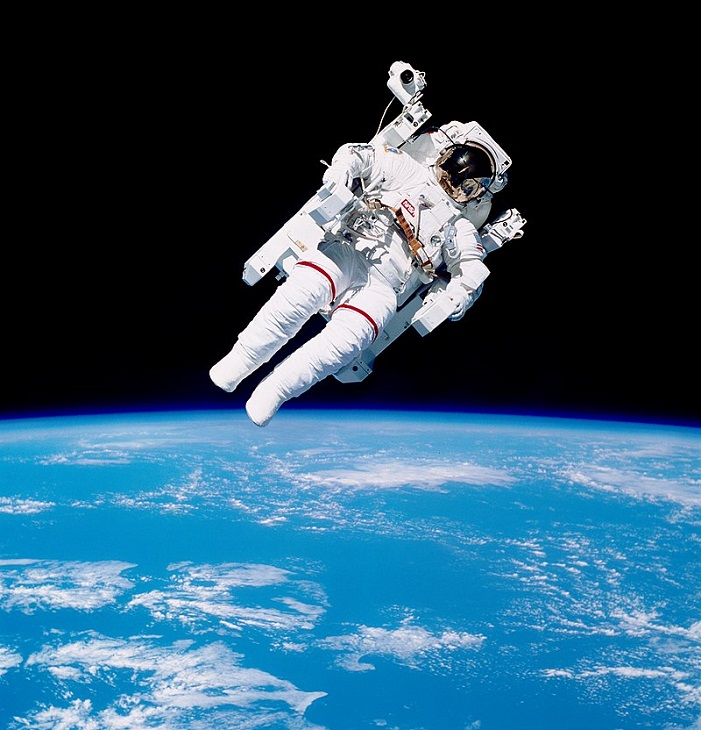
Bruce McCandless II (June 8, 1937 – December 21, 2017) was a United States Navy officer and aviator, electrical engineer, and NASA astronaut. In 1984, during the first of his two Space Shuttle missions, he completed the first untethered spacewalk by using the Manned Maneuvering Unit.
The Manned Maneuvering Unit (MMU) is an astronaut propulsion unit that was used by NASA on three Space Shuttle missions in 1984. The MMU allowed the astronauts to perform untethered extravehicular spacewalks at a distance from the shuttle. The MMU was used in practice to retrieve a pair of faulty communications satellites, Westar VI and Palapa B2. Following the third mission the unit was retired from use. A smaller successor, the Simplified Aid For EVA Rescue (SAFER), was first flown in 1994, and is intended for emergency use only.
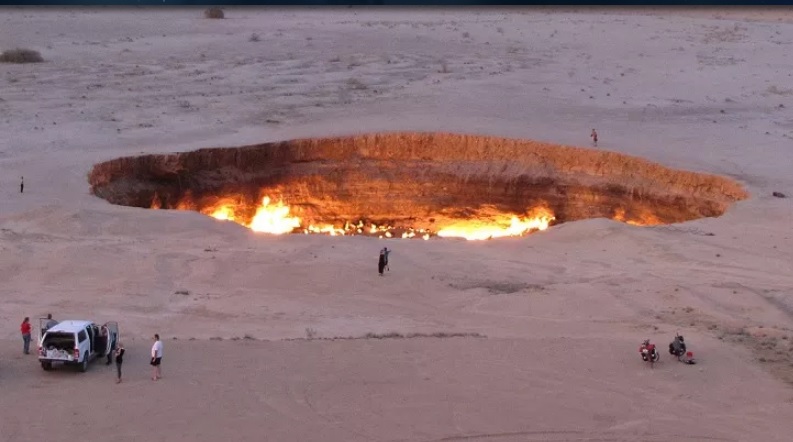
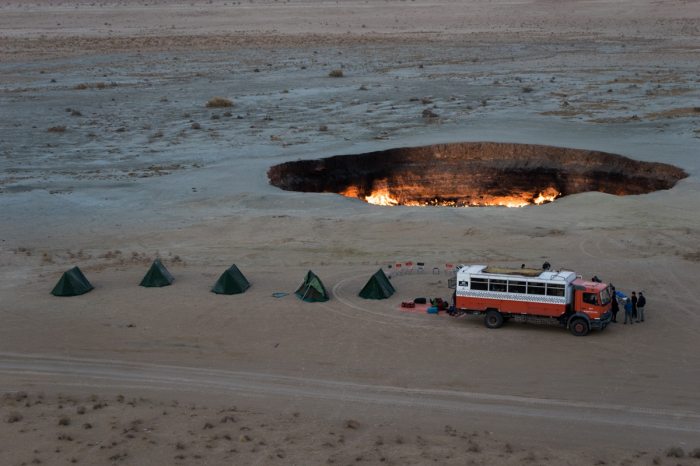
The president of Turkmenistan hopes to extinguish a massive fiery crater, dubbed the ‘Gates of Hell,’ which has been burning for decades and has become one of the country’s most popular tourist attractions. Gurbanguly Berdymukhamedov reportedly issued the decree this past Saturday, explaining that the inferno’s output “negatively affects both the environment and the health of the people living nearby.” He also argued that “we are losing valuable natural resources for which we could get significant profits and use them for improving the well being of our people.” As such, Berdymukhamedov told officials in the country to figure out a way to finally snuff out the fire.
The origins of the monstrous chasm and its iconic inferno are murky at best with legend stating that it was accidentally created in the 1970s by Russian miners hoping to extract natural gas from the area. That version of events is now doubted by researchers, who believe that the crater probably formed sometime in the 1960s. Although it has been burning continuously for several decades, how and when the fire started remains a mystery. Be that as it may, it has become a genuine landmark which draws visitors from all over the world to Turkmenistan.
Before one sheds a tear for the tourist attraction, the fate of the ‘Gates of Hell’ is far from certain as this is actually the second time that Berdymukhamedov has called for the fire to be extinguished. Back in 2010, he issued a similar order to experts in the country, but the effort clearly failed as the inferno continues to burn to this day. With that in mind, there is a strong possibility that the authoritarian leader’s wishes will once again be thwarted by the mysterious fiery chasm.
Previous post:
The “Gates of Hell”
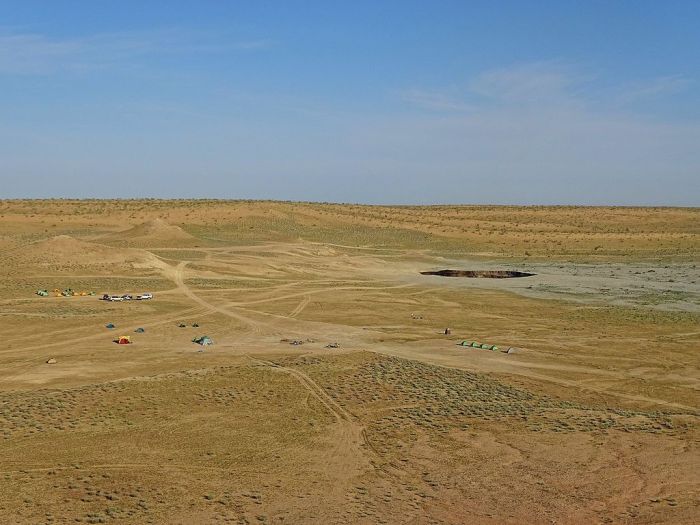
The Darvaza gas crater, known locally as the “Door to Hell” or ”Gates of Hell”, is a natural gas field in Derweze, Turkmenistan, that collapsed into an underground cavern, becoming a natural gas crater. Geologists set it on fire to prevent the spread of methane gas, and it has been burning continuously since 1971. The diameter of the crater is 69 metres (226 ft), and its depth is 30 metres (98 ft). The crater is a popular tourist attraction. Since 2009, 50,000 tourists have visited the site. The gas crater has a total area of 5,350 m2. The surrounding area is also popular for wild desert camping.
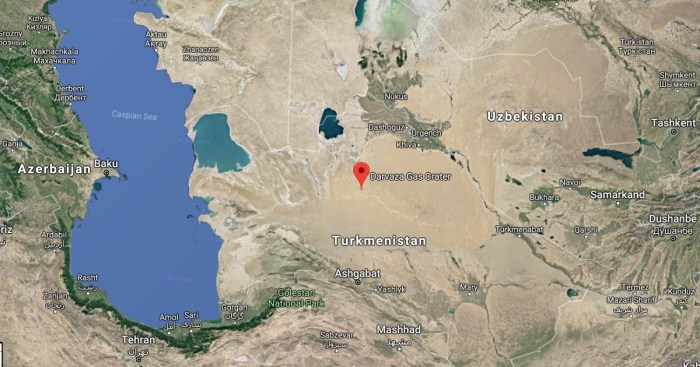
The gas crater is located near the village of Derweze, also known as Darzava. It is in the middle of the Karakum Desert, about 260 kilometres (160 mi) north of Ashgabat, the capital of Turkmenistan. The gas reserve found here is one of the largest in the world. The name “Door to Hell” was given to the field by the locals, referring to the fire, boiling mud, and orange flames in the large crater, which has a diameter of 70 metres (230 ft). The hot spots range over an area with a width of 60 metres (200 ft) and to a depth of about 20 metres (66 ft).
According to Turkmen geologist Anatoly Bushmakin, the site was identified by Soviet engineers in 1971. It was originally thought to be a substantial oil field site. The engineers set up a drilling rig and operations to assess the quantity of oil available at the site. Soon after the preliminary survey found a natural gas pocket, the ground beneath the drilling rig and camp collapsed into a wide crater and was buried. Expecting dangerous releases of poisonous gases from the cavern into nearby towns, the engineers thought it best to burn the gas off. It was estimated that the gas would burn out within a few weeks, but it has instead continued to burn for more than four decades.
In April 2010, the president of Turkmenistan, Gurbanguly Berdimuhamedow, visited the site and ordered that the hole should be closed. In 2013, he declared the part of the Karakum Desert with the crater a nature reserve.
The crater was featured in a Die Trying episode titled “Crater of Fire”. Explorer George Kourounis became the first person to ever set foot at the bottom, gathering samples of extremophile microorganisms. The episode was broadcast on the National Geographic Channel on July 16, 2014.
In a wild story out of China, more than 80 ostriches escaped their farm and, much to the amazement of motorists, wound up flooding the streets of a city. The strange incident reportedly occurred early Saturday morning in the community of Chongzuo. Thanks to an unlocked gate on the property where they live, the bevy of birds managed to make a break for it and enjoy a brief taste of freedom.Drivers cruising the streets of the city could not believe their eyes as the ostriches dashed down the streets in droves and overwhelmed nearby sidewalks.
Perhaps thinking that no one would believe their story, several witnesses filmed the jaw-dropping scene with their cellphone and their videos went viral on social media. Fortunately no one was injured during the unexpected stampede and the owner of the farm was able to wrangle nearly all of their escaped ostriches. That said, since not every bird was captured, there may be more than a few of the rogue birds still hiding out somewhere in Chongzuo.
An astronaut on the International Space Station (ISS) snapped a picture of the United State’s Cascade and Rocky Mountains, as well as Canada’s Coast Mountains. An ISS solar array can be seen in the upper center part of the frame.
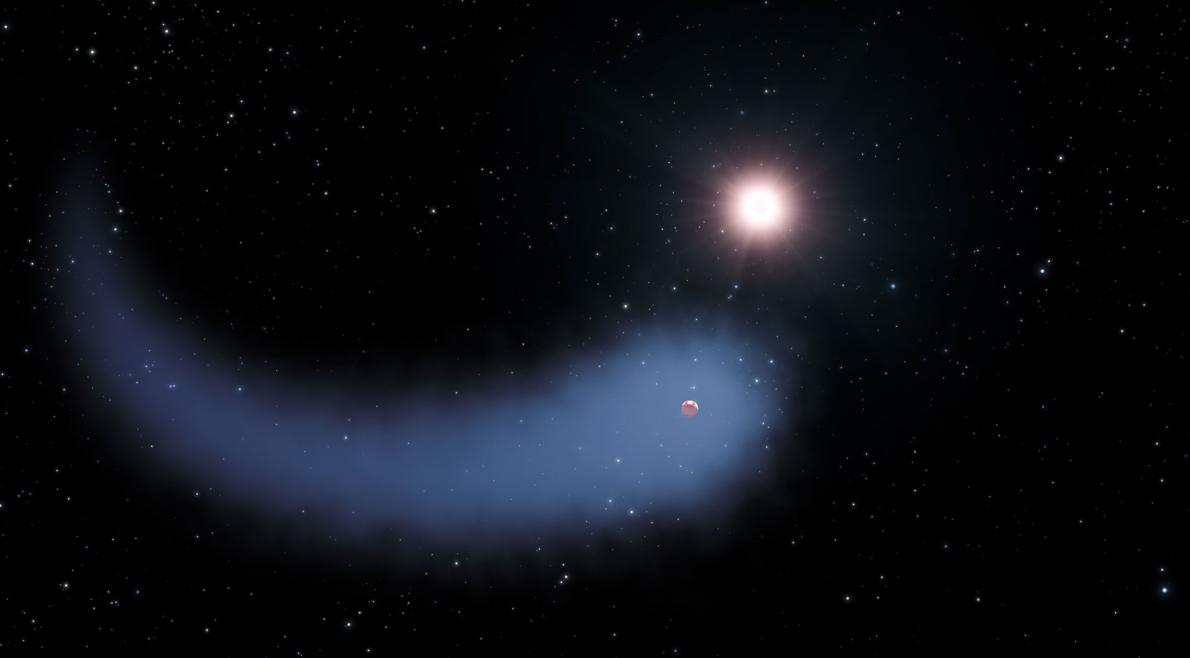
Cloudy Tail
A massive cloud of hydrogen streams from a Neptune-sized exoplanet due to the extreme radiation given off by the planet’s star. Researchers have never seen this occur around such a small planet dubbed – GJ 436b – before.
Auroras
Crew members on the International Space Station got a front seat view of this week’s auroras and captured this image.
Up, Up, and Away
A Soyuz rocket shoots into space from the Baikonur Cosmodrome in Kazakhstan on July 23. Three crewmembers bound for the International Space Station for a five month mission on board.
Sunlit
This is the first picture of Earth’s entire sunny side that NASA has released since the famous “Blue Marble” image in 1972. Images published in the interim have been stitched together from multiple pictures taken at different times.
Smoky
Satellites captured smoke from Canadian and Alaskan wildfires drifting over the Greenland Sea. Alaska has had its worst fire season ever, with millions of acres burned as of July 7. Over three million acres have burned in Canada as of July 15.
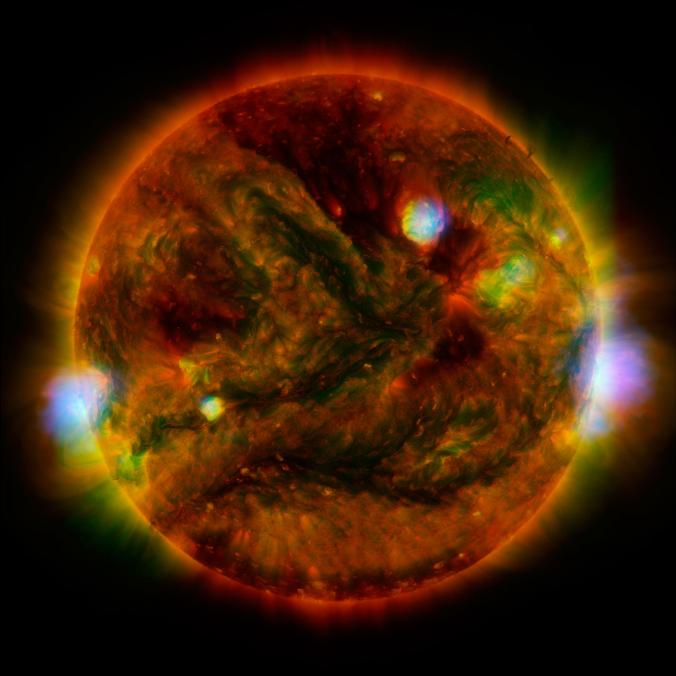
Solar Marble
Our sun glows in x-ray and ultraviolet light. High-energy x-rays are shown in blue, low-energy x-rays are green, and extreme ultraviolet light shines in yellow and green. Active regions flare up in bursts of white.
Drone photos
Snorkeling With Sharks
Snorkelers swim with sharks near Moorea Island in French Polynesia.
Lost Island
Tourists wait for a sunset in French Polynesia, a group of islands in the South Pacific.
Glorieto Rodolfo Sanchez Taboada
A cliff diver jumps into the ocean in Mazatlan, Mexico.
Above the Mist
The Cathedral of Maringa pokes through heavy fog in Parana, Brazil.
Mont-Saint-Michel
Mont-Saint-Michel is an island commune off the coast of Normandy, France.
















 The MarkoZen Blog