


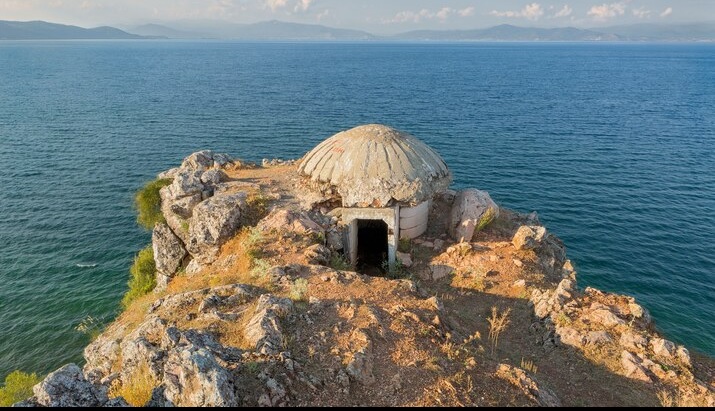
Concrete military bunkers are a ubiquitous sight in Albania, with an average of 5.7 bunkers for every square kilometre (14.7 per square mile). The bunkers (Albanian: bunkerët) were built during the Stalinist and anti-revisionist government of Enver Hoxha from the 1960s to the 1980s; by 1983 a total of 173,371 bunkers had been constructed around the country.
Hoxha’s program of “bunkerization” (bunkerizimi) resulted in the construction of bunkers in every corner of the then People’s Socialist Republic of Albania, ranging from mountain passes to city streets. They were never used for their intended purpose during the years that Hoxha governed. The cost of constructing them was a drain on Albania’s resources, diverting them away from more pressing needs, such as dealing with the country’s housing shortage and poor roads.
The bunkers were abandoned following the dissolution of the communist government in 1992. A few were used in the Albanian insurrection of 1997 and the Kosovo War of 1999. Most are now derelict, though some have been reused for a variety of purposes including residential accommodation, cafés, storehouses, and shelters for animals or the homeless.
From the end of World War II to his death in April 1985, Enver Hoxha pursued a style of politics informed by hardline Stalinism as well as elements of Maoism. He broke with the Soviet Union after Nikita Khrushchev embarked on his reformist Khrushchev Thaw, withdrew Albania from the Warsaw Pact in 1968 in protest of the Warsaw Pact invasion of Czechoslovakia, and broke with China after U.S. President Richard Nixon’s 1972 visit to China.
His regime was also hostile towards the country’s immediate neighbours. Albania did not end its state of war with Greece, left over from the Second World War, until as late as 1987 – two years after Hoxha’s death – due to suspicions about Greek territorial ambitions in southern Albania as well as Greece’s status as a NATO member state.
Hoxha was virulently hostile towards the government of Josip Broz Tito in Yugoslavia, accusing Tito’s government of maintaining “an anti-Marxist and chauvinistic attitude towards our Party, our State, and our people”. He asserted that Tito intended to take over Albania and make it into the seventh republic of Yugoslavia, and castigated the Yugoslav government’s treatment of ethnic Albanians in Kosovo, claiming that “Yugoslav leaders are pursuing a policy of extermination there.”
Albania still maintained some links with the outside world at this time, trading with neutral countries such as Austria and Sweden, and establishing links across the Adriatic Sea with its former invader Italy. However, a modest relaxation of domestic controls was curtailed by Hoxha in 1973 with a renewed wave of repression and purges directed against individuals, the young and the military, whom he feared might threaten his hold on the country. A new constitution was introduced in 1976 that increased the Labor Party’s control of the country, limited private property, and forbade foreign loans. The country sank into a decade of isolation and economic stagnation, virtually cut off from the outside world.
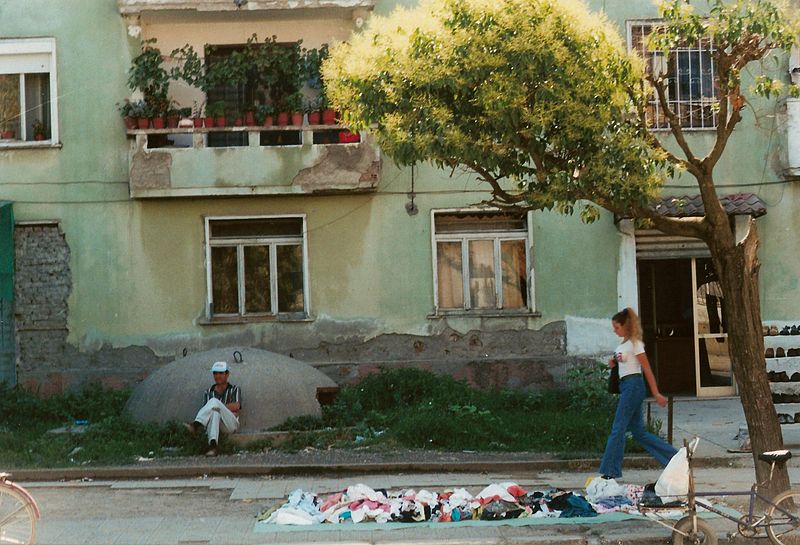
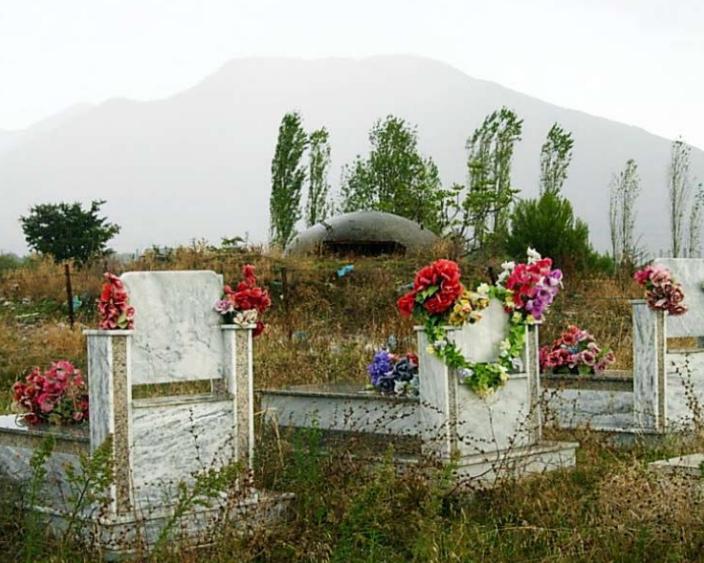
Starting in 1967 and continuing until 1986, the Albanian government carried out a policy of “bunkerisation” that saw the construction of hundreds of thousands of bunkers across the country. They were built in every possible location, ranging from “beaches and mountains, in vineyards and pastures, in villages and towns, even on the manicured lawns of Albania’s best hotel”.[9] Hoxha envisaged Albania fighting a two-front war against an attack mounted by Yugoslavia, NATO or the Warsaw Pact involving a simultaneous incursion by up to eleven enemy airborne divisions. As he put it, “If we slackened our vigilance even for a moment or toned down our struggle against our enemies in the least, they would strike immediately like the snake that bites you and injects its poison before you are aware of it.”

The bunkerisation programme was a massive drain on Albania’s weak economy. The construction of prefabricated bunkers alone cost an estimated two percent of net material product, and in total the bunkers cost more than twice as much as the Maginot Line in France, consuming three times as much concrete. The programme diverted resources away from other forms of development, such as roads and residential buildings. On average, they are said to have each cost the equivalent of a two-room apartment and the resources used to build them could easily have resolved Albania’s chronic shortage of housing. According to Josif Zagali, building twenty smaller bunkers cost as much as constructing a kilometre of road. It also had a human cost; 70–100 people a year died constructing the bunkers. In addition, the bunkers occupied and obstructed a significant area of arable land.
A line of bunkers in Dhërmi, Himara
The bunkerisation of the country had effects that went beyond their ubiquitous physical impact on the landscape. The bunkers were presented by the Party as both a symbol and a practical means of preventing Albania’s subjugation by foreign powers, but some viewed them as a concrete expression of Hoxha’s policy of isolationism – keeping the outside world at bay. Some Albanians saw them as an oppressive symbol of intimidation and control.
Albanian author Ismail Kadare used the bunkers in his 1996 novel The Pyramid to symbolise the Hoxha regime’s brutality and control, while Çashku has characterised the bunkers as “a symbol of totalitarianism” because of the “isolation psychology” that they represented. It has been argued that the bunkerisation programme was a form of “patterned large-scale construction” that “has a disciplinary potential as a means of familiarising a population with a given order of rule”. The regime’s xenophobia had the effect of creating a siege mentality and a sense of constant emergency.
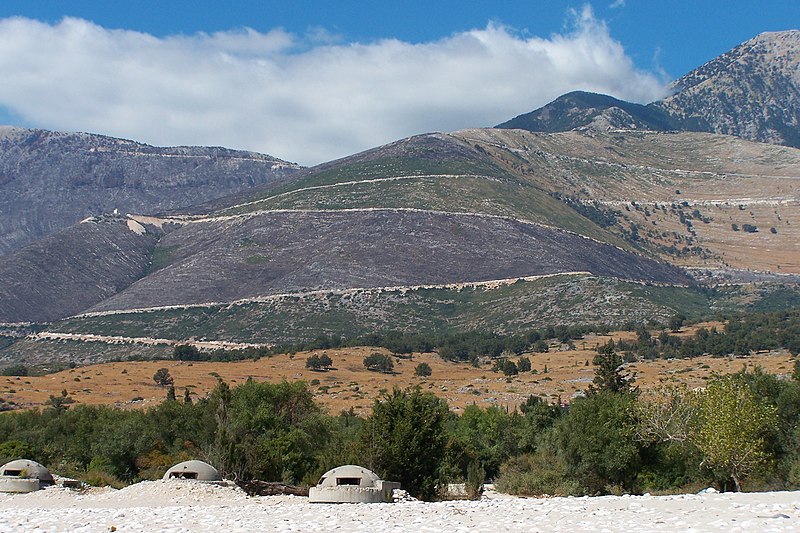
There have been various suggestions for what to do with them: ideas have included pizza ovens, solar heaters, beehives, mushroom farms, projection rooms for drive-in cinemas, beach huts, flower planters, youth hostels, and kiosks. Some Albanians have taken to using the bunkers for more romantic purposes. In a country where until recently cars were in short supply, they were popular places for lovers to have sex; as travel writer Tony Wheeler puts it, “Albanian virginity is lost in a Hoxha bunker as often as American virginity was once lost in the back seats of cars.”
In November 2014, a “five star” nuclear shelter built near Tirana for Hoxha was opened as a tourist attraction and art exhibition. The large bunker contains a museum with exhibits from World War II and the Hoxhaist period.
Albania’s bunkers have become a national symbol. Pencil holders and ashtrays in the shape of bunkers have become one of the country’s most popular tourist souvenirs. One such line of bunker souvenirs was promoted with a message to buyers: “Greetings to the land of the bunkers. We assumed that you could not afford to buy a big one.”
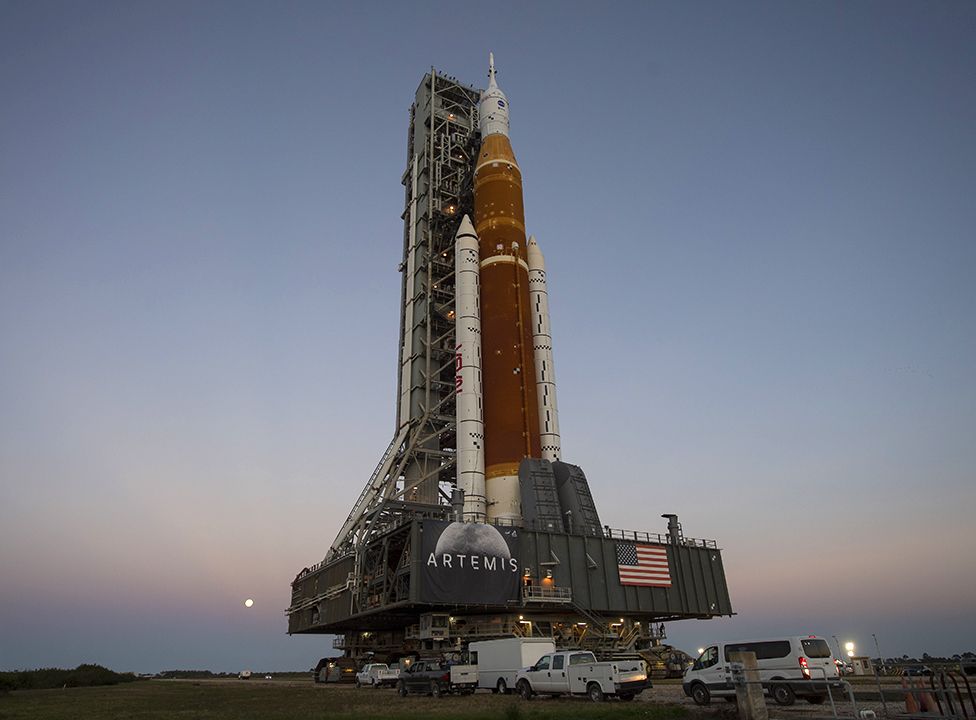
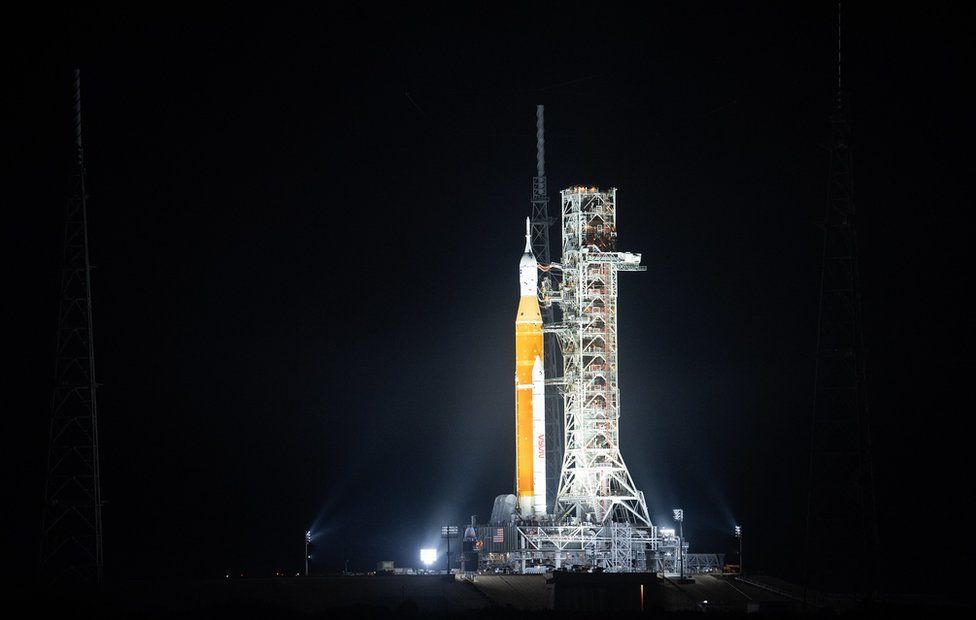
The American space agency has rolled out its new giant Moon rocket for the first time.
The vehicle, known as the Space Launch System (SLS), was taken to Pad 39B at the Kennedy Space Center in Florida to conduct a dummy countdown.
If that goes well, the rocket will be declared ready for a mission in which it will send an uncrewed test capsule around the Moon.
This could happen in the next couple of months.
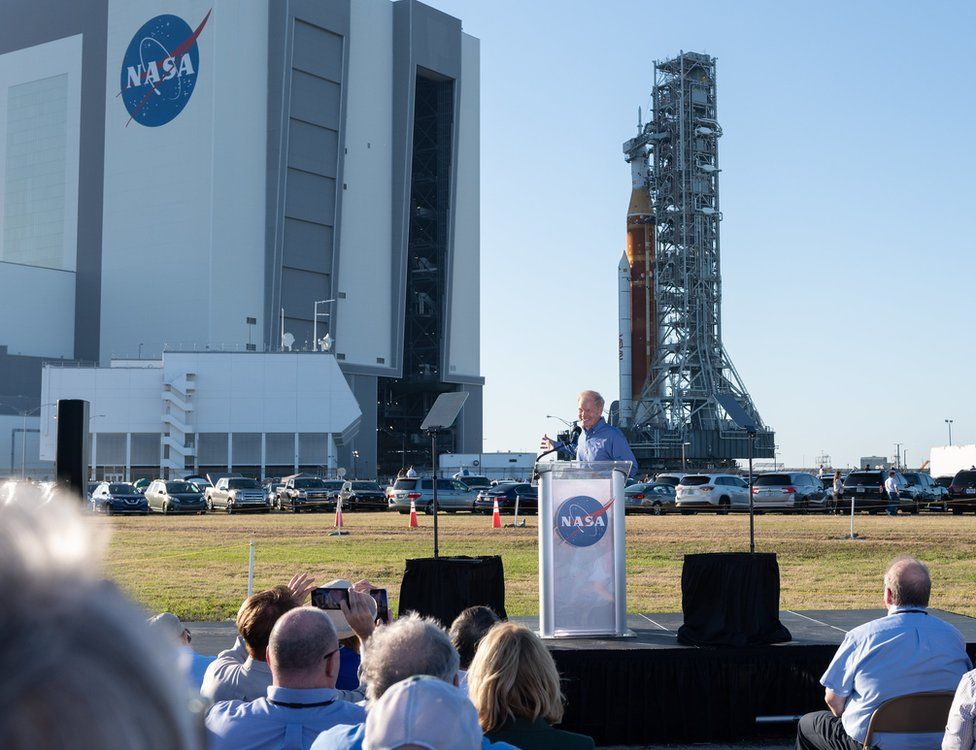 IMAGE SOURCE,NASA/KEEGAN BARBERImage caption,
Bill Nelson was a prime mover behind the rocket when he was a US Senator
Ultimately, it’s hoped astronauts would climb aboard later SLS rockets to return to the Moon’s surface sometime in the second half of this decade.
These missions are part of what Nasa calls its Artemis programme.
Watching the roll-out, agency administrator Bill Nelson said we were entering a golden era of human space exploration.
“The Artemis generation is preparing to reach new frontiers,” he told the spectator crowds gathered at Kennedy.
“This generation will return astronauts to the Moon and this time, we will land the first woman and the first person of colour on the surface, to conduct ground-breaking science.
“Nasa’s Artemis programme will pave the way for humanity’s giant leap (to) future missions to Mars.”
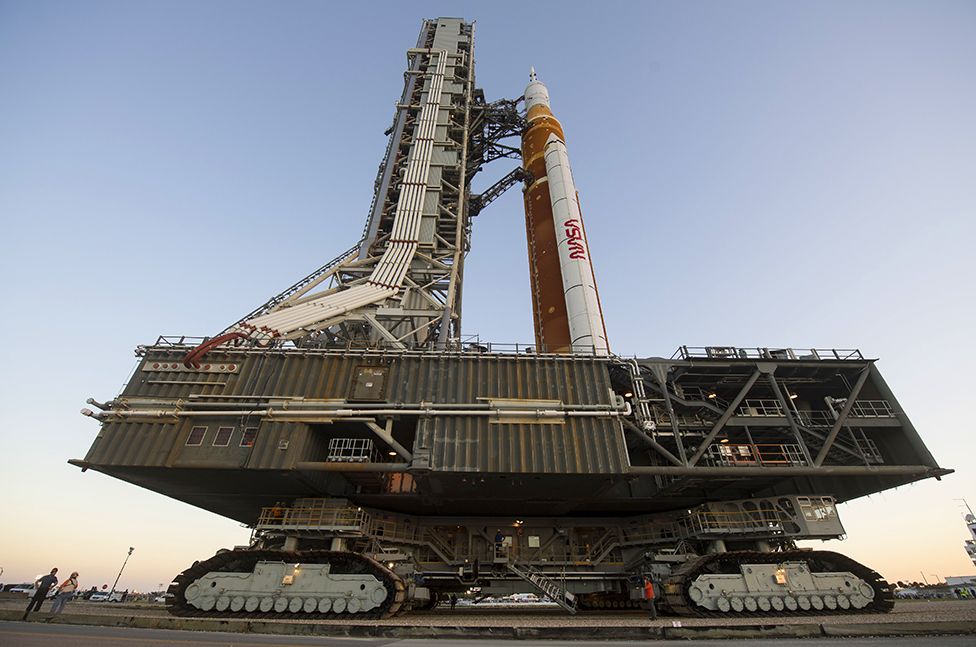
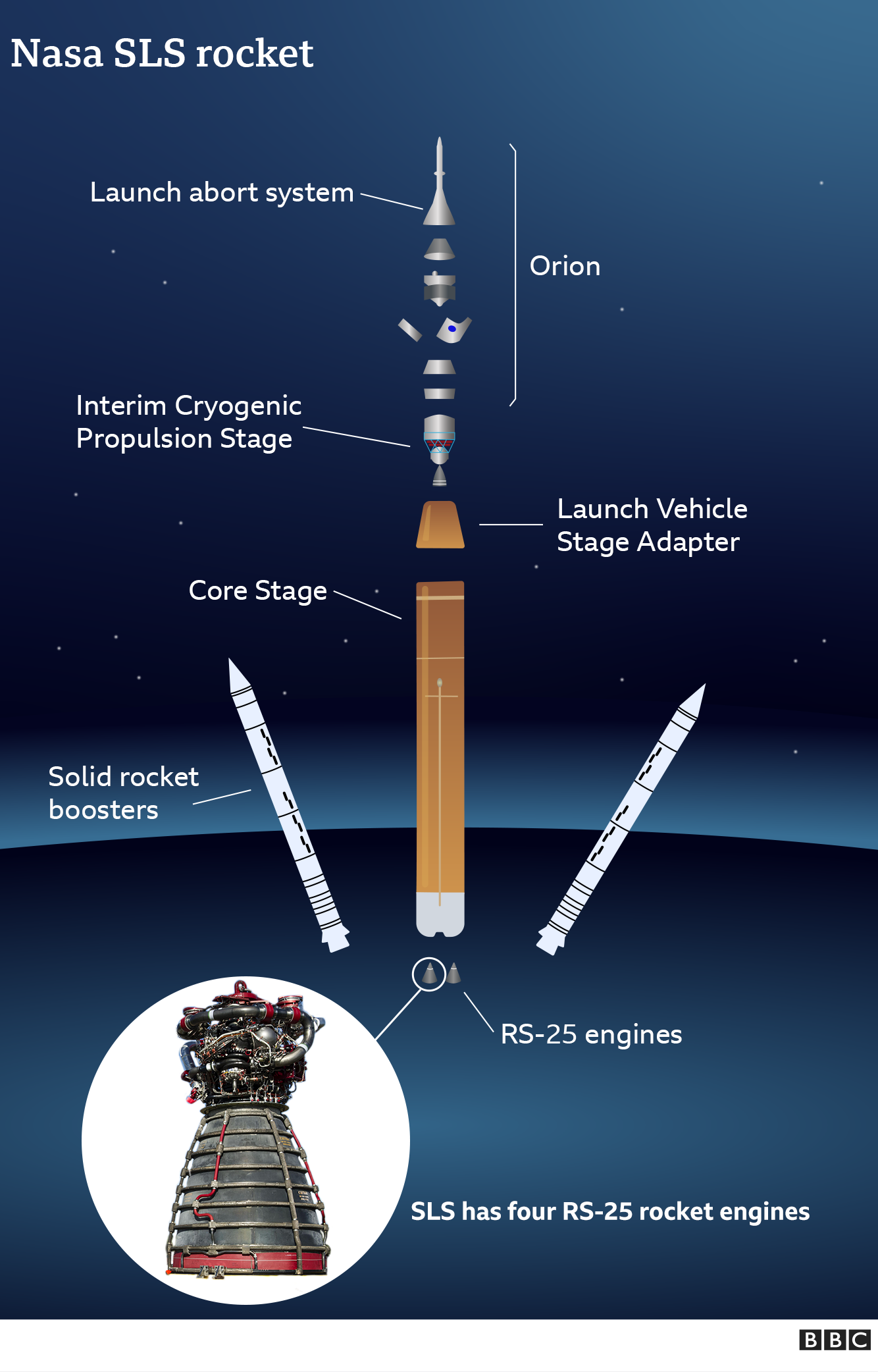
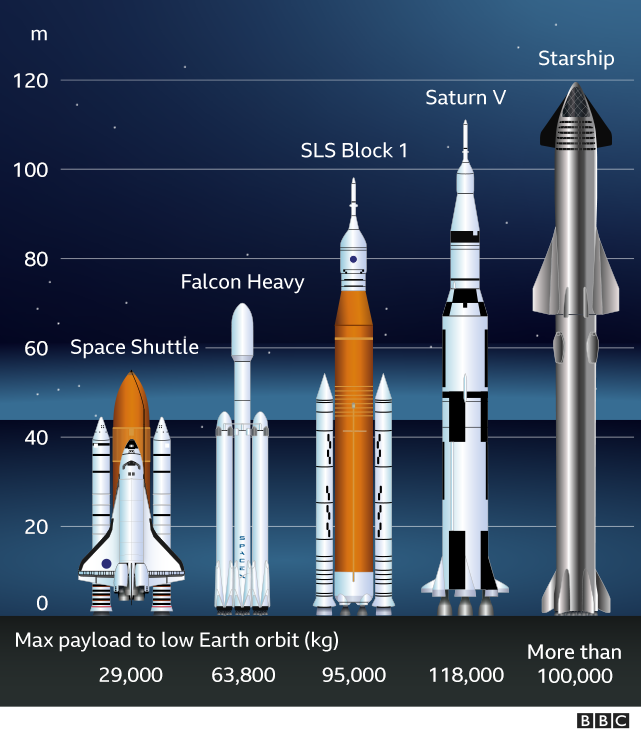
SLS is a colossus. A touch under 100m in height, it was designed to be more powerful than the Apollo Saturn vehicles of the late 1960s and early 1970s.
It will have the thrust to not only send astronauts far beyond Earth but additionally so much equipment and cargo that those crews could stay away for extended periods.
Thursday’s rollout from Kennedy’s Vehicle Assembly Building (VAB) is the rocket’s debut in the sense that it’s the very first time everyone has got to see all its different elements fully stacked together.
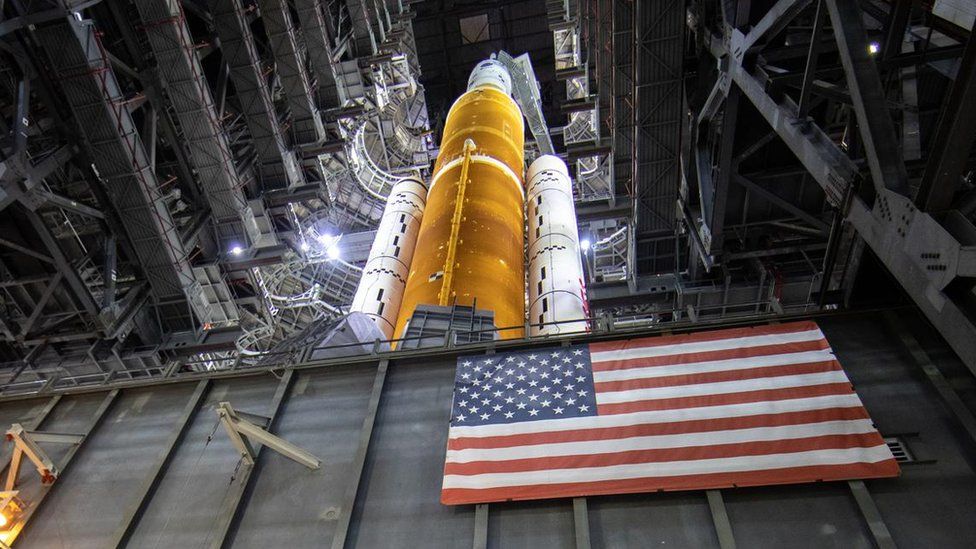
The SLS move from the VAB began 17:47 local Florida time.
The rocket came out attached to a support gantry known as the Mobile Launcher. This structure, which is itself 120m high and weighs 5,000 tonnes, was sitting atop the same mammoth tractor that used to move the Saturn Vs back in the day, and later the space shuttles.
The Crawler Transporter goes very slowly, with a cruising speed of just over 1km/h (under 1mph). And after engineers had stopped and started the tractor for various checks, it was 04:15 on Friday morning by the time the procession had reached Pad 39B. A total journey distance of 6.75km.
SLS will now be prepared for a “wet dress rehearsal”, likely to occur on 3 April.
This will see the rocket loaded with propellants and taken through a practice countdown all the way to a mere 9.4 seconds from the moment of lift-off. The “scrub” point is just before they would normally light the four big shuttle-era engines under the rocket.
Assuming everything proceeds to the satisfaction of the engineers, Nasa will then be able to set a flight date.
The end of May remains a possibility, but more likely it will be June or July.
This mission, dubbed Artemis-1, will propel the rocket’s Orion crew capsule on a 26-day journey that includes an expanded orbit around the Moon. There will be no-one in the capsule for the test flight. This should happen on a second mission in a couple of years’ time.
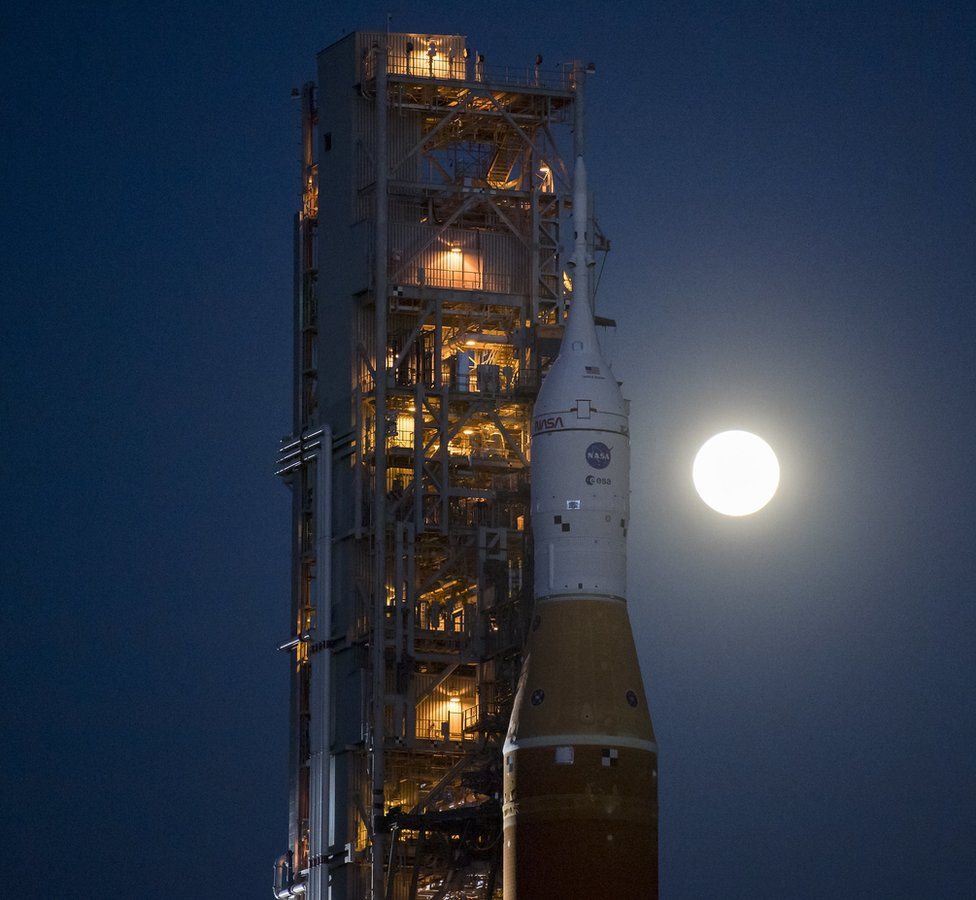 IMAGE SOURCE,NASA/AUBREY GEMIGNANIImage caption,
The Moon is the initial target, but eventually Nasa wants to get people to Mars
While Nasa is developing the SLS, the American rocket entrepreneur Elon Musk is preparing an even larger vehicle at his R&D facility in Texas.
He calls his giant rocket the Starship. Like SLS it has yet to have a maiden flight. Unlike SLS, Starship has been designed to be totally reusable and ought therefore to be considerably cheaper to operate.
A recent assessment from the Office of Inspector General, which audits Nasa programmes, found that the first four SLS missions would each cost more than $4bn to execute – a sum of money that was described as “unsustainable”.
Florida Man Asked Cops To Test His Meth Because He Was Worried The Drugs Were Actually Bath Salts

A Florida man dialed 911 to implore police to test the meth he bought as he worried his dealer had sold him bath salts instead. Thomas Colluci, 41, requested a sheriff be sent to his home in Spring Hill, a suburb of Tampa, to look into the purity of the drugs he’d purchased at a local bar. He’d used a bit of the substance but felt from the effects that he may not have a pure product on his hands. He ended up drugless and in cuffs by the end of the night.
1. COLUCCI DESCRIBED HIMSELF TO POLICE AS AN EXPERIENCED DRUG USER.Because of that, he was sure he would “know what it should feel like” when he did meth. When he tried the product he bought from the random man at the bar, however, something felt different and he was obviously concerned for his health.
2. HE HANDED OVER TWO BAGGIES FULL OF A “CRYSTALLINE SUBSTANCE” TO AUTHORITIES.In Colucci’s head, he legitimately believed that police would test the drugs and give them back. That obviously wasn’t how things went down, much to his disbelief.
3. COLUCCI WAS LOOKING OUT FOR OTHER DRUG USERS.He told police that he didn’t want other customers to end up with “fake” meth from the man. Also, despite the fact that he didn’t have any contact info or even a name for the dealer, he said he wanted to “put the person in trouble” for selling narcotics.
4. THE PRODUCT COLUCCI BOUGHT DID INDEED CONTAIN METH.The Hernando County Sheriff’s Office confirmed the presence of methamphetamines in the bags, which was bad news for Colucci after all as he was arrested on a felony drug possession charge as well as two misdemeanor drug paraphernalia charges. He was released from the county jail after posting $7,000 bail.
5. THIS WASN’T COLUCCI’S FIRST BRUSH WITH THE LAW. As per The Smoking Gun, Colucci was convicted in 2019 of slamming his SUV into another vehicle while under the influence of alcohol. As he drove away from the scene without stopping, he hit another vehicle that was getting gas and knocked the driver to the ground while injuring the passenger as well. He pleaded no contest to DUI and leaving the scene of an accident and was given a year of probation as well as an order to attend outpatient substance abuse treatment. Looks like that worked well!
Video below
A wild viral video from an adventure park in Costa Rica shows a boy’s zip-line ride come to a sudden stop when he collides with a sloth that had somehow gotten stuck on the wire. The very strange encounter reportedly occurred last weekend at the Go.Adventure Arenal Park in the town of La Fortuna as the unnamed youngster was participating in a canopy tour at the tourist destination. The breathtaking experience of cruising down a zip-line amid the lush treetops of the rainforest turned into a truly unforgettable moment for the boy when he slams into the veritable slow-moving speed bump. Although the collision is rather abrupt, it would appear that neither the youngster nor the animal were injured in the mid-air crash thanks to the zip-line’s break.
When the park worker shadowing the boy catches up to him, the astonished tot exclaims “it’s a sloth! I just clocked it straight in the face!” The duo are then essentially left stuck hanging on the line while they wonder how the creature wound up in their path and wait for it to eventually depart. Remarkably, park owner Flavio Leiton Ramos said that such an encounter had never occurred at the park before and marveled that “it’s one of those things that happened that probably will never happen again.” We’re guessing that the sloth hopes that’s the case, since it almost certainly got quite the scare when the boy barreled into it.

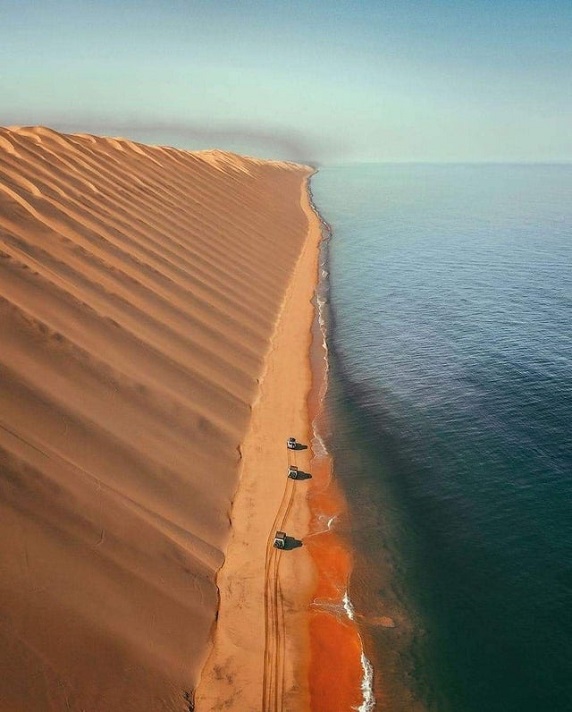
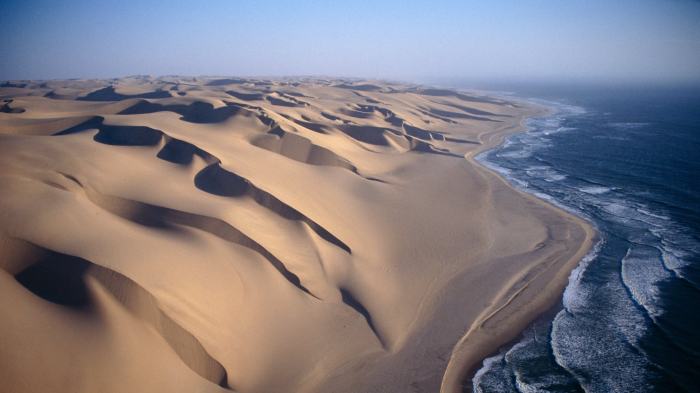
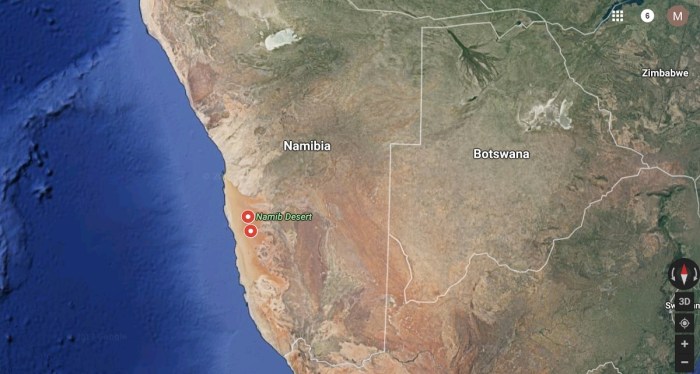
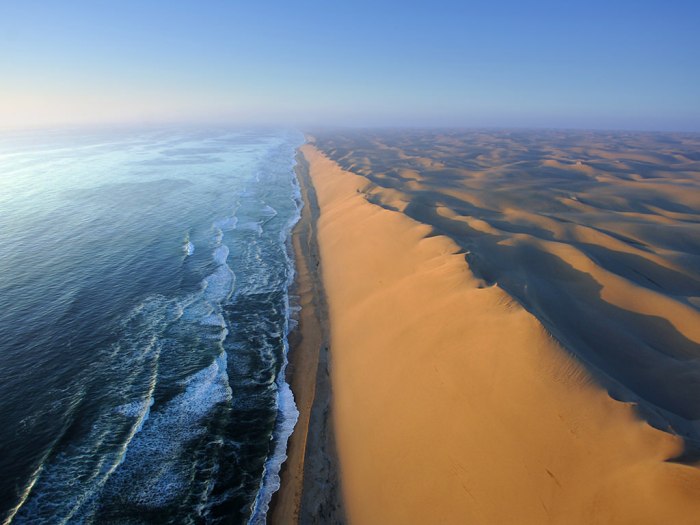
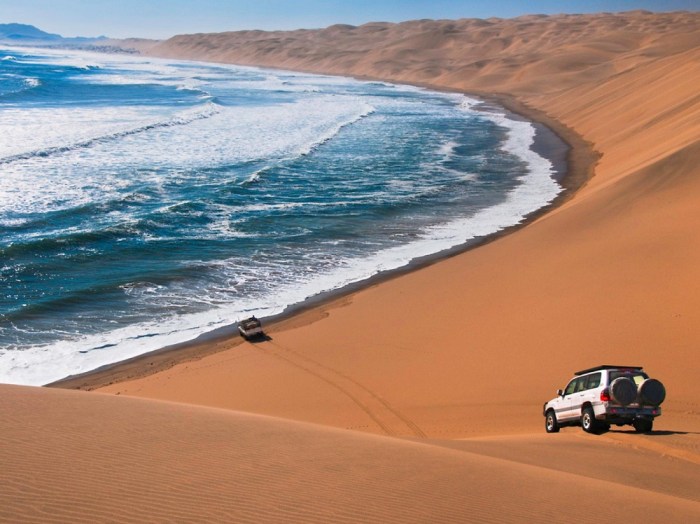
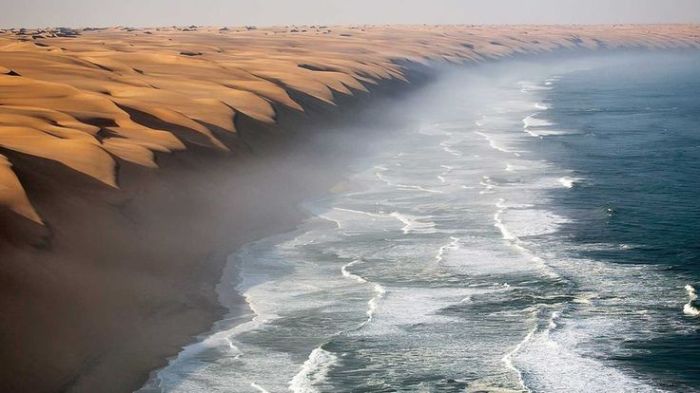
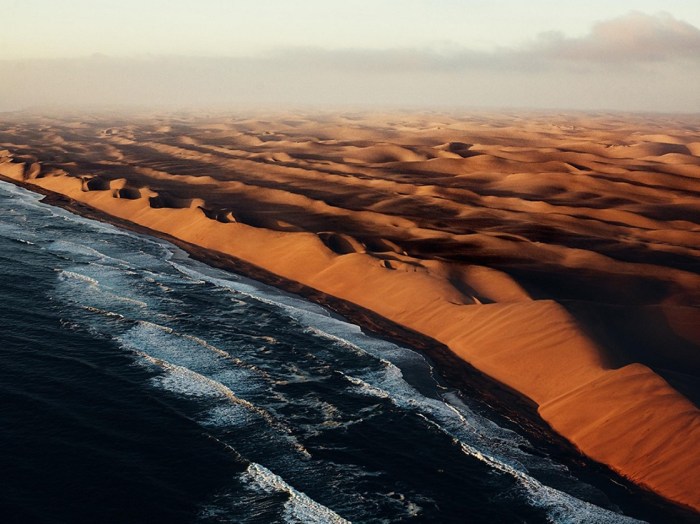
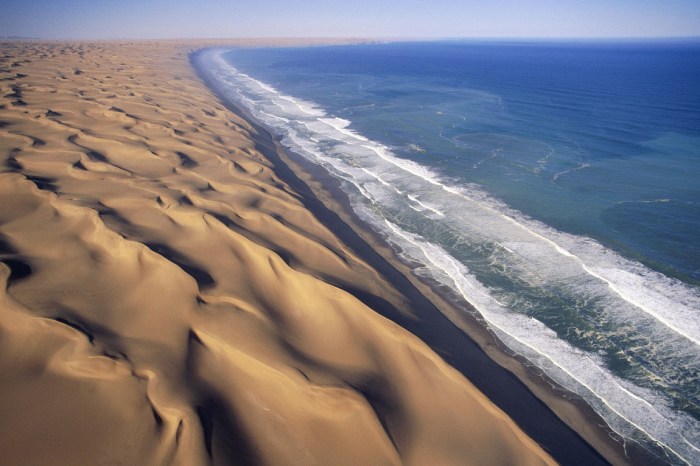
The Namib is a coastal desert in southern Africa. The name Namib is of Nama origin and means “vast place”. According to the broadest definition, the Namib stretches for more than 2,000 kilometres (1,200 mi) along the Atlantic coasts of Angola, Namibia, and South Africa, extending southward from the Carunjamba River in Angola, through Namibia and to the Olifants River in Western Cape, South Africa.
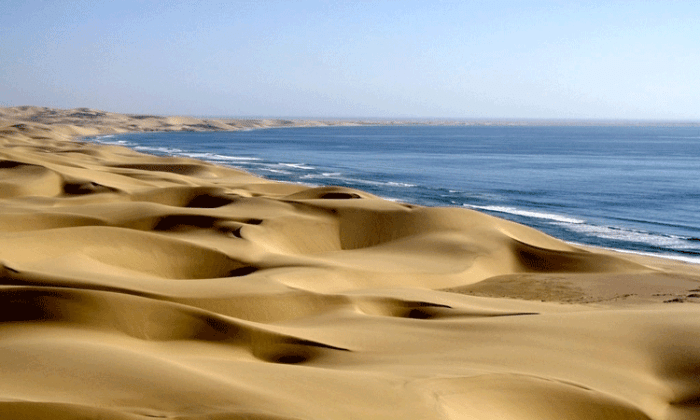
The desert geology consists of sand seas near the coast, while gravel plains and scattered mountain outcrops occur further inland. The sand dunes, some of which are 300 metres (980 ft) high and span 32 kilometres (20 mi) long, are the second largest in the world after the Badain Jaran Desert dunes in China.
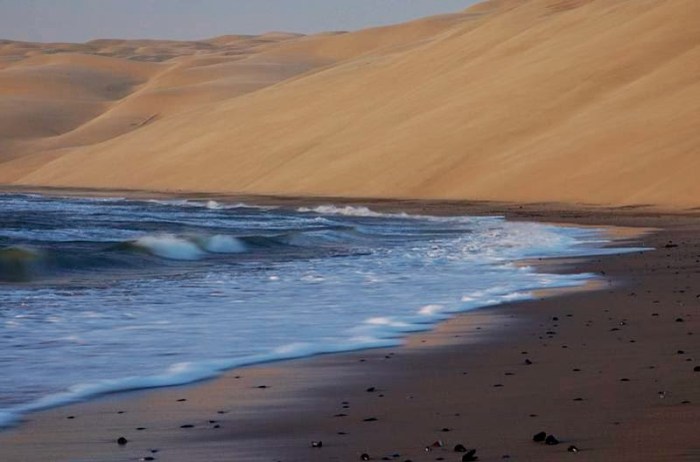
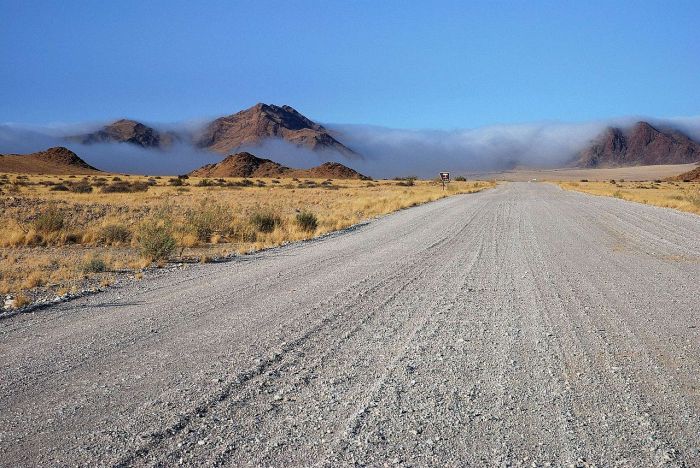
Winds coming from the Atlantic Ocean are pressed down by hot air from the east; their humidity thus forms clouds and fog. Morning fogs coming from the ocean and pushing inwards into the desert are a regular phenomenon along the coast, and much of the life cycle of animals and plants in the Namib relies on these fogs as the main source of water.
Fog rolling in
![namib-desert-meets-sea-4[2]](https://markozen.com/wp-content/uploads/2017/10/namib-desert-meets-sea-42.jpg?w=700)
![namib-desert-meets-sea-2[2]](https://markozen.com/wp-content/uploads/2017/10/namib-desert-meets-sea-22.jpg?w=700)
![namib-desert-meets-sea-7[2]](https://markozen.com/wp-content/uploads/2017/10/namib-desert-meets-sea-72.jpg?w=700)
These things were so heavy you needed a couple bodybuilders to move it.
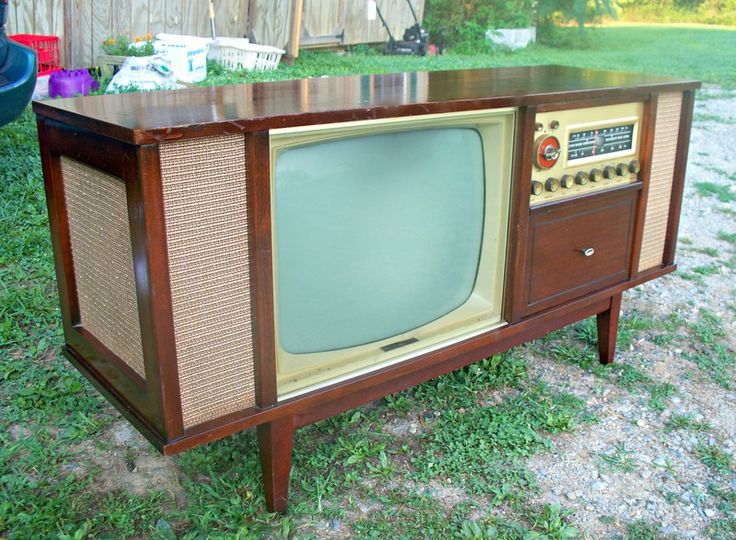
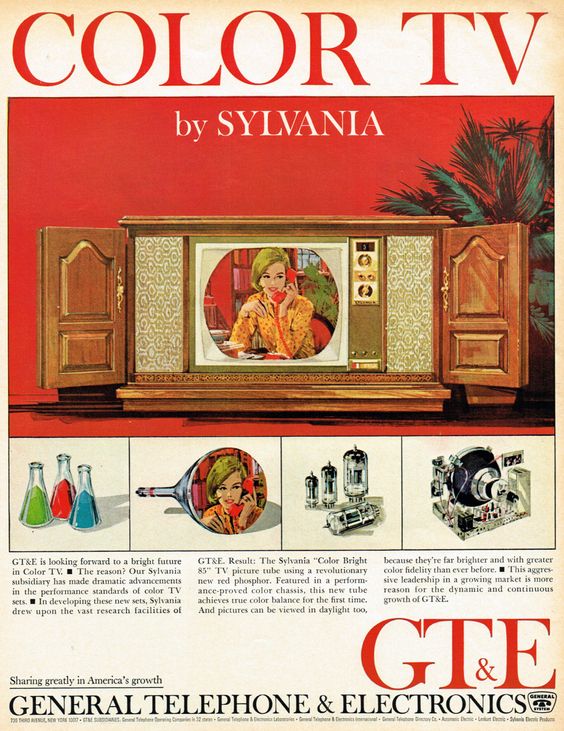


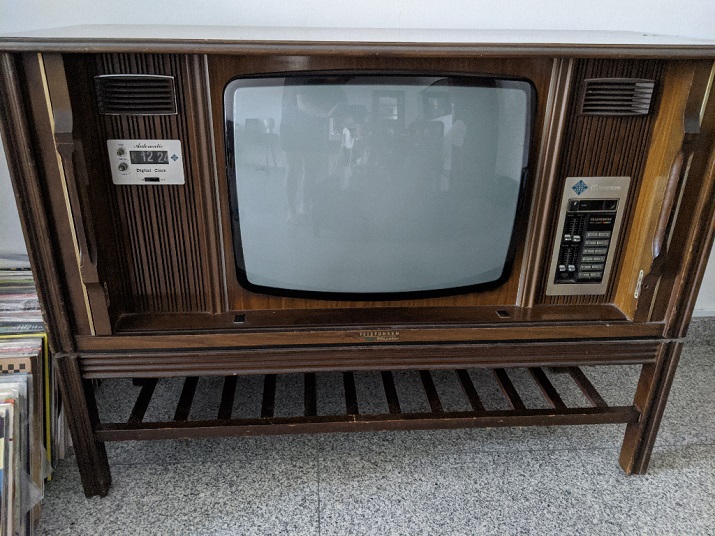
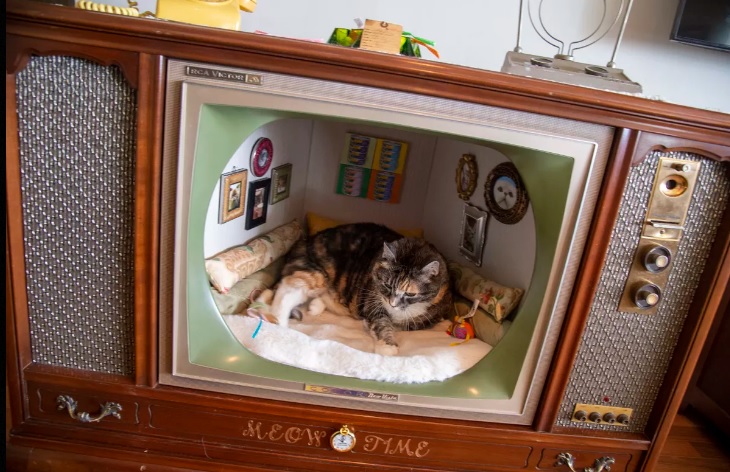
Great idea!

A Lovecraftian poster for an odd 1960s mermaid thriller starring Dennis Hopper with a freaky cameo appearance by Marjorie Cameron, the bohemian witch of Los Angeles.
This is a sampling from a private collection of rare, massive 40” x 60” posters that were printed on cardstock for drive-In movie theaters.

An American distributor purchased a historical film and repackaged it as a Nazisploitation thrill; the fact that the movie was years old at this point was sold to the audience as the film having been “censored until now!”

A towel-clad Brigitte Bardot stuns in this incredible 1961 Pop Art poster.

A giant poster advertising a 1966 Hammer double-feature where theatregoers would get their own Rasputin beard!

After stabbing her mother’s boyfriend, a teenager escapes from reform school amid a barrage of attempted rape and lesbianism.

A psychedelic graphic for a 1971 camp film marketed as druggy horror to capitalize on the Charles Manson trials.

This 1963 poster lured theater goers over to listen to the whispering of a rocky-skinned slime monster.

Vincent Price narrates this “travel documentary” exploring bizarre cultural practices.

Hammer horror classic with the busty Ingrid Pitt as Carmilla, the original prototype of the lesbian vampire.

An Italian dramatic film released in the United States with a decidedly sexy marketing campaign.

Mario Bava directed this 1964 film that created the template for the “body count” slasher films of the 1980s.

In 1967, the first Argentinian vampire film offers viewers a unique experience called “Erotomania!”

The dismembered hand of an astronaut possessed by an evil alien intelligence goes on a killing spree. Luckily a hungry cat saves everyone at the end. Burt Reynolds screen tested twice for this film and was turned down both times.

Deranged: The confessions of a Necrophile is loosely based on serial killer Ed Gein and features a man using corpses for various aspects of home décor.

H.P. Lovecraft presented with the patina of 1960s cinema.

A hallucinogen-paranoid tale of espionage and psychedelic “acting.”
A Winnipeg man on a stolen snowmobile led police on a four-hour chase through the southeastern part of the city Sunday afternoon.

Police said they were called around noon Sunday about a man illegally operating a snowmobile — later determined to be stolen — in a residential St. Norbert neighbourhood.
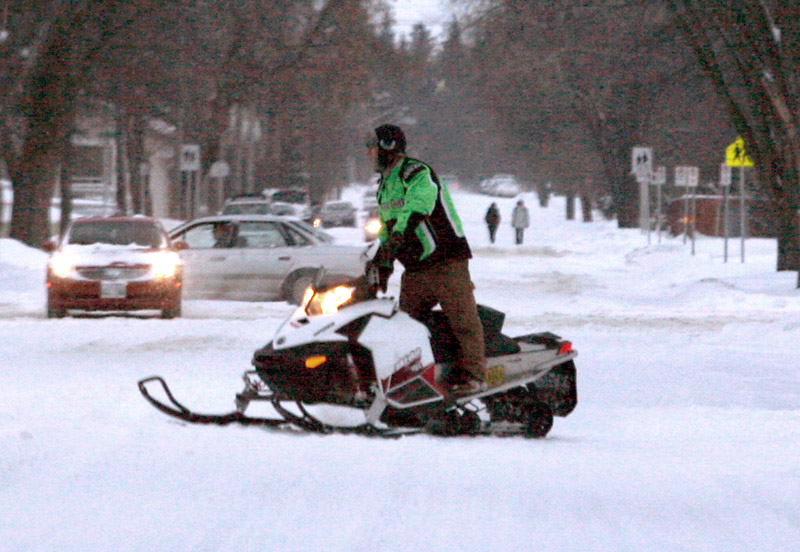
The suspect, identified as a man who was already the subject of a warrant for firearms-related charges, managed to evade police throughout an “extensive” area, until he was arrested around 3:45 p.m.
The 40-year-old was taken into custody and faces charges of failing to comply with conditions of a release order, three counts of property obtained by crime over $5,000, and fleeing while pursued by a peace officer.

T.A.M.I. Show is a 1964 concert film released by American International Pictures. It includes performances by numerous popular rock and roll and R&B musicians from the United States and England. The concert was held at the Santa Monica Civic Auditorium on October 28 and 29, 1964. Free tickets were distributed to local high school students. The acronym “T.A.M.I.” was used inconsistently in the show’s publicity to mean both “Teenage Awards Music International” and “Teen Age Music International”.
 The MarkoZen Blog