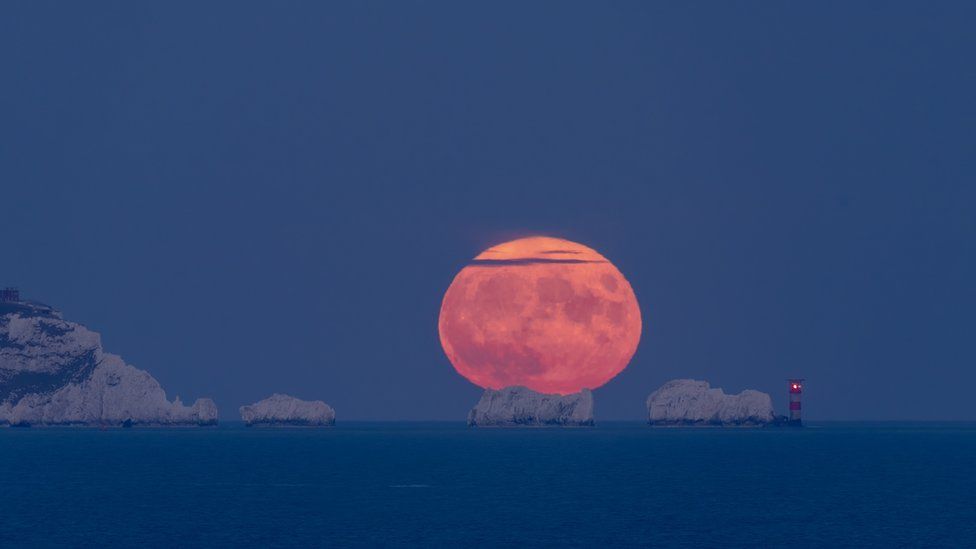
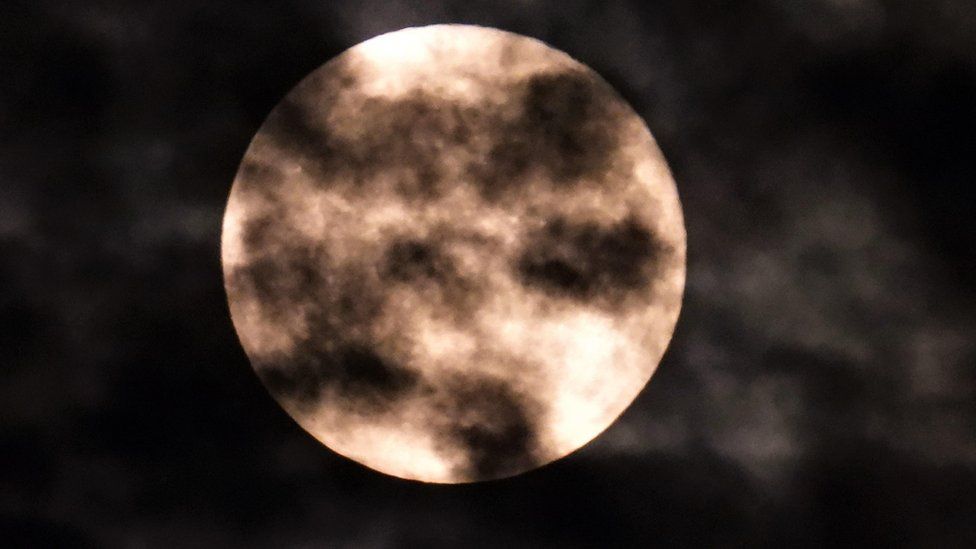
Image caption,Graham Wiffen captured this picture of the moon over The Needles on the Isle of Wight
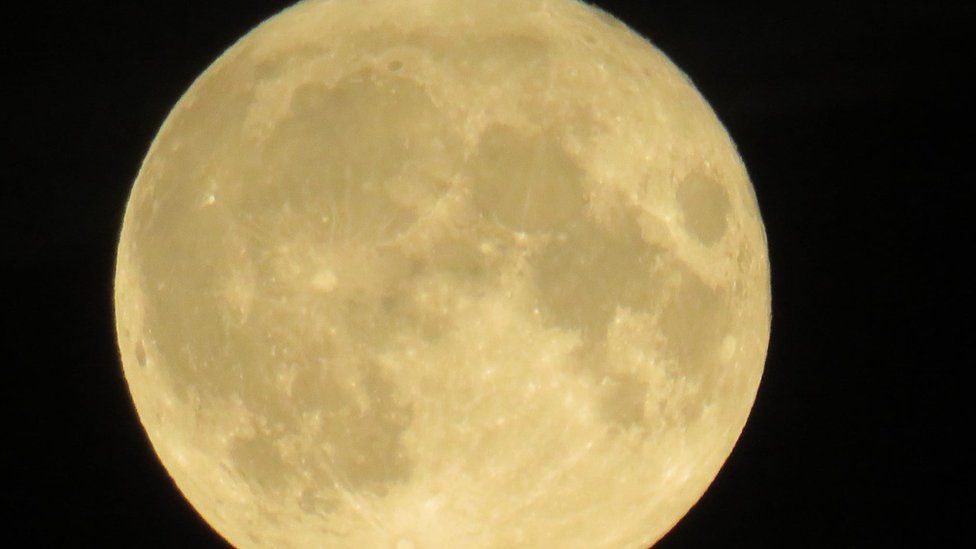
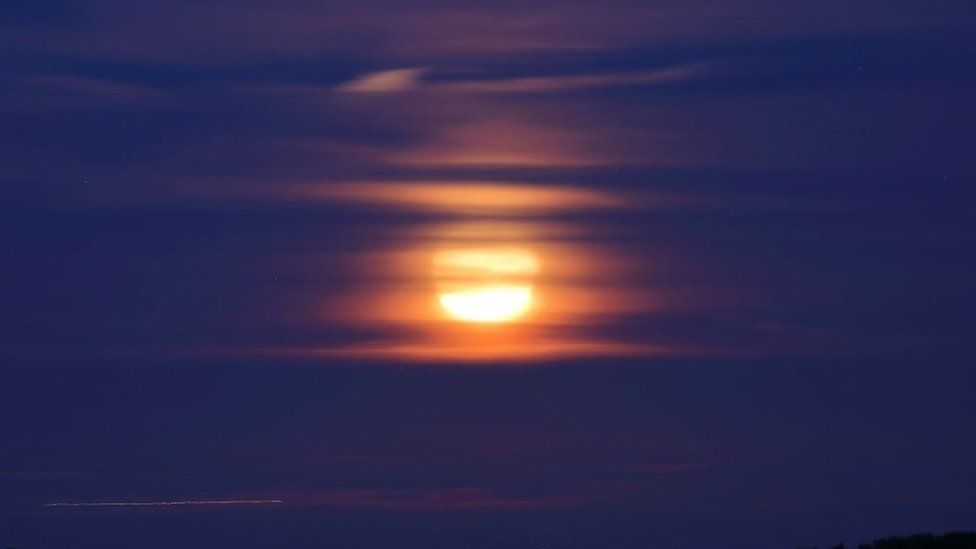
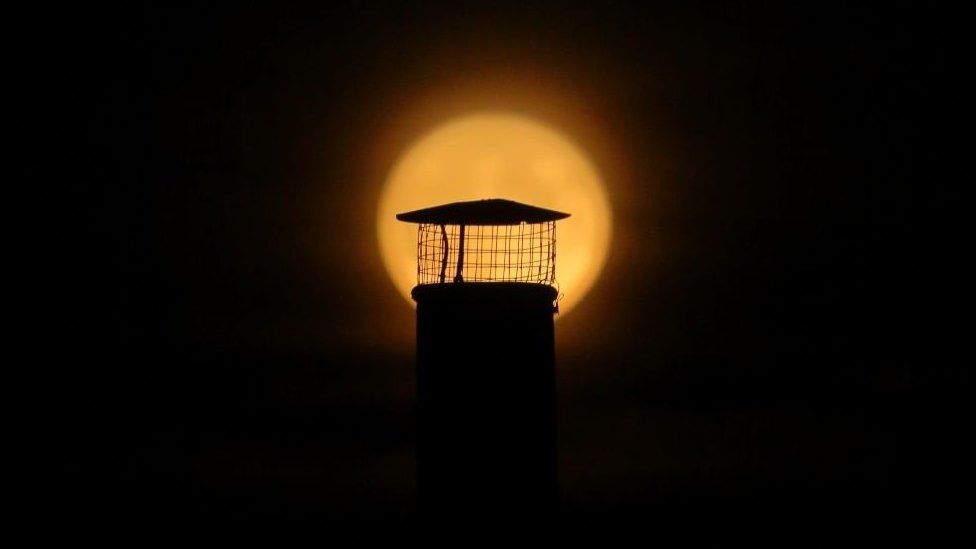
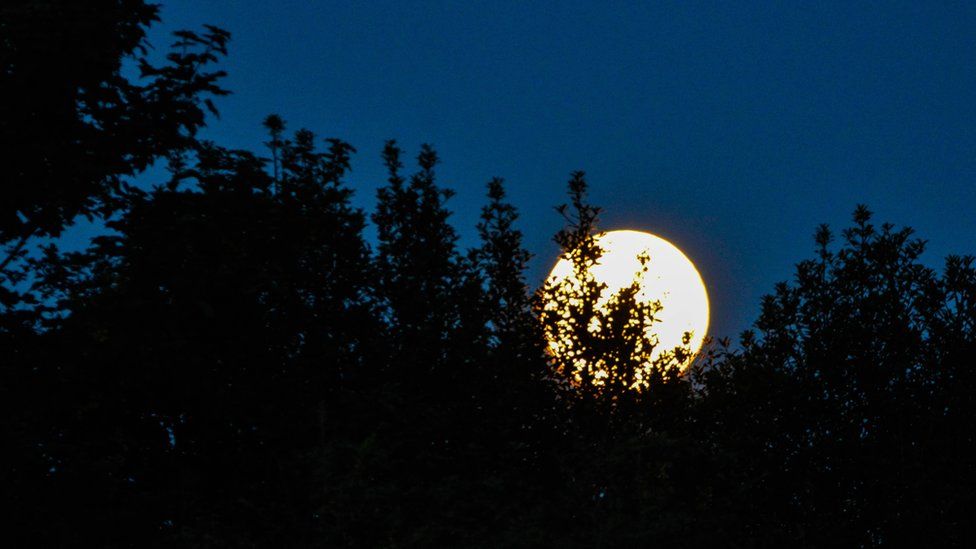
What is believed to be the biggest and brightest Moon of the year has been lighting up the sky in England.
July’s full moon – the Buck Moon – was most visible on Wednesday evening.
It was the second supermoon of the year and looked bigger than normal as the Moon is currently closer to the Earth than usual.
Citing the Maine Farmer’s Almanac, Nasa said it was referred to as the “Buck Moon” by the Algonquin Native Americans of what is now the north-east United States. This is because it appears when new antlers tend to appear on buck deer.
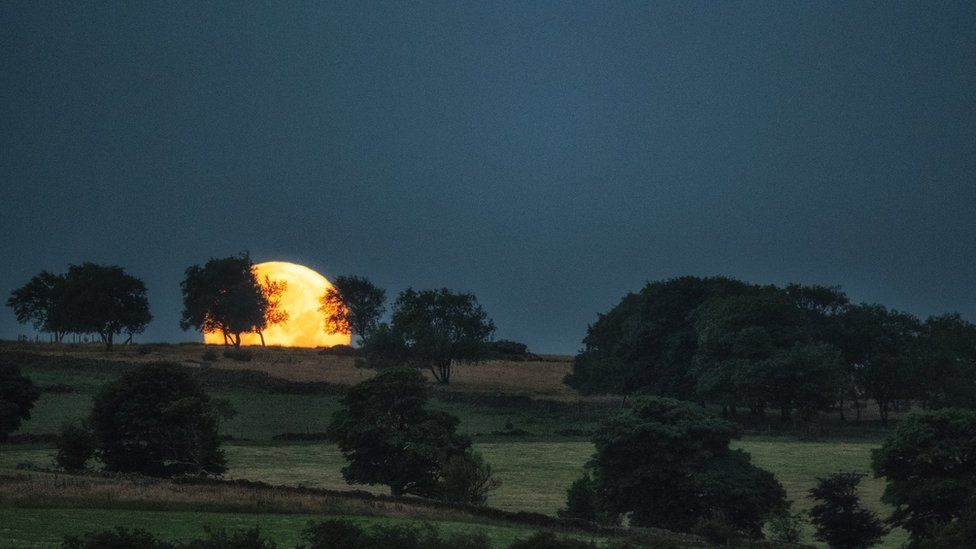
Image caption,The Buck Moon was captured by local resident Jim in Beeley Moor, DerbyshireImage caption,Andy Johson in Burbage, Leicestershire, grabbed a close-up viewImage caption,Chris Cookman took this picture in Matlock, DerbyshireImage caption,Another picture of the supermoon in Matlock taken by Chris CookmanImage caption,Hiding behind the trees, this picture of the moon was captured in Ripley, DerbyshireImage caption,A close-up taken by Maggie T Howlett in East Leake, Nottinghamshire
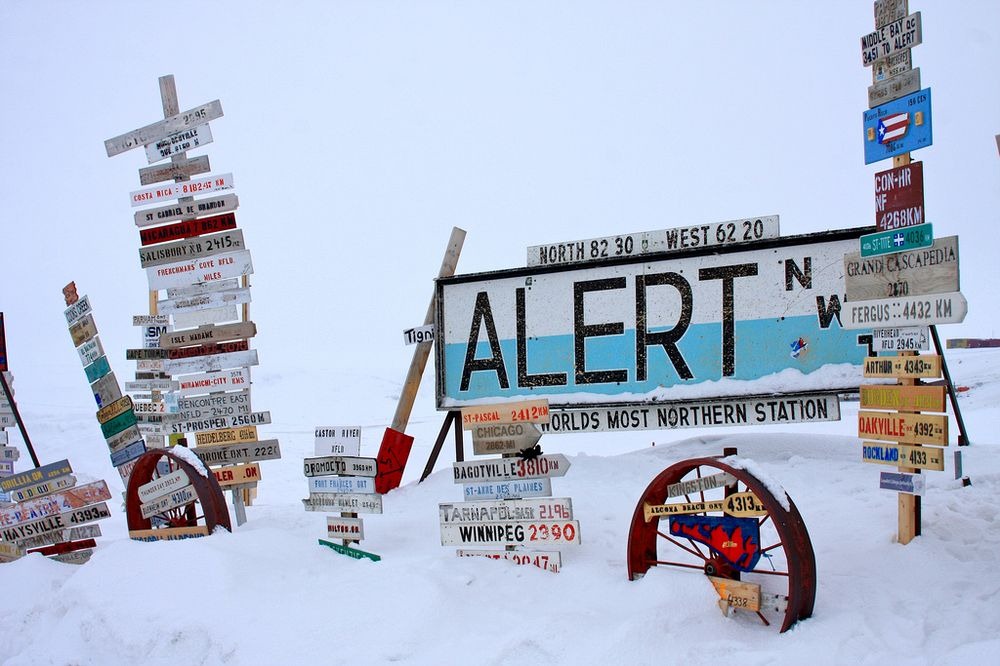
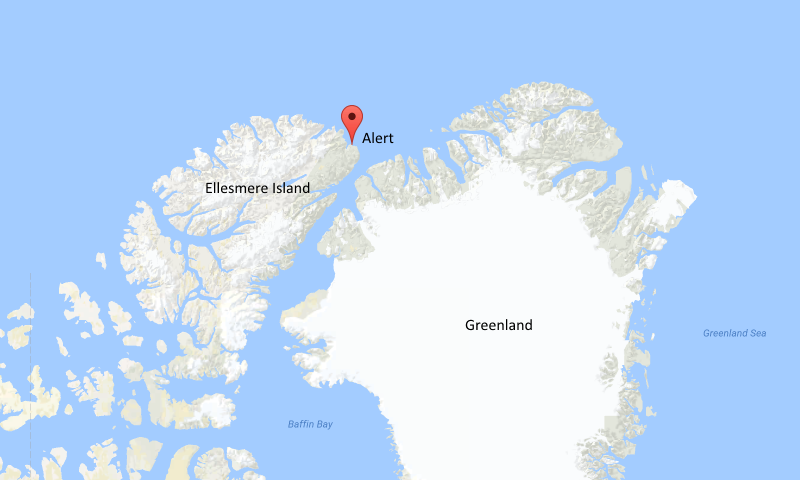
Located just over eight hundred kilometers away from the North Pole, the community of Alert, on the northeastern tip of Ellesmere Island, in Nunavut, Canada, is the most northerly permanent settlement in the world. The nearest populated place is another 540 kilometers south, in Greenland, while the nearest Canadian city is over two thousand kilometers away. The place is so close to the North Pole that it can’t connect with communication satellites because their orbit lies below the horizon.
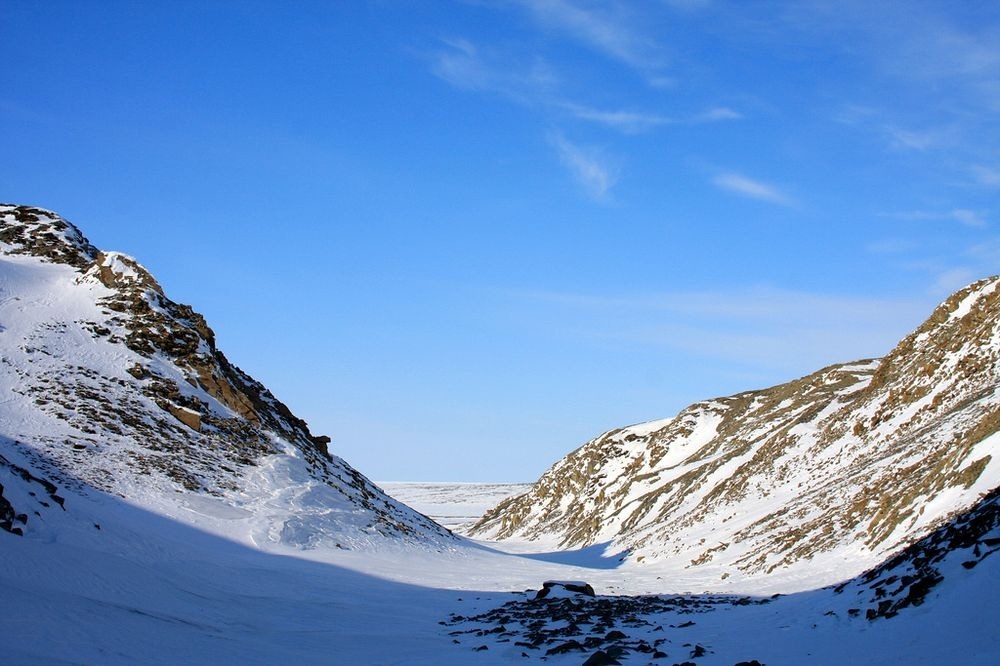
For four months, Alert exist in total darkness. For another four months, the sun never leaves the sky, but rising no more than 30 degrees above the horizon at noon. The land remains frozen and snow covered for almost ten months of the year. Winters are harsh and cold with temperatures regularly dropping thirty degrees below zero. Peak summer temperatures are just a couple of degrees above freezing.
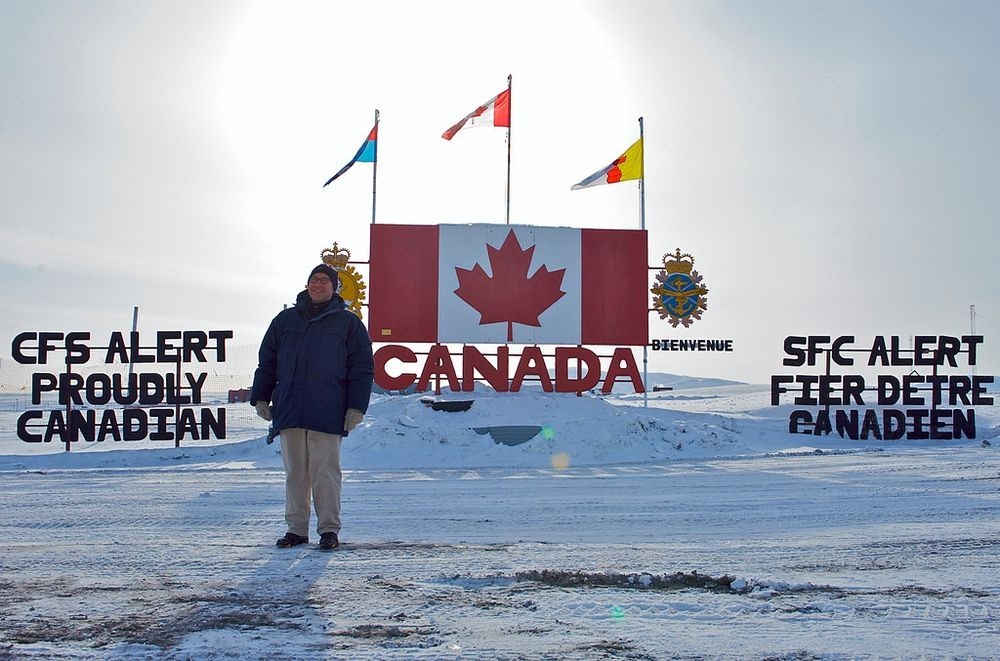
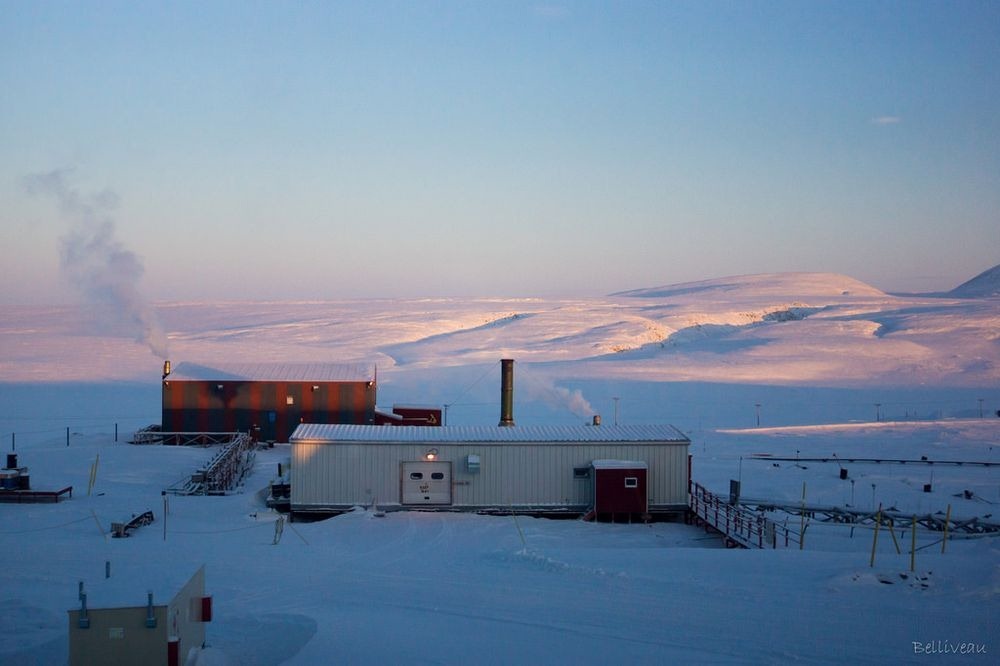
At any time in this godforsaken place, you’ll find several dozen people living. Thankfully, Alert is not their permanent home; they are merely here on work. These cold and miserable people, nicknamed “The Frozen Chosen”, include members of the Canadian Armed Forces —which maintains a signals intelligence intercept facility called CFS Alert— and scientific personnel working at the two research facilities here —the Environment Canada weather station and a Global Atmosphere Watch (GAW) atmosphere monitoring observatory.
In July 2019, during a global heat wave Alert recorded the highest ever temperature—an unprecedented 21 degrees Celsius, about 14 degrees higher than normal.
The community of Alert is named after HMS Alert, a British ship which set up camp near Alert in the winters of 1875–76. The ship’s captain, George Nares, and his crew were the first recorded people to reach the northern end of Ellesmere Island.
The weather station was established here in 1950. The military station came eight years later. During the Cold War, Alert was strategically important because it was the only point in North America that was closest to the northwestern area of the Soviet Union. In fact, Alert is closer to Moscow (2,500 miles or 4,000 km) than it is to Ottawa (2,580 miles or 4,150 km). Alert’s proximity to the Soviet Union allowed the US-Canada-UK-Australia-New Zealand intelligence sharing alliance, also known as the Five Eyes, to eavesdrop on the Russian communication network. The station soon became a key asset in the global ECHELON network.
At its peak, CFS Alert had upwards of 215 personnel posted at any one time. But after budget cuts in the 1990s, CFS Alert was downsized to approximately 74 personnel, but during summers, its population can rise to over hundred.
A Sun newspaper article dated November 14, 2004, provides readers with a glimpse of life at Alert:
The soldiers, a lot of them volunteers, serve six month postings — divided by a three week vacation. Today, the food is as good as it ever was. TV’s in various rooms show four channels of live television and another four of movies, played from the stations stock of 4,500 video and DVDs. Listening to the base’s CHAR-FM 105.9 trivia shows are another popular pastime. Much of the station is devoted to recreation, with two gyms, a darkroom, a bowling alley and a theatre. Evenings are filled with activities — multi-player computer games, woodworking, bingo, euchre and trivia. Most personnel volunteer to come here. Like a crew inside a submarine, the isolation and uniqueness of Alert pull people together and drive others apart — earning them all the 50-year-old nickname of ‘The Frozen Chosen.”.
The only way to transport anything here is by air. Every year, the RCAF makes about 225 Hercules flights to Alert to bring in around two million litres of fuel and 300 tonnes of cargo. In addition to the weekly flights, supplies are shuttled in twice a year in massive operations involving dozens of flights to and from the nearest deep-water port, Thule, Greenland. The problem is, much of the time Canada’s Hercules C-130 aircraft aren’t flying. The resupply flights are routinely delayed 24 hours or cancelled altogether when planes are grounded by mechanical problems or diverted elsewhere by military priority.
Military physicians note most people gain weight after arriving. Those who aren’t able to deal with the remoteness are weeded out before they touch down on the gravel and snow runway. “It’s great to be here, but you must keep yourself busy all the time,” says Station Warrant Officer Serge Oullet in 2004. “We try to get people to socialize with each other in off hours.”
United States Ambassador Jacobson in front of CSB Alert welcome sign.
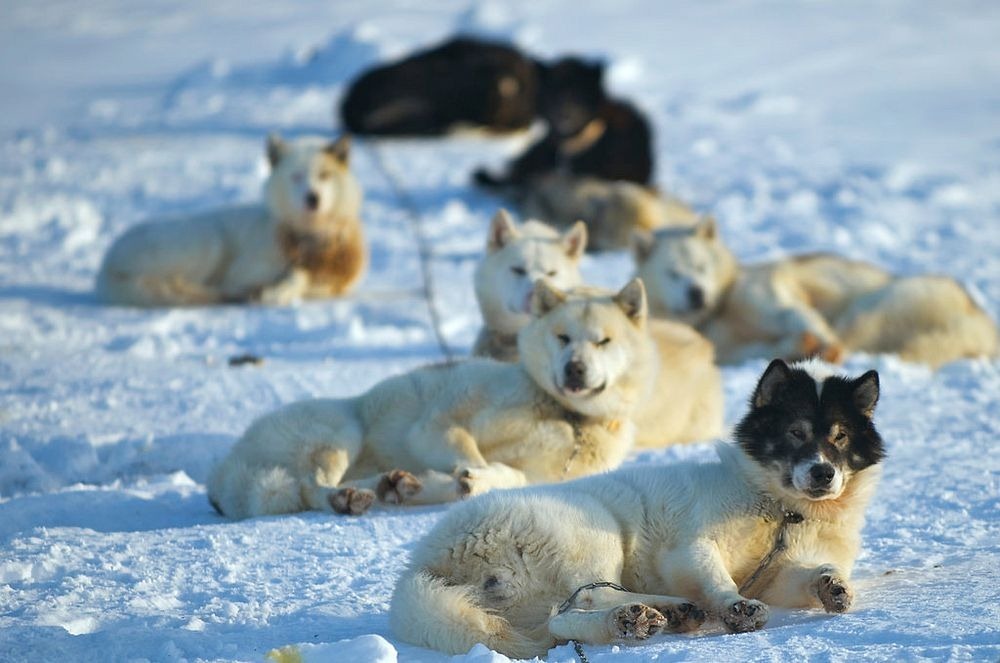
Danish sled dogs in Alert, Nunavut.
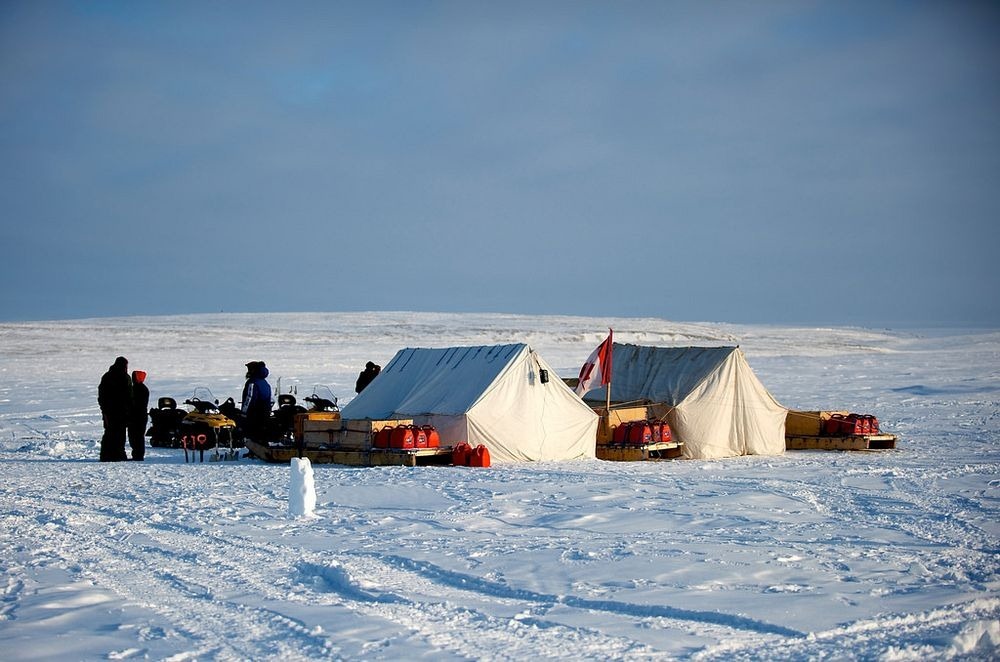
Canadian Rangers training camp near CSB Alert, Nunavuk.
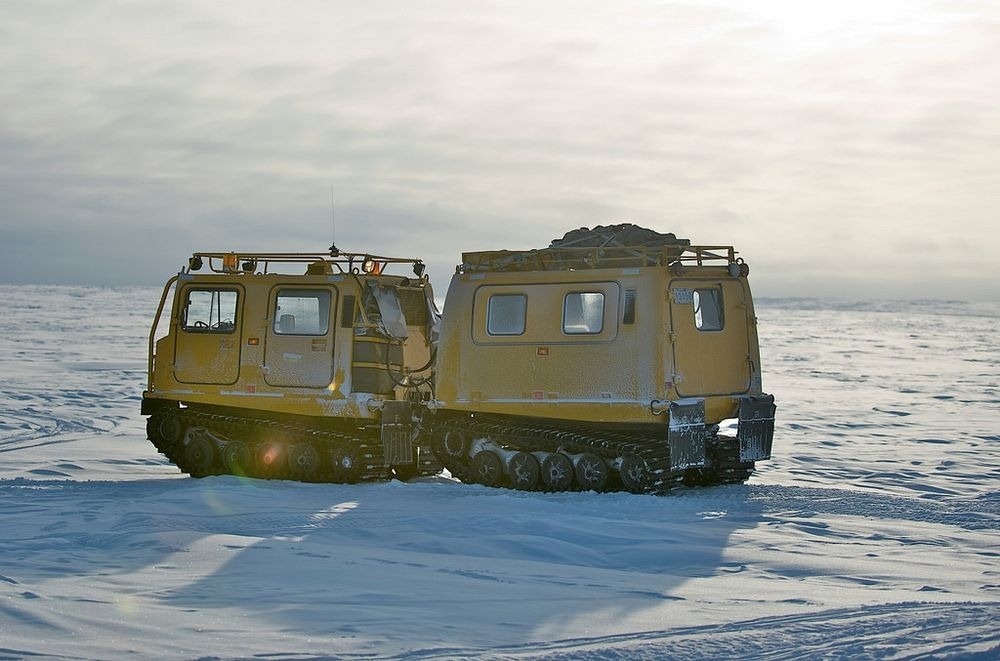
Snow transport in Alert, Nunavut.
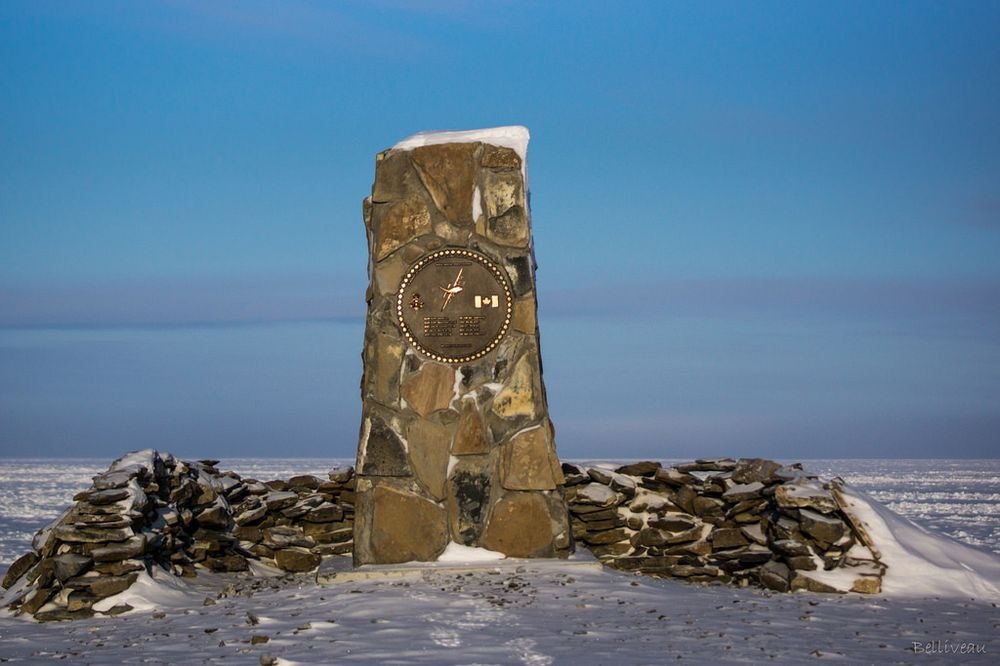
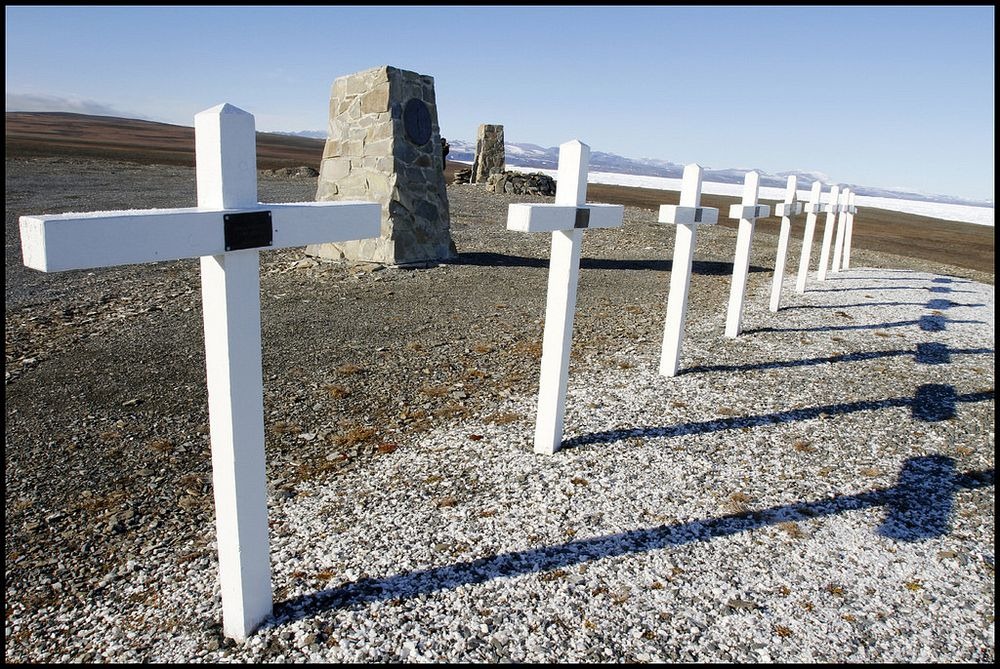
A memorial commemorating the men who died in a 1950 plane crash in Alert.
The graves of the crew who died in the 1950 crash remains buried at Alert.
The wreckage of an airplane. There were actually three crashes on Alert. The photographer doesn’t mention to which crash this wreckage belongs to.
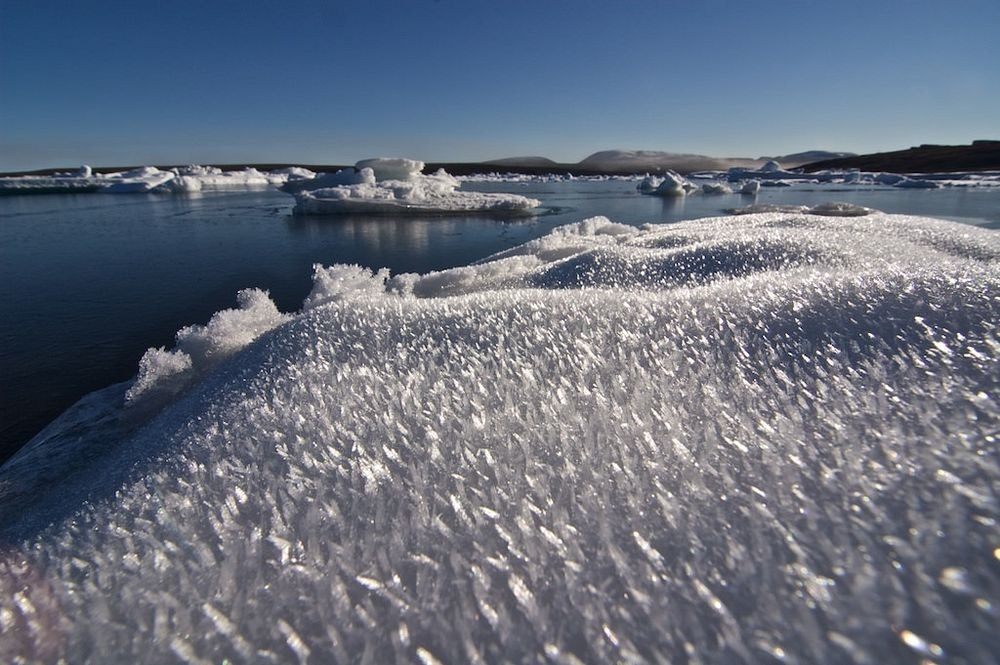
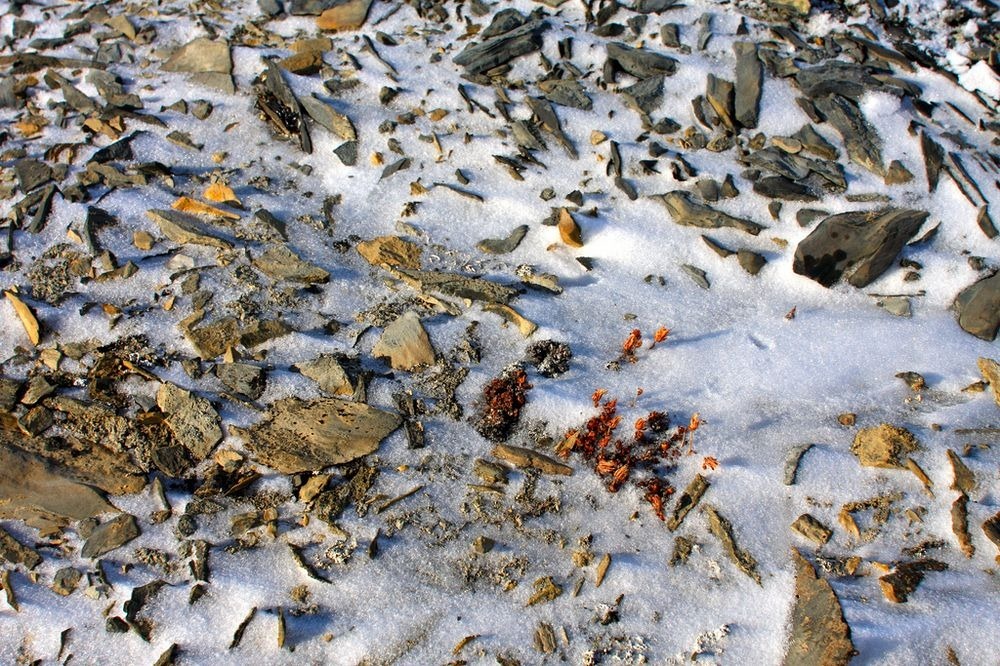
Ice crystals.
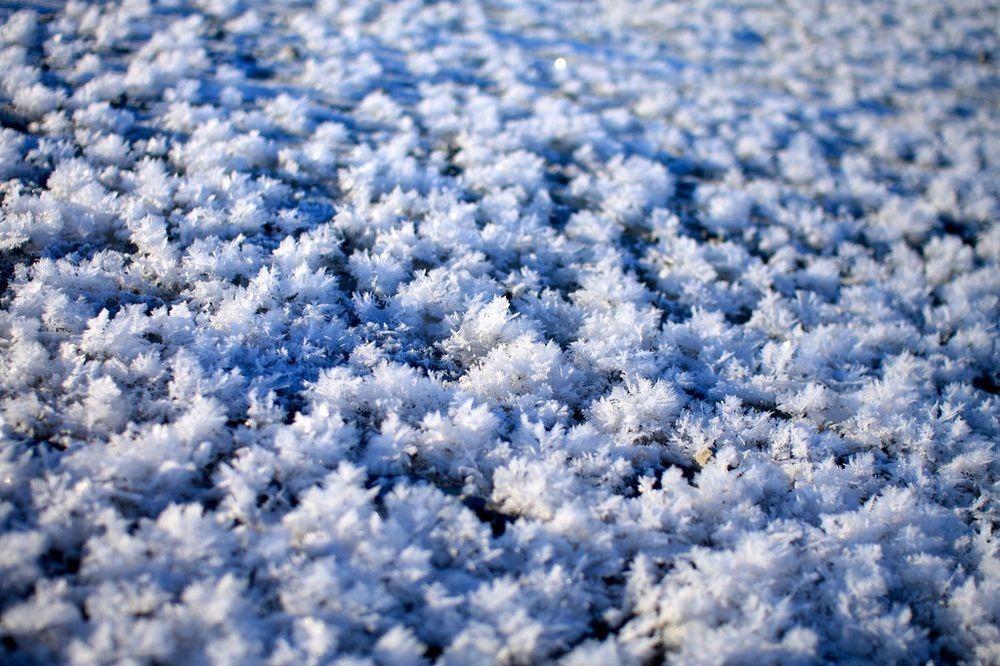
Frost flowers.
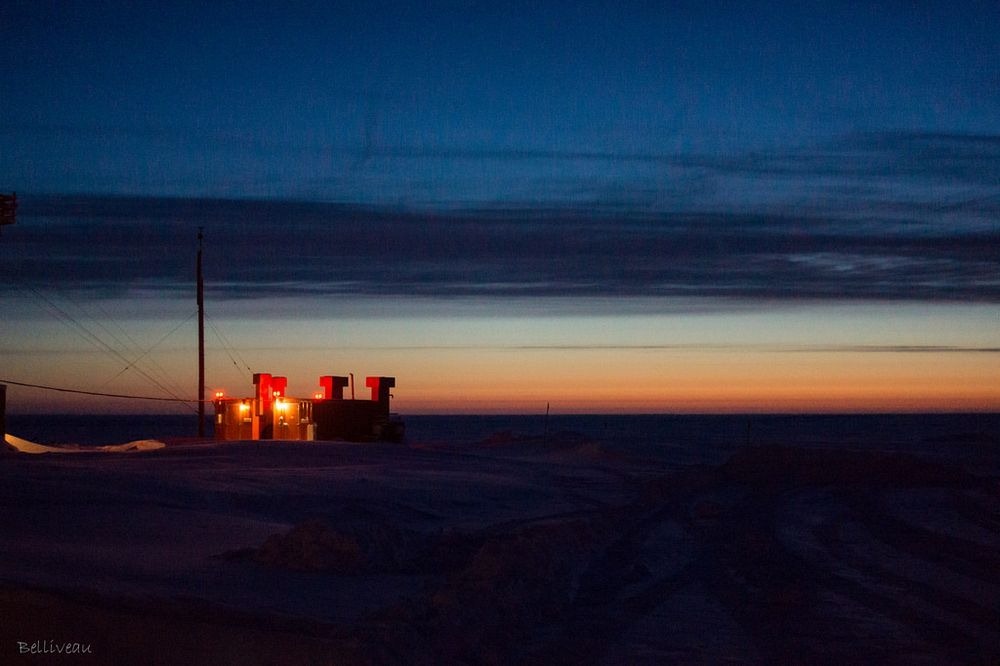
Sun rise at 2am.
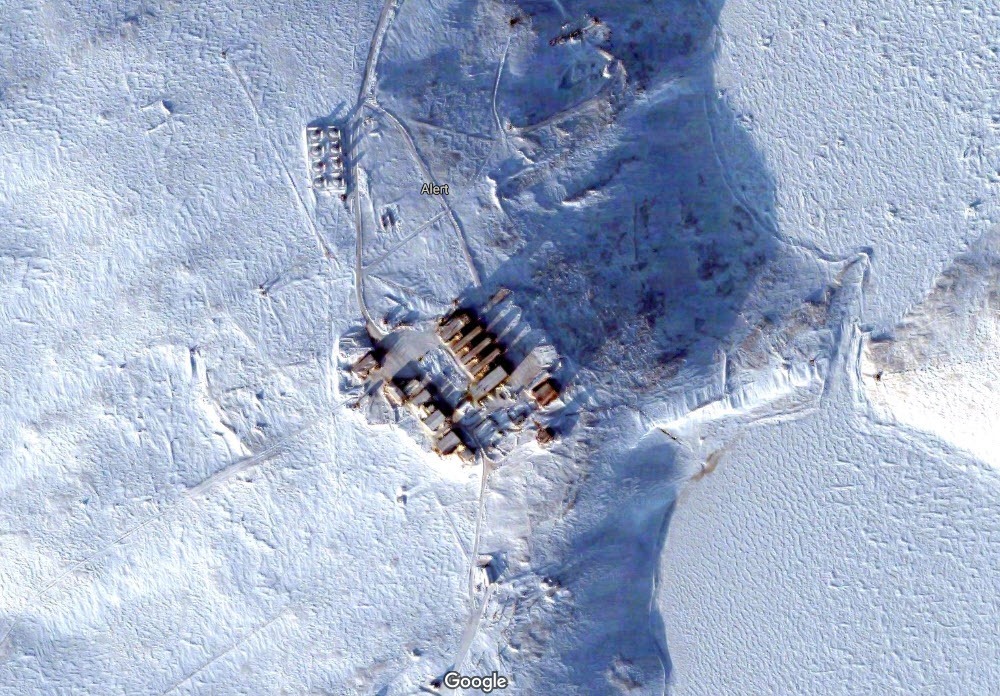
Satellite photo of Alert. Photo credit: Google Maps
At any given time there are roughly 60-80 personnel at the base. This includes military and contractors.
C-17 resupply aircraft landing at Alert.
Some signals intelligence spy equipment.
Mr. Yves Gauthier guides Master Corporal Marty Stride and Corporal Graeme Ross (CFS LEITRIM) through the maintenance program on one of the High Arctic Data Communication Systems Line of Sight Systems (HADCS LOS) Sites. (lt (N) clayton erickson, joint task force north, dnd)
A priest in Nigeria claims that the Virgin Mary recently appeared at his church and over 100 parishioners were on hand to witness the miraculous event. The peculiar incident reportedly occurred at the St Charles Lwanga Catholic Church in the city of Calabar last month and was revealed to the world shorty thereafter by Fr. Evaristus Bassey, who heads the parish, on his Twitter account. In detailing the wondrous event, he asserted that more than 100 people witnessed the visitation, including “a Protestant pastor who came to visit his cousin, the assistant priest.” After first appearing at the church, Bassey recalled, “she moved up to the Shrine dedicated to her and then was taken up. It was amazing.”
Along with his recounting of the visitation, the priest also including several photos (which can be seen in the video above) of what he contends to be the Virgin Mary, though conceded that “the rays around her were too bright for a clear picture.” According to Bassey, there was no message imparted during the visit, which led him to theorize that “she came to assure” the congregation “of God’s presence with us.” A few days after sharing the amazing account, the priest provided an update to the story by way of insights from interviews that he conducted with some of the witnesses to the event, including the first individual who allegedly saw the Virgin Mary appear in the sky that day.
Saviour Asuquo told Bassey that his attention was initially drawn to a rainbow on the horizon that was so vivid that it “made him wonder what was up.” Before he had much time to ponder that question, he noticed “a beam of light that came from the sky” and fell onto a spot in the church parking lot. When Asuquo looked back at where the rainbow had been, he saw “the figure of the Blessed Virgin Mary emerging” from that area and coming closer towards him. According to Bassey, “he saw very clearly a woman wearing a blinking crown and a rosary with lights blinking as well, and that all around her was light.”
Looking over at a statue of the Virgin Mary, Asuquo marveled that “it did not in any way match the beauty of the woman,” who proceeded to smile at him. The apparition then merged with the beam of light on the ground and illuminated the entire area, which led to the entire congregation coming out of the church to see what had caused the curious event. Another witness that Bassey spoke to was a young woman who insisted that “I saw the apparition very clearly” and, despite being doubted by her friends and family, was adamant that “I know what I saw.” This was echoed by yet another observer, who told the priest “this wasn’t a matter of seeing only the brightness of the sun, I saw her very clearly with my own eyes.”
Alas, despite there being so many witnesses to the event, the handful of pictures from the visitation only show a glowing anomaly in the sky that seems to be in the shape of a figure. Responding to those who wondered why there were no videos from the incident, Bassey amusingly argued that “maybe they think it is like the visit of a celebrity, where you have time to take all the selfies you want.” On the contrary, he said, “a supernatural event such as this fills you with a certain awe that you don’t even think about reaching to your phone.” He concluded the account by noting that some parishioners hope that the Virgin Mary will return with a message, but the priest mused that he is content with “the fact that she came with a smile,” which he believes “is a positive indication.”
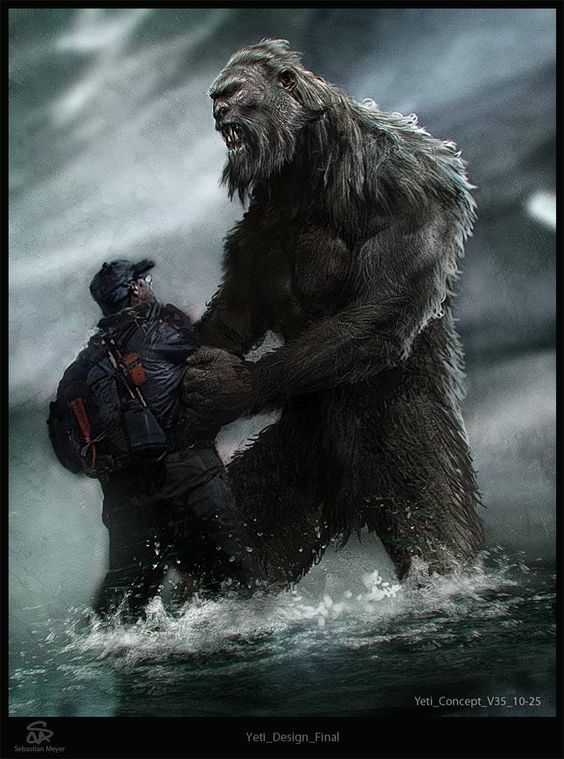
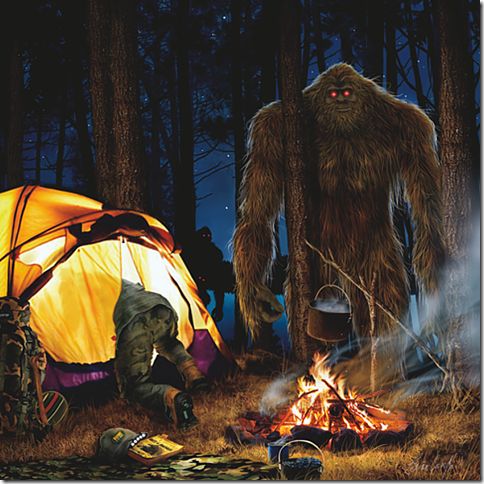
In a bizarre story out of Oklahoma, a man arrested for allegedly killing his friend during a fishing trip told police that the deadly incident came about in response to his companion summoning Bigfoot to attack him! According to a local media report, the very weird case occurred this past Saturday afternoon near the city of Ada as Larry Sanders and Jimmy Knighten were attempting to catch catfish in the South Canadian River by way of their bare hands using a technique known as ‘noodling.’ However, their day took a dark turn when the two fishing buddies got into a disagreement which ultimately left Knighten dead and Sanders pointing the finger at Sasquatch.
Responding to a report of a homicide that had unfolded at the river, police say that they arrived to find Sanders recounting his role in Knighten’s death to a family member. Upon being questioned by deputies at the scene, the noodler confessed to killing his friend by first striking him and then strangling him. As for why he did it, Sanders shockingly explained that “Knighten had summoned Bigfoot to come and kill him” and, in order to save his own life, the man concluded that he had to silence his companion before the proverbial call to action reached the hirsute ears of Sasquatch. In what might be the least surprising aspect of the case, police also observed that Sanders “appeared to be under the influence of something.”
While the misguided measure of self defense appears to have worked, since he was not killed by Bigfoot, Sanders was subsequently arrested for Knighton’s murder after police recovered the downed noodler’s body from the river the following day. Musing that the man’s forthcoming nature “makes it easier” to prosecute the case, Sheriff John Christian indicated that “you still have to prove all the elements of the crime, and that what the suspect is telling you is actually what happened.” Since it is unlikely that Sanders will be able to find Bigfoot to testify on his behalf, he’s likely facing an uphill legal battle in which, if he is found guilty, could ironically culminate with him facing the death penalty for the Sasquach-inspired slaying.



























 The MarkoZen Blog