










A bear cub in Turkey needed a helping hand after it managed to get its paws on some hallucinogenic honey that left the creature wandering around a forest in a daze. The weird incident reportedly occurred on Thursday in the country’s Duzce province when the creature somehow found a reserve of what is known as ‘deli bal’ or ‘mad honey.’ The substance, which is largely only produced in this particular region of the world as well as in the Himalayas, is derived from the honey produced by bees that have pollinated indigenous rhododendrons which possess a neurotoxin known as grayanotoxin.
While something of a traditional medicinal treatment for a variety of ailments, just a small dose of ‘mad honey’ can produce hallucinations and a feeling of euphoria in mammals. In this particular instance, it is believed that the bear cub consumed a fairly significant amount of the substance as it was found barely able to walk and seemingly in distress. Fortunately, upon being discovered stumbling around the forest, the intoxicated creature was loaded into the back of a truck and taken to a nearby vet, where is subsequently ‘slept off’ its stupor. Authorities say that the bear cub should be released back into the wild soon with what one imagines is a monstrous hangover.
Gordie Johnson shreds on the Canadian National Anthem Dec 27, 2022 in Winnipeg.
The rendition was different, but interesting. It’s the looks on the faces of the fans and especially the players that is amusing. They don’t seem to know what to make of it.
Sort of reminds me of the Jimi Hendrix rendition of the Star Spangled Banner at Woodstock.
This sculpture is supposedly made from used auto parts.

A sports pundit at the World Junior Hockey Tournament made a list of the strangest names at the tournament. They are pretty interesting.

The flags by country: top to bottom, United States, Czechia, Austria, Finland, Latvia and Germany.
The area of Winnipeg known as the North End has a distinct character all its own. Today it is mainly known for its violence and large distinct cultural groups. Over the past few decades a large Aboriginal population has been established. But going back to the late 1800’s and early 1900’s the North End was home to large Eastern European groups. And it is still this way today.
Many people of Polish, Ukrainian, Jewish and German heritage settled in the North End. Winnipeg was becoming an industrial city 100 years ago and many of the previously mentioned groups worked in the blue collar labour force. Wages weren’t high back then and therefore workers could not afford the large houses that were being built in the southern part of the city. So the people built smaller houses in the North End on streets such as Redwood, Boyd and Flora. Many were built from 1905-1920. And most are still in use today. Some are no more than 440 square feet. The same size as a small apartment. But at least the hard working North Enders could be proud of owning their own houses.♦

————————————————

——————————————————

—————————————


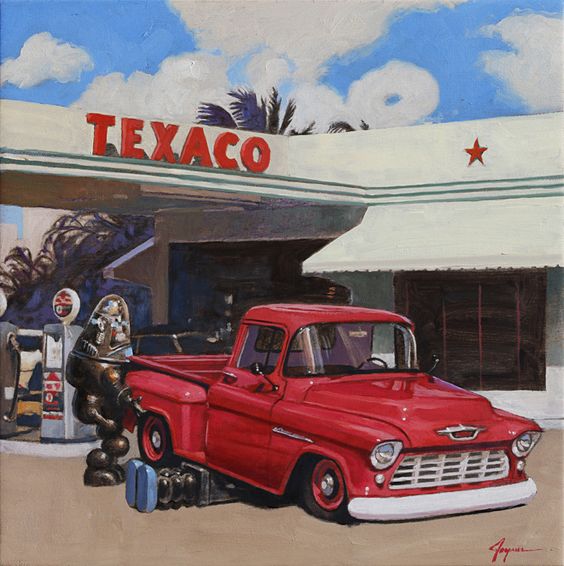
Eric Joyner (born c. 1960) is a contemporary American artist whose body of work has focused on robots and donuts.


In 1999, he chose to focus only on topics that he likes. He started painting with four different elements: Mexican masks, San Francisco city life, old newspaper cartoons and Japanese robots. He found that the robots were the most popular feature with his friends. He had been collecting toy robots for about 20 years and wanted to bring them to life. In 2002, he felt that he needed another element to work off of. Inspired by the film Pleasantville, in which Jeff Daniels paints donuts, Joyner added donuts. The donuts have been featured as both objects of desire and adversaries to the robots.


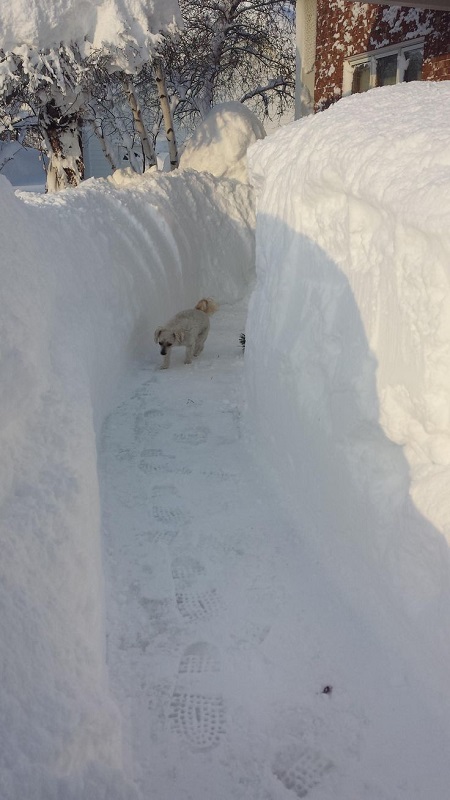
Buffalo, New York, where 43 inches of snow fell as of Sunday morning, according to the National Weather Service. The snowfall and blizzard conditions made roads impassable, froze power substations and left more than a dozen people dead, Erie County officials said.

Dec 25 (Reuters) – A lethal blizzard paralyzed Buffalo, New York, on Christmas Day, trapping motorists and rescue workers in their vehicles, leaving thousands of homes without power and raising the death toll from storms that have chilled much of the United States for days.
At least 30 people have died in U.S. weather-related incidents, according to an NBC News tally, since a deep freeze gripped most of the nation, coupled with snow, ice and howling winds from a sprawling storm that roared out of the Great Lakes region on Friday.

Much of the loss of life has centered in and around Buffalo at the edge of Lake Erie in western New York, as numbing cold and heavy “lake-effect” snow – the result of frigid air moving over warmer lake waters – persisted through the holiday weekend.
Erie County Executive Mark Poloncarz said the storm’s confirmed death toll climbed to 13 on Sunday, up from three reported overnight in the Buffalo region. The latest victims included some found in cars and some in snow banks, Poloncarz said, adding that the death tally would likely rise further.
New York Governor Kathy Hochul called it an “epic, once-in-a-lifetime” weather disaster that ranked as the fiercest winter storm to hit the greater Buffalo area since a crippling 1977 blizzard that killed nearly 30 people.
“We have now surpassed the scale of that storm, in its intensity, the longevity, the ferocity of its winds,” Hochul told an evening news conference, adding that the current storm would likely to go down in history as “the blizzard of ’22.”
Christina Klaffka, 39, a North Buffalo resident, watched the shingles blow off her neighbor’s home and listened to her windows rattle from “hurricane-like winds.” She lost power along with her whole neighborhood on Saturday evening, and was still without electricity on Sunday morning.
“My TV kept flickering while I was trying to watch the Buffalo Bills and Chicago Bears game. I lost power shortly after the 3rd quarter,” she said.
John Burns, 58, a retiree in North Buffalo, said he and his family were trapped in their house for 36 hours by the storm and extreme cold that he called “mean and nasty.”

Redwood tree in California

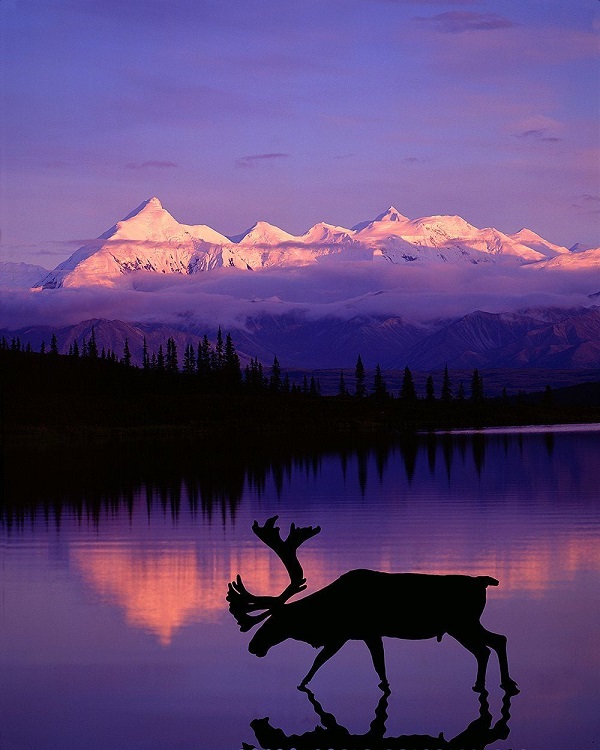
Denali National Park, Alaska
Granada, Spain

Climbing up Everest

Supercell thunderstorm West Texas

Supercell Kansas

Iceberg Alley, Twillingate, Newfoundland

Frosted up Bison, Yellowstone

Kyiv, Ukraine

 The MarkoZen Blog