
Buildings
Living in the Clouds of Ostentatious Luxury

432 Park Avenue is a residential skyscraper in Manhattan, New York City that overlooks Central Park. Originally proposed to be 1,300 feet (396.2 meters) in 2011, the structure topped out at 1,396 ft (425.5 m). It was developed by CIM Group and features 104 condominium apartments. Construction began in 2012 and was completed on December 23, 2015.
The building required the demolition of the 495-room Drake Hotel. Built in 1926, it was purchased for $440 million in 2006 by developer Harry Macklowe and razed the next year. Its footprint became one of New York’s most valuable development sites due to its location, between East 56th and 57th Streets on the west side of Park Avenue.
As completed, 432 Park Avenue is the third tallest building in the United States, and the tallest residential building in the world. It is the second-tallest building in New York City, behind One World Trade Center, and ahead of the Empire State Building.

The floor-to-floor height of each of the 85 stories is 15 ft 6 in (4.72 m), with 10 in (25 cm) thick floor slabs, although to dampen the acceleration from wind loads, upper floors have slabs up to 18 in (46 cm) thick to add more mass. Also aimed at reducing the potentially uncomfortable effects of swaying due to wind vortex loading on such a flexible tower, the window grid and interior space of 2 floors between every 12 occupied floors are left open to allow the wind to pass through. These floors also contain modularized mechanical services for the six floors above and below to reduce ductwork. In addition two tuned mass dampers are located at the top of the tower and in the outriggers of some of the mechanical floors to help damp the motion.


| Height | |
|---|---|
| Architectural | 1,396 ft (425.5 m) |
| Tip | 1,396 ft (425.5 m) |
| Top floor | 1,286 ft (392.1 m) (occupied) |
| Technical details | |
| Floor count | 96 + 3 below ground |
| Floor area | 412,637 square feet (38,335 m2) |
| Lifts/elevators | 6 |
View of Central Park from the top floor
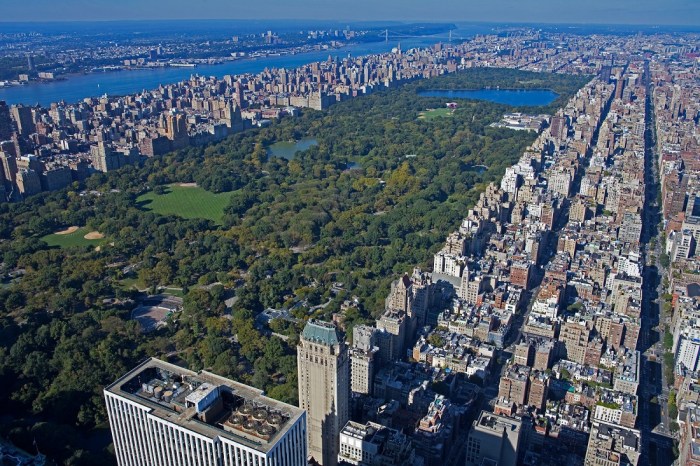
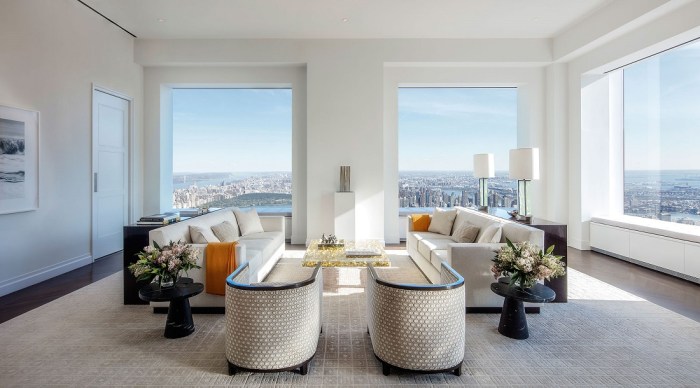
The tower’s condominium units feature high ceilings, and range from a 351-square-foot (32.6 m2) studio to a six-bedroom, seven-bath penthouse with a library, which sold for $95 million to real estate mogul Fawaz Al Hokair. The building’s amenities include 12-foot (3.7 m) golf training facilities and private dining and screening rooms.
The first sale of apartment #35B was reported in January 2016 for $18.116 million, more than the $17.75 million asking price. Ten additional apartments were available at the time ranging from $17.4 to $44.25 million. #35B covers 4,000 square feet (370 m2), one half of the 35th floor of the tower, and contains three bedrooms and four-and-a-half baths. Each face has six 10 by 10 ft (3.0 by 3.0 m) windows, which for #35B, face south and west with views of Central Park.


The multi-millionaires get their way and play high.
You’ll Never Look At Movies The Same Once You See These Miniature Film Sets Used For Blade Runner 2049
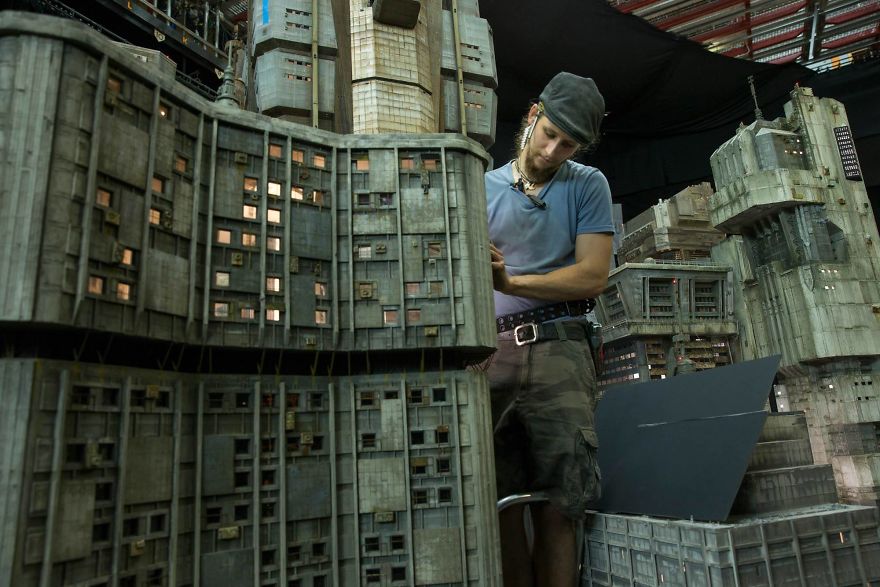
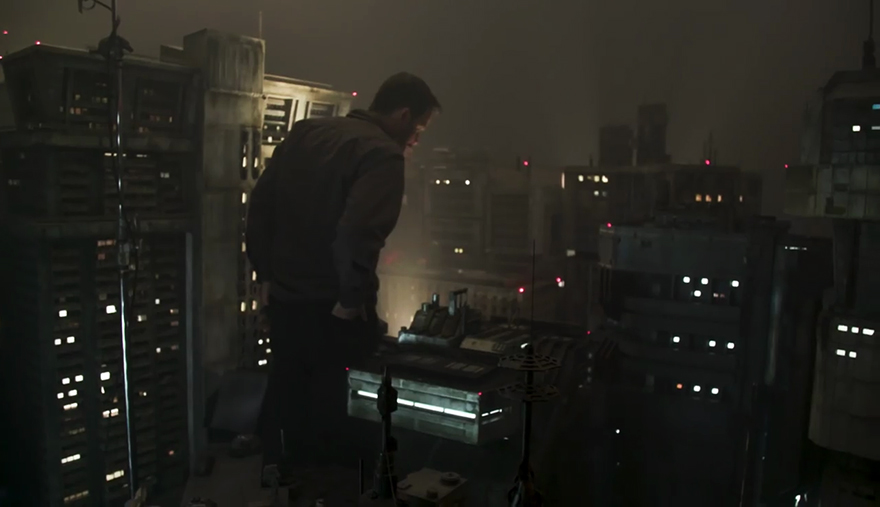
Anybody who’s seen Blade Runner 2049 will know how stunning it is. Even if you didn’t like the movie itself, it’s almost impossible not to gaze in awe at the incredible visuals on offer in Denis Villeneuve’s incredible follow-up to the 1982 classic. What’s even more impressive is that instead of solely relying on CGI for everything, the filmmakers actually used miniature models for many of the scenes. Well, we say “miniature” but as you can see, there’s really nothing miniature about them!
“They’re really bigatures – they’re not miniatures. They’re massive buildings,” says Pamela Harvey-White, the on-set production manager, in the video below. And few people could disagree when they see the 14.8ft (4.5m) high L.A.P.D building, the pyramid-shaped Wallace Towers that could only be lifted by crane, and the Trash Mesa that nearly filled the whole floor of the studio. “They’re just stellar pieces of art,” she states with pride.
The “bigatures” were made by Weta Workshop, a special effects and prop company from New Zealand (co-founded by Lord of the Rings director Peter Jackson) which has also worked on such blockbusters as Thor: Ragnarok and Ghost in the Shell. Around 38 models were made in total, and “each building would probably take about a week to make,” said Ben Milsom, the miniature unit’s senior art director, emphasizing that they were “mega high detailed.” Scroll down to see the incredible results.
Many of the Blade Runner 2049 sets were actually made from miniatures
Well, we say “miniature” but as you can see, there’s really nothing miniature about them!

With the biggest one being the L.A.P.D. miniature skyscraper, which was 14.8 feet (4.5 meters) high
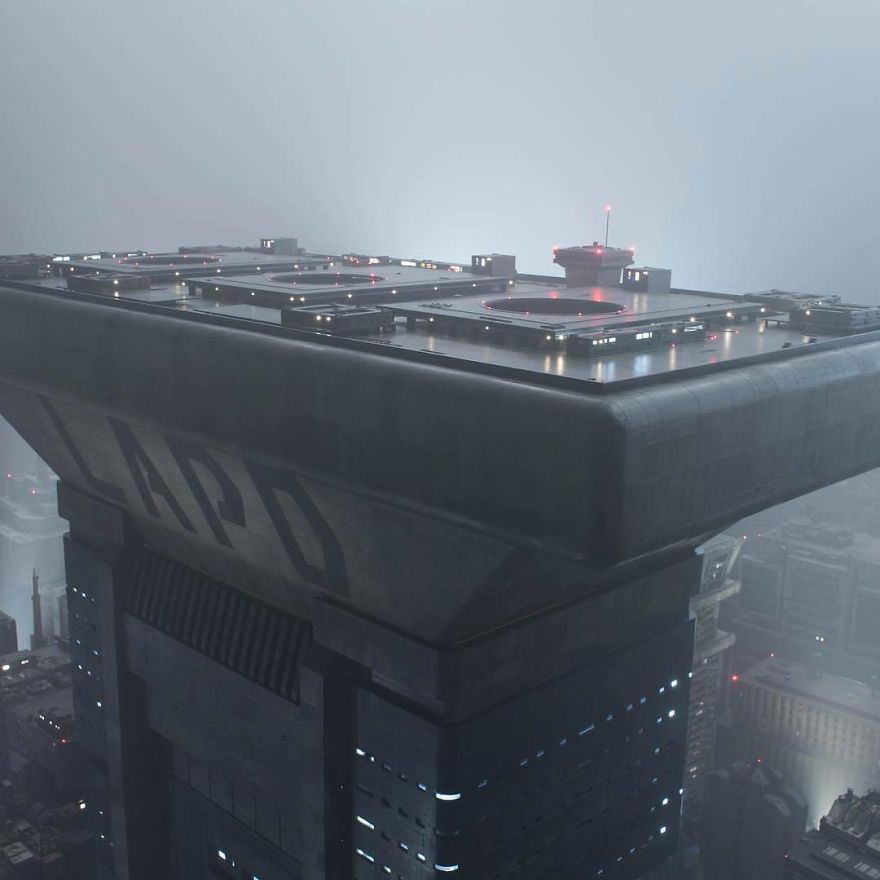
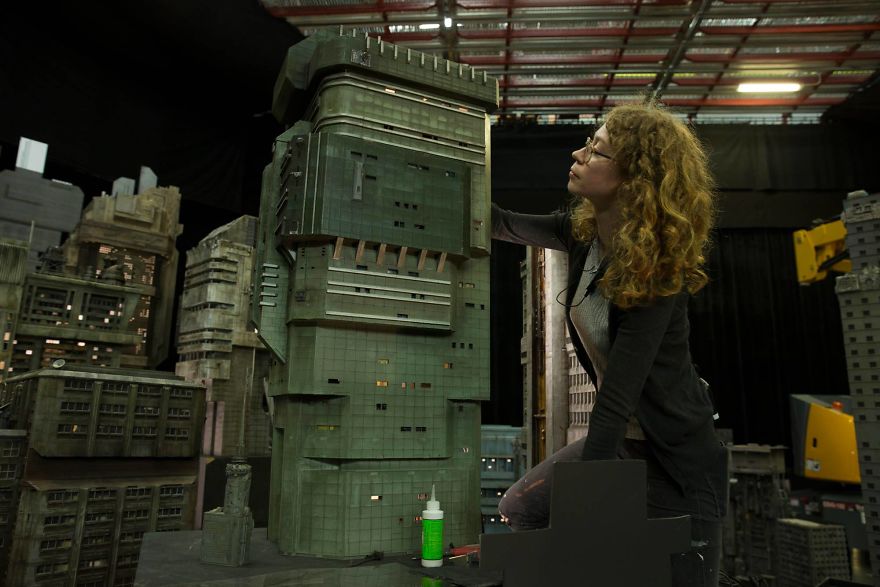
“They’re really bigatures – they’re not miniatures. They’re massive buildings,” says Pamela Harvey-White, the on-set production manager
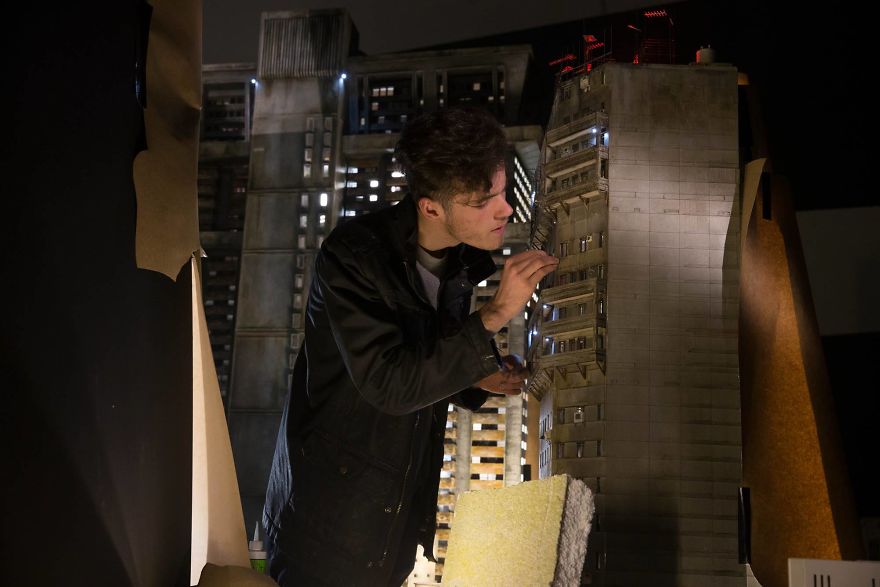
In total, around 38 “miniature” buildings were constructed
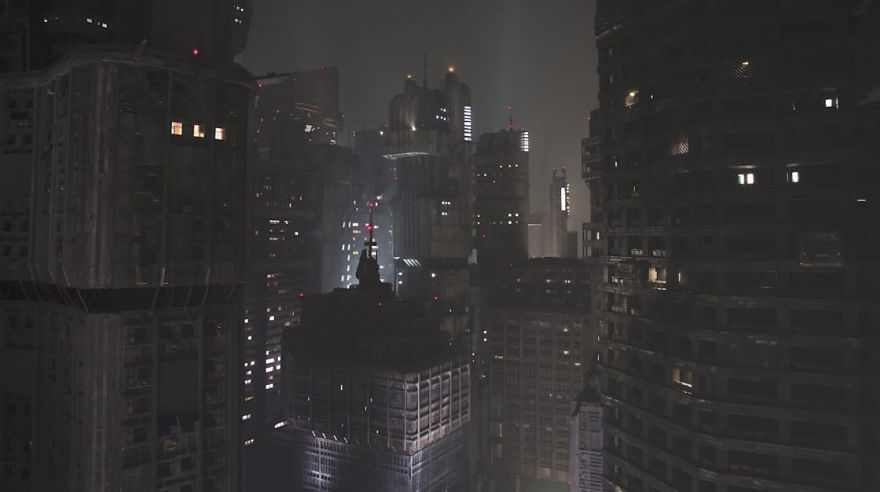
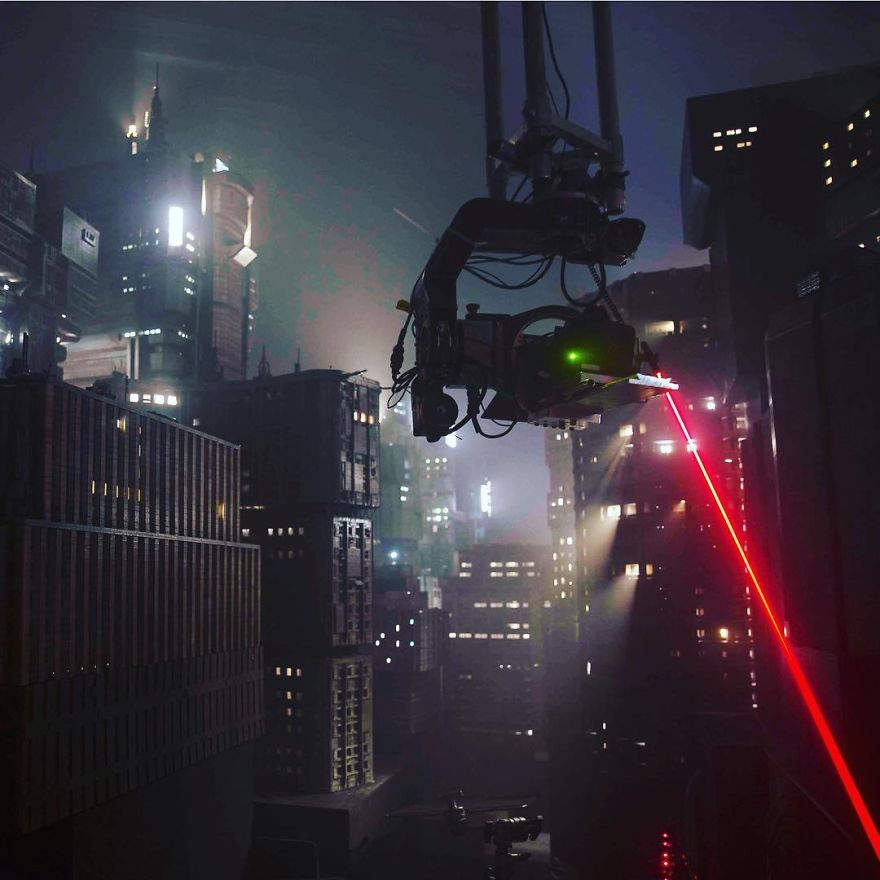
Some were so big that they could only be moved by crane
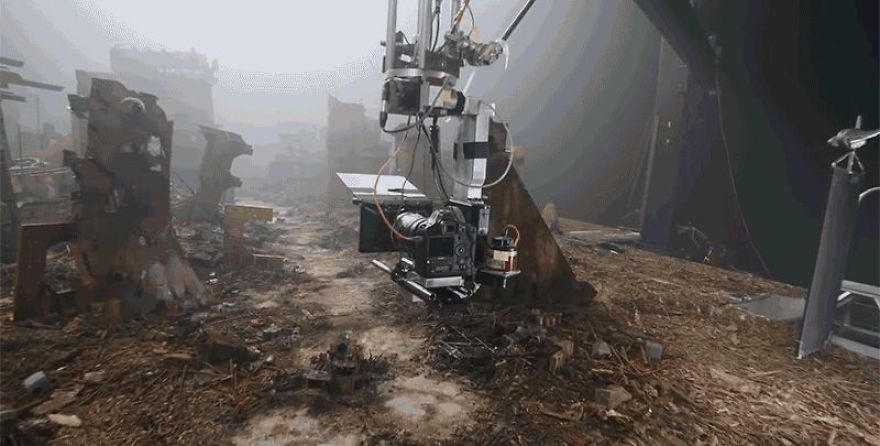
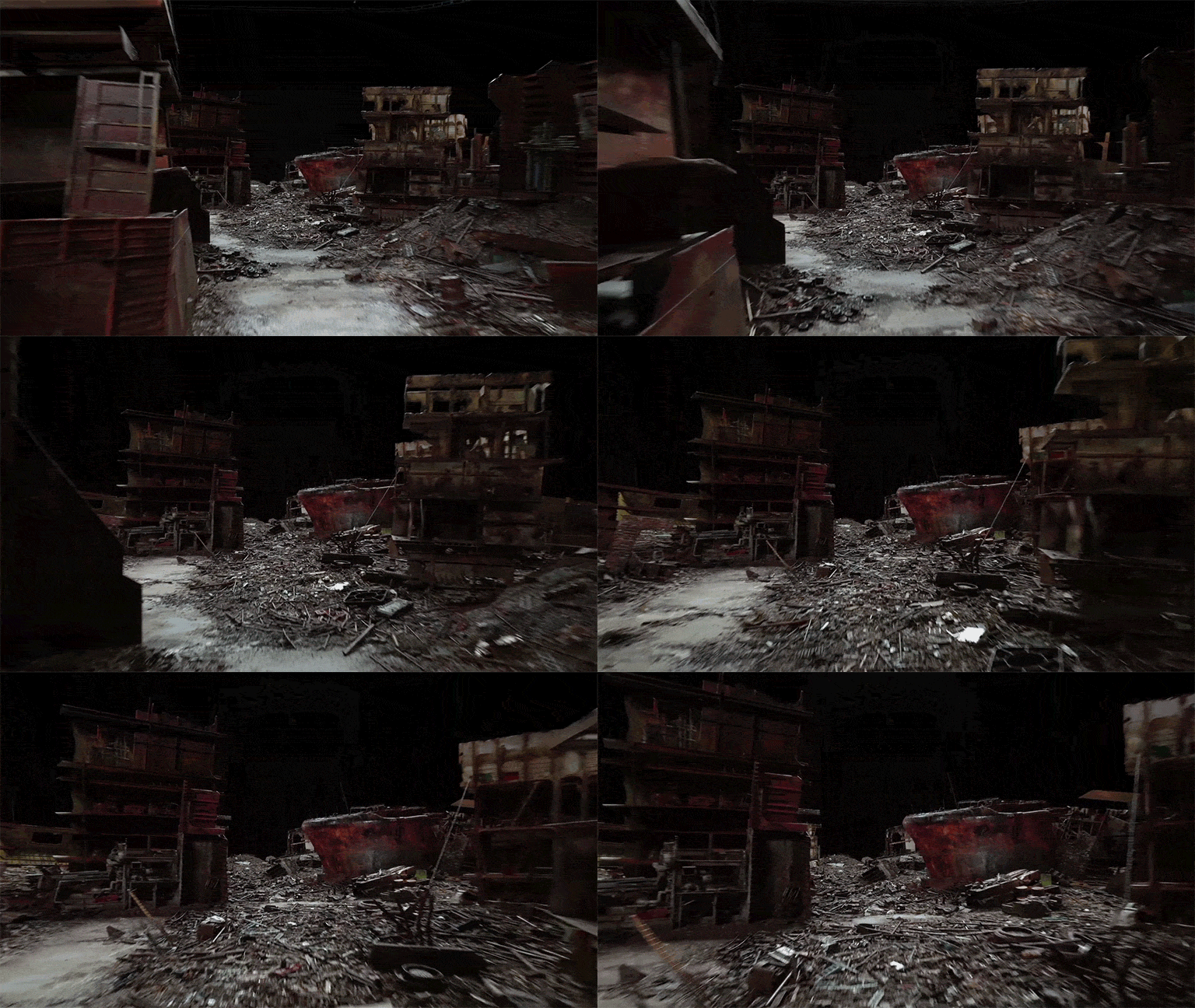
They were crafted by Weta Workshop, a special effects and prop company from New Zealand
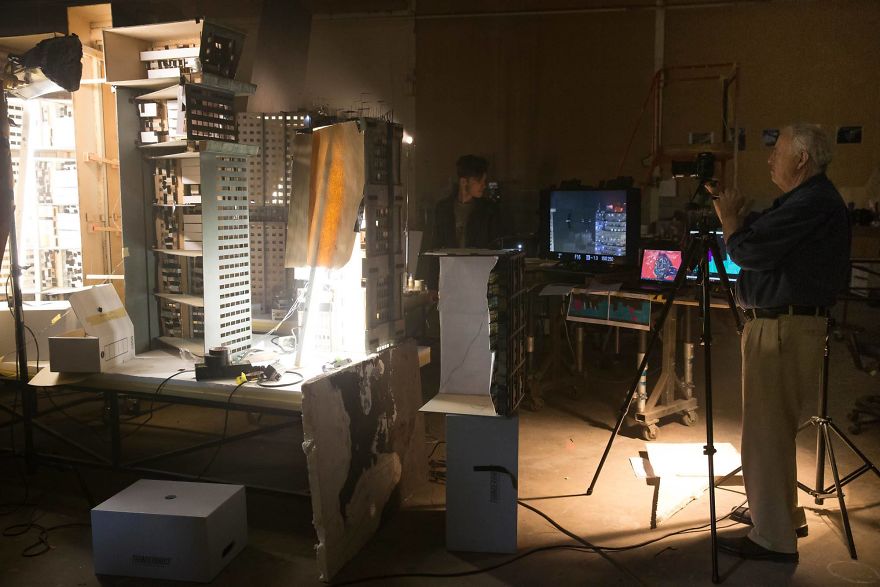
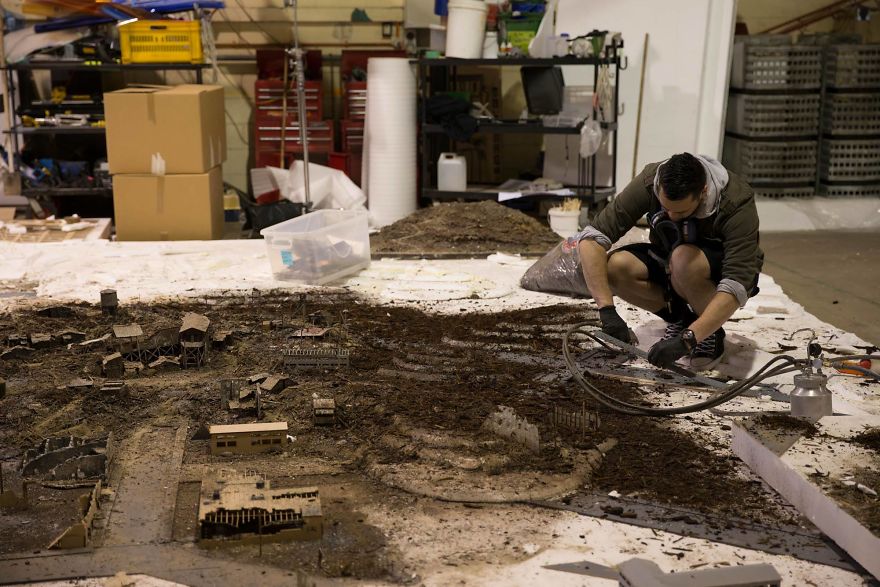
The company was co-founded by Peter Jackson, who directed the Lord of the Rings and The Hobbit trilogies
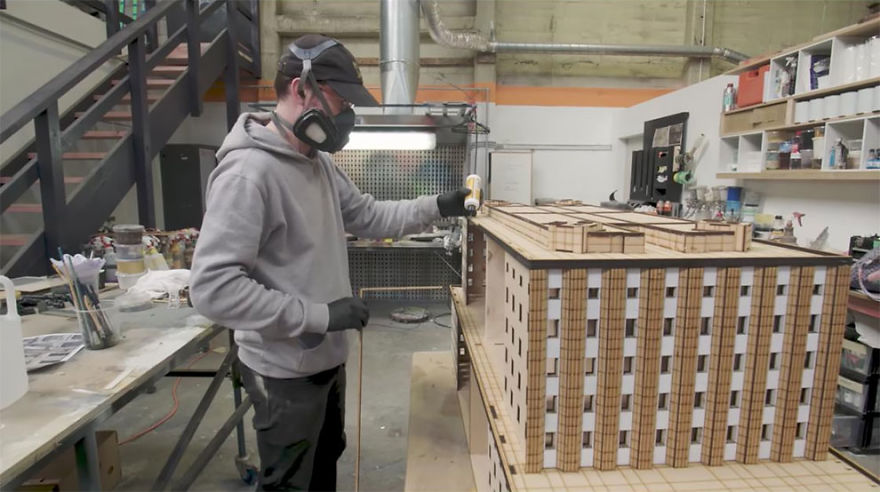
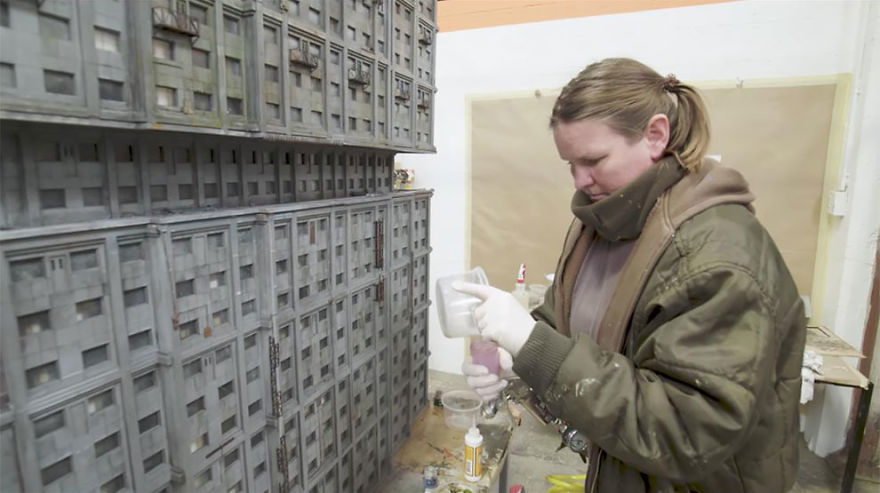
“Each building would probably take about a week to make,” said Ben Milsom, the miniature unit’s senior art director
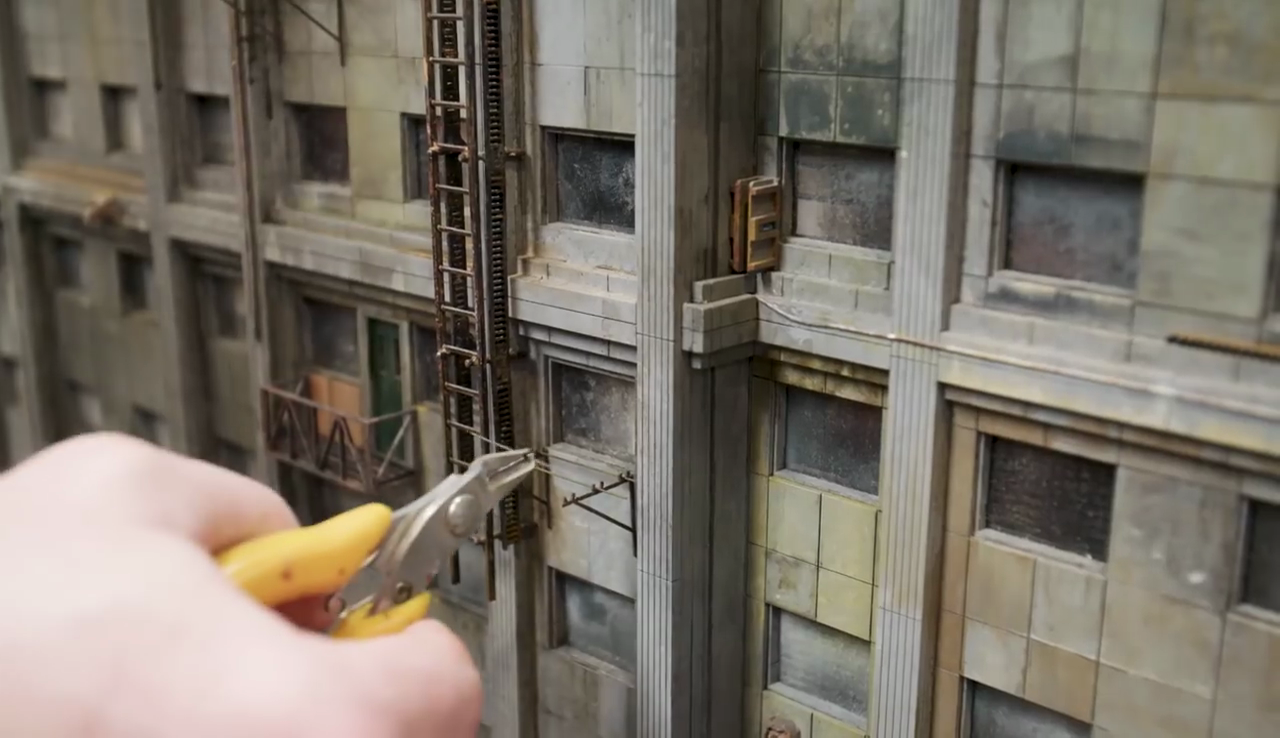
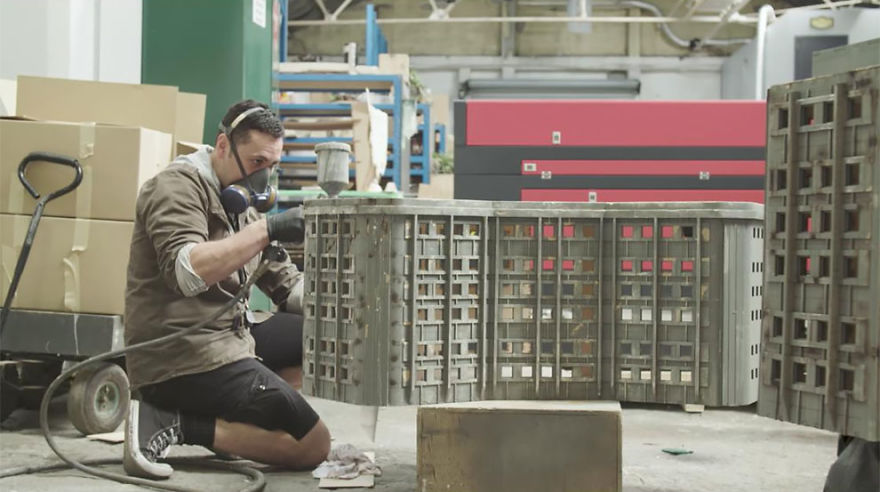
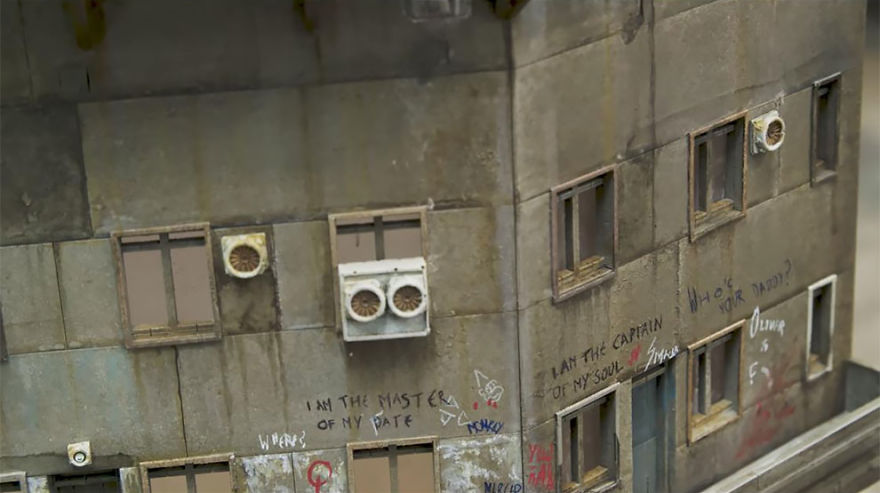
And it comes as no surprise, seeing how much detail the artists pack into a single miniature
You Can Buy This Pharaoh-Themed Apartment in Moscow for Just $1.7 Million
If you’ve ever wanted to feel like a pharaoh without having to build your own lavish palace, you can settle for this unique Moscow apartment designed to make you feel like a ruler of ancient Egypt.
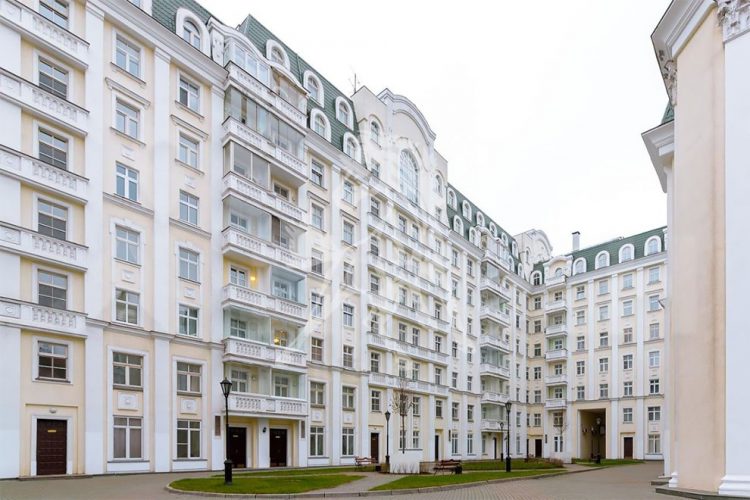
Over the last two decades, the Khamovniki district of Moscow has turned from a simple working-class district, into one of the most expensive living areas in the entire Russian capital. There are plenty of luxurious apartment complexes to choose from if you have the funds, but if you’re looking for something truly unique, you may want to consider this $1.7 million apartment in the “Opera House” residential complex on Ostozhenka street. It’s literally fit for a king, an Egyptian king, that is…

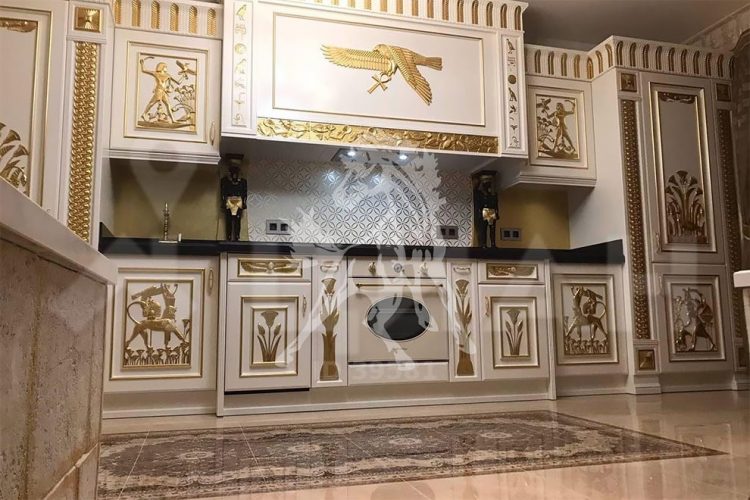
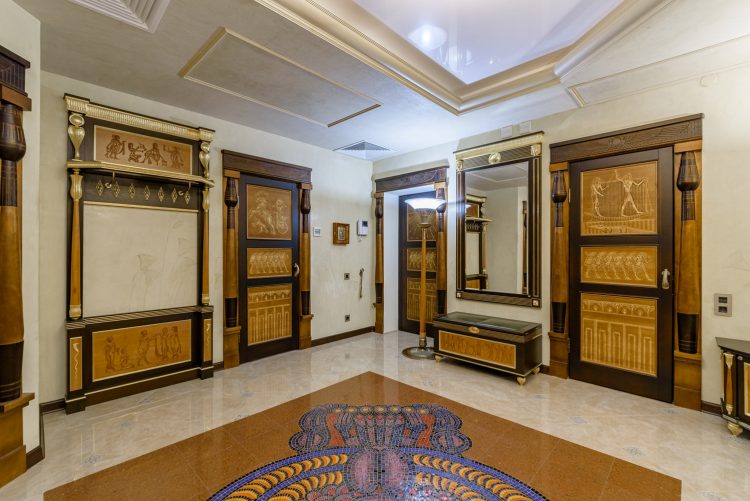
Walking into this unusual Moscow apartment, you are immediately transported to ancient Egypt. From the white marble flooring, and the columns lining the walls, to the Egyptian mythology-inspired statues and furniture decor, everything about this place screams ancient Egypt. Just don’t look out the window and you can live out your pharaoh fantasy in peace.

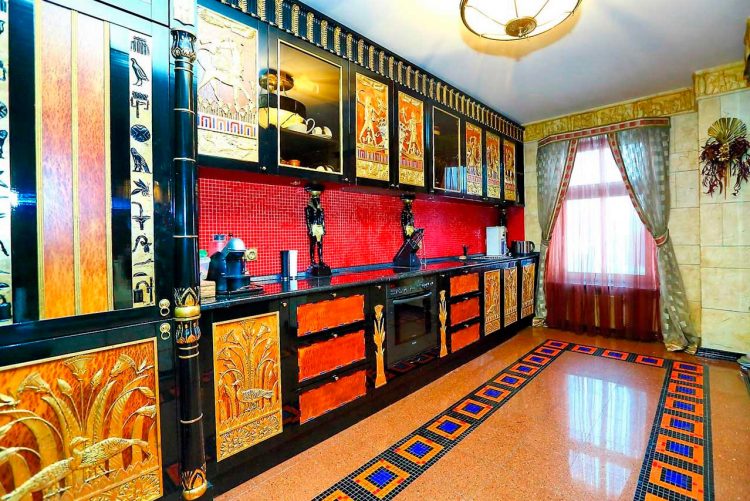
Even the bed is fashioned after an ancient Egyptian war ship, the bathtub is guarded by two golden statues of winged rams, and a watchful eye on the wall, and even the custom kitchen furniture is decorated with Egyptian symbols and motifs.
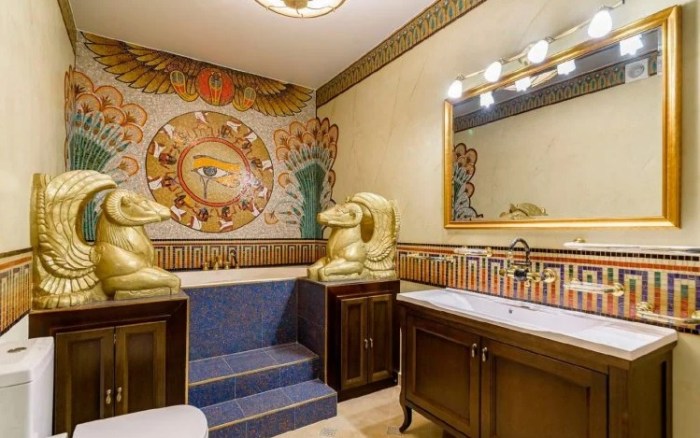
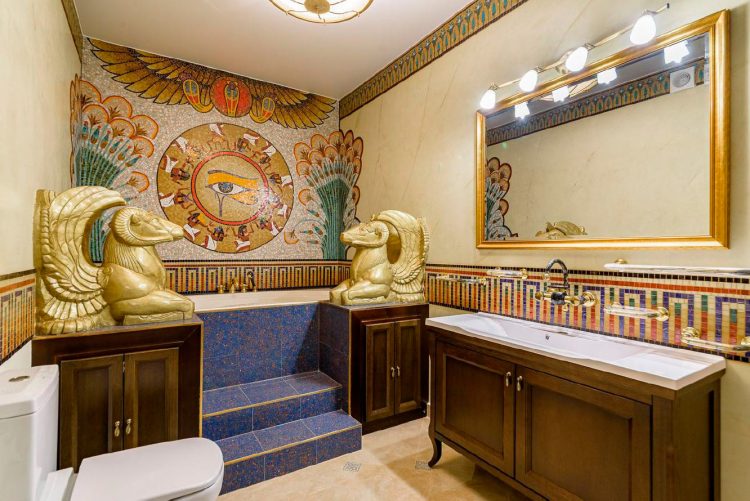
This unique apartment is on the fourth floor and offers a generous 184 square meters of living space, split into 2 bedrooms, kitchen, living room, study, large dressing room, and 2 bathrooms. The windows offer views of the Conception Monastery, the Cathedral of Christ the Savior, but why would you ever want to look outside with so much beauty surrounding you?

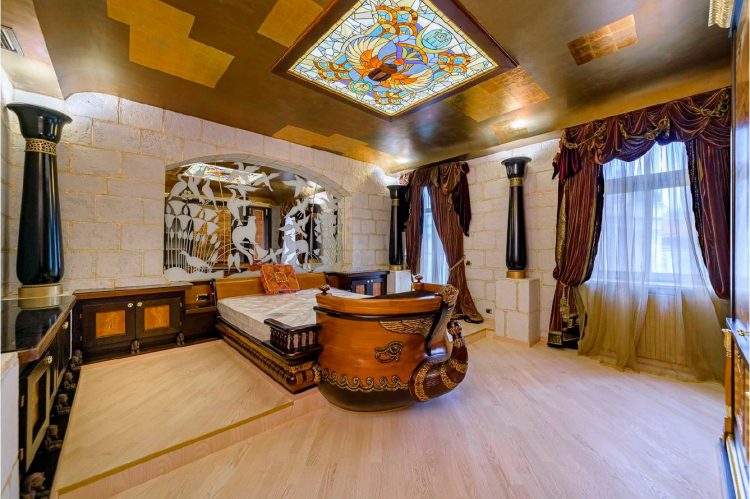
The Opera House is an exquisite building designed by Russian architect Mikhail Posokhin. If you ever feel like leaving the awesome Egypt-inspired apartment, residents of the building also have access to a swimming pool, gym, beauty salon, sauna and restaurant.
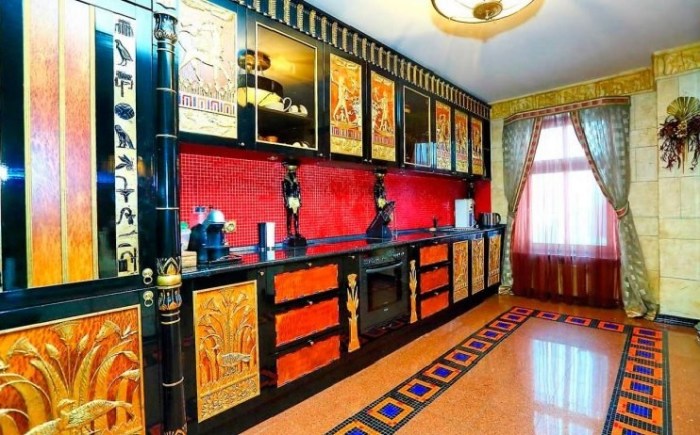
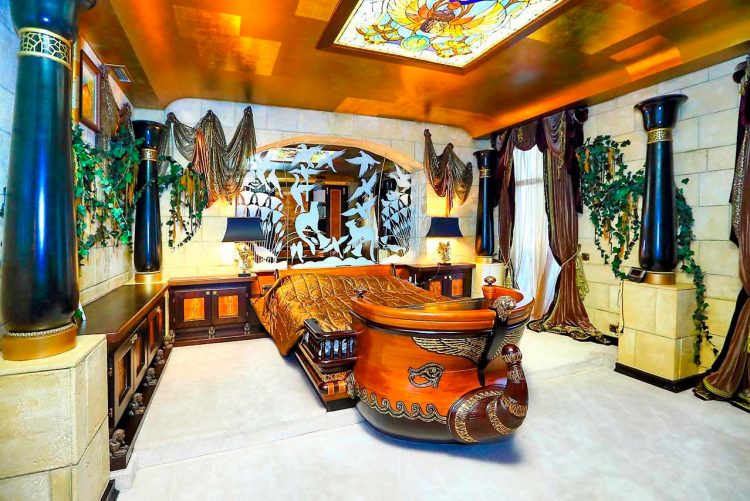
This exquisite piece of property is being sold for 128 million rubles (just under $1.7 million), which may seem expensive, but for a true pharaoh worthy of this luxury, it shouldn’t be more than pocket change.

Rare ‘UFO House’ for Sale in New Zealand

An incredibly rare Futuro House has been put up for sale in New Zealand, where less than ten of the flying saucer-shaped residences exist. The brainchild of Finnish architect Matti Suuronen, approximately 100 of the homes were constructed over the course of the 1960s and ’70s. Since that time, a great number of the houses have fallen into disrepair, making the remaining residences something of an expensive collector’s item with some becoming roadside attractions and one, in California, was transformed into an Airbnb.
This particular Futuro House is reportedly located in the city of Christchurch and has been on display at various sites throughout the city over the last 14 years. For fans of the famed residences, the home serves as something of a museum as it contains a number of placards detailing the history of the odd buildings. Although there is no listed asking price for the ‘UFO House,’ an initial estimate placed the value at around $200,000, though that price could climb considerably higher given the rarity of the residence as well as its pristine condition.
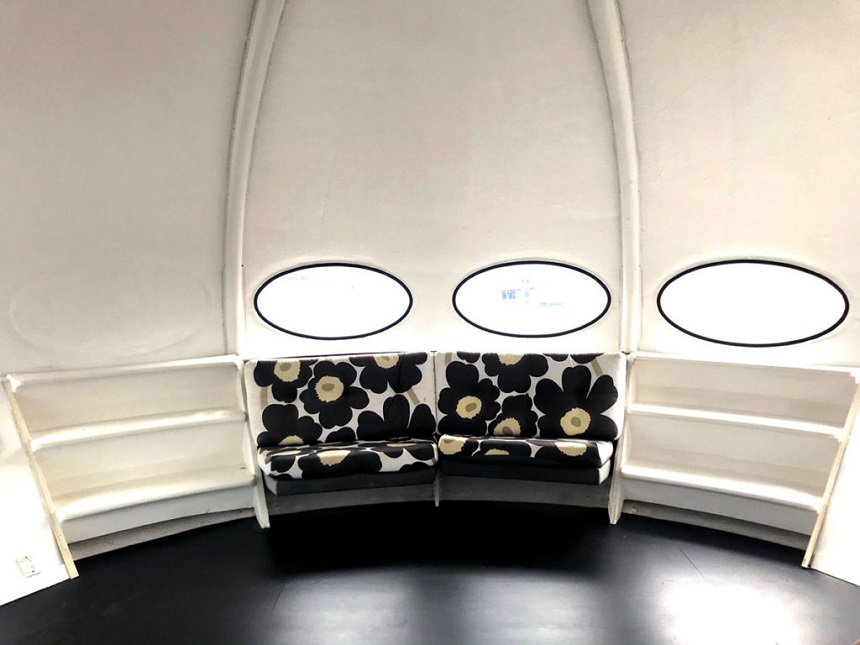

The real thing.

This Is What 6 Iconic Landmarks Look Like From Above
Most of us have seen these iconic landmarks one way or another, be it just pictures or the actual buildings in real life when visiting the popular landmarks ourselves. Many architects have spent hundreds of hours perfecting these landmarks so visitors like us could enjoy their view regardless of circumstances. But how many of us have actually seen what they actually look like from above?
Budget Direct decided to provide us with the answer by having their innovative insurance team take and render these six breathtaking pictures that they kindly shared with us in the midst of a worldwide pandemic. They portrayed the beautiful famous places by offering us a new perspective on even the most photographed tourist spots.
So, scroll down and see what iconic places such as the Eiffel Tower or Sydney Opera House look like from above.
Sydney Opera House (Sydney, Australia)
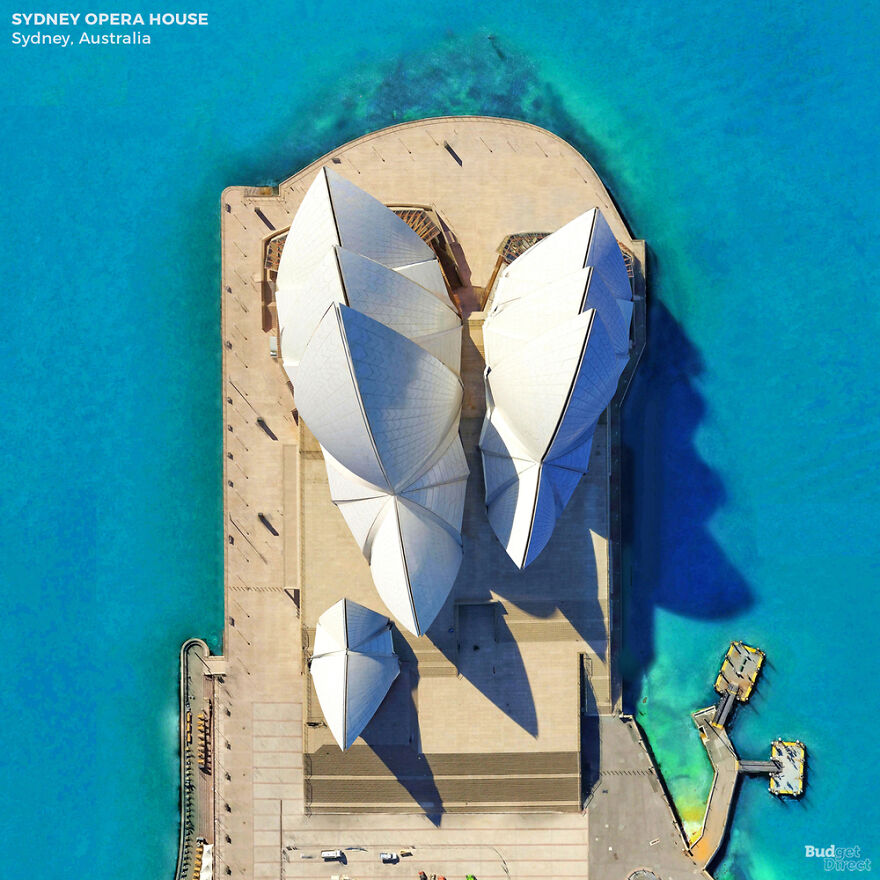
“With Kronborg in mind,” wrote Sydney Opera House’s architect, Jørn Utzon, “I was convinced that a new building in such a position as to be seen from all sides, had to be a large sculptural building.” Utzon was keenly aware of how the structure would occupy Sydney Harbour since he lived near Kronberg Castle, which occupies a similar position beyond a steep drop, sandwiched by the coasts of Denmark and Sweden.
30 St. Mary Axe ‘The Gherkin’ (London, England)
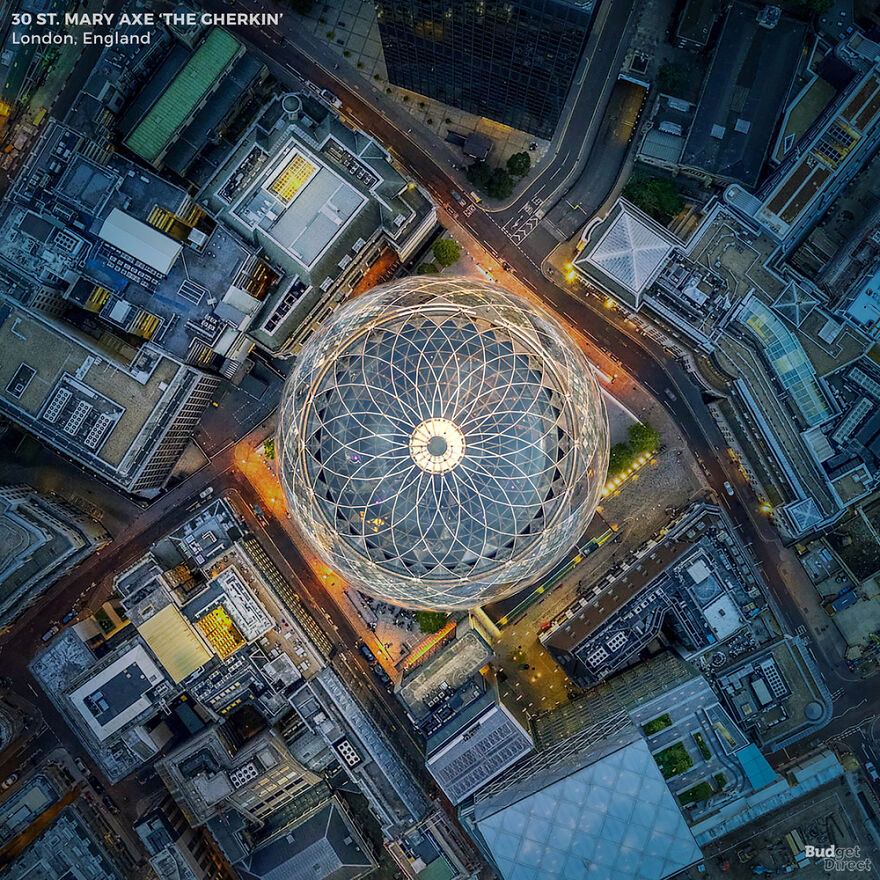
You need to levitate 180m to reach the top of London’s second-tallest building. On the way up, you’ll notice that the building puffs outwards and then inwards again from its circular ground-level footprint. This leaves plenty of space for people to mill about like ants down on the ground while allowing for 47,000m2 of interior floor space.
Eiffel Tower (Paris, France)
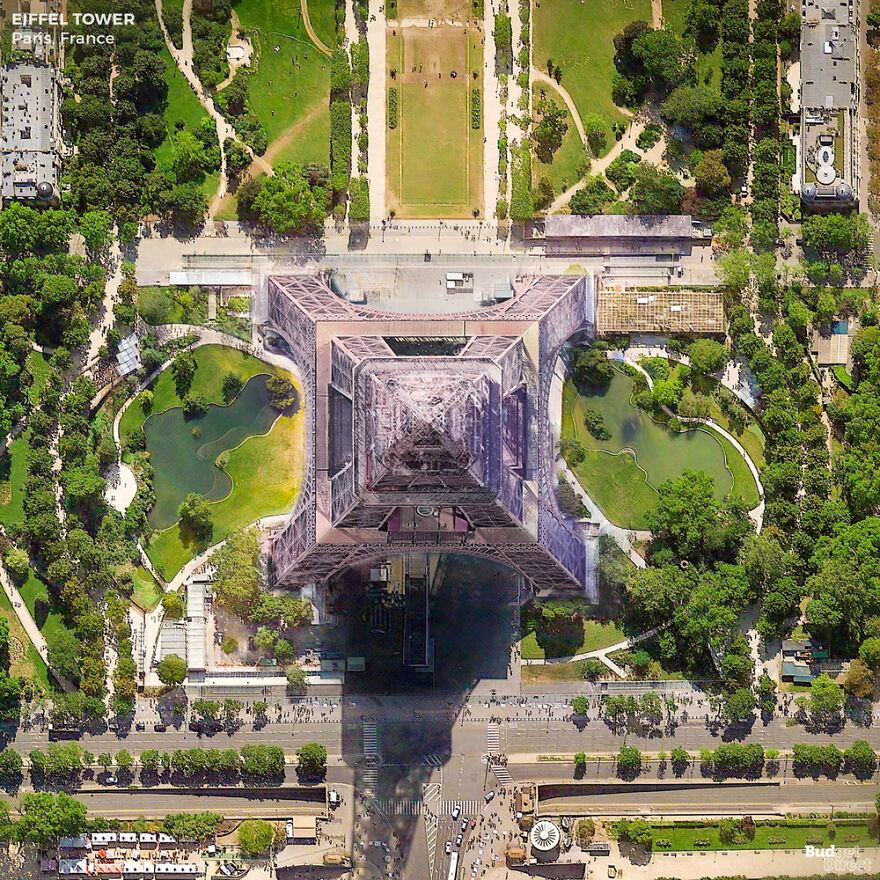
X marks the spot. Cuddled by kidney-shaped lawns at the tip of the Champ de Mars, it may take you a moment to identify the Eiffel Tower. The centre of the X is the meeting point of four iron lattice piers that begin on the ground 300m below.
Statue of Liberty (New York City, USA)
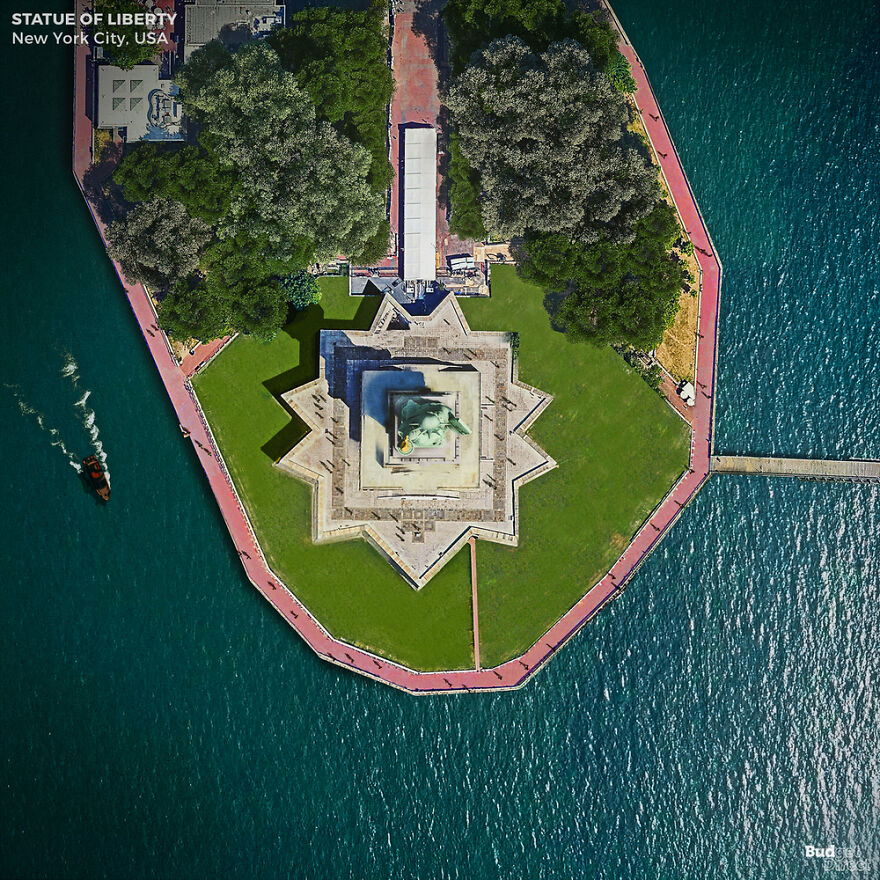
An aerial view of the Statue of Liberty offers a clear look at the 11-pronged star on which it sits. The star may look like it was designed for the purpose, but it is actually a former fort, built a year before the War of 1812 to protect New York Harbor. Tour boats and commuter ferries pass there today.
The Colosseum (Rome, Italy)
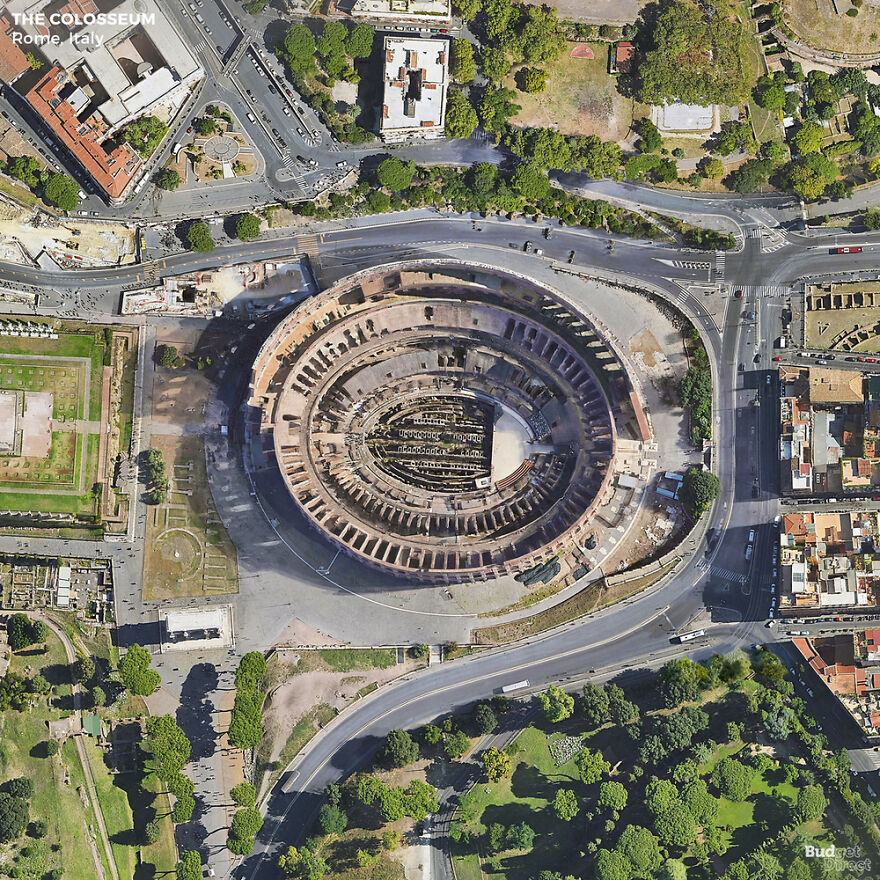
This head-down view of the Colosseum looks pretty different to when it was first built for animal hunts, executions, and gladiator battles, nearly 2,000 years ago. Somewhere between 50-90,000 people of all classes would have gathered here, protected from the sun by enormous vela (canvas awnings) wrangled by hundreds of strong men, probably from the Roman navy.
Shwedagon Pagoda (Yangon, Myanmar)

Legend has it Myanmar’s most sacred Buddhist stupa is 2,600 years old, making it the world’s oldest Buddhist stupa and the oldest landmark on our list. Scholars estimate it’s a remarkable 11-15 centuries old. Either way, the building has been enhanced over the years. The golden roof has been replenished by devotees, including the 15th-century Queen Shin Sawbu (BinnyaThau), who donated her bodyweight in gold.
From boredpanda.com
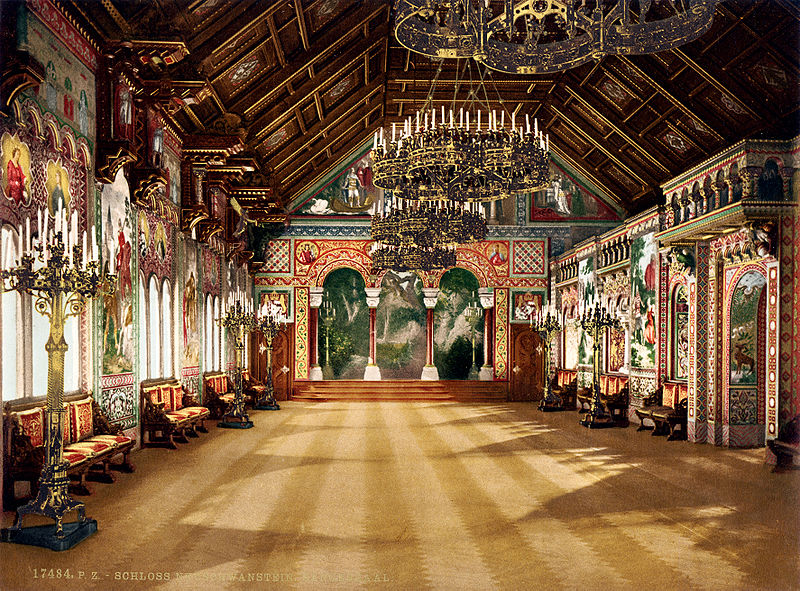
Neuschwanstein Castle

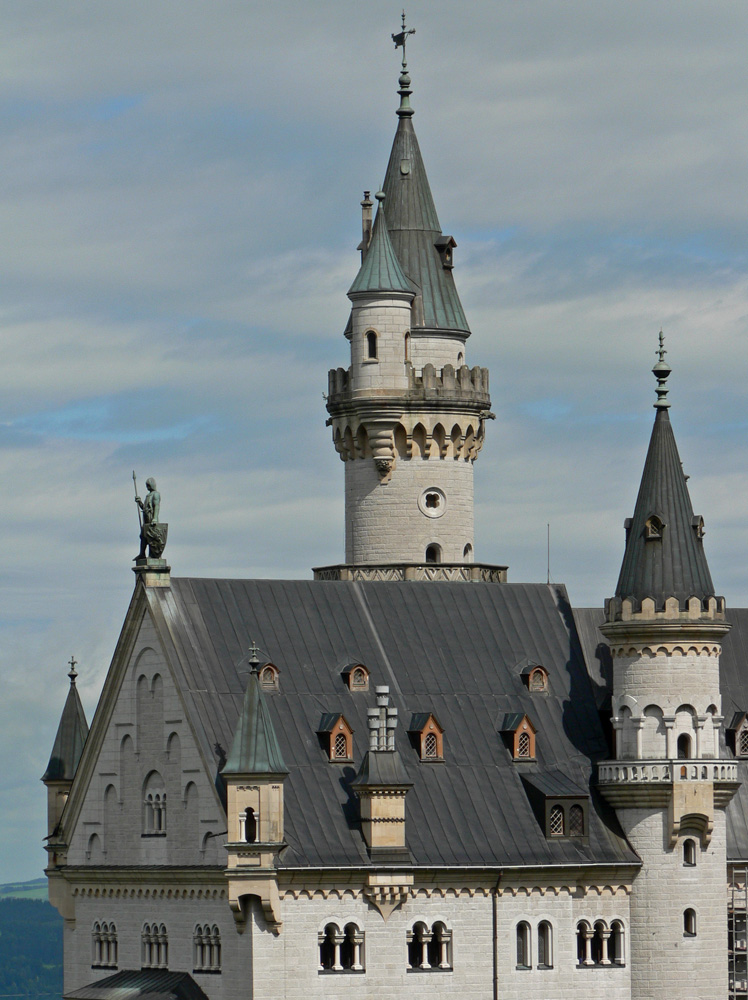
Neuschwanstein Castle is a 19th-century Romanesque Revival palace on a rugged hill above the village of Hohenschwangau near Füssen in southwest Bavaria, Germany. The palace was commissioned by King Ludwig II of Bavaria as a retreat and in honour of Richard Wagner. Ludwig paid for the palace out of his personal fortune and by means of extensive borrowing, rather than Bavarian public funds.
The castle was intended as a home for the King, until he died in 1886. It was open to the public shortly after his death. Since then more than 61 million people have visited Neuschwanstein Castle. More than 1.3 million people visit annually, with as many as 6,000 per day in the summer.
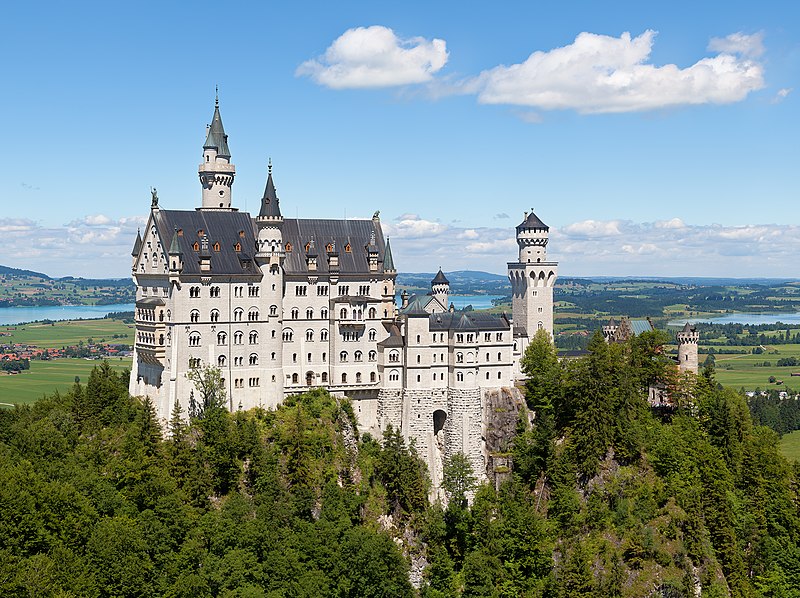
The effect of the Neuschwanstein ensemble is highly stylistic, both externally and internally. The king’s influence is apparent throughout, and he took a keen personal interest in the design and decoration. An example can be seen in his comments, or commands, regarding a mural depicting Lohengrin in the Palas; “His Majesty wishes that … the ship be placed further from the shore, that Lohengrin’s neck be less tilted, that the chain from the ship to the swan be of gold and not of roses, and finally that the style of the castle shall be kept medieval.”
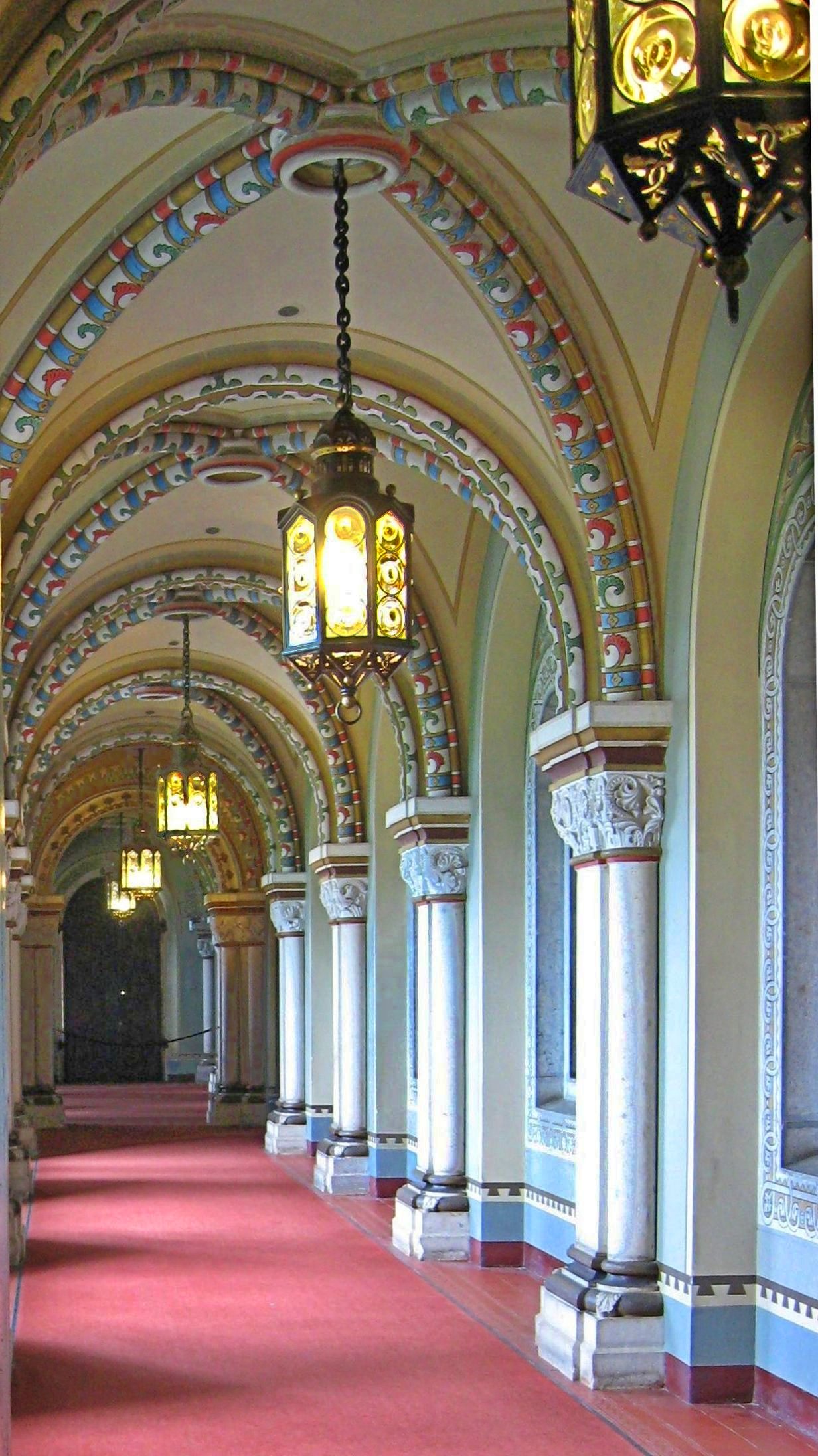
The suite of rooms within the Palas contains the Throne Room, King Ludwig’s suite, the Singers’ Hall, and the Grotto. The interior and especially the throne room Byzantine-Arab construction resumes to the chapels and churches of the royal Sicilian Norman-Swabian period in Palermo related to the Kings of Germany House of Hohenstaufen. Throughout, the design pays homage to the German legends of Lohengrin, the Swan Knight. Hohenschwangau, where King Ludwig spent much of his youth, had decorations of these sagas. These themes were taken up in the operas of Richard Wagner. Many rooms bear a border depicting the various operas written by Wagner, including a theatre permanently featuring the set of one such play. Many of the interior rooms remain undecorated, with only 14 rooms finished before Ludwig’s death. With the palace under construction at the King’s death, one of the major features of the palace remained unbuilt. A massive keep, which would have formed the highest point and central focus of the ensemble, was planned for the middle of the upper courtyard but was never built, at the decision of the King’s family. The foundation for the keep is visible in the upper courtyard.




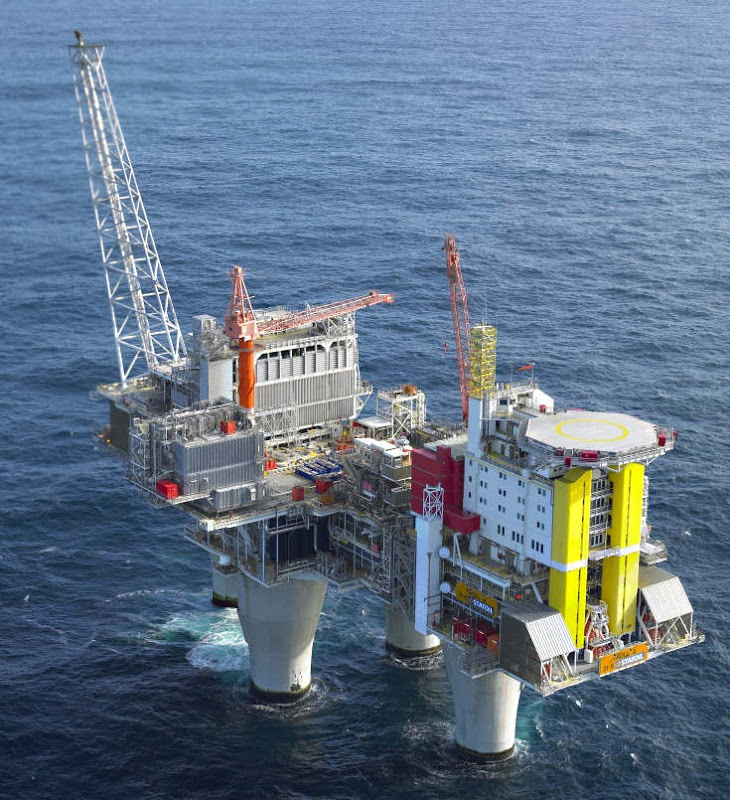
Troll A Platform
The Troll A platform is an offshore natural gas platform in the Troll gas field off the west coast of Norway. At 1.2 million ton ballasted under tow, 472 meters high, with underwater concrete structure at 369 meters, and dry weight of 656,000 tons, the Troll A platform is a majestic piece of design and construction. Not only is Troll A among the largest and most complex engineering projects in history, it is the largest object ever to be moved by man across the surface of the Earth. The platform was a televised sensation when it was towed into the North Sea in 1996, where it is now operated by Statoil.
Normally a platform’s legs are transported on their side and then – supported by flotation devices – are dropped into place. In the case of Troll A, however, the whole platform was assembled in one location, and then floated out to sea. The Troll platform was towed over 200 kilometers from Vats, in the northern part of Rogaland, to the Troll field, 80 kilometers north-west of Bergen. The tow took seven days.

The platform stands on the sea floor 303 meters below the surface of the sea and one of the concrete cylindrical legs has an elevator that takes over nine minutes to travel from the platform above the waves to the sea floor. The walls of Troll A’s legs are over 1 meter thick made of steel reinforced concrete formed in one continuous pour. The four legs are joined by a “Chord shortener”, a reinforced concrete box interconnecting the legs, but which has the designed function of damping out unwanted potentially destructive wave-leg resonances. Each leg is also sub-divided along its length into compartments a third of the way from each end which act as independent water-tight compartments. The legs use groups of six 40 meters tallvacuum-anchors holding it fixed in the mud of the sea floor.
In 1996 the platform set the Guinness World Record for ‘largest offshore gas platform’. The title now belongs to the Petronius Platform in the Gulf of Mexico which stands 2,000 feet (610 m) above the ocean floor.



Getting Closer to God

The Katskhi pillar is a natural limestone monolith located at the village of Katskhi in western Georgian region of Imereti, near the town of Chiatura. It is approximately 40 metres (130 ft) high, and overlooks the small river valley of Katskhura, a right affluent of the Q’virila.
The rock, with visible church ruins on a top surface measuring c. 150 m2, has been venerated by locals as the Pillar of Life and a symbol of the True Cross, and has become surrounded by legends. It remained unclimbed by researchers and unsurveyed until 1944 and was more systematically studied from 1999 to 2009. These studies determined the ruins were of an early medieval hermitage dating from the 9th or 10th century. A Georgian inscription paleographically dated to the 13th century suggests that the hermitage was still extant at that time. Religious activity associated with the pillar was revived in the 1990s and the monastery building had been restored within the framework of a state-funded program by 2009.

The Katskhi pillar complex currently consists of a church dedicated to Maximus the Confessor, a crypt (burial vault), three hermit cells, a wine cellar, and a curtain wall on the uneven top surface of the column. At the base of the pillar are the newly built church of Simeon Stylites and ruins of an old wall and belfry.
The church of St. Maximus the Confessor is located at the south-easternmost corner of the top surface of the Katskhi pillar. A small simple hall church design with the dimensions of 4.5 × 3.5 m., it is a modern restoration of the ruined medieval church built of stone. Beneath and south of the church is an elongated rectangular crypt with the dimensions of 2.0 × 1.0 m., which had served as a burial vault. Digs at the ruined wine cellar revealed eight large vessels known in Georgia as k’vevri. Also of note is a rectangular cellar grotto with the entrance and two skylights—on the vertical surface of the rock, some 10-metre (33 ft) below the top. At the very base of the pillar there is a cross in relief, exhibiting parallels with similar early medieval depictions found elsewhere in Georgia, particularly at Bolnisi.


In July 1944 a group led by the mountaineer Alexander Japaridze and the writer Levan Gotua made the first documented ascent of the Katskhi pillar. Vakhtang Tsintsadze, an architecture specialist with the group, reported in his 1946 paper that the ruins found on top of the rock were remains of two churches, dating from the 5th and 6th centuries and associated with a stylite practice, a form of Christian asceticism. Since 1999, the Katskhi pillar has become the subject of more systematic research. Based on further studies and archaeological digs conducted in 2006, Giorgi Gagoshidze, an art historian with the Georgian National Museum, re-dated the structures to the 9th–10th century. He concluded that this complex was composed of a monastery church and cells for hermits. Discovery of the remnants of a wine cellar also undermined the idea of extreme ascetism flourishing on the pillar. In 2007, a small limestone plate with the asomtavruli Georgian inscriptions was found, paleographically dated to the 13th century and revealing the name of a certain “Giorgi”, responsible for the construction of three hermit cells. The inscription also makes mention of the Pillar of Life, echoing the popular tradition of veneration of the rock as a symbol of the True Cross.[1]
Religious activity started to revive in 1995, with the arrival of the monk Maxim Qavtaradze, a native of Chiatura. Between 2005 and 2009, the monastery building on the top of the pillar was restored with the support of the National Agency for Cultural Heritage Preservation of Georgia. The rock was once accessible to male visitors through an iron ladder running from its base to the top, but has recently been deemed inaccessible to the public.
The ladder


Rope pulley to bring up supplies


The Empire State Building was Constructed Incredibly Fast
The speed with which they built the Empire State Building, 1931

The idea for the Empire State Building is said to have been born of a competition between Walter Chrysler of the Chrysler Corporation and John Jakob Raskob of General Motors, to see who could erect the taller building. Chrysler had already begun work on the famous Chrysler Building, the gleaming 1,046-foot skyscraper in midtown Manhattan. Not to be bested, Raskob assembled a group of well-known investors, including former New York Governor Alfred E. Smith. The group chose the architecture firm Shreve, Lamb and Harmon Associates to design the building. The Art-Deco plans is said to have been based in large part on the look of a pencil.
Despite the colossal size of the project, the design, planning and construction of the Empire State Building took just 20 months from start to finish. After demolishing the Waldorf-Astoria hotel—the plot’s previous occupant—contractors Starrett Brothers and Eken used an assembly line process to erect the new skyscraper in a brisk 410 days. Using as many as 3,400 men each day, they assembled its skeleton at a record pace of four and a half stories per week—so fast that the first 30 stories were completed before certain details of the ground floor were finalized. The Empire State Building was eventually finished ahead of schedule and under budget, but it also came with a human cost: at least five workers were killed during the construction process.
The new building imbued New York City with a deep sense of pride, desperately needed in the depths of the Great Depression, when many city residents were unemployed and prospects looked bleak. The grip of the Depression on New York’s economy was still evident a year later, however, when only 25 percent of the Empire State’s offices had been rented.

During certain periods of building, the frame grew an astonishing four-and-a-half stories a week.
Chrysler Building 1932

 The MarkoZen Blog