Animals
Hogs and Various Other Critters


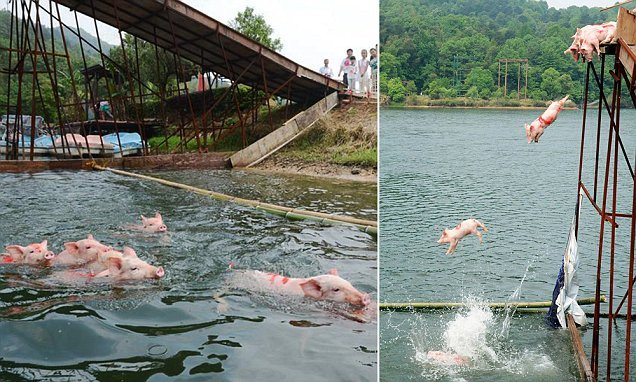

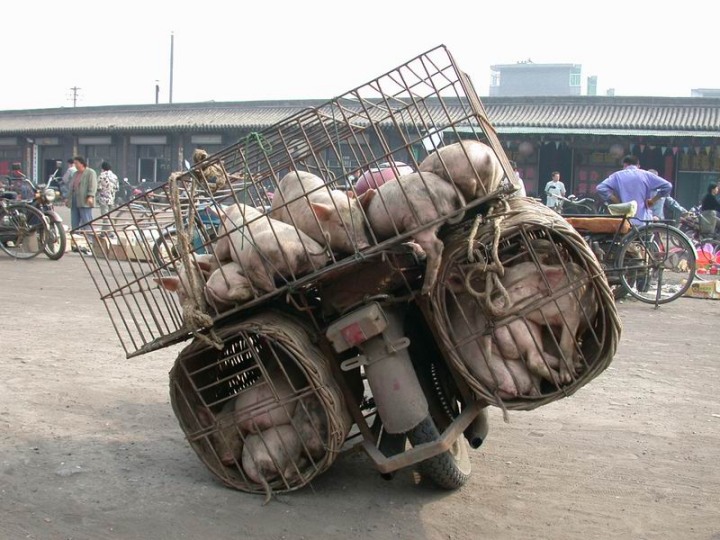
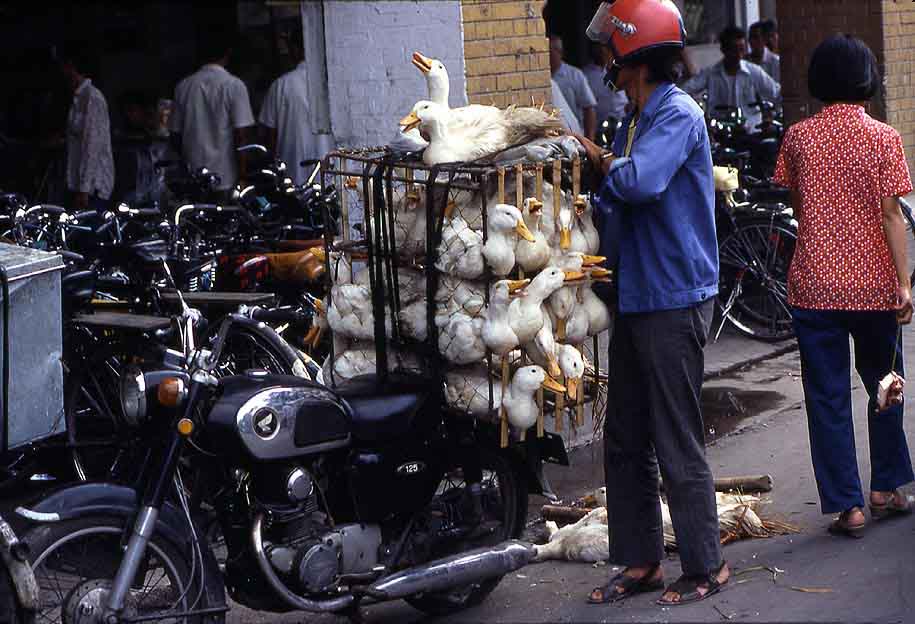
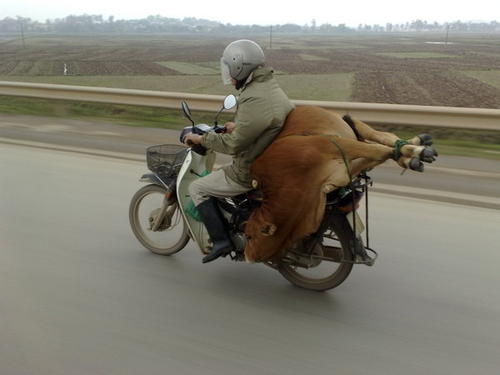


Let’s get back to the hogs shall we?
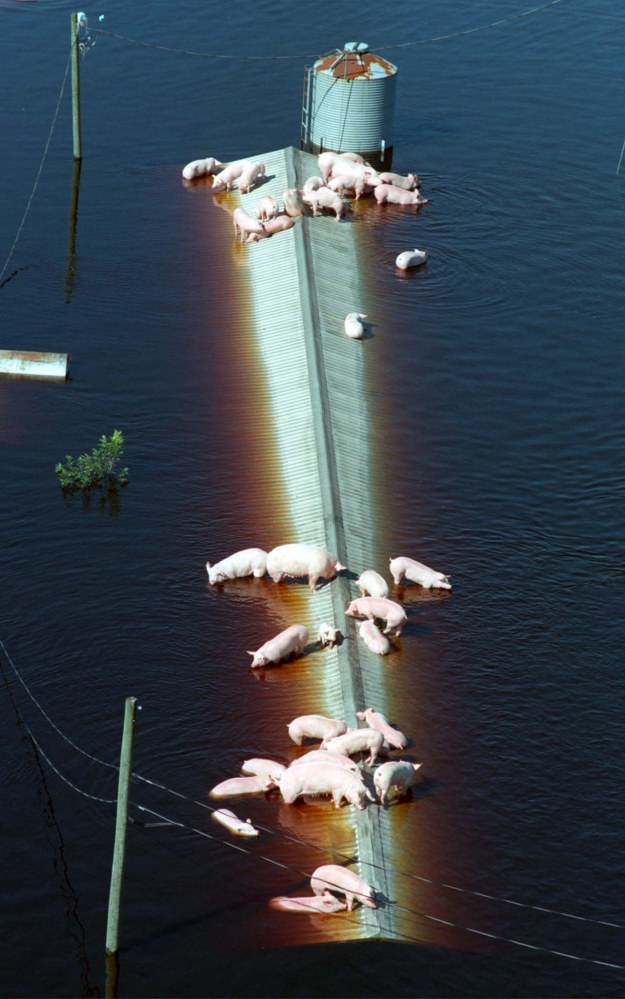
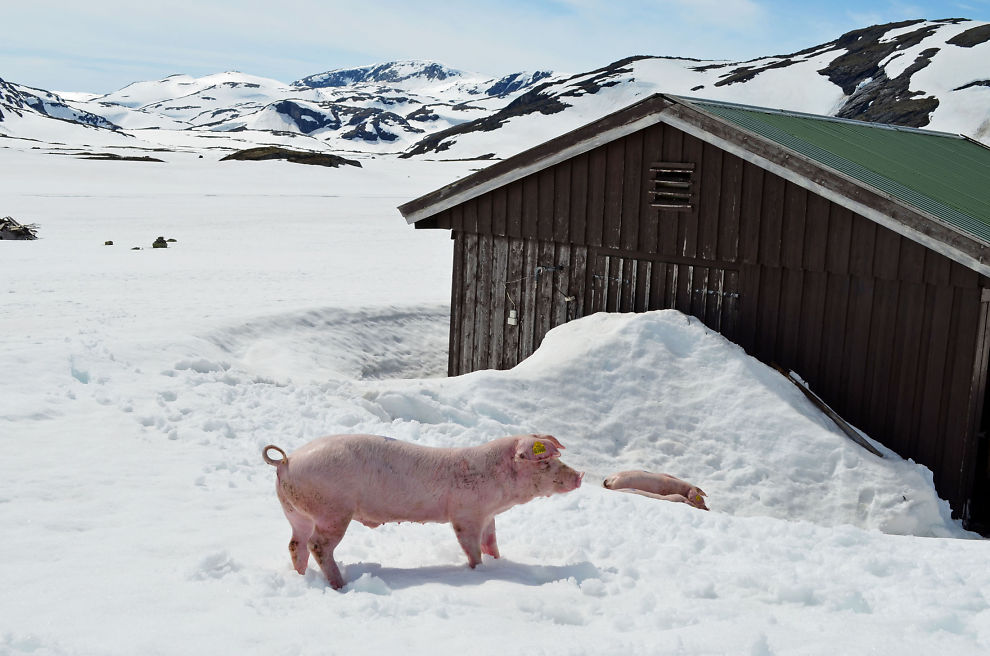
Dealing with a flood situation. The sun is out so the water should be receding shortly. Pigs are very good swimmers.
Royal Winter Fair in Brandon has Little Pony Chuck Wagon Races
The Royal Winter Fair in the western Manitoba city of Brandon is an agricultural exhibition held annually at the end of March. On average approximately 110,000 visitors pass through the turnstiles to check out the amazing critters yearly. The major events are cattle and horse competitions, equestrian, team horse wagons, hog chases, heifer round-ups, petting zoo, Royal fiddle competition, Barrel Racing, K-9 Equine relay and tiny pony chuck wagon races.
The fair is held at the Keystone Arena which has a capacity of 5,000 for the fair. The Royal Winter Fair is a great outing for all the family, including Grandma and Grandpa.
Equestrian and horse carriage competition.


The K-9 Equine relay course.


Spot and Trigger are about to take off!
Equestrian competition.

Cattle competition.

Young cattle and their young handlers.

Masterfeed Supreme Bull (CNW Group/Royal Agricultural Winter Fair.
The big horse team competition, glorious animals.


Barrel Racing.

Hog scramble.

Little Pony Chuck Wagon Races
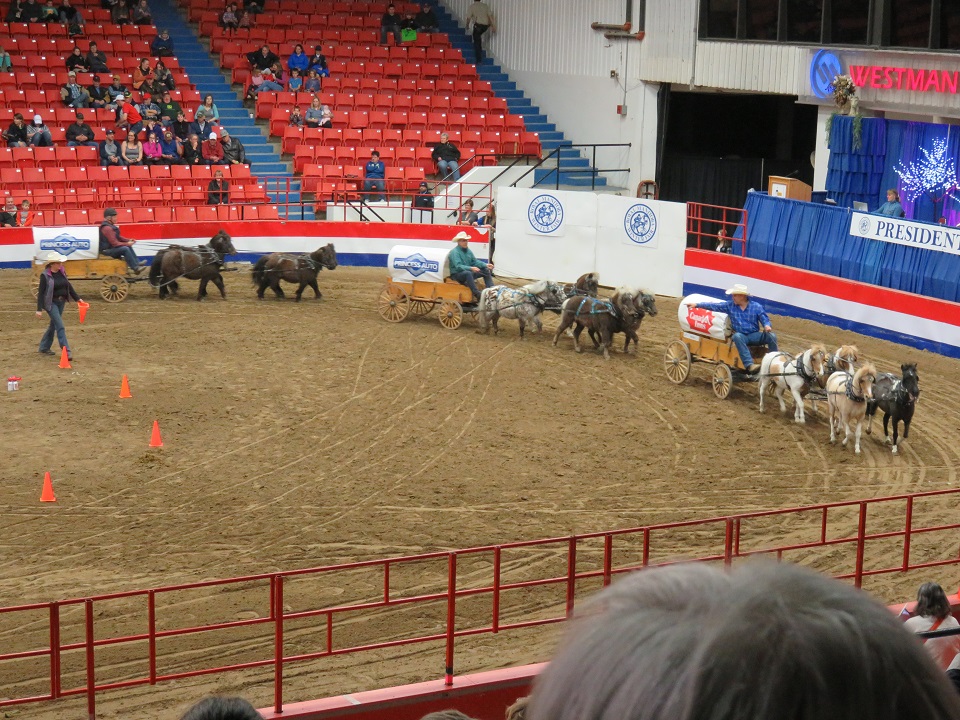


Little horses really put out and go like the banshee.

These are really small horses!


Traffic and the Sacred Cow in India
Due to the multiple benefits from cattle, there are varying beliefs about cattle in societies and religions. In some regions, especially Nepal and some states in India, the slaughter of cattle is prohibited and their meat may be taboo. Cattle are considered sacred in world religions such as Hinduism, Jainism, Zoroastrianism and others. Religions in Ancient Egypt, Ancient Greece, Ancient Israel and Ancient Rome held similar beliefs.

Due to millions of sauntering cows, it is likely that India has the world’s greatest number of moving road impediments, and little sits between these roaming dangers and the many people on the country’s roads.
Hollywood and Bollywood depictions of India routinely feature comical transport situations involving tok-toks, assorted quadrupeds and buses packed like freeze-dried coffee.
While there is truth in humor, mounds of corpses from India’s road accidents are devastating, not at all funny.
The Indian government’s estimate of 130,000 traffic-related deaths per year makes the country a near-world leader in road fatalities, just behind China, but the World Health Organization (WHO) puts the figure closer to 231,000—a number equal to the population of Orlando, Fla.


Hindus consider cows sacred animals, and their slaughter is banned throughout most of India. Cows are frequently allowed to wander where they please, even in cities, where Indians tend to view them much the way Americans and Europeans regard pigeons — an unpleasant but intractable part of the urban landscape.


To remedy the cows in the streets predicament, ‘Cow Catchers’ are used to remove cattle from the cities.
It’s becoming a routine ritual on the crowded, colorful streets of Delhi, India: A small team of men surrounds a wandering cow, attempting to coax it on to a waiting truck for a trip to a suburban reserve. But the cow catchers need to be careful: To India’s millions of Hindus, the cow is a holy animal that cannot be harmed.
The tender treatment is just one example of our complicated relationship with cows — a historic partnership detailed by NATURE’s Holy Cow. From a source of meat and milk to a provider of labor and religious inspiration, cows often play a central role in modern life.
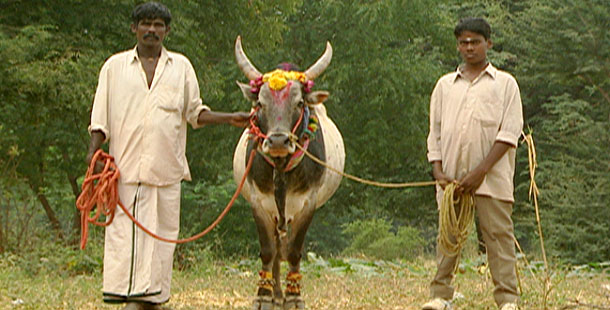
Today, in heavily Hindu nations like India and Nepal, milk continues to hold a central place in religious rituals. And in honor of their exalted status, cows often roam free. Indeed, in some places, it is considered good luck to give one a snack, a bit of bread, or fruit before breakfast. On the other hand, a citizen can be sent to jail for killing or injuring a cow.
But as cities have grown more crowded, cow-friendly policies have posed problems. Delhi’s 13 million residents, for instance, share the streets with an estimated 40,000 cows — leading to some complaints. One is that the grazing cows spread trash as they rip open garbage bags in search of tasty morsels. Another is that they dangerously snarl traffic.
“What is the greatest traffic hazard in Delhi today? Cows,” Bibek Debroy, a columnist for India’s Financial Express, wrote in a pointed 2003 essay. “As our national animal, the tiger may be close to extinction. But the cow is very much around and many soon become our new national animal.”
To solve the problem, Debroy offered one tongue-in-cheek solution. “Let them have reflectors and, if not license plates, at least identity cards. Only genuine Delhi cows should be eligible for social security and other benefits.”
City officials, meanwhile, have adopted a different approach: the cow catchers. Under pressure to reduce cow populations, Delhi has hired nearly 100 of the urban cowboys, who are charged with catching and shipping cows outside the city limits, sometimes to special reserves where the animals are cared for.
But the work isn’t easy. And it can be downright dangerous. The cows often sport sharp horns, and life on the street has made them savvy and sometimes ornery. Some can recognize the sound of the transport trucks and perform a kind of bovine ballet to avoid the catchers. Still, city leaders say they won’t give up until the vast majority of the cows have been moved. Skeptics note that some of the animals return to their home turfs within days of being moved.
Where’s the Beef?
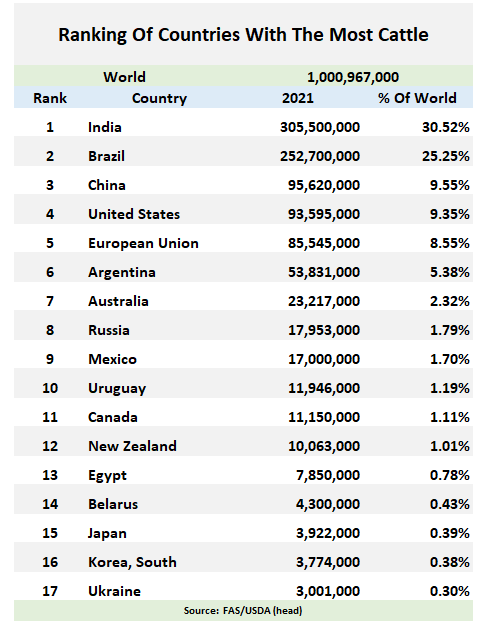
Ever wonder where all the cattle are in the world? The chart below will quench that curiosity. Most countries raise cattle for food, but in some countries they are treated with more dignity. Hindus regard the animals as sacred and will not kill or eat them.
In India a large population of cows wanders freely through both rural areas and city streets, undisturbed by the millions of hungry and malnourished people. They are used as draft animals however.

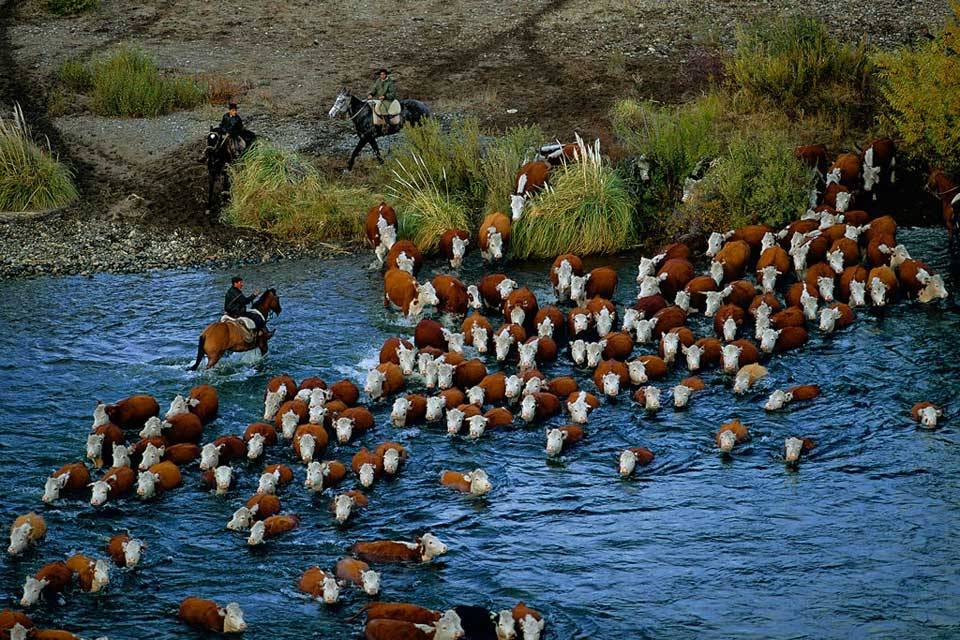
Herd of cattle in South America.
World cattle populations
African cattle.

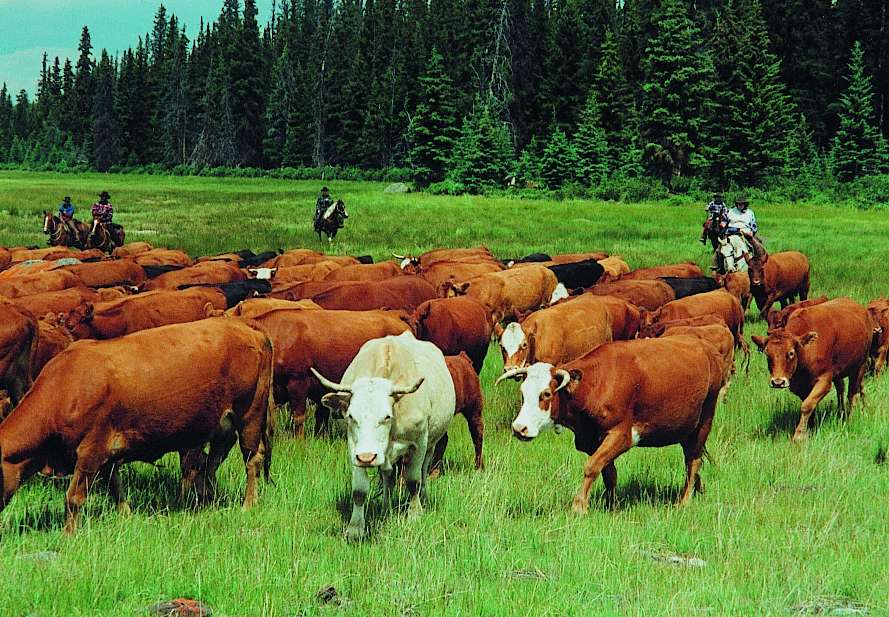
Herd of cattle in North America.
Cattle herd and American soldiers cross paths in Afghanistan.

There have been unsubstantiated reports that the odd cow went missing near U.S. military outposts in Afghanistan. Just after the cow was reported missing the Americans always had a large barbeque.
Nazis Cows in the U.K. eliminated because of Aggressive behaviour
Aurochs: How Hitler and Goering resurrected extinct species to make ‘Nazi super cows’

Heck cattle was bred by Nazis as propaganda tools.
A breed of cow that went extinct in the 1600s but was brought back to life by Hitler has made the headlines across the UK.
Devonshire farmer Derek Gow had to slaughter most of his herd of Heck because of their “incredibly aggressive” behaviour. Some of the animals would try to kill anyone that approached and, as a result, have been turned into sausage meat.
Gow killed all but two bulls and four cows of the herd. “The ones we had to get rid of would just attack you any chance they could. They would try to kill anyone. I have worked with a range of different animals and they are far and away the most aggressive I have ever dealt with.”
Origins
Aurochs, or Bos primigenius, died out in 1627 in Poland. They were a large breed of cattle, standing up to 1.8m in height, and was ancestor to modern domestic breeds. Aurochs had huge curved horns that characterised the breed – in some the horns could reach 80cm in length – and their legs were longer than modern cattle.

Historical accounts suggests the beasts were fast and very aggressive. They were not afraid of humans, and if they were hunted would attack back in response.
Evidence suggests the wild species began to be domesticated around 8,000 years ago.
By the 13th century, populations of wild aurochs had fallen dramatically with their range restricted from human expansion. They had disappeared from Britain by 2,000 BC, but remained in eastern Europe until the 17th century.
Rise of Nazi super cows
In the 1930s, Nazi second in command Hermann Goering asked geneticists Heinz and Lutz Heck to re-create the extinct species. A keen hunter, Goering instructed them to develop a genetically engineered species by back-breeding from auroch descendants.
The Heck brothers – working independently – crossed Spanish fighting bulls with Highland cattle, along with primitive breeds from Corsica and Hungary. The result – Nazi super cows. They were used for propaganda material during WWII – their bodies were huge and muscular, with massive horns – an illustration of the strength of the party.

Hermann Goering commissioned the Heck brothers to create the species.
Gow said: “There was a thinking that you could selectively breed animals – and indeed people – for ‘Aryan’ characteristics, which were rooted in runes, folklore and legend. What the Germans did with their breeding programme was create something truly primeval.
“The reason the Nazis were so supportive of the project is they wanted them to be fierce and aggressive. When the Germans were selecting them to create this animal they used Spanish fighting cattle to give them the shape and ferocity they wanted.”
Problems and downfall
While resembling aurochs, Heck cattle never matched the size and stature of the extinct species. The brothers only ever managed to breed the cattle to the size of domestic cows. However, the physical resemblance was strong – as was the aggressive temperament.

German jackbooters with a milking cow
Neither of the Heck brothers is believed to have survived WWII, with Lutz Heck’s breed of cattle also dying out before 1945. As a result, all modern Heck breeds are descendants of Heinz Heck’s experiments, with breeds including Hungarian Grey, Highland, Corsican and Murnau-Werdenfels.
Modern Hecks
Heck bulls today measure about 1.4m in height and weight up to 600kg. Their horns, while present, are not as uniform as aurochs, curving up or out more than the original species. However, the breed is very well suited to life in the wild, able to withstand cold temperatures and nutrient-poor food.
Currently there are about 2,000 Heck cattle in Europe, with the species found roaming free in nature reserves in Barvaria and the Netherlands.
Gow said that since he slaughtered the aggressive animals, the rest of the herd is no longer murderous.
“Since they have gone it is all peaceful again. Peace reigns supreme on the farm. Despite these problems, I have no regrets at all. It has been a good thing to do and the history of them is fascinating,” he said, adding that the sausages tasted a bit like venison.
Off to the Doggy Park to Play
There is a dog park in downtown Winnipeg that dogs love. It’s intimate allowing the canines to intermingle and have a jolly frolocking good time.
The hounds are so eager to get to the park they practically pull their owners on the way there.

Some are a little more laid back.

Let the fun begin.


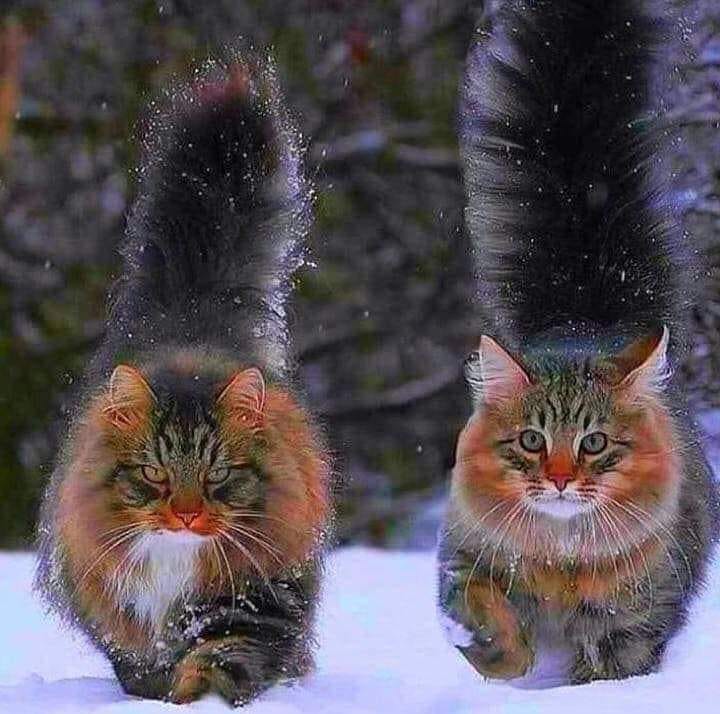
Loose Kangaroo Confounds Cops in Denmark
Authorities in Denmark are on the hunt for a loose kangaroo that was spotted by a motorist who filmed the out-of-place creature hopping through a field. Footage of the weird encounter was shared by South Zealand and Lolland-Falster Police in a Facebook post on Monday. Joking that the “morning driver had to rub his sleep out of his eyes” when he saw the mysterious marsupial, they indicated that the strange sighting had occurred earlier that day near the community of Øster Ulslev on the island of Lloland. Perhaps thinking that no one would believe him, the motorist managed to capture a brief video of the kangaroo before it hopped out of view from the vehicle.
As one might imagine, cops are confused as to how a kangaroo wound up roaming the island since no one has reported such a noticeable creature having gone missing. However, as news of Monday’s sighting spread throughout the community, several people came forward with claims that the marsupial has actually been living in the area for quite awhile. “We see it from time to time, four or five times a week it comes bouncing,” resident Morten Friis nonchalantly told a local media outlet, “it has been here for several years, it is nothing new.” He went on to laugh that “it is very funny, many stop and are completely incomprehensible, and think they see visions. Then we say calmly, ‘it’s just the kangaroo you’ve seen.'”
The possibility that such a creature could make its home on the island is not completely out of the question, wildlife expert Anne Sofie Meilvang said, “even though kangaroos are associated with the warm climate in Australia, the Danish weather does not scare them.” She went on to explain that the animal subsists on a diet of “grass, herbs, bark and leaves,” which can be found in abundance in the area. While the kangaroo may have managed to adapt to living on Lloland, one suspects that its time in the wild may sadly soon come to an end now that its presence in the area has come to light and animal welfare workers are on the lookout for the creature.
 The MarkoZen Blog