Burning Man is an event focused on community, art, self-expression, and self-reliance held annually in the western United States. The name of the event comes from its culminating ceremony: the symbolic burning of a large wooden effigy, referred to as the Man, that occurs on the penultimate night of Burning Man, which is the Saturday evening before Labor Day. The event has been located since 1991 at Black Rock City in northwestern Nevada, a temporary city erected in the Black Rock Desert about 100 miles (160 km) north-northeast of Reno. As outlined by Burning Man co-founder Larry Harvey in 2004, the event is guided by ten principles: radical inclusion, gifting, decommodification, radical self-reliance, radical self-expression, communal effort, civic responsibility, leaving no trace, participation, and immediacy. The event originated on June 22, 1986, on Baker Beach in San Francisco as a small function organized by Larry Harvey and Jerry James, the builders of the first Man. It has since been held annually, spanning the nine days leading up to and including Labor Day. Over the event’s history, attendance has generally increased. In 2019, 78,850 people participated in the event. In 2021, the unofficial event had an estimated 20,000 attendees.
A large gathering of 21st century hippies partying hard
A mechanically inclined anti-establishment do-it-your-selfer must have built this contraption.
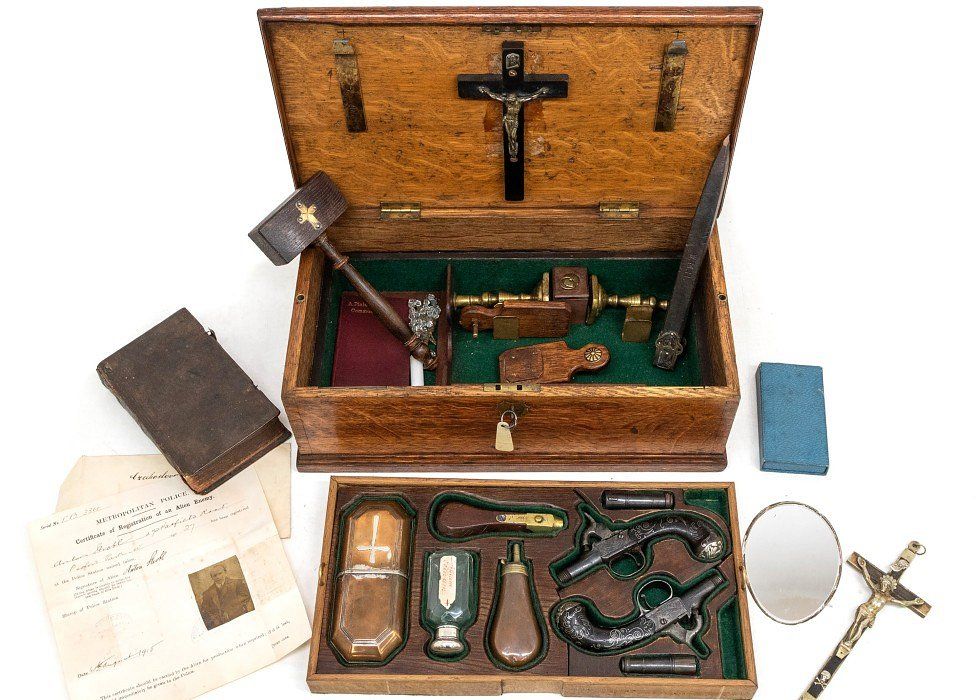
Image caption,The kit comes richly adorned with crosses and crucifixes, including those making up a secret opening mechanism
A different sort of hammer has fallen on a century-old vampire fighting kit, complete with holy water bottle and wooden stake, after it was auctioned.
The bizarre box of paranormal paraphernalia, including candlesticks, crucifixes and pistols, was once owned by British peer Lord Hailey.
It sold for £13,000 at a Derbyshire auction – five times its guide price.
It is unclear how seriously Lord Hailey took the threat of vampires, or if the kit was ever used.
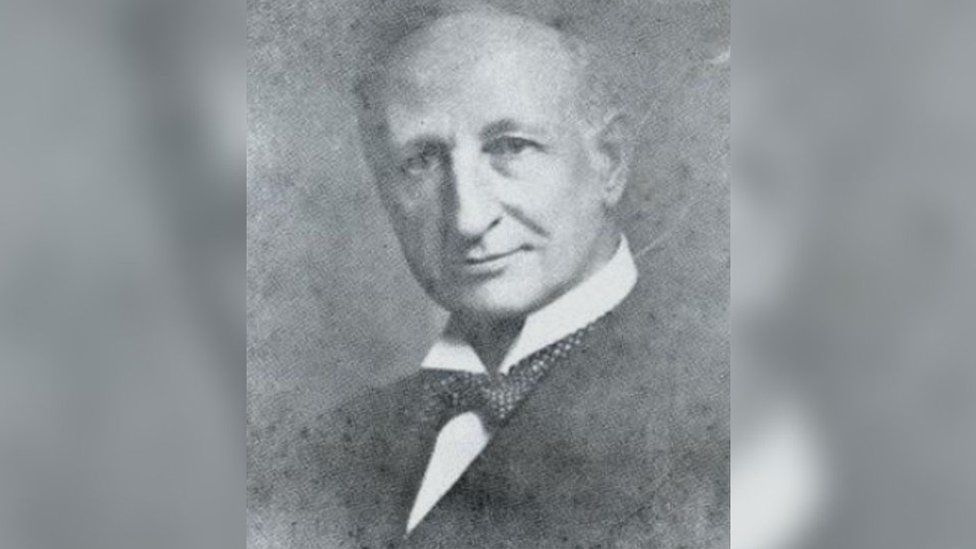
Image caption,Lord Hailey rose to be governor of the Punjab from 1924 to 1928
The 19th Century lockable box features two brass crucifixes on the lid, which act as secret sliding locks.
Inside are more crucifixes, a matching pair of pistols, a brass powder flask, holy water, a Gothic Bible, a wooden mallet, a stake, brass candlesticks and rosary beads.
Several items were stamped with Lord Hailey’s initials.
Also included was Metropolitan Police paperwork apparently registering an “alien enemy” in 1915 – during World War One.
William Malcolm Hailey, 1st Baron Hailey was born in 1872 and rose to be governor of the Punjab from 1924 to 1928 and Governor of the United Provinces from 1928 to 1934.
He died in 1969 and has a memorial tablet in Westminster Abbey.
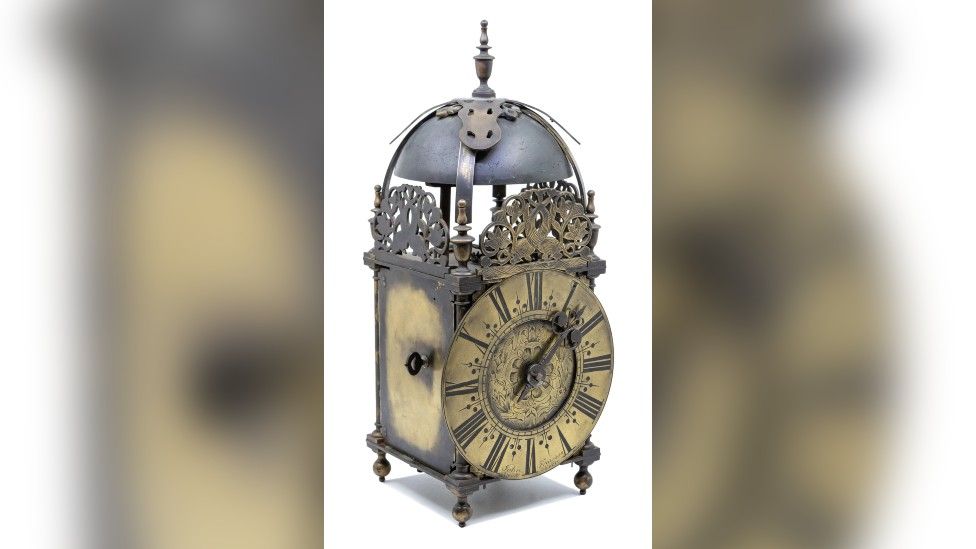
Image caption,This clock is thought to be one of the earliest domestic types available
Charles Hanson, owner of Hansons Auctioneers, said: “Vampires have been part of popular culture for more than 200 years. They are enshrined in European folklore.
“The publication of John Polidori’s The Vampyre in 1819 had a major impact and that was followed by Bram Stoker’s 1897 classic Dracula.
“However, a belief in vampires and strange superstitions go back even further and persist to this day. The task of killing a vampire was extremely serious and historical accounts suggested the need for particular methods and tools.”
Image caption,The Chinese vase may have had links to a World War Two spy
Also in the sale was a Lantern clock dating from between 1690 and 1700.
These are thought to be the earliest types of domestic clocks in England and this example was unusual due to its original condition. It sold for £7,000.
Another lot was a blue and white Chinese “lotus” bottle vase, given to a British serviceman by a family in Japan.
According to family legend, he may have worked as a spy during World War Two. It sold for £1,900.
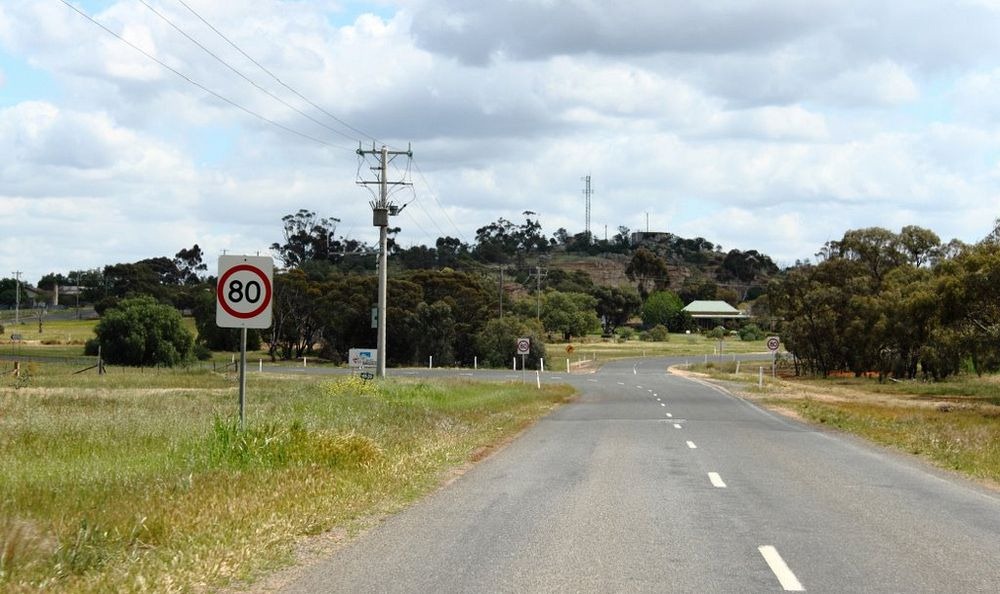
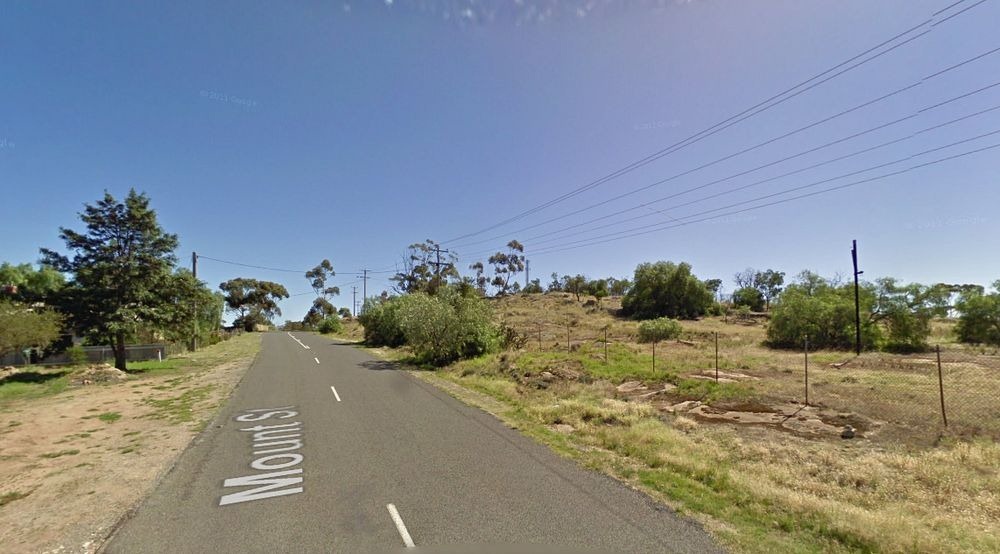
That little bump ahead, just beyond the fork in the road, is the world’s smallest registered mountain. Located in Australia’s low-lying Terrick Terrick Range, Mount Wycheproof stands 148 meters above sea level, which is pretty decent for a small mountain. However, it rises only 43 meters above the surrounding plain, and because the ground rises gradually to the summit, it’s hard to say where the mountain begins.
The mountain is located on the town of Wycheproof, which in turn is located on the hill’s south western slopes. The town was officially established in 1875, although the settlement dates back to 1846. The town’s name is derived from the Aboriginal language, ‘witchi-poorp’, which means ‘grass on a hill’, a reference to Mountt Wycheproof just east of the highway.
Mount Wycheproofite, the world’s smallest mountain. Photo credit: Whroo70/Panoramio
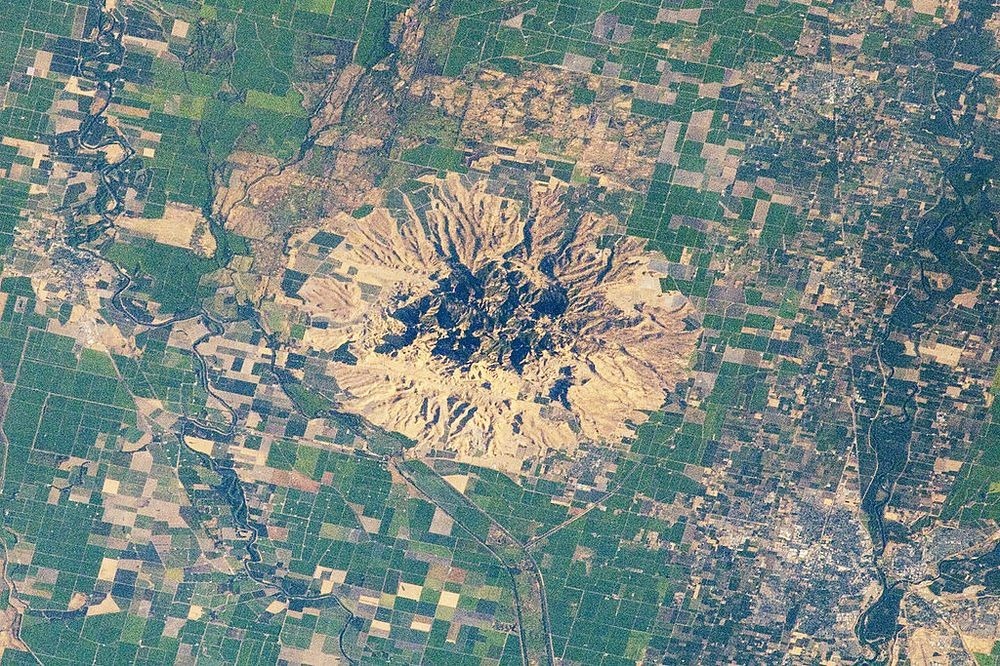
Perhaps a better candidate for the title of the world’s smallest mountain are the eroded remains of a volcanic cone in the flat plains of the Sacramento Valley in Sutter County, northern California. But because of its multiple peaks, the Sutter Buttes are referred to as the world’s smallest mountain range instead.
Rising 610 meters above the surrounding agricultural plains, the Sutter Buttes were once an active volcano formed 1.6 million to 1.4 million years ago during the Pleistocene Epoch. The central core of the Buttes is characterized by lava domes that forms when piles of viscous lava erupts onto the surface that gets higher and higher with each successive layer.
Surrounding the cone is an apron of fragmented material created by occasional eruptions of the lava domes. This ‘debris apron’ extends roughly 16 to 18 kilometers in a circle from the center. Between the core and the debris apron, lies a “moat” that was formed by erosion of older, exposed sedimentary rocks that underlie the volcanic rocks.
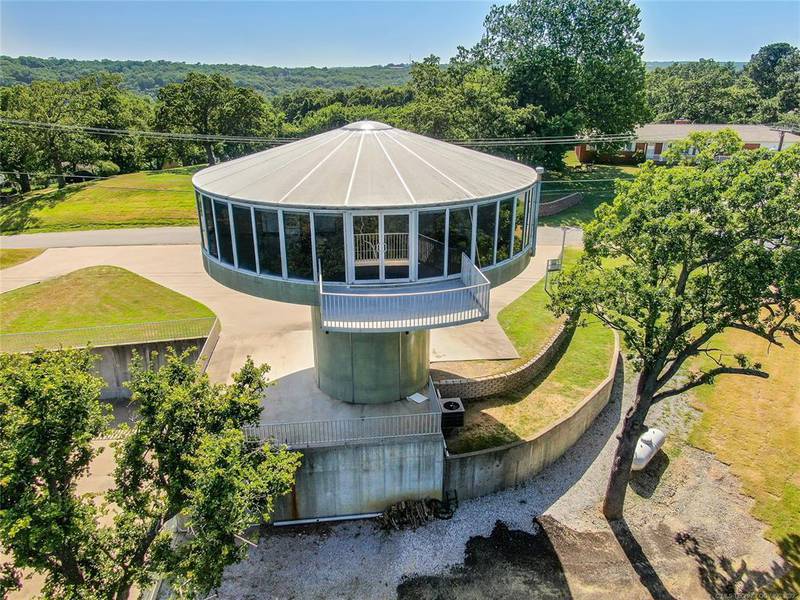
A house for sale in Tulsa, Okla., is drawing attention online due to its resemblance to the saucer-shaped house from “The Jetsons.”
June 29 (UPI) — An unusual house for sale in Oklahoma is drawing attention online due to its resemblance to the titular family’s domicile from classic cartoon series The Jetsons.
Nancy Davis Vandenhende of Halloran Home Team – eXp Realty, who showed the unusual Tulsa home in a popular TikTok video, said the house features its own elevator that takes residents and visitors up to the saucer-shaped main floor of the house.
The home features windows on all sides and features a “breathtaking view of the Tulsa Skyline,” the listing states.
“It reminds me of The Jetsons. Views from every turn,” Vandenhende told KOKI-TV.
The two-bedroom, three-bathroom home was built in 2005. The current asking price is $415,000.
60 Minutes recently did a story on the monks and monasteries of Mount Athos in Greece. Mount Athos is a mountain and peninsula in Macedonia, Greece. A World Heritage Site, it is home to 20 Eastern Orthodox monasteries and forms a self-governed monastic state within the sovereignty of the Hellenic Republic. It is an amazing place with huge monasteries and breath-taking landscapes. The architecture is intrinsically beautiful. Art is everywhere.
The Monks live very simple lives: no electricity, telephones, computers or even radios. They work hard making cheese and other foods. They are also artisans and woodworkers, sculptors and artists.
And they mainly pray. They pray all day long, continuously. When asked by the 60 Minutes journalist Bob Simon why they pray so much, the Monks stated they are preparing for the next life after death when they will come face to face with Jesus.
These men give up everything to prepare for death. A death that their faith assures them will be in heaven in communion with Jesus Christ and the Christian God. To them the ultimate reality is not the here and now. But the future, after death.
Mount Athos monastery
Monks of Mount Athos
One of the greatest physicists of the modern world takes a different approach and understanding.
The Guardian
A belief that heaven or an afterlife awaits us is a “fairy story” for people afraid of death, Stephen Hawking has said.
In a dismissal that underlines his firm rejection of religious comforts, Britain’s most eminent scientist who passed away in 2018 said there was nothing beyond the moment when the brain flickers for the final time.
Hawking, who was diagnosed with motor neurone disease at the age of 21, shared his thoughts on death, human purpose and our chance existence in an exclusive interview with the Guardian back in 2013.
The incurable illness was expected to kill Hawking within a few years of its symptoms arising, an outlook that turned the young scientist to Wagner, but ultimately led him to enjoy life more, he has said, despite the cloud hanging over his future.
“I have lived with the prospect of an early death for the last 49 years. I’m not afraid of death, but I’m in no hurry to die. I have so much I want to do first,” he said.
“I regard the brain as a computer which will stop working when its components fail. There is no heaven or afterlife for broken down computers; that is a fairy story for people afraid of the dark,” he added.
Hawking’s latest comments go beyond those laid out in his 2010 book, The Grand Design, in which he asserted that there is no need for a creator to explain the existence of the universe. The book provoked a backlash from some religious leaders, including the chief rabbi, Lord Sacks, who accused Hawking of committing an “elementary fallacy” of logic.
The physicist’s remarks draw a stark line between the use of God as a metaphor and the belief in an omniscient creator whose hands guide the workings of the cosmos.
In his bestselling 1988 book, A Brief History of Time, Hawking drew on the device so beloved of Einstein, when he described what it would mean for scientists to develop a “theory of everything” – a set of equations that described every particle and force in the entire universe. “It would be the ultimate triumph of human reason – for then we should know the mind of God,” he wrote.
The book sold a reported 9 million copies and propelled the physicist to instant stardom. His fame has led to guest roles in The Simpsons, Star Trek: The Next Generation and Red Dwarf. One of his greatest achievements in physics is a theory that describes how black holes emit radiation.
In the interview, Hawking rejected the notion of life beyond death and emphasised the need to fulfil our potential on Earth by making good use of our lives. In answer to a question on how we should live, he said, simply: “We should seek the greatest value of our action.”
In answering another, he wrote of the beauty of science, such as the exquisite double helix of DNA in biology, or the fundamental equations of physics.
Hawking suggested that with modern space-based instruments, such as the European Space Agency’s Planck mission, it may be possible to spot ancient fingerprints in the light left over from the earliest moments of the universe and work out how our own place in space came to be.
So here we are. What should we do?
We should seek the greatest value of our action.
The Monks are preparing for the next life. That is the ultimate and greatest reward for their actions. Stephen Hawking is living in the here and now. The only true reality that we really do experience according to Hawking, the infinite moment as the Zen say. And Hawking is seeking the greatest value of his actions in this immediate moment.
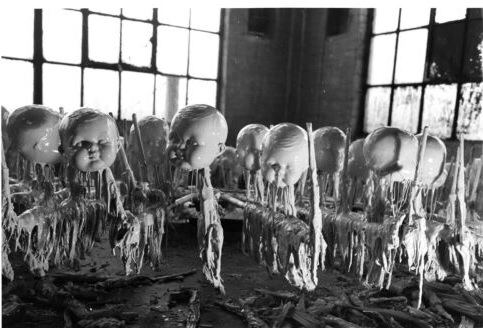
Dripping Dolls Heads in a Factory, Photographed by Merlyn Severn, 1947
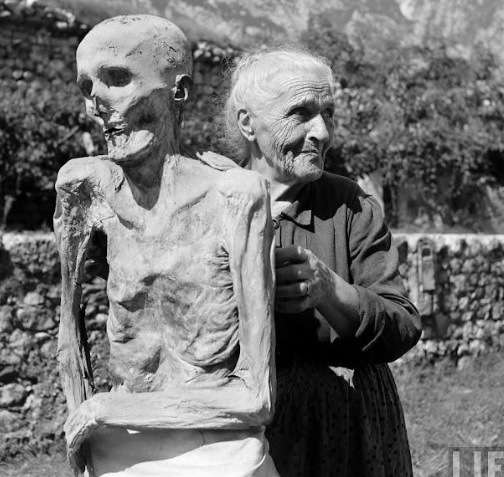
Taking Tea with Mummy: the Mummies of Venzone, Italy, Photographed in 1950
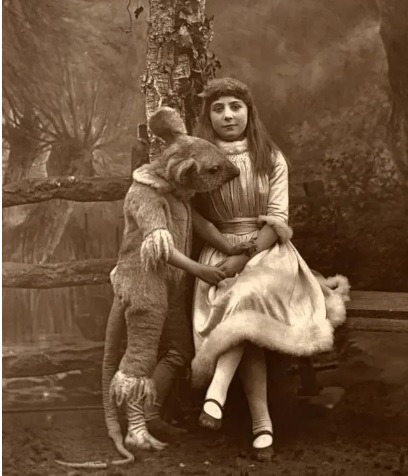
Alice and the Dormouse, Photographed by Ernest Barraud, 1887
Halloween Masks, New York, 1960s, Photographed by Arthur Tress
Just creepy
In 1970, a teenage stowaway named Keith Sapsford fell to his death from an airplane.
On February 22, 1970, an Australian teen named Keith Sapsford snuck onto the tarmac at Sydney Airport and hid inside a Tokyo-bound plane. It was the last decision he ever made. [disaster]
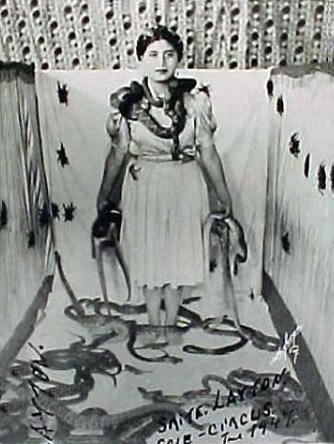
The Snake Woman Saite Layton, Cole Bros. Circus, 1947
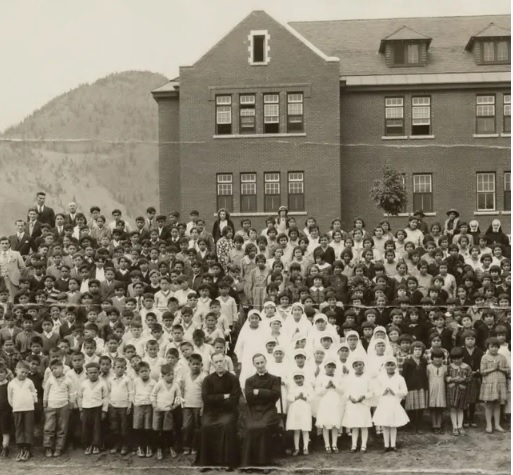
The Kamloops Indian Residential School ran by the Catholic Church (1937)
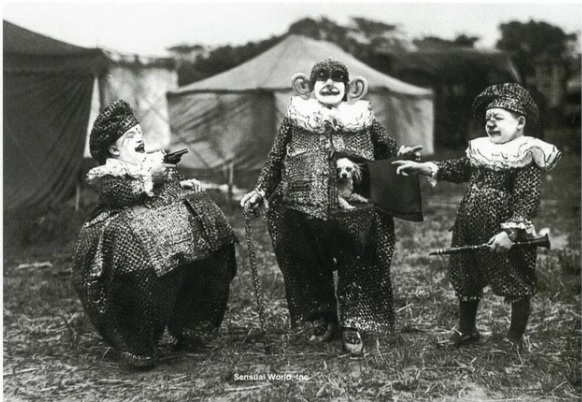
Three French circus performers from around 1900-1930
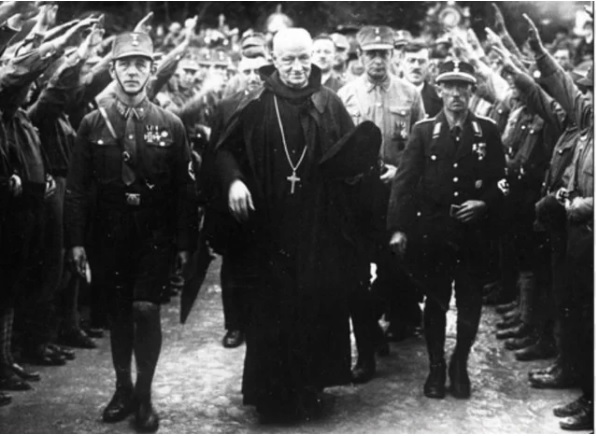
The Catholic Church with the Nazi Third Reich
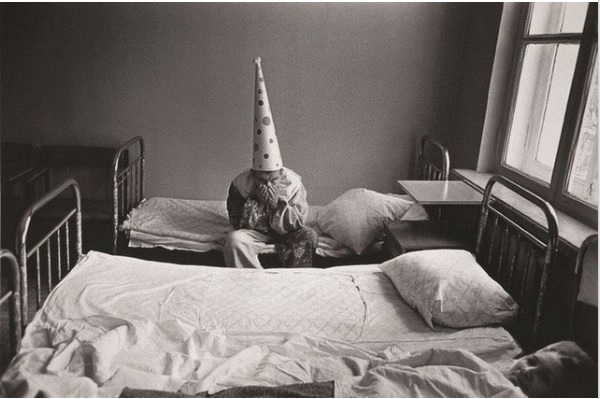
New Year in a psychiatric hospital, Moscow, 1988. Photographer: Pavel Krivtsov

























 The MarkoZen Blog