James Schlesinger was a CIA director who later, as Defence Secretary, told Army chiefs to ignore Nixon if he ordered a nuclear strike
James Schlesinger , who has died at age 85 in 2014, was a hardline American Secretary of Defense from 1973 to 1975 under Presidents Nixon and Ford ; he subsequently became the country’s first Secretary of Energy, under President Carter.
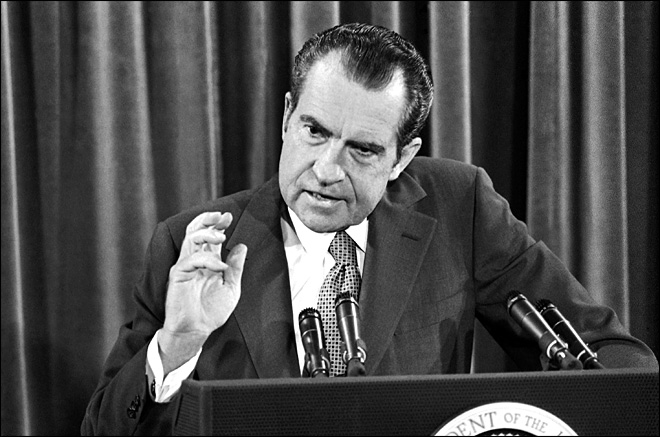
During Nixon’s last days in the White House at the height of the Watergate crisis, when some were doubting the President’s mental stability, Schlesinger reportedly instructed the Joint Chiefs of Staff to check with him before carrying out any of Nixon’s orders regarding nuclear weapons. He also drew up contingency plans for an emergency military deployment in the event of an impeached Nixon refusing to step down.
Nixon was drinking heavily and becoming erratic. Trump doesn’t drink, but erratic, he takes that to a whole new level.
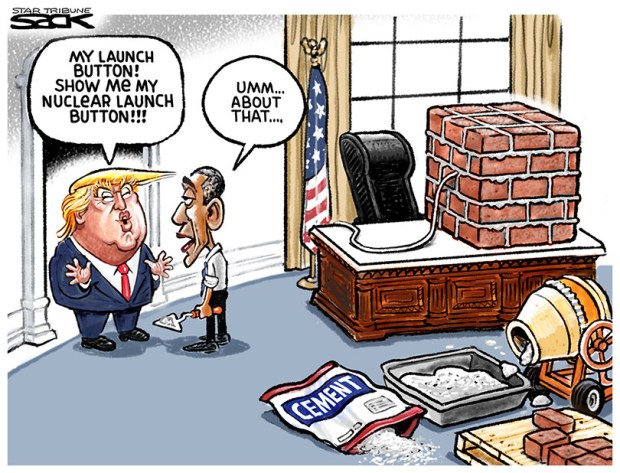
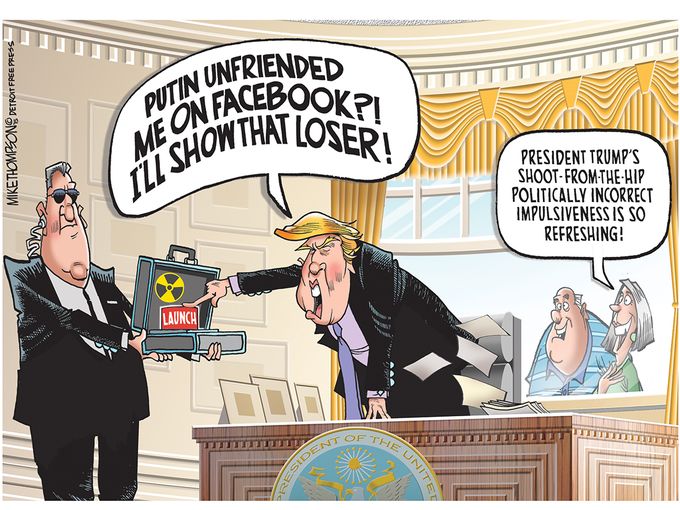
Worse case scenario: Trump is getting impeached and falling down, politically and mentally. He thinks if he is going to go out, he is going to go out in a big way, with a very big bang. Nuke North Korea. His secretaries of defense and state will have to go unconstitutional and take over all control of nuclear weapons. Just as Mr. Schlesinger did back in 1974.
Giant sinkhole in Fukuoka, Japan. Completely repaired in 2 weeks.
Sunset over a volcano
San Diego, the city with perpetual perfect weather.
New Zealand earthquake. Wire like rail tracks.
Great shot of Joe Biden. Most experts agree that Joe would have mopped the floor with Trump if he would have ran.
Whales feeding in Alaska. New underwear for those fisherman.
Angolan President’s palace juxtaposed beside the slums that he rules.
The Big Apple at night.
ISIS suicide “Frankentruck” speeding towards Kurdish lines. These things are packed with over a thousand pounds of explosives and plated with steel sheeting to protect the driver and engine. Packs a hell of a punch. The key is to hit it with a missile before it gets too close.
The founder of K-Tel died a few months ago in Winnipeg. Phil Kives started the company selling anything and everything. His big breakthrough was a non-stick frying pan. And this was just the beginning. In the 70’s and 80’s K-Tel sold everything from the pocket fisherman to the vegie-matic, the miracle brush to bionic glue. Any crazy and obscure product he could find out there, Phil would offer it to the world via TV advertising.
But K-Tel didn’t have all the crazy products. The list below has some products even more bizarre than K-Tel’s most outrageous contraptions.
Kush Support
The weight of one massive jug on top of the other has been plaguing big-breasted side sleepers for ages. Or so the makers of this item claim.
Fridge Locker
Contain your lunch and expose your OCD.
The Better Marriage Blanket
Protect yourself from deadly farts with “the same fabric used by the military to protect against chemical weapons.”
The Backup
A bedside gun rack so you can shoot an intruder without hesitating long enough to notice it’s just your girlfriend.
FIR-Real Portable Sauna
Leave a little bit of your ball sweat every place you visit with this traveling torture chamber.
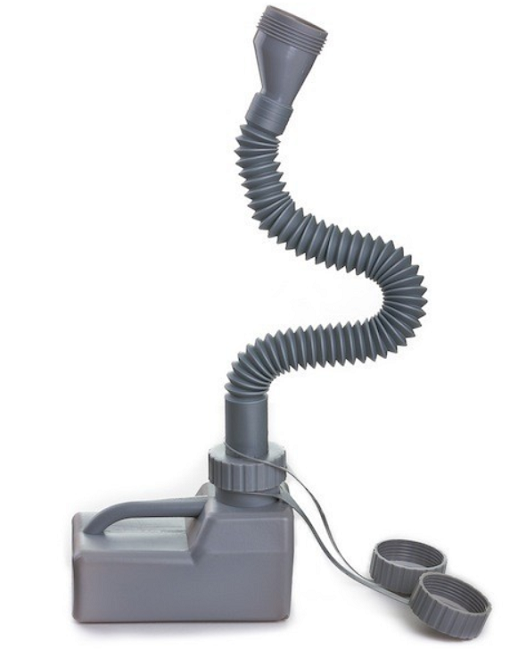
The GoPilot Portable Urinal
This product for the prostate challenged was recently included in a Father’s Day Gift Guide … written by the worst son ever.
Gangnam Style Singing Toothbrush
Hear this maddening tune two times a day for two minutes straight and try not to kill yourself. It’s like Fear Factor.
The Tush Turner
A lazy Suzan for your fat ass that’s guaranteed to make it even fatter.
The UroClub
Douse your friends in urine when you accidentally swing this pee-filled tube instead of your three iron.
The Fat Magnet
Suck the grease—and fun—out of every meal.
Hand Fitness Trainer
Type so hard you break the goddamn keys!
Bigfoot Garden Yeti
A sculpture that ensures a neighbor will never come knocking.
INFILTRATION. SABOTAGE. MAYHEM. FOR YEARS FOUR-STAR GENERAL KEITH ALEXANDER HAS BEEN BUILDING A SECRET ARMY CAPABLE OF LAUNCHING DEVASTATING CYBERATTACKS. NOW IT’S READY TO UNLEASH HELL.
Inside Fort Meade, Maryland, a top-secret city bustles. Tens of thousands of people move through more than 50 buildings—the city has its own post office, fire department, and police force. But as if designed by Kafka, it sits among a forest of trees, surrounded by electrified fences and heavily armed guards, protected by antitank barriers, monitored by sensitive motion detectors, and watched by rotating cameras. To block any telltale electromagnetic signals from escaping, the inner walls of the buildings are wrapped in protective copper shielding and the one-way windows are embedded with a fine copper mesh.
This is the undisputed domain of General Keith Alexander, a man few even in Washington would likely recognize. Never before has anyone in America’s intelligence sphere come close to his degree of power, the number of people under his command, the expanse of his rule, the length of his reign, or the depth of his secrecy. A four-star Army general, his authority extends across three domains: He is director of the world’s largest intelligence service, the National Security Agency; chief of the Central Security Service; and commander of the US Cyber Command. As such, he has his own secret military, presiding over the Navy’s 10th Fleet, the 24th Air Force, and the Second Army.
Alexander runs the nation’s cyberwar efforts, an empire he has built over the past eight years by insisting that the US’s inherent vulnerability to digital attacks requires him to amass more and more authority over the data zipping around the globe. In his telling, the threat is so mind-bogglingly huge that the nation has little option but to eventually put the entire civilian Internet under his protection, requiring tweets and emails to pass through his filters, and putting the kill switch under the government’s forefinger. “What we see is an increasing level of activity on the networks,” he said at a recent security conference in Canada. “I am concerned that this is going to break a threshold where the private sector can no longer handle it and the government is going to have to step in.”
In its tightly controlled public relations, the NSA has focused attention on the threat of cyberattack against the US—the vulnerability of critical infrastructure like power plants and water systems, the susceptibility of the military’s command and control structure, the dependence of the economy on the Internet’s smooth functioning. Defense against these threats was the paramount mission trumpeted by NSA brass at congressional hearings and hashed over at security conferences.
But there is a flip side to this equation that is rarely mentioned: The military has for years been developing offensive capabilities, giving it the power not just to defend the US but to assail its foes. Using so-called cyber-kinetic attacks, Alexander and his forces now have the capability to physically destroy an adversary’s equipment and infrastructure, and potentially even to kill. Alexander—who declined to be interviewed for this article—has concluded that such cyberweapons are as crucial to 21st-century warfare as nuclear arms were in the 20th.
And he and his cyberwarriors have already launched their first attack. The cyberweapon that came to be known as Stuxnet was created and built by the NSA in partnership with the CIA and Israeli intelligence in the mid-2000s. The first known piece of malware designed to destroy physical equipment, Stuxnet was aimed at Iran’s nuclear facility in Natanz. By surreptitiously taking control of an industrial control link known as a Scada (Supervisory Control and Data Acquisition) system, the sophisticated worm was able to damage about a thousand centrifuges used to enrich nuclear material.
A Saudi Sheikh, Salah al-Luhaydan, has said that women in Saudi Arabia shouldn’t drive for health reasons. He says doing so could have negative health effects on their ovaries.
As Reuters recently reported, Saudi women activists have begun a new campaign to try and lift the regressive ban on female drivers in the Saudi kingdom. A petition this group posted on its website outlines the groups aims, that being, “If the state refuses to lift this ban on women, we call on it to offer citizens its justifications for the ban. The state is not a father or a mother and the citizens are not children.”
Al Arabiya in turn today had a report which tells us that Sheikh Salah al-Luhaydan has given some bizarre medical explanation for why Saudi women shouldn’t drive.
He claims that driving “could have a reverse physiological impact. Physiological science and functional medicine studied this side [and discovered] that it automatically affects ovaries and rolls up the pelvis. This why we find for women who continuously drive cars their children are born with clinical disorders of varying degrees.”
Surely this cleric won’t allow women to do what’s in the picture below. That could really bugger them up.
He went on to say that women should accordingly put “the mind before the heart and emotion and look at this issue with a realistic eye. The result of this is bad and they should wait and consider the negativity.”
The Boeing E-4 Advanced Airborne Command Post, with the project name “Nightwatch”, is a strategic command and control military aircraft operated by the United States Air Force (USAF). The E-4 series was specially modified from the Boeing 747-200B. The E-4 serves as a survivable mobile command post for the National Command Authority, namely the President of the United States, the Secretary of Defense, and successors. The four E-4Bs are operated by the 1st Airborne Command and Control Squadron of the 55th Wing located at Offutt Air Force Base, near Omaha, Nebraska. An E-4B is denoted a “National Airborne Operations Center” when in action, it is to be a command platform in the event of nuclear war.
The E-4B is designed to survive an EMP with systems intact and has state-of-the-art direct fire countermeasures. Although many older aircraft have been upgraded with glass cockpits, the E-4B still uses traditional analog flight instruments, as they are less susceptible to damage from an EMP blast.[
The E-4B is capable of operating with a crew up to 112 people including flight and mission personnel, the largest crew of any aircraft in US Air Force history. With in-flight aerial refueling it is capable of remaining airborne for a considerable period (limited only by consumption of the engines’ lubricants and food supplies). In a test flight for endurance, the aircraft remained airborne and fully operational for 35.4 hours, however it was designed to remain airborne for a full week in the event of an emergency. It takes two fully loaded KC-135 tankers to fully refuel an E-4B. The E-4B has three operational decks: upper, middle, and lower.
In January 2006, Secretary of Defense Donald Rumsfeld announced a plan to retire the entire E-4B fleet starting in 2009. This was reduced to retiring one of the aircraft in February 2007. The next Secretary of Defense, Robert Gates reversed this decision in May 2007. This is due to the unique capabilities of the E-4B, which cannot be duplicated by any other single aircraft in Air Force service, and the cancellation in 2007 of the E-10 MC2A, which was considered as a successor to the EC-135 and E-8 aircraft, and could also perform many of the same tasks of the E-4B. As of the 2015 federal budget there were no plans for retiring the E-4B. The E-4B airframe has a usable life of 115K hours and 30K cycles, which would be reached in 2039; the maintenance limiting point would occur some time in the 2020s.
All four produced are operated by the U.S. Air Force, and are assigned to the 1st Airborne Command Control Squadron (1ACCS) of the 55th Wing at Offutt Air Force Base, Nebraska. Maintenance and crews are provided by Air Combat Command. Operations are coordinated by the United States Strategic Command.
When the President travels outside of North America using a VC-25A as Air Force One, an E-4B will deploy to a second airport in the vicinity of the President’s destination, to be readily available in the event of a world crisis or an emergency that renders the VC-25A unusable. When the President visits Honolulu, Hawaii, an E-4B has often been stationed 200 miles away at Hilo International Airport on Hawaii Island.
Battle Staff Cabin
A right front view of an E-4 advanced airborne command post (AABNCP) on the electromagnetic pulse (EMP) simulator for testing.
An electromagnetic pulse (EMP), also sometimes called a transient electromagnetic disturbance, is a short burst of electromagnetic energy. Such a pulse’s origination may be a natural occurrence or man-made and can occur as a radiated, electric or magnetic field or a conducted electric current, depending on the source.
EMP interference is generally disruptive or damaging to electronic equipment, and at higher energy levels a powerful EMP event such as a lightning strike can damage physical objects such as buildings and aircraft structures. The management of EMP effects is an important branch of electromagnetic compatibility (EMC) engineering.
Weapons have been developed to create the damaging effects of high-energy EMP. These are typically divided into nuclear and non-nuclear devices. Such weapons, both real and fictional, have become known to the public by means of popular culture.
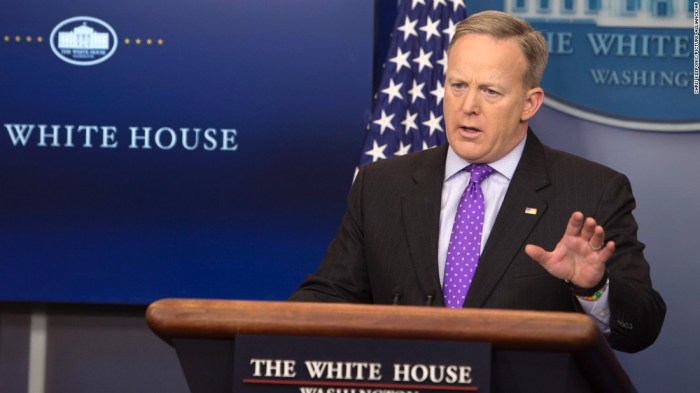
White House press secretary Sean Spicer has a thankless job. He faces the media everyday trying to defend his boss, the unparalleled Donald Trump. The Donald has a knack for throwing gas on the fire. And he is really good at starting fires. The latest allegations from the Washington Post purport that Trump divulged classified intelligence to the Russian foreign minister and ambassador in the Oval Office a couple days ago as they were sharing laughs and cognac. Nothing has been proven so far.
Immediately to the rescue was Sean Spicer. Even though he was berated by Trump in a TV interview last week his loyalty to Donald is without bounds. Trump said he is a great guy, but he gets beat up by the press at the briefings. That didn’t seem to phase Sean. He confronted the rabid press horde tonight defending the president concerning the Russian oval office indiscretion.
Sean was getting bombarded by unrelenting questions regarding the Trump faux pas. Sean didn’t seem like his usual acerbic belligerent self tonight as he stood at the podium warding off rapid fire CNN and New York Times fusillades. After repeating the same answer for the 38th time something snapped inside Spicer. He face turned reddish as he spewed personal insults at a young female reporter from the Boston Globe. The Globe reporter asked Sean what he was hiding. He didn’t take that question very well.
After Reuters Washington correspondent Malcolm Spudbury asked Sean if the alleged blunder by Trump was impeachable, Sean’s head started to go spastic. His cheeks starting drooping downwards and his head turned blue. It was miraculous!
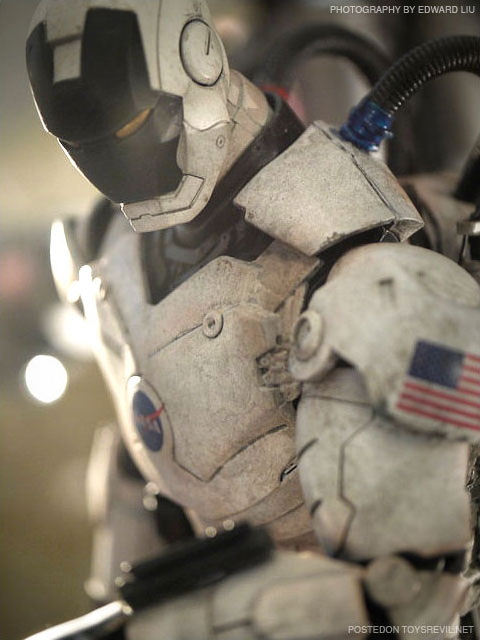
Then a David Cronenberg moment manifested with great ferocity!
After the bloody mishap Trump tweeted: “Sean Spicer has been FIRED!!” I need a new press Secretary right now, a great press secretary. Someone who won’t explode under pressure.”
































 The MarkoZen Blog