Cattle Population





Cattle Population
“Wienermobile” is a series of automobiles shaped like a hot dog on a bun which are used to promote and advertise Oscar Mayer products in the United States. The first version was created in 1936 by Oscar Mayer’s nephew, Carl G. Mayer, and variants are still used by the Oscar Mayer company today. Drivers of the Wienermobiles are known as Hotdoggers and often hand out toy whistles shaped as replicas of the Wienermobile, known as Wienerwhistles.


The Oscar Mayer Wienermobile has evolved from Carl Mayer’s original 1936 vehicle[1] to the vehicles seen on the road today. Although fuel rationing kept the Wienermobile off the road during World War II, in the 1950s Oscar Mayer and the Gerstenslager Company created several new vehicles using a Dodge chassis or a Willys Jeep chassis. One of these models is on display at the Henry Ford Museum in Dearborn, Michigan. These Wienermobiles were piloted by “Little Oscar” (portrayed by George Molchan) who would visit stores, schools, orphanages, and children’s hospitals and participate in parades and festivals.
In 1969, new Wienermobiles were built on a Chevrolet motor home chassis and featured Ford Thunderbird taillights. The 1969 vehicle was the first Wienermobile to travel outside the United States. In 1976 Plastic Products, Inc., built a fiberglass and styrofoam model, again on a Chevrolet motor home chassis.
In 1988, Oscar Mayer launched its Hotdogger program, where recent college graduates were hired to drive the Wienermobile through various parts of the nation and abroad. Using a converted Chevrolet van chassis, Stevens Automotive Corporation and noted industrial designer Brooks Stevens built a fleet of six Wienermobiles for the new team of Hotdoggers.
With the 1995 version, the Wienermobile grew in size to 27 feet long and 11 feet high.[2] The 2004 version of the Wienermobile includes a voice-activated GPS navigation device, an audio center with a wireless microphone, a horn that plays the Wiener Jingle in 21 different genres from Cajun to Rap to Bossa Nova, according to American Eats, and sports fourth generation Pontiac Firebird taillights.


There are currently eight active Wienermobiles, six of which are the full-sized familiar models (the other two are the Mini and the food truck versions) with each assigned a part of the country. The “hotdogger” position of driving the Wienermobile is open to U.S. citizens, and the job lasts from the first of June until the following first of June. Only college seniors who are about to graduate are eligible. Both current hotdoggers and Oscar Mayer recruiters visit college campuses across the country in search of the next round of hotdoggers. Candidates are screened from an average of 2000 applicants. Every March, a pool of thirty final-round candidates are brought to Kraft Foods and Oscar Mayer headquarters in Madison, Wisconsin, for interviews. Each vehicle can hold two hotdoggers, and twelve people are chosen. Currently there are about 300 hotdogger alumni.



A fractal is a mathematical set that exhibits a repeating pattern displayed at every scale. It is also known as expanding symmetry or evolving symmetry. If the replication is exactly the same at every scale, it is called a self-similar pattern. Fractals can also be nearly the same at different levels. This latter pattern is illustrated in small magnifications of the Mandelbrot set. Fractals also include the idea of a detailed pattern that repeats itself.

Fractals are different from other geometric figures because of the way in which they scale. Doubling the edge lengths of a polygon multiplies its area by four, which is two (the ratio of the new to the old side length) raised to the power of two (the dimension of the space the polygon resides in). Likewise, if the radius of a sphere is doubled, its volume scales by eight, which is two (the ratio of the new to the old radius) to the power of three (the dimension that the sphere resides in). But if a fractal’s one-dimensional lengths are all doubled, the spatial content of the fractal scales by a power that is not necessarily an integer. This power is called the fractal dimension of the fractal, and it usually exceeds the fractal’s topological dimension.
I’m not exactly sure what the paragraph above means. But they sure are nice to look at.




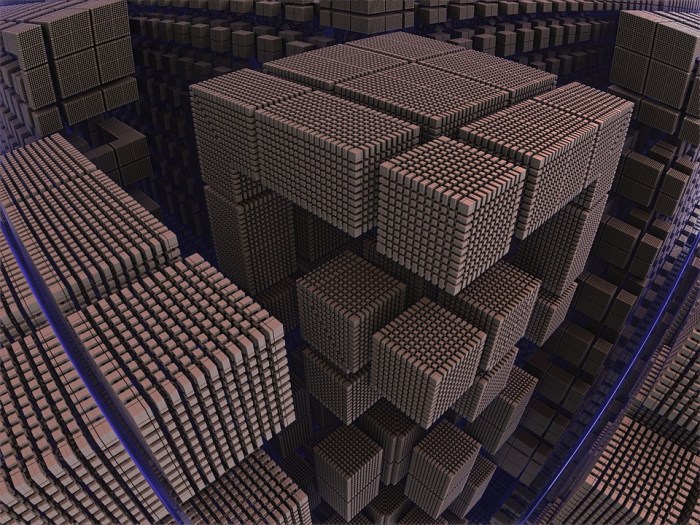
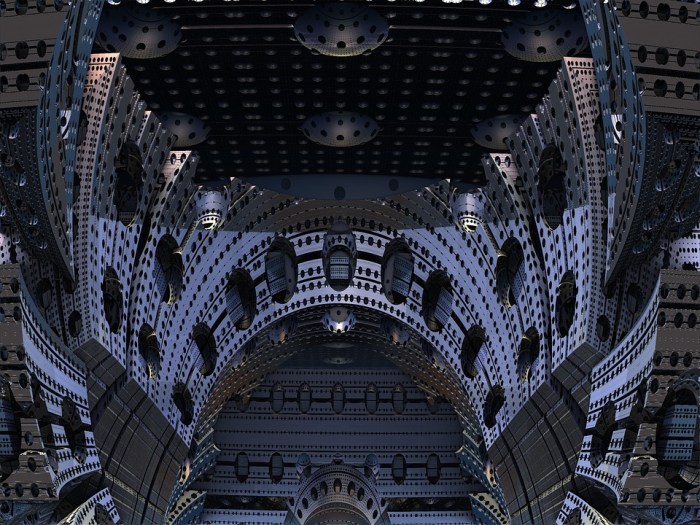


Mandelbrot above



December 1942
An Auxiliary Territorial Service (ATS) ‘spotter’ at a 3.7-inch anti-aircraft gun site.
Though color photography was invented decades before World War II, it was still a rather niche process, more complicated and expensive than black-and-white photography.
The scarcity of color film was compounded by the hazards of shipping in wartime and the difficulties of reproduction and printing.
Nevertheless, thousands of color images were created during the global conflict. 3,000 of those were assembled by the British Ministry of Information and eventually ended up in
the collections of the Imperial War Museums, which now hold over 11 million photos of conflict from the first World War to the present day.
A new book of never-before-published photos drawn from the IWM’s archives, The Second World War in Colour, surveys myriad aspects of the war, from frontline combat among flamethrower tanks and paratroopers to factories and hospitals on the homefront.
— all in vividly immersive color.

May 1943
A crew from the 16th/5th Lancers, 6th Armoured Division, clean the gun barrel of their Crusader tank at El Aroussa in Tunisia.
IMAGE: IMPERIAL WAR MUSEUMS (TR 939)

August 1943
Nurses and convalescent aircrew at Princess Mary’s Royal Air Force Hospital at Halton in Buckinghamshire.
IMAGE: IMPERIAL WAR MUSEUMS (TR 1169)


April 22, 1944
British paratroopers prepare for a practice jump from an RAF Dakota based at Down Ampney in Wiltshire.
IMAGE: IMPERIAL WAR MUSEUMS (TR 1662)


February 1944
General Dwight D. Eisenhower and his senior commanders at Supreme Allied Headquarters in London.
IMAGE: IMPERIAL WAR MUSEUMS (TR 1541)

1943
Lancaster bombers nearing completion in Avro’s assembly plant at Woodford near Manchester.
IMAGE: IMPERIAL WAR MUSEUMS (TR 1386)


September 1943
A 5.5-inch gun crew from 75th (Shropshire Yeomanry) Medium Regiment, Royal Artillery, in action in Italy.
IMAGE: IMPERIAL WAR MUSEUMS (TR 1402)

October 1944
British soldiers admire the Caryatids on the Acropolis while sightseeing in Athens.
IMAGE: IMPERIAL WAR MUSEUMS (TR 2516)

July 1944
The RAF’s top-scoring fighter pilot, Wing Commander James ‘Johnnie’ Johnson, with his Spitfire and pet Labrador ‘Sally’ in Normandy.
IMAGE: IMPERIAL WAR MUSEUMS (TR 2145)

September 1944
Dutch civilians dance in the streets after the liberation of Eindhoven by Allied forces.
IMAGE: IMPERIAL WAR MUSEUMS (TR 2369)
The city of Shibam, located in the central-western area of Hadhramaut Governorate, Yemen, in the Ramlat al-Sab`atayn desert, is best known for its towering mudbrick skyscrapers. This small town of 7000 is packed with around 500 mud houses standing between 5 and 11 stories tall and reaching 100 feet high, all constructed entirely of mud bricks. The bizarre skyline that the high rise buildings bestow upon the city has earned Shibam the moniker “Manhattan of the Desert.”
Shibam is often called “the oldest skyscraper city in the world” and is one of the oldest and best examples of urban planning based on the principle of vertical construction. Its plan is trapezoidal, almost rectangular; and it is enclosed by earthen walls within which a block of dwellings, also built from earth, have been laid out on an orthogonal grid. Shibam was founded in the 3rd century AD, but most of the houses you see here dates only to the 16th century, following a devastating flood of which Shibam was the victim in 1532-33. However, some older houses and large buildings still remain from the first centuries of Islam, such as the Friday Mosque, built in 904, and the castle, built in 1220.

In general the windowless lower floors are used for grain storage, with areas for domestic use above and those for family and leisure above that. The main room on the second floor is used by men for socializing. It often has wonderful carved plasterwork and freestanding decorated wooden columns supporting the ceiling, while women’s areas are found higher, usually on the third or fourth floor. The highest rooms are for communal use by the whole family, and on the upper levels there are often bridges and doors connecting the houses. These are a defensive feature, but also a practical one – especially for old people who find it difficult to walk up and down the interminable staircases.
The houses needed to be rebuilt over the centuries. Rain and erosion have been constant threats to the buildings here. To protect their homes, residents must thickly coat the facades and roofs with sealant, and ensure they are maintained and regularly renovated. Those who can afford it limewash their houses to protect them against termites.
Shibam was added to UNESCO’s World Heritage list in 1982.


Barack

Bruce Willis

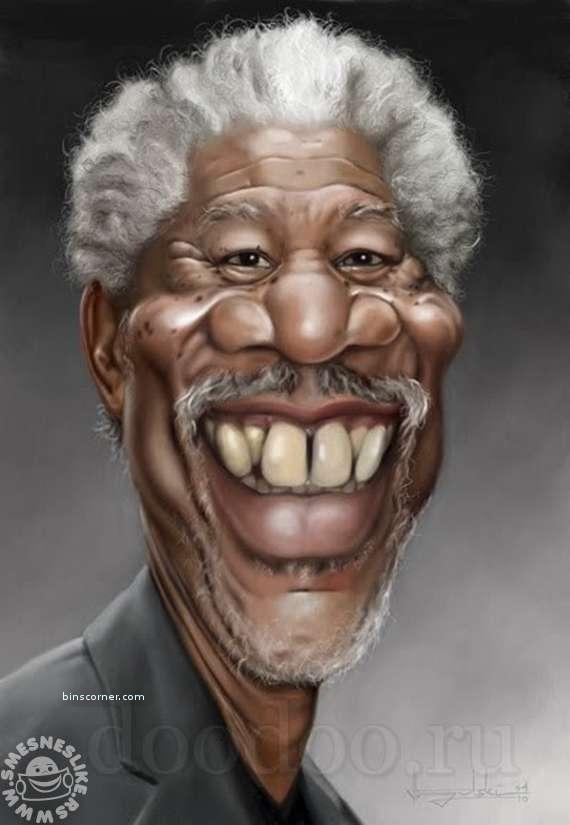
Morgan Freeman
James Bond

Jack

Rocky

Da Terminator

Goodfella

Snoop

Dirty Harry

Scarface
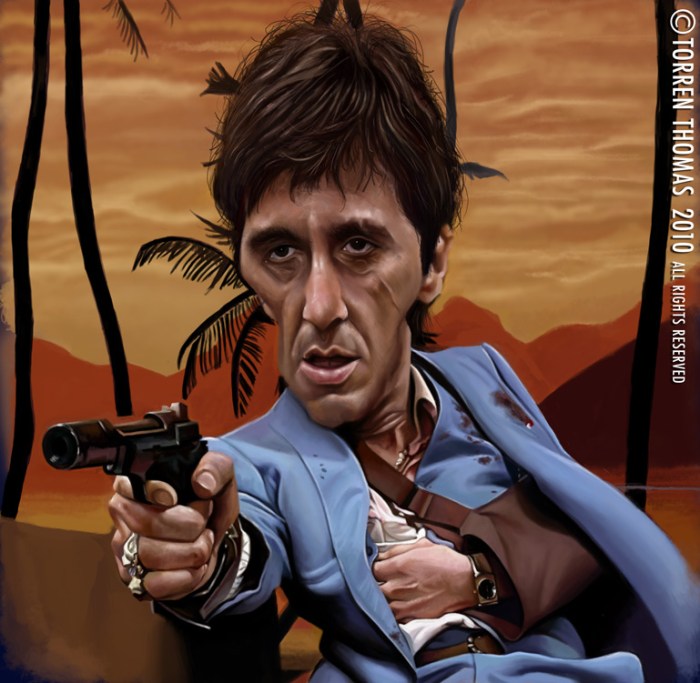
Mr. Bean

Jim

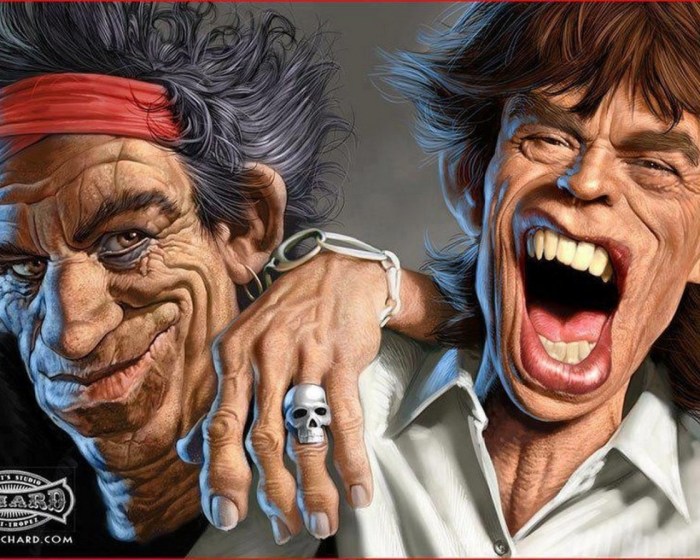
Mick and Keith

Kevin Pollak impersonating Mr. Walken
Lets go cool off in the river

Another day working in the fields
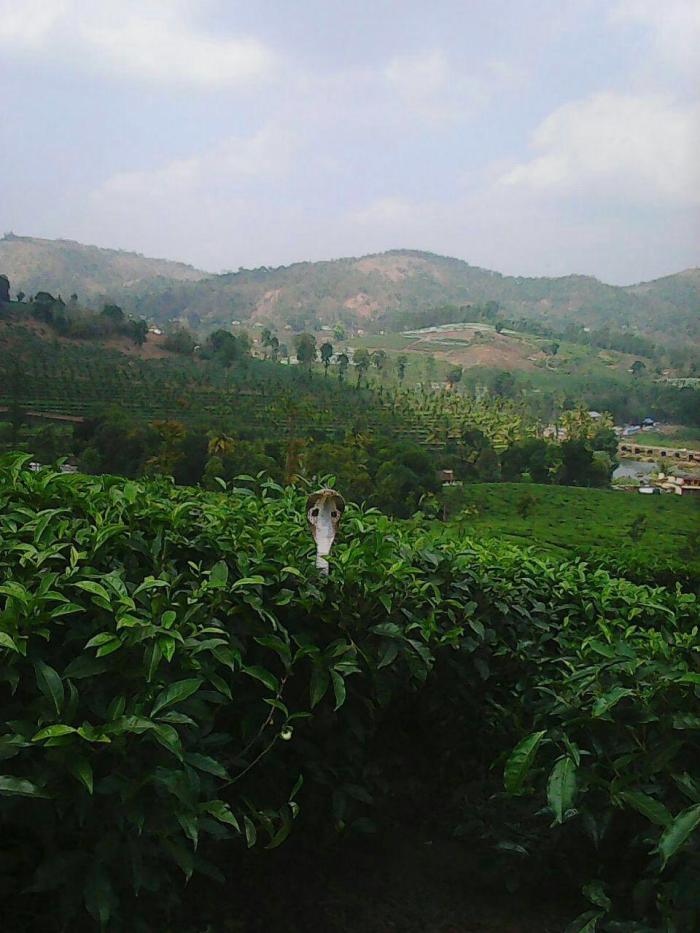
“I don’t feel so good, I’m telling the foreman I’m sick and going home.”
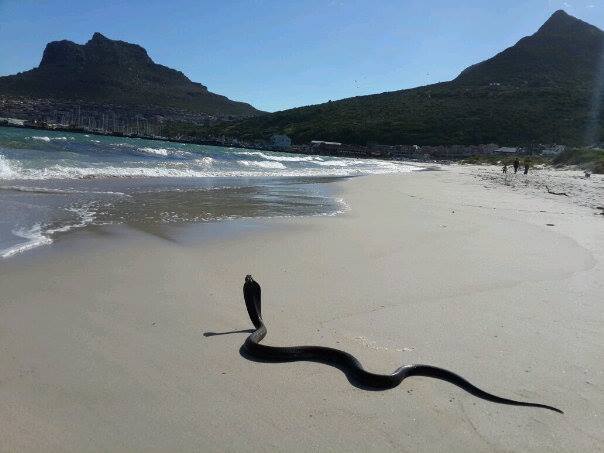
A beautiful day to sunbath on the beach here in Cape Town.
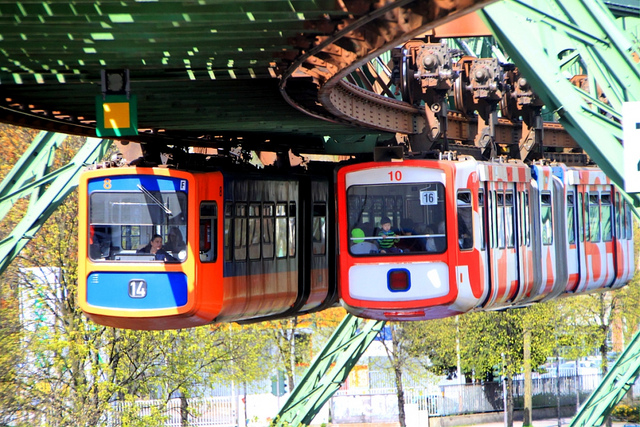
Its full name is “Electric Elevated Railway (Suspension Railway) Installation, Eugen Langen System”, it is the oldest electric elevated railway with hanging cars in the world and is a unique system.
Designed by Eugen Langen to sell to the city of Berlin, the installation with elevated stations was built in Barmen, Elberfeld and Vohwinkel between 1897 and 1903; the first track opened in 1901. The Schwebebahn is still in use today as a normal means of local public transport, moving 25 million passengers annually (2008).
The suspension railway runs along a route of 13.3 kilometres (8.3 mi), at a height of about 12 metres (39 ft) above the river Wupper between Oberbarmen and Sonnborner Straße (10 kilometres or 6.2 miles) and about 8 metres (26 ft) above the valley road between Sonnborner Straße and Vohwinkel (3.3 kilometres or 2.1 miles). At one point the railway crosses the A46 motorway. The entire trip takes about 30 minutes.

Construction on the actual Wuppertal Suspension Railway began in 1898, overseen by the government’s master builder, Wilhelm Feldmann. On 24 October 1900, Emperor Wilhelm II participated in a monorail trial run.
In 1901 the railway came into operation. It opened in sections: the line from Kluse to Zoo/Stadion opened on 1 March, the line to the western terminus at Vohwinkel opened on 24 May, while the line to the eastern terminus at Oberbarmen did not open until 27 June 1903. Around 19,200 tonnes (18,900 long tons; 21,200 short tons) of steel were used to produce the supporting frame and the railway stations. The construction cost 16 million gold marks. The railway was closed owing to severe damage during World War II, but reopened as early as 1946.


The Wuppertal Suspension Railway nowadays carries approximately 80,000 passengers per weekday through the city. Since 1997, the supporting frame has been largely modernised, and many stations have been reconstructed and brought technically up to date. Kluse station, at the theatre in Elberfeld, had been destroyed during the Second World War. This too was reconstructed during the modernisation. Work was planned to be completed in 2001; however a serious accident took place in 1999 which left five people dead and 47 injured. This, along with delivery problems, delayed completion. In recent years (2004), the cost of the reconstruction work has increased from €380 million to €480 million.
On 15 December 2009 the Schwebebahn suspended its operations for safety concerns; several of the older support structures needed to be renewed, a process that was completed on 19 April 2010.
On 10 November 2011 Wuppertaler Stadtwerke (Wuppertal City Works) signed a contract with Vossloh Kiepe to supply 31 new articulated cars to replace those built in the 1970s. The new cars were built in Valencia, Spain. When they were introduced the line’s power supply voltage was raised from 600 to 750 V.
In 2012, the Wuppertal Suspension Railway was closed for significant periods to upgrade the line. The closing times were 7 to 21 July, 6 August to 22 October and weekends in September (15/16) and November (10/11).
The modernisation was completed and the line fully reopened on 19 August 2013.


The cars are suspended from a single rail built underneath a supporting steel frame. The cars hang on wheels which are driven by an electric motor operating at 600 volts DC, fed from an extra rail.
The supporting frame and tracks are made out of 486 pillars and bridgework sections. For the realization Anton Rieppel Head of MAN-Werk Gustavsburg invented 1895-96 a patented structural system. The termini at each end of the line also serve as train depots and reversers.
The current fleet consists of twenty-seven two-car trains built in the 1970s. The cars are 24 metres long and have 4 doors. One carriage can seat 48 with approximately 130 standing passengers. The top speed is 60 kilometres per hour (37 mph) and the average speed is 27 km/h (17 mph).
The Kaiserwagen (Emperor’s car), the original train used by Emperor Wilhelm II during a test ride on 24 October 1900, is still operated on scheduled excursion services, special occasions and for charter events.


On July 21, 1950 the Althoff Circus organised a publicity stunt by putting a baby elephant on a train at Alter Markt station. As the elephant started to bump around during the ride, she was pushed out of the car and fell into the river Wupper. The elephant, two journalists, and one passenger sustained minor injuries. After this jump, the elephant got the name Tuffi, meaning ‘waterdive’ in Italian. Both operator and circus director were fined after the incident.

Driving one of these things would be a great job.


Blast from the past: 2015.
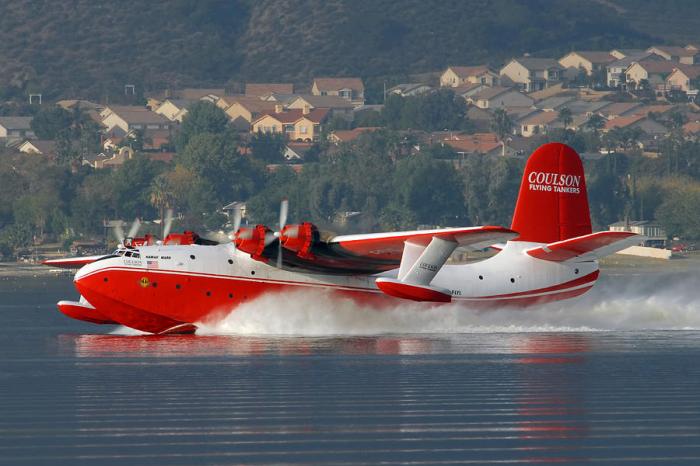
Despite no official deal in place with the B.C. government, one of the largest air water tankers in the world took a test dip in Sproat Lake near Port Alberni, B.C. to ready for action. It operated in 2015.

The last remaining Martin Mars water bomber is “coming out of retirement” to fight the wildfires burning up B.C. this summer, Forests Minster Steve Thomson has confirmed.
About 195 fires are currently burning across the province, with dozens more fires popping up each day.
“Given the extraordinary fire situation this year, and recognizing that public safety is paramount, we need to look at every possible tool in our toolbox,” said Thomson in a statement issued on Wednesday.
The ministry confirmed earlier this week it was in negotiations to use the aging air tanker, but the deal was not confirmed publicly until yesterday
“Today, I’m pleased to announce that we’re entering into a one-month agreement to use the Martin Mars air tanker.”


General characteristics