Julian Assange coming up for air

Julian Paul Assange, born Julian Paul Hawkins, 3 July 1971 is an Australian computer programmer, publisher and journalist. He is editor-in-chief of the organisation WikiLeaks, which he founded in 2006. He has won numerous accolades for journalism, including the Sam Adams Award and Martha Gellhorn Prize for Journalism.
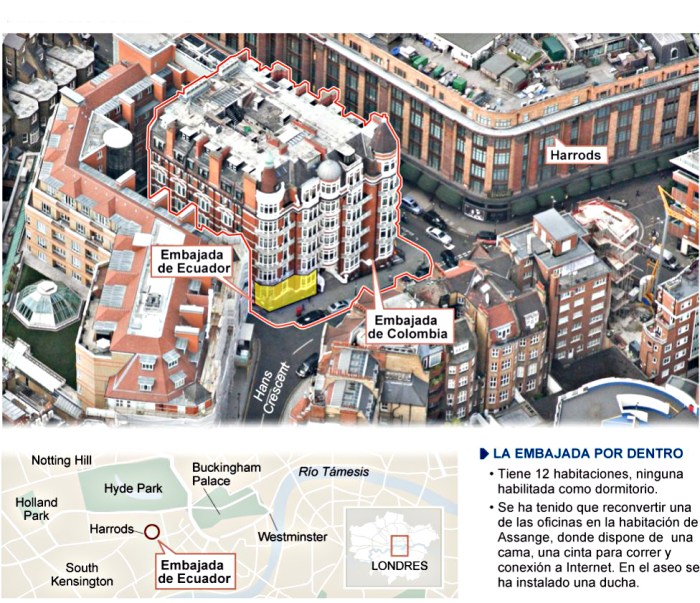
Assange founded WikiLeaks in 2006, but came to global prominence in 2010, when WikiLeaks published a series of leaks provided by Chelsea Manning. These leaks included the Collateral Murder video (April 2010), the Afghanistan war logs (July 2010), the Iraq war logs (October 2010), and CableGate (November 2010). Following the 2010 leaks, the United States government launched a criminal investigation into WikiLeaks and asked allied nations for assistance. In November 2010, a request was made for Assange’s extradition to Sweden, where he had been questioned months earlier over allegations of sexual assault and rape. Assange continued to deny the allegations, and expressed concern that he would be extradited from Sweden to the United States because of his perceived role in publishing secret American documents. Assange surrendered himself to UK police on 7 December 2010, and was held for ten days in solitary confinement before being released on bail. He sought and was granted asylum by Ecuador in August 2012. He has since remained in the Embassy of Ecuador in London, and is unable to leave without being arrested for breaching his bail conditions.

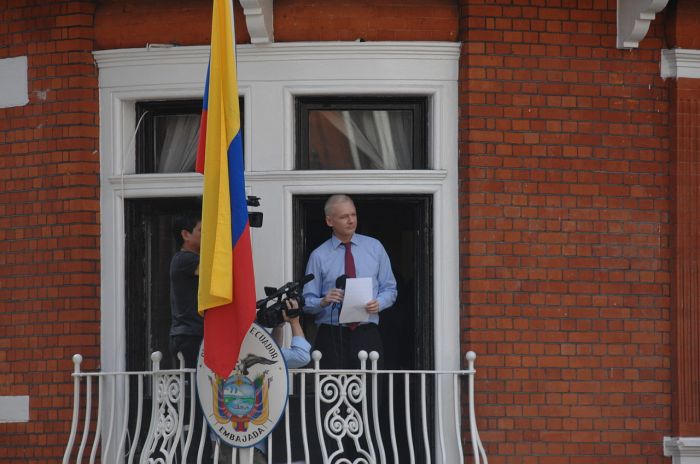
Speaking from the Embassy
ajulie4

On 16 August 2012, Foreign Minister Patiño announced that Ecuador was granting Assange political asylum because of the threat represented by the United States secret investigation against him and several calls for assassination from many American politicians. In its formal statement, Ecuador reasoned that “as a consequence of [Assange’s] determined defense to freedom of expression and freedom of press… in any given moment, a situation may come where his life, safety or personal integrity will be in danger”. Latin American states expressed support for Ecuador. Ecuadorian President Rafael Correa confirmed on 18 August that Assange could stay at the embassy indefinitely, and the following day Assange gave his first speech from the balcony. Assange’s supporters forfeited £293,500 in bail and sureties. His home since then has been an office converted into a studio apartment, equipped with a bed, telephone, sun lamp, computer, shower, treadmill, and kitchenette.
ajulie6

Due to the assassination threats Assange doesn’t go out on the embassy balconies and stays away from windows. Nor does he venture to the roof for fresh air.

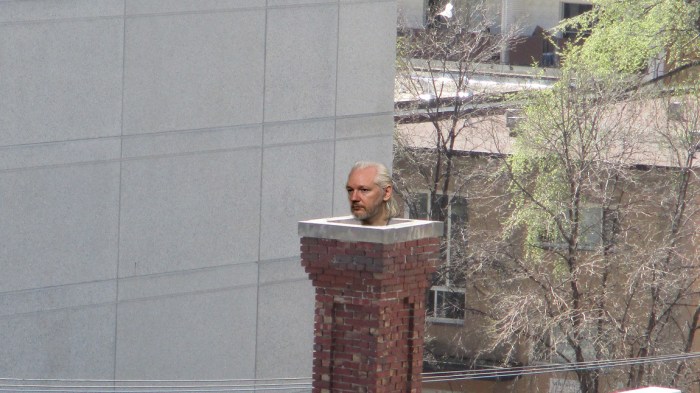
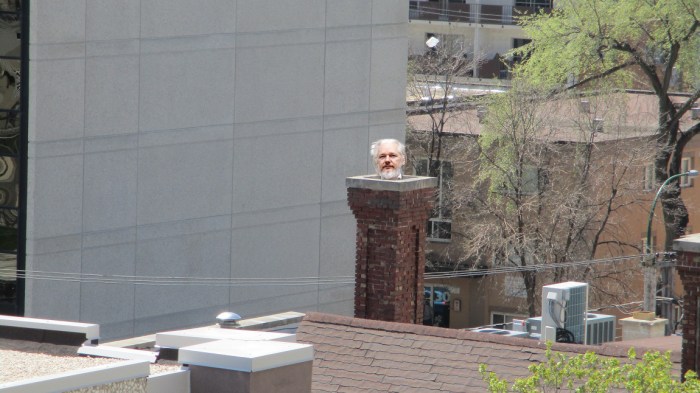
Recently emerged photos taken by British intelligence seems to show Assange’s head emerging from a chimney from a nearby building. How he moved from the embassy to that building is unknown.
ajulie (1)

ajulie (2)

The fresh air must be exhilarating. Getting through the chimney however must be quite stuffy.

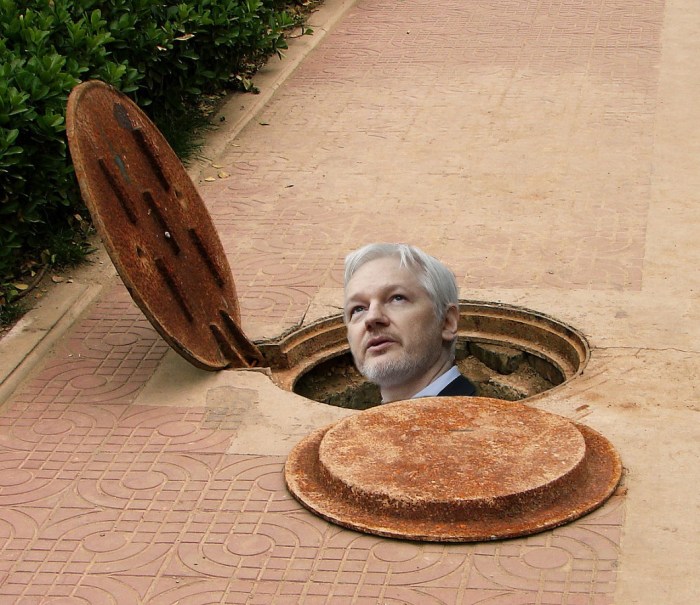
Another photo snapped by a lucky paparazzi shows Assange sticking his head out of a manhole on a street next to the embassy. Conjecture has it that Assange must have a network of sewer tunnels available to him to move around below the streets of London. If the Ecuadorians ever change their minds about allowing him asylum Julian could make a break for it by fleeing through the sewers. With help he could make it to Russia, where he could move in with Edward Snowden.
ajulie3

Assange claims he is all about transparency by governments. A true democrat who is fighting for the people. According to traitors like Assange and Snowden the government should never conceal and have secrets. Everything should be wide open. Even in time of war.

Furthermore,  if Assange is so committed to truth and transparency, why doesn’t he turn himself in to authorities and face the music. If he is truthfully innocent he has nothing to fear,  so why is he holed up in the Ecuadorian Embassy like a cornered rat?

00000winstonchurchill1

NASA’s Armstrong Flight Research Center

Armstrong Flight Research Center is NASA’s primary center for atmospheric flight research and operations. NASA Armstrong is chartered to research and test advanced aeronautics, space and related technologies that are critical to carrying out the agency’s missions of space exploration, space operations, scientific discovery, and aeronautical research and development.

Located at Edwards, California, in the western Mojave Desert, Armstrong is uniquely situated to take advantage of the excellent year-round flying weather, remote area and visibility to flight test some of the nation’s most unique aircraft and aeronautical systems.

Some examples of the research undertaken: Oblique Wing Research, SST and Sonic Boom Research, Autonomous Formation Flight Control, Atmospheric Research, Vortex study,  Develop Dyna-soar launch pad abort procedures, Variable Sweep Transition flight experiment,  F-15 – Thrust Vectoring, to name a few.

Selected aircraft:

nasa automatic collision avoidance technology

F-16D conducting Automatic Collision Avoidance Technology (ACAT) tests

nasa1

F-14 Tomcat

nasa2

F-15 Eagle

nasa3

F-18

nasa4

F-104 Starfighters

nasa5

Global Hawk Unmanned Aerial Vehicle (this drone is bigger than an F-16)

nasa7

SR-71 Blackbird

nasa8

F-16

nasa9

F-18 Hornet

nasa10

The infamous Predator drone

The current fleet

nasa6


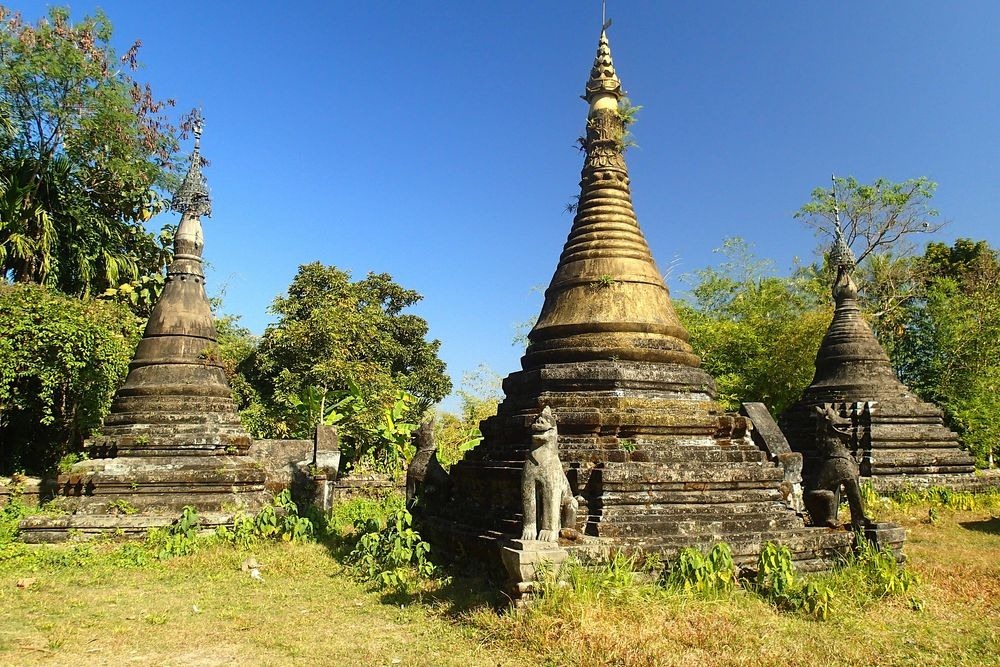
The Forgotten Ruins of Mrauk U

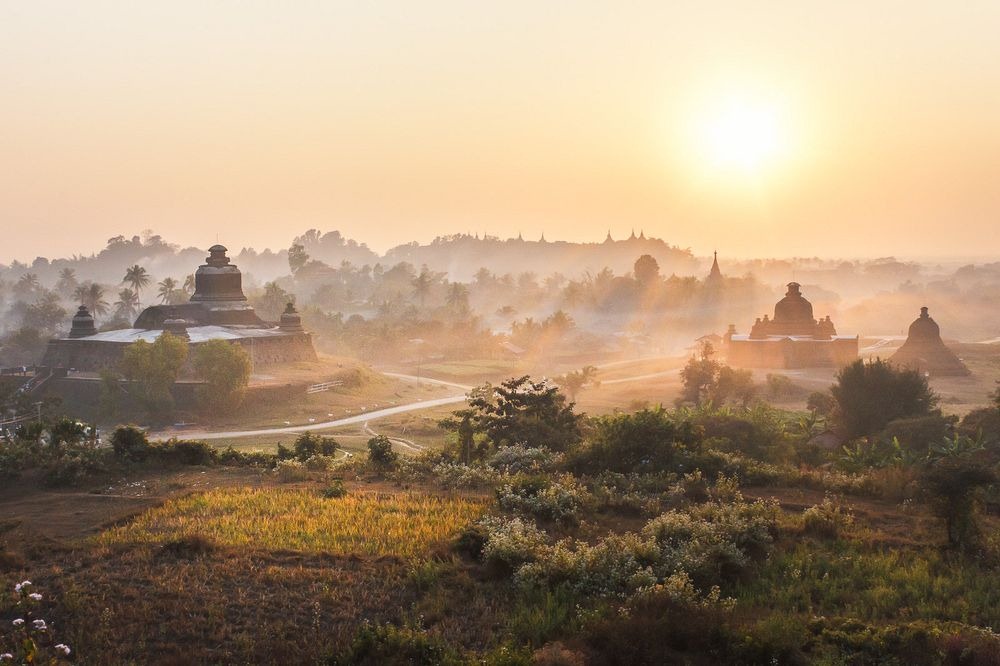
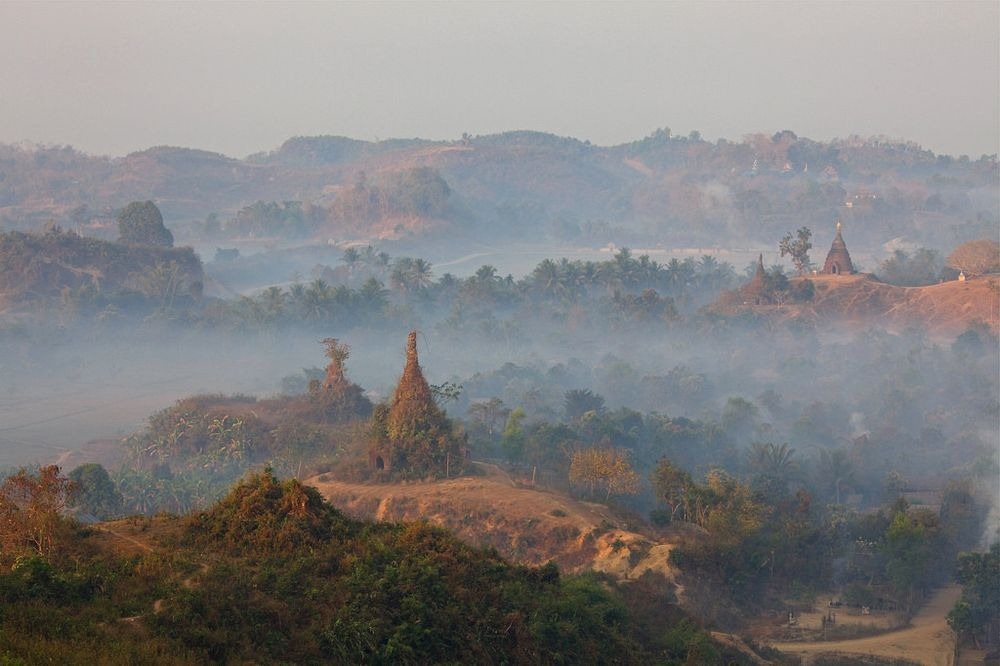
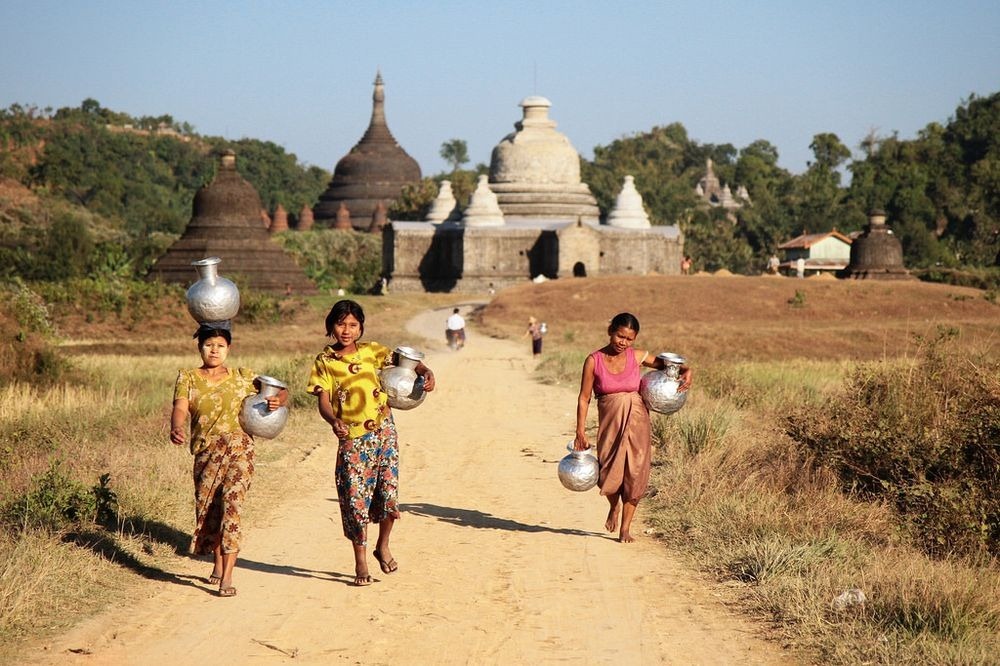
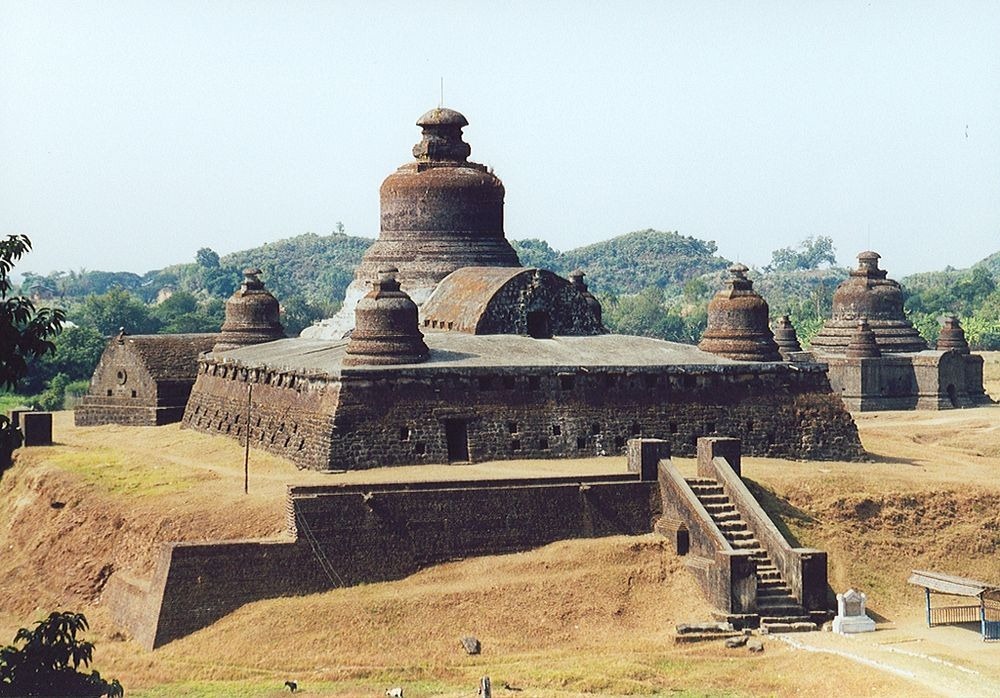
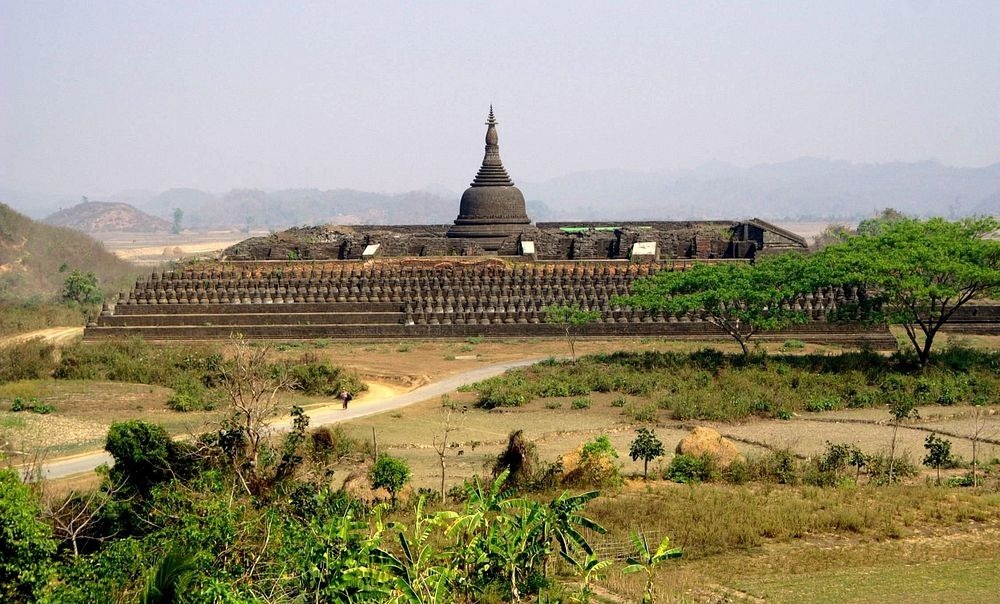
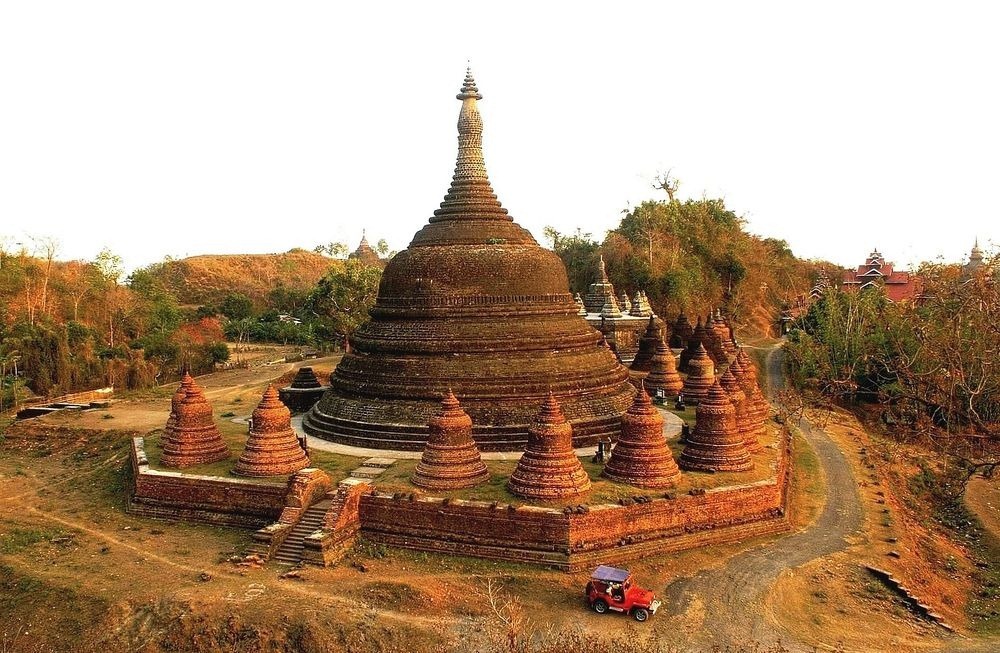
Spread across the beautiful rolling hills of Rakhine in Western Burma, lies a little known archeological site—the medieval town of Mrauk U. Once the capital of the powerful Arakan empire where Portuguese, Dutch and French traders rubbed shoulders with the scholars of Bengal and Mughal princes on the run, Mrauk U is now a sleepy village where goat herders tend to their animals, farmers work their fields and women fetch water from the wells located among the hundreds of old temples and Buddhist pagodas that the Kings of Mrauk U erected during the city’s heydays.

mrauk-u-10

The Mrauk U Kingdom was founded in 1430 by King Min Saw Mon, and Mrauk U remained the capital for more than three hundred and fifty years, until 1785. At its peak, Mrauk U controlled half of Bangladesh and the western part of Lower Burma. Its fame spread to far Europe where it became known as a city of oriental splendor after the Portuguese missionary and traveler, Fray Sebastien Manrique, published a vivid account of the coronation of King Thiri Thudhamma in 1635 and about the Rakhine Court.

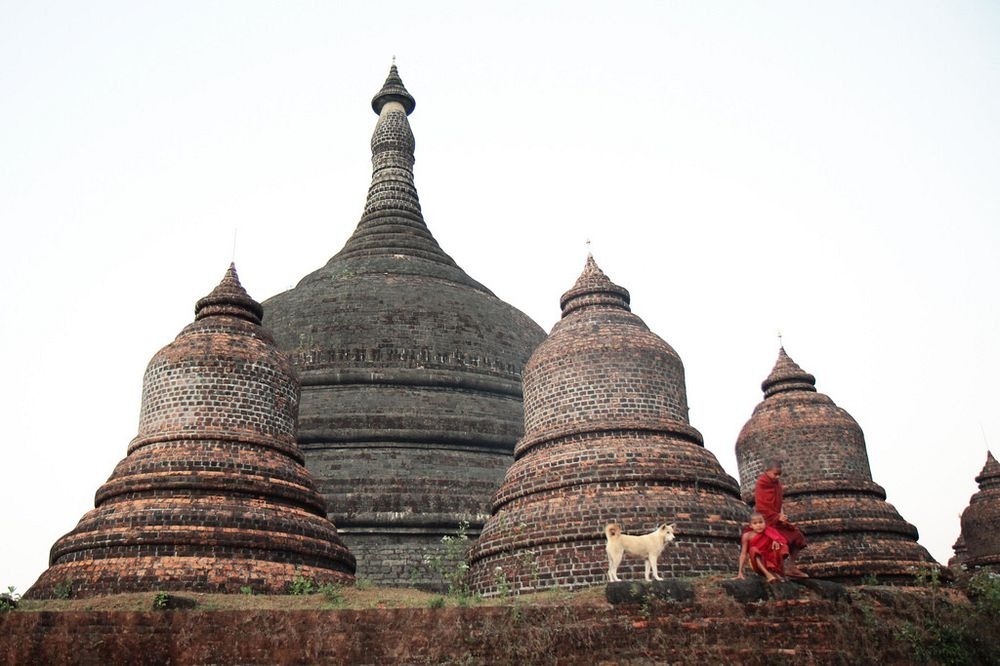
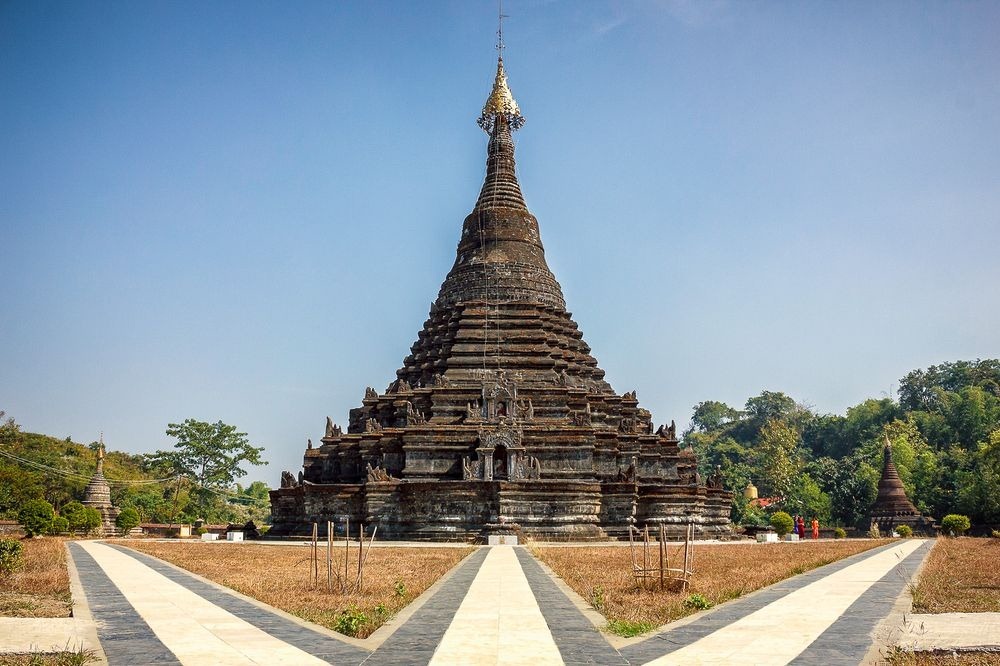
As the city grew, the King and the rich inhabitants built many Buddhist pagodas and temples. Some are still being used as places of worship, and these are the main attraction of Mrauk-U. In fact, Mrauk U’s rich collection of temples and pagodas is second only to Bagan, but unlike Bagan, Mrauk U isn’t swarmed with tourists. This is because the place is not easy to reach. There’s no airport, and the only way to get there is by a boat, which takes about 7 to 8 hours.

One thing that sets Mrauk U apart from other popular archeological sites is the local life here that runs right in the heart of this historical site.

Travel writer Robert Reid describes his visit to Mrauk U in a BBC article:

Here, the ruins are merely a backdrop to everyday life. Streams of young women fill tin pots at temple-side wells and take short cuts over cracked pagoda steps to farms sandwiched between 500-year-old stupas. Elders crouch below trees, amid smoking refuse piles and goat herds.

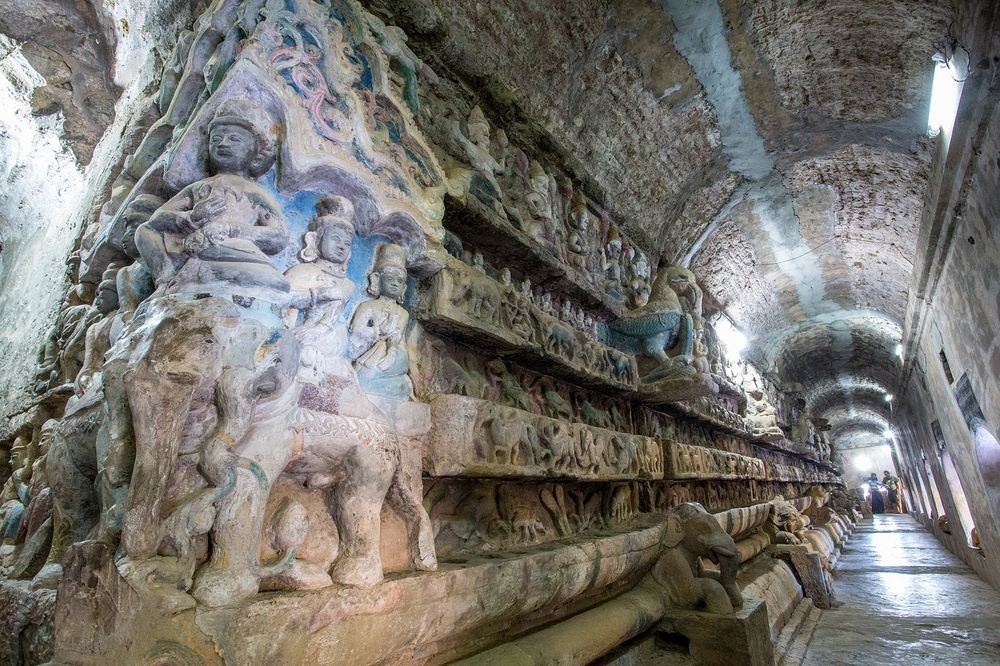
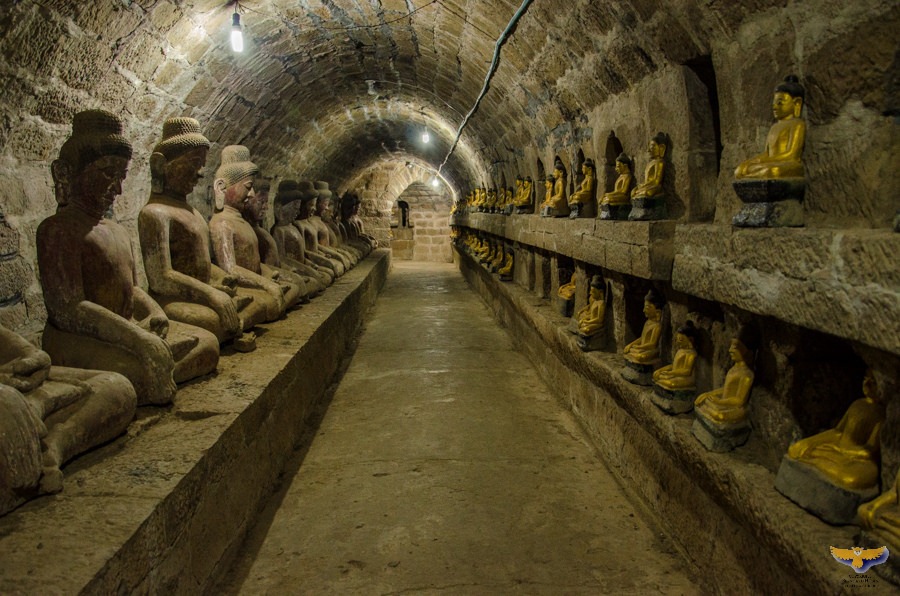
Another difference between Bagan and Mrauk U is that unlike in Bagan, none of the temples in Mrauk U are closed, and can be explored inside out. Although there are far more temples in Bagan than in Mrauk U, the views from the surrounding hills are no less breathtaking. The temples are also different to those in Bagan, made of hewn stone bricks rather than mud and brick. Some of the temples were built like bunkers with thick solid walls, and were probably used as places of refuge during times of war.

Being the former capital of the Arakan empire, Mrauk U was surrounded by long defensive walls and moats, at the center of which stood the Royal Palace. Very little of the palace remains today.

mrauk-u-1

mrauk-u-2

mrauk-u-3

mrauk-u-4

mrauk-u-5

mrauk-u-6

mrauk-u-14

mrauk-u-7

mrauk-u-9

mrauk-u-11

Amusing Planet

The Best Star Trek Models, Props and Toys

Scratch that collector itch and buy yourself some branded and licensed plastic lifestyle Star Trek accouterments.

1:350 Scale Enterprise Model

trek

If you’re a modeler, this is the replica kit to get. The completed USS Starship Enterprise is over 32 inches long, but more impressive than the size is the incredible detail. There’s even an optional lighting kit that will set the portholes aglow. Also makes a great holiday dinner centerpiece. $140

DST Communicator & Phaser

trek1

If you are wandering in the outskirts of space, you are going to need these bad boys. Talk with fellow shipmates via the Communicator and stun your enemies with the Phaser. Diamond Select Toys is known for its excellent replicas, and this $75 two-pack is essential TOS hardware.

Bat’Leth

Batleth-932x621

A 1:1 replica of the most choice Klingon battle weapon, crafted of aluminum and finished with real leather. Phasers? Earthling nonsense. Hand-to-hand blade combat to the death is what really makes a warrior. $500

Tribble

trek2

These tiny, hairy creatures are totally adorable. Buy 50 of them, throw them on your bed, jump into their furriness, then curse their existence. Fun! $10 each.

Custom Uniform Shirt

trek3

Meet eBay user Murraymousie. Send in your measurements, and 10 days later you’ll be sent a custom-sewn velour replica uniform shirt or dress, complete with rank and insignia. Pick gold for Kirk, a red shirt for Scotty, or a red dress for Uhura. $100 and up.

DST Retro Cloth Figures

trek4

The vintage 8-inch action figures from Mego are highly collectible, and Kirk and Spock go for about $50 each on eBay. But the plastic on these 40-year-old toys is disintegrating, so get yourself some modern-day redos from Diamond Select Toys. Pick from any number of characters. $160 for two.

The Klingon Dictionary

Author/lexicographer Marc Okrand, the creator of Klingon language for the Star Trek TV series, being bodily carried by two men made-up & wearing costumes as Klingons while reading his book THE KLINGON DICTIONARY at the Air & Space Museum. (Photo by Robert Sherbow/The LIFE Images Collection/Getty Images)

If you’re going to demand that an enemy “Surrender or die,” then you’d better get your pronunciation right. $11.33

TR-590 MK 9 Science Tricorder

trek6

This $500 replica prop is not only stunningly accurate, but it also lights up and makes the appropriate sound effects. No more walking around with your iPhone going “bloop beep weee-ooh” when it’s time to play doctor.

Gorn Action Figure

LOS ANGELES - JANUARY 19: A Gorn in the STAR TREK episode, "Arena". Original air date January 19, 1967, season 1, episode 19. Image is a screen grab. (Photo by CBS via Getty Images)

All of the ReAction figures are pretty cool, but we’ve got a soft spot for Gorn. $19

Hot Wheels Klingon Bird of Prey

trek8

Never mind the little cars. Hot Wheels makes some pretty decent Trek stuff, and this Klingon BOP ($39) is a good example. The wings fold just like the real thing, but the cloaking device will cost you a whole lot extra.

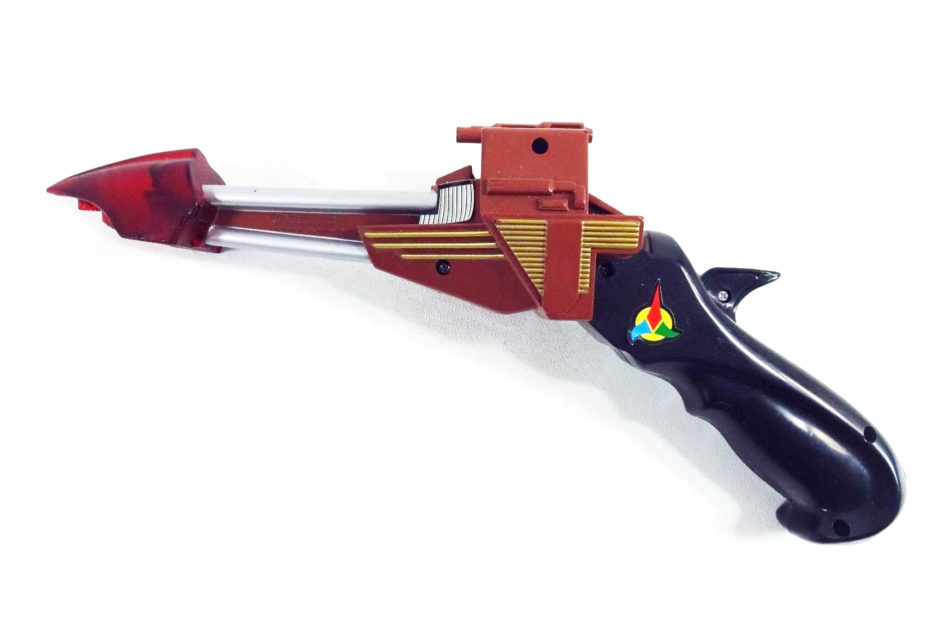
Playmates Klingon Disruptor

trek9

You’ll have to go to eBay for this vintage toy from the 1990s, but the cool sounds it makes are worth the hassle of all the hunting, bidding and sniping.

Enterprise Bridge Playset

trek10

The ultimatest ultimate. This replica of the original Mego set from the ’70s works with any figure built to the scale of the originals, as most of the current “retro” toys are. $60

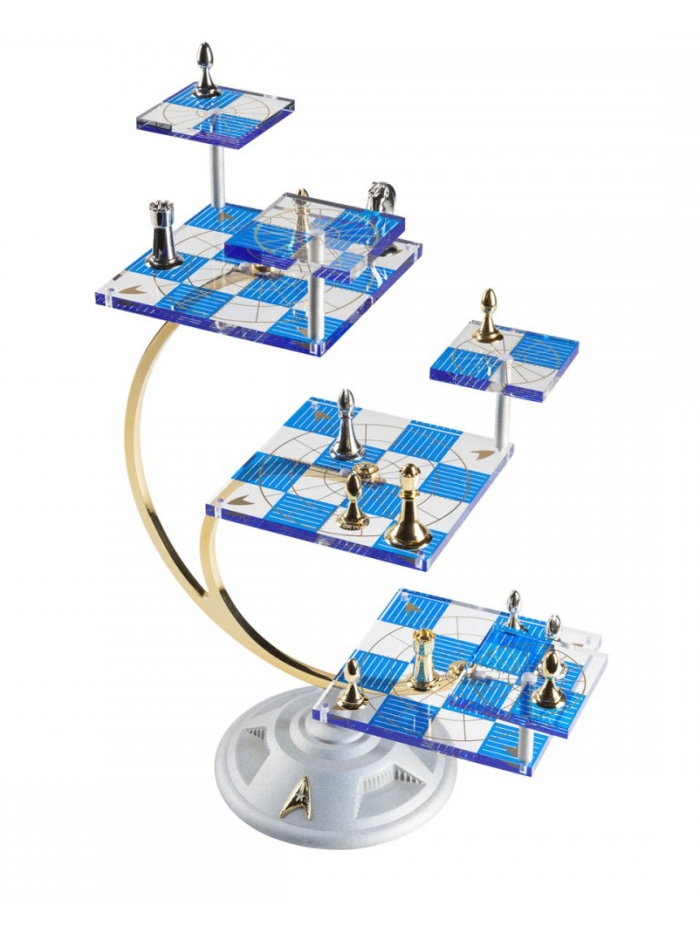
Tri-D Chess Set

trek11

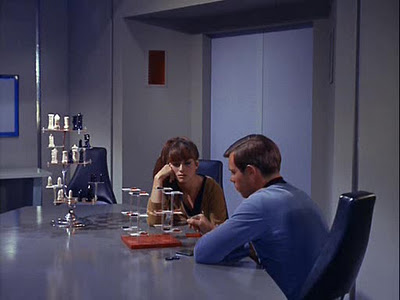
This recreation of the original Franklin Mint Tri-D chess set from the 1990s will set you back $275. But that’s real silver and gold on there. And whoo boy is this thing extra nerdy or what? How do you play it? Who cares!?
trek4478169