Saudi Cleric doesn’t want women to drive

A Saudi Sheikh, Salah al-Luhaydan, has said that women in  Saudi Arabia shouldn’t drive for health reasons. He says doing so could have  negative health effects on their ovaries.

 As Reuters recently reported, Saudi women activists have begun  a new campaign to try and lift the regressive ban on female drivers in the Saudi  kingdom. A petition this group posted on its website outlines the groups aims,  that being, “If the state refuses to lift this ban on women, we call on it to  offer citizens its justifications for the ban. The state is not a father or a  mother and the citizens are not children.”
 Al Arabiya in turn today had a report which tells us that Sheikh Salah al-Luhaydan  has given some bizarre medical explanation for why Saudi women shouldn’t drive.

He claims that driving “could have a  reverse physiological impact. Physiological science and functional medicine  studied this side [and discovered] that it automatically affects ovaries and  rolls up the pelvis. This why we find for women who continuously drive cars  their children are born with clinical disorders of varying degrees.”

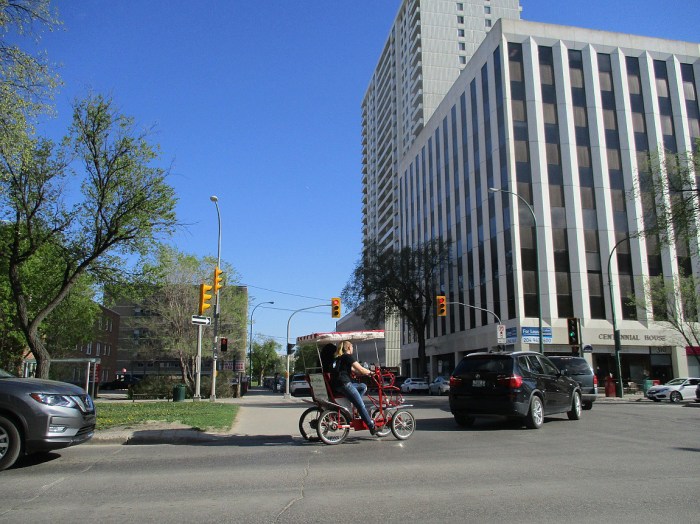
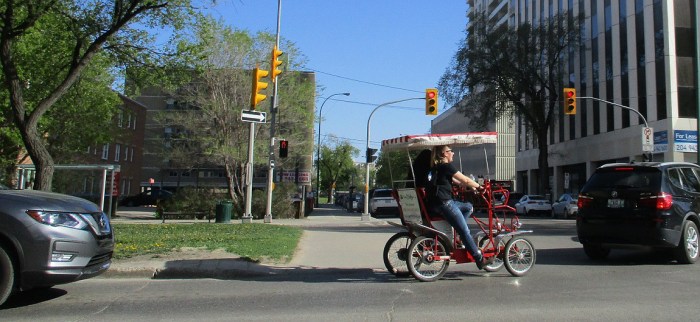
Surely this cleric won’t allow women to do what’s in the picture below.  That could really bugger them up.
asaudi


He went on to say that women should  accordingly put “the mind before the heart and emotion and look at this issue  with a realistic eye. The result of this is bad and they should wait and  consider the negativity.”

carts

cage7

cage5

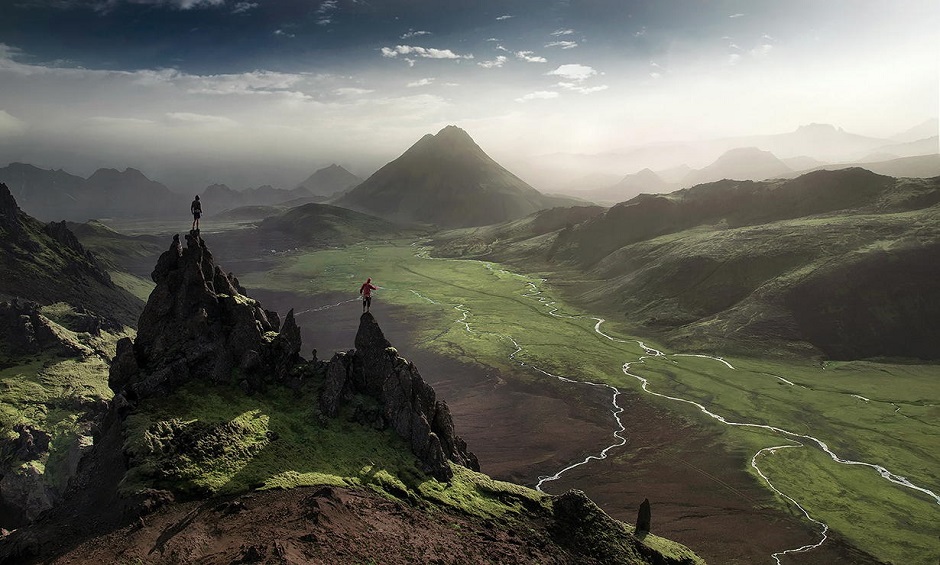
The Pristine Beauty of Iceland

iceland

No neighbours to worry about

iceland1

iceland1a

iceland2

iceland3

The famous black sand

iceland4

Creative hydro towers

iceland5

iceland6

The Island country is on a major earthquake fault intersection

iceland14

iceland8

iceland9

iceland10

iceland11

iceland12

iceland13


Capital
and largest city
Reykjavík
64°08′N 21°56′W / 64.133°N 21.933°W / 64.133; -21.933
Official language
and national language
Icelandic
Ethnic groups (2014)
  • 93.01% Icelandic
  • 3.13% Polish
  • 3.84% other
Religion Evangelical Lutheranism
Demonym Icelander
Government Unitary parliamentary constitutional republic
 – President Ólafur Ragnar Grímsson
 – Prime Minister Sigmundur Davíð Gunnlaugsson
 – Speaker of Parliament Einar Kristinn Guðfinnsson
 – President of Supreme Court Markús Sigurbjörnsson
Legislature Althing
Formation
 – Settlement 9th century
 – Commonwealth 930–1262
 – Union with Norway 1262–1814
 – Danish monarchy 1380–1944
 – Constitution 5 January 1874
 – Kingdom 1 December 1918
 – Republic 17 June 1944
Area
 – Total 102,775 km2 (108th)
39,699 sq mi
 – Water (%) 2.7
Population
 – 1 January 2015 estimate 329,100 (182nd)
 – Density 3.2/km2 (233rd)
8.29/sq mi
GDP (PPP) 2015 estimate
 – Total $14.488 billion (142nd)
 – Per capita $44,575 (23rd)

The Doomsday Jet

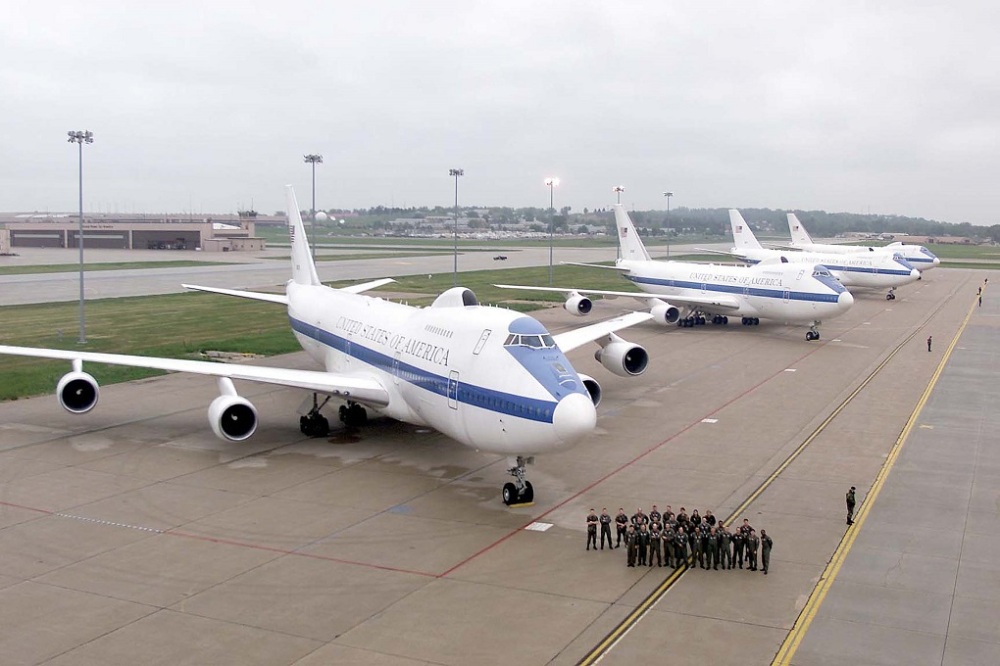
The Boeing E-4 Advanced Airborne Command Post, with the project name “Nightwatch”, is a strategic command and control military aircraft operated by the United States Air Force (USAF). The E-4 series was specially modified from the Boeing 747-200B. The E-4 serves as a survivable mobile command post for the National Command Authority, namely the President of the United States, the Secretary of Defense, and successors. The four E-4Bs are operated by the 1st Airborne Command and Control Squadron of the 55th Wing located at Offutt Air Force Base, near Omaha, Nebraska. An E-4B is denoted a “National Airborne Operations Center” when in action, it is to be a command platform in the event of nuclear war.

e41

 The E-4B is designed to survive an EMP with systems intact and has state-of-the-art direct fire countermeasures. Although many older aircraft have been upgraded with glass cockpits, the E-4B still uses traditional analog flight instruments, as they are less susceptible to damage from an EMP blast.[

The E-4B is capable of operating with a crew up to 112 people including flight and mission personnel, the largest crew of any aircraft in US Air Force history. With in-flight aerial refueling it is capable of remaining airborne for a considerable period (limited only by consumption of the engines’ lubricants and food supplies). In a test flight for endurance, the aircraft remained airborne and fully operational for 35.4 hours, however it was designed to remain airborne for a full week in the event of an emergency. It takes two fully loaded KC-135 tankers to fully refuel an E-4B. The E-4B has three operational decks: upper, middle, and lower.

e44

E-4b

In January 2006, Secretary of Defense Donald Rumsfeld announced a plan to retire the entire E-4B fleet starting in 2009. This was reduced to retiring one of the aircraft in February 2007. The next Secretary of Defense, Robert Gates reversed this decision in May 2007. This is due to the unique capabilities of the E-4B, which cannot be duplicated by any other single aircraft in Air Force service, and the cancellation in 2007 of the E-10 MC2A, which was considered as a successor to the EC-135 and E-8 aircraft, and could also perform many of the same tasks of the E-4B. As of the 2015 federal budget there were no plans for retiring the E-4B. The E-4B airframe has a usable life of 115K hours and 30K cycles, which would be reached in 2039; the maintenance limiting point would occur some time in the 2020s.

All four produced are operated by the U.S. Air Force, and are assigned to the 1st Airborne Command Control Squadron (1ACCS) of the 55th Wing at Offutt Air Force Base, Nebraska. Maintenance and crews are provided by Air Combat Command. Operations are coordinated by the United States Strategic Command.

When the President travels outside of North America using a VC-25A as Air Force One, an E-4B will deploy to a second airport in the vicinity of the President’s destination, to be readily available in the event of a world crisis or an emergency that renders the VC-25A unusable. When the President visits Honolulu, Hawaii, an E-4B has often been stationed 200 miles away at Hilo International Airport on Hawaii Island.

e43

Battle Staff Cabin

e47

E-4_advanced_airborne_command_post_EMP_sim

A right front view of an E-4 advanced airborne command post (AABNCP) on the electromagnetic pulse (EMP) simulator for testing.

e48

e49

An electromagnetic pulse (EMP), also sometimes called a transient electromagnetic disturbance, is a short burst of electromagnetic energy. Such a pulse’s origination may be a natural occurrence or man-made and can occur as a radiated, electric or magnetic field or a conducted electric current, depending on the source.

EMP interference is generally disruptive or damaging to electronic equipment, and at higher energy levels a powerful EMP event such as a lightning strike can damage physical objects such as buildings and aircraft structures. The management of EMP effects is an important branch of electromagnetic compatibility (EMC) engineering.

Weapons have been developed to create the damaging effects of high-energy EMP. These are typically divided into nuclear and non-nuclear devices. Such weapons, both real and fictional, have become known to the public by means of popular culture.

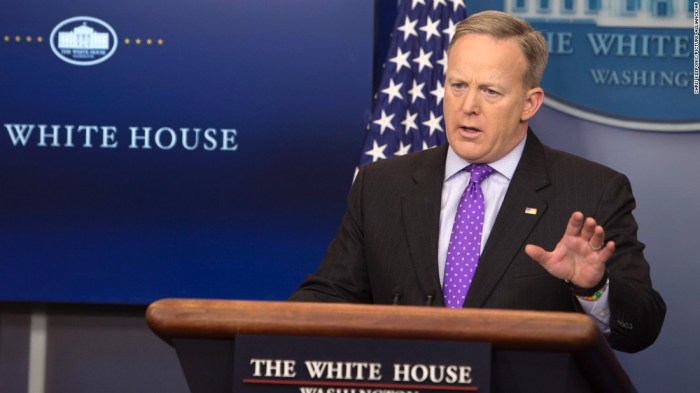
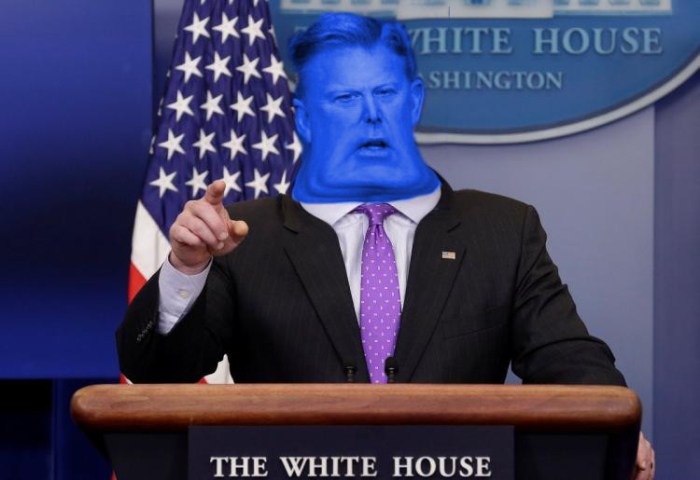
Sean Spicer Explodes at Today’s White House Press Briefing

White House press secretary Sean Spicer has a thankless job. He faces the media everyday trying to defend his boss, the unparalleled Donald Trump. The Donald has a knack for throwing gas on the fire. And he is really good at starting fires. The latest allegations from the Washington Post purport that Trump divulged classified intelligence to the Russian foreign minister and ambassador in the Oval Office a couple days ago as they were sharing laughs and cognac. Nothing has been proven so far.

Immediately to the rescue was Sean Spicer. Even though he was berated by Trump in a TV interview last week his loyalty to Donald is without bounds. Trump said he is a great guy, but he gets beat up by the press at the briefings. That didn’t seem to phase Sean. He confronted the rabid press horde tonight defending the president concerning the Russian oval office indiscretion.

spicerx (2)

Sean was getting bombarded by unrelenting questions regarding the Trump faux pas. Sean didn’t seem like his usual acerbic belligerent self tonight as he stood at the podium warding off rapid fire CNN and New York Times fusillades. After repeating the same answer for the 38th time something snapped inside Spicer. He face turned reddish as he spewed personal insults at a young female reporter from the Boston Globe. The Globe reporter asked Sean what he was hiding. He didn’t take that question very well.

spicerx (4)

After Reuters Washington correspondent Malcolm Spudbury asked Sean if the alleged blunder by Trump was impeachable, Sean’s head started to go spastic. His cheeks starting drooping downwards and his head turned blue. It was miraculous!

spicerx (3)

Then a David Cronenberg moment manifested with great ferocity!

spicerx (1)

After the bloody mishap Trump tweeted: “Sean Spicer has been FIRED!!” I need a new press Secretary right now, a great press secretary. Someone who won’t explode under pressure.”

The Spanish Cities of North Africa

Unbeknownst to me there are two cities in North Africa that belong to Spain. I discovered this a few days ago. It is European colonization that dates back to the fifteen hundreds. Ceuta and Melilla.

Ceuta is an 18.5-square-kilometre (7.1 sq mi) Spanish autonomous city located on the north coast of Africa, sharing a western border with Morocco. Separated from the Iberian peninsula by the Strait of Gibraltar, Ceuta lies along the boundary between the Mediterranean Sea and the Atlantic Ocean. Ceuta, along with the Spanish exclave Melilla, is one of two permanently inhabited Spanish territories in mainland Africa. It was part of Cádiz province until 14 March 1995 when the city’s Statute of Autonomy was passed.

Ceuta, like Melilla, was a free port before Spain joined the European Union. As of 2011, it has a population of 82,376. Its population consists of Christians, Muslims (chiefly Arabic and Berber speakers), and small minorities of Sephardic Jews and ethnic Sindhi Hindus. Spanish is the official language.

Ceuta

ceuta_desde_el_monte_hacho_2008

Ceuta’s location has made it an important commercial trade and military way-point for many cultures, beginning with the Carthaginians in the 5th century BC, who called the city Abyla; initially, this was also its name in Greek and Latin.  Together with Gibraltar on the European side, it formed one of the famous “Pillars of Hercules”. Later, it was renamed for a formation of seven surrounding smaller mountains, collectively referred to as Septem Fratres (‘[The] Seven Brothers’) by Pomponius Mela, which lent their name to a Roman fortification known as Castellum ad Septem Fratres.

ceuta_melilla

It changed hands again approximately 400 years later, when Vandal tribes ousted the Romans. After being controlled by the Visigoths, it then became an outpost of the Byzantine Empire. Ceuta was an important Christian center since the fourth century (as recent discovered ruins of a Roman basilica show), and consequently is the only place in the Maghreb where the Roman heritage has survived continuously until modern times.

In the 7th century the Umayyads tried to conquer the region but were unsuccessful. Byzantine governor, Julian (described as King of the Ghomara) who was a vassal of the Visigothic kings of Iberia changed his allegiance after the king Roderic raped his daughter, and exhorted the Muslims to invade the Iberian Peninsula. Under the leadership of the Berber general Tariq ibn Ziyad, the Muslims used Ceuta as a staging ground for an assault on Visigothic Iberian Peninsula. After Julian’s death, the Berbers took direct control of the city, which the indigenous Berber tribes resented. They destroyed Ceuta during the Kharijite rebellion led by Maysara al-Matghari in 740.

In 1415, during the Battle of Ceuta, the city was captured by the Portuguese during the reign of John I of Portugal. The Benemerine sultan besieged the city in 1418 but was defeated. Phillip II (King of Spain 1556–1598) ascended the Portuguese throne in 1580 and Spanish kings of Portugal governed Ceuta for 60 years (Iberian Union). During this time, Ceuta attracted many residents of Spanish origin. Ceuta became the only city of the Portuguese Empire that sided with Spain when Portugal regained its independence in 1640, and war broke out between the two countries.

On 1 January 1668 by the Treaty of Lisbon, King Afonso VI of Portugal recognized the formal allegiance of Ceuta to Spain and formally ceded Ceuta to King Carlos II of Spain. However, the original Portuguese flag and coat of arms of Ceuta remained unchanged, and the modern-day Ceuta flag features the configuration of the Portuguese shield. The flag has the same background as that of the flag of the city of Lisbon. The city was besieged by Moroccan forces under Moulay Ismail from 1694 to 1727.

In July 1936, General Francisco Franco took command of the Spanish Army of Africa and rebelled against the Spanish republican government; his military uprising led to the Spanish Civil War of 1936–1939. Franco transported troops to mainland Spain in an airlift using transport aircraft supplied by Germany and Italy. Ceuta became one of the first casualties of the uprising: General Franco’s rebel nationalist forces repressed the citizens of Ceuta, while at the same time the city came under fire from the air and sea forces of the official republican government.

When Spain recognized the independence of Spanish Morocco in 1956, Ceuta and the other plazas de soberanía remained under Spanish rule. Spain considered them integral parts of the Spanish state, but Morocco has disputed this point.

ceuta_spain_crop

ceuta_en

The official currency of Ceuta is the euro. It is part of a special low tax zone in Spain. Ceuta is one of two Spanish port cities on the northern shore of Africa, along with Melilla. They are historically military strongholds, free ports, oil ports, and also fishing ports. Today the economy of the city depends heavily on its port (now in expansion) and its industrial and retail centres. Ceuta Heliport is now used to connect the city to mainland Spain by air.

costa_de_ceuta_espana_2015-12-10_dd_24


Melilla

Melilla is a Spanish autonomous city located on the north coast of Africa, sharing a border with Morocco with an area of 12.3 square kilometres (4.7 sq mi). Melilla, along with Ceuta, is one of two permanently inhabited Spanish cities in mainland Africa. It was part of Málaga province until 14 March 1995 when the city’s Statute of Autonomy was passed.

Melilla, like Ceuta, was a free port before Spain joined the European Union. As of 2011, it had a population of 78,476 made up of ethnic Spaniards, ethnic Riffian Berbers, and a small number of Sephardic Jews and Sindhi Hindus. Both Spanish and Riffian-Berber are the two most widely spoken languages, with Spanish as the only official language.

Melilla is officially claimed by Morocco, which considers it “occupied territory”.

melilla-locator-map

The current Berber name of Melilla is Mřič or Mlilt which means the “white one”. Melilla was an ancient Berber village and a Phoenician and later Punic trade establishment under the name of Rusadir.  Rusaddir was supposed to have once been the seat of a bishop, but there is no record of any bishop of the supposed see, which is not included in the Catholic Church’s list of titular sees. As centuries passed, it went through Vandal, Byzantine and Hispano-Visigothic hands. The political history is similar to that of towns in the region of the Moroccan Rif and southern Spain. Local rule passed through Amazigh, Phoenician, Punic, Roman, Umayyad, Idrisid, Almoravid, Almohad, Marinid, and then Wattasid rulers. During the Middle Ages it was the Berber city of Mlila. It was part of the Kingdom of Fez when the Catholic Monarchs, Queen Isabella I of Castile and King Ferdinand II of Aragon requested Juan Alfonso Pérez de Guzmán, 3rd Duke of Medina Sidonia, to take the city.

In the Conquest of Melilla, the duke sent Pedro Estopiñán, who conquered the city virtually without a fight in 1497, a few years after Castile had taken control of the Nasrid Kingdom of Granada, the last remnant of Al-Andalus, in 1492. Melilla was immediately threatened with reconquest and was besieged during 1694–1696 and 1774–1775. One Spanish officer reflected, “an hour in Melilla, from the point of view of merit, was worth more than thirty years of service to Spain.”

The current limits of the Spanish territory around the fortress were fixed by treaties with Morocco in 1859, 1860, 1861, and 1894. In the late 19th century, as Spanish influence expanded, Melilla became the only authorized center of trade on the Rif coast between Tetuan and the Algerian frontier. The value of trade increased, goat skins, eggs and beeswax being the principal exports, and cotton goods, tea, sugar, and candles being the chief imports.

melilla1

The government of Morocco has requested from Spain the sovereignty of Ceuta and Melilla, of Perejil Island, and of some other small territories. The Spanish position is that both Ceuta and Melilla are integral parts of the Spanish state, and have been since the 15th century. Morocco denies these claims and maintains that the Spanish presence on or near its coast is a remnant of the colonial past which should be ended. The United Nations list of Non-Self-Governing Territories does not include these Spanish territories.

The principal industry is fishing. Cross-border commerce (legal or smuggled) and Spanish and European grants and wages are the other income sources.

Melilla is regularly connected to the Iberian peninsula by air and sea traffic and is also economically connected to Morocco: most of its fruits and vegetables are imported across the border. Moroccans in the city’s hinterland are attracted to it: 36,000 Moroccans cross the border daily to work, shop, or trade goods. The port of Melilla offers several daily connections to Almeria and Málaga. Melilla Airport offers daily flights to Almería, Málaga and Madrid. Spanish operator Air Europa uses nearby Nador International Airport for their connections to mainland Spain.

Many people traveling between Europe and Morocco use the ferry links to Melilla, both for passengers and for freight. Because of this, the port and related companies form an important economic driver for the city.

fence

The Melilla border fence aims to stop illegal immigration into Spain.

melilla

Spanish territories of North Africa

ceuta2

ceuta1

Stunning Hawaiian Beach used in the 1976 King Kong Film

Honopū Valley is a landmark valley within Nā Pali Coast State Park along the northwest shore of Kauai, Hawaii. It is known for its distinctive natural arch, which at approximately 90 feet (27 m) tall is the tallest in Hawaii. At the lower end of the valley is Honopū’s secluded, 0.25-mile (0.40 km) beach, also known as Cathedral Beach.

Honopū means “conch shell”, and the valley’s name is derived from the conch shell-like sound its arch makes when hit by winds from the north.

kong

In the 1976 remake of King Kong the beaches and jungles of Kauai, Hawaii were made to stand in for the South Pacific. Originally only the jungle scenes were to be shot in Hawaii and the rest on Zuma Beach, California. Producer Dino De Laurentiis, however, was so pleased with Hawaii that he decided to film all the beach scenes at Honopū and Kalalau Valley.

kong1

kong2

kong3

kong4

This really does look like an island that would be King Kong territory.

kong5