50 Years of Space Walking

1965-2015

‘Spacewalkin’

50 years ago Ed White became the first American to step into space.

Spacewalk-2

June 3, 1965

Astronaut Edward H. White II, pilot for the Gemini-Titan 4 space flight, floats in space during America’s first spacewalk. The extravehicular activity (EVA) was performed during the Gemini 4 mission on June 3, 1965. White spent 23 minutes maneuvering around his spacecraft as Jim McDivitt remained inside the spacecraft. White is attached to the spacecraft by a 25-foot umbilical line and a 23-foot tether line, both wrapped in gold tape to form one cord. In his right hand, White carries a Hand-Held Self Maneuvering Unit (HHSMU), which he used to help move him around the weightless environment of space. The visor of his helmet is gold plated to protect him from the unfiltered rays of the sun.

It’s half a century since Ed White became the first American to step into space, in 1965. Now an almost routine part of any space mission, the EVA (Extra Vehicular Activity), or “spacewalk” was once a hazardous procedure.

During the 1950s and 1960s, the USSR scored a few early firsts in the Space Race: first satellite (Sputnik 1); first man in space (Yuri Gagarin); and first spacewalk (Alexei Leonov on March 8, 1965).

Leonov encountered many difficulties during his own spacewalk. He could only maneuver by pulling on the umbilical cord that tethered him to the spacecraft, and his suit over-inflated in the vacuum of space. Leonov had to bleed some oxygen from the suit to be able to get back in the hatch. The extent of these problems was not revealed until after the end of the Cold War.

Spacewalk-5

June 3, 1965

Ed White over the Gulf of Mexico.

NASA scheduled its first spacewalk to take place during the Gemini 4 mission. On June 3, 1965, Ed White left the Gemini spacecraft and, with the aid of a Hand-Held Self Manoeuvring Unit (HHSMU), or “zip gun,” White was able to move 15 feet (5 meters) from the craft.

Communication problems meant White had to be actively ordered to re-enter the spacecraft. Opening and closing the hatch was problematic, and a planned dump into space of White’s used spacewalk equipment was abandoned.

Several more spacewalks were performed during the Gemini missions, but the astronauts tired quickly and experienced overheating. It was Buzz Aldrin who first overcame these problems, working for just over two hours outside Gemini 12. Aldrin’s experiences as a scuba diver inspired NASA’s move to training astronauts for spacewalks in large water tanks to simulate the weightlessness of space.

Spacewalk-3

Nov. 12, 1966

Edwin E. Aldrin Jr., pilot of the Gemini 12 spacecraft, performs extravehicular activity (EVA) during the second day of the four-day mission in space. Aldrin is positioned next to the Agena work station.

With the advent of the space shuttle, spacewalks became routine. In 1983, NASA astronauts began using the Extravehicular Mobility Unit (EMU), a self-contained life support device. The Shuttle Remote Manipulator System (SRMS), also known as Canadarm, was developed by Canada and delivered to NASA in 1981, the first of five such arms. This machine could be used as an anchor for astronauts during spacewalks.

On Feb. 7, 1984, the Manned Manoeuvring Unit (MMU) was deployed. For the first time, this allowed an astronaut to work untethered. Using the MMU, Bruce McCandless became the first astronaut to fly free in space, moving 320 feet (98 meters) away from the shuttle.

In 2001, Susan Helms and James Voss set the record for the spacewalk with the longest duration, at eight hours and 56 minutes.

Spacewalk-6

Mar. 6, 1969

Apollo 9 Command/Service Modules (CSM), nicknamed “Gumdrop,” and Lunar Module (LM), nicknamed “Spider,” are shown docked together as Command Module Pilot David R. Scott stands in the open hatch. Astronaut Russell L. Schweickart, Lunar Module pilot, took this photograph of Scott during his EVA as he stood on the porch outside the Lunar Module. Apollo 9 was an Earth orbital mission designed to test docking procedures between the CSM and LM, as well as test fly the Lunar Module in the relative safe confines of Earth orbit.

Spacewalk-9

Feb. 12, 1984

Mission Specialist Bruce McCandless II, is seen further away from the confines and safety of his ship than any previous astronaut had ever been. This space first was made possible by the Manned Manuevering Unit or MMU, a nitrogen jet propelled backpack. After a series of test maneuvers inside and above Challenger’s payload bay, McCandless went “free-flying” to a distance of 320 feet away from the Orbiter.

Spacewalk

Sept. 16, 1994

Astronauts Carl J. Meade and Mark C. Lee (red stripe on suit) test the Simplified Aid for EVA Rescue (SAFER) system some 130 nautical miles from Earth. The pair were actually performing an in-space rehearsal or demonstration of a contingency rescue using the never- before-flown hardware. Meade, who here wears the small backpack unit with its complementary chest-mounted control unit, and Lee, anchored to Discovery’s Remote Manipulator System (RMS) robot arm, took turns using the SAFER hardware during their shared space walk.

Spacewalk-4

Sep. 16, 1995

The pale blue Earth serves as backdrop for astronaut Michael Gernhardt during his Extravehicular Activity (EVA). He is standing on a Manipulator Foot Restraint (MFR) attached to the Remote Manipulator System (RMS). He is positioned over the Payload Bay, and Endeavour’s forward section is reflected in his visor. A thermal cube is attached to the RMS and records temperatures during spacesuit evaluations. Unlike earlier spacewalking astronauts, Gernhardt was able to use an electronic cuff checklist, a prototype developed for the assembly of the International Space Station (ISS).

Spacewalk-8

Nov. 14, 1984

Astronaut Dale A. Gardner, having just completed the major portion of his second extravehicular activity (EVA) period in three days, holds up a “For Sale” sign referring to the two satellites, Palapa B-2 and Westar 6, that they retrieved from orbit after their Payload Assist Modules (PAM) failed to fire. Astronaut Joseph P. Allen IV, who also participated in the two EVAs, is reflected in Gardner’s helmet visor. A portion of each of two recovered satellites is in the lower right corner, with Westar 6 nearer Discovery’s aft.

atlantic11

Russian cosmonaut conducting maintenance on the ISS
Ramblin Man

Gregory LeNoir Allman (December 8, 1947 – May 27, 2017) was an American musician, singer, and songwriter.
He was best known for performing in the Allman Brothers Band. He was born and spent much of his childhood in Nashville, Tennessee, before relocating to Daytona Beach, Florida. He and his brother, Duane Allman, developed an interest in music in their teens, and began performing in the Allman Joys in the mid-1960s. In 1967, they relocated to Los Angeles and were renamed the Hour Glass, releasing two albums for Liberty Records. In 1969, he and Duane regrouped to form the Allman Brothers Band, which settled in Macon, Georgia.

Allman-Bros-Band_AllmanBrothersBand_com_

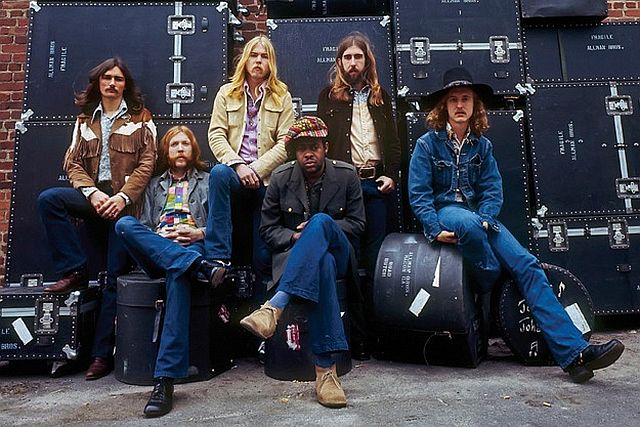
Gregg top blonde guy.

The heavyweight Cattle breed in the World

Chianina

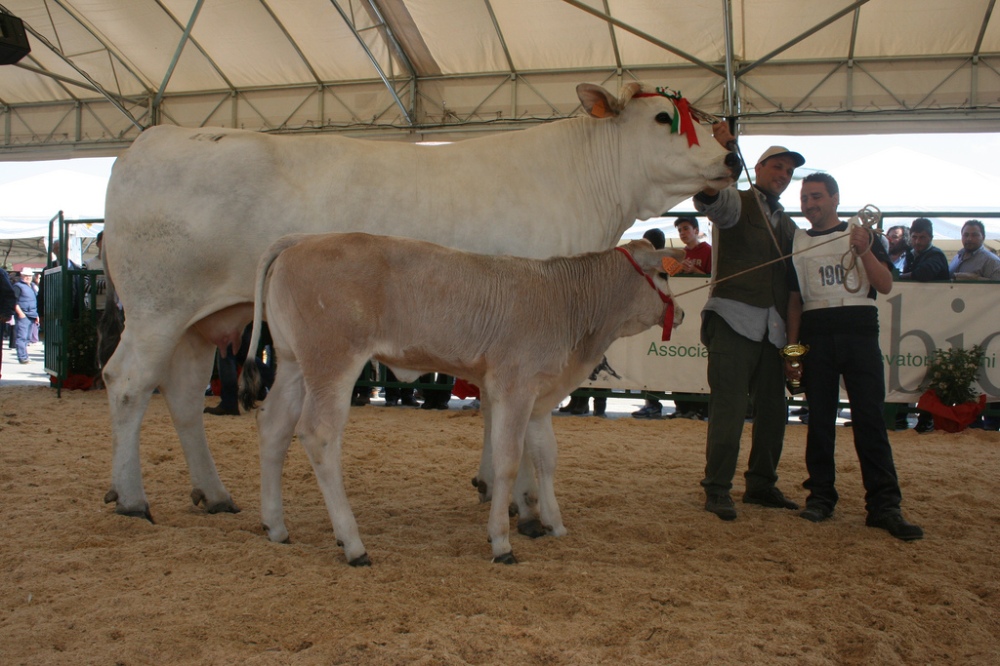
The Chianina is an Italian breed of cattle, formerly principally a draught breed, now raised mainly for beef. It is the largest and one of the oldest cattle breeds in the world. The famous bistecca alla fiorentina (‘beefsteak Florentine style’) is produced from its meat.

One of the oldest breeds of cattle, the Chianina originates in the area of the Valdichiana, from which it takes its name, and the middle Tiber valley. Chianina cattle have been raised in the Italian regions of Tuscany, Umbria and Lazio for at least 2200 years.

Chianina_Bulle

The Chianina is both the tallest and the heaviest breed of cattle. Mature bulls stand up to 1.8 m (5 ft 11 in), and castrated oxen may reach 2 m (6 ft 7 in). It is not unusual for bulls to exceed 1,600 kg (3,500 lb) in weight. Males standing over 1.51 m (4 ft 11 in) at 12 months are considered top-grade. A Chianina bull named Donetto holds the world record for the heaviest bull, reported by one source as 1,740 kg (3,840 lb) when exhibited at the Arezzo show in 1955, but as 1,780 kg (3,920 lb) and 1.85 m (6 ft 1 in) tall at the age of 8 by others including the Tenuta La Fratta, near Sinalunga in the province of Siena, where he was bred. Cows usually weigh 800–900 kg (1,800–2,000 lb), but commonly exceed 1,000 kg (2,200 lb); those standing over 1.65 m (5 ft 5 in) are judged top-grade. Calves routinely weigh over 50 kg (110 lb) at birth. The coat of the Chianina is white; very slight grey shading round the eyes and on the foreparts is tolerated. The skin, muzzle, switch, hooves and the tips of the horns are black.

At the end of 2010 there were 47,236 head registered in Italy, of which more than 90% were in Tuscany, Umbria and Lazio; it is, after the Marchigiana, the second indigenous beef breed of Italy.

Chianina1

Don’t want one these beasts to get agitated when you are nearby.

Chianina2

Chianina3

Their history as draft animals means that Chianinas were bred for docile temperaments, as they had to work closely with people. That good disposition is important in a cow as large as the Chianina.

Chianina4


Chewbacca’s Family Reunion

Chewbacca, a 200-year-old Wookiee. Wookiees are a species of intelligent bipeds from the planet Kashyyyk in the Star Wars universe.  Standing at 8 feet tall, Chewbacca is covered with long hair, and wears only a bandolier. His weapon of choice is the Wookiee bowcaster (a crossbow-shaped directed-energy weapon).

Chewbacca’s family had the chance to come together as their paths were crossing for the first time in decades. The most convenient location was Crawford, Texas, as the Wookiee family members would all be travelling within close range of that Texas town. Many members of the family arrived in Crawford on various ships from the far reaches of the galaxy. The family reunion was a great success. 

Reunion Photos

chewbacca1

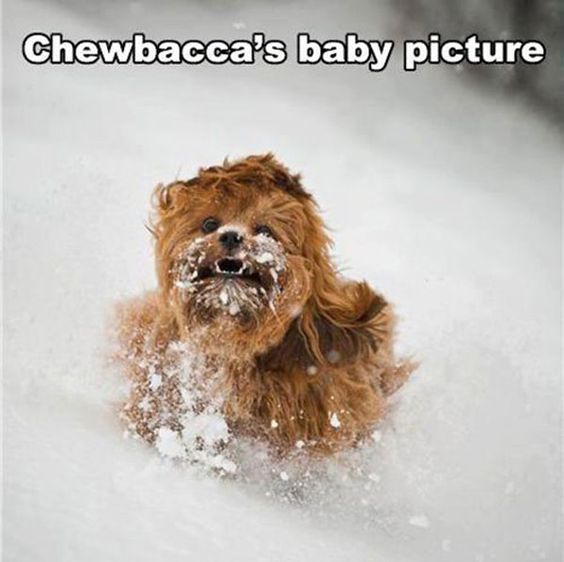
Portrait of a group of cousins

choo

Chewie enjoying beverages with Hans Solo’s great-great granddaughter.

awkward-family-photos-29

Painted portrait of Chewie, the wife and kids, and cat.

three_generations_of_rwook

Chewie with some family elders.

chewka

Cousin Hoolacca arrives at the Crawford spaceport. The late great Carrie Fisher.

chewy

funny-bigfootx

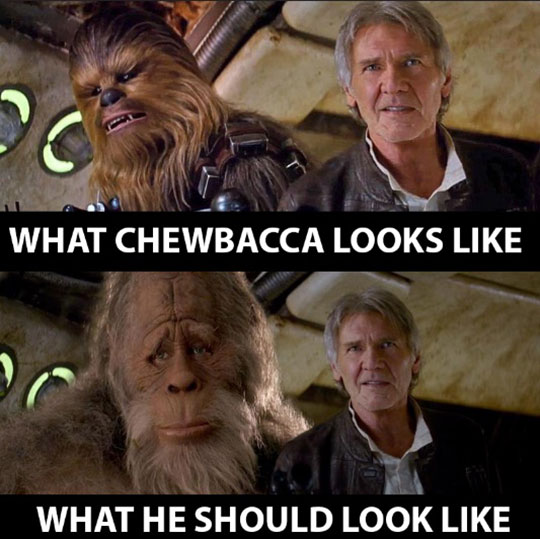
Chewing the fat with his step-brother Leroy the Sasquatch.

Chewie throwing out the first pitch at a Crawford Rattlers baseball game.

baseball

funny-Han-Solo-trailer-shot-Harry-Hendersons

The Pyramid of San Francisco

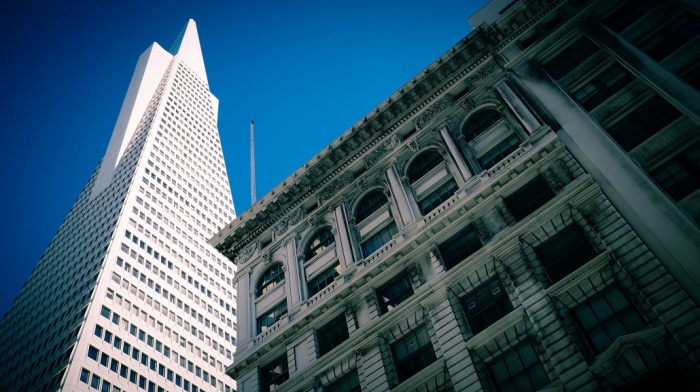
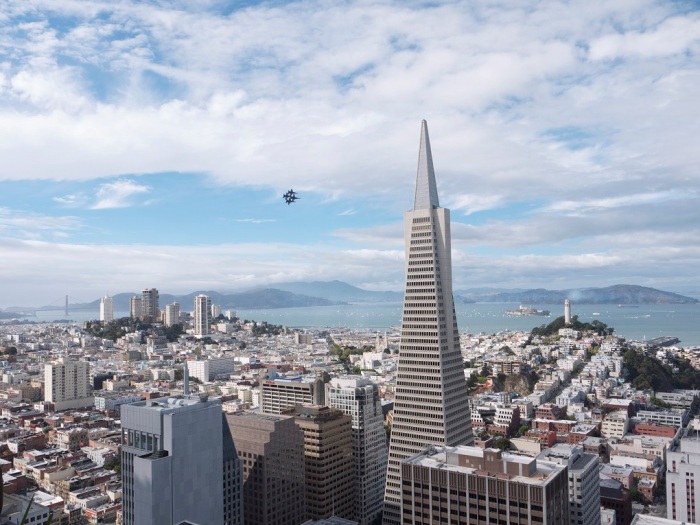
The Transamerica Pyramid is the tallest skyscraper in the San Francisco skyline. Its height is surpassed by Salesforce Tower, currently under construction. The building no longer houses the headquarters of the Transamerica Corporation, which moved its U.S. headquarters to Baltimore, Maryland, but it is still associated with the company and is depicted in the company’s logo. Designed by architect William Pereira and built by Hathaway Dinwiddie Construction Company, at 853 ft (260 m), on completion in 1972 it was the eighth tallest building in the world.

trans-america

Building facts:

There are 48 floors, 15 passenger elevators, 3 freight elevators, and 3,678 windows.

Because of the shape of the building, the majority of the windows can pivot 360 degrees so they can be washed from the inside.

transz

The decorative aluminum spire at the top is 212-feet tall – roughly 20 stories.

The spire is actually hollow and lined with a 100-foot steel stairway at a 60 degree angle, followed by two steel ladders.


tranxzxz

The conference room (with 360 degree views of the city) is located on the 48th floor and can be booked for $400-600 dollars…an hour.

transzzxx

The building is covered in crushed white quartz, giving it its pure white color.

transzw

It takes 18,000 work hours to get “brightened” every 10 years, last occurring in 2007.

transx

transzx

The building is a tall, four-sided pyramid with two “wings” to accommodate an elevator shaft on the east and a stairwell and a smoke tower on the west.

transx1

The Tallest Statues in The World

Big statues are very impressive.  The thought and effort that goes into constructing these pieces of artwork is extremely impressive.  What I did not realize when I looked into this subject was the magnitude of some of the great statues in the world.  Some of these creations are truly massive. 

The list below is not the tallest statues in order of height.  The tallest statues are listed here, but in order to make the list more international I have chosen statues from many different countries.  By far the biggest statues are in China and Japan.  29 of the top 40 tallest statues in the world are in those two countries.  A truly world representation is the idea in this post.

Veera Abhaya Anjaneya Hanuman Swami is a statue in depicting Hanuman (Hindu Deity). It is located in the village of Paritala, approximately 30 km from the city of Vijayawada, in the state of Andhra Pradesh, India. The statue, installed in 2003, stands 135 feet tall (41 metres), is the tallest statue of Hanuman in the world, and the tallest statue in India.

astat1

The Genghis Khan Equestrian Statue, part of the Genghis Khan Statue Complex is a 40 metre (131 ft 3 in) tall statue of Genghis Khan on horseback, on the bank of the Tuul River at Tsonjin Boldog (54 km (33.55 mi) east of the Mongolian capital Ulan Bator), where according to legend, he found a golden whip.

astat3

The Statue of Liberty (Liberty Enlightening the World; French: La Liberté éclairant le monde) is a colossal neoclassical sculpture on Liberty Island in the middle of New York Harbor, in Manhattan, New York City. The statue, designed by Frédéric Auguste Bartholdi and dedicated on October 28, 1886, was a gift to the United States from the people of France. The statue is of a robed female figure representing Libertas, the Roman goddess of freedom, who bears a torch and a tabula ansata (a tablet evoking the law) upon which is inscribed the date of the American Declaration of Independence, July 4, 1776. A broken chain lies at her feet. The statue is an icon of freedom and of the United States: a welcoming signal to immigrants arriving from abroad.

Statue of Liberty seen from the Circle Line ferry, Manhattan, New York

The African Renaissance Monument (French: Le Monument de la Renaissance africaine) is a 49m tall bronze statue located on top of one of the twin hills known as Collines des Mamelles, outside of Dakar, Senegal.

astat5

Guanyin of the South China Sea, Mount Xiqiao is a statue of Guanyin, located on Mount Xiqiao, in the Nanhai District of Foshan, Guangdong, People’s Republic of China. This monument stands 62 m (203 ft) tall, and sits on a 15 m pedestal making a total height of 77 m (253 ft).  Guanyin is the bodhisattva associated with compassion as venerated by East Asian Buddhists, usually as a female.

astat6

The Motherland Calls is a statue in Mamayev Kurgan in Volgograd, Russia, commemorating the Battle of Stalingrad.

When the memorial was dedicated in 1967 it was the tallest sculpture in the world, measuring 87 metres (279 feet) from the tip of its sword to the top of the plinth. The figure itself measures 52 metres (170 feet), and the sword 33 metres (108 feet). Two hundred steps, symbolizing the 200 days of the Battle of Stalingrad, lead from the bottom of the hill to the monument.

astat7

The Ushiku Daibutsu  located in Ushiku, Ibaraki Prefecture, Japan, is one of the world’s tallest statues. Completed in 1993, it stands a total of 120 meters (394 feet) tall, including the 10m high base and 10m high lotus platform. An elevator takes visitors up to 85m off the ground, where an observation floor is located. It depicts Amitabha Buddha.

astat8

The Spring Temple Buddha is a statue depicting Vairocana Buddha located in the Zhaocun township of Lushan County, Henan, China, built in 2002. It is located within the Fodushan Scenic Area, close to National Freeway no. 311. At 128 m (420 ft), which includes a 20 m (66 ft) lotus throne, it is the tallest statue in the world.

astat9

Christ the Redeemer is a statue of Jesus Christ in Rio de Janeiro, Brazil; considered the largest Art Deco statue in the world and the 5th largest statue of Jesus in the world. It is 30 metres (98 ft) tall, not including its 8 metres (26 ft) pedestal, and its arms stretch 28 metres (92 ft) wide.

astat10

astat11

Not to leave out my hometown of Winnipeg I thought our famous statue should be included.  The Golden Boy (official name Eternal Youth) is a statue perched facing North on the dome of the Manitoba Legislative Building in Winnipeg, Manitoba, Canada, and it is arguably Manitoba’s best known symbol. it stands 5.25 metres (17.2 feet) tall from the toe to the top of the torch and 4.27 metres (14 feet) from head to toe. It weighs 1650 kg (3,640 lb), and the top of his torch is 77 metres (250 feet) above ground.

The Legislative Building.

astat12

golden-boy-manitoba-legislature

astat

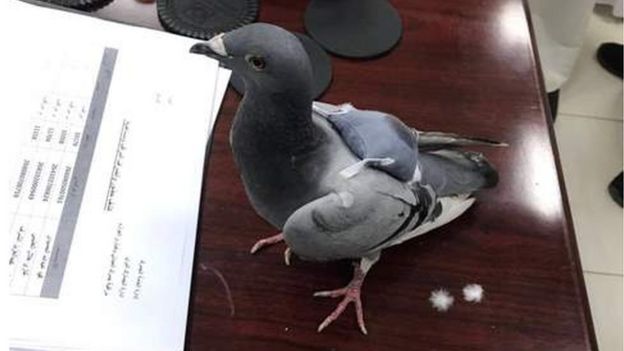
Pigeon ‘caught with backpack of drugs’

Pigeon found carrying drugs in Kuwait

Customs officials in Kuwait have apprehended a pigeon carrying drugs in a miniature backpack, Kuwaiti newspaper al-Rai reports.

A total of 178 pills were found in the fabric pocket attached to its back, the newspaper says.

The bird was caught near the customs building in Abdali, close to the border with Iraq.

An al-Rai journalist said the drugs were a form of ketamine, an anaesthetic also used as an illegal party drug.

Abdullah Fahmi told the BBC that customs officials already knew pigeons were being used to smuggle drugs, but this was the first time they had caught a bird in the act.

Pigeon found carrying drugs in Kuwait

Law enforcement officials elsewhere have, however, identified previous cases where pigeons have been used to carry lightweight high-value narcotics.

In 2015, prison guards in Costa Rica caught a pigeon carrying cocaine and cannabis in a zipped pouch.

And in 2011, Colombian police discovered a pigeon that was unable to fly over a high prison wall because of the weight of a package of cocaine and marijuana strapped to it.

Pigeons have been used to carry messages since Roman times, using their powerful “homing” ability.

Racing pigeons can return to their lofts from distances of hundreds of kilometres.

BBC

The Distinctive Architecture of Barcelona, Spain

Eixample is a district of the Spanish city of Barcelona, that lies between the old city and the surrounding small towns. The district was built as an extension (hence the name “Eixample”) when Barcelona started to grow during the middle of the 19th century. The 7.5 square km district is characterized by long straight streets, a strict grid pattern crossed by wide avenues, and octagonal city blocks – rectangular blocks with the corners cut off, which are distinctive for Barcelona. This was the visionary, pioneering design by Spanish urban planner Ildefons Cerdà, who considered traffic and transport along with sunlight and ventilation in coming up with his characteristic octagonal blocks.

barc

Cerdà’s central aim was to overcome social problems by using quadrangular blocks of a standard size, with strict building controls to ensure that they were built up on only two sides, to a limited height, leaving a shady square or garden in between. This recreational open space with open sides to the blocks was to guarantee the houses the maximum amount of sun, light and ventilation. The angled corners allowed the streets to broaden at every intersection making for greater visibility, and fluid traffic in all directions. Cerdà had steam trams in mind, and it was its long turning radius which determined the angle of the corners of the buildings. Trams were never installed, and the city planners unfortunately ignored many of his other provisions.

Cerda wanted housing blocks to be orientated NW-SE to ensure all apartments received sunshine during the day. Each district would be of twenty blocks, containing all the community shops and services, and each block were to have at least 800 square meters of gardens. Cerda’s idealized use of urban space was scarcely achieved. The blocks went up to much more than the planned heights, and in practice all the blocks have been enclosed, with very few inner gardens surviving. Most of the inner courtyards today are occupied by car parks, workshops and shopping centers. The streets were narrower – only one of the two diagonal avenues was carried out – the inhabitants were of a higher class than the mixed composition dreamed of by Cerdà. The grid pattern with its distinctive octagonal blocks, however, remains as a hallmark of Barcelona’s Eixample.

Over the past few years the city has begun trying to implement Cerdà’s idea for green public spaces behind the buildings. When a block is vacated because of the relocation of a business, the city takes up the block and redesigns it with parks and open spaces. The ultimate goal is to create one patio-garden for every nine blocks, but its unlikely that so many will become available in the near future.

barc1

barc3

barc5

barc6

barc7