Photos, of This and That

Japanese boy soldier prisoners on Okinawa WWII. One said he was 21 years old and the other one said he was 18.


red pics jap prisoners okinawa


Greek village


red greek village


Niagara Falls


red niagara falls


Antarctica from space


red


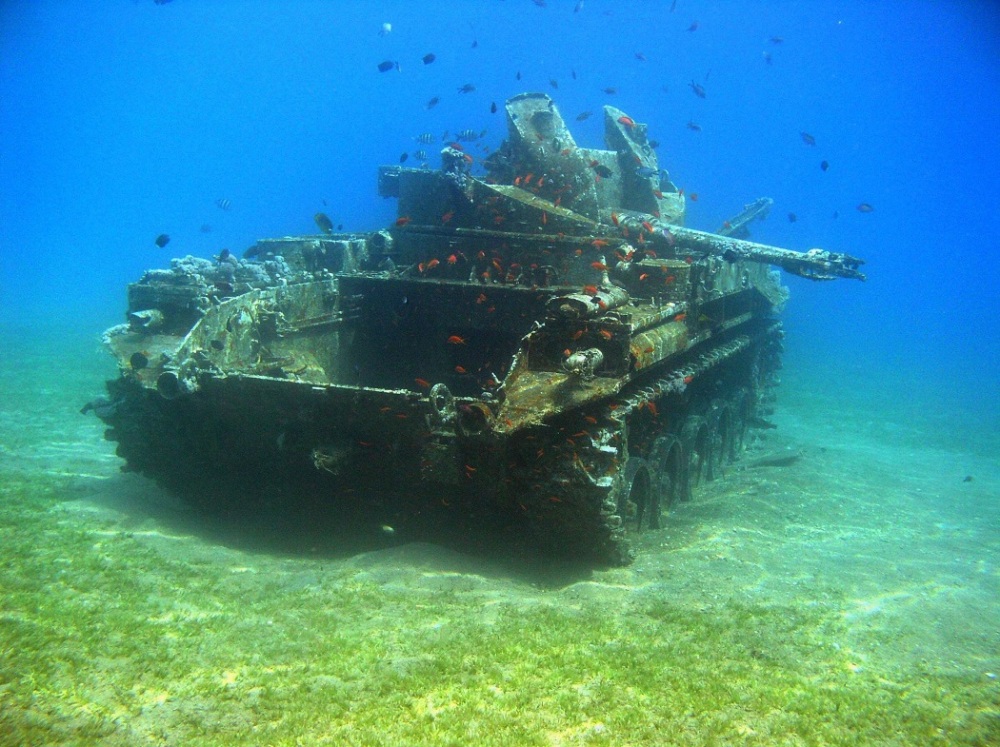
Fish Tank?


red4

Bridges in Winnipeg


red6a


Trains crossing a bridge that carries the CN Rail mainline through Winnipeg.


Young lady skateboarder Winnipeg. I think chick skateboarders are really cool.


red6c


Condo in Winnipeg with a different design. Locally known as the UFO building.

red6b


Palestinian girl shaking hands with an Israeli soldier.


red5


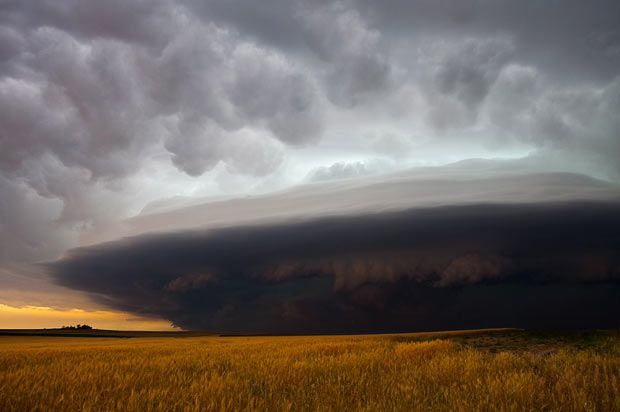
Storm brewing over Cleveland


red7 Cleveland


A museum that wants to scare the crap out of visitors?


red6


Canada’s Andre Degrasse and Jamaica’s Usain Bolt sharing smiles in the 200 meter semi-final as they crossed the finish line together.


bolt


Very big trees along the Red River in Winnipeg.


red6d


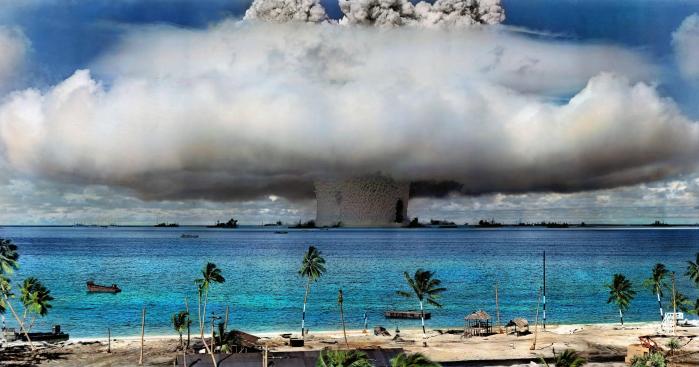
FEMA’s information on a Nuclear Blast

Federal Emergency Management Agency

cave11

Nuclear Blast

A nuclear blast is an explosion with intense light and heat, a damaging pressure wave, and widespread radioactive material that can contaminate the air, water, and ground surfaces for miles around. A nuclear device can range from a weapon carried by an intercontinental missile, to a small portable nuclear device transported by an individual. All nuclear devices cause deadly effects when exploded.

Hazards of Nuclear Devices

The danger of a massive strategic nuclear attack on the United States is predicted by experts to be less likely today. However, terrorism, by nature, is unpredictable.

In general, potential targets include

  • Strategic missile sites and military bases.
  • Centers of government such as Washington, DC, and state capitals.
  • Important transportation and communication centers.
  • Manufacturing, industrial, technology, and financial centers.
  • Petroleum refineries, electrical power plants, and chemical plants.
  • Major ports and airfields.

The three factors for protecting oneself from radiation and fallout are distance, shielding and time.

  • Distance – the more distance between you and the fallout particles, the better. An underground area such as a home or office building basement offers more protection than the first floor of a building. Shielding – the heavier and denser the materials – thick walls, concrete, bricks, books and earth – between you and the fallout particles, the better.
  • Time – fallout radiation loses its intensity fairly rapidly. In time, you will be able to leave the fallout shelter. Radioactive fallout poses the greatest threat to people during the first two weeks, by which time it has declined to about 1 percent of its initial radiation level.

Taking shelter during a nuclear blast is absolutely necessary. There are two kinds of shelters:

  • Blast shelters are specifically constructed to offer some protection against blast pressure, initial radiation, heat and fire. But even a blast shelter cannot withstand a direct hit from a nuclear explosion.
  • Fallout shelters do not need to be specially constructed for protecting against fallout. They can be any protected space, provided that the walls and roof are thick and dense enough to absorb the radiation given off by fallout particles.

Remember that any protection, however temporary, is better than none at all, and the more shielding, distance and time you can take advantage of, the better.

Before a Nuclear Blast

The following are things you can do to protect yourself, your family and your property in the event of a nuclear blast.

  • Build an Emergency Supply Kit
  • Make a Family Emergency Plan.
  • Find out from officials if any public buildings in your community have been designated as fallout shelters.
  • If your community has no designated fallout shelters, make a list of potential shelters near your home, workplace and school, such as basements, subways, tunnels, or the windowless center area of middle floors in a high-rise building.
  • During periods of heightened threat increase your disaster supplies to be adequate for up to two weeks.

During a Nuclear Blast

The following are guidelines for what to do in the event of a nuclear explosion.

  • Listen for official information and follow the instructions provided by emergency response personnel.
  • If an attack warning is issued, take cover as quickly as you can, below ground if possible, and stay there until instructed to do otherwise.
  • Find the nearest building, preferably built of brick or concrete, and go inside to avoid any radioactive material outside.
  • If better shelter, such as a multi-story building or basement can be reached within a few minutes, go there immediately.
  • Go as far below ground as possible or in the center of a tall building.
  • During the time with the highest radiation levels it is safest to stay inside, sheltered away from the radioactive material outside.
  • Radiation levels are extremely dangerous after a nuclear detonation but the levels reduce rapidly.
  • Expect to stay inside for at least 24 hours unless told otherwise by authorities.
  • When evacuating is in your best interest, you will be instructed to do so. All available methods of communication will be used to provide news and / or instructions.

If you are caught outside and unable to get inside immediately:

  • Do not look at the flash or fireball – it can blind you.
  • Take cover behind anything that might offer protection.
  • Lie flat on the ground and cover your head. If the explosion is some distance away, it could take 30 seconds or more for the blast wave to hit.
  • Take shelter as soon as you can, even if you are many miles from ground zero where the attack occurred – radioactive fallout can be carried by the winds for hundreds of miles.
  • If you were outside during or after the blast, get clean as soon as possible, to remove radioactive material that may have settled on your body.
  • Remove your clothing to keep radioactive material from spreading. Removing the outer layer of clothing can remove up to 90% of radioactive material.
  • If practical, place your contaminated clothing in a plastic bag and seal or tie the bag. Place the bag as far away as possible from humans and animals so that the radiation it gives off does not affect others.
  • When possible, take a shower with lots of soap and water to help remove radioactive contamination. Do not scrub or scratch the skin.
  • Wash your hair with shampoo or soap and water. Do not use conditioner in your hair because it will bind radioactive material to your hair, keeping it from rinsing out easily.
  • Gently blow your nose and wipe your eyelids and eyelashes with a clean wet cloth. Gently wipe your ears.
  • If you cannot shower, use a wipe or clean wet cloth to wipe your skin that was not covered by clothing.

After a Nuclear Blast

People in most of the areas that would be affected could be allowed to come out of shelter within a few days and, if necessary, evacuate to unaffected areas. The heaviest fallout would be limited to the area at or downwind from the explosion. It might be necessary for those in the areas with highest radiation levels to shelter for up to a month.

Returning to Your Home

Remember the following when returning home:

  • Keep listening to the radio and television for news about what to do, where to go and places to avoid.
  • Stay away from damaged areas. Stay away from areas marked “radiation hazard” or “HAZMAT.”

Trump’s “Great Great Wall” may have to be downsized

First Trump bellowed that Mexico will pay for the wall. At his rally’s he would say ” who’s going to pay for the wall!”, his minions would chant, Mexico! Mexico! Then after the crowd of rednecks were fed up with that chant, they would revert back to their favourite chant, “Lock her up, lock her up”.

What made Trump think that Mexico was going to pay for the wall is still a Great mystery. He had no legal basis for making such a claim.

Fast forward, now ‘The Donald’ is threatening to shut down the federal government if Congress doesn’t fund his wall. Estimates put the cost of the wall at anywhere between 10 and 20 billion dollars.  Congress will not be enthusiastic about funding the Trump Wall.

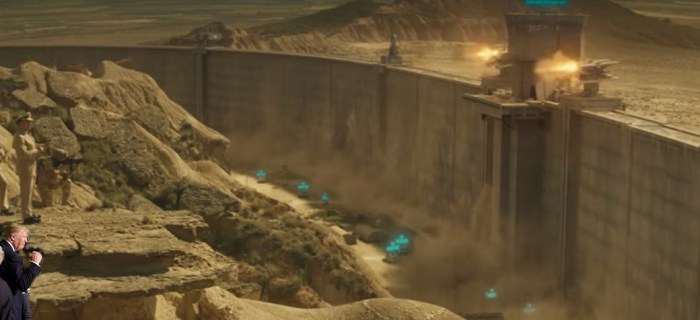
In the warped mind of Trump this is the walls he envisioned:

wall11

A hundred feet high manned by remote anti-tank missiles and laser beams.

wall11a

With Apache helicopter gunships patrolling the wall, prepared to open up on any rapist illegal Mexicans that venture near the wall.

wallxxxx

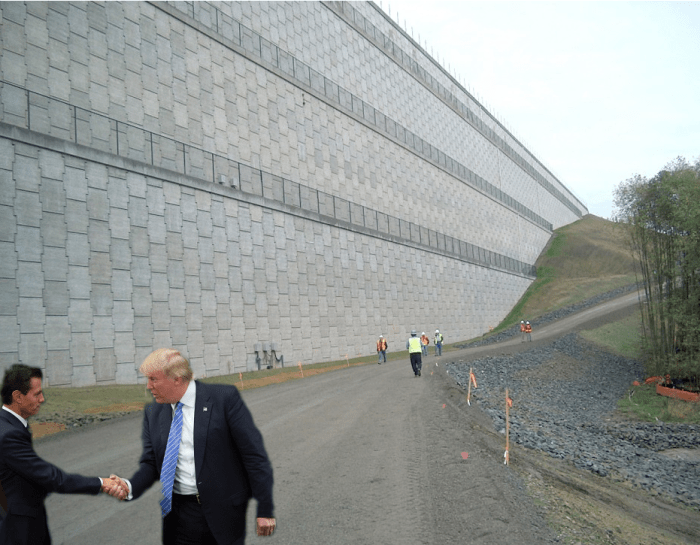
Trump having another fantasy dream with another great wall while the Mexican president agrees to pay.  He thinks of himself as such a great deal maker.

trump-wall_zpsv2s0ihvb

Trump having another wall wet dream.

Ultimately, Trump won’t get federal funding for the wall. He will have to pay for it with his own money. A downsize will happen because Trump doesn’t want to have to declare bankruptcy again. Even Trump can’t afford the “Great Wall”.

The downsized wall:

Bi_Barbed_Wire_Fence

Or maybe something like this

bi1

At least it will keep out illegal Mexican Donkeys.


It’s all about the ingredients in the concrete

The Pantheon is a building in Rome, Italy, on the site of an earlier building commissioned by Marcus Agrippa during the reign of Augustus (27 BC – 14 AD). The present building was completed by the emperor Hadrian and probably dedicated about 126 AD. He retained Agrippa’s original inscription, which has confused its date of construction.

The building is circular with a portico of large granite Corinthian columns (eight in the first rank and two groups of four behind) under a pediment. A rectangular vestibule links the porch to the rotunda, which is under a coffered concrete dome, with a central opening (oculus) to the sky. Almost two thousand years after it was built, the Pantheon’s dome is still the world’s largest unreinforced concrete dome. The height to the oculus and the diameter of the interior circle are the same, 43.3 metres (142 ft).


Pantheon_Rome-The_Dome


The 4,535 metric tons (4,999 short tons) weight of the Roman concrete dome is concentrated on a ring of voussoirs 9.1 metres (30 ft) in diameter that form the oculus, while the downward thrust of the dome is carried by eight barrel vaults in the 6.4 metres (21 ft) thick drum wall into eight piers. The thickness of the dome varies from 6.4 metres (21 ft) at the base of the dome to 1.2 metres (3.9 ft) around the oculus. The materials used in the concrete of the dome also varies. At its thickest point, the aggregate is travertine, then terracotta tiles, then at the very top, tufa and pumice, both porous light stones. At the very top, where the dome would be at its weakest and vulnerable to collapse, the oculus actually lightens the load.


Pantheon_0918_2013


No tensile test results are available on the concrete used in the Pantheon; however, Cowan discussed tests on ancient concrete from Roman ruins in Libya, which gave a compressive strength of 20 MPa (2,900 psi). An empirical relationship gives a tensile strength of 1.47 MPa (213 psi) for this specimen. Finite element analysis of the structure by Mark and Hutchison found a maximum tensile stress of only 128 kPa (18.5 psi) at the point where the dome joins the raised outer wall.


Pantheon-Roof-from-Gianicolo-2012


The stresses in the dome were found to be substantially reduced by the use of successively less dense aggregate stones, such as small pots or pieces of pumice, in higher layers of the dome. Mark and Hutchison estimated that, if normal weight concrete had been used throughout, the stresses in the arch would have been some 80% greater. Hidden chambers engineered within the rotunda form a sophisticated structural system. This reduced the weight of the roof, as did the elimination of the apex by means of the oculus.


Pantheon-occulus


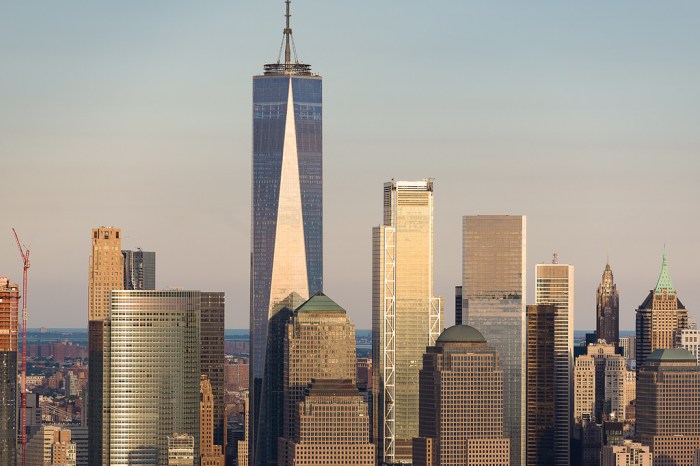
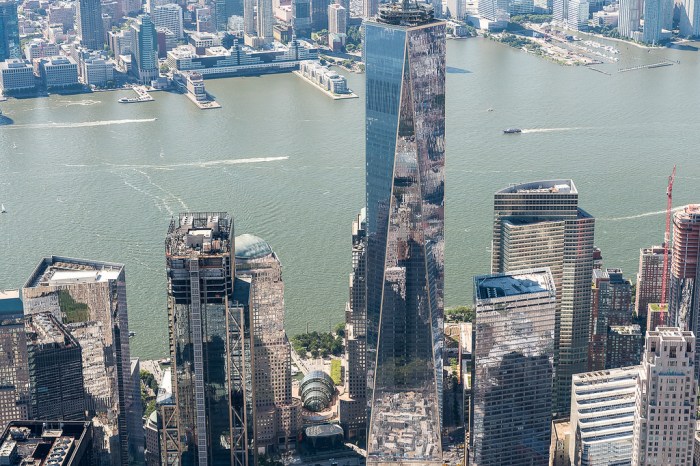
One World Trade Center (also known as the Freedom Tower1 World Trade CenterOne WTC and 1 WTC) is the main building of the rebuilt World Trade Center complex in Lower Manhattan, New York City. It is the tallest building in the Western Hemisphere, and the fourth-tallest in the world. The supertall structure has the same name as the North Tower of the original World Trade Center, which was completely destroyed in the terrorist attacks of September 11, 2001. The new skyscraper stands on the northwest corner of the 16-acre (6.5 ha) World Trade Center site, on the site of the original 6 World Trade Center. The building is bounded by West Street to the west, Vesey Street to the north, Fulton Street to the south, and Washington Street to the east.


1 wtc8


In early 2010, Eastern Concrete Materials, a U.S. Concrete company, began producing high-strength concrete for One World Trade Center (WTC). Within three years, the New York City-based producer had supplied 150,000 cubic yards of ready-mix for the tower’s superstructure—with a concrete strength that has never been used on such a scale in building construction. Collavino Construction Co. then pumped this mix as high as 103 stories.
new1

Construction began in 2006 and was completed in 2014. Its supporting columns are made of steel and concrete ranging in strength from 8600 psi to 14,000 psi. Columns on the first 40 floors are made from 12,000-14,000-psi concrete and the upper floors with 8,600–10,000-psi mix designs.

The ready-mixed concrete was pumped by Collavino’s crews to the highest elevation to which concrete has ever been pumped in the Americas. Because the mix design was so workable, pumping was accomplished with a single pump that moved the concrete directly from the ground to the top story, instead of to an intermediate station where it would have been remixed before being transferred to a second pump.

The Trump World Tower, the tallest all-residential building in the world when completed in 2001 and the tallest in New York until the 76-story Beekman Tower, engineered by WSP Cantor Seinuk, brought another technological marvel to New York: “super” cement. The super or high-strength concrete is produced by blending fly ash, slag cement and silica fume with concrete. Super high-strength concrete cannot be produced with only concrete.

Typically, the high-strength concrete used in skyscraper cores (in the 1990’s) would have a compressive strength of 8,000 to 10,000 pounds per square inch (psi). Because Trump World Tower is a rather slender high-rise, WSP Cantor Seinuk specified concrete compressive strength of 12,000psi for the first time in New York City.

“On One World Trade Center WSP Cantor Seinuk’s engineers worked on specifying the compressive strength and modulus of elasticity,” says Marcus. “But we needed even higher compressive strength—14,000 psi—for the taller One World Trade building.”

1wtc (3)

View from the top

Most of the concrete has gone into the tower’s monolithic pedestal. From a footprint of 200-by-200 feet, it rises up for 70 feet. Above ground, this has specially reinforced concrete to defend the building from the blast of a street-level bomb. Below grade, the reinforced-concrete structure is engineered to protect the tower’s structural integrity from a bomb even bigger than the one that exploded in 1993 in the World Trade Center’s parking garage.

 

cement

new2

Subway Pushers of Japan

The Japanese rail network is known throughout the world for its superiority and punctuality. In the capital city Tokyo, nearly 40 million passengers ride the rail every day, heavily outweighing other modes of transport like buses and private cars. Of these, 22% or 8.7 million take the subway.

The Tokyo subway network is a transportation marvel. On most lines, trains come every 5 minutes apart, on average, and during peak times, they tend to run every 2-3 minutes. That’s about 24 trains per hour going in one direction. Despite so many trains, the subway is extremely overcrowded, especially during rush hour. This page from the Ministry of Land, Infrastructure and Transport has data (from 2007) detailing the level of congestion at different stations of Tokyo’s subway. As you can see, nearly all of them run at over capacity with a few running at 200% over rated capacity.


push

“Oshiya” or “pushers” at Tokyo’s Shinjuku station trying to pack as many passengers as possible into the carriages during rush hour in 1967. Photo credit: CNN

In order to fit twice the number of passengers into a subway carriage, the stations employ uniformed staff known as oshiya or “pusher”, whose goal is to cram as many people as possible into the subway tram. These white glove-wearing personal actually pushes people into the train, so the doors can be shut. This is so surreal, it has to be seen to be believed.


push1


When pushers were first brought in at Tokyo’s Shinjuku Station, they were called “passenger arrangement staff” and were largely made up of students working part-time. Nowadays, there are no dedicated “pushers”. The station staff and part-time workers fill these roles during rush hours.

Although a Japanese phenomenon now, subway pushers were an American invention and originated in New York City, nearly a century ago. They were not very well-liked because they were known to push and shove passengers with hostility. The vigor with which the guards often did their job earned them the reputation as “sardine packers”. Their brutality sometimes made national headlines. “The Anxious Subway Guard Who Guillotines His Passengers” —screamed a headline, and “Long Suffering New York Subway Riders Cheer Man Who Hit Guards” —reported another.

Pushers became out of fashion with the introduction of automatic door controls and automatic turnstiles. As the sadistic sardine packers began to lose their job in the 1920s, their demise were mourned briefly. Several movies about subway workers came out during this period including Subway Sadie (1926), Wolf’s Clothing (1927), The Big Noise (1928), Love Over Night (1928) and so on. Subway pushers were also depicted in a 1941 biographical movie called Pusher — the story takes place during World War 1.

More recently, in 2012, Hong Kong- based photographer Michael Wolf created a photo series named Tokyo Compression, where he captured the traumatized and pained expression of commuters as their faces were crushed against the windows. These pictures show how horrible and shameful the situation inside the subway is. Bodies are squished so tightly against one another that most people can’t physically move. Short persons suffer the risk of getting smothered against the coat of their fellow passenger. Getting off at the right station require strength and determination, and fire hazards and emergency evacuation are serious issues. The subways are also fertile grounds for pickpockets and gropers.


push2


push3


push4


push5


push6


Japanese commuters wait in line for the next train, while people pushers push passengers onto the Yamanote line subway train during the morning rush hour at Shinjuku station in Tokyo, Japan. The daily ritual is performed to maximize the number of commuters on trains.


“Be Kind; Everyone You Meet is Fighting a Hard Battle.” Plato.


Don’t Text and Scoot

A jaw-dropping video from China shows an enormous sinkhole burst open in the middle of a street, leading to an unsuspecting man on a scooter plunging into the huge hole.

Captured via CCTV, the footage first shows a giant portion of a road suddenly collapse and, in what looks like a scene from a cartoon, a scooter comes barreling towards it mere seconds later.

In a troubling testament to our modern times, the man riding the bike apparently did not see the gigantic chasm in front of him because he was too busy looking at his phone!

Considering that his distracted state could have resulted in an injured pedestrian, it’s rather ironic that the rider, himself, wound up being the one worse for wear.

Fortunately, he emerged from the incident unscathed and even managed to pull himself out of the hole without any help.

While the unexpected tumble may have destroyed his cell phone, that might actually be for the best.

The Widest Freeway in the World

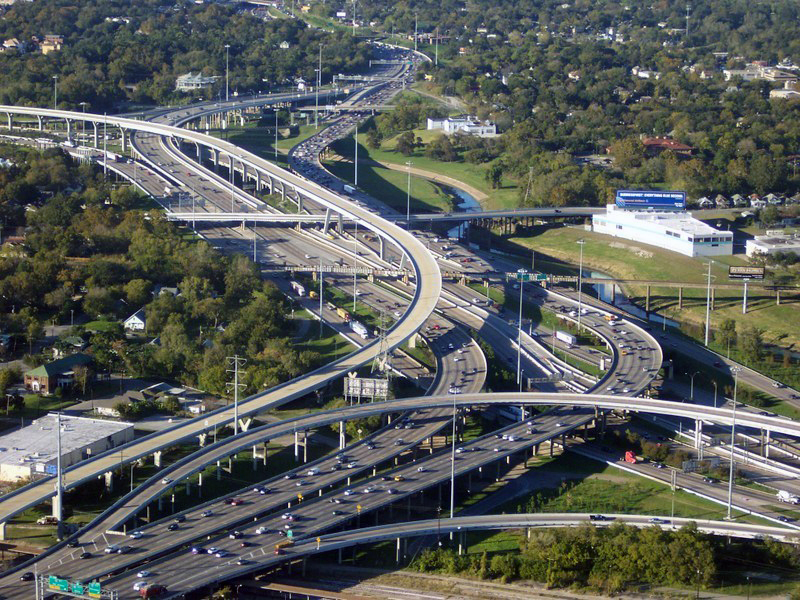
Where else? Houston, Texas of course.


katy1


When constructed during the 1960s, the I-10 Katy from Houston, known as the Katy Freeway, was built with six to eight lanes wide barring side lanes, being modest by Houston standards because existing traffic demand to the farming area of West Houston was relatively low. As the population and economic activity increased in the area vehicular traffic increased, reaching an annual average daily traffic (AADT) of 238,000 vehicles just west of the West Loop in 2001.

In 2000 increased traffic levels and congestion led to plans being approved for widening of the freeway to 16 lanes with a capacity for 200,000 cars per day. An old railway running along the north side of the freeway was demolished in 2002 in preparation for construction which began in 2004. The interior two lanes in each direction between SH 6 and west I-610, the Katy Freeway Managed Lanes or Katy Tollway, were built as high-occupancy toll lanes and are managed by the Harris County Toll Road Authority. The section just west of SH 6 to the Fort Bend–Harris county line opened in late June 2006. Two intersections were rebuilt (Beltway 8 and I-610), toll booths were added, together with landscaping as part of Houston’s Highway Beautification Project. Most of the section between Beltway 8 and SH 6 had been laid by September 2006 and work was completed in October 2008.

Tolls on the managed lanes vary by vehicle occupancy, axle count and time of day. High occupancy vehicles may travel for free at certain times.


Katy-Freeway


katy4


Interstate 10 (I-10) is the major east–west Interstate Highway in the Southern United States. In the U.S. state of Texas, it runs east from Anthony, at the border with New Mexico, through El Paso, San Antonio and Houston to the border with Louisiana in Orange, Texas. At just under 880 miles (1,420 km), the Texas segment of I-10, maintained by the Texas Department of Transportation, is the longest continuous untolled freeway in North America that is operated by a single authority, a title formerly held by Ontario Highway 401. 


katy2


katy3


OLYMPUS DIGITAL CAMERA


katy interstate-10-map