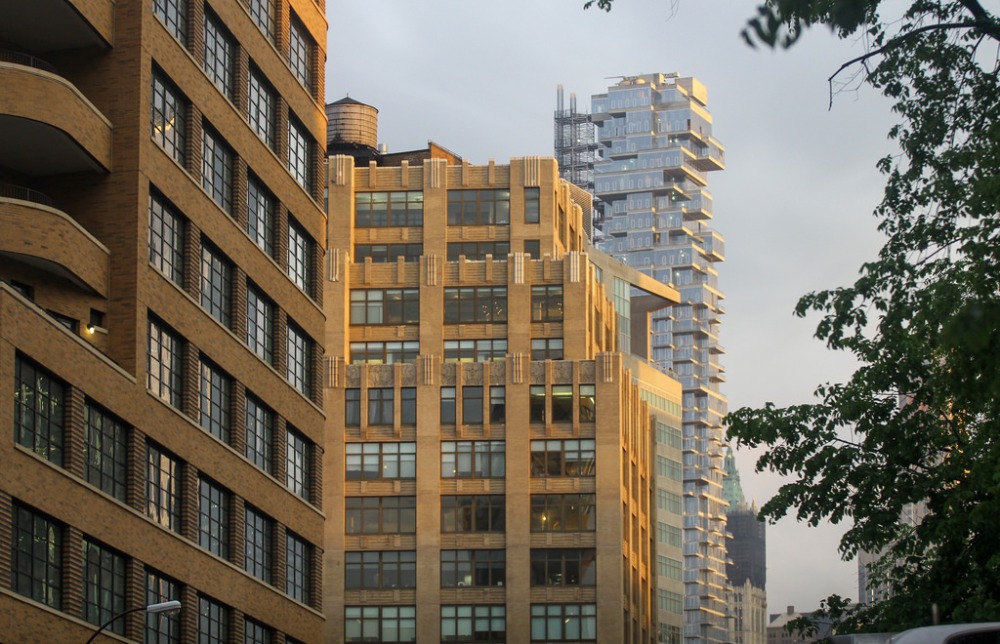
56 Leonard Street is an 821 feet (250 m) tall, 57-story skyscraper on Leonard Street in Tribeca, New York City, United States. Herzog & de Meuron describes the building as “houses stacked in the sky.” It is the tallest structure in Tribeca.
The building has 145 condominium residences priced between US$3.5 million and US$50 million. Residences will range in size from 1,418 to 6,400 square feet (131.7 to 594.6 m2) and will include 2 to 5 bedrooms all with private outdoor space.
As of May 2013, 70% of the building had sold. According to building developer Izak Senbahar, the building was 92% sold in seven months. In June 2013, a penthouse at 56 Leonard went into contract for US$47 million, making it the most expensive residential property ever sold below Midtown Manhattan.
The building was completed in 2016.[4] Due to its cantilevered balconies it has been nicknamed the Jenga building by the media.
If you snooze you lose goes the old adage. Getting up early and starting the day bright eyed and bushy tailed is the way to success for the go-getters out there. The downside is having to get disrupted out of deep sleep by noisy contraptions. Here are some strange alarm clocks that will force a person to jump into the rat race at full speed.
The Sub Morning cleverly lures you to the bathroom, by forcing you to submerge it in water
Once you get to the bathroom, you’re basically in the shower already and, once you’re in the shower, the day has officially begun.
–
Clocky leaps off your nightstand and runs away, making you chase it around the room to shut off the damn beeping
This sneaky little thing forces both your body and your wits into action.
Target Alarm Clock
If you are a sucker for shooting games, you must try this Target alarm clock. The rules are easy: the clock will sound the alarm based on the time you set, and you need to stop it by using the laser target gun to shoot the bullseye.
I.Q. test first thing in the morning
This Sonic Grenade alarm clock is guaranteed to get your sleepy children out of bed. Just pull the pin, throw the grenade into the room and get out of the way as it emits an ear-piercing noise.
The Rocket Launcher alarm clock will really “launch” you from your bed. When the alarm goes off, it shoots a rocket off in your room, and the only way to turn it off is to locate the rocket and place it back on the launch pad.
The toughest part about waking up for many people is physically getting out of bed. Luckily, the Carpet Alarm Clock helps you work through the hard part, by forcing you to stand up and step on the mat to turn it off.
In the recent past we have published several videos showing pretty dangerous low passes: a Su-27 flying really low over a group of people after performing a low approach at an airbase in Ukraine; a Su-25 Frogfoot buzzing a group of female soldiers posing for a photograph; another one performing a low passage along a taxiway of a military airfield in northwestern Ukraine; a Mig-29 overflying pro-Russia separatist blocking rails, an Ilyushin Il-76 buzzing some Su-25s and Frogfoots returning the favor while buzzing the tower; an Mi-17 helicopter flying among the cars on a highway and another fully armed Mig-29 Fulcrum in the livery of the Ukrainian Falcons aerobatic display team flying over an apron at an airbase in Ukraine.
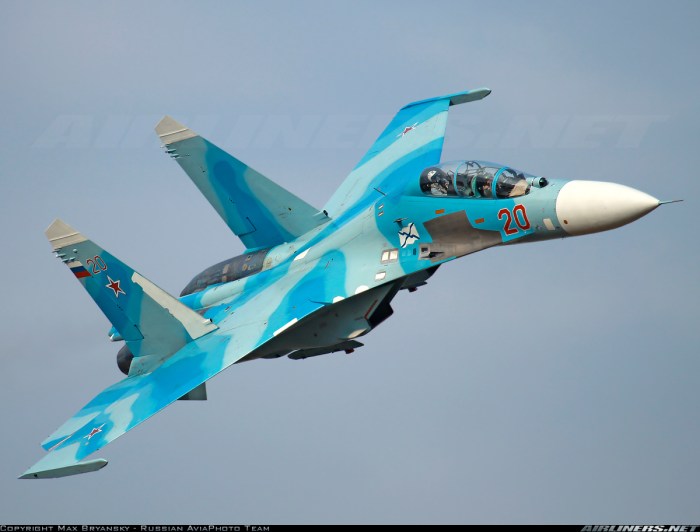
However, Russian Air Force and Naval Aviation pilots love flying low and be filmed in the process too. Not only with the Su-24 Fencer, the type shown buzzing cars on a highway in a video that went viral few years ago causing military prosecutors to investigate flight records and safety measures carried out at military airfields. This time with a Su-33 Flanker-D.
The Sukhoi Su-33 is an all-weather carrier-based highly maneuverable air defence fighter based on the Su-27 “Flanker” and initially known as Su-27K. It has larger (folding) wings, upgraded engines, twin nose wheel, strengthened undercarriage for blue waters ops.
The Su-33 equips the only Russian aircraft carrier Admiral Kuznetsov and, as reported last year, a Russian Navy Su-33 Flanker carrier-based multirole aircraft crashed during flight operations from the carrier at its inaugural combat cruise in the Mediterranean Sea, to support the air strikes in Syria, on Saturday, Dec. 3, 2016.
According to the report, the combat plane crashed at its second attempt to land on the aircraft carrier in good weather conditions (visibility +10 kilometers, Sea State 4, wind at 12 knots): the arresting wire snapped and failed to stop the aircraft that fell short of the bow of the warship.
The pilot successfully ejected and was picked up by a Russian Navy search and rescue helicopter.
The Chinese Shenyang J-15, equipping the refurbished ex-Soviet Kuznetsov class carrier Varyag now “Liaoning” is also extensively based on the Su-27 and Su-33.
Anyway, the following video show a Russian Navy Su-33 at some airbase in Russia, performing a couple of really low passes buzzing the cameraman. Cool footage, probably not too safe.
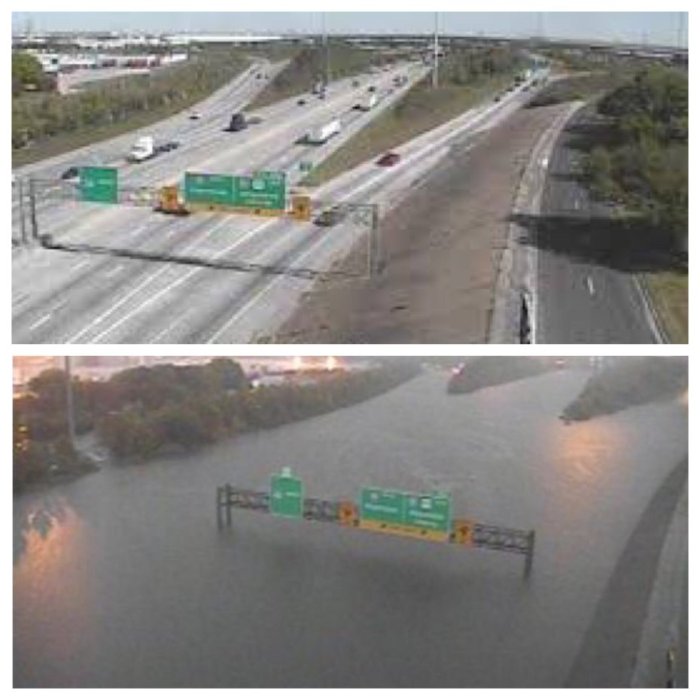
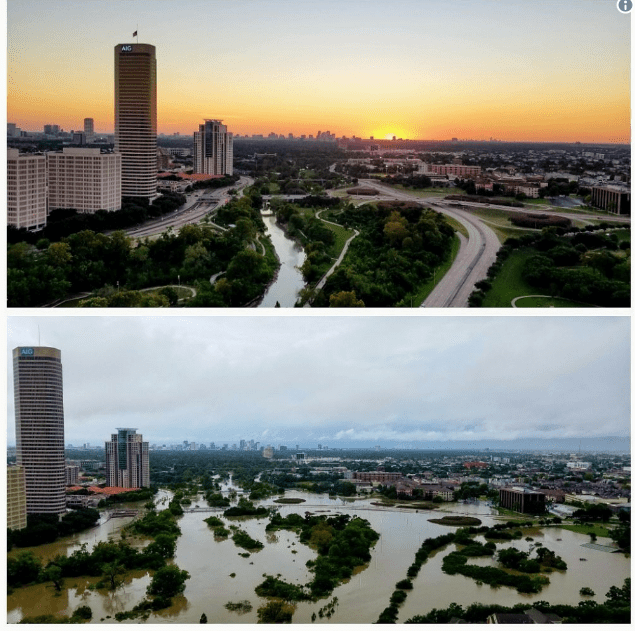
Startling before-and-after images from Houston, where hurricane Harvey dumped a trillion gallons of water after tearing up much of coastal Texas.
At least eight deaths are reported and it’s expected to generate more damage than Katrina. Yet it’s far from over, with no end to the rain. Nearly half a million people will need disaster relief in what is being plainly described as the worst disaster ever to hit in Texas. Some 30,000 people need immediate shelter.
Falconry has been popular for many centuries around the world. Falconry is the use of Falcons to hunt other creatures. It is especially popular in the United Arab Emirates and Qatar in the Middle East.
The sport of falconry began over 5,000 years ago in Iran, and spread over the centuries to East and West. The sport was introduced to Qatar through Bedouin tribes who used the birds as a tool for hunting. They discovered that it was much easier to allow the raptors to take down birds migrating across the Arabian Peninsula than it was to shoot them down themselves. This Bedouin method of falconry set the basis for the modern version of the sport practiced in Qatar.
Although, over the centuries, falconry has virtually disappeared from the European continent, the sport lives on in the Middle East. In Qatar, you can still purchase falcons in downtown Doha at falcon souqs or through private dealers. The best raptors can cost thousands of dollars and may even be issued their own Qatari passports to ensue they are not stolen or taken out of the country without the owner’s permission. Due to these elaborate methods of theft prevention, it is not uncommon for you to be seated beside a full-grown falcon when travelling on a Middle Eastern airliner.
From Airport Guide Traveller:
Live animal facility
All pets travelling via Hamad International Airport enjoy the comfort of our dedicated live animal facility while they wait for their connecting or departing flights. This is a secure and climate-controlled environment that is supervised by trained animal handlers.
Collecting your pet
An airline representative in thebaggage claimarea will deliver your pet to you in person. Please contact the Airline Baggage Service office near Belt 1 (map) if you need any assistance. Once you’ve collected the rest of your checked baggage please proceed toCustomswhere your pet’s travel documents will be inspected.
Things to remember
Please inform your airline well in advance to finalize travel arrangements and documentation for your pet.
Please make sure your pet is secured in a suitable container and has access to food and water.
Falcons
Some airlines, such as Qatar Airways, will allow your falcon to travel with you in the passenger cabin (only in Economy Class). Other airlines may accept your falcon for travel but only as checked baggage. Before starting your journey please consult your airline for guidance.
The Lençóis Maranhenses National Park located in Maranhão state, in northeastern Brazil, is one of the most marvelous and unique places in the world. An area encompassing about 1000 square kilometers of white silky sands intercepted at regular intervals by endless cool oases of turquoise lakes.
At first glance Lençóis Maranhenses looks like an archetypal desert. In fact it isn’t actually a desert just like the Tottori Sand Dunes aren’t. Lying just outside the Amazon basin, the region is subject to a regular rain season during the beginning of the year. The rain water accumulates in the valleys in between sand dunes and forms clear blue and green lagoons that reach their fullest between July and September. The area is also surprisingly home to a variety of fish which, despite the almost complete disappearance of the lagoons during the dry season, have their eggs brought from the sea by birds. Mangroves, deserted beaches, buritis – a graceful kind of palm tree – and the Preguiças River help compose the park’s diversity.
Lençóis Maranhenses has been formed over thousands of years, as the sand from riverbeds is deposited at the mouth of the rivers and brought back to the continent by winds and sea currents.
The dunes advance as far as 31 miles into the continent and stretch along 27 miles of coastline, mostly deserted beaches. Some of the lagoons at Lençóis Maranhenses National Park are huge. Lagoa Bonita and Lagoa Azul are near the town of Barreirinhas. Lagoa Tropical, also worth a visit, is closer to the village of Atins. Lagoa da Gaivota (Seagull Lagoon), one of the park’s largest and most beautiful, is near Santo Amaro do Maranhão, a village located about 60 miles from Barreirinhas.
The best time to visit the park is roughly from May to September, when it’s sunny, yet the lagoons are still full.