That sounds funny — the science behind why certain words make us laugh

The meaning of a word and the form a word takes are key to getting a giggle

Psychologist Dr. Chris Westbury figured out what makes words like wriggly, squiffy and boobs so funny. (John Ulan, University of Alberta, Faculty of Science)

Science has determined through rigorous statistical analysis of 45,000 total words what the funniest words in the English language are, and some insights into why they make us giggle.

In fact, the word giggle, along with wrigglysquiffy and boobs are among the funniest words we know according to a new study by Chris Westbury, a psychologist at the University of Alberta. And there’s a big goofy list below of the funniest 200 words in English.  Some will make you slaphappy, others will make you upchuck, and one we can’t mention because you may get your knickers in a knot.

Slobbering, puking, blockhead

No, not you. We just wanted to get your attention so we could talk about the purpose of this study.

Westbury, who has an interest in the psychology of humour, wants to understand what it is about certain words that makes us laugh. The capacity to laugh is unique to us and higher primates, but only we have words.

The study is based on three theories of humour. One, called superiority humour, suggests we find humour from making fun of people. “You blockhead Charlie Brown” is an example.

A second theory of humour is incongruity theory, which suggests that less likely things are funnier than likely things. You are not expected to slobber, but when you do, people laugh.

The third theory is juxtaposition theory, and it suggests that people’s actions sometimes make us laugh. Who doesn’t find puking funny?

All three of these theories are reflected in a master list of 200 individual words that make us laugh the most. Don’t worry, we’re getting to them.

Of all the words in the English language, upchuck and slobbering are among the funniest. (David Singleton, Creative Commons Attribution 2.0 Generic)

Semantic predictors of funny words

One of the conclusions of the study is that there are two ways to predict whether a word will be funny or not: its meaning and its form.

Semantic predictors depend on the meaning of a word and the emotions evoked by that word. This measures how closely a word is — either in meaning or emotion — to the particular category is represents. The study found there were six categories of words that typically make us laugh: sex, bodily functions, insults, swear words, partying and animals.

From the sex category, boob and penis are classics. Bodily functions includes burp and snot; insults are words like ninny and buffoon; swear words are bullocks and jackass (among those we care to list); funny partying related words are booze and shindig; and humour in the animal list comes from pooch and critter.

Did we mention there are more in the list of the 200 funniest words at the end of this article? Keep scrolling …

Many of comedian George Carlin’s seven words you can’t say on TV have characteristics similar to those on the funniest words list. But we can’t tell you what they are. (Gary C. Caskey/Reuters)

Information predictors of funny words

Dr. Westbury’s second predictor of funny words he calls “information predictors.” These have do do with the structure of a word or its form.

Words with fewer letters that occur less frequently in English were found to be funnier than words with more common letters. Similarly, less common words are funnier than common ones.

Also a few specific letters or sounds sometimes occur more frequently in funny words. For example the letter ‘k’ appears quite often in funny words: pukefinkoink; as does the ‘oo’ sound, as in boob and poop. The letters ‘le’ at the end of a word is also often worth a giggle — or a wriggle or even a nibble.

The top 200 funny words (yes, finally!)

(Warning: some of these words could be considered mildly offensive)

slobbering
upchuck
puking
humping
fuzz
bawl
giggle
cooch
bunghole
floozy
boff
cackling
chucky
guffaw
slobber
pukes
giggling
bubby
titty
titties
poop
pooping
wank
mangy
fellate
puss
puke
burp
boobs
pubes
simp
boob
prancing
licker
poops
hussies
booby
jiggling
meany
bucko
hussy
flappy
schmuck
giggly
humph
booger
foxy
fellating
farted
blowjob
waddle
chubby
buxom
goddamn
ninny
buzz
strumpet
fanny
yaps
huffy
cluck
pudgy
barfed
weiner
nymphomaniacs
cootie
wiggling
groupies
wiggly
farting
twerp
yack
poppa
fellated
dumpy
foolery
chortle
pecker
heinie
snogging
wriggly
goofy
whoop
cackle
belcher
crapping
boobies
jiggle
yuks
whoopee
prance
frisky
lummox
gulp
squawk
squawking
weeny
clinger
squiffy
jiggly
snots
muzzy
nincompoop
drool
cooky
wiggle
nilly
blurt
mumbo
lubber
yobbo
farts
squealing
guff
bogart
minx
bozo
groupie
chomp
quip
ponces
giggles
honkey
boner
diddle
willy
f–ker
hijinks
snickering
waggling
ponce
guppy
chortles
momma
biff
conniption
kiddies
wags
twirly
widdle
tipsy
guffaws
puffball
dippy
cuddle
honky
effing
goos
cavort
squirming
dingle
frigging
porky
oink
shagging
tubby
wham
mamma
smarty
cheerios
boozy
catcall
huffs
fornicated
blurts
douches
biddies
tiddly
rotter
crumby
punkin
scamp
hubby
prats
shimmy
scarry
chick
huck
floozie
gabbing
dicks
chump
cavorting
hirsute
titter
hoot
wienie
grump
coxcomb
gabby
jock
bray
snicker
letch
braw
holler
skulk
how’d
yelp

CBC Quirks & Quarks
Different Images

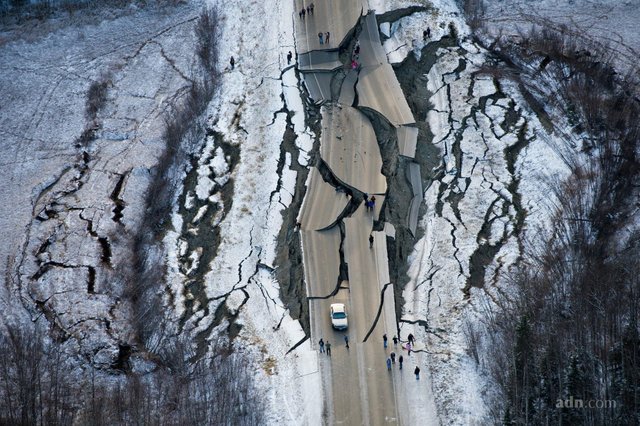
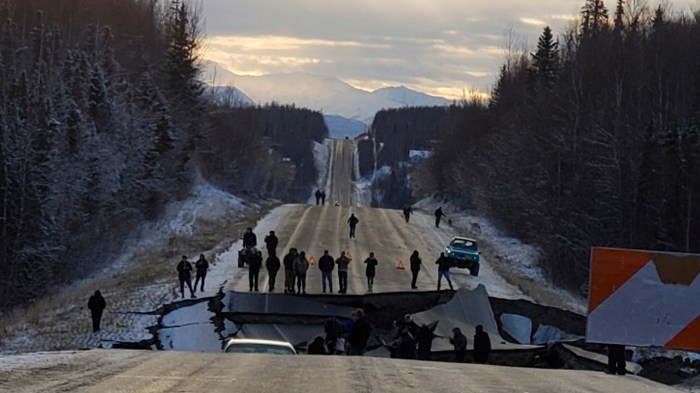
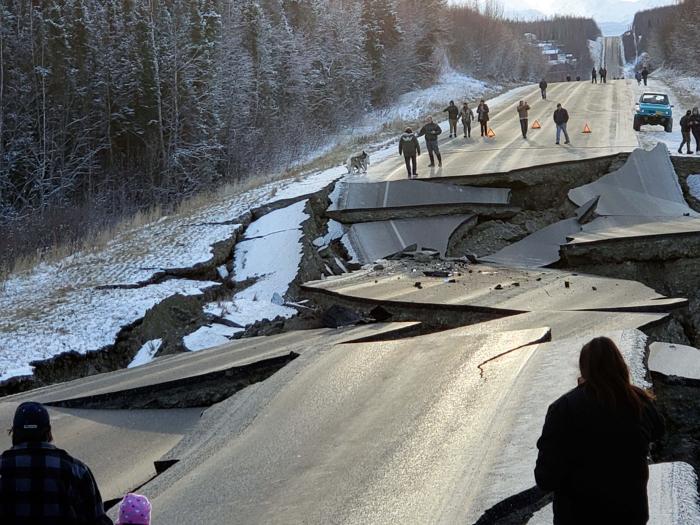
Alaskan earthquake.

earthquake

earthquake1

Earthquake Alaska

earthquake3

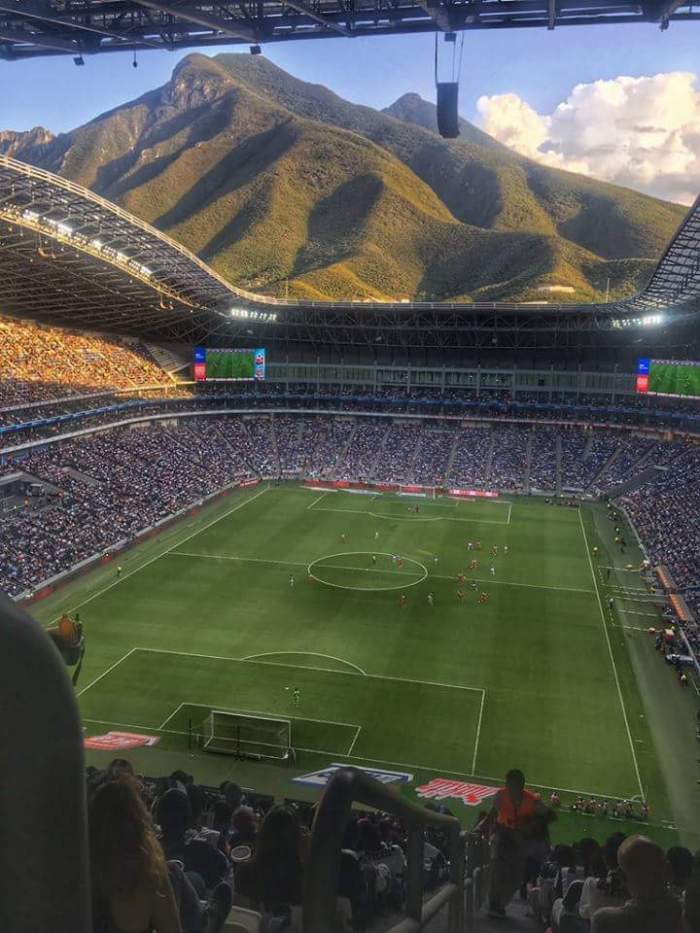
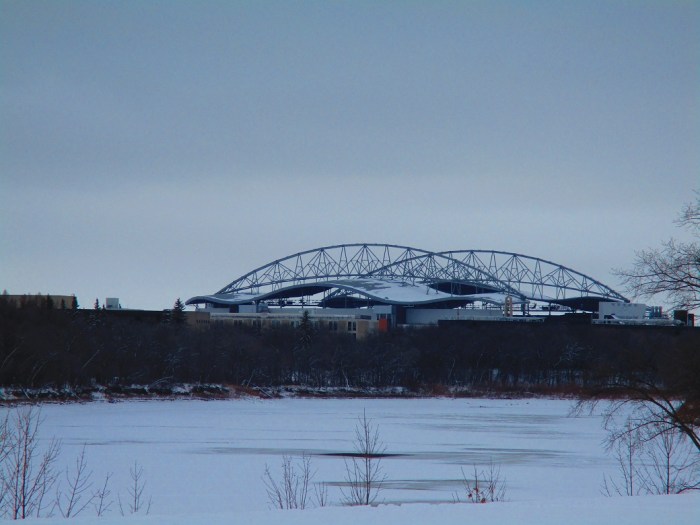
Stadium in Monterrey, Mexico.

redd

Great big guy with tiny wife.

reddi

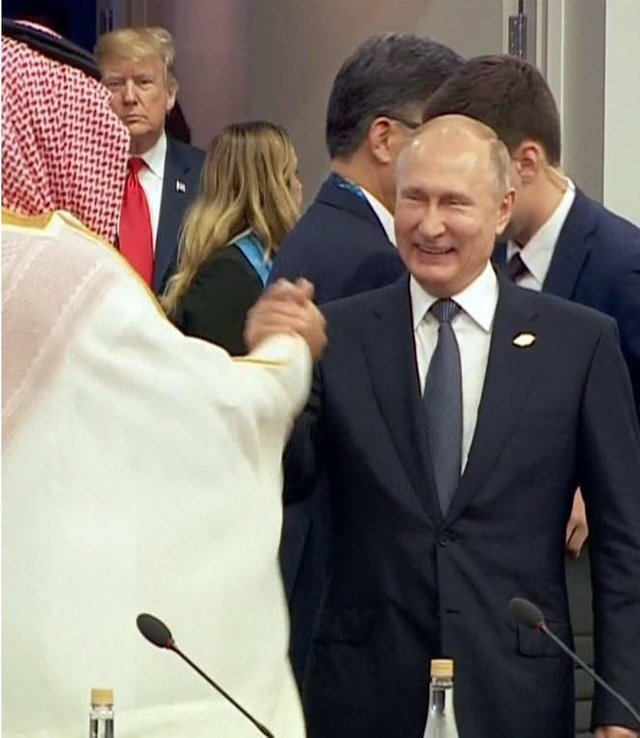
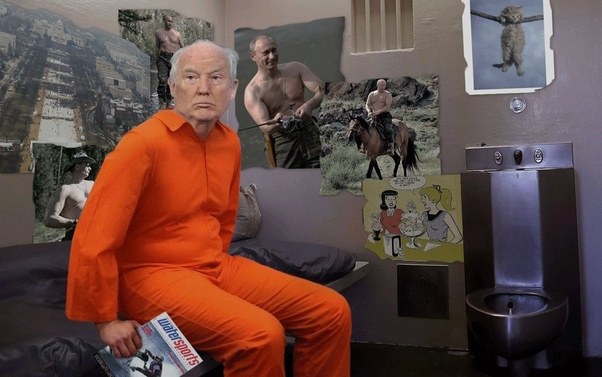
Two killers who Trump admires.

reddi1

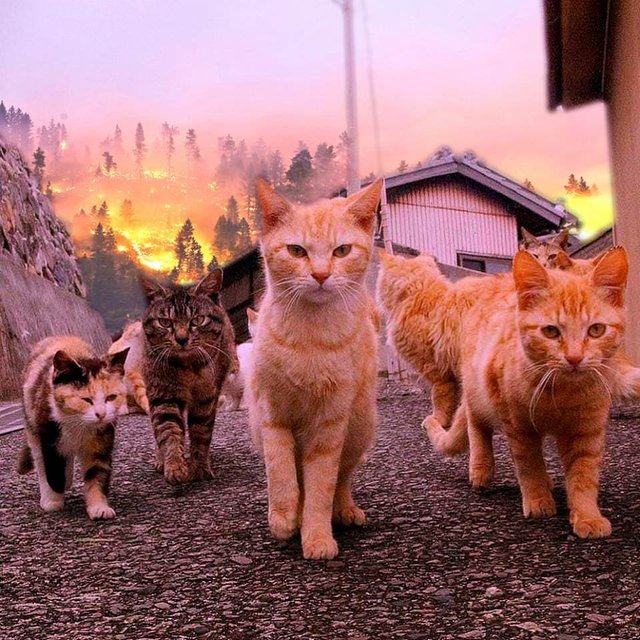
Cat gang with wildfires in the background.

reddi2

Snow maze in Poland.

reddi3

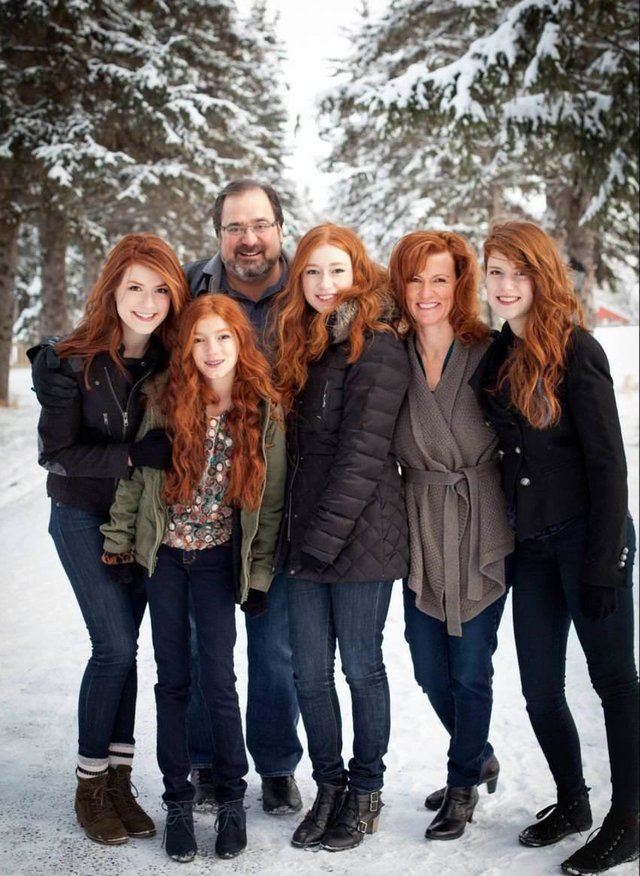
Like mother like daughters.

redhead

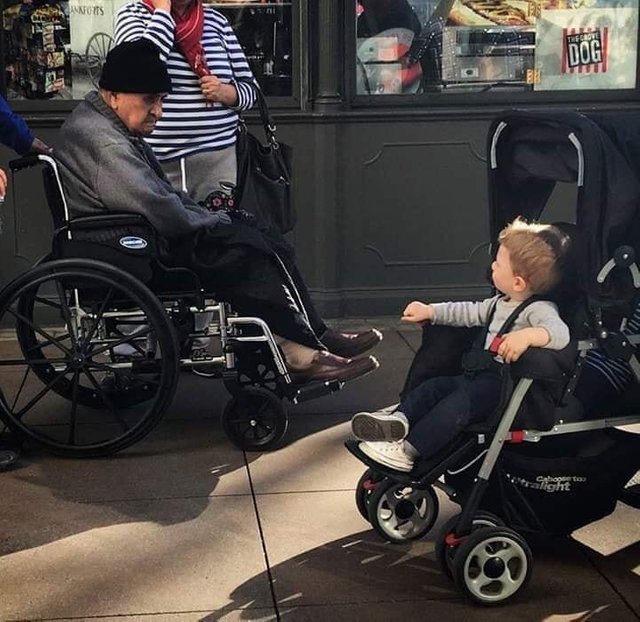
How’s it going old man?

redhead1


Tribute to George H. W. Bush

George Herbert Walker Bush (June 12, 1924 – November 30, 2018) was an American politician who served as the 41st President of the United States from 1989 to 1993. Prior to assuming the presidency, Bush served as the 43rd Vice President of the United States from 1981 to 1989. As a member of the Republican Party, he had previously been a Representative, Ambassador and Director of Central Intelligence. During his career in public service, he was known simply as George Bush; since 2001, he has often been referred to as “George H. W. Bush”, “Bush 41”, or “George Bush Sr.” in order to distinguish him from his eldest son, George W. Bush, the 43rd President of the United States.

Week in Pictures

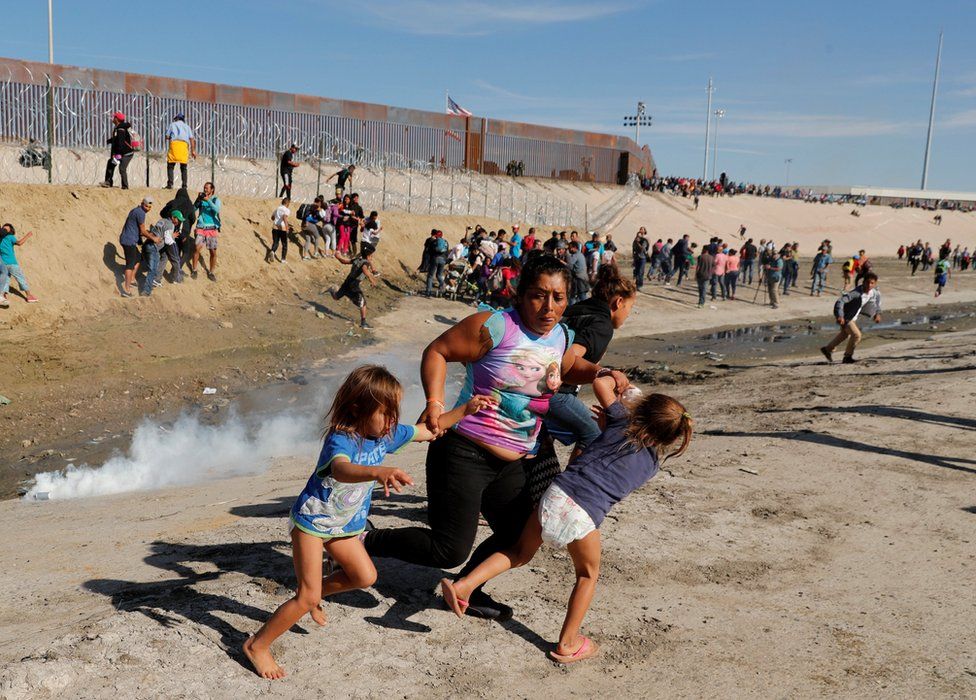
A woman runs from tear gas holding two of her childrenMaria Meza (centre), an asylum seeker from Honduras runs away from tear gas with her five-year-old twin daughters Saira Mejia Meza (left) and Cheili Mejia Meza (right) in front of the border wall between the US and Mexico in Tijuana.

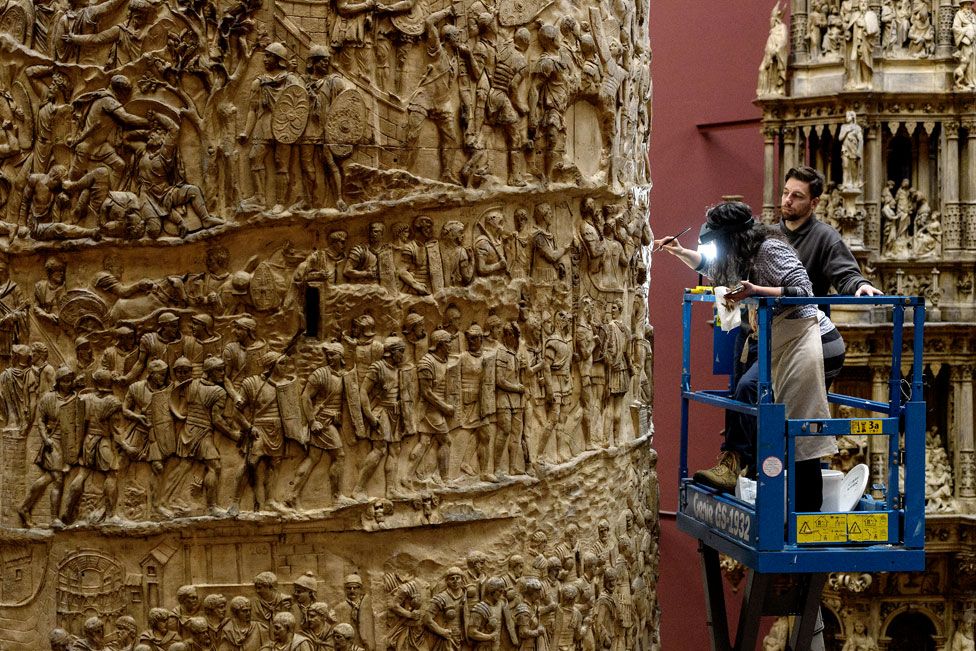
A museum worker stands on a cherry-picker whilst working on a large decorated columnA conservator works on one half of a cast of the Roman Trajan’s Column memorial at a press preview of the exhibition Cast Courts at the Victoria and Albert Museum in London.
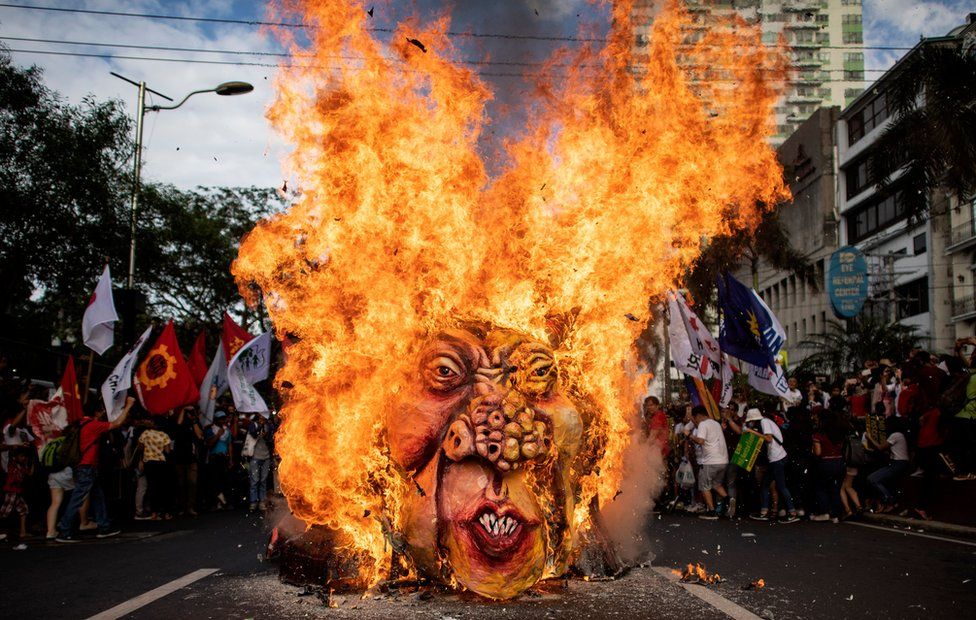
A large effigy is burned in the streetActivists burn an effigy of Philippine President Rodrigo Duterte near the US Embassy in Manila during the commemoration of the 155th birthday of revolutionary leader Andres Bonifacio.

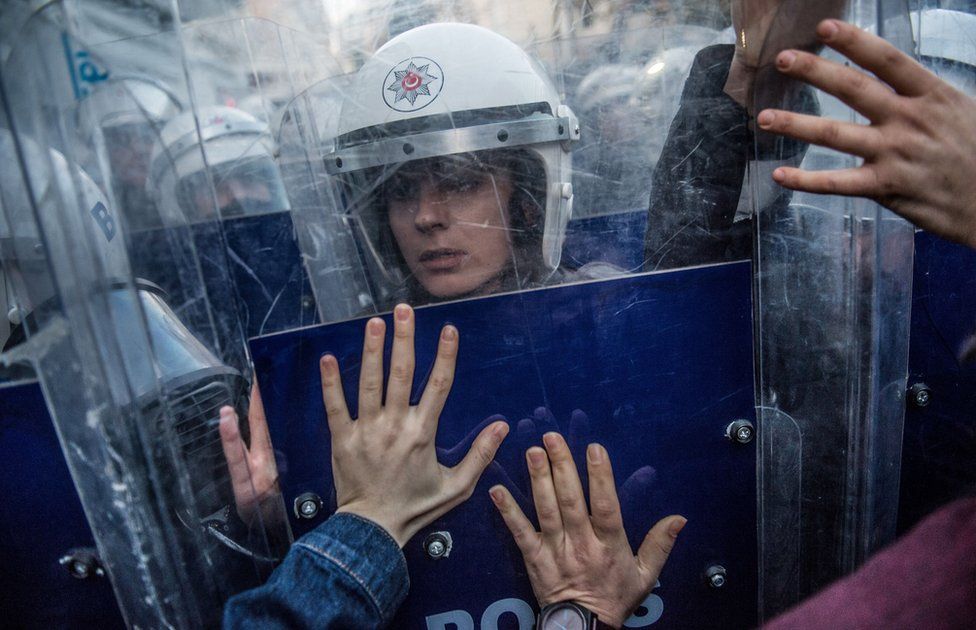
A riot officer holds back protestersA Turkish riot police officer reacts during clashes with women’s rights activists as they try to march to Taksim Square to protest against gender violence in Istanbul on the International Day for the Elimination of Violence against Women.

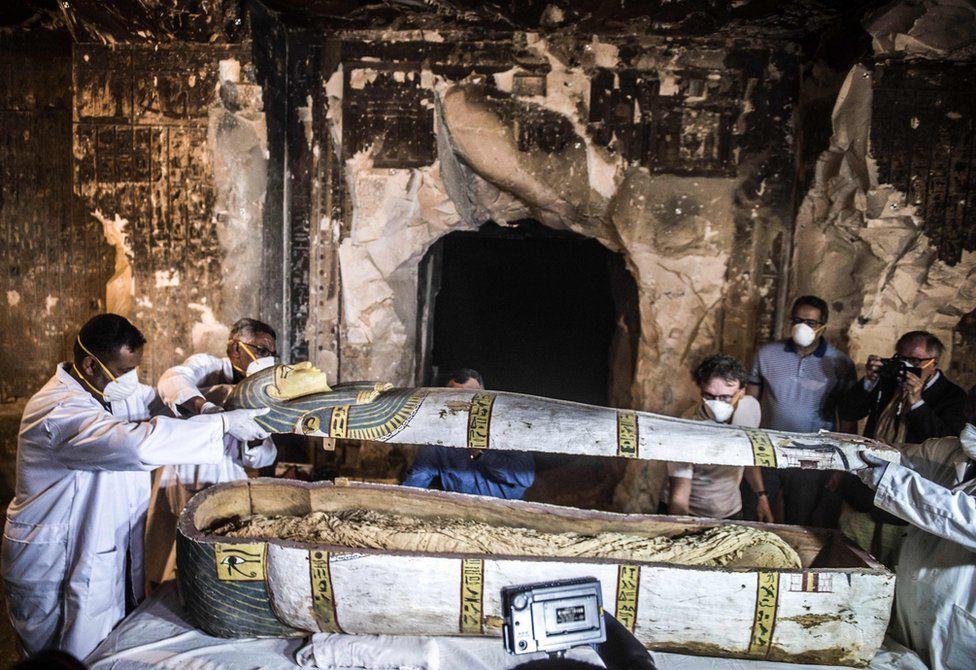
A group of men lift the lid off of a sarcophagusA sarcophagus discovered intact is opened by Egypt’s Antiquities Minister Khaled el-Enany (second from right) and others on the west bank of the Nile, north of the southern Egyptian city of Luxor.

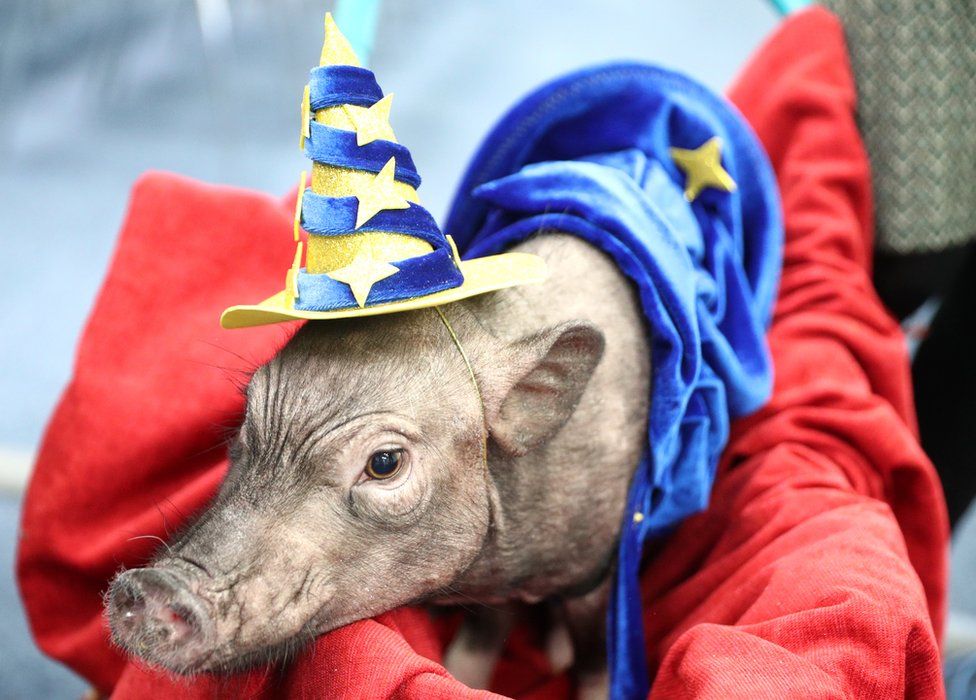
A pig in a red cloak and a wizard hatPigs in hats are brought to a press conference in Moscow, Russia, for the forthcoming 2019 new year celebrations. According to the Chinese zodiac, 2019 is the Year of the Pig.

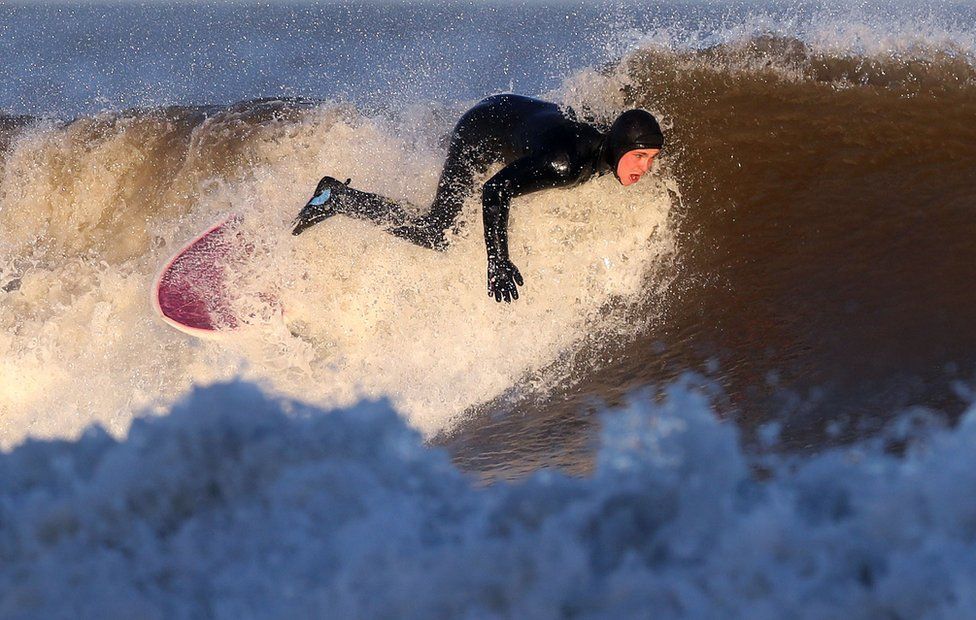
A surfer surfs a waveA surfer at Tynemouth takes advantage of the windy conditions as Storm Diana hits parts of the UK.

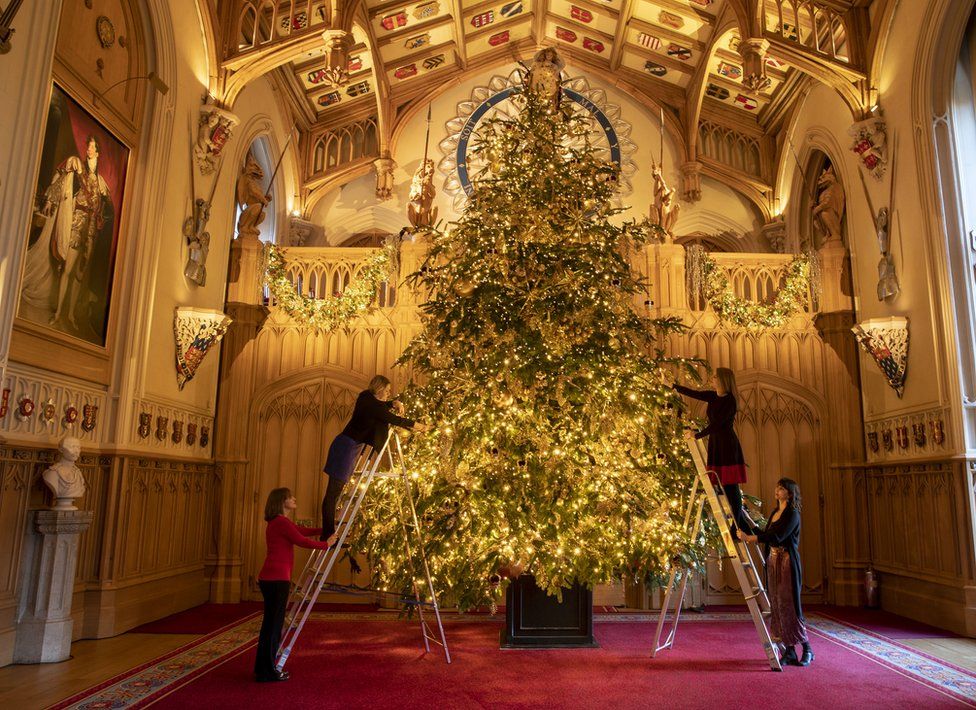
People decorate a tall Christmas tree using laddersFinal preparations are made to a 20ft Nordmann fir Christmas tree in St George’s Hall at Windsor Castle, Berkshire, UK.

BBC


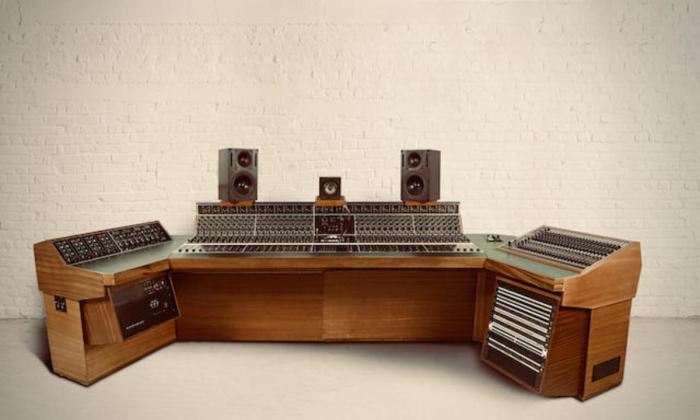
Recording Consoles

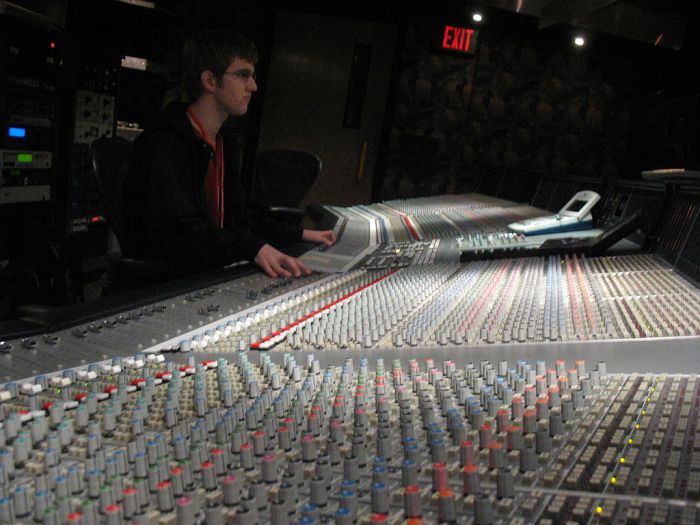
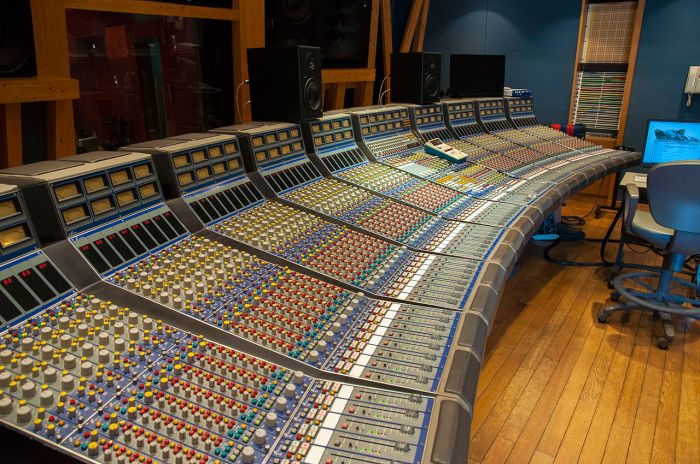
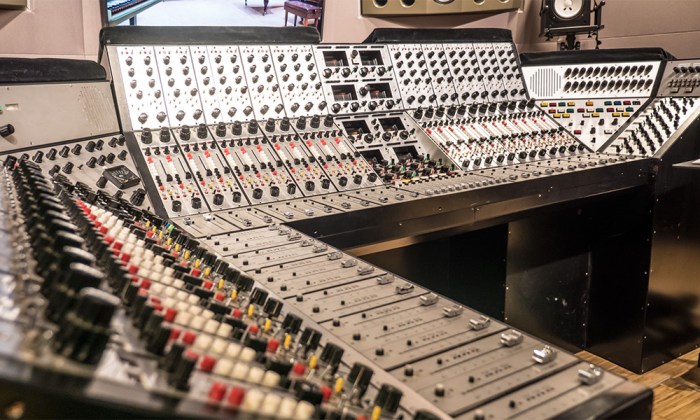
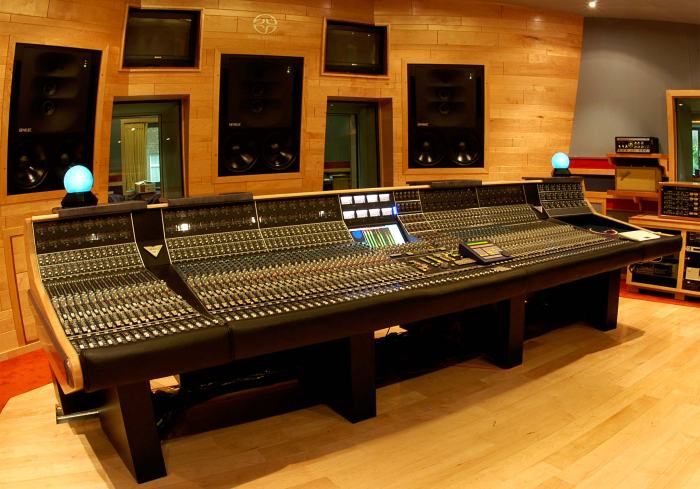
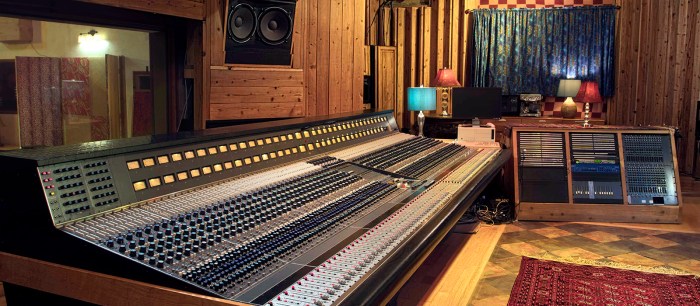
More buttons than in an airliners cockpit.

In sound recording and reproduction, and sound reinforcement systems, a mixing console is an electronic device for combining sounds of many different audio signals. Inputs to the console include microphones being used by singers and for picking up acoustic instruments, signals from electric or electronic instruments, or recorded music. Depending on the type, a mixer is able to control analog or digital signals. The modified signals are summed to produce the combined output signals, which can then be broadcast, amplified through a sound reinforcement system or recorded.

console

Mixing consoles are used in many applications, including recording studios, public address systems, sound reinforcement systems, nightclubs, broadcasting, television, and film post-production. A typical, simple application combines signals from microphones on stage into an amplifier that drives one set of loudspeakers for the audience. A DJ mixer may have only two channels, for mixing two record players. A coffeehouse’s tiny stage might only have a six channel mixer, enough for two singer-guitarists and a percussionist. A nightclub stage’s mixer for rock music shows may have 24 channels for mixing the signals from a rhythm section, lead guitar and several vocalists. A mixing console in a professional recording studio may have as many as 96 channels.

console1

In practice, mixers do more than simply mix signals. They can provide phantom power for condenser microphones; pan control, which changes a sound’s apparent position in the stereo soundfield; filtering and equalization, which enables sound engineers to boost or cut selected frequencies to improve the sound; dynamic range compression, which allows engineers to increase the overall gain of the system or channel without exceeding the dynamic limits of the system; routing facilities, to send the signal from the mixer to another device, such as a sound recording system or a control room; and monitoring facilities, whereby one of a number of sources can be routed to loudspeakers or headphones for listening, often without affecting the mixer’s main output. Some mixers have onboard electronic effects, such as reverb. Some mixers intended for small venue live performance applications may include an integrated power amplifier.

console2

console3

console4

The console used to record Led Zeppelin’s Stairway to Heaven.

console5 stairway to heaven

The past in color 1843-1947

c. 1930

An overhead view of people on 36th St. between 8th and 9th Aves., New York. Manhattan’s Garment District has been the center of the American fashion industry since at least the turn of the twentieth century – in 1900, New York City’s garment trade was its largest industry by a factor of three. The entire fashion ecosystem, from fabric suppliers to designer showrooms, exists within an area just under a square mile. Native New Yorker Margaret Bourke-White was in her mid-twenties when she took this picture. She would later become Life magazine’s first female photojournalist and, during WWII, the first female war correspondent. The two cars shown are a 1930 Ford Model A 4-Door Sedan, left, and a Ford Model A Sports Coupe, right.

1949

Stanley Kubrick is a hugely significant figure in the history of cinema, directing 13 major feature films including Spartacus, A Clockwork Orange, The Shining, Full Metal Jacket and the ground-breaking 2001: A Space Odyssey. But prior to his film career, the young Kubrick was an apprentice photographer at Look magazine. First using a camera for his school’s publication, he was offered an apprenticeship at Look after he submitted a photograph. This picture of people arriving at the Chicago Theatre, North State Street, Chicago, is drawn from a set of pictures the 21-year-old Kubrick took for the Look series “Chicago – City of Extremes”. The theatre production in question, starring Jack Carson, Marion Hutton, and Robert Alda, was John Loves Mary, a farce.

1863

Confederate prisoners at Seminary Ridge during the battle of Gettysburg. Until 1863, both sides in the American Civil War of 1861-1865 used a parole system for prisoners. A captured soldier vowed not to fight until he had been exchanged for a soldier fighting for the opposition. But in 1863, when this picture was taken, the parole system proved untenable, because Confederate authorities would not recognize a black prisoner as equal to a white prisoner. The direct result was that the number of troops being held in prisons increased massively, on both sides. Just over 400,000 soldiers were taken captured and placed in prison camps during the American Civil War. One in ten of all deaths during the war occurred in a prison camp – a total of more than 55,000 men lost their lives incarcerated.

c. 1864

This Union soldier is believed to be Sergeant Samuel Smith, together with his wife Molle, and daughters Mary and Maggie. Smith served as a soldier in the 119th US Colored Infantry, enlisting at Camp Nelson, Kentucky. Formed during the American Civil War, after Lincoln’s Emancipation Proclamation came into effect on January 1st 1863, the 175 regiments of the United States Colored Troops (USCT) were largely but not exclusively formed of African-American soldiers. In total, around 180,000 free African Americans together with Native Americans, Asian Americans and Pacific Island Americans were enrolled in the USCT – around one tenth of the Union force. Almost 2,700 were killed in combat – but that is a figure dwarfed by a total of 68,000 killed chiefly by disease – the largest cause of death in the War. The regiments were led by white officers.

1918

Oklahoma’s Fort Sill – the burial place of the Native American, Geronimo – housed static kite balloons, inflated with hydrogen such as this one. The balloons were deployed for the observation of artillery attacks, and were secured with guiding cables by groups of ground staff. Six troops were killed in the accident captured here on camera, at Henry Post Field at the Fort. The hydrogen in a balloon was ignited by a what is believed to have been a static electricity charge, created as the folds of the balloon fabric were rubbed together. Thirty more troops were injured.

1905

The “Empire State Express” (New York Central Railroad) passes through Washington Street, Syracuse, New York. The Empire State Express was the flagship train of the New York Central and Hudson River Railroad. It also had world renown as the first passenger train with a speed scheduled above 50 mph, as well as undertaking the longest scheduled nonstop run, between New York City and Albany, for 143 miles. Trains have run on the roads of Syracuse, New York since 1859, earning the city the sobriquet “the city with the trains in the streets.” As well as the obvious safety concerns, the situation also brought noise, dirt and pollution to Syracuse citizens. At peak points, around sixty trains ran along Washington Street – though that era finally came to an end in 1936 with the arrival of an elevated railroad and a new station on Erie Boulevard East. The final train to run on Syracuse streets was the Empire State Express – eastbound.

1918

Celebrations on Wall Street, New York following the surrender of Germany. This picture is almost what it seems – but not quite. We know the exact moment this picture was taken, 1:52 PM on Thursday November 7th, 1918 – four days before the end of World War One. The premature report of the end of the Great War originated in a casual lunchtime conversation between Admiral Henry Wilson, commander of the American Naval forces in French waters, and Roy Howard, President of United Press. Wilson passed on a report of a telephone call he had received from a friend employed in the American Embassy declaring an armistice had been signed. Howard, believing he had just been handed the greatest news story of the his career years, circumnavigated the various systems of checks and censorship in place, going so far as to forge the signature of his foreign editor. He transmitted the story to New York unscrutinized, giving the time of cessation of hostilities as 2pm – eight minutes after this picture was taken. Traders on Wall Street were the first to be aware of the news, and trading ended at 1pm. As the news spread, the entire city was caught up in the celebrations. The next day, the New York Times described the United Press transmission as “the most flagrant and culpable act of public deception.” The Armistice treaty signed at the end of World War One by the Allies and Germany at Compiègne, France, went into effect on the eleventh day of the eleventh month at the eleventh hour, 1918. Yet close to 3,000 men lost their lives on the final day of the War, as, despite the announcement of the Armistice, fighting did not actually cease until that specific moment.

c. 1904

A ride at Coney Island’s Luna Park. When Frederic Thompson and Elmer Dundy built their A Trip To The Moon ride for an exposition in Buffalo, New York State in 1901, they had a hit on their hands. The centerpiece of the ride was an airship powered by wings which flapped, named Luna. Moving the ride to Coney Island’s Steeplechase Park for 1902, Thomson and Dundy then leased more land and created Luna Park, using 1,000 spires, a quarter of a million lights, and $700,000. On its opening night, 60,000 people paid ten cents each to enter Luna Park – rides cost extra. But in 1908, Luna Park was eclipsed by Dreamland, with a million lights. Dundy died in 1907, and Thompson went bankrupt. Luna Park continued to exist, but successive owners struggled to realize any potential it possessed. In 1944, it was wiped out by fire.

1900

Mulberry Street was at the very centre of Manhattan’s Little Italy, an ethnic neighborhood that followed from the mass immigration to New York of Italians after the 1880s. By the turn of the twentieth century, nine out of ten people in the Fourteenth Ward of Manhattan had an Italian background. Mulberry Street itself took its name from the Mulberry trees that grew around Mulberry Bend – the point in the street where it curved around what was then the Collect Pond. This scene, shot in 1900, shows something of the breadth of activity of Little Italy – vegetable stalls; barefooted children; shoe, boot and clothing merchants; a wagon of barrels and sacks; furniture removal men; and blankets, quilts and rugs left out to air – or to sell.

1910

“11 a.m. Newsies at Skeeter’s Branch, Jefferson near Franklin. They were all smoking. St. Louis, Missouri.” As a photographer working for social reform, Lewis Hine found a number of advantages in photographing “newsies” – boys who sold newspapers on street. Unlike the work he did photographing child workers in mines, factories and mills, Hine could photograph the boys without either seeking permission from employers, or, more typically, circumnavigating them. The photographs could be achieved with more time, and with more focus and attention on the subjects he shot. To achieve this sense of direct connection, Hine would bring his camera down to the eye level of his subjects. Not only taking photographs of child workers, Hine also talked to them and sought to document and record their experience. n aggregate, he created a body of work that displayed an unacceptable standard of living for many thousands of children and which ultimately achieved a change in cultural understanding of what it means to be a child, and in the law.

1885

Sitting Bull and Buffalo Bill. Taken at William Notman’s studios in Montreal, Quebec, during Buffalo Bill’s Wild West Show, in August of 1885, this photograph bore the title “Foes in ’76 – Friends in ’85.” Sitting Bull was 54 when he agreed to join William Cody’s Buffalo Bill’s Wild West in 1885. Paid a signing bonus of $125, and $50 a week, his role in what was essentially an American circus was to ride round the arena once per show, in the opening procession. Sitting Bull was the star attraction – but after four months, he had had enough, and returned to the Standing Rock Reservation. It was a far cry from 1876, when, as spiritual leader to the Lakota Sioux, Sitting Bull had inspired his tribe in the defeat of Custer’s 7th Cavalry at the Battle of Little Big Horn. Following the battle, Sitting Bull was driven into exile in Canada, until starvation forced him to surrender to the US Government. Transferred onto Standing Rock, Sitting Bull was was shot and killed by a Reservation police officer in 1890.

1896

The “Street of Gamblers,” Chinatown, San Francisco. Two men and one woman on board the American brig Eagle were the very first Chinese immigrants to San Francisco. From 1849, Chinese people were drawn by the laboring opportunities for the construction of the Transcontinental Railroad, as well as the California Gold Rush – though racial discrimination was pronounced and enshrined in law, culminating in the Chinese Exclusion Act of 1892, which outlawed immigration from China for the next decade. San Franciscan studio photographer Arnold Genthe was drawn to San Francisco’s Chinatown, capturing many hundreds of photographs of its people – often without their knowledge. The pictures are true to the culture Genthe saw – although he also cropped out Western elements. Here, Genthe has captured the essence of a Chinese hutong market transposed into San Francisco, crowded with men wearing black chángshān shirts and sporting the Manchu queue hairstyles – mandatory for all Chinese men until the 1910s. Excepting Genthe’s images, very few photographs remain of San Francisco’s Chinatown prior to the earthquake and fires of 1906. Most photographic collections were lost, but Genthe’s survived, stored in a bank vault.

July 1947

Portrait of Art Hodes, Kaiser Marshall, Henry (Clay) Goodwin, Sandy Williams, and Cecil (Xavier) Scott, Times Square, New York. Although born in the Ukraine, Jazz pianist Art Hodes was brought up in Chicago, and spent most of his career in “The Windy City”. Hodes became known for the Chicago Jazz style, but in order to find success, he had had to move to New York, in 1938. Here, Hodes and his River Boat Jazz Band – Joseph “Kaiser” Marshall on drums, Henry “Clay” Goodwin on trumpet, Sandy Williams on trombone and Cecil “Xavier” Scott played clarinet and tenor sax – are playing on a horse drawn cart to promote their concert that night – with special guest Louis Armstrong and Jack Teagarden. Writer and (self-taught) photographer William P. Gottlieb spent the ten years from 1938 to 1948 interviewing and photographing the leading, largely New York-based, jazz musicians of the time, including Duke Ellington, Ella Fitzgerald, Dizzy Gillespie, and Billie Holiday. A columnist for the Washington Post, Gottlieb started to take his own pictures when the Post wouldn’t pay a photographer.


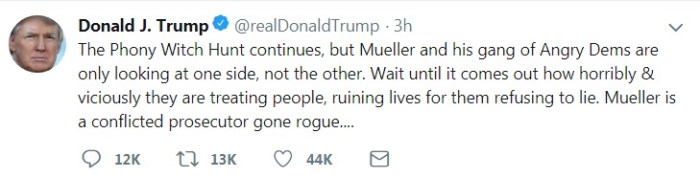
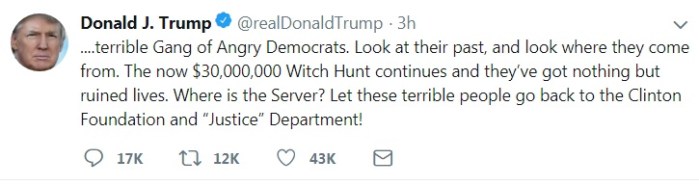
Trump’s Obsession with the Mueller Probe

The Bob Mueller probe really gets Trump worked up. It must keep him awake at night to put it mildly. Actually it is torturing him.

atrump1

atrump

If ‘The Donald’ has nothing to hide he should welcome the probe, it will exonerate him! It will clear his reputation. But he is terrified of the probe. I think the probe could put Trump in very deep doo doo. I think the most conceited, arrogant and mean spirited President ever, is having nightmares that his orange hair may be colored coded with future clothing.

atrump5