






The Covini C6W opens the list with its 6-wheeled monstrosity. The car had a decent 400 horsepower and the extra wheels were meant for balance and to give it better braking. The makers were simply trying to achieve functionality but the result was not so appealing to the eye. The other car that follows this pattern is No.1. You won’t believe the insane idea behind it!

Marcos was a British manufacturer that specialised in sports cars. Their cars were generally ugly but the Marcos Mantis seems to have taken the cake home. Fortunately, only one was released in 1968 and it did not even last that long before it was retired. It made one last appearance in 2008 at the Festival of speed.

Troll Plastik & Bilindustri, a Norwegian company, attempted to build a car with a fibreglass body. The material is light and it has other benefits such as resistance to rust. The engineering aspect might have been commendable but for the design, the makers of the car deserved a harsh jail term. The car was only produced for two years from 1956 to 1958. The next car is not all that bad it is still ugly.

The Hyundai Tiburon went by many names. In Europe, it was called the Hyundai Coupe while in America and other markets, it went by the name Tiburon. Tiburon is the Spanish word for Shark. They were right- It does look like an ugly shark. If you think this is bad, wait till you see the next car which looks like a hideous alien coffin.

The Stutz Blackhawk was first produced in 1972. Over 4 decades later, it is not clear what was going through the minds of the designers when they made the ugly thing. It was 19 ft ( almost 6 metres) long. Apparently, it was loved by Elvis, the King. It was also quite expensive costing over $120,000 in 2017 Dollars. That is clearly a ripoff. The car maker is relatively unknown, but the next one comes from a renowned company. You won’t believe it is on the list!
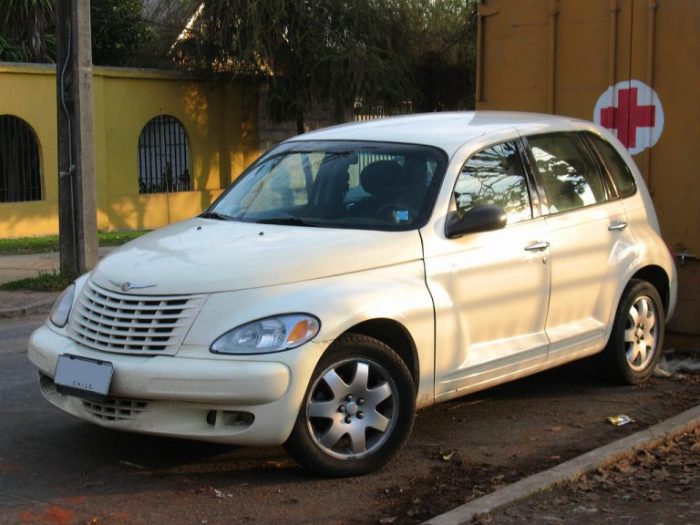
Chrysler is a decent car maker. Unfortunately, they failed quite lamentably with the Chrysler PT Cruiser. We cannot say much about the car’s performance but we will unapologetically say this is quite an ugly car. But it is definitely a whole lot better than the next demon.
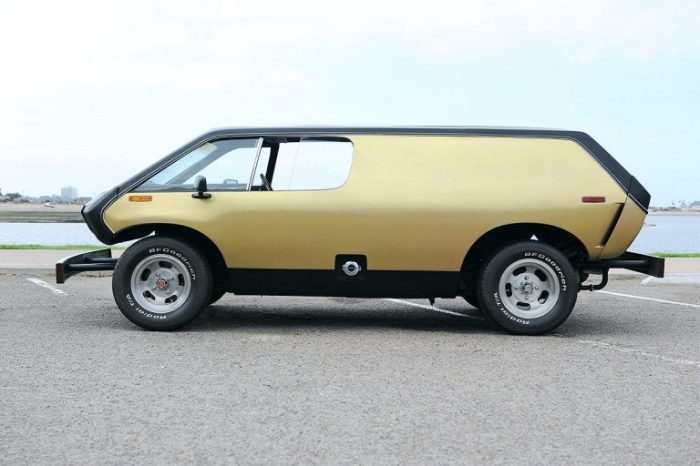
The makers of the Brubaker Box deserve an A plus for accurate representation. That’s right – the name is as ugly as the car. It really does look like a rig from hell and it is devoid of any character at all. It is just an ugly box on wheels. It does, however, look like something that would be useful in case of nuclear world war. Speaking of usefulness, the next car is not only ugly but it seems to be quite useless as well.

The reliant Robin looks like a cross between a car, a boat, and a motorcycle. That doesn’t sound right on any front. The robin was one of the most popular fibreglass cars in history and today, it has rightly earned a place on Top Car Magazine’s list of the ugliest cars in the world. It was first manufactured in 1973 to take the place of the Reliant Regal. Although this one is ugly, the next one is actually scary!

Vermot AG had not been active in the automotive industry for 60 years by 2010. That same year, they decided to make a comeback, a hideous comeback. The 2010 Veritas RS III is not only ugly, it actually looks like something you would see in a nightmare. It seems they pressed the wrong button and pulled a monster from hell. But we appreciate their intentions nonetheless.
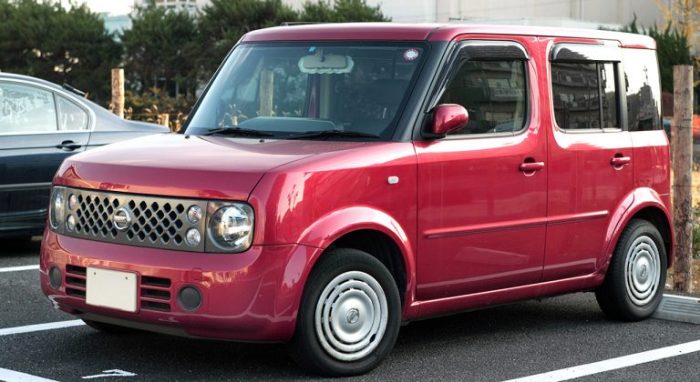
The Nissan Cube could care less about aerodynamics, and it most definitely does not give a damn about beauty. It is not clear what exactly the Japanese car maker was trying to achieve but one thing we can all agree on is that this car was an aesthetic crime. The car was first produced in 1998 and to this day, it is still being thrown onto the streets.

The Weber Sportscars was nicknamed the Faster One. But an even more apt name would have been ‘the ugly one’ because it really was hideous. This was Switzerland’s attempt to dethrone the Veyron as the fastest street legal car in 2008. The result? A fast assault to the eye! What makes this car unforgivable is that unlike some entries on the list, this blunder was made in 2008 when there was so much automotive enlightenment. The same can be said of the next pic. You have never seen anything uglier!

The Panoz Abruzzi ‘Spirit of Le Mans’ is a grand tourer that takes ugly to a whole new level, an expensive level. That’s right – the Panoz Abruzzi “Spirit of Le Mans came with a £330,000 price tag. Only 81 units were planned to be produced (thank God). Fortunately, the car never saw the light of day. It died a natural death right at the prototype stage. But once you see the next one, you will wish it was never created as well.
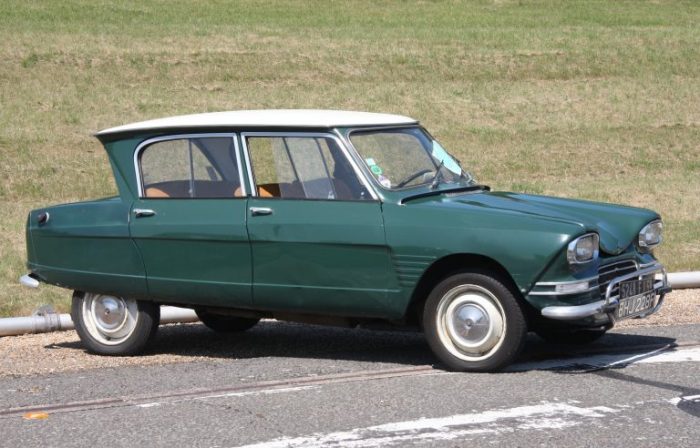
When you think of France, fine taste in wine, perfume, and fashion come to mind. Unfortunately, one of their cars happens to be on the list, and it really is ugly. It was in 1961 when the world first saw the oversized headlamps and a strange new body shape called the notchback. It is the reverse of a hatchback and that gave it a really unattractive appearance and crappy aerodynamics. This one was fighting for 2nd place with the next one.

The Fiat Multipla is really an overdose of ugly. Even if the goal was to design the ugliest car ever, no one would manage to create such an atrocity. The car was really terrible when it was first built but it got a little better towards the final production years. The model’s hideous reign started in 1998. In 2010, the Italian car maker decided that people’s eye had been assaulted enough and shut the line down. Today, remnants of the car still haunt the streets. The next one, however, is the finest example of an ugly car!

One fine day in 1957, a priest woke up and after reflecting upon the death toll resulting from car accidents, he decided to save the world. He had a brilliant idea. He was going to build the world’s safest car. He did, and the result was the Aurora. We are not sure how safe it was but it was astonishingly ugly.
Topcarsmagazine.com
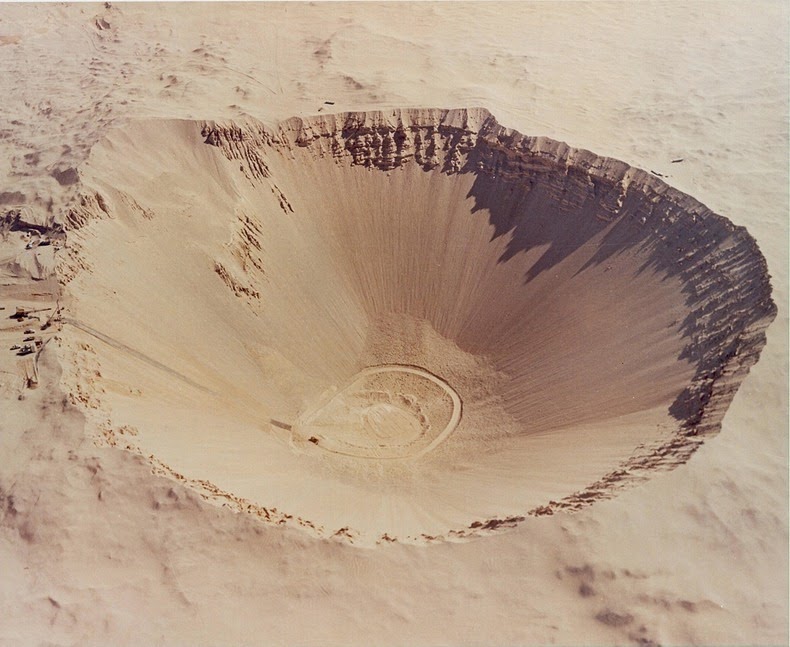
The Sedan nuclear crater is located at the Nevada Test Site, about 90 miles north of Las Vegas. It is the result of the Sedan nuclear test, an underground nuclear test carried out on 6 July 1962 as part of the Plowshare Program, established in June 1957 to explore peaceful applications for controlled nuclear detonations. The idea was that a nuclear explosion could easily excavate a large area, facilitating the building of canals and roads, improving mining techniques, or simply moving a large amount of rock and soil. The intensity and distribution of radiation, however, proved too great, and the program was abandoned. Operation Plowshare resulted in 27 thermonuclear detonations. Only four events were intended to produce craters, among which Sedan was by far the largest.
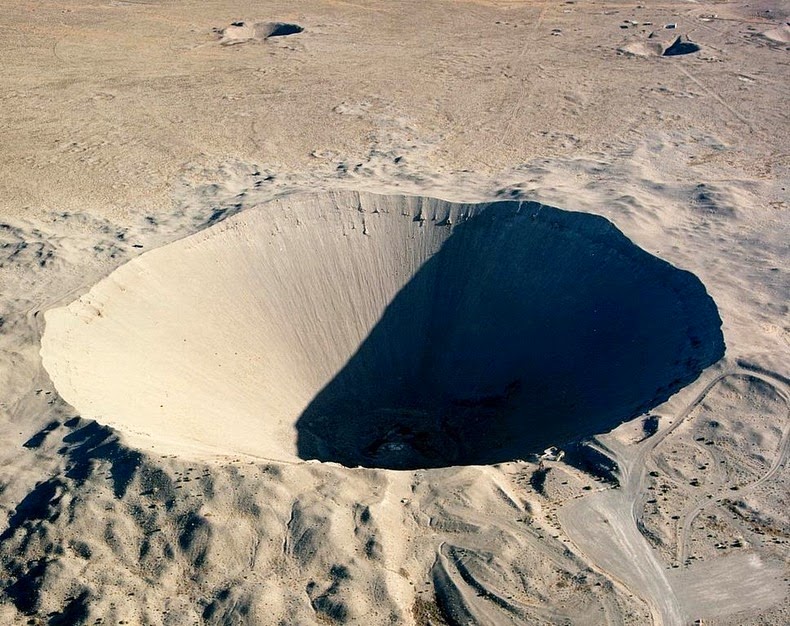
The device that produced the crater was buried 194 meters below the desert floor and had a yield equivalent to 104 kilotons of TNT or around eight Hiroshima bombs. The blast first lifted a dome of earth 90 meters above the desert floor before it vented at three seconds after detonation, exploding upward and outward displacing 12 million tons of earth. The resulting crater is 100 meters deep and 390 meters wide.
The explosion created fallout that affected more US residents than any other nuclear test, exposing more than 13 million people to radiation, although within 7 months of the detonation, the radiation had decayed to the point that the bottom of the crater could be safely walked upon with no protective clothing. Today, more than 10,000 visitors visit the crater every year through free monthly tours offered by the U.S. Department of Energy. An observation platform built on the rim of the crater allows tourists to peek into the crater below.
Negative impacts from Operation Plowshare’s 27 nuclear projects ultimately led to the program’s termination in 1977, largely due to public opposition.
The Soviet Union continued to pursue the concept through their program “Nuclear Explosions for the National Economy” and carried out more than 150 nuclear test. The best known was Chagan – a test identical to Sedan – which created the artificial lake reservoir Lake Chagan.
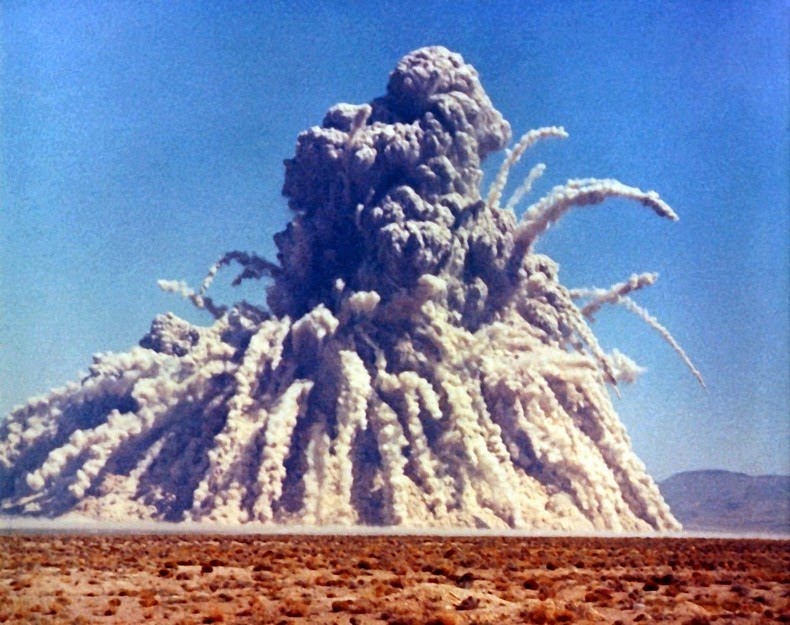
The Sedan nuclear test on 6 July 1962.
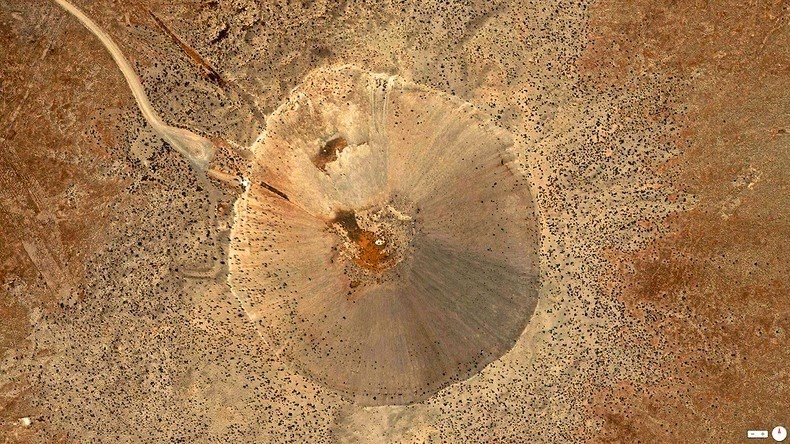
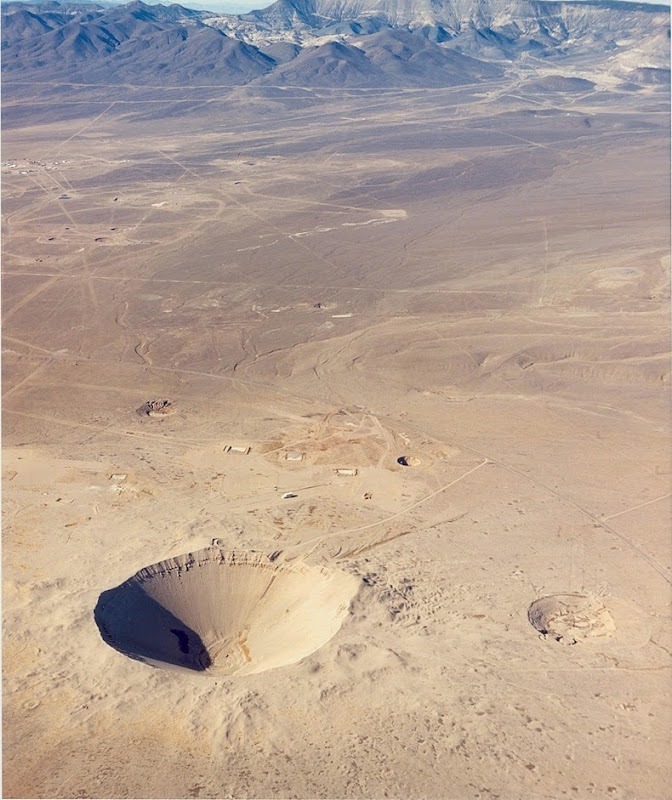
Satellite image of the Sedan crater.
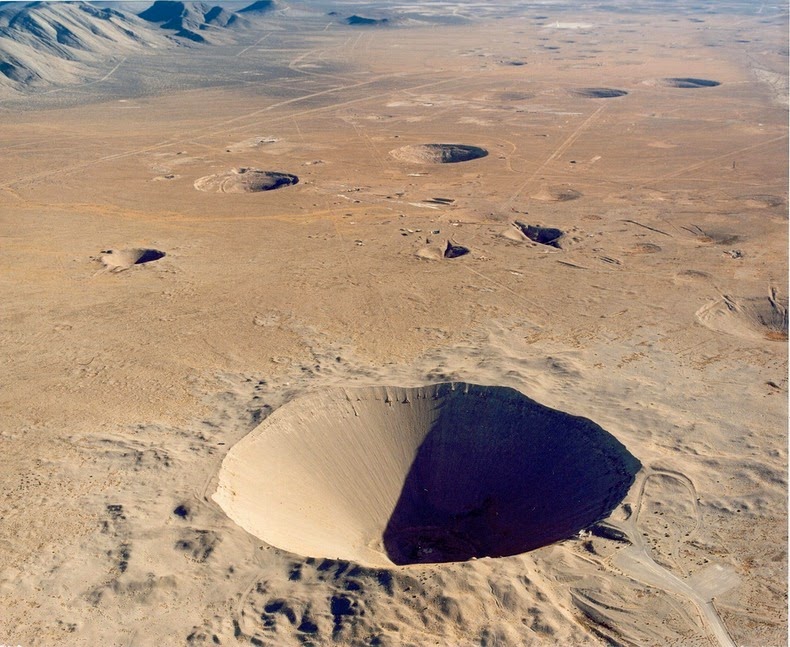
The Nevada Test Site is pockmarked by numerous nuclear tests. The Sedan crater is the largest among them.
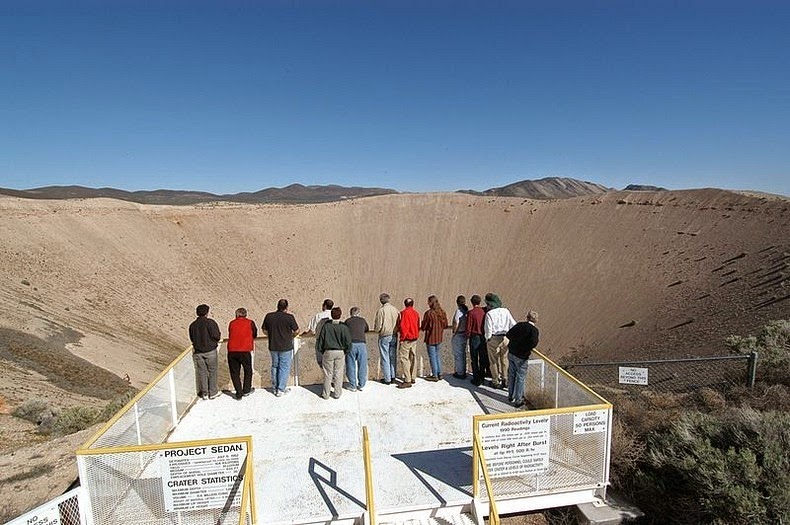
Observation deck at Sedan Crater.
A jaw-dropping video from Hong Kong shows an enormous wild boar scavenging for food by standing on its hind legs and rooting through a dumpster.
In the remarkable footage, the massive creature stands alongside a trio of presumably hungry piglets and can be seen trying to pull a black trash bag from the receptacle.
The video, which has gone viral on social media in Hong Kong, has raised considerable concerns because the animal’s attempt to feast apparently occurred incredible close to an elementary school.
With that in mind, we’re guessing that the question of what to do about the monstrous hog lurking outside the building will likely be the first order of business at the next PTA meeting.
A truly strange video circulating online shows a flute-wielding musician in upstate New York serenading a rather sizeable group of raccoons. The bizarre scene reportedly took place at Brasher State Forest last week and the man behind the music, who has since earned the nickname ‘Pied Piper of Raccoons,’ is named Eddy Lawrence.
In the weird footage of his performance, Lawrence can be seen surrounded by a jaw-dropping number of raccoons as he plays a Native American song on his flute. As this continues, an increasing number of the creatures emerge from the forest seemingly being drawn by the young man’s music. By the time the video ends, there appear to be at least two dozen raccoons gathered around Lawrence.
While it’s easy to appreciate his skills as a musician, one can’t help but also admire Lawrence’s bravery, since he’s clearly outnumbered by the creatures. Considering how close the many raccoons were to him, the young man is lucky that he didn’t strike the wrong note, since the video of his performance may have been more frightening than wondrous should the creatures have gone on the attack.
Tourists vacationing in Thailand were left scratching their heads when they spotted what looked like a bizarre ritual being performed by some strange-looking creatures. The weird encounter was captured on film by a man named Jemayel Khawaja as he and his family were visiting a popular Thai rock climbing destination known as Railay Bay.
While admiring the picturesque scenery of the site, the group was taken aback when they suddenly heard some strange music coming from an area beneath a cliff. Their astonishment was amplified considerably when they saw that the sounds were seemingly coming from some diminutive furry creatures that appeared to be frolicking on the rocks.
Fortunately for Khawaja and company, it turns out that the tourists had not interrupted some kind of sacred ceremony. In fact, they later learned that the ‘creatures’ were actually costumed actors and that the entire show was the work of an artist and performer named Tori Wranes. What, exactly, his purpose was behind the odd event is, like all great art, a mystery.
Numerous residents of a city in Ohio have reported encountering nightmarish raccoons that display unsettling zombie-like behavior!
Authorities at the Youngstown police department say that they have received over a dozen calls in the last few weeks from frightened citizens describing the creatures acting particularly strange.
Specifically, they say, the raccoons stand on their hind legs, bear their teeth, and then topple over to the ground where they lay motionless for a while before repeating the puzzling maneuver.
One wildlife photographer who witnessed the weird antics of the animals said he’s never seen a raccoon behave in such an “extremely strange” way.
Making matters all the more odd is that these incidents have occurred during the daytime, which is atypical for the nocturnal creatures, and that loud noises which would normally scare the animals away seemingly have no effect on them.
While one might suspect that the raccoons are simply rabid, wildlife experts say that is probably not the case and that, based on witness descriptions, the creatures are likely suffering from a disease known as distemper.
And, although humans cannot contract the illness, they warn that dogs can and so pet owners should be mindful of that until the odd outbreak can be contained.

Authorities in the Spanish city of Seville busted a gang of ne’er-do-wells who were attempting to transport nearly 9,000 pounds of stolen oranges in their two cars!
After cops stopped the vehicles for driving suspiciously, officers were astounded to discover that the cars were crammed with hundreds of oranges.
The fruit was so haphazardly loaded into the cars that it actually came spilling out onto the street when police began trying to get to the bottom of what they’d uncovered.
When questioned about how they’d manage to accumulate so many oranges, the suspects coyly claimed that they had been collecting them throughout their travels.
As one can imagine, police found their claims to be pretty unbelievable, considering that there were more than four tons of oranges amassed among the vehicles.
Their doubts were confirmed when it was later found that the fruit was actually pilfered from a warehouse close to the city.
The group now faces robbery charges as well as whatever types of fines come from illegally transporting tons of fruit without the proper paperwork.

A rare natural phenomenon, light pillars, occurred across the southern part of the province Saturday. (Submitted by Daniel MacGibbon)
I was listening to a science show the other day and came across this weirdness. The scientist said most people have witnessed this. Not sure where he was coming from, but I have never seen one, or even heard about them.
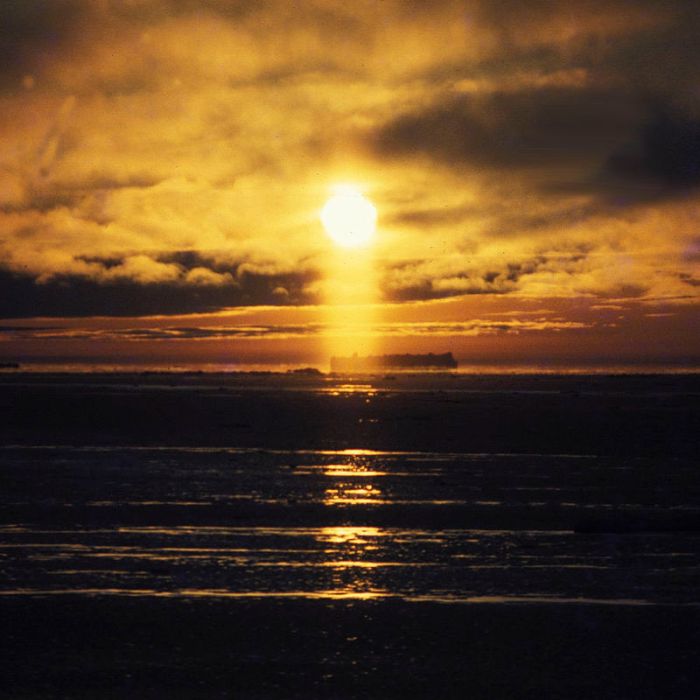
Sun Pillar over Antarctica
A light pillar is an atmospheric optical phenomenon in the form of a vertical band of light which appears to extend above and/or below a light source. The effect is created by the reflection of light from numerous tiny ice crystal suspended in the atmosphere or clouds. The light can come from the Sun (usually when it is near or even below the horizon) in which case the phenomenon is called a sun pillar or solar pillar. It can also come from the Moon or from terrestrial sources such as streetlights.
Light Pillars over North Bay, Ontario
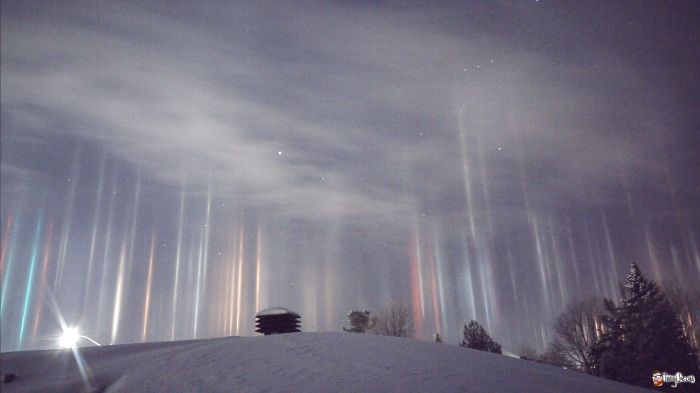
Since they are caused by the interaction of light with ice crystals, light pillars belong to the family of halos. The crystals responsible for light pillars usually consist of flat, hexagonal plates, which tend to orient themselves more or less horizontally as they fall through the air. Their collective surfaces act as a giant mirror, which reflects the light source upwards and/or downwards into a virtual image. As the crystals are disturbed by turbulence, the angle of their surfaces deviates some degrees from the horizontal orientation, causing the reflection (i.e. the light pillar) to become elongated into a column. The larger the crystals, the more pronounced this effect becomes. More rarely, column-shaped crystals can cause light pillars as well. In very cold weather, the ice crystals can be suspended near the ground, in which case they are referred to as diamond dust.
Unlike a light beam, a light pillar is not physically located above or below the light source. Its appearance of a vertical column is an optical illusion, resulting from the collective reflection off the ice crystals, only those of which that appear to lie in a vertical line direct the light rays towards the observer (similar to the reflection of a light source in a body of water).

Sun Pillar over Ohio
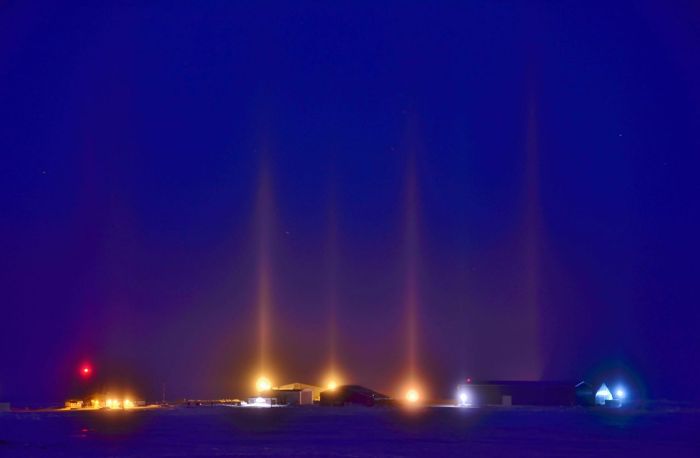
Light Pillars over Cambridge Bay, Canada
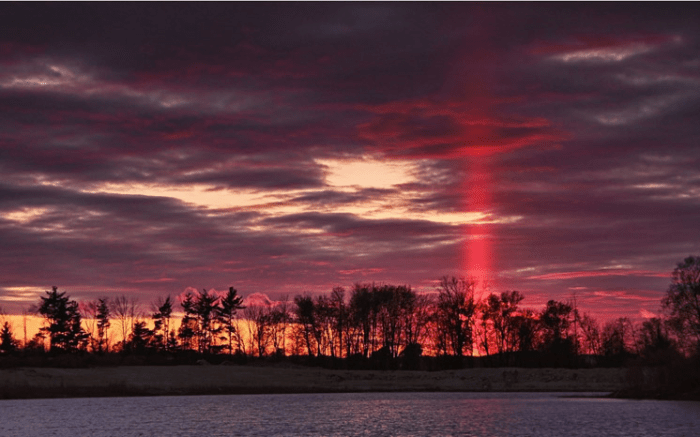
Source: Wikipedia, Google and CBC Quirks and Quarks

THIS YEAR THANKFULLY avoided any world-breaking ransomware attacks like NotPetya. It even had some small victories, like GitHub beating back the biggest DDoS attack in history. Still, online threats are manifold, lurking and evolving, making the internet a more hostile place than ever.
The biggest threats online continued to mirror the biggest threats in the real world, with nation states fighting proxy battles and civilians bearing the brunt of the assault. In many cases, the most dangerous people online are also the most dangerous in the real world. The distinction has never mattered less.
Donald Trump
On January 3 of 2018, at the height of tensions with North Korea, Donald Trump saw fit to send the following tweet:
Donald J. Trump
✔
@realDonaldTrump
North Korean Leader Kim Jong Un just stated that the “Nuclear Button is on his desk at all times.” Will someone from his depleted and food starved regime please inform him that I too have a Nuclear Button, but it is a much bigger & more powerful one than his, and my Button works!
476K
6:49 PM – Jan 2, 2018
Set aside, if you can, the deep absurdity of the language. The episode was a reminder that Trump is perhaps the only human on Earth who could quite literally start a nuclear war with a tweet, and that he seems decidedly not to care. While tensions with North Korea have subsided—for now—Trump has used the internet to other ill effects, from potential witnesses tampering in federal investigations, to constantly undermining the credibility of the media, to announcing unilateral military action without any apparent thought for the consequences. Trump has shown in 2018 that he doesn’t need to cause Armageddon in a single tweet to do damage. He can simple use his social pulpit to whittle away at democratic norms, 280 characters at a time.
Vladimir Putin
Let the Russian president stand in for any number of his country’s adept hackers. The country may have been relatively quiet—though not inactive—during the midterm elections, but Russia’s hackers still caused all manner of trouble throughout the world. Upset over a doping-related ban, they hacked and released emails of the International Olympic Committee in January, then attacked the Pyeongchang Olympics themselves, wreaking havoc during the opening ceremonies with so-called Olympic Destroyer malware. When a lab investigated the nerve agent used in the attempted murder of former Russian double agent Sergei Skirpal, Russia tried to hack it, too. They continue to probe the US power grid for weaknesses. And on and on, all before you even get to Putin’s continued, unprecedented cyberaggression against Ukraine. Russia has spent this year actively, opening lashing out at the world online—with Putin at the command.
Min Aung Hlaing
Facebook was tragically slow to recognize that its platform was being used in service of genocide in Myanmar. Indeed, it took a UN report before the company finally took action against the military leaders behind the most blatant abuses. Among the 20 individuals and organizations Facebook banned in that first wave was Min Aung Hlaing, head of the armed forces, who both used his personal account to spread hate speech and led a military that surreptitiously ran at least 425 Facebook pages, 17 Facebook groups, 135 Facebook accounts, and 15 Instagram accounts. “We want to prevent them from using our service to further inflame ethnic and religious tensions,” Facebook wrote at the time. As The New York Times reported, it was quite a bit more serious than that: Myanmar military personnel, under Min Aung Hlaing’s command, “turned the social network into a tool for ethnic cleansing.”
Mark Zuckerberg
Min Aung Hlaing and his subordinates were the ones using Facebook in the service of genocide. But it was Facebook that let them get away with it for so long, just as it was Facebook that was slow to recognize Russian efforts to destabilize US democracy in 2016, and Facebook that let 30 million users get hacked with a vulnerability that took a year and a half to discover and fix. In fairness, many of the woes Facebook has faced in 2018 consist of revelations and repercussions of how the platform operated years ago, rather than today.
But from his initial dismissiveness of the fake news problem to his company’s opposition research against George Soros, it seems as though Facebook CEO Mark Zuckerberg still hasn’t grasped the enormous responsibility that comes with a platform as all-encompassing as Facebook, nor the extent of the damage. He and his deputies continue to insist that they’ll do better, but some things can’t be fixed retroactively.
The SamSam Hackers
The SamSam ransomware strain had already had a remarkable run, targeting hospitals and universities and other victims with reason to pay up fast. Then it hit Atlanta. The attack hobbled the city, hampering payments and communications and all manner of municipal necessities. The hackers had demanded $52,000; Atlanta spent $2.6 million to clean up the mess. In November, the Justice Department [brought charges against two Iranian nationals](https://www.wired.com/story/doj-indicts-hackers-samsam-ransomware/%5D in connection with the hacking spree, alleging that they took in $6 million while causing $30 million of damage along the way. While they don’t seem connected to the Iranian government, the two alleged perpetrators seem unlikely to be arrested, or even chastened, by the indictment. Expect SamSam to continue to plague the internet well beyond 2018.
APT10
In 2015, the US and China came to an historic agreement: The two superpowers would stop hacking each others’ private sector interests. Miraculously, it worked, sort of, for at least a few years. China didn’t stop hacking altogether, but it at least ramped down its efforts against the US. But with trade tensions between the two countries, the truce appears increasingly to have been short lived. China has increased its hacking campaigns against the US Navy and other government-adjacent entities, and the recent revelation of a devastating, years-long Marriott breach showed just how long-lasting some of its apparent heists have been. Leading the charge for China is APT10, an elite hacker group whose thefts of the world’s most closely held intellectual property has made it a top priority for law enforcement from not just the US, but multiple victim countries. A recent indictment shows just how active—and effective—the group has been.
Christian Porter
As Australia’s attorney general, Porter has pushed for, and gotten, a law that threatens to undermine encryption not just Down Under, but around the world. As written, the law gives Australian authorities the right to compel tech companies to put backdoors in their encrypted messaging platform. It also lets officials target specific individual with those requests, under a veil of secrecy, rather than the company itself. It’s a concerning development on multiple levels. You can’t weaken encryption piecemeal; if you make a backdoor for WhatsApp, it will apply not just to Australians but to all users. You also can’t guarantee that hackers unauthorized nation state spies wouldn’t find their way in as well. In short, it’s a law that threatens encryption protections for everyone, whether the Australian government has targeted them or not—a dangerous development on a global scale.
Magekart
Credit card skimming hacks were popular this year; Ticketmaster, British Airways, Newegg, and more all got hit. In fact, they all got compromised by the same group: Magecart. Well, technically an umbrella under which several groups coexist. According to research from security firm RiskIQ, Magecart has hit at least 6,400 sites in its long history. Compared to nation state groups, its activities may seem relatively mundane. But it’s still one of the most active hacking consortiums out there, ready and waiting to lift your credit card number in 2019.
Wired.com





 The MarkoZen Blog