


No wonder the scores are so low.
No wonder the scores are so low.
About 20% of the Reykjavík Metropolitan Police’s force are women – almost twice the percentage of U.S. police, and a higher percentage than in many EU countries.

I wonder what percentage are blonde? Some statistics report that 70% of Icelanders are blonde and 90% have blue eyes. Pic above seems to confirm the blonde stats.

Big Balanced Rock in Chiricahua National Monument, southeast Arizona
A balancing rock, also called balanced rock or precarious boulder, is a naturally occurring geological formation featuring a large rock or boulder, sometimes of substantial size, resting on other rocks, bedrock or on glacial till. Some formations known by this name only appear to be balancing but are in fact firmly connected to a base rock by a pedestal or stem. There is no single scientific definition of the term, and it has been applied to a variety of rock features that fall into one of four general categories:

Balanced Rock is one of the most popular features of Arches National Park, situated in Utah, United States. It is located next to the park’s main road, at about 9 miles from the park entrance.
The total height of Balanced Rock is about 39 m, with the balancing rock rising 16.75 m above the base. The big rock on top is the size of three school buses. Until recently, Balanced Rock had a companion – a similar, but much smaller balanced rock named “Chip Off The Old Block”, which fell during the winter of 1975/1976.
–
![Balance_Rock,_Garden_of_the_Gods[3]](https://markosun.files.wordpress.com/2015/08/balance_rock_garden_of_the_gods3.jpg)
This balanced rock is located in the Garden of the Gods in Colorado Springs, Colorado. It is easily accessible by paved road and is a popular spot for tourist photography.
![balance digby-nova-scotia[2]](https://markosun.files.wordpress.com/2015/08/balance-digby-nova-scotia2.jpg)
The Balancing Rock in St. Mary’s Bay on Long Island, Nova Scotia seems to defy gravity as it stands on its end at the edge of the rock below. The 9 meter high column of rock is attached by two small sections with a gap between that you can look through.
![balance idol-rock[3]](https://markosun.files.wordpress.com/2015/08/balance-idol-rock3.jpg)
Many curious rock formations are scattered over 50 acres on Brimham Moor, U.K. One of them is the Idol Rock precariously balanced on top of a smaller rock. The rocks eroded by water, glaciation and wind, have taken amazing shapes. Many of the formations suggest all manner of things, including elephants, hippos, bears, and mushrooms.

The Chiremba Balancing Rocks is located 13 km southeast of Harare in Epworth. Strange balancing rocks are found all over Zimbabwe. The Balancing Rocks have been used as a metaphorical theme to explain the importance of development coupled with preserving the fragile environment of Zimbabwe as similar to that of the Balancing Rocks found in Epworth, Matopos and in other areas.
![balance devils-marbles2[2]](https://markosun.files.wordpress.com/2015/08/balance-devils-marbles22.jpg)
The Devils Marbles are amongst the most famous Australian rocks, located south of Tennant Creek area of Northern Territory. These huge, red, rounded granite boulders vary in size, from 50 cm up to six metres across, and they are strewn across a large area. Many of them seem impossibly balanced on top of each other.
![balance Kjeragbolten[3]](https://markosun.files.wordpress.com/2015/08/balance-kjeragbolten3.jpg)
Kjeragbolten is a massive 5 cubic meter boulder wedged in to a crevasse on the edge of the Kjerag mountain in Lysefjorden, Norway. The block of stone is suspended 984 meters above a deep abyss. Despite its impressive appearance, it is easily accessible on foot without any special equipment. The whole of Kjerag mountain is a popular hiking area, and Kjeragbolten is a favorite photo spot.
![balanceGolden_Rock[3]](https://markosun.files.wordpress.com/2015/08/balancegolden_rock3.jpg)
The Golden Rock (Kyaik-htiyo or Kyaiktiyo), perched atop a cliff near Yangon, is one of the most sacred sites in Burma. According to legend, the Golden Rock itself is precariously perched on a strand of the Buddha’s hair. The rock seems to defy gravity, as it perpetually appears to be on the verge of rolling down the hill. At the top of the rock is built a small pagoda and covered with gold leaves pasted on by devotees. A glimpse of the “gravity defying” Golden Rock is believed to be enough of an inspiration for any person to turn to Buddhism.
![balancekrishnas-butterball-10[6]](https://markosun.files.wordpress.com/2015/08/balancekrishnas-butterball-106.jpg)
Krishna’s Butterball is a curious tourist attraction in Mahabalipuram, a town about 60 km south of Chennai famous for its stone carvings. The “butterball” is a giant balancing rock, 5 meters in diameter, perched on a smooth slope, seemingly defying all laws of physics.
In Hindu mythology Lord Krishna had an insatiable appetite for butter, and as a child, would often sneak a handful from his mother’s butter jar. Situated on a hill slope near the Ganesh Ratha this massive natural rock boulder is attributed to a bolus of butter the young Krishna would steal.
An earthquake hits and those goats are pancakes.
NatGeo

Snowboarding in Nepal. Steep enough!
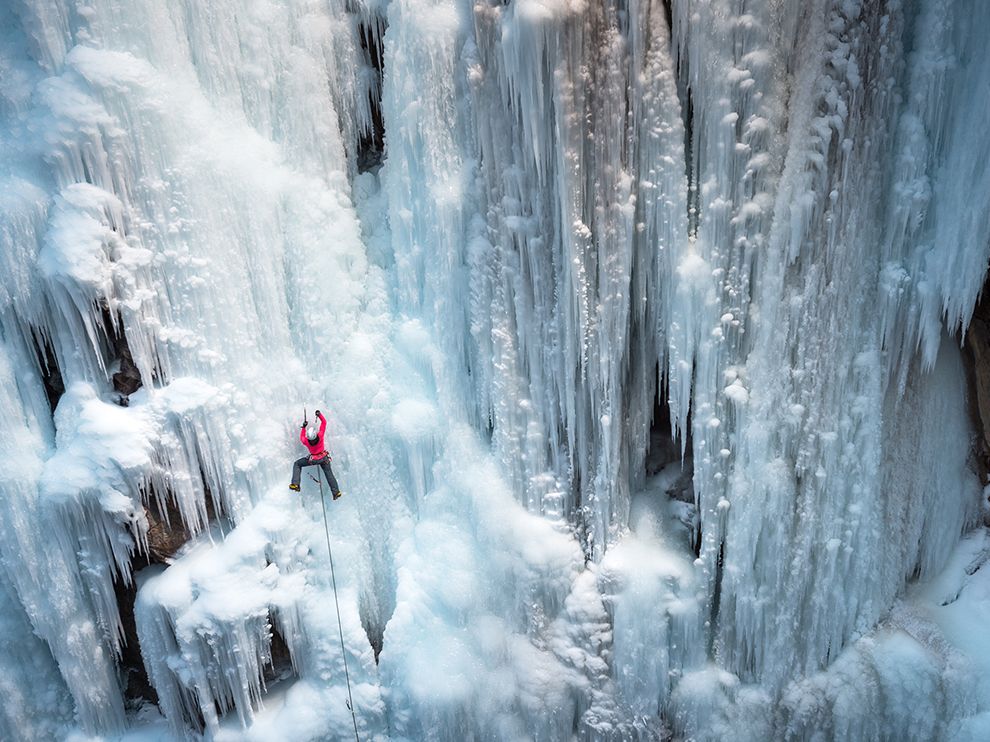
Ice climbing Colorado

Tree skiing near Whistler, B.C.

Waterfall kayaking Norway

Real Mountain Biking

Surfing near big rocks Tasmania

Wall climbing Zion Utah

Surfing paparazzi, Hawaii

Free climbing Yosemite, California

Kamikaze kayaking Mexico

Upside down group skydiving Texas

Crazy kamikaze kayaker, Spain

Japan
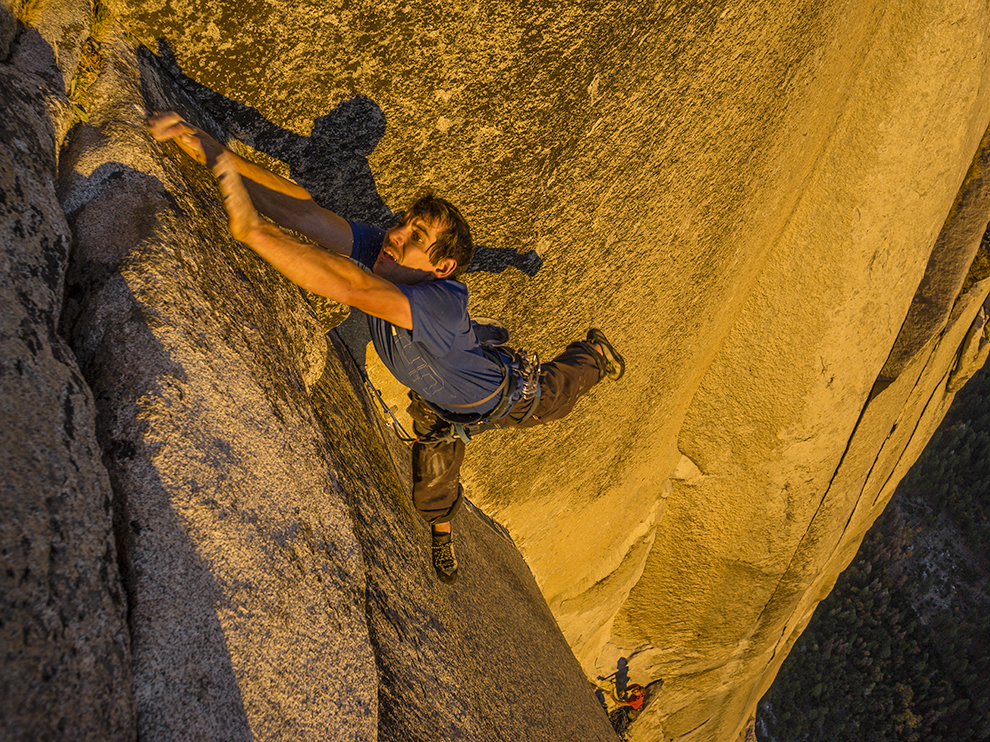
Free climbing Yosemite. These guys are spiders. One slip and they will be squashed spiders.

Ice climbing a glacier, Mt. Kilimanjaro, Tanzania

Bike base jumping Utah. They stay with the bike all the way down with the parachute.

Hawaii. Now that is how to live!
The Cupola is an ESA-built observatory module of the International Space Station (ISS). Its seven windows are used to conduct experiments, dockings and observations of Earth. It was launched aboard Space Shuttle mission STS-130 on 8 February 2010 and attached to the Tranquility (Node 3) module. With the Cupola attached, ISS assembly reached 85 percent completion. The Cupola’s 80 cm (31 in) window is the largest ever used in space.

Stunning views from the Cupola

South Florida

Storms over Ghana, Africa

Great Lakes
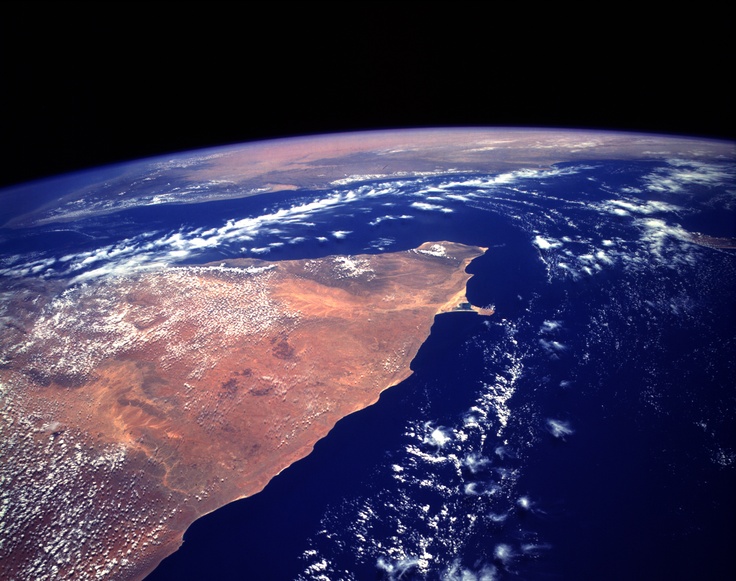
Horn of Africa

Northeast coast of Brazil

New York City looking south

Southwest Libya

Tibet

Tokyo

Mt. Vesuvius, Italy
Historical space photos

Earth from the Moon during an Apollo mission

Space Shuttle blasting off into the clouds
Breaking through the clouds

Lily Munster, Countess of Shroudshire (née Dracula), is a fictional character in the 1960’s CBS sitcom, The Munsters, originally played by Yvonne De Carlo. The matriarch of the Munster household, Lily is a vampire.
Lily was born in 1827 to Sam Dracula (Grandpa) and his 166th wife (referred to only as “Grandma”). She lived with Grandpa for some time in Transylvania (a region in Romania) before meeting Herman Munster and marrying him in 1865. She, Grandpa, and Herman moved to America sometime before the mid-1940s and adopted her sister’s child, Marilyn. In the mid-1950s, she gave birth to Eddie, her and Herman’s only child.
Her name is presumably derived from the tradition of the lily as a flower of death, or a vague reference to Lilith, a female demon of Jewish mythology.

Lily is the matriarch of the Munster family. She is very close with her niece, Marilyn. She has a werewolf for a brother, who appears in one episode, and a sister who is mentioned a few times who is Marilyn’s mother. Lily is the voice of reason in the Munster household, often relied upon to set problems right, and typically mediates when Herman and Grandpa squabble.

Lily and Herman
Lily also has a fiery temper. While she is deeply in love with Herman (“Pussycat,” as she calls him), she also frequently gets very angry at him (due to his frequent stupidity and occasional selfishness), and Herman often meekly discloses his fear (to others) of being on the receiving end of her wrath. She also has reprimanded her own father (Grandpa) on several occasions for his own foolish actions and stubborn self-righteousness.
Lily is a beautiful and slender woman who appears to be in her middle age years, although she is actually hundreds of years old. A white streak in her hair recalls the monster’s mate from Bride of Frankenstein. Lily usually dresses in an ankle-length pale pink gown that appears faded and old, and she sometimes also wears a scarf. Her necklace features a bat-shaped medallion. When away from the Munster house, she sometimes wears a long silver cape with a hood. In the episode “Munsters Masquerade”, Lily demonstrates the ability to float in the air while dancing.

Gothic Underwear
Herman loves it



A photographer said four men dismantled the mysterious shiny object that has captivated the country. Two Utah residents said they took part in the removal.
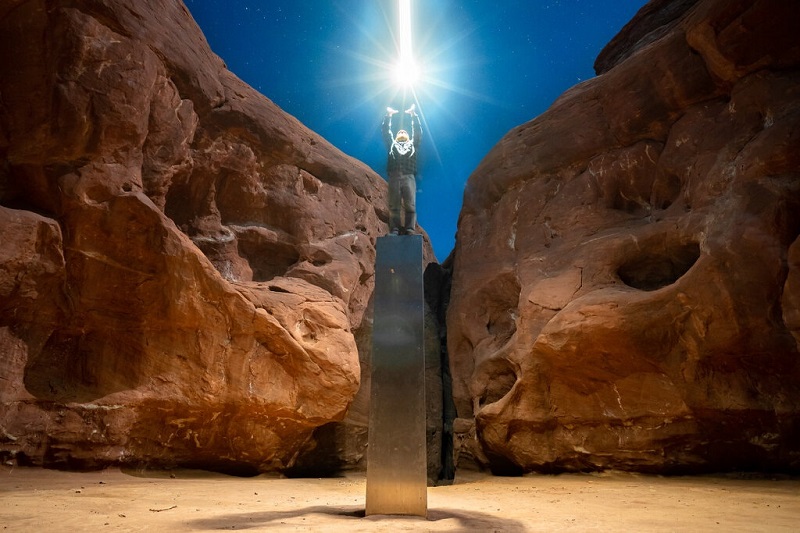
Credit…Ross Bernards
It was, by most standards, a short stay. The pop-up metal monolith that became the focus of international attention after it was spotted in a remote section of the Utah desert on Nov. 18 was dismantled just 10 days later. On Tuesday a local outdoorsman with a penchant for stunts claimed credit on social media for the sculpture’s removal.
The office of the San Juan County Sheriff at first announced that it was declining to investigate the case in the absence of complaints about missing property. To underscore that point, it uploaded a “Most Wanted” poster on its website, or rather a jokey version of one in which the faces of suspects were replaced by nine big-eyed aliens. But by the end of Monday, the sheriff’s office had reversed its position and announced that it was planning a joint investigation with the Bureau of Land Management, a federal agency.
It was left to an adventure photographer, Ross Bernards, to disclose evidence on Instagram. Mr. Bernards, 34, of Edwards, Colo., was visiting the monolith on Friday night when, he said, four men arrived as if out of nowhere to dismantle the sculpture. Mr. Bernards had driven six hours for the chance to ogle the sculpture and to take dramatic photographs of it. Using upscale Lume Cube lights attached to a drone, he produced a series of glowy, moonlit pictures in which the monolith glistens against the red cliffs and the deep blue of the night sky.
The office of the San Juan County Sheriff at first announced that it was declining to investigate the case in the absence of complaints about missing property. To underscore that point, it uploaded a “Most Wanted” poster on its website, or rather a jokey version of one in which the faces of suspects were replaced by nine big-eyed aliens. But by the end of Monday, the sheriff’s office had reversed its position and announced that it was planning a joint investigation with the Bureau of Land Management, a federal agency.
It was left to an adventure photographer, Ross Bernards, to disclose evidence on Instagram. Mr. Bernards, 34, of Edwards, Colo., was visiting the monolith on Friday night when, he said, four men arrived as if out of nowhere to dismantle the sculpture. Mr. Bernards had driven six hours for the chance to ogle the sculpture and to take dramatic photographs of it. Using upscale Lume Cube lights attached to a drone, he produced a series of glowy, moonlit pictures in which the monolith glistens against the red cliffs and the deep blue of the night sky.
Suddenly, around 8:40 p.m., he said, the men arrived, their voices echoing in the canyon. Working in twosomes, with an unmistakable sense of purpose, they gave the monolith hard shoves, and it started to tilt toward the ground. Then they pushed it in the opposite direction, trying to uproot it.
“This is why you don’t leave trash in the desert,” one of them said, suggesting that he viewed the monolith as an eyesore, a pollutant to the landscape, according to Mr. Bernards.
The sculpture popped out and landed on the ground with a bang. Then the men broke it apart and ferried it off in a wheelbarrow.
“As they walked off with the pieces, one of them said, ‘Leave no trace,’” Mr. Bernards recalled in a telephone interview.
“It must have been 10 or 15 minutes at most for them to knock over the monolith and pull it out,” he told The New York Times. “We didn’t know who they were, and we were not going to do anything to stop them.” He added, “They just came in there to execute and they were like, ‘This is our mission.’”
See also: https://markozen.com/2020/11/23/mysterious-monolith-appears-in-utah/
https://markozen.com/2020/11/24/update-on-mysterious-monolith-in-utah/
https://markozen.com/2020/11/25/mystery-utah-monolith-update/
Andes Mountains, also called the Andes, Spanish Cordillera de los Andes or Los Andes, is a mountain system of South America and one of the great natural features of the Earth.
The Andes consist of a vast series of extremely high plateaus surmounted by even higher peaks that form an unbroken rampart over a distance of some 5,500 miles (8,900 kilometres)—from the southern tip of South America to the continent’s northernmost coast on the Caribbean. They separate a narrow western coastal area from the rest of the continent, affecting deeply the conditions of life within the ranges themselves and in surrounding areas. The Andes contain the highest peaks in the Western Hemisphere. The highest of them is Mount Aconcagua (22,831 feet [6,959 metres]) on the border of Argentina and Chile.

The Andes are not a single line of formidable peaks but rather a succession of parallel and transverse mountain ranges, or cordilleras, and of intervening plateaus and depressions. Distinct eastern and western ranges—respectively named the Cordillera Oriental and the Cordillera Occidental—are characteristic of most of the system. The directional trend of both the cordilleras generally is north-south, but in several places the Cordillera Oriental bulges eastward to form either isolated peninsula-like ranges or such high intermontane plateau regions as the Altiplano (Spanish: “High Plateau”), occupying adjoining parts of Argentina, Chile, Bolivia, and Peru.


Volcano in Chile
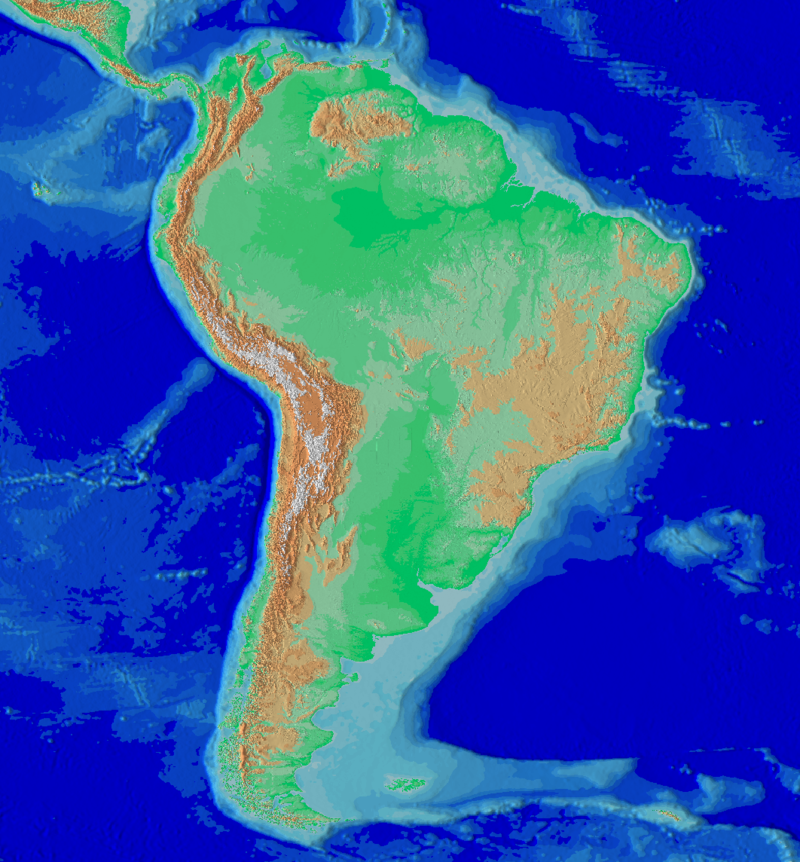
The Andean mountain system is the result of global plate-tectonic forces during the Cenozoic Era (roughly the past 65 million years) that built upon earlier geologic activity. About 250 million years ago the crustal plates constituting the Earth’s landmass were joined together into the supercontinent Pangaea. The subsequent breakup of Pangaea and of its southern portion, Gondwana, dispersed these plates outward, where they began to take the form and position of the present-day continents. The collision (or convergence) of two of these plates—the continental South American Plate and the oceanic Nazca Plate—gave rise to the orogenic (mountain-building) activity that produced the Andes.

Bolivia

Patagonia region of Chile

Santiago, Chile


Crazy staircase at Machu Picchu, Peru


Space Shuttle passes over The Andes

Argentina


Peru

 The MarkoZen Blog