In the last few years, news of unexpected sinkholes swallowing cars, houses and people have made headlines with disturbingly high frequency. These reports are mainly coming from Florida, the U.S., where almost the entire state is karst terrain (made of limestone), which means it has the potential for sinkholes. Mexico, Belize and parts of Italy and China are also karst area, but the phenomenon of sinkholes suddenly appearing in apparently stable grounds is mostly American. Experts estimate thousands of sinkholes form every year in Florida alone.
Sinkholes form when water flowing underground has dissolved rock, mostly limestone and sometimes clay, below the surface, leading to the formation of underground voids. When the surface layer can no longer take the weight of whatever that’s above, it collapses into the void forming sinkholes. These sinkholes can be dramatic, because the surface land usually stays intact until there is not enough support. Then, a sudden collapse of the land surface can occur.
A giant sinkhole caused by the rains of Tropical Storm Agatha is seen in Guatemala City on May 31, 2010. More than 94,000 people were evacuated as the storm buried homes under mud, swept away a highway bridge near Guatemala City and opened up sinkholes in the capital. (Casa Presidencial / Handout / Reuters)
An aerial view of the damaged Gran Marical de Ayacucho highway in the state of Miranda outside Caracas December 1, 2010. Thousands of Venezuelans fled their homes after landslides and swollen rivers killed at least 21 people and threatened to cause more damage. (Photo by Miranda Government/Reuters)
A construction vehicle lies where it was swallowed by a sinkhole on Saint-Catherine Street in downtown Montreal, August 5, 2013. (Photo by Christinne Muschi/Reuters)
Pamela Knox waits for rescue after a massive sinkhole opened up underneath her car in Toledo, Ohio in this July 3, 2013 handout photo provided by Toledo Fire and Rescue. Toledo firefighters later rescued Knox without major injuries. Fire officials told a local TV station that a water main break caused the large hole. Picture taken July 3, 2013. (Photo by Lt. Matthew Hertzfeld/Toledo Fire and Rescue/Handout via Reuters)
A stranded car is hoisted from a collapsed road surface in Guangzhou, Guangdong province, September 7, 2008. The road collapsed on Sunday afternoon and trapped the car in a hole, which measured 5 meters (16.4 feet) in depth and 15 meters (49.2 feet) in diameter, local media reported. Further investigation is underway. Picture taken September 7, 2008. (Photo by Reuters/China Daily)
An aerial view shows the debris of a residential building and a destroyed road in the village of Nachterstedt, July 18, 2009. Three residents were missing in the eastern German village of Nachterstedt after their lakeside home and another building suddenly collapsed early Saturday into the water. A 350-metre stretch of shoreline gave way next to an old open-cast coalmine converted to a lake, about 170 kilometres south-west of Berlin. (Photo by Reuters/Gemeindeverwaltung Nachterstedt)
Rescue workers remove a bus with a crane from a Lisbon street hole November 25, 2003. The bus was parked on a Lisbon street when the ground began to open up and gobble it. No casualties were reported. (Photo by Jose Manuel/Reuters)
A truck is seen in a hole after part of the structure of a bridge collapsed into a river in Changchun, Jilin province May 29, 2011. Two truck passengers were injured, while the cause of the accident is still under investigation, local media reported. (Photo by Reuters/China Daily)
Cars lie in a sinkhole, caused when a road collapsed into an underground cave system, in the southern Italian town of Gallipoli March 30, 2007. There were no injuries in the overnight incident, according to local police. (Photo by Fabio Serino/Reuters)
A giant sinkhole that swallowed several homes is seen in Guatemala City February 23, 2007. At least three people have been confirmed missing, officials said. (Photo by Reuters/Stringer)
A large sinkhole opened on East Monument Street in Baltimore in summer 2012. The sinkhole appeared above a 120-year-old drainage culvert after heavy rains, causing evacuations and closing the road. (Algerina Perna/Baltimore Sun Photo)
Frame is a TV channel that is commercial free and shows great scenery. The scenery images and videos are from all over the world. An example is a drone over Venice, outstanding visuals. Very satisfying channel to watch. However, as December arrives, the channel puts on a bloody unending fireplace. They play this fireplace continously for 7 straight weeks.
I know the holiday season goes to some peoples heads, but lets take a deep breath and get real. Who the hell wants to look at the same fireplace 24/7 for 7 weeks?
Amazon’s wildly popular personal assistant Alexa is raising eyebrows once again after a stunned mother took to social media claiming that the device challenged her ten-year-old daughter to stick a coin into an electrical socket! Posting on Twitter this past weekend, an understandable concerned Kristin Livdahl revealed the unsettling instructions that came from her Echo speaker. Explaining that she and her daughter had been doing physical challenges to pass the time due to bad weather outside, the miffed mom said that they turned to Alexa for potential ideas and the device offered a stunning suggestion.
According Livdahl, when they asked the Echo for a challenge, the device responded with “here’s something I found on the web” and then it told them to “plug in a phone charger about halfway into a wall outlet, then touch a penny to the exposed prongs.” As one might imagine, the mom could not believe what she was hearing and, in retrospect, expressed relief that “I was right there to say ‘no,’ but I hope my daughter would have checked in with me anyway before trying it.” Livdahl’s story has since gone viral and Amazon reportedly indicated that they have excised the dangerous challenge from the Alexa system.
The troubling incident is not the first time that Alexa has wound up in the news by way of some odd statements or unnerving behavior. Back in 2018, multiple users reported hearing a creepy laugh coming from their device. A few weeks later, the personal assistant was ‘caught’ giving a conspiratorial answer to the question of ‘what are chemtrails’ when it replied that they are “chemical or biological agents deliberately sprayed at high altitudes for a purpose undisclosed to the general public in clandestine programs directed by government officials.” When word of the very weird response spread online, Amazon quickly changed it to a prosaic explanation for the controversial phenomenon.
The damn thing looks like a hockey puck. I would never let one of those eavesdropping mind control voodoo pucks anywhere near my front door.
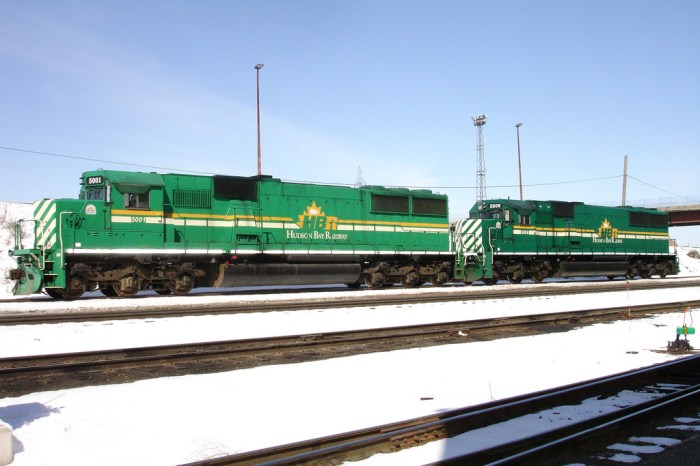
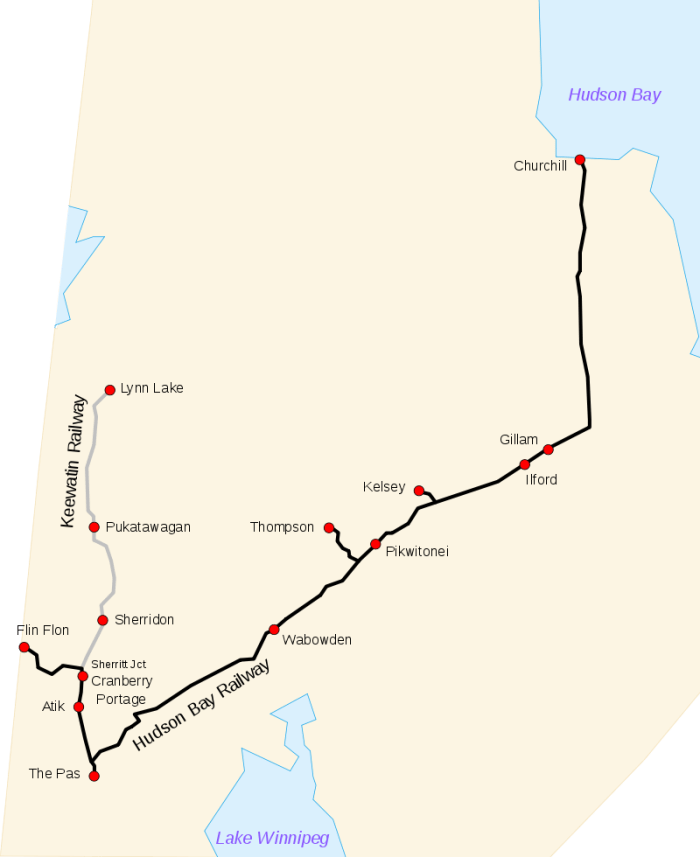
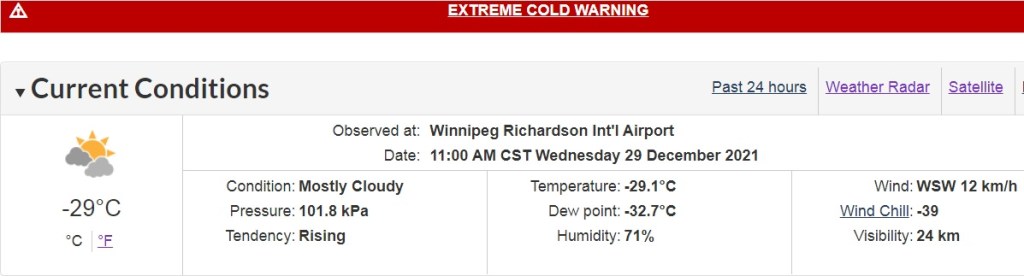
A severe winter blizzard hit northern Manitoba a couple weeks back cutting off Churchill, the “polar bear capital of the world,” for over a week. The town on the coast of Hudson Bay was buried deep. One of the worst blizzards to ever hit the place.
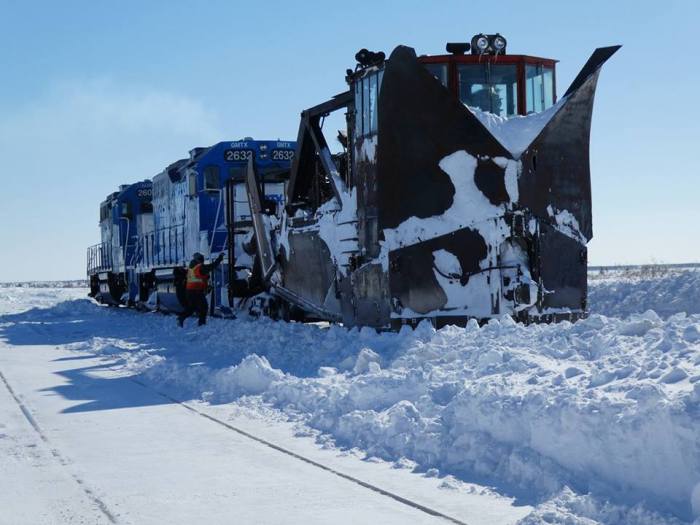
The Hudson Bay Railway, the rail company that serves Churchill, had to wait for the big snow clearing equipment to re-supply the town. The big blades on the front of the powerful locomotives.
The blades eventually arrived and supply trains saved the town from potential starvation. Of course I’m exaggerating, the town has back-up supplies that can last for a couple months. The airport also flies in tons of supplies.
The blades that saved Churchill
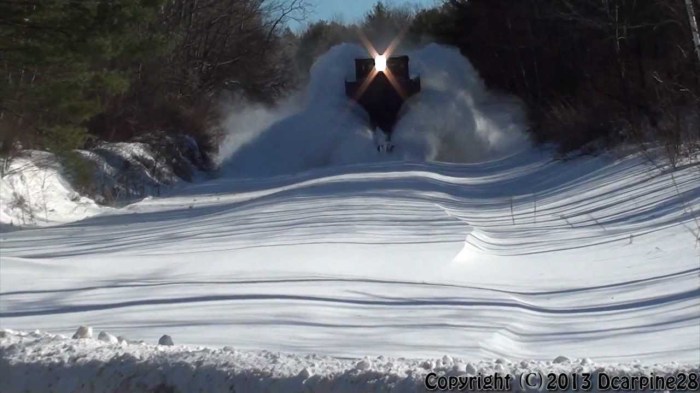
These monster blades make mincemeat out of the hard packed snowdrifts.
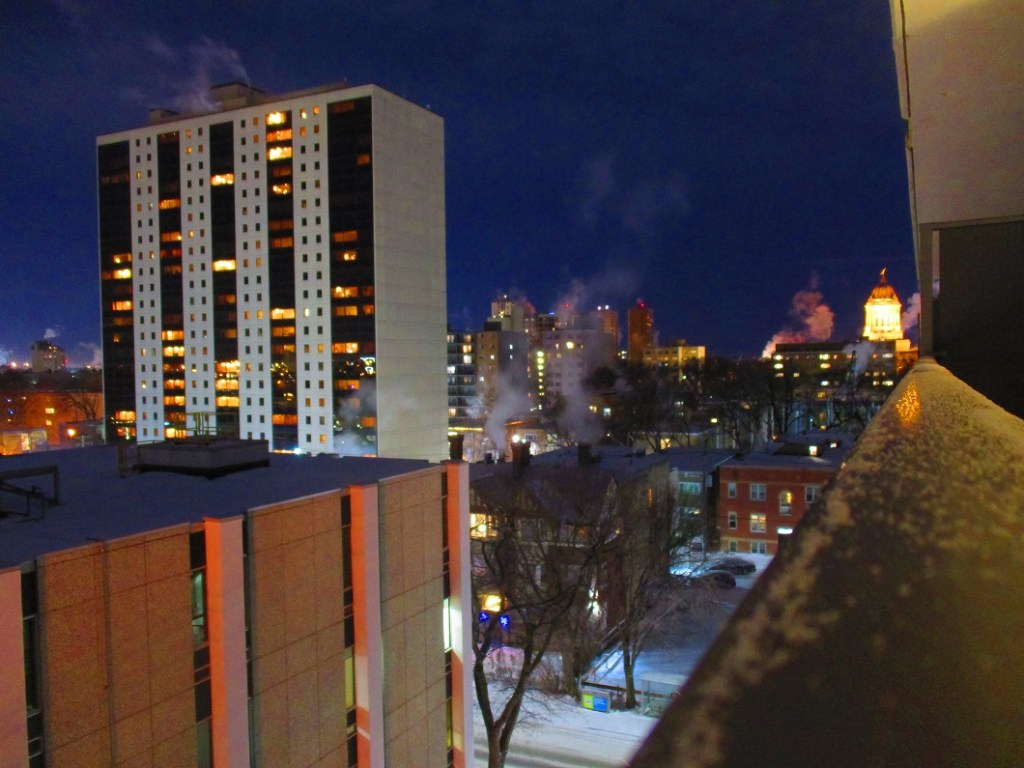
This weather is not for the meek. To be fair, most people go from their heated car garage, to the heated car, to the heated underground garage at work and then to the heated work office. However, people that have to work outside and the homeless have a very harsh reality.
This list is compiled by Loren Coleman who is one of the world’s leading cryptid researchers. Cryptids are the yet-to-be discovered animals or recovered supposedly extinct zoological species that are being sought by cryptozoologists, zoologists, anthropologists, and other researchers through fieldwork in the wild, re-examinations of specimens in zoological collections, and searches of archival materials. For me, it all started with the Abominable Snowman (Yeti) in 1960, and then moved quickly to an awareness of a world filled with cryptids.
In my book, Cryptozoology A to Z, I detailed several of the well-known and lesser-known but technically unknown alleged animals from around the world that are of interest to cryptozoologists. From that 1999 work, my earlier lists, and later research and fieldwork, here’s my list of the top fifty picks of these hopefully soon-to-be-found animals, which are actively being pursued today.
1. Ahool Giant: unknown bats are reported to reside in a region of western Java, plus similar reports under different names from Vietnam and the Philippines; possibly known as Orang-bati in Seram, Indonesia.
2. Almas: Huge hairy Neanderthaloid or Homo erectus-like hominids sighted in various parts of Euroasia.
3. Agogwe: The Agogwe are little, human-like, hairy, bipeds reported consistently from the forests of Eastern Africa.
4. Andean Wolf: These unrecognized mountain dogs are seen in South America.
5. Arabhar: These unconfirmed flying snakes are located in the Arabian Sea region.
6. Barmanu: Reportedly strong, muscular, and hairy humanoids reported from the Shishi-kuh valley in Pakistan.
7. Beast of Bodmin (or Bodmin Moor): Locally named mystery felids found in the United Kingdom.
8. Bergman’s Bear: Possible unknown species of giant bear once roamed Eastern Asia, and still may.
9. Bigfoot: The classic Sasquatch of the Pacific Northwest is well-grounded in hundreds of years of sightings, encounters, folklore, traditions, hair samples, and footprint evidence, for starters. The Patterson-Gimlin footage captured images in 1967 of what appears to be a good type specimen of this animal.
10. Birds-of-Paradise: Six species from New Guinea and surrounding islands, and a distinctive Long-Tailed Black Bird-of-Paradise from Goodenough Island are of interest to cryptozoology. (Ivory-billed woodpeckers in America have moved from “cryptid” to “rediscovered species,” in terms of the way zoology views them today.)
11. Black Panthers and Maned Mystery Cats: Sightings of large Black Panthers and seemingly “African Lions” with manes in the Midwest USA have law enforcement officials on the alert.
12. Blue Mountain panthers: These unknown cats reportedly live in the Blue Mountains of the east coast of Australia in the state of New South Wales.
13. Blue Tiger: These mystery felids are spotted in the Fujian Province, China, and are also filed under the name Black Tiger.
14. Bobo Sea monsters of the North Pacific Ocean are frequently reported off Monterey Bay since the 1940s, and have been given this local name.
15. Buffalo Lion: East African maneless lions are said to be man-eaters, and may reflect some new genetic alignments, akin to the King Cheetah discoveries among cheetahs.
16. Buru: Fifteen foot long bluish-black giant lizards were seen often in the swamps, lakes and foothills of the Himalayas, up through the 1940s, although they may be extinct now. More new monitors will be found, however.
17. Caddy: These unknown Sea Serpents (perhaps Mystery Cetaceans?) living off the coast of British Columbia are a popular figure in Canadian cryptozoology.
18. Champ: Giant prehistoric-looking creatures supposedly lurk in Lake Champlain, a 109 mile lake that borders New York, Vermont, and Ontario.
19. Chupacabras: Also called “Goatsuckers,” these bizarre Caribbean and South American cryptids are five feet tall biped creatures with short grey hair that have spiked hair and reportedly drain the blood through throat punctures of the livestock they kill.
20. Ebu Gogo: Three feet tall, hairy little people with pot bellies and long arms sighted on the island of Flores, Indonesia. Tiny females are said to have long, pendulous breasts.
21. Giant Anaconda: Reports have been made of 100 feet long snakes on the Rio Negro of the Amazon River basin.
22. Giant Octopus: The Blue Holes of Bimini offer many sightings of these unknown huge, many-tentacled animals.
23. Giant Sloth: Weighing up to three tons, these supposedly extinct animals have been reported in South America in contemporary times. These do notappear to be the Mapinguary/Mapinguari, which seem to be bipedal primates.
24. Globsters: Strange looking giant creatures (also called blobs) wash up on the beaches of the world, get the media and scientists excited, and sometimes turn out to be “unknowns.”
25. Hantu Jarang Gigi: Also called the Orang Dalam, Mawas, and Johor Bigfoot, these hominoids reported from Malaysia may indicate large unknown primates are still to be discovered from this corner of the world.
26. Jersey Devil: This regionalized name hides these perhaps a variety of creatures that have been haunting the New Jersey Pineland forest for over 260 years.
27. Kongamato: The natives of the Jiundu region of Northern Rhodesia (now Zambia) have firsthand encounters with these strange flying bat-like creatures.
28. Lake Storsjon Monster: Lake Sorsjön in northern Sweden appears to be inhabited by a Lake Monster, and has a relative in Lake Seljord in the Telemark region of Norway, which has its own Lake Monster swimming the waters there for centuries.
29. Lau Are specific African lakes the home to 40 feet long unknown catfishes or lungfishes?
30. Loch Ness Monster: Nessie is the most famous Lake Monster in the world; they are said to inhabit this loch, an extremely deep Scottish lake.
31. MacFarlane’s Bear: The carcass is at the Smithsonian, believed to be a possible hybrid between a grizzly and polar bear. Or an new unknown species?
32. Mngwa: The Mngwa are mystery cats described as being as large as donkeys, with marks like a tabby and living in Africa – but not a known species.
33. Mokele-Mbembe: For over two hundred years there have been reports of living Sauropods (dinosaur) in the remote Congo area of Africa. They may be confused with accounts of other local cryptids, including aquatic rhinos and monitors.
34. Mongolian Death Worm: Locals in the Gobi Desert of Mongolia talk of these giant snakes, worms, or long thin lizards (also called Olgoi-khorkhoi or Allghoi-khorkhoi) as killing livestock and people with their breath or strayed venom.
35. Mothman: A local name for giant owls (also called Bighoot) which have been sighted for over 100 years in the West Virginia-Ohio area, and elsewhere in North America.
36. Ogopogo: This is Canada’s most famous type of water monster, the specific inhabitants of Lake Okanagan in the south central interior of British Columbia.
37. Orang-Pendak: These reportedly small biped apes (also called Sedapa) live in the jungles of Sumatra and Borneo.
38. Peruvian Mystery Jaguar: Unknown large cats with white background covered in solid irregular spots are seen in the rainforests of Peru.
39. Skunk Ape: Also known by the label Myakka “ape” and other local names (Booger, Swamp Ape), these chimpanzee- or orangutan-like primates have been sighted throughout central and south Florida, and are a local version of the North American Ape. They are entirely different than the classic PNW Bigfoot.
40. Steller’s Sea Cow: A once thought extinct species, could these totally marine animals, looking like huge, wrinkled manatees, continue to exist? They are contemporarily sighted by Russian fisherman and others.
41. Tasmanian Tiger or Thylacine: Thought extinct, these wolf-like marsupials are still sighted on a regular basis in Western Australia, and perhaps New Guinea too.
42. Tatzelwürm: Classic small log-shaped reptilian cryptids from the European Alps are enigmatic animals, but have they gone extinct in historical times?
43. Thunderbird: Large condor-like birds, perhaps Teratorns, appear to still roam the skies of North America, along regular migration routes.
44. Tzuchinoko: Unknown species of snake sighted in the upper elevations of Korea and Japan.
45. Ucu: The South American Bigfoot live mainly in the Andean foothills.
46. Waitoreke: These strange unknown otter-like beasts are seen in New Zealand, and as yet undiscovered.
47. Xing-Xing: This is a specific regional name, from southern China, for small unknown apes, perhaps a new subspecies of orangutan.
48. Yeren: The Chinese Wildmen are reddish, semi-bipedal, and often encountered by locals and government officials along rural roads.
49. Yeti: perhaps unknown rock apes, are creatures reported as crossing the Himalayan plateaus and living in the valley forests. There is not just “one” Abominable Snowman, and they are not “white.”
50. Yowie: These tall hairy unknown hominoids are sighted throughout several remote eastern coastal areas of Australia.
Some former members of this list do occassionaly have to be deleted. For example, the Bili Ape (allegedly giant chimpanzees reported to live in remote east Africa) have lost status as cryptids, as they are said today to merely be a subspecies of chimpanzee. Never mind, there will be new discoveries and new additions in the coming years.
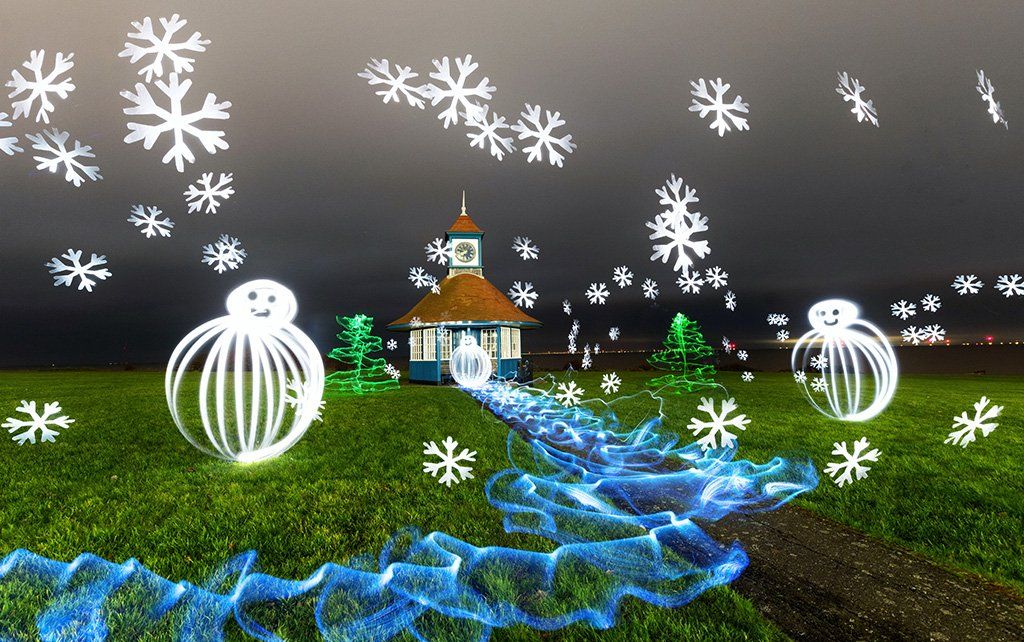
Image caption,Complicated images that feature a number of light painting effects often require the picture to be created in sections and then joined together in post production
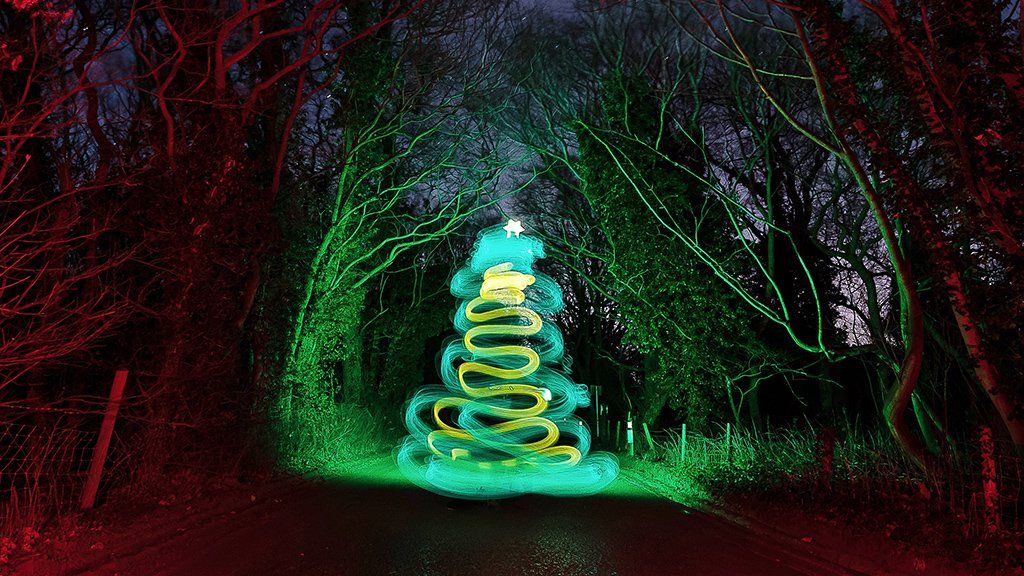
Festive decorations and Christmas cheer has been painted across sites in Essex – but visitors will only be able to discover them in a photograph.
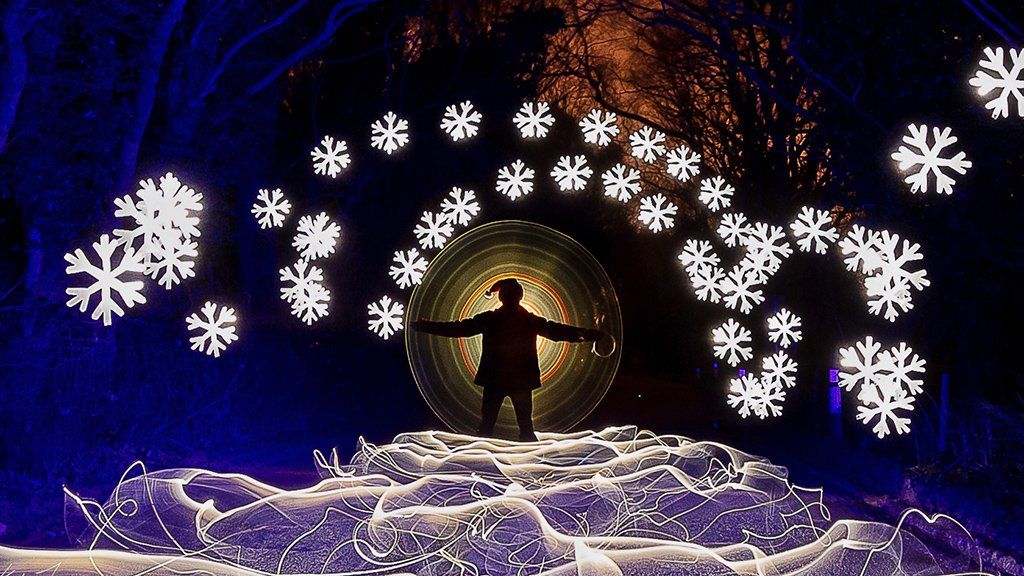
Snowmen, Christmas trees, blue-hue pathways and baubles have all been created by light painter Kevin Jay and enjoyed by thousands across social media, with the images shared on Instagram.
Kevin Jay, 50, of Clacton-on-Sea, Essex, uses a light source to “paint” the images and capture the work on his camera using a slow shutter speed.
“It’s an ideal form of photography at this time of year as there’s not much to shoot at night – you’re literally creating the image as there’s nothing there to start with apart from perhaps a local landmark,” he said.
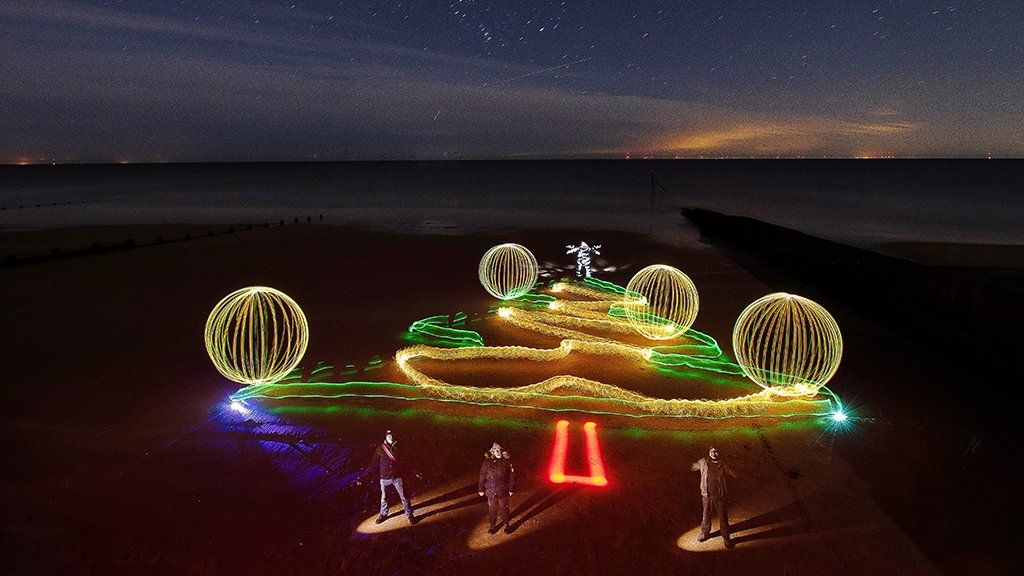
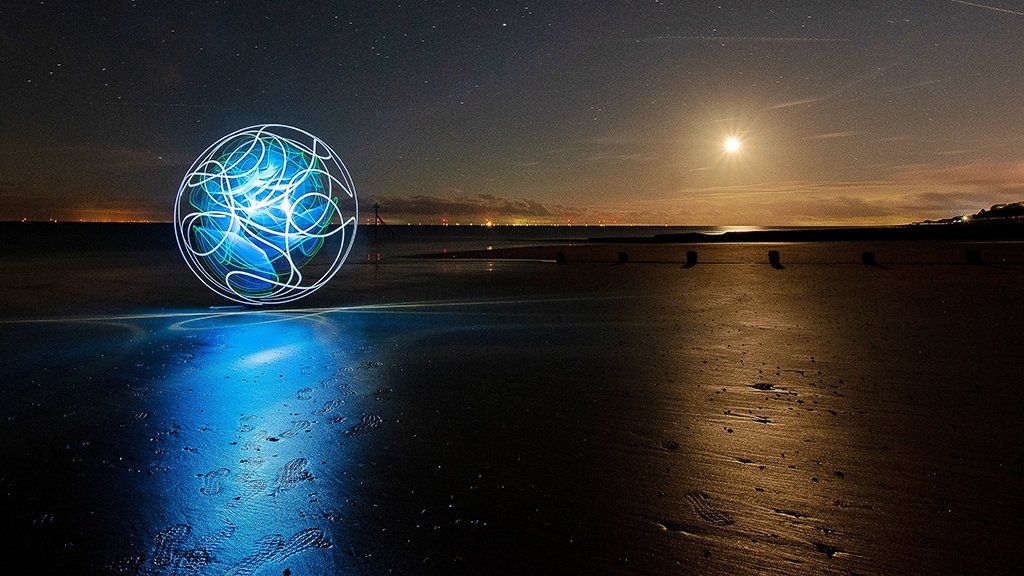
Image caption,The Frinton beach image, a team effort by Kevin Jay, Nicki Jay and Terry Spires, features seven individual shots to create the finished picture
Mr Jay started light painting about four years ago when he wanted to do something with his photography skills after dark.
“As we shoot at night it’s rare people see what we’re doing but it’s really rewarding just to know people appreciate the final image,” said Mr Jay.
“The big Christmas tree on the beach was challenging as it involved three of us doing multiple things – I did the baubles and they each took about 30 seconds. It’s why the final image is made up of a number of shots as we just couldn’t run around quickly enough to do it all in one go.”
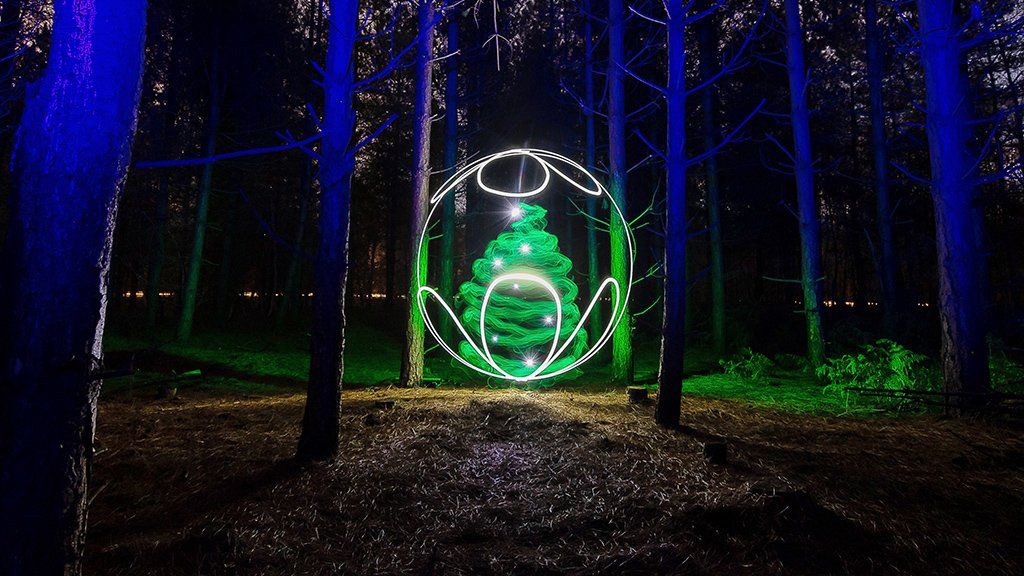
Image caption,The location of the light painting plays a big part in Kevin Jay’s work. Here he created a Christmas Tree bauble in Thetford Forest, Norfolk – a site that supplies Christmas trees
Although the images are planned, Mr Jay admits they can sometimes be more organic.
“It’s probably about a 50/50 mix,” he said. “There’s a plan, I’ve often got a rough sketch of my idea but then it goes in another direction during the creative process.”
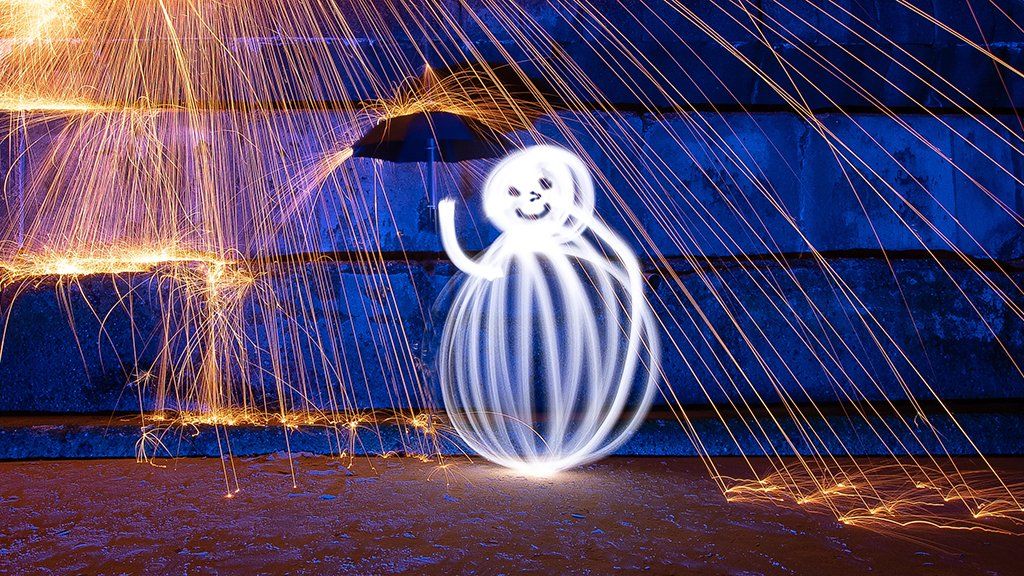
Image caption,”This snowman is one of my most rewarding images as it’s so close to what I imagined,” said Mr Jay. “It was complicated as we had the umbrella hanging from a pole on a bit of string so we could spin the wire wool above it once I’d drawn the light snowman.”Image caption,Kevin Jay often works with friends to create his images – including this scene featuring fellow light photographer Terry Spires taken in BrightlingseaImage caption,Creating a scene is an important part of the process, here red and green lights were used to illuminate the surrounding trees to create a frame for the light-painted Christmas treeImage caption,Essex beaches are often used for Kevin Jay’s light paintings as the damp sand creates reflections of the work. This snow globe was formed on Frinton beach
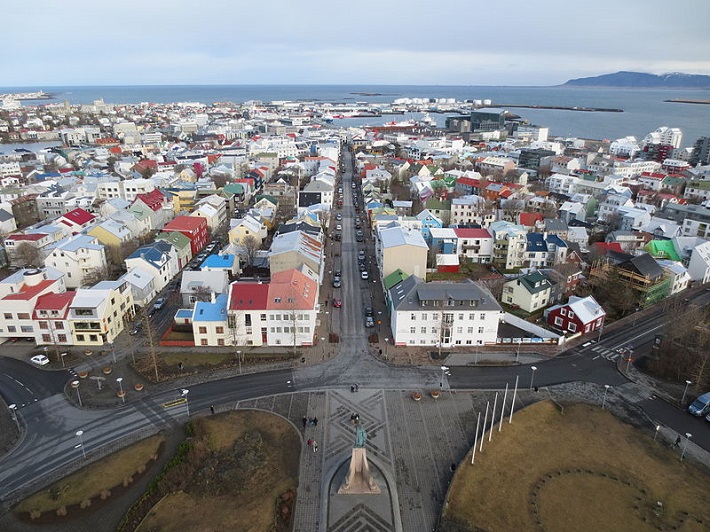
Hallgrímskirkja is a Lutheran (Church of Iceland) parish church in Reykjavík, Iceland. At 74.5 metres (244 ft) tall, it is the largest church in Iceland and among the tallest structures in the country. The church is named after the Icelandic poet and clergyman Hallgrímur Pétursson (1614–1674), author of the Passion Hymns.
Situated on a hilltop near the centre of Reykjavík, the church is one of the city’s best-known landmarks and is visible throughout the city. State Architect Guðjón Samúelsson’s design of the church was commissioned in 1937. He is said to have designed it to resemble the trap rocks, mountains and glaciers of Iceland’s landscape. The design is similar in style to the expressionist architecture of Grundtvig’s Church of Copenhagen, Denmark, completed in 1940.
It took 41 years to build the church: construction started in 1945 and ended in 1986, but the landmark tower was completed long before the whole church was finished. The crypt beneath the choir was consecrated in 1948, the steeple and wings were completed in 1974, and the nave was consecrated in 1986. At the time of construction, the building was criticized as too old-fashioned and as a blend of different architectural styles. The church was originally intended to be less tall, but the leaders of the Church of Iceland wanted a large spire so as to outshine Landakotskirkja (Landakot’s Church), which was the cathedral of the Catholic Church in Iceland.
The church houses a large pipe organ by the German organ builder Johannes Klais of Bonn. It has electronic action; the pipes are remote from the four manuals and pedal console. There are 102 ranks, 72 stops and 5275 pipes. It is 15 metres (49 ft) tall and weighs 25 metric tons (25 long tons; 28 short tons). Its construction was finished in December 1992. It has been recorded by Christopher Herrick in his Organ Fireworks VII CD and by Mattias Wager on his CD Live at Vatnajökull.
The church is also used as an observation tower. An observer can take a lift up to the viewing deck and view Reykjavík and the surrounding mountains. The church is still used today for modern services and weddings.
The statue of explorer Leif Erikson (c.970 – c.1020) by Alexander Stirling Calder in front of the church predates its construction. It was a gift from the United States in honor of the 1930 Althing Millennial Festival, commemorating the 1000th anniversary of the convening of Iceland’s parliament at Þingvellir in 930 AD.
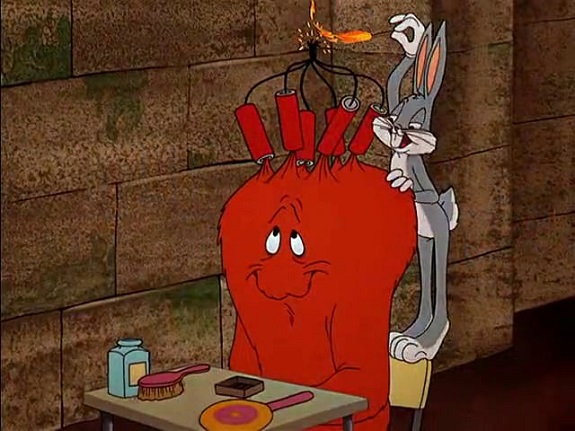
Gossamer is an animated character in the Warner Bros. Looney Tunes and Merrie Melodies series of cartoons. He is a large, hairy, orange monster. His body is perched on two giant tennis shoes, and his heart-shaped face is composed of only two oval eyes and a wide mouth, with two hulking arms ending in dirty, clawed fingers. The monster’s main trait is his uncombed, orange hair.













 The MarkoZen Blog