Hercules in New York is a 1970 low-budget fantasy comedy film. It is notable for being the first feature film to star (a then-unknown) Arnold Schwarzenegger, who was about 22 years old when the film was produced. It is further notable for being one of the films that Schwarzenegger admits regretting having appeared in.
In the scene a bear escapes from the Central Park zoo. Arnie confronts the bear and the fight begins. They grapple for a while then Hercules body slams the bear. After he has the bear down Herc starts choking the furry brute and punches it into submission.
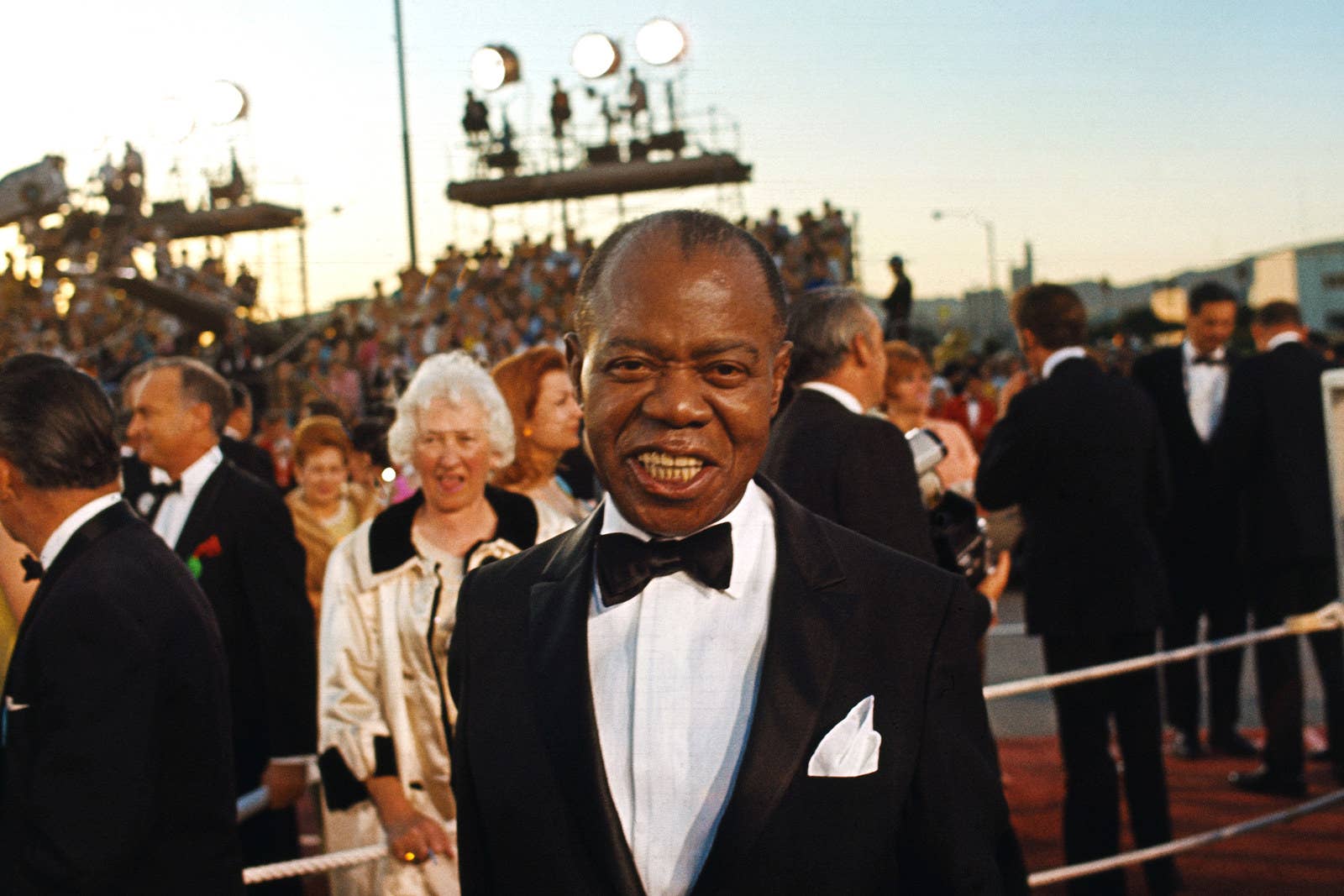
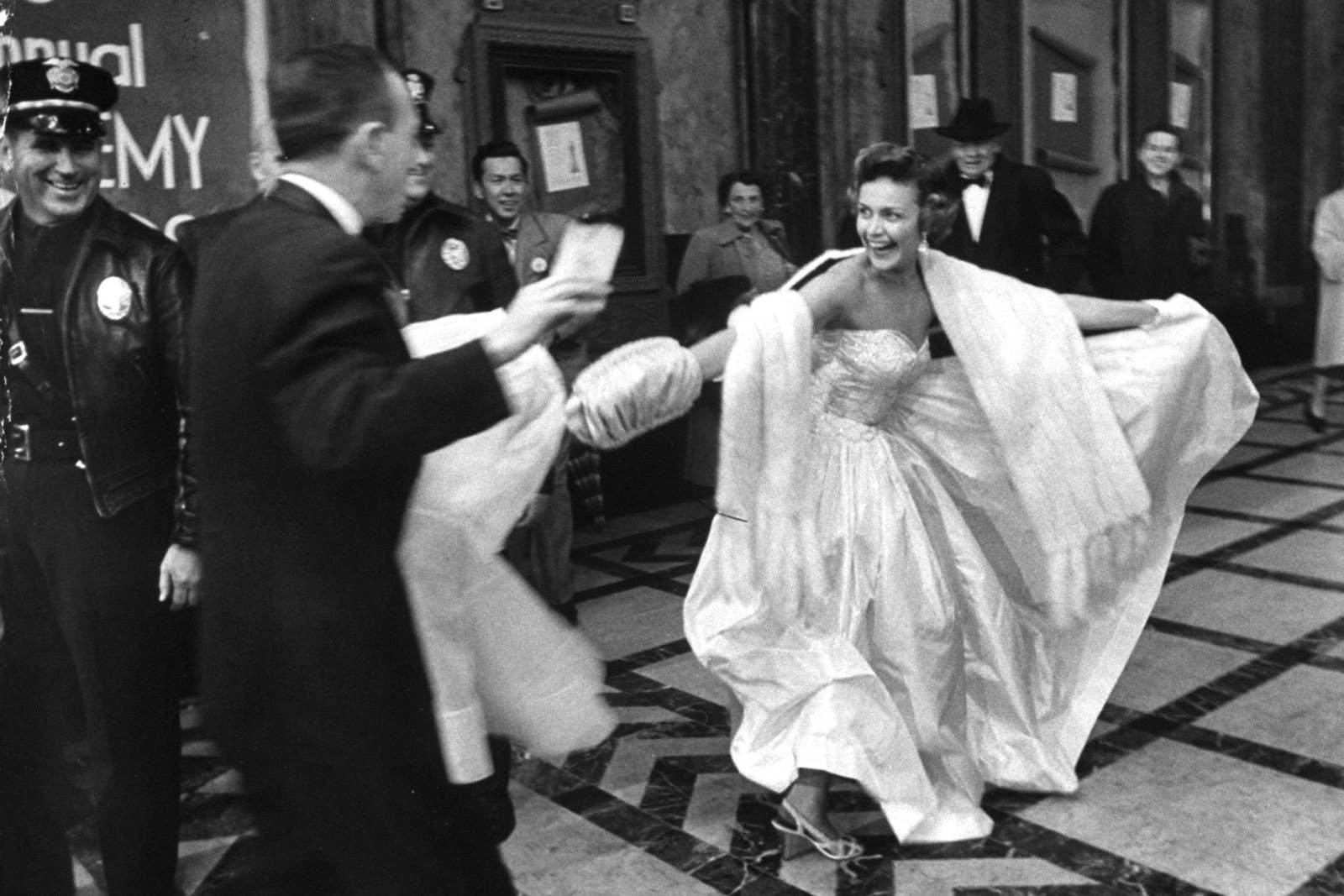
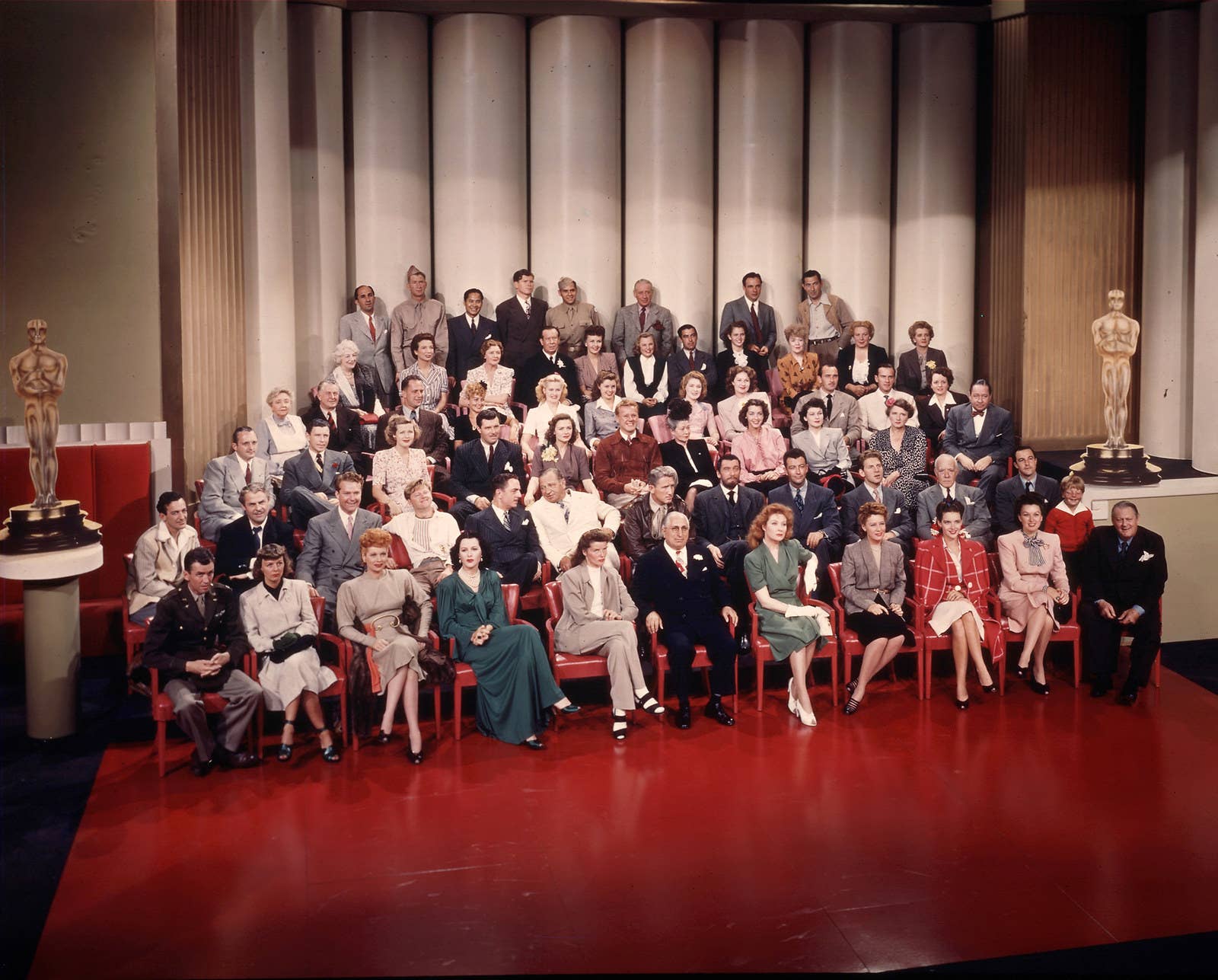
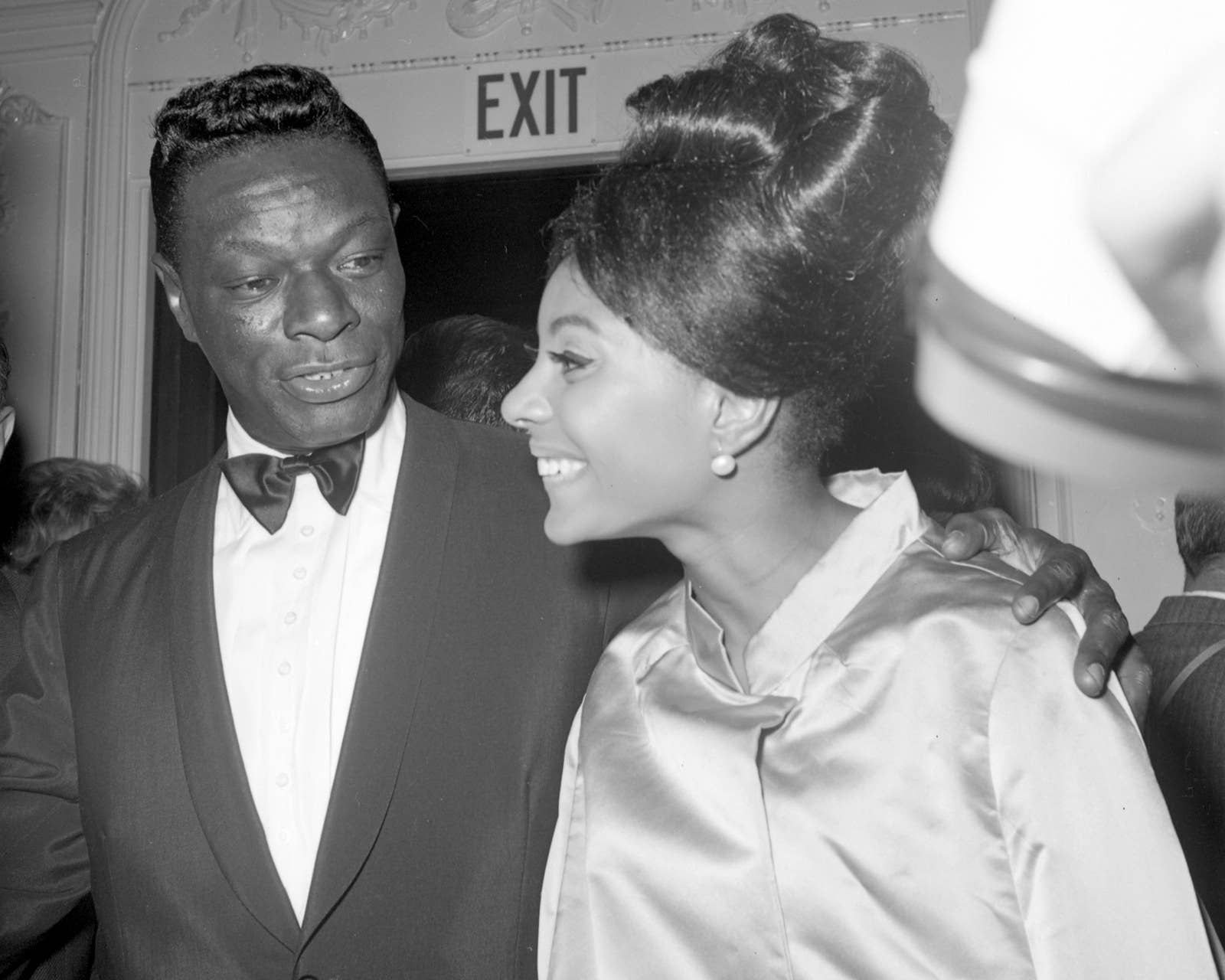
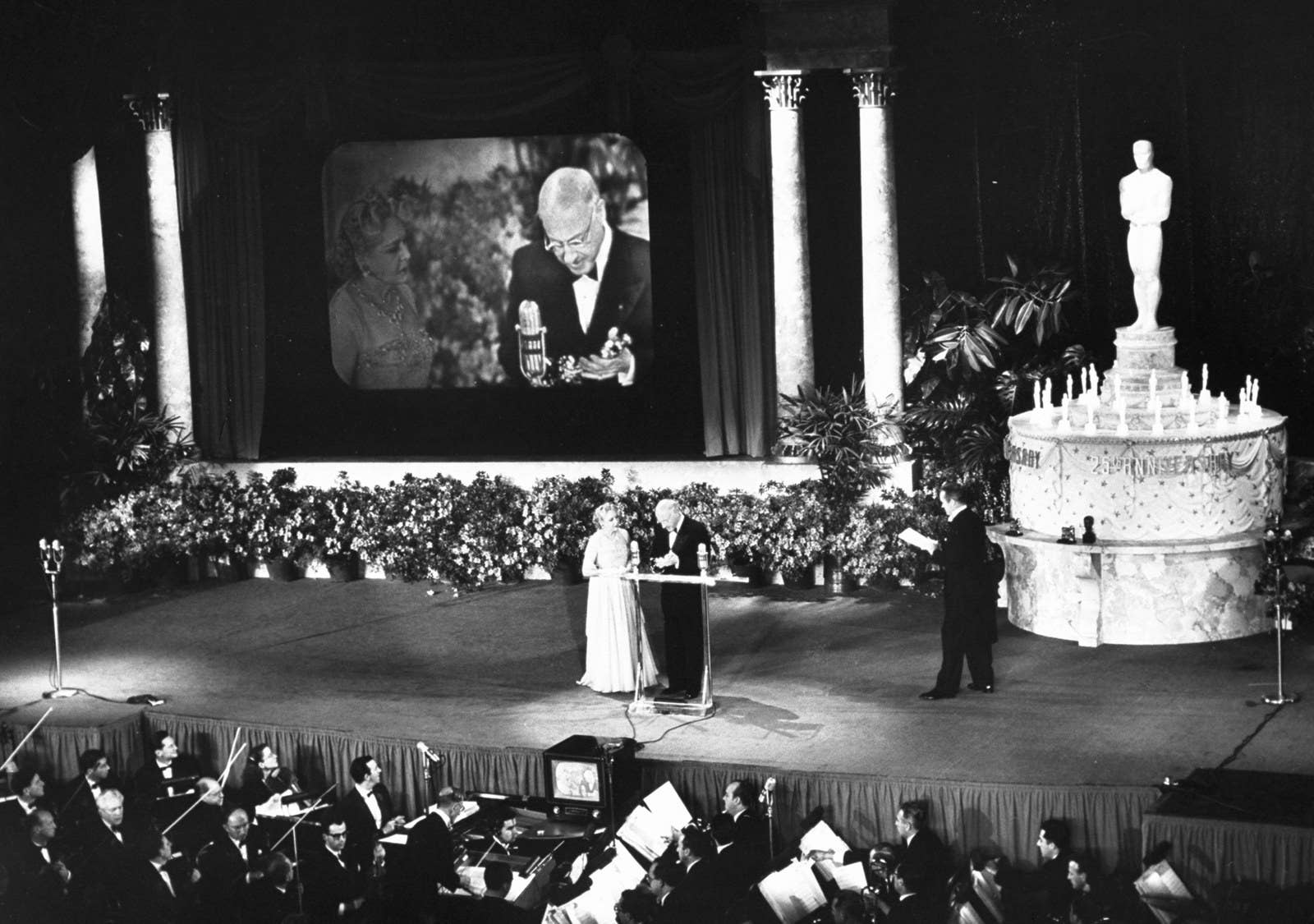
Elizabeth Taylor sits with her Oscar for Best Actress in Butterfield 8 at the 33rd Academy Awards on April 17, 1961.A crowd of fans watch as celebrities arrive for the 26th annual Academy Awards on March 25, 1954.Famed jazz trumpeter Louis Armstrong arrives at the Academy Awards on April 10, 1968.Actor Sandra White laughs with embarrassment as she arrives late to the Academy Awards on March 19, 1953.MGM studio head Louis B. Mayer (bottom, center) sits surrounded by 65 MGM stars in 1943.Entertainer Nat “King” Cole chats with his date to the 35th Academy Awards on April 8, 1963.
Mary Pickford (left) stands on stage with Cecil B. DeMille (center) and Bob Hope after presenting an award during the first televised Academy Awards show on March 1, 1953.
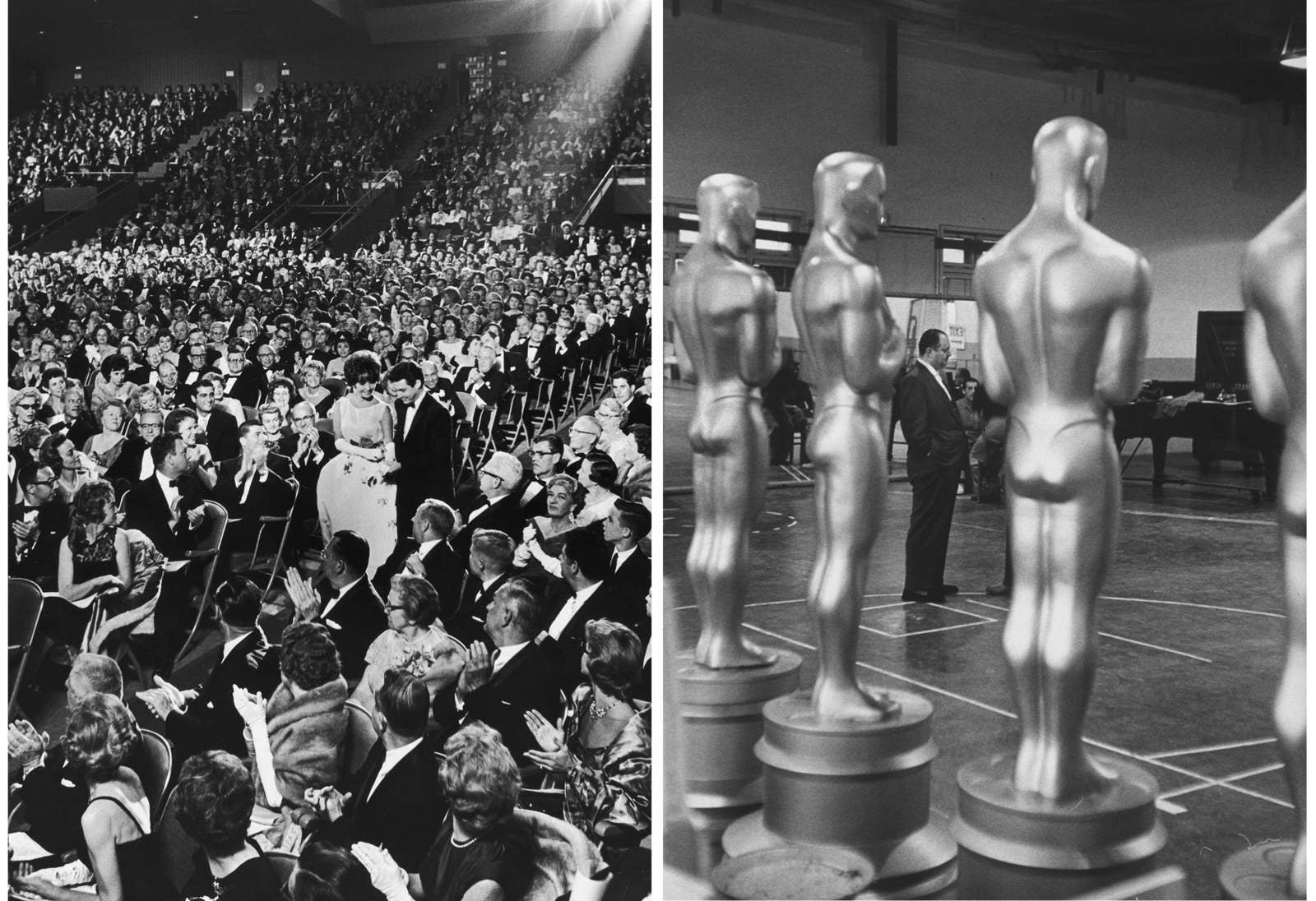
Left: Actor Ava Gardner takes a seat in the audience during the Academy Awards on April 4, 1960. Right: Actors Edmond O’Brien and Grace Kelly celebrate their win on March 30, 1955. O’Brien won Best Supporting Actor for his role in The Barefoot Contessa, while Kelly won Best Actress for her role in the 1954 film The Country Girl.Miyoshi Umeki poses with her Academy Award for Best Supporting Actress in Sayonara on March 26, 1958.Left: Elizabeth Taylor is assisted down the aisle by her husband Eddie Fisher to accept her award in April 1961. Right: Large replicas of Oscars used for decoration at Academy Awards show are staged before the ceremony.
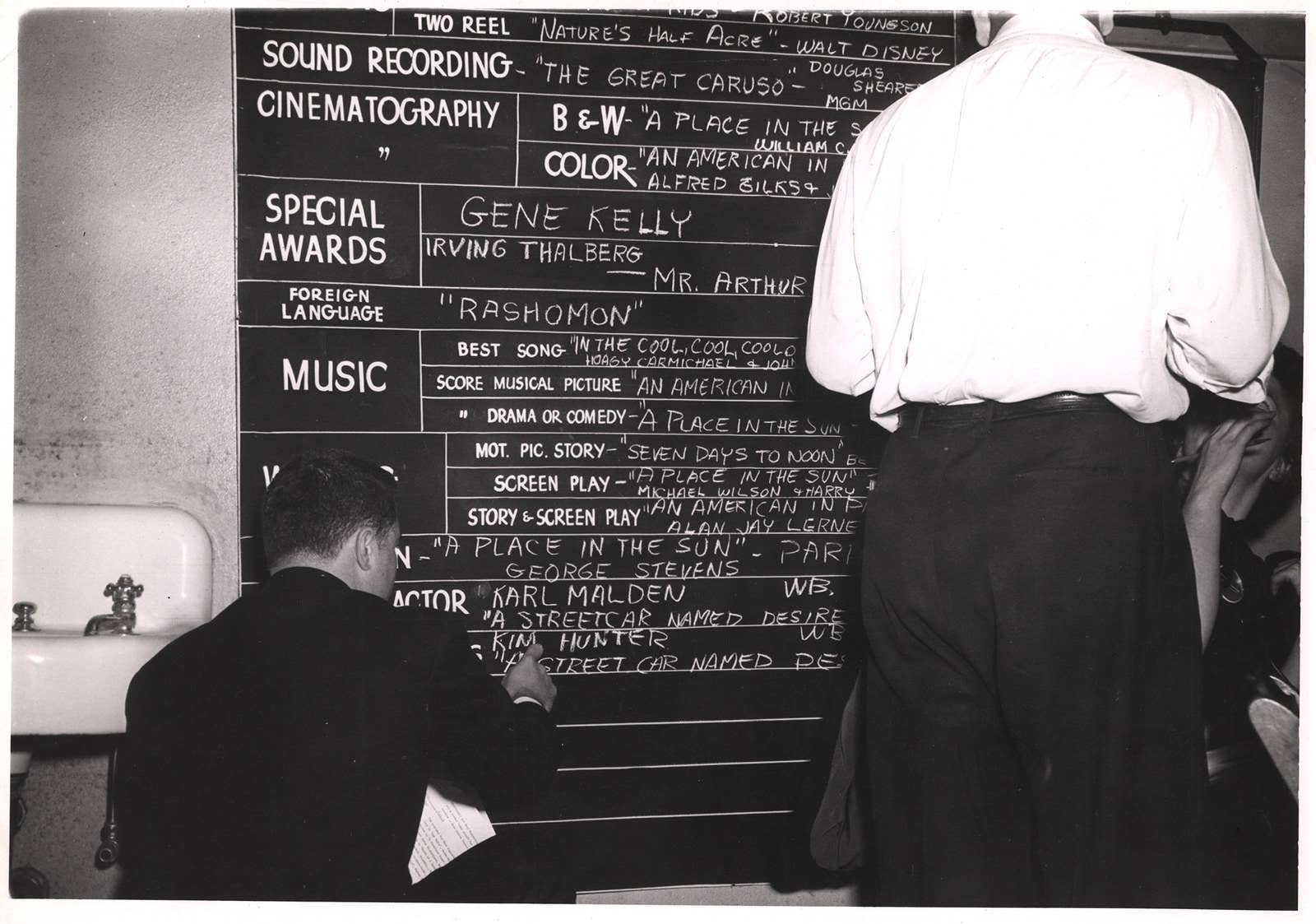
An Academy Awards staff writes the names of the winners on a chalkboard on March 20, 1952.
William Lovelace / Getty Images
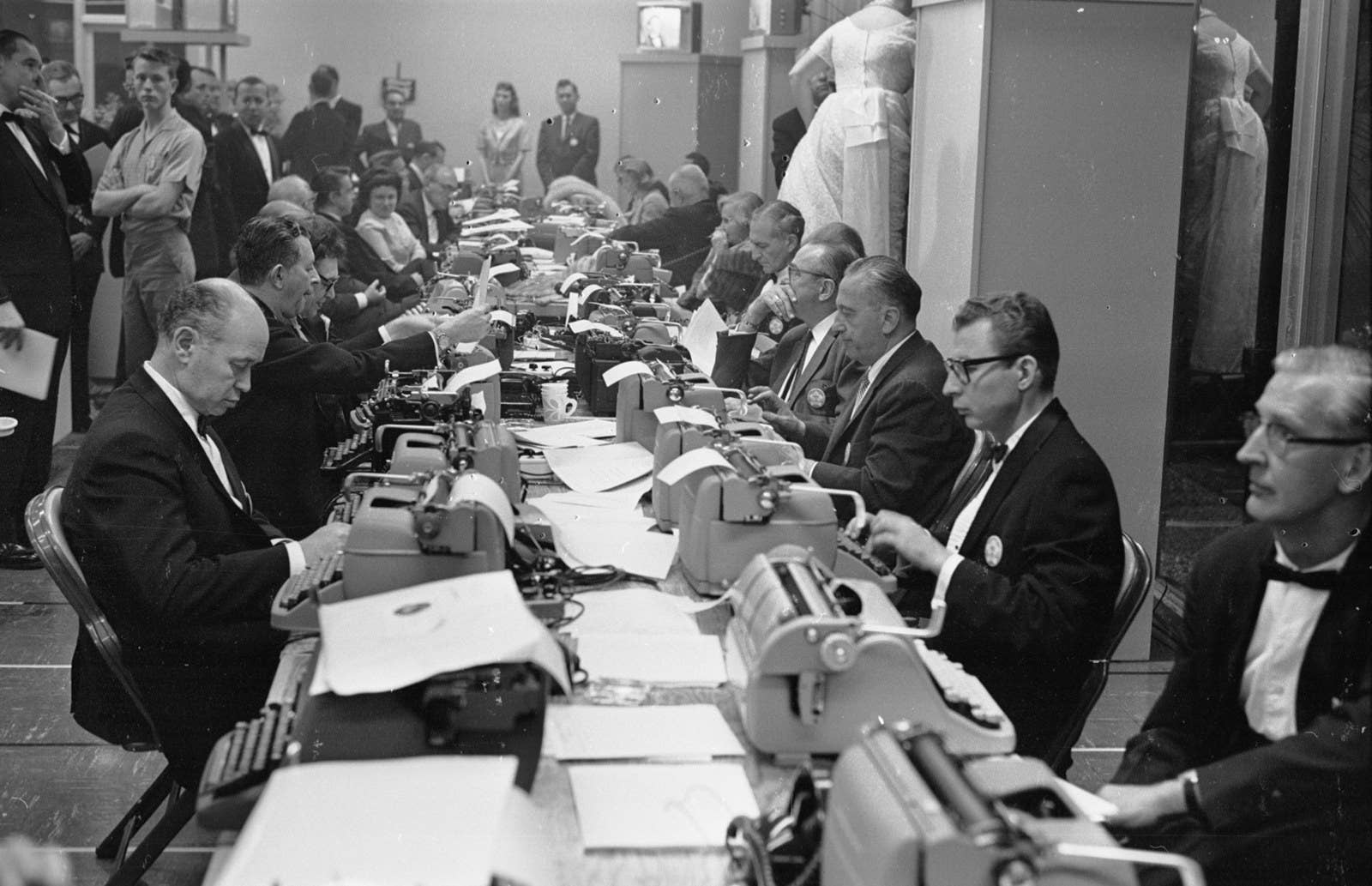
Journalists type up their reports in the press room on April 11, 1962.
Silver Screen Collection / Getty Images
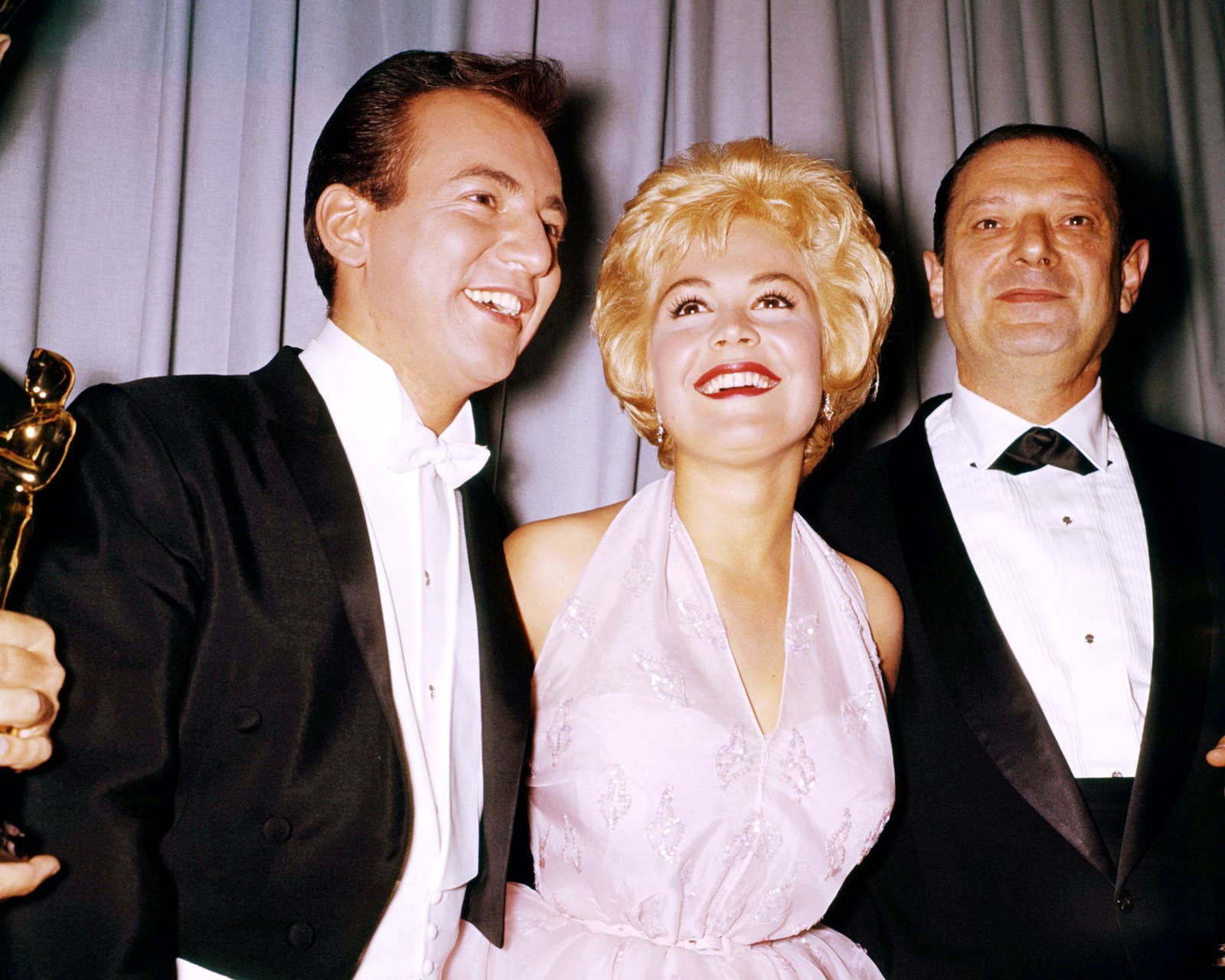
Singer Bobby Darin (left), actor Sandra Dee (center), and composer Harry Sukman (right) pose for a photo at the 33rd Academy Awards on April 17, 1961.
Hulton Archive / Getty Images
Actor Audrey Hepburn is surrounded by reporters as she shows off her Best Actress Oscar she won for her role in Roman Holiday, at the Academy Awards ceremony on March 25, 1954.
New York Daily News Archive / Getty Images
José Ferrer (center) is hugged by Judy Holliday (left) upon hearing the news that Ferrer’s portrayal of Cyrano de Bergerac had earned him the Academy Award as 1950’s Best Actor. Holliday was named as the year’s Best Actress. Gloria Swanson (right), who was in contention for the Best Actress award, jumps with joy over Ferrer’s success.
Brich / BRICH / AP/REX/Shutterstock
Actor Annette Funicello (right) and former child film star Shirley Temple (left) hold a miniature Oscar statuette at the annual Academy Awards in April 1961.
Silver Screen Collection / Getty Images
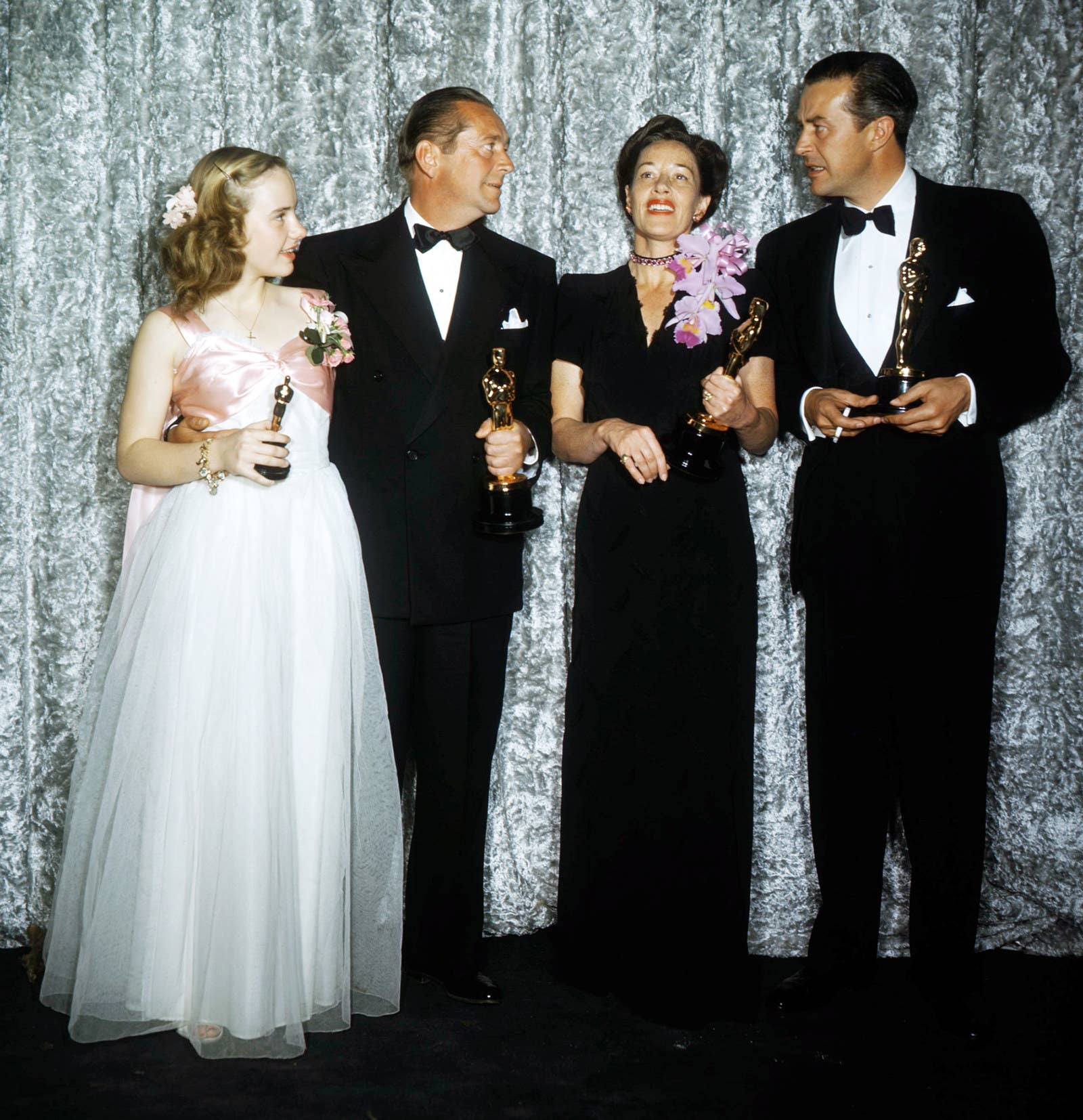
Oscar winners (left to right) Peggy Ann Garner, James Dunn, Ann Revere, and Ray Milland pose for the press at the 18th Academy Awards on March 7, 1946.
Frank Worth, Courtesy Of Capital / Getty Images
Husband and wife actors Robert Wagner and Natalie Wood attend an Oscar dinner in 1959.
William Lovelace / Getty Images
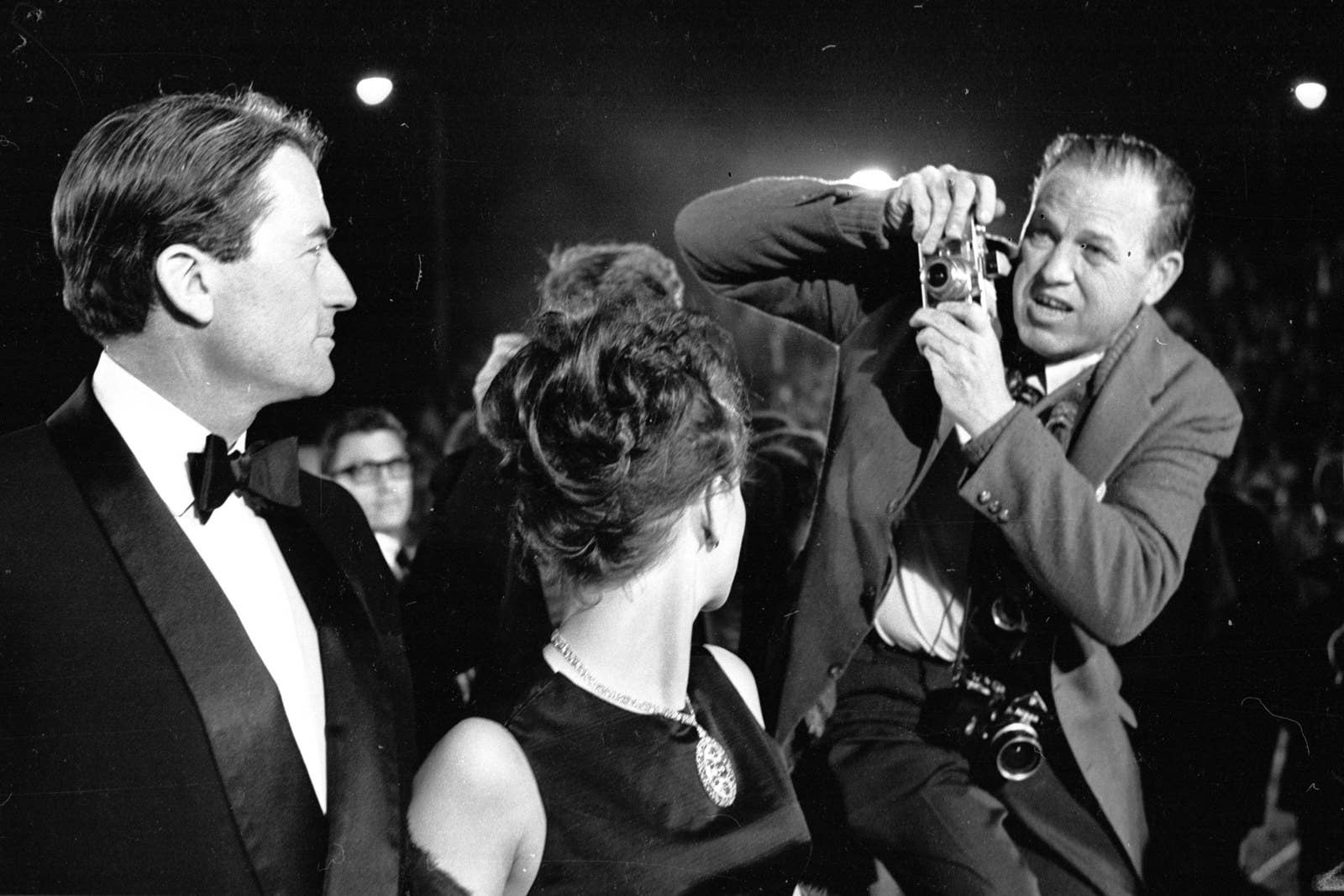
Actor Gregory Peck and his wife Veronique are photographed at the Oscars ceremony on April 11, 1962.
Jack Albin / Getty Images
Actor Patty Duke holds her Oscar statuette and her pet chihuahua, Bambi, while seated next to Andy Prine during the Academy Awards afterparty on April 1963.
Getty Images
Left: Walt Disney repairs one of four Oscars he won at the Academy Awards on April 1, 1954. Right: Award presenters Audrey Hepburn (left) and Grace Kelly (right) wait backstage at the 28th Academy Awards on March 21, 1956.
One-man flying space hopper could become the ‘air car’ of the future
80kg machine can take off vertically like a jump jet
Powered by Lithium Ion batteries
Inventor claims the 16-rotor machine will make helicopters ‘obsolete
Could be used for ‘air sports’ – or even as a flying car
It might look like as space hopper surrounded by model helicopters, but the 16-rotor E-Volo is an entirely new kind of helicopter – which can hover motionless in the air without input from the pilot.
Its bold engineer, Thomas Senkel, took the machine on its first manned flight this week – lasting 1 minute 30 seconds. It’s not the first electric helicopter flight – but this is a new kind of machine, steered simply by joystick, with the pilot sitting above the rotors. Senkel says it could revolutionise transport. SCROLL DOWN FOR VIDEO
The three inventors claim their flying machine could be used for inspecting pipelines, as an air ambulance or for taking aerial photographs – as well as just for fun.
Once they have solved the problem of how to keep it in the air for longer – and support more people – Senkel hopes it might replace helicopters for good.
It’s far easier to fly than ordinary helicopters – it’s steered by rotor speed, which is computer-controlled, so the pilot just needs to use a joystick as if playing a videogame, rather than controlling multiple complex controls at once.
Senkel describes the easy-to-use machine as ‘good-natured’ and potentially capable of replacing the helicopter in many situations.
A one-hour flight would cost around six euros in electricity. The machine has few parts, which could wear out, meaning the aircraft needs little maintenance.
E-volo say their aircraft is special because of the ‘simplicity of its engineered construction without complicated mechanics, and redundant engines.’
In an emergency, it can land even if four of its 16 rotors fail. And since the propellers sit below the pilot, a safety parachute can also be deployed.
The controls could be integrated with GPS software, the three friends claim, and the machine could even automatically avoid obstacles and direct itself to predetermined locations. E-Volo have already completed several successful ‘drone’ flights with the vehicle, controlled remotely from the ground.
Popular Science magazine had many articles devoted to automobile safety back in the 1930’s, 1940’s, 50’s and 60’s. The car explosion in those decades revealed many problems and concerns as cars became bigger and faster. Many of the tips Pop Sci brings up from back in the day could be utilized in today’s world of mass automobile use.
Keep your eyes on the road!
If this cover image doesn’t terrify you into driving safely, we don’t know what will. According to the illustrator, driving 30 miles and hour is as dangerous as driving on the roof of a building.
Manitoba Public Insurance should start preaching these same basic rules. I don’t know about the one of suspecting every pedestrian of suicide.
1. Learn to judge the conditions of the road and the drivers. 2. It isn’t how fast you can go, it’s how fast you can stop. 3. Keep one car length between you and the car in front of you for every 10 miles on your speedometer. 4. Suspect every pedestrian of suicide. 5. Every intersection is a crash point, so slow down. 6. Signal properly. 7. Expect the worst from the other car.
Get those brakes checked regularly
Speed limits in certain States back in 1960 was 30 mph. That would be about 52 kph.
Keep those tires up to date and checked out regularly
In 2020, Clarence Iron, Earl Wood, and John Chabot debuted calling for the NHL in Nêhiyawêwin (ᓀᐦᐃᔭᐍᐏᐣ; the Plains Cree language) during a Montreal Canadiens versus Carolina Hurricanes game. Building on their coverage beginning in 2019 of Rogers Hometown Hockey in Cree, APTN now hosts HNIC in Cree every Saturday night with announcer Clarence Iron calling alongside host Earl Wood and analysts John Chabot and Jason Chamakese. Although broadcasts in Nêhiyawêwin were postponed during the pandemic-shortened 2020-21 season, a large push for them to return ensured the return of consistent, weekly Plains Cree hockey coverage. The team behind Cree broadcasting is also working to translate hockey terms into the language, such as “slapshot” (ᓱᐦᑭᐸᑲᒥᐍᐸᐦᐍᐤ sohki-pakamiwepahwew), “faceoff” (ᓇᐸᑭᐘᓂᐢ napakiwanis), and “rink” (ᓱᓂᐢᑿᑕᐦᐃᑫᐏᑲᒥᐠ soniskwatahikewikamik).
Claim to fame: A 60-mile traffic jam on an expressway heading into Beijing lasted 13 days in 2015
Life in the slow lane: The 2015 jam on National Expressway 110, which links Beijing and North China’s Hebei province, caused by construction and a number of accidents, shocked the world. But Beijingers are used to epic-scale gridlock. Despite the city’s six surrounding ring roads, numerous expressways, and the government’s restrictions on car use, urban planners simply can’t keep up with the massive influx of new cars that many of Beijing’s approximately 20 million increasingly wealthy people (many of whom have never driven a car before) have recently bought. Some 248,000 new cars were registered in the first four months of 2010, according to the Beijing municipal tax office, a rate of 2,100 new cars per day.
Driving in Beijing, which came in first on IBM’s latest survey of “commuter pain” among major world cities, is a truly frustrating experience: 69 percent of Beijing motorists admitted that on occasion they have just given up and gone home, 84 percent claimed traffic affected work or school performance, and the average commuter suffers through almost an hour of traffic just commuting to work. The city is pinning its hopes on one out-of-the-box solution: an enormous, solar-powered bus that literally drives over traffic.
MOSCOW
Claim to fame: Muscovite drivers face the longest traffic delays in the world, with waits averaging about two and a half hours
Life in the slow lane: Drunk driving, bad weather, streets designed only for military marches and Communist officials in limousines, and well-connected individuals skipping traffic continue to make driving in this city an exasperating — not to mention costly and dangerous — experience. The Russian Transportation Ministry claims that $12.8 billion — more than the GDP of Iceland — is lost every year due to the miserable traffic conditions. Overall, Russia’s road-accident mortality rate is more than twice as high as some members of the European Union — despite the fact that Russians have about a third the amount of cars.
The Kremlin has addressed the traffic issue on numerous occasions, but with the country’s road infrastructure ranked 111th in the world and falling rates of public spending — despite the Transportation Ministry’s pleas to add almost 250 miles of road to ease congestion — Muscovites are not happy. One study showed that over the past three years, two in five residents of the capital have had to wait at least three hours for traffic to clear (an impressively low figure considering there are 650 traffic jams on average every day).
MEXICO CITY
Claim to fame: In 2006, a single political protest caused a backup of half a million cars
Life in the slow lane: Some might think that freeway-clogged Los Angeles is North America’s worst traffic nightmare, but according to IBM’s survey, Mexico City is almost four times as tough for commuters. The Mexican capital has become famous for Darwinian traffic habits (an average of 1,500 pedestrians are killed in accidents a year) and pollution so heavy that it likely shortens life spans. Despite city initiatives to decrease the heavy traffic congestion largely caused by simply too many people and too few roads, more than half of Mexico City drivers said that the traffic has negatively affected school or work while 62 percent said that traffic is getting worse in a city with streets first designed by the Aztecs.
One uniquely Mexican trait is definitely not helping matters: The city averages about eight and a half street protests per day, further clogging the streets with demonstrators from all over the country. The city even has a website specifically designed to note every protest and the likelihood of resulting traffic blockages.
SAO PAULO
Claim to fame: The city holds the world record for the world’s longest traffic jam at over 165 miles on May 9 in 2008
Life in the slow lane: A traveler to Sao Paulo might wonder why so many drivers can be seen doing such menial tasks as shaving, watching movies, or playing video games while at the wheel. Given that Paulistas regularly spend three- to four-hours each day in traffic jams that can be over 100 miles long, it should not be too surprising that motorists are making themselves feel at home. Not only do Sao Paulo roads handle the city’s more than 20 million people poorly, but the city has simply not done enough to fix matters. The fast-growing and sprawling, decentralized megalopolis –spread across more than 3,000 square miles — suffers from extra traffic due to its lack of any fully functional ring roads.
Designated bus lanes, subway additions, and a car-restriction system that allows only a limited number of drivers on the road each day have done little to lessen the massive traffic congestion that costs the city an estimated $2.3 billion a year. The gridlock has gotten so bad that Sao Paulo’s well-connected and wealthy have made the city home to the second-largest helicopter fleet in the world.
LAGOS
Claim to fame: Frequent massive car accidents cause fatalities in the dozens
Life in the slow lane:Driving in Lagos is characterized more by the act of sitting — the standstill nature of driving in this booming city is so ubiquitous that Lagosians have created their own term for their city’s traffic: “go-slow.” Near the top of many lists for fastest-growing city in the world, Lagos for many years lacked any overarching plans for infrastructure, as its infamous traffic attests.
Overcrowding is not the only problem afflicting Lagos’s roads, however– vehicle-wrecking potholes, few working traffic lights, carjacking, corrupt traffic police, and flooded roads are also common. Traffic in Lagos, a coastal city on the Atlantic Ocean, is plagued by the fact that drivers are often forced to take narrow bridges, causing bottlenecks. Worst yet, according to urban lore, it’s dangerous to try to buy any items from street vendors while stuck on a bridge because there is a good chance that they or others nearby — knowing you have nowhere to move — are armed and looking to steal all your belongings.
In Canada Toronto is by far the worst. An average of 80 minute commutes per day. Montreal is a close second. Bangkok and Cairo have notorious traffic.
In the U.S. it is Chicago, Washington, D.C., Los Angeles, Houston and Seattle.
Traffic on interstate outside New Orleans before Hurricane Rita. All the traffic is going in the same direction.












 The MarkoZen Blog