The Soviet Lunar Lander that Never Landed on the Moon


lunar1


The Soviet lunar program was covered up, forgotten after failing to put a man on the moon.

Soviet scientists were well ahead of their American counterparts in moon exploration before President John F. Kennedy pronounced the U.S. would put a man there first. The Soviets had already landed the probe Luna 2 on the surface of the moon in 1959 and had an orbiting satellite in 1966.

The Soviets developed a similar multi-step approach to NASA, involving a module used to orbit the moon and one for landing. Their version was decidedly less complex and lighter to account for inferior rockets. This photo show the LK “Lunar Craft” lander, which has a similar pod-over-landing gear structure but numerous key differences.


lunar-craft-2-russo_0


All the activities done by two astronauts is done by one. To make the craft lighter, the LK only fits the one cosmonaut, who was supposed to peer through a tiny window on the side of the craft to land it. After landing the vehicle the pod separates from the landing gear, as with the Apollo Lunar Module, but uses the same engine for landing as it does for take off as another weight savings.

The L2 Lunar Orbit Module designed to transport the LK into orbit around the moon was similarly stripped down. There’s no internal connection between the two craft so the cosmonaut had to space walk outside to get into the LK and head towards the surface. When the LK rejoined the L2 for the return trip home, the now likely exhausted cosmonaut would then climb back out into the abyss of space. The LK would then be thrown away.


Soviet Lunar Orbiter


lunar2


Soviet Lunar Lander (LK)


lunar3


There were numerous political, scientific and financial reasons why the Soviets didn’t make it to the moon first, including a space agency with split priorities and therefore not single-mindedly dedicated to this goal. Neil Armstrong walked on the moon first on July 20, 1969, besting the Russians, who were still planning to visit the moon in the upcoming years.

They had the equipment, but they didn’t have the rockets.

Getting to the moon requires launching a command module and a lander. Both are heavy objects and require massive amounts of thrust to get into orbit. The Soviet’s planned to use their N-1 rocket, but two failed launches in 1971 and 1972 destroyed dummy landing and control modules, as well as the rockets themselves, and led to the program being shelved for lack of a proper launch vehicle.

The LK was sent into space for numerous test missions. The first two unmanned flights were successful tests of the vehicle through a simulated orbit. The third flight ended when the N-1 rocket crashed. The fourth test in 1971 was a success, but years later the decaying test module started to return to Earth with a trajectory that would put it over the skies of Australia.

NASA explains in a report on the Soviet space program how they had to convince the Australians it wasn’t a nuclear satellite:

To allay fears of a nuclear catastrophe, representatives of the Soviet Foreign Ministry in Australia admitted that Cosmos 434 was an “experiment unit of a lunar cabin,” or lunar lander

Eventually, the program was deemed too expensive and unnecessary in light of the NASA success. The Soviets moved onto building space labs, successfully, and the remaining parts of the lunar program were destroyed or dispersed, including this amazing collection of parts hidden in the back of the Moscow Aviation Institute.
 

lunar5

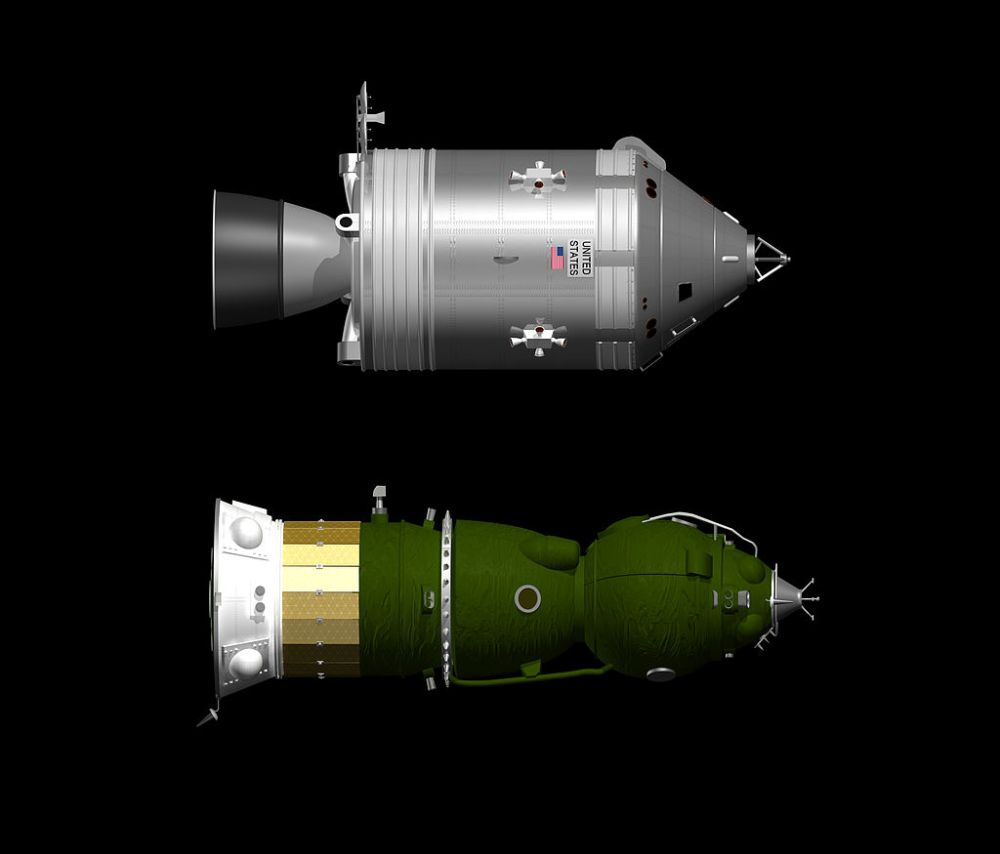
American Lunar Orbiter top, Soviet Orbiter bottom


Soviet Lander ascending from the surface of the Moon, artist graphic.


lunar4


LK Lander and Apollo LM (drawn to scale). Manned Moon landers


lunar6

space1

Soviet left, American right

Playgrounds From The Space Age

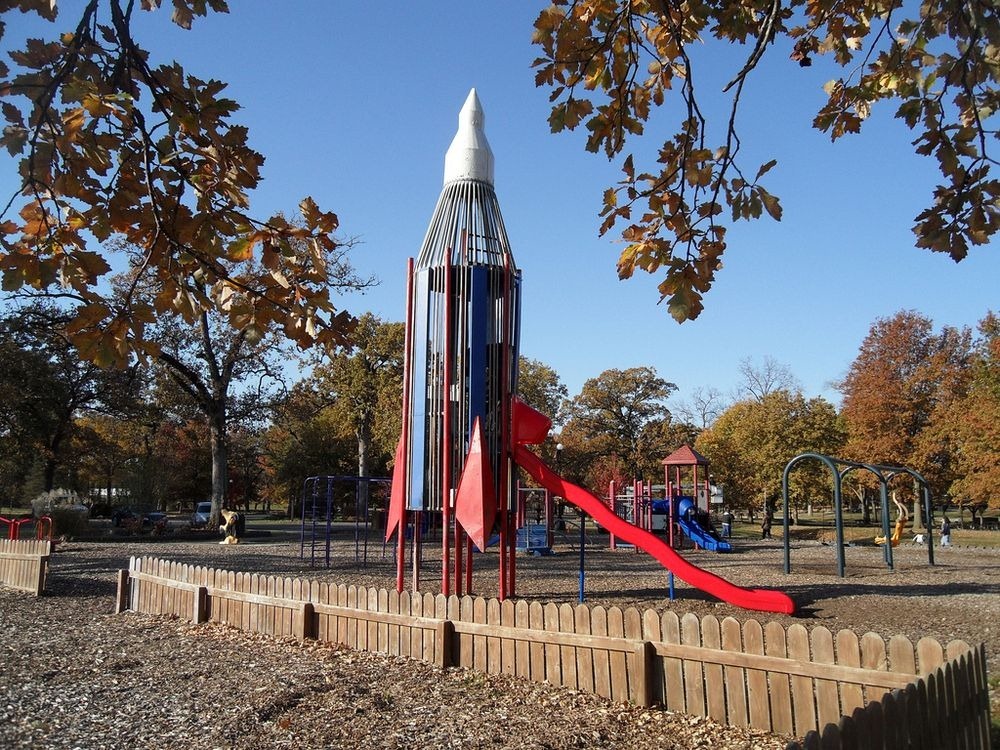
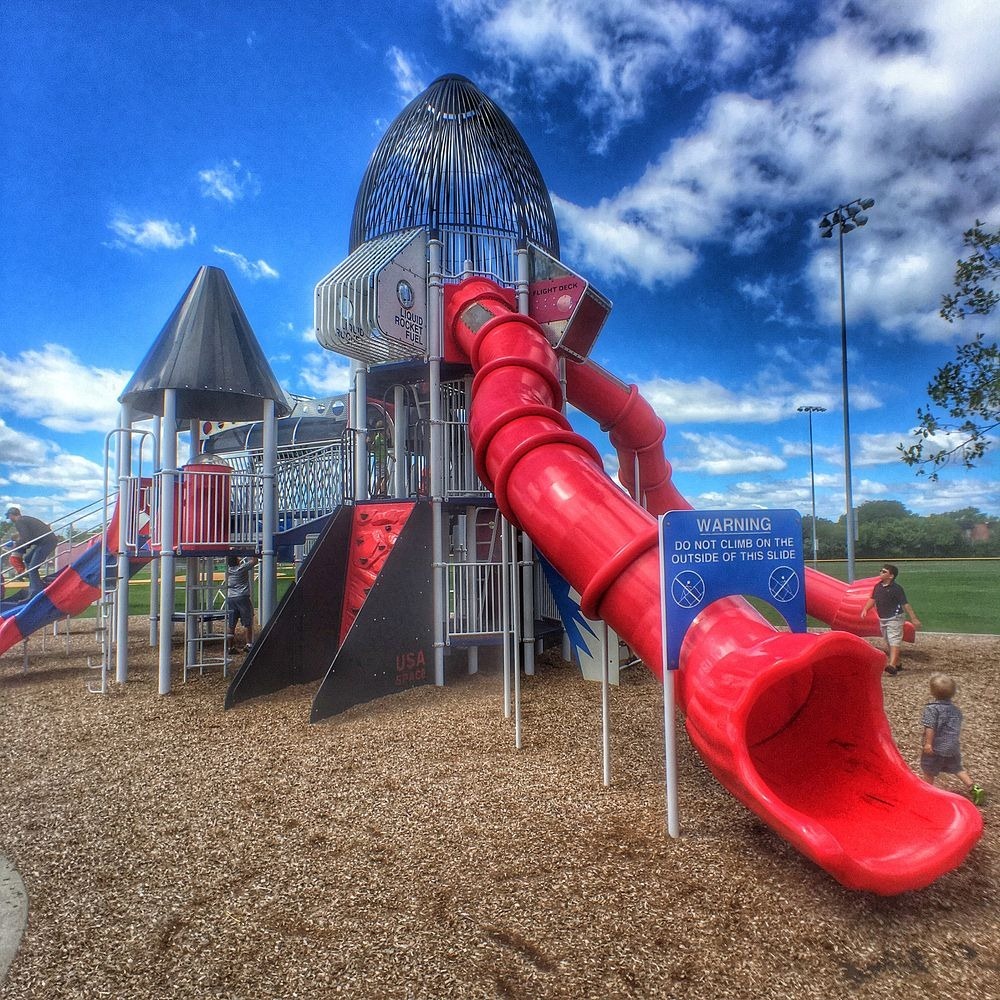
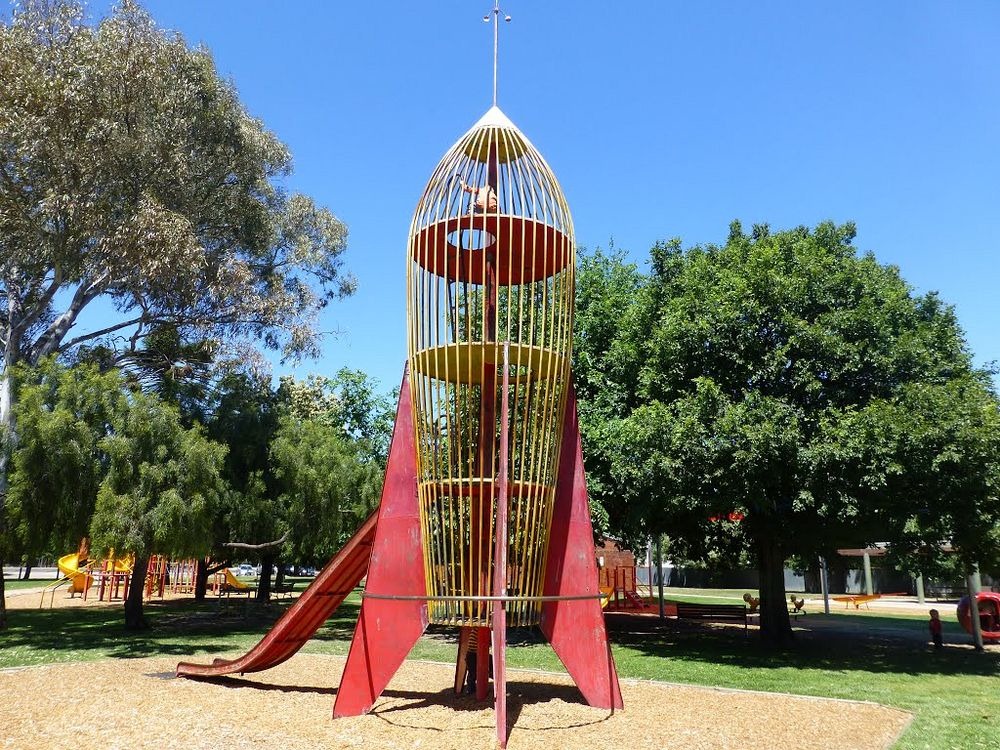
The rocket holds a special place in history. It’s an icon of technological progress that’s both revered and feared at the same time. During the sixties of the last century, the United States and the Soviet Union was gripped by the space-age fever, and the rocket emerged as the fundamental symbol of the space rivalry. Throughout America, as well as the Eastern bloc, rocket shaped structures began popping up across children playgrounds to foster curiosity and excitement about the space race among kids. Aside from rockets there were other fixture resembling various space-age equipment such as satellites, radar tower, planets and even submarines that kids can climb, swing and slide from.

rocket-playground-9

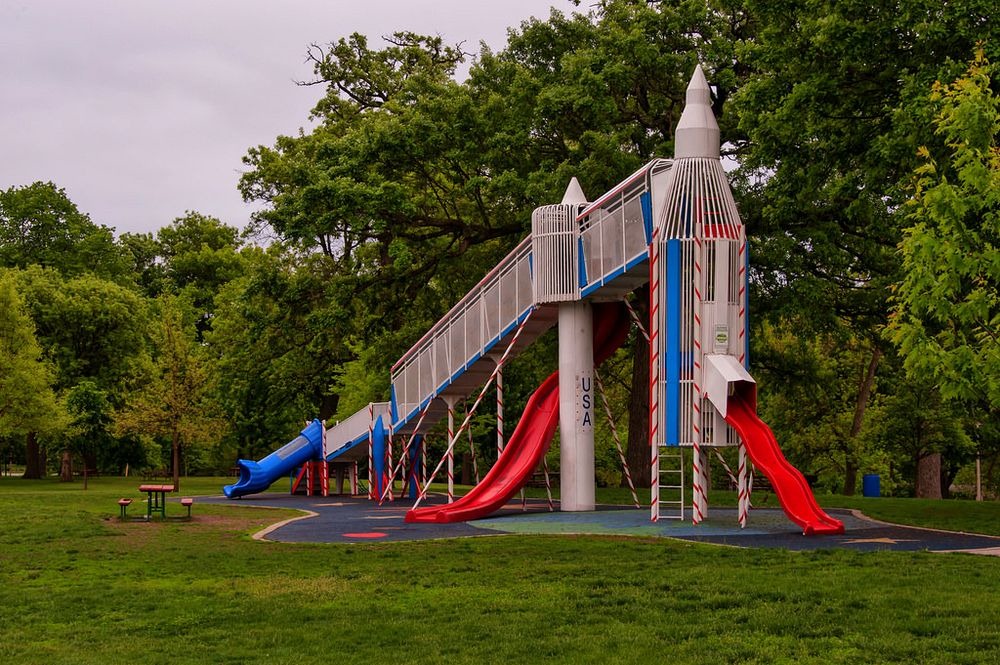
A rocket slide at a playground in Iowa, United States.

rocket-playground-11

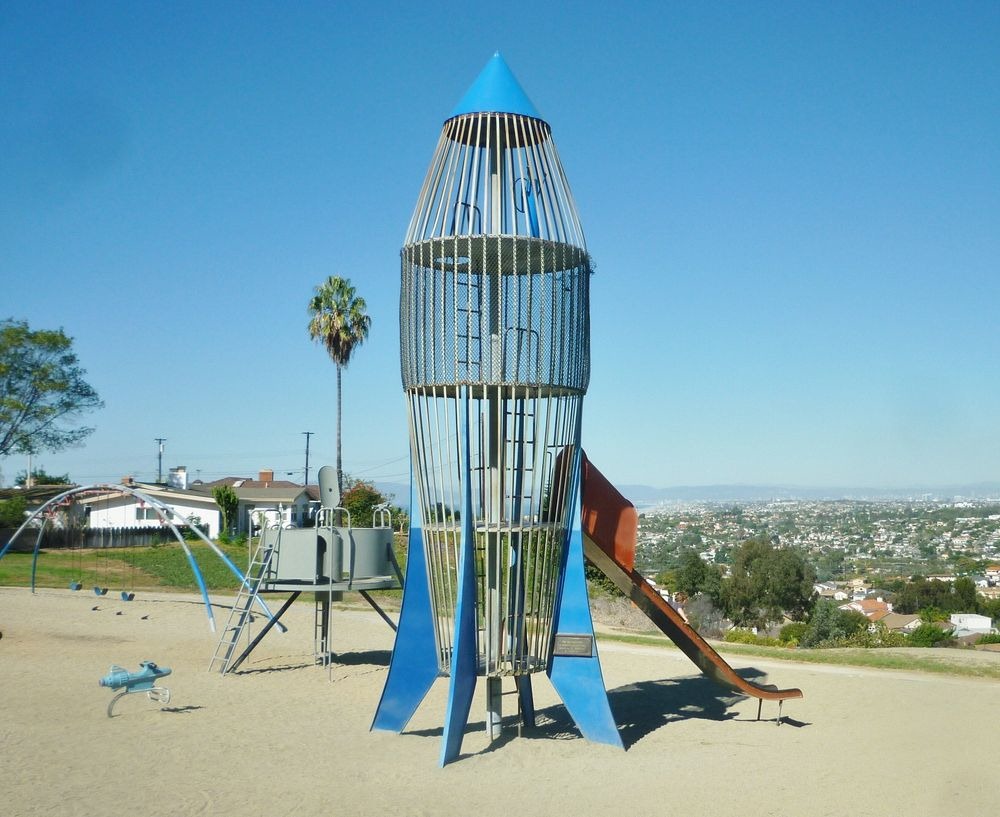
The rocket ship slide in Torrance’s Los Arboles Park, installed in 1960. Photo credit: Daily Breeze

Brenda Biondo, a freelance journalist who photographed many old playgrounds across the US, added that “the Consumer Product Safety Commission never issued requirements, just suggested guidelines. But manufacturers felt that if their equipment didn’t meet those guidelines, they’d be vulnerable to liability. Everybody went to the extreme, making everything super safe so they wouldn’t risk getting sued.”

Playgrounds across the country began retiring old equipment. The Carson playground, in Wisconsin, lost their rocket despite pleas from the public not to remove the beloved fixture.

“Of all the pieces of equipment, the rocket had the most memories associated with it … a lot of the play value went away with the new guidelines,” laments Phil Johnson, the Superintendent of Parks & Recreation.

But lower heights and softer landing haven’t made playgrounds any safer. On the contrary, injuries seems to have risen. As David Ball, a professor of risk management at Middlesex University in London, explains, when playground equipment was higher and had asphalt instead of sand or rubber, kids knew they had to be careful and learned to assess risks. Nowadays, with everything lower and presumably safer, children and parents believe they are in an environment which is safer than it actually is, and take more risks leading to injuries.

old-playground-1

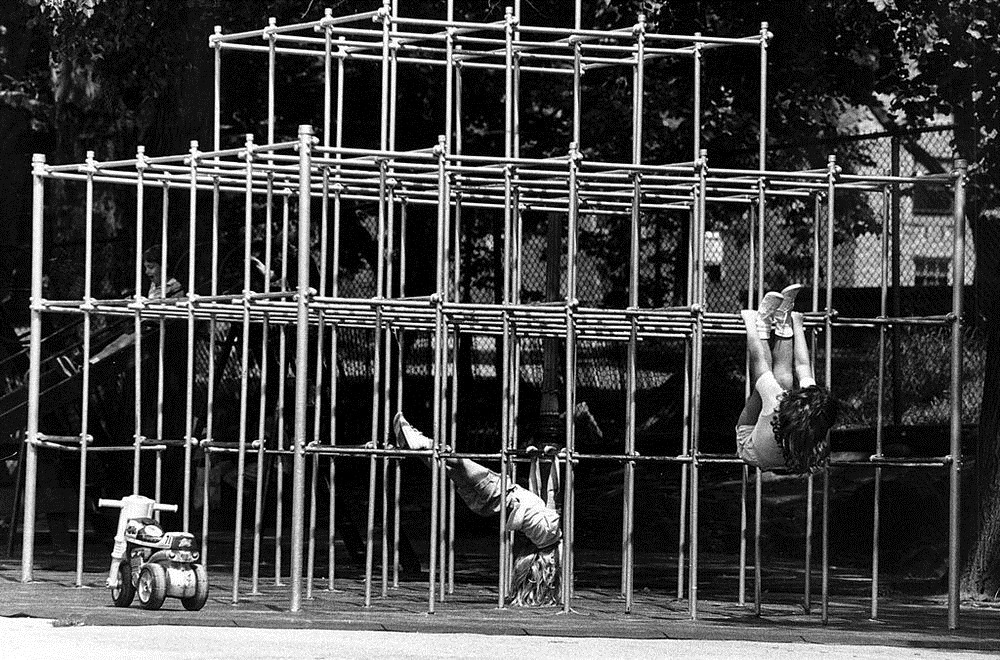
A jungle gym in Riverside Park in Manhattan, which has disappeared now. Photo credit: Dith Pran/The New York Times

old-playground-2

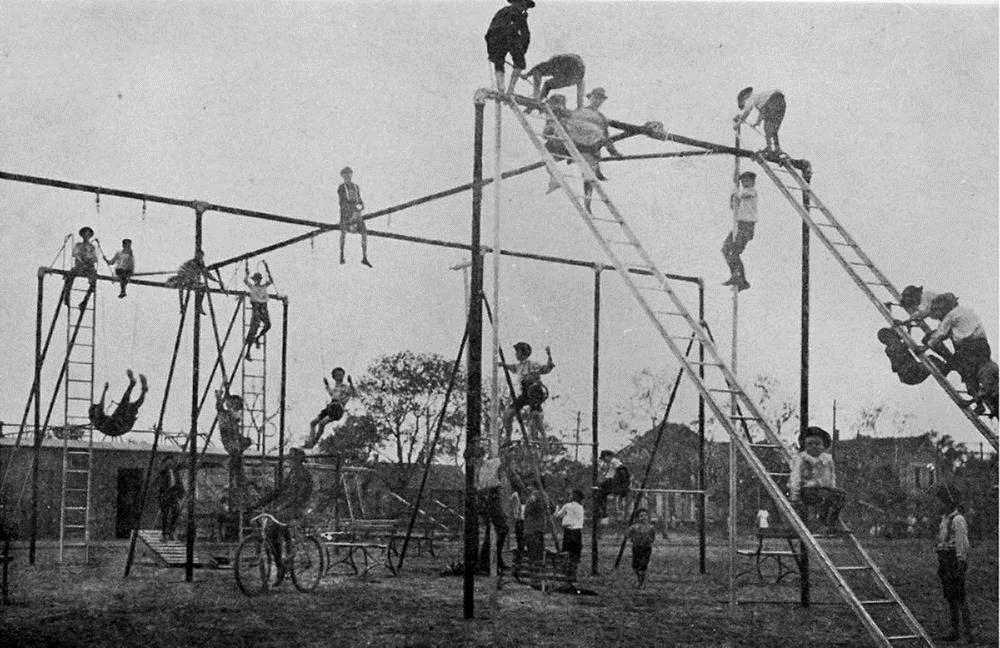
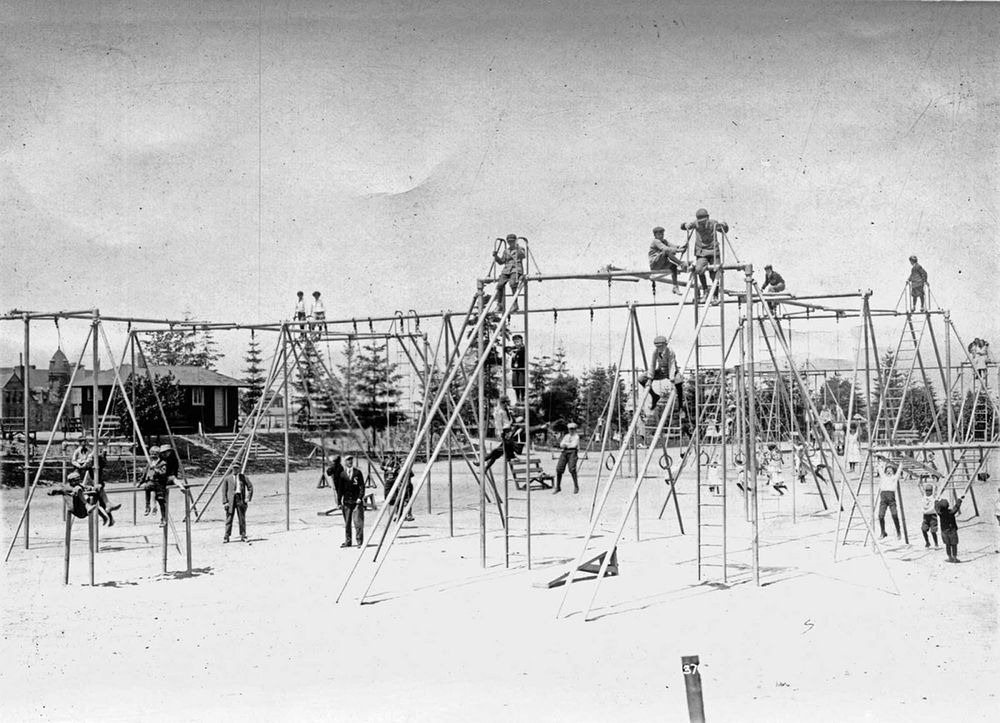
Children playing on iron pole playground equipment at Trinity Play Park, circa 1900.


old-playground-3

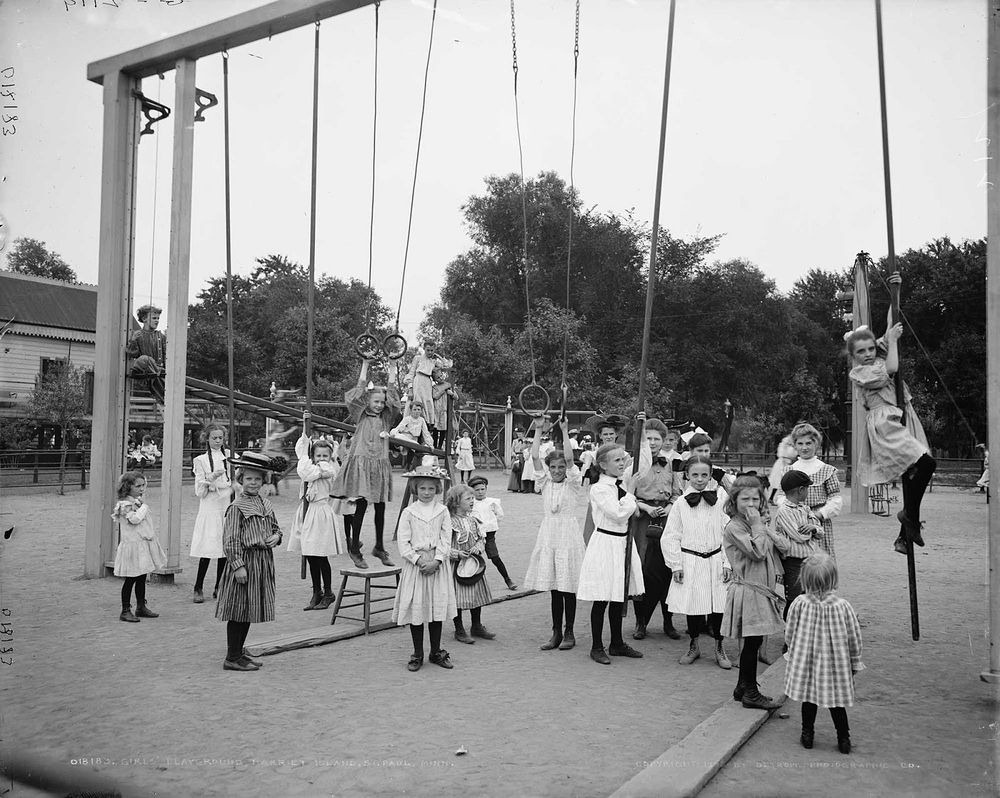
Girls’ playground, Harriet Island, St. Paul, Minn. 1905.

old-playground-4

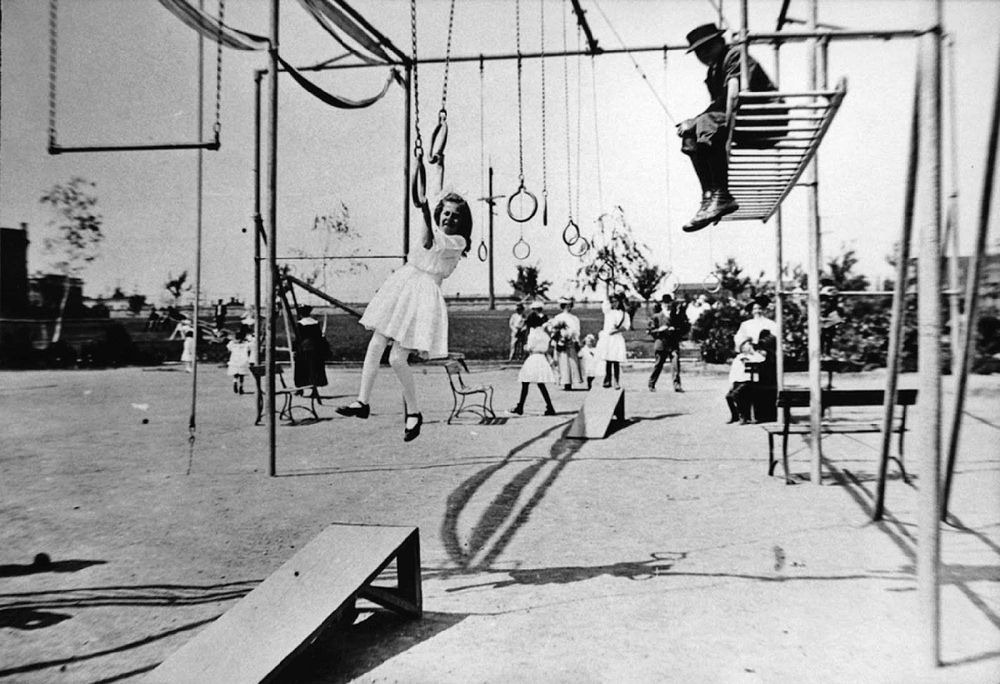
Broadway Playfield, 1910.

old-playground-5

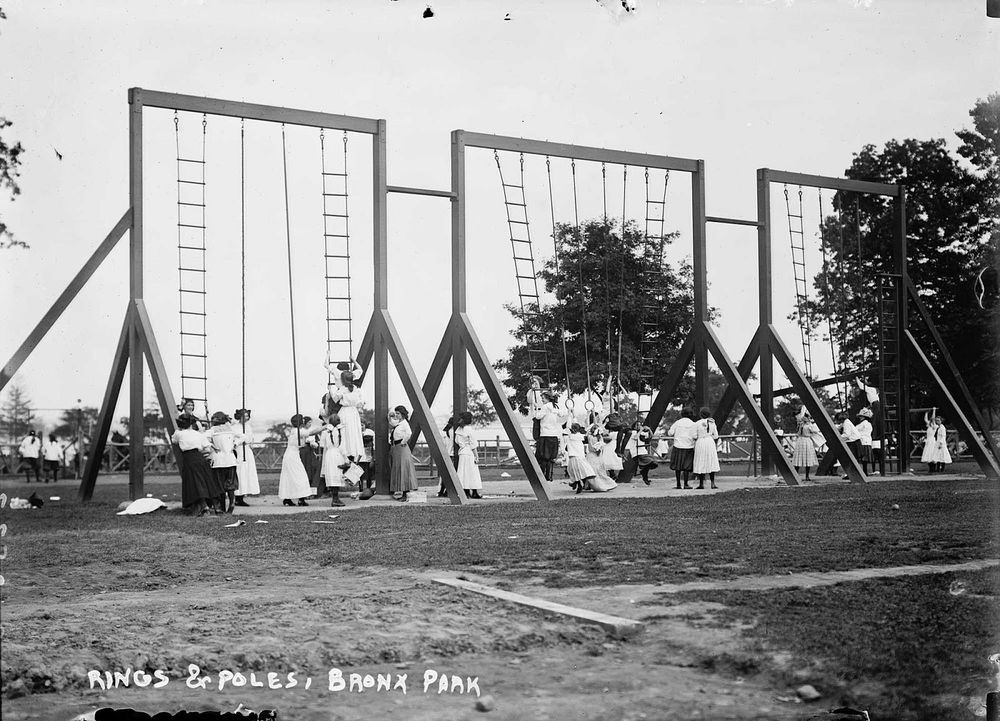
Rings and poles, Bronx Park, New York. 1911.

old-playground-6

Hiawatha Playground, 1912.

rocket-playground-1

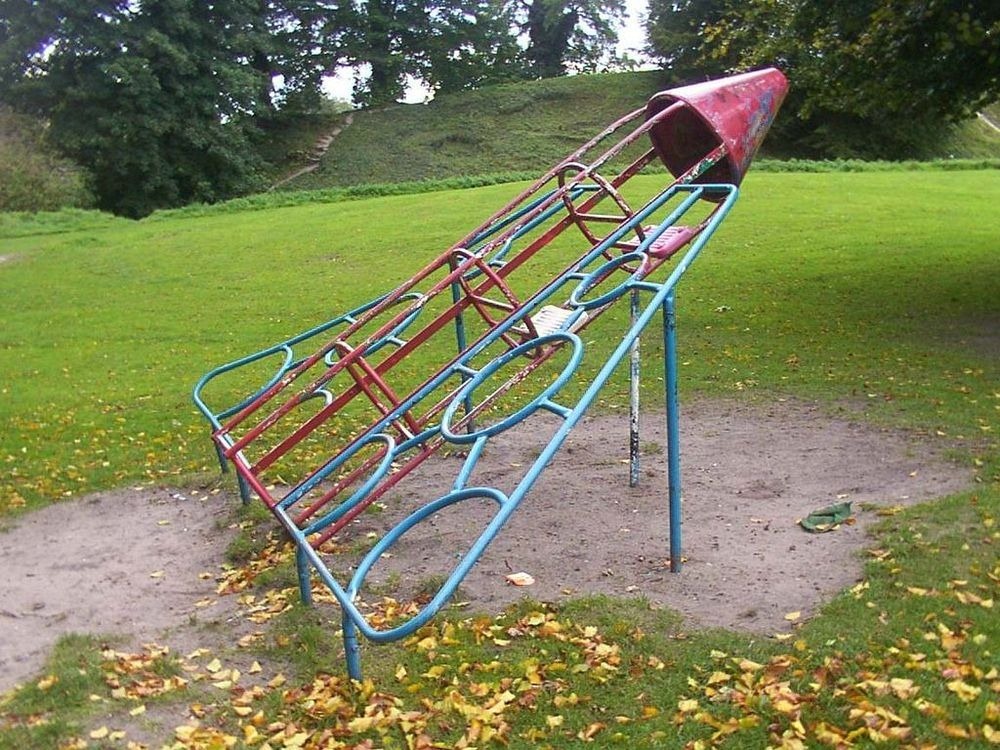
A rocket shaped playground apparatus in Thetford, England.

rocket-playground-2

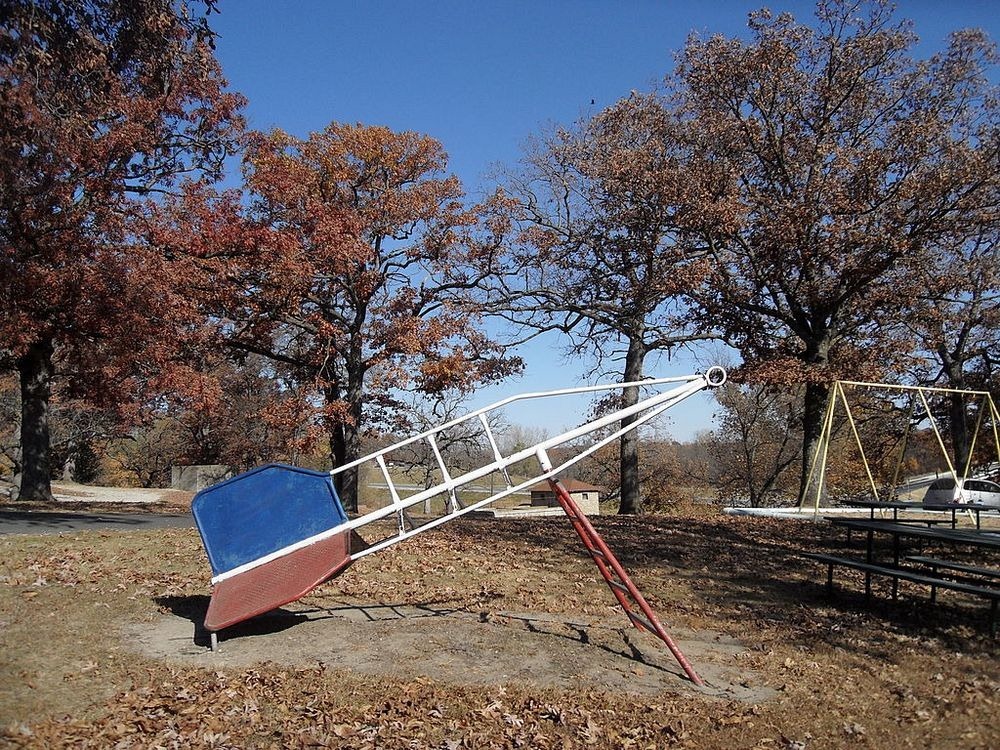
A rocket in Levy Lowry Memorial Park, Princeton, Missouri.

rocket-playground-5

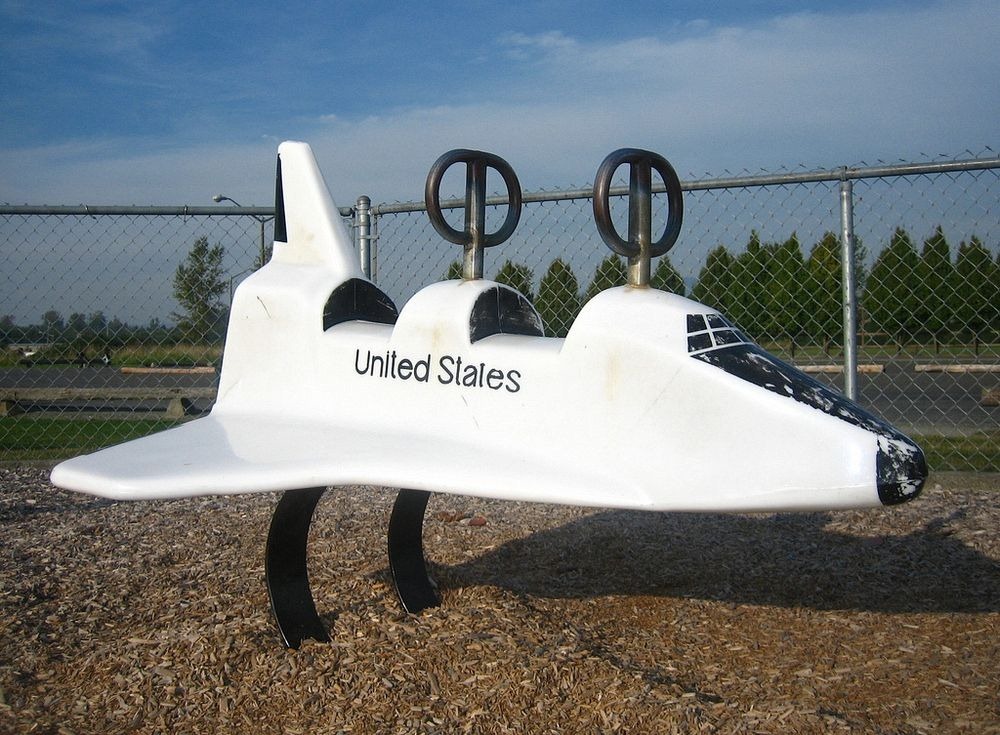
A rocket-shaped playground equipment in Bakerview Park, Mount Vernon, United States.

rocket-playground-8

A rocket slide at a playground in Chillicothe, Missouri, United States.

rocket-playground-10

A rocket slide at a playground in Glen Ellyn, Illinois, United States.

rocket-playground-4

A rocket slid at a playground in Benalla, Australia.

Amazing Photos from Space


Soyuz 23S, “Olympus” docked to the nadir side of the Space Station. This will be our ride back home to planet Earth when our work is complete here. Thought I would tweet this view out of the Cupola, as we were passing over the majestic snow-capped Caucuses. The sun rising and reflecting off the Caspian Sea. Space Photo: NASA, Astronaut Wheelock.


Western Europe


Patagonia, southern tip of South America


Egypt, Israel, Mediterranean Sea and Red Sea.


Our ‘Progress 39P’ unmanned resupply spaceship on final approach for docking. It was laden with food, fuel, spare parts, and much needed supplies for our orbiting outpost. The greatest gift was just inside the hatch…some bags of fresh fruit and vegetables. Such a wonderful treat after 3 months of eating out of tubes and plastic pouches.


Ayers Rock now known as Uluru, Australia.  This beast is 2.2 miles long and 1.4 miles wide.

 

The ‘Cupola’, attached to the nadir side of the Space Station, gives a panoramic view of our beautiful planet. Cosmonaut Fyodor took this picture from the window of the Russian Docking Compartment (Airlock). Here I am in the Cupola preparing a camera for our late evening Hurricane Earl flyover…trying to capture the moment.

How the World’s Largest Signature Is Used by NASA to Analyze Satellite Imagery

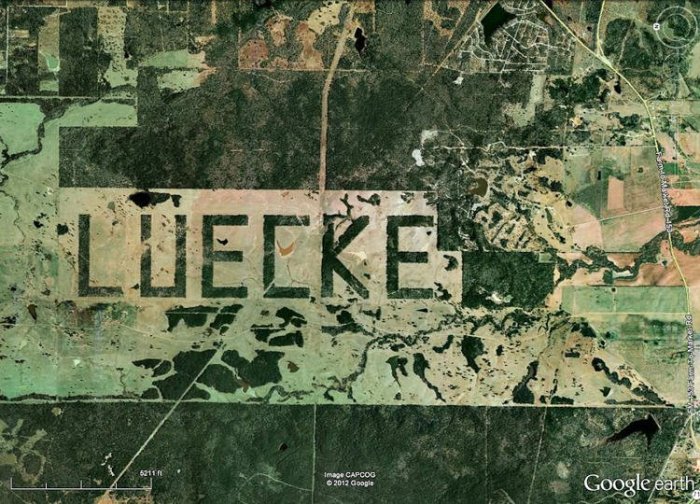
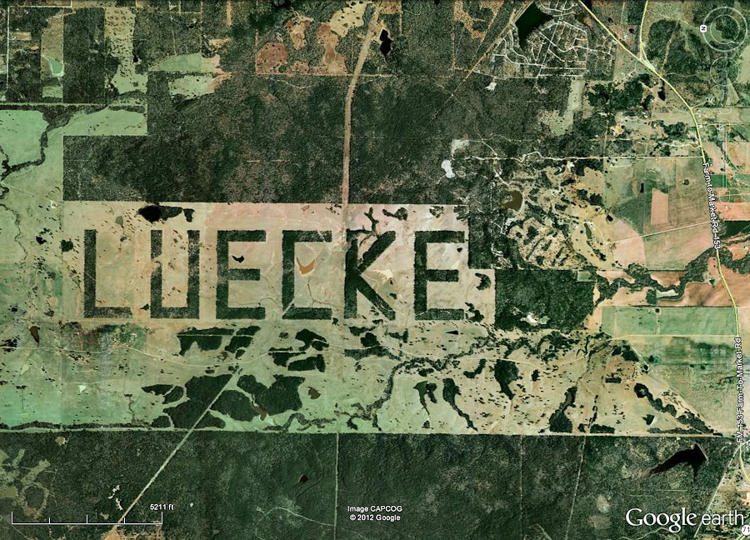
In the late 1990’s, when a Texas farmer decided to clear up some new grazing land for his cattle by leaving up just enough trees to spell his name in giant letters, he probably never imagined that his signature would one day be used by NASA to evaluate the quality of their satellite cameras.

Jimmie Luecke was a young Texas state trooper who left the highway patrol in 1980 to try his luck in the oil business. He was lucky enough to do so during the chalk oil boom, became a millionaire, and invested most of his profits in land outside the town of Smithville. He started raising cattle on it, and by the late 1990’s his heard had gotten so large that he needed to clear up some more of his land of trees for grazing. Only he didn’t just settle for bulldozing all the trees, he decided to write his name in the process, thus creating the world’s largest signature.

Photo: Google Earth

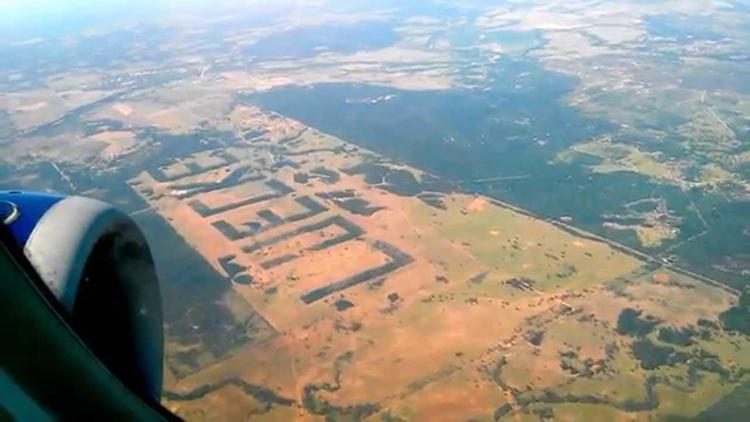
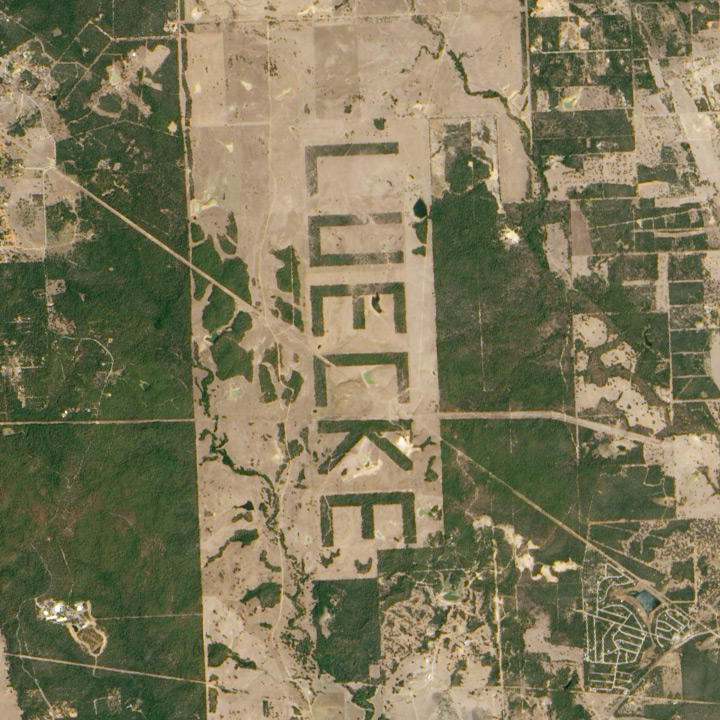
The name LUECKE, written out with trees, stretches about three miles on a plot of land near Buescher State Park, outside of Smithville. Each letter measures thousands of feet high, and there’s no doubt that Jimmie Luecke signed his name on his land out of simple egocentrism, but today his signature actually serves a purpose. A few years back, NASA revealed that the LUECKE signature provides a perfect target for astronauts “to estimate the maximum resolution of cameras aboard the space shuttle”. The strips of trees making up the letters also prevent soil erosion, although they don’t necessarily have to be shaped like letters that happen to spell out the land owner’s name…

Luecke Farm is located directly along major flight paths, including most westbound flights out of Houston, which makes the world’s largest signature a very popular sight for people flying over it. And with the rise of Instagram, I wouldn’t be surprised if some people got on a plane just so they could snap a picture of Jimmy Luecke’s creation.

Mysterious radio signal from space seems to have suddenly vanished

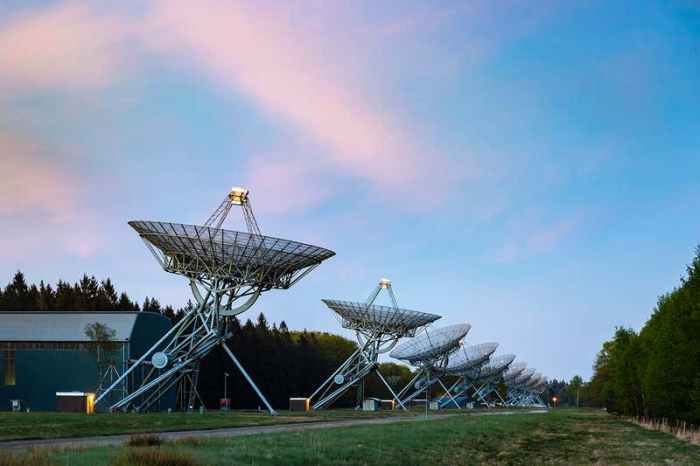
The Westerbork Synthesis Radio Telescope is scanning the skies

Strange radio signals from space are still baffling astronomers with their odd behaviour. Fast radio bursts (FRBs) are powerful blasts of radio waves that last just a few milliseconds. Some of these bursts have been seen to repeat, flickering on and off many times from the same point in space. They carry a huge amount of energy, but we don’t know what causes them.

The first repeating FRB, called FRB 121102 or R1, was discovered in 2012 and later traced to its host galaxy, a dwarf galaxy about three billion light years away. The second, nicknamed R2, wasn’t found until 2018.

Leon Oostrum at the Netherlands Institute for Radio Astronomy and his colleagues used the Westerbork Synthesis Radio Telescope (WSRT) in the Netherlands to watch R1 and R2 for 130 and 300 hours respectively, looking for more bursts that might help characterise them better and find R2’s host galaxy.

While they detected 30 bursts from R1, they didn’t see any from R2. The simplest explanation is that R2 isn’t detectable in the wavelengths at which WSRT observes, which are different from those used by the telescope which discovered it. It would be as if this FRB emits relatively red light, but WSRT can only see blue.

The other possible explanation Oostrum and his colleagues suggest is that R2 could have stopped emitting bursts. However, it is more likely that the telescope can’t detect the FRB’s wavelengths or that any bursts it emitted while Oostrum and his colleagues were observing were just too dim to see, says Jason Hessels, who is also at the Netherlands Institute for Radio Astronomy but wasn’t involved in this work. “Just because you don’t see anything at this time with this telescope doesn’t mean there’s nothing to see,” he says.

Regardless, it shows R1 and R2 are very different from one another. “If the two were similar, we should have seen that second repeater easily, and we didn’t,” says Oostrum. “They could be very different in how bright they are, how often they repeat, and basically any other parameters as well.”

They could also be in very different galaxies, as evidenced by new findings from a separate group led by Hessels. It traced a different repeating FRB called FRB 180916.J0158+65 to its host galaxy, only the fifth time any FRB has been tracked back and only the second repeater to be pinned down in this way.

Its galaxy is completely different from R1’s galaxy. It is a spiral more like our Milky Way instead of an irregularly-shaped dwarf galaxy. Its environment is also far less extreme, making some of the explanations for FRBs that came from analysis of R1 seem less likely.

“We’re in the situation where either a successful theory has to explain that diversity or we have to start thinking seriously about there being multiple different types of sources for FRBs,” says Hessels. If FRBs aren’t all the same but instead result from a variety of different types of events, that could explain why they all seem so different.

FRB 180916.J0158+65 is about six times closer to Earth than R1, so we will be able to observe it in more detail, and the next generation of huge telescopes should help explain FRBs too. “The main goal in the end is to find out what these things are, but for now, the more information we have, the more questions we have,” says Oostrum.

Really Cool Spacewalk

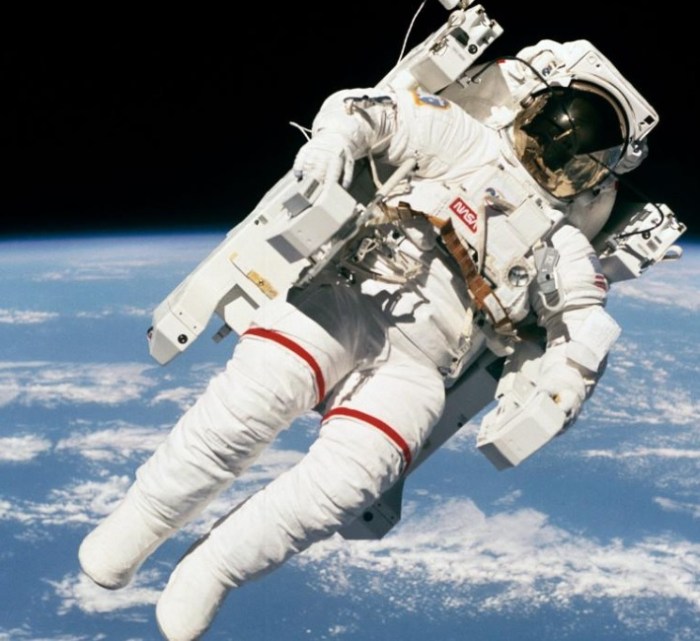
On February 7, 1984, Bruce McCandless became the first human to float free from any earthly anchor when he stepped out of the space shuttle Challenger and flew away from the ship. In a still-startling NASA image from that mission, untethered McCandless hangs 320 feet from Challenger, suspended above our impossibly blue planet and appearing paradoxically powerful and fragile against the yawning vastness of the cosmos.


But McCandless’s most memorable spacewalks, immortalized by a photo taken later during the mission, took place on his very first spaceflight. He’d been asked to test a new 300-pound Manned Maneuvering Unit, or MMU, which is basically a nitrogen-powered jetpack that allows astronauts to twist and turn through space as George Clooney’s character did in the movie Gravity. But this was no feature film, and to say that people were nervous about an unrecoverable malfunction is no overstatement.

Crappy Days in the International Space Station

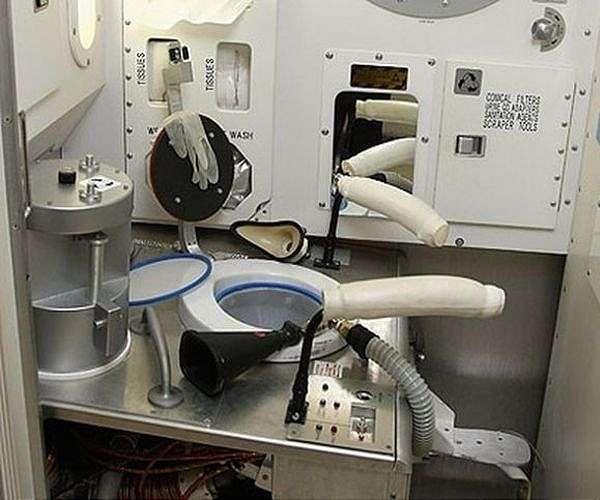
All toilets at ISS Break Down, astronauts forced to use ‘diapers’

None of the toilets at the International Space Station (ISS) are working, astronauts have to use “diapers”, a NASA translation suggested Wednesday.

There are two toilets at the ISS, both Russian-made – one in the US module and another one in the Russian one.

In addition, there are toilets in Soyuz ships docked at the station but they are used when the ship is in flight and only rarely when it is docked.

According to ISS commander Luca Parmitano, the toilet in the US section constantly signals that it is not working, while the one in the Russian module is filled to the maximum.

Later on, an engineer of Space Center Houston told ISS Commander Luca Parmitano that a toilet in the US module was operational again.