





All the activities done by two astronauts is done by one. To make the craft lighter, the LK only fits the one cosmonaut, who was supposed to peer through a tiny window on the side of the craft to land it. After landing the vehicle the pod separates from the landing gear, as with the Apollo Lunar Module, but uses the same engine for landing as it does for take off as another weight savings.
The L2 Lunar Orbit Module designed to transport the LK into orbit around the moon was similarly stripped down. There’s no internal connection between the two craft so the cosmonaut had to space walk outside to get into the LK and head towards the surface. When the LK rejoined the L2 for the return trip home, the now likely exhausted cosmonaut would then climb back out into the abyss of space. The LK would then be thrown away.


There were numerous political, scientific and financial reasons why the Soviets didn’t make it to the moon first, including a space agency with split priorities and therefore not single-mindedly dedicated to this goal. Neil Armstrong walked on the moon first on July 20, 1969, besting the Russians, who were still planning to visit the moon in the upcoming years.
They had the equipment, but they didn’t have the rockets.
Getting to the moon requires launching a command module and a lander. Both are heavy objects and require massive amounts of thrust to get into orbit. The Soviet’s planned to use their N-1 rocket, but two failed launches in 1971 and 1972 destroyed dummy landing and control modules, as well as the rockets themselves, and led to the program being shelved for lack of a proper launch vehicle.
The LK was sent into space for numerous test missions. The first two unmanned flights were successful tests of the vehicle through a simulated orbit. The third flight ended when the N-1 rocket crashed. The fourth test in 1971 was a success, but years later the decaying test module started to return to Earth with a trajectory that would put it over the skies of Australia.
NASA explains in a report on the Soviet space program how they had to convince the Australians it wasn’t a nuclear satellite:
To allay fears of a nuclear catastrophe, representatives of the Soviet Foreign Ministry in Australia admitted that Cosmos 434 was an “experiment unit of a lunar cabin,” or lunar lander
Eventually, the program was deemed too expensive and unnecessary in light of the NASA success. The Soviets moved onto building space labs, successfully, and the remaining parts of the lunar program were destroyed or dispersed, including this amazing collection of parts hidden in the back of the Moscow Aviation Institute.


Some interesting photos showing tracks from the moon landings. It is amazing that there were six manned landings from 1969 to 1972 when state of the art Apollo NASA computers were less powerful than today’s smart phones.
(CBS/AP)
WASHINGTON – A robotic spaceship circling the moon has snapped the sharpest photos ever of the tracks and trash left by Apollo astronauts in visits from 1969 to 1972.
NASA’s Lunar Reconnaissance Orbiter got close enough to see the astronauts’ path when they walked on the moon. The photos also show ruts left by a moon buggy and even backpacks pitched out of the lunar landers before the U.S. visitors returned to Earth.

Tracks left by astronauts Alan Shepard and Edgar Mitchell on both Apollo 14 moon walks (Credit: NASA)
The photos were taken two weeks ago from 13 to 15 miles above the moon’s surface and show the landing sites for Apollo 12, 14 and 17. These photos offer a sharper look that more clearly distinguishes man-made objects from moon rocks.
The closest images are of the Apollo 17 site from 1972, the moon visit.
“The images look very spectacular, as you can see for yourself,” Mark Robinson, an Arizona State University, Tempe scientist, who is the principal investigator of LRO’s camera, told reporters at a news briefing.

Tracks made in 1969 by Apollo 12 astronauts Pete Conrad and Alan Bean, the third and fourth humans to walk on the moon (Credit: NASA)
“From a science standpoint, [the images] are important for two reasons,” Robinson said. “They tell us something about the photometric properties of the moon – why are they darker? Scientists are working to investigate that question. In a more practical sense, it allows us to find the exact spot where samples were collected.”
However, he was less optimistic about finding remains of the flags left behind by various Apollo moon missions, saying that the banners would have fared poorly against a combination of the moon’s extremes of hot and cold, not to mention constant ultraviolet radiation.
“If the flags are still there, they’re probably in pretty rough shape,” he said. The pictures were taken two weeks ago and show the landing sites for Apollo 12, 14 and 17. The closest images are of the 1972 Apollo 17 site, the last moon mission.

Paths left by astronauts and moon buggies in 1972 Apollo 17 mission (AP/NASA)
Apollo 17 Commander Eugene Cernan wrote in an email to The Associated Press that the photo gives him a chance to revisit those days, “this time with a little nostalgia and disappointment. Nostalgia because those special days are fondly etched in my memory and disappointment because it looks like now we will not be going back within the days I have left on this planet.”
Two years ago, images from the same spacecraft from 30 and 60 miles out showed fuzzier images. But this year the orbiter dipped down to take about 300,000 more close-ups. The trails left by the astronauts are clear, but the places where backpacks were discarded, Apollo 17’s moon buggy, and the bottom parts of the three lunar landers are blurry.
“You have to really look at it for a long time to figure out what you’re looking at,” Robinson said. For example, when it comes to the moon buggy he said, “if you squint really hard you can resolve the wheels and that the wheels are slightly turned to the left.”
At first, scientists thought they had a bit of a mystery: They saw more stuff than they expected. It turned out to be packing material and an insulation blanket, Robinson said.
After 40 years there does not seem to be much moon dust covering the manmade trails. It probably will take about 10 million to 100 million years for dust to cover them, Robinson said.
The photos were released a few days after the debut of the new fictional movie “Apollo 18” and before Thursday’s planned launch of NASA’s twin robotic spaceships to explore the moon’s gravity.

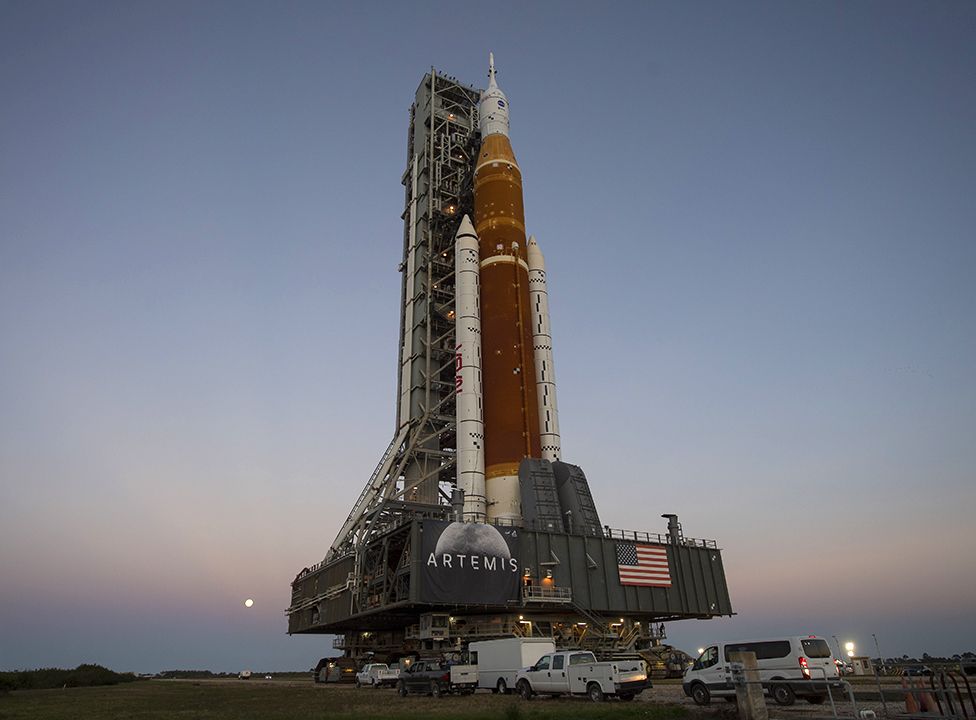
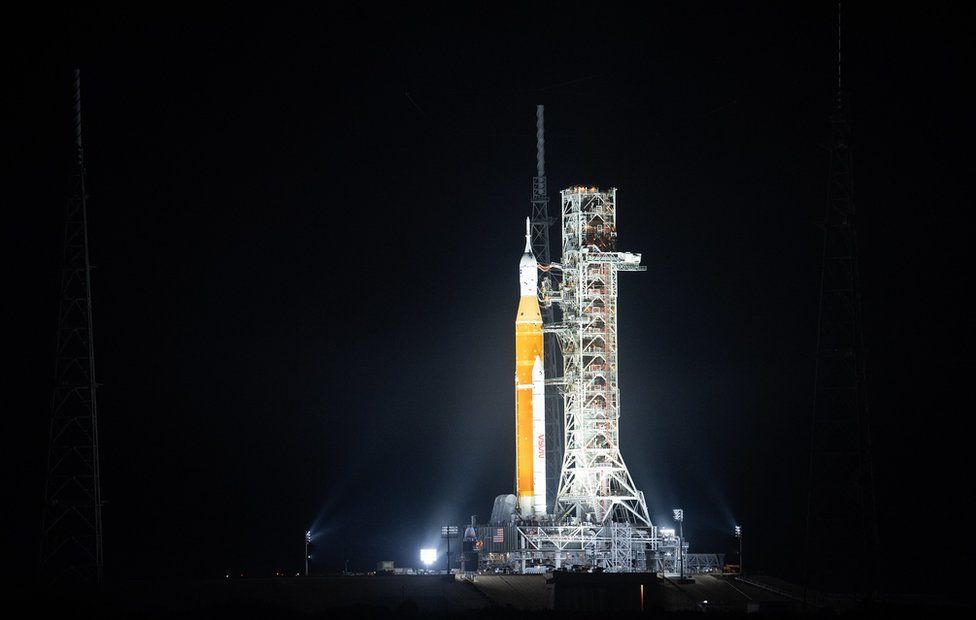
The American space agency has rolled out its new giant Moon rocket for the first time.
The vehicle, known as the Space Launch System (SLS), was taken to Pad 39B at the Kennedy Space Center in Florida to conduct a dummy countdown.
If that goes well, the rocket will be declared ready for a mission in which it will send an uncrewed test capsule around the Moon.
This could happen in the next couple of months.
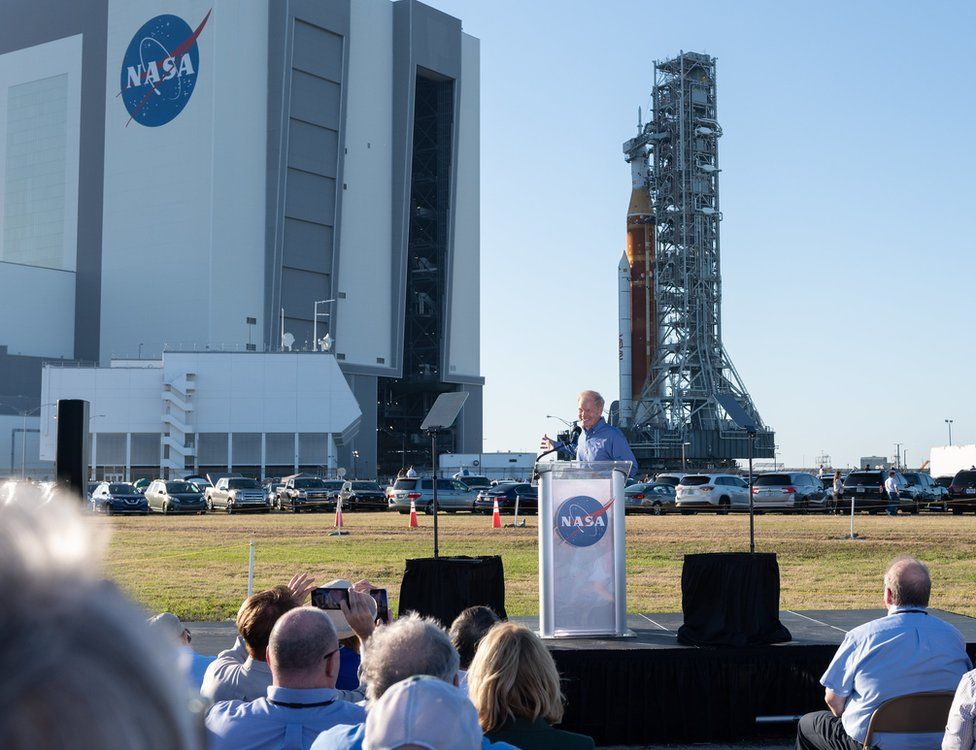 IMAGE SOURCE,NASA/KEEGAN BARBERImage caption,
Bill Nelson was a prime mover behind the rocket when he was a US Senator
Ultimately, it’s hoped astronauts would climb aboard later SLS rockets to return to the Moon’s surface sometime in the second half of this decade.
These missions are part of what Nasa calls its Artemis programme.
Watching the roll-out, agency administrator Bill Nelson said we were entering a golden era of human space exploration.
“The Artemis generation is preparing to reach new frontiers,” he told the spectator crowds gathered at Kennedy.
“This generation will return astronauts to the Moon and this time, we will land the first woman and the first person of colour on the surface, to conduct ground-breaking science.
“Nasa’s Artemis programme will pave the way for humanity’s giant leap (to) future missions to Mars.”
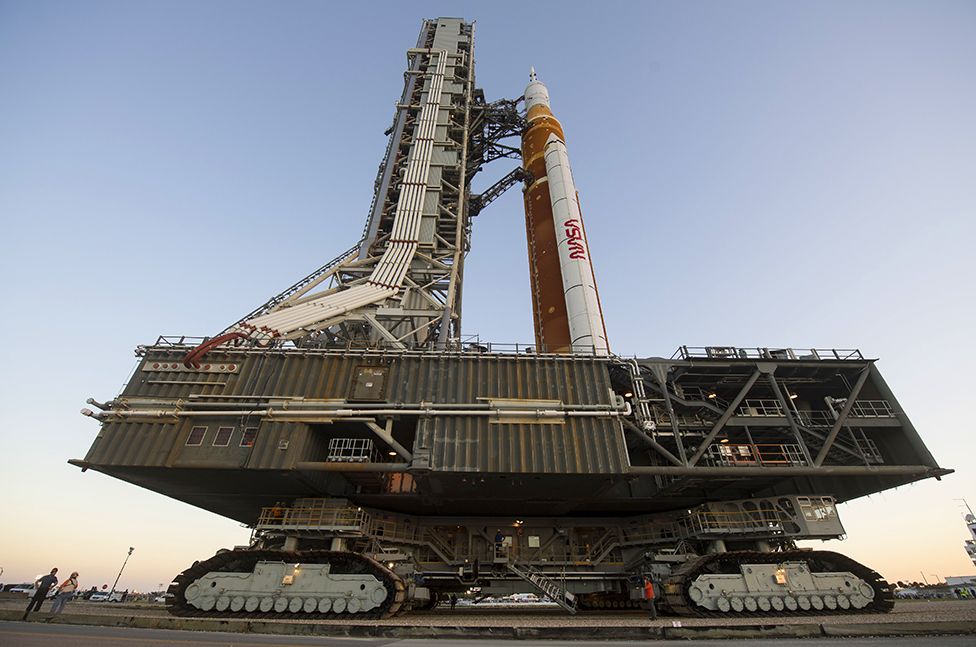
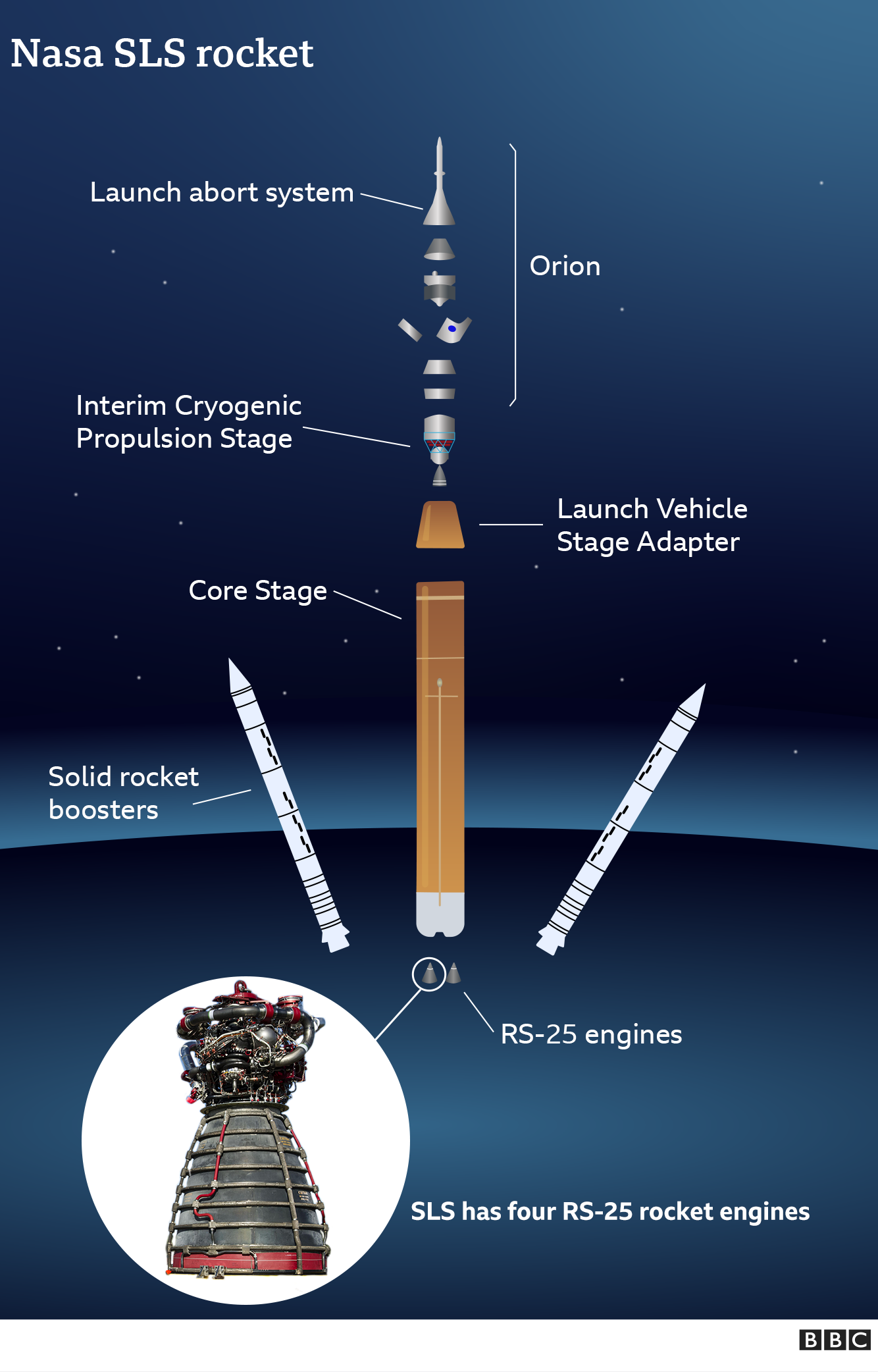
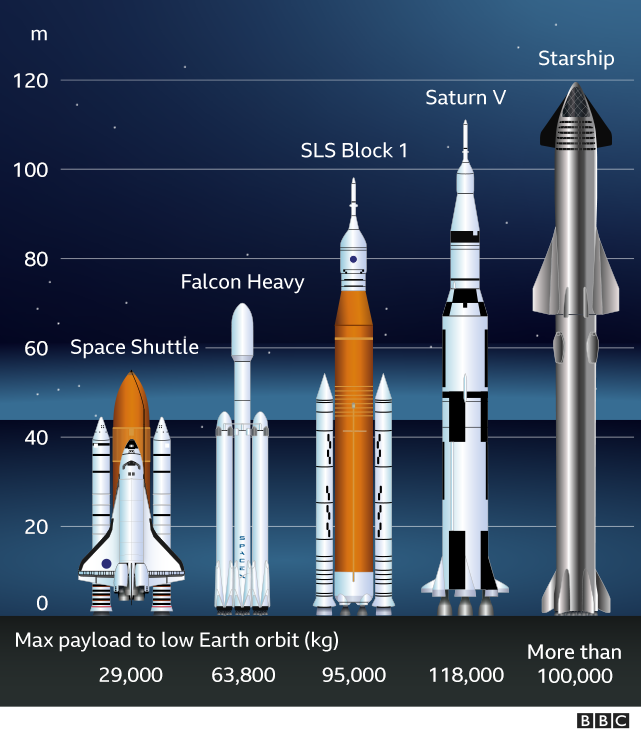
SLS is a colossus. A touch under 100m in height, it was designed to be more powerful than the Apollo Saturn vehicles of the late 1960s and early 1970s.
It will have the thrust to not only send astronauts far beyond Earth but additionally so much equipment and cargo that those crews could stay away for extended periods.
Thursday’s rollout from Kennedy’s Vehicle Assembly Building (VAB) is the rocket’s debut in the sense that it’s the very first time everyone has got to see all its different elements fully stacked together.
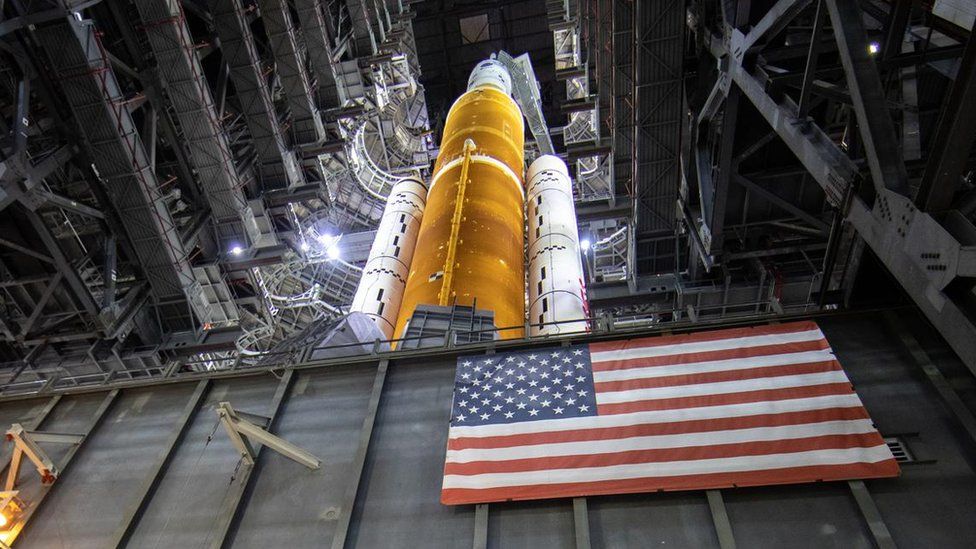
The SLS move from the VAB began 17:47 local Florida time.
The rocket came out attached to a support gantry known as the Mobile Launcher. This structure, which is itself 120m high and weighs 5,000 tonnes, was sitting atop the same mammoth tractor that used to move the Saturn Vs back in the day, and later the space shuttles.
The Crawler Transporter goes very slowly, with a cruising speed of just over 1km/h (under 1mph). And after engineers had stopped and started the tractor for various checks, it was 04:15 on Friday morning by the time the procession had reached Pad 39B. A total journey distance of 6.75km.
SLS will now be prepared for a “wet dress rehearsal”, likely to occur on 3 April.
This will see the rocket loaded with propellants and taken through a practice countdown all the way to a mere 9.4 seconds from the moment of lift-off. The “scrub” point is just before they would normally light the four big shuttle-era engines under the rocket.
Assuming everything proceeds to the satisfaction of the engineers, Nasa will then be able to set a flight date.
The end of May remains a possibility, but more likely it will be June or July.
This mission, dubbed Artemis-1, will propel the rocket’s Orion crew capsule on a 26-day journey that includes an expanded orbit around the Moon. There will be no-one in the capsule for the test flight. This should happen on a second mission in a couple of years’ time.
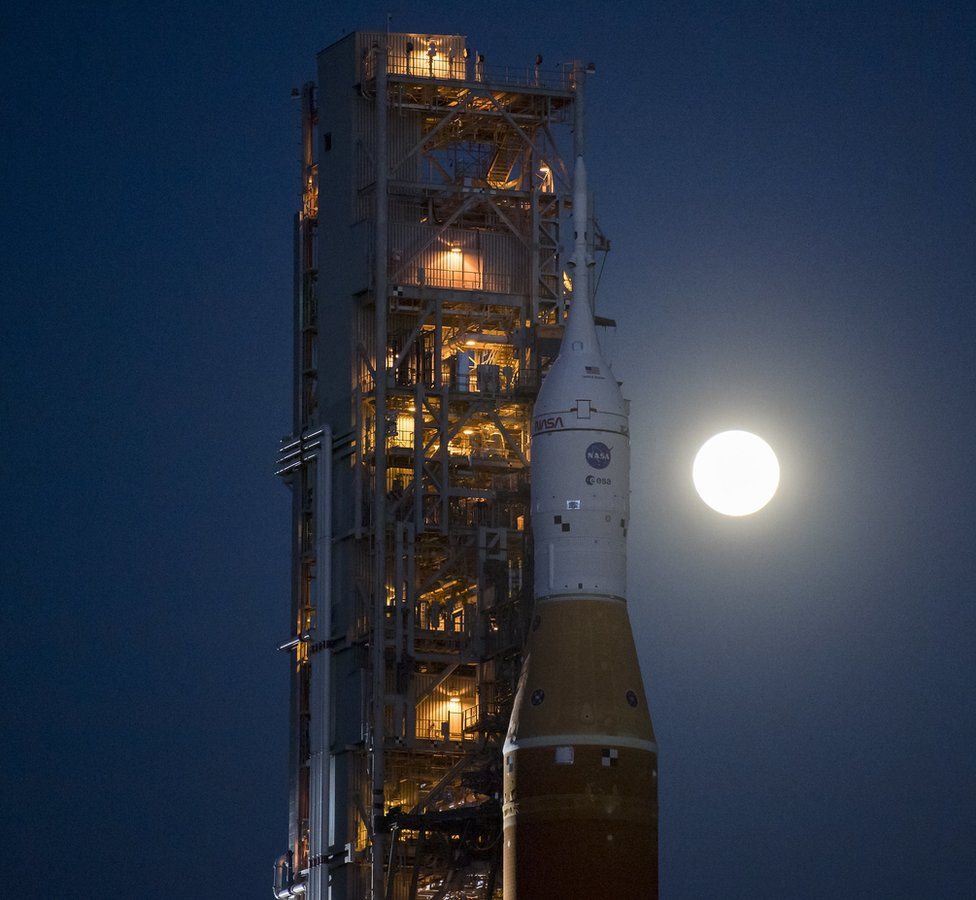 IMAGE SOURCE,NASA/AUBREY GEMIGNANIImage caption,
The Moon is the initial target, but eventually Nasa wants to get people to Mars
While Nasa is developing the SLS, the American rocket entrepreneur Elon Musk is preparing an even larger vehicle at his R&D facility in Texas.
He calls his giant rocket the Starship. Like SLS it has yet to have a maiden flight. Unlike SLS, Starship has been designed to be totally reusable and ought therefore to be considerably cheaper to operate.
A recent assessment from the Office of Inspector General, which audits Nasa programmes, found that the first four SLS missions would each cost more than $4bn to execute – a sum of money that was described as “unsustainable”.

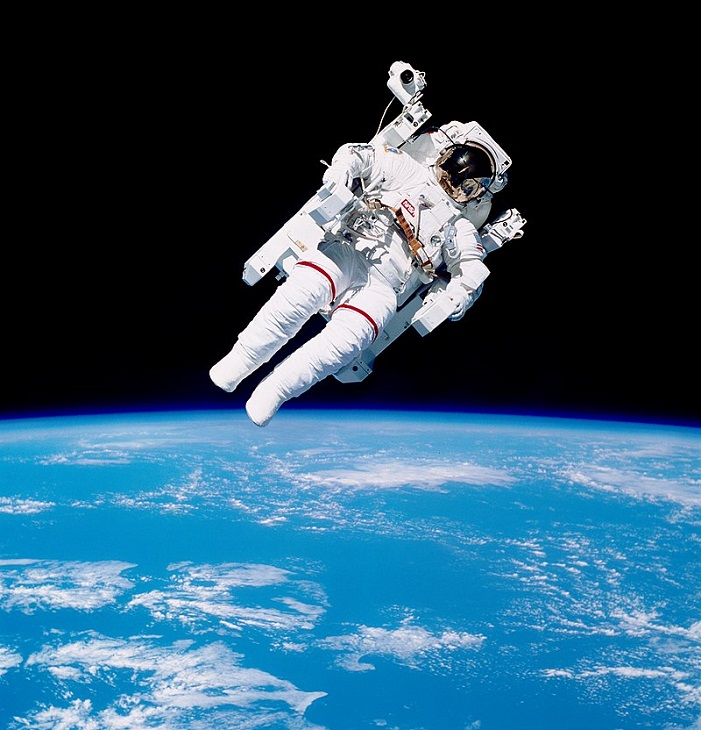
Bruce McCandless II (June 8, 1937 – December 21, 2017) was a United States Navy officer and aviator, electrical engineer, and NASA astronaut. In 1984, during the first of his two Space Shuttle missions, he completed the first untethered spacewalk by using the Manned Maneuvering Unit.
The Manned Maneuvering Unit (MMU) is an astronaut propulsion unit that was used by NASA on three Space Shuttle missions in 1984. The MMU allowed the astronauts to perform untethered extravehicular spacewalks at a distance from the shuttle. The MMU was used in practice to retrieve a pair of faulty communications satellites, Westar VI and Palapa B2. Following the third mission the unit was retired from use. A smaller successor, the Simplified Aid For EVA Rescue (SAFER), was first flown in 1994, and is intended for emergency use only.
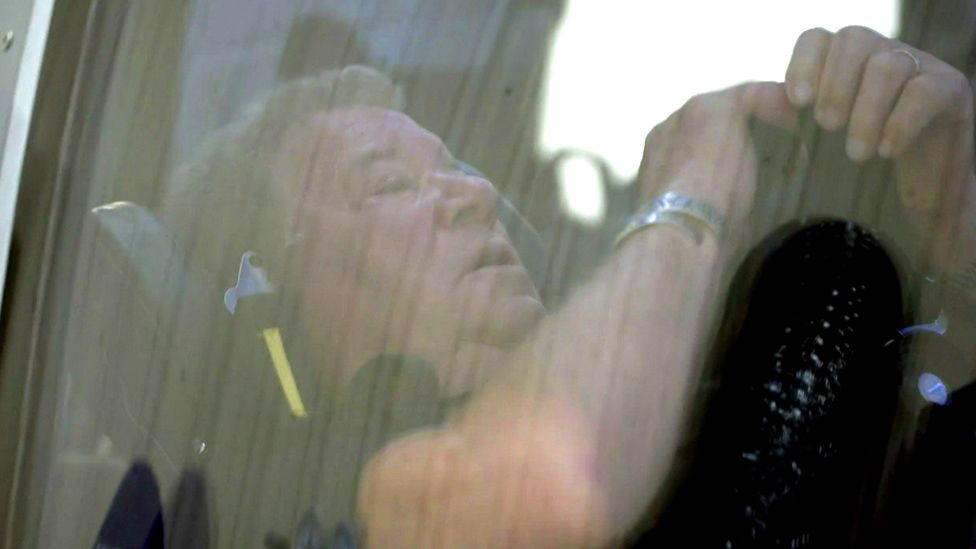
Hollywood actor William Shatner will later become the oldest person to go to space when he takes a ride in the Blue Origin sub-orbital capsule.
The 90-year-old, who played Captain James T Kirk in the Star Trek films and TV series, says he is looking forward to seeing Earth from a new perspective.
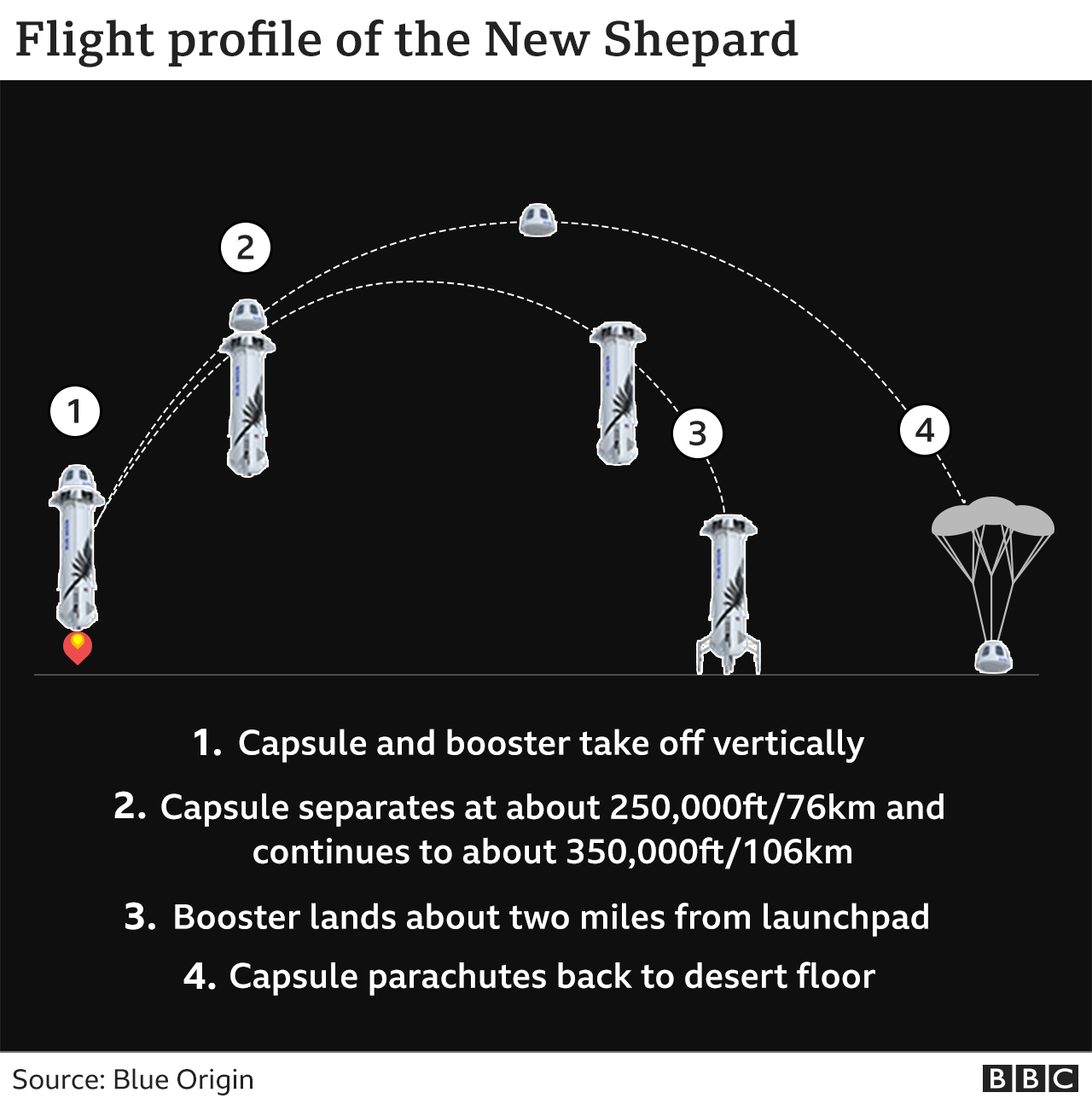
He will blast off from the Texas desert with three other individuals.
His trip aboard the rocket system, developed by Amazon.com founder Jeff Bezos, should last about 10 minutes.
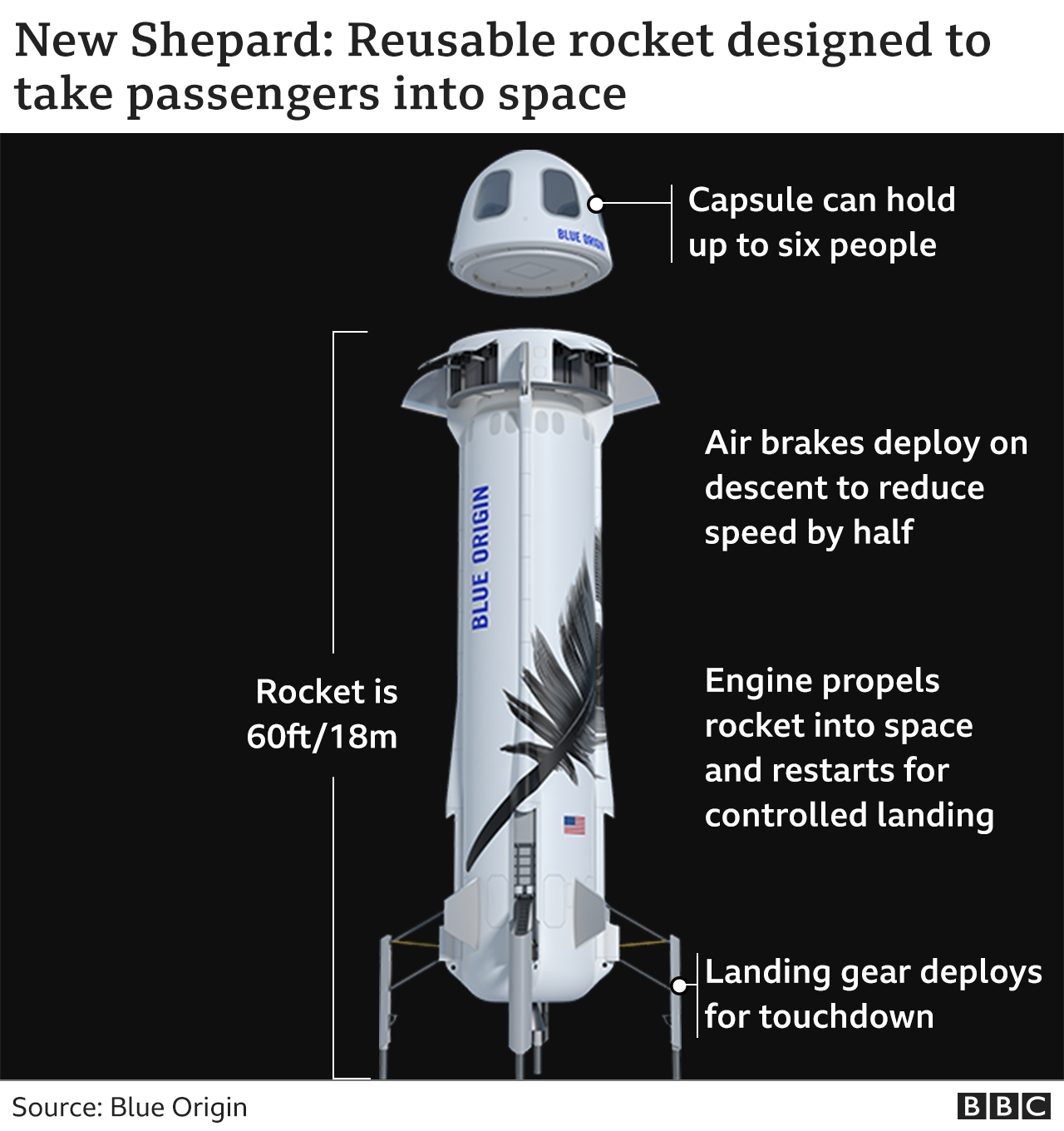
Mr Shatner will get to experience a short period of weightlessness as he climbs to a maximum altitude just above 100km (60 miles). He will also be able to see the curvature of the Earth through the capsule’s big windows.
“There is this mystique of being in space and that much closer to the stars and being weightless,” the Canadian star said.
“I shall be entranced by the view of space. I want to look at that orb and appreciate its beauty and its tenacity.”
Mr Shatner will be joined on the flight by Audrey Powers, a Blue Origin vice president; Chris Boshuizen, who co-founded the Earth-imaging satellite company Planet; and Glen de Vries, an executive with the French healthcare software corporation Dassault Systèmes.
They have been given a couple of days’ training, although there is nothing really major for them to do during the flight other than enjoy it. The rocket and capsule system, known as New Shepard, is fully automatic.
Blue Origin flight director Nicholas Patrick said the quartet did however need to know what to do in the unlikely event of an emergency, and to recognise – and not be perturbed by – the normal bumps and noises of spaceflight.
“The third thing the training does is teach the crew how to behave in Zero G; how to move around the cabin without bumping each other or kicking each other; what handholds to use; the kinds of things they can expect and their response to it,” the British-born, former Nasa astronaut explained.
This will be only the second crewed outing for New Shepard. The first, on 20 July, carried Mr Bezos, his brother Mark, Dutch teenager Oliver Daemen; and famed aviator Wally Funk.
Afterwards, Ms Funk, being 82, was able to claim the record for the oldest person in space – a title she will now now relinquish to Mr Shatner, assuming his mission passes without incident and he gets above Earth’s atmosphere.
The launch comes amid claims that Blue Origin has a toxic work culture and failed to adhere to proper safety protocols. The mostly anonymous accusations made by former and present employees have been strenuously denied.
“That just hasn’t been my experience at Blue,” countered Audrey Powers, who is responsible for mission and flight operations.
“We’re exceedingly thorough, from the earliest days up through now as we’ve started our human flights. Safety has always been our top priority.”
William Shatner may be the first person to go from Star Trek’s version of space to the real thing – but three Nasa astronauts have made the opposite journey.
Mae Jemison appeared in an episode of TV sequel Star Trek: The Next Generation, while Mike Fincke and Terry Virts turned up in the final episode of Enterprise, the Star Trek prequel series.
Also providing a link are Gene Roddenberry, the franchise creator, and James Doohan, the actor who played Montgomery “Scotty” Scott in the original 1960s series and subsequent films. Both men had their ashes sent into space.
While Mr Bezos invites some people to fly on New Shepard, he is selling other seats. And whereas his space tourism rival, Sir Richard Branson, puts a ticket price against a trip in his Virgin Galactic rocket plane, the Amazon founder does not disclose the fees paid by the likes of Mr Boshuizen and Mr de Vries.
Just adding a little bit of levity to the post:



 The MarkoZen Blog