The Super Volcano that could change everything

The supervolcano that lies beneath Yellowstone National Park in the US is far larger than was previously thought, scientists report.

A study shows that the magma chamber is about 2.5 times bigger than earlier estimates suggested.

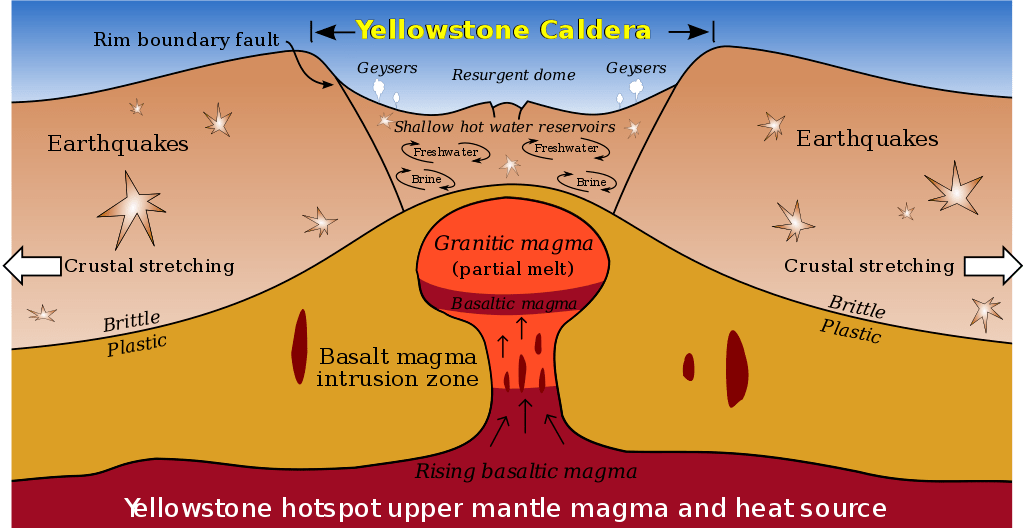
A team found the cavern stretches for more than 90km (55 miles) and contains 200-600 cubic km of molten rock.

The findings are being presented at the American Geophysical Union Fall Meeting in San Francisco.

Prof Bob Smith, from the University of Utah, said: “We’ve been working there for a long time, and we’ve always thought it would thought it would be bigger… but this finding is astounding.”

If the Yellowstone supervolcano were to blow today, the consequences would be catastrophic.

The last major eruption, which occurred 640,000 years ago, sent ash across the whole of North America, affecting the planet’s climate.

Now researchers believe they have a better idea of what lies beneath the ground.

The team used a network of seismometers that were situated around the park to map the magma chamber.

Dr Jamie Farrell, from the University of Utah, explained: “We record earthquakes in and around Yellowstone, and we measure the seismic waves as they travel through the ground.

“The waves travel slower through hot and partially molten material… with this, we can measure what’s beneath.”

volcano

The team found that the magma chamber was colossal. Reaching depths of between 2km and 15km (1 to 9 miles), the cavern was about 90km (55 miles) long and 30km (20 miles) wide.It pushed further into the north east of the park than other studies had previously shown, holding a mixture of solid and molten rock.

“To our knowledge there has been nothing mapped of that size before,” added Dr Farrell.

The researchers are using the findings to better assess the threat that the volatile giant poses.

“Yes, it is a much larger system… but I don’t think it makes the Yellowstone hazard greater,” explained Prof Bob Smith.

“But what it does tell us is more about the area to the north east of the caldera.”

He added that researchers were unsure when the supervolcano would blow again.

Some believe a massive eruption is overdue, estimating that Yellowstone’s volcano goes off every 700,000 years or so.

YellowstoneFalloutAshBed

Although fascinating, the new findings do not imply increased geologic hazards at Yellowstone, and certainly do not increase the chances of a ‘supereruption’ in the near future. Contrary to some media reports, Yellowstone is not ‘overdue’ for a supereruption.

Media reports were more hyperbolic in their coverage.

A study published in GSA Today, the monthly news and science magazine of the Geological Society of America, identified three fault zones where future eruptions are most likely to be centered. Two of those areas are associated with lava flows aged 174,000–70,000 years, and the third is a focus of present-day seismicity.

In 2017, NASA conducted a study to determine the feasibility of preventing the volcano from erupting. The results suggested that cooling the magma chamber by 35 percent would be enough to forestall such an incident. NASA proposed introducing water at high pressure 10 kilometers underground. The circulating water would release heat at the surface, possibly in a way that could be used as a geothermal power source. If enacted, the plan would cost about $3.46 billion. On the other hand, according to Brian Wilson of the Jet Propulsion Laboratory, such a project might trigger rather than prevent an eruption.

3200 Years in One Photograph at Sequoia National Park

Thankfully, no loggers took it down, nor forest fires nor earthquakes!
Just a quiet life in a California forest for all these years … 3,200!


Not every tree has a nickname, but ‘The President’ has earned it.
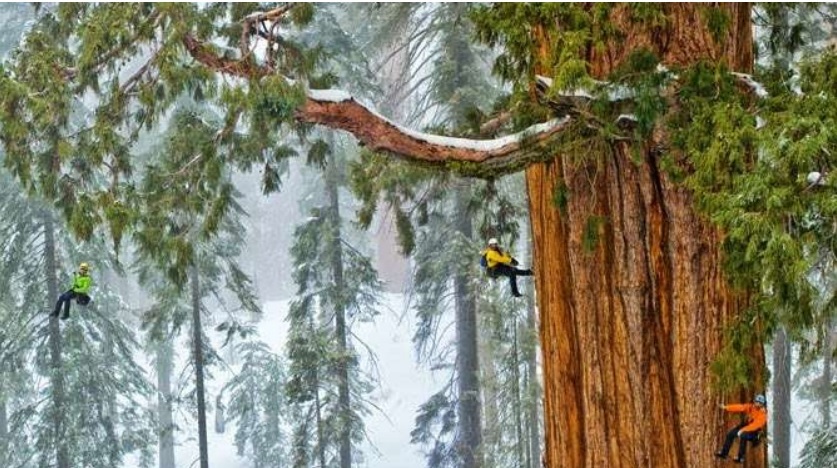
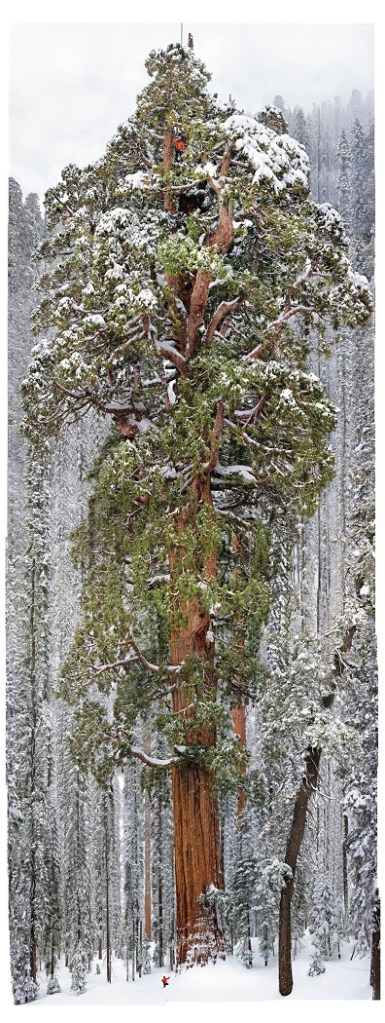
This giant sequoia stands at 247 feet tall & is estimated to be over 3,200 years old.


Imagine, this tree was already 700 years old during the height of ancient Greece’s civilization and
1200 years old when Jesus lived while Rome was well into its rule of most of the western world
and points beyond.
The trunk of The President measures 27 feet across, with 2 billion needles from base to top.

Because of its unbelievable size, this tree has never been photographed in its entirety, until now.
National Geographic photographers have worked along with scientists to try and create the first
photo that shows The President in all its glory.

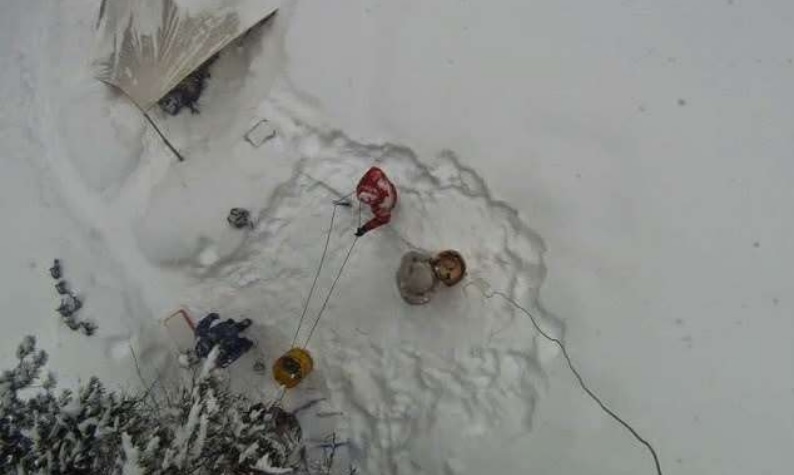
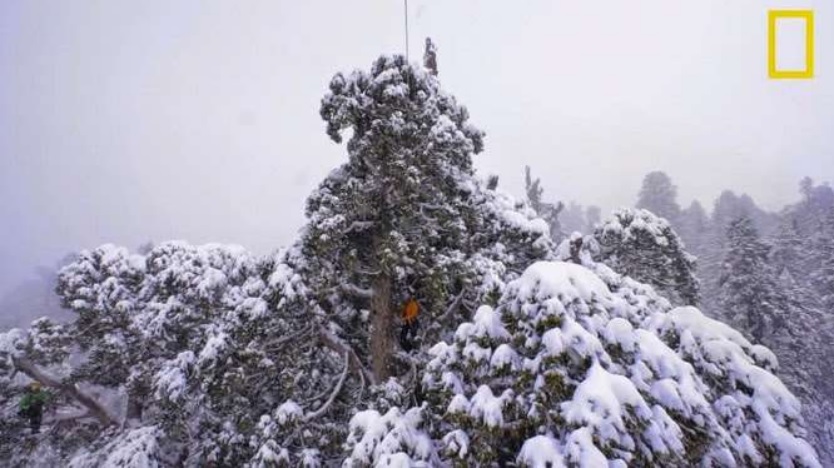
They had to climb the tree with pulleys and levers and took thousands of photos. Of those, they
selected 126 and stitched them together to get this incredible portrait of The President.

The man near the trunk of the tree is a good indicator of the tree’s size – Incredible, isn’t it?
Did you notice the man near the top of the tree?

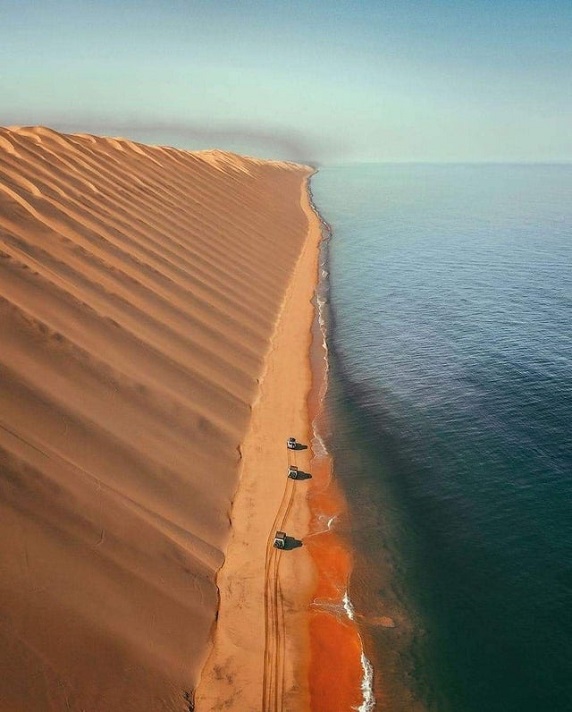
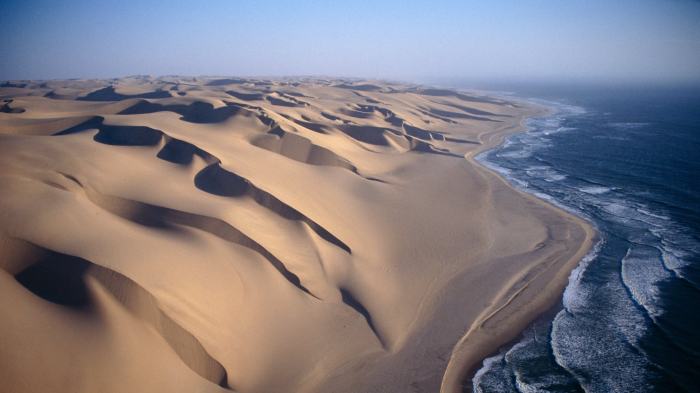
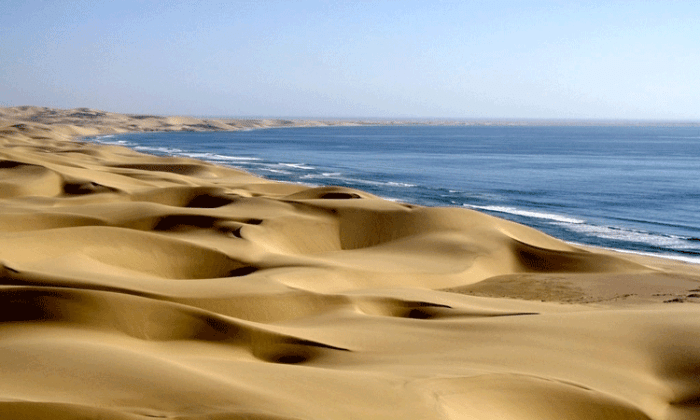
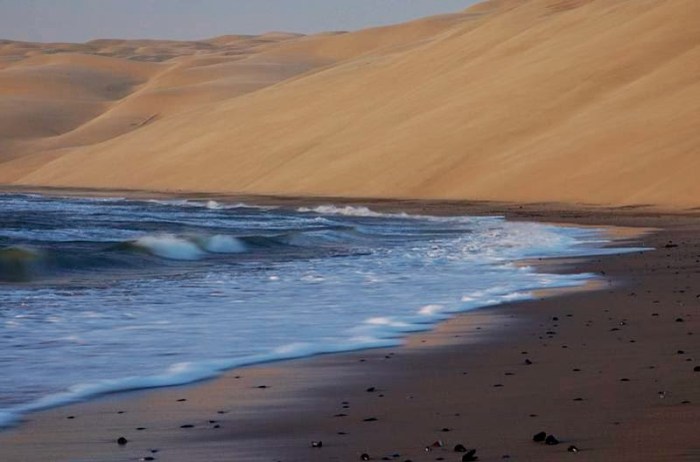
Now This is a Beach

namib.jpg

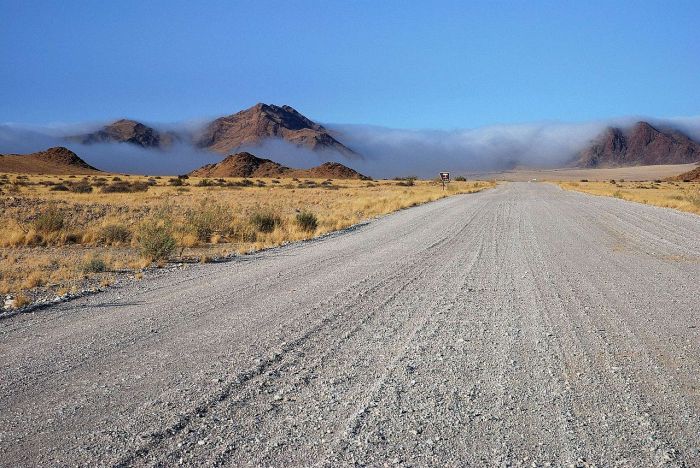
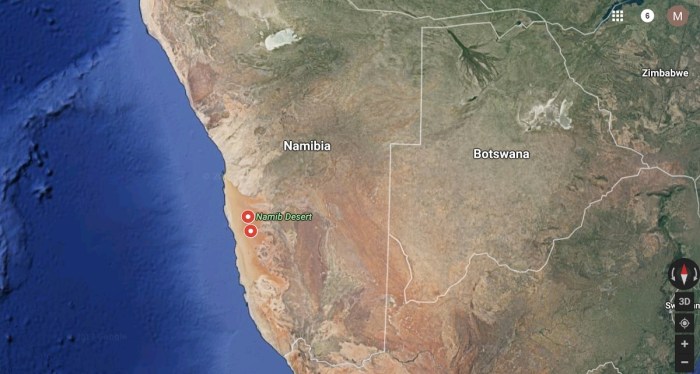
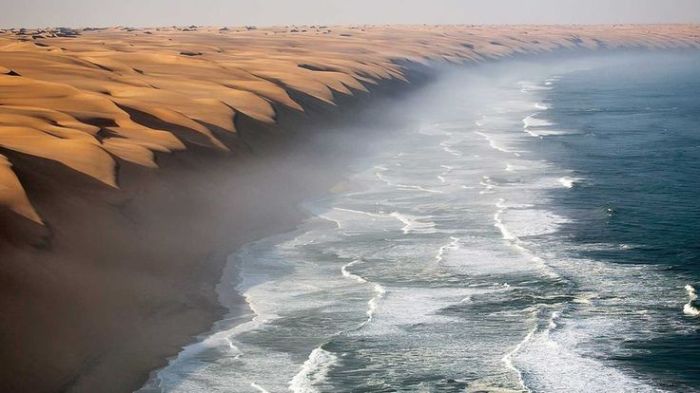
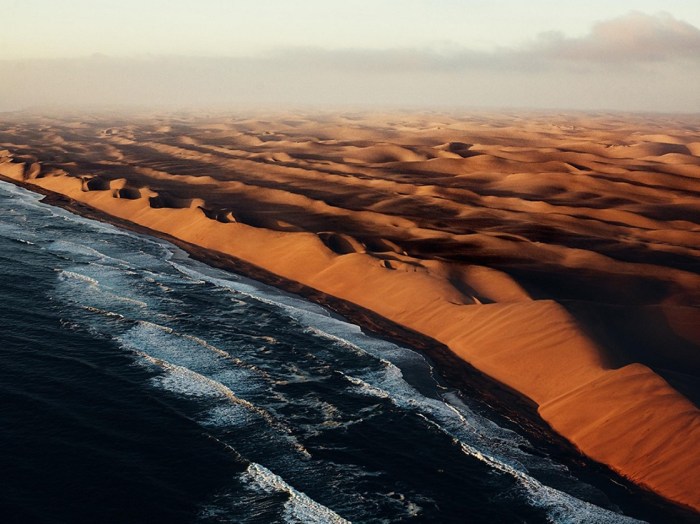
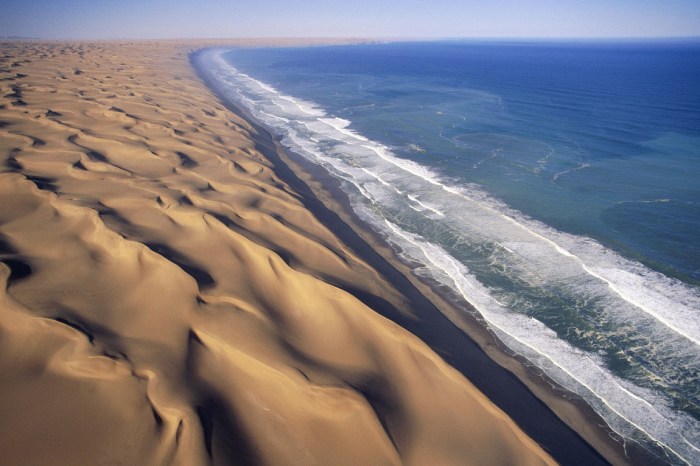
The Namib is a coastal desert in southern Africa. The name Namib is of Nama origin and means “vast place”. According to the broadest definition, the Namib stretches for more than 2,000 kilometres (1,200 mi) along the Atlantic coasts of Angola, Namibia, and South Africa, extending southward from the Carunjamba River in Angola, through Namibia and to the Olifants River in Western Cape, South Africa.

namib4

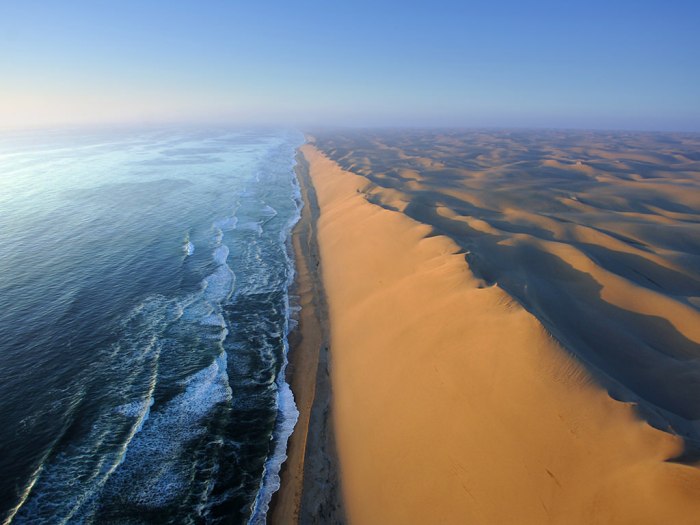
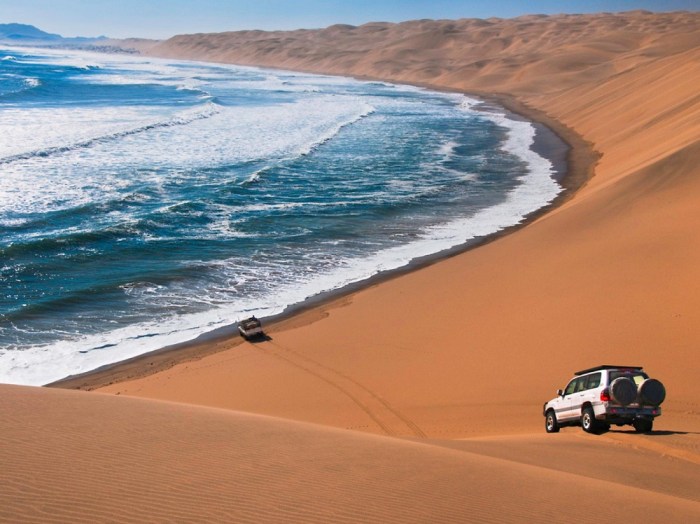
The desert geology consists of sand seas near the coast, while gravel plains and scattered mountain outcrops occur further inland. The sand dunes, some of which are 300 metres (980 ft) high and span 32 kilometres (20 mi) long, are the second largest in the world after the Badain Jaran Desert dunes in China.

Namib_Desert_Where_the_Desert_meets_the_Ocean_ritebook.in_003

Winds coming from the Atlantic Ocean are pressed down by hot air from the east; their humidity thus forms clouds and fog. Morning fogs coming from the ocean and pushing inwards into the desert are a regular phenomenon along the coast, and much of the life cycle of animals and plants in the Namib relies on these fogs as the main source of water.

Fog rolling in

namibia
namibx
namib1
namib2
namib3
namib5
NHP-MWE001352A
namib-desert-meets-sea-4[2]
namib-desert-meets-sea-2[2]
namib-desert-meets-sea-7[2]

How climate change is leading to bigger hailstones

Rising global temperatures might be causing hailstorms to become more violent, with larger chunks of ice and more intense downpours. But just how big can a hailstone get?

It was the height of summer in the UK and the country found itself in the grip of a heatwave. In Leicestershire, in the midlands of England, children on their school holidays played in paddling pools to stay cool. Then the sky darkened.

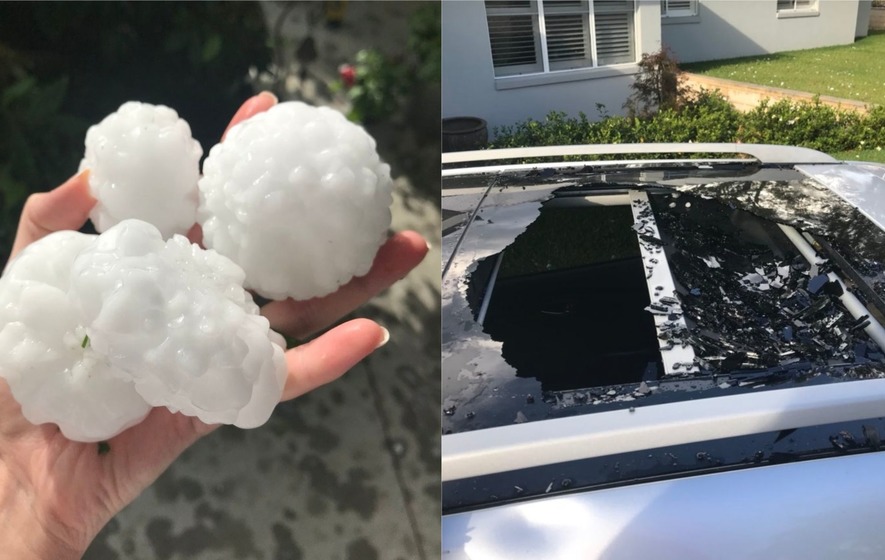
In the early evening of 21 July 2021, hailstones the size of golf balls pelted suddenly from the sky, smashing windows and battering cars. Gardens that were a few moments earlier filled with people soaking up the evening sun, were left badly damaged by the downpour of ice.

While the hailstorm – caused by strong updrafts of cloud high in the atmosphere – was unusual in its severity, it was mild compared to a hailstorm that struck Calgary in Canada in June 2020. Hailstones the size of tennis balls caused damage to at least 70,000 homes and vehicles, destroyed crops and left the area facing a C$1.2bn (US$940m/£720m) repair bill. The 20-minute hailstorm was one of the country’s most costly weather events.

And climate change is altering the pattern of hailstorms. In Texas, Colorado and Alabama the records for largest hailstone have been broken in the last three years, reaching sizes of up to 16cm (6.2 inches) in diameter. In 2020, Tripoli, the capital of Libya, was struck by hailstones nearly 18cm (7.1in) across.

While giant hailstones – classed as those with a diameter greater than 10cm (3.9in) – are extremely rare, they are an indicator and hail damage in the US now averages more than $10bn (£7.6bn) a year.

But why might global warming be causing an increase in the amount of ice falling from the sky? And are their limits to just how big a hailstone can grow?

Some large hailstones form as smaller ones collide and fuse together as they are buffeted around in a storm (Credit: Nature Picture Library/Alamy)

Some large hailstones form as smaller ones collide and fuse together as they are buffeted around in a storm (Credit: Nature Picture Library/Alamy)

Hail forms as droplets of water are carried upward into a thunderstorm. Updraughts carry them into parts of the atmosphere where the air is cold enough to freeze the droplets. Moisture from the air accumulates on the outside of the drops of ice as it moves through the air, causing the hailstone to grow in onion-like layers.

How fast a hailstone grows depends on the amount of moisture in the air. It will continue to grow until the updraught is no longer strong enough to keep it aloft. A 103km/h (64mph) updraft supports hail the size of a golf ball, while one 27% faster can create hailstones the size of baseballs, according to the US National Oceanic and Atmospheric Administration (although as we will see in a moment, the size of a hailstone doesn’t always directly relate to its weight). More humid air and more powerful updraughts will bring bigger hailstones. Often larger hailstones will fall closer to the updraught while smaller hailstones will fall further away, often blown there by cross winds.

Destructive storms that produce hailstones more than 25mm (1in) in diameter require a specific set of conditions, says Julian Brimelow, a physical sciences specialist at Environment and Climate Change Canada, a department of the Canadian government, who has studied how climate change affects hail formation. They require enough moisture, powerful updraughts, and a “trigger factor”, typically a weather front. This is why serious hailstorms are usually confined to particular regions such as the Great Plains in the US and Australia’s Gold Coast. Typically such regions have cool, dry air in the upper atmosphere above warm, humid surface air. This unstable situation leads to strong updraughts and the formation of thunderstorms.

Such locations are particularly prone to a type of thunderstorm known as supercells, which can produce very large hail due to the powerful rotating updraughts they create.

But as climate change alters the temperature of the Earth’s atmosphere, so too is the amount of moisture in the air. Warmer air can hold more water vapour while higher temperatures also mean more water is evaporated from the Earth’s surface. This is predicted to lead to heavier rainfall and more extreme storms in parts of the world.

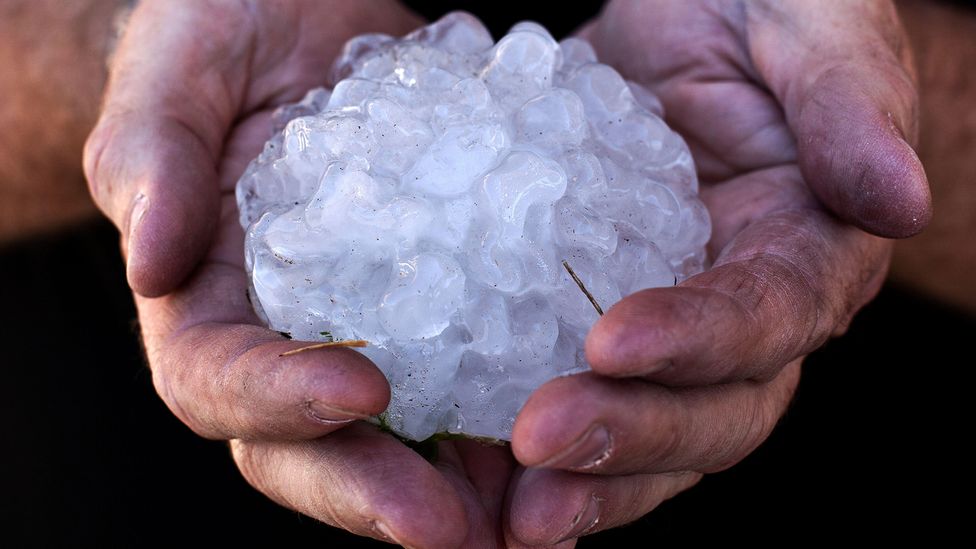
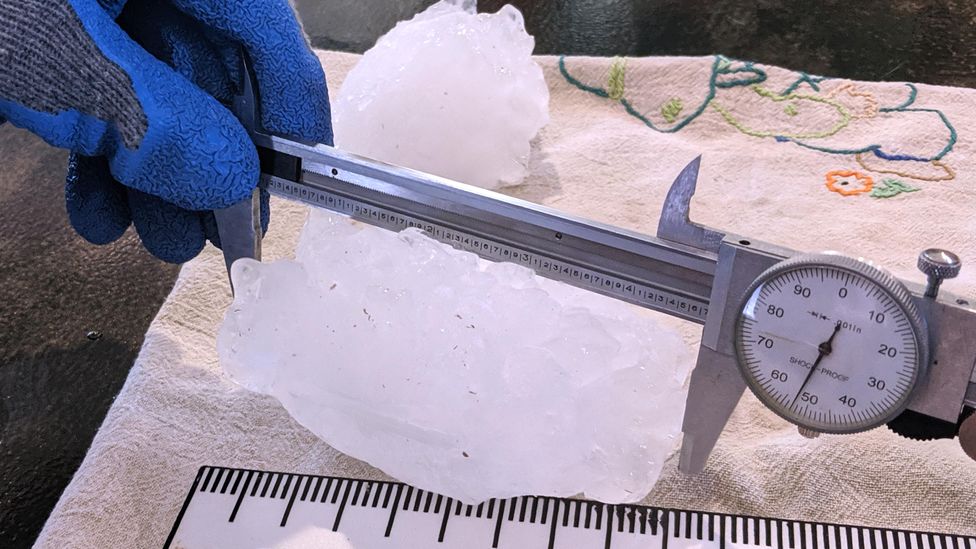
A hailstone measuring 4.83in (12cm) at its widest point was collected after a storm in Bethune, Colorado, US, in 2019 (Credit: National Weather Service, Goodland Forecast Office)

A hailstone measuring 4.83in (12cm) at its widest point was collected after a storm in Bethune, Colorado, US, in 2019 (Credit: National Weather Service, Goodland Forecast Office)

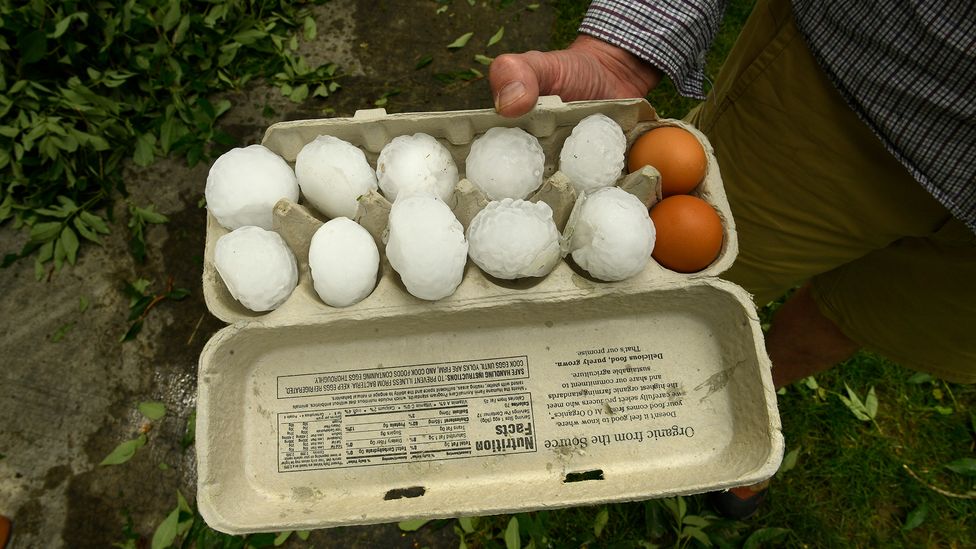
Hailstones as big as eggs – like these that fell in Louisville, Colorado, in 2018 – are not uncommon in severe storms (Credit: Helen H Richardson/The Denver Post/Getty Images)

Hailstones as big as eggs – like these that fell in Louisville, Colorado, in 2018 – are not uncommon in severe storms (Credit: Helen H Richardson/The Denver Post/Getty Images)

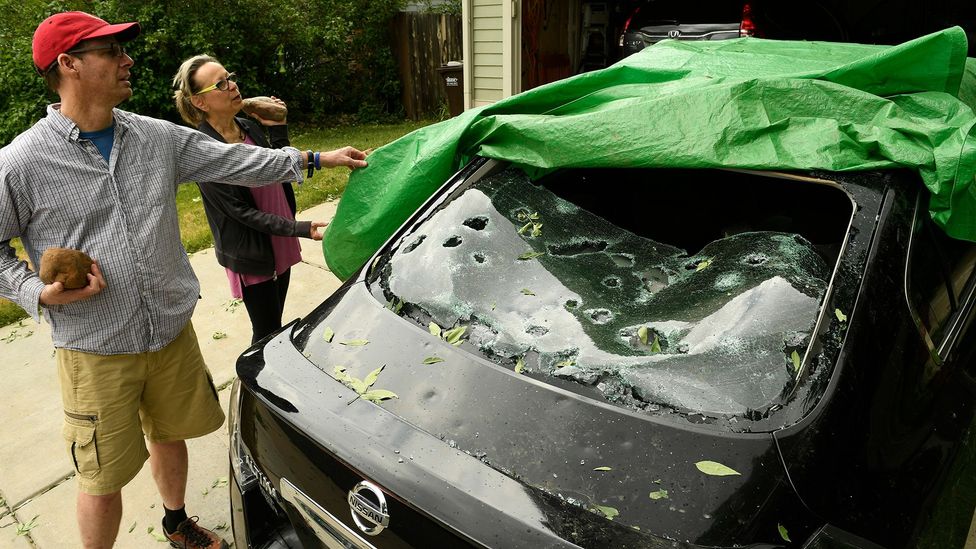
Damage caused by large hail downpours can cause damage to vehicles and buildings costing billions (Credit: Helen H Richardson/The Denver Post/Getty Images)

Damage caused by large hail downpours can cause damage to vehicles and buildings costing billions (Credit: Helen H Richardson/The Denver Post/Getty Images)

BBC

Tonga Volcano Eruption

Tonga eruption: How its impact spread so widely and violently

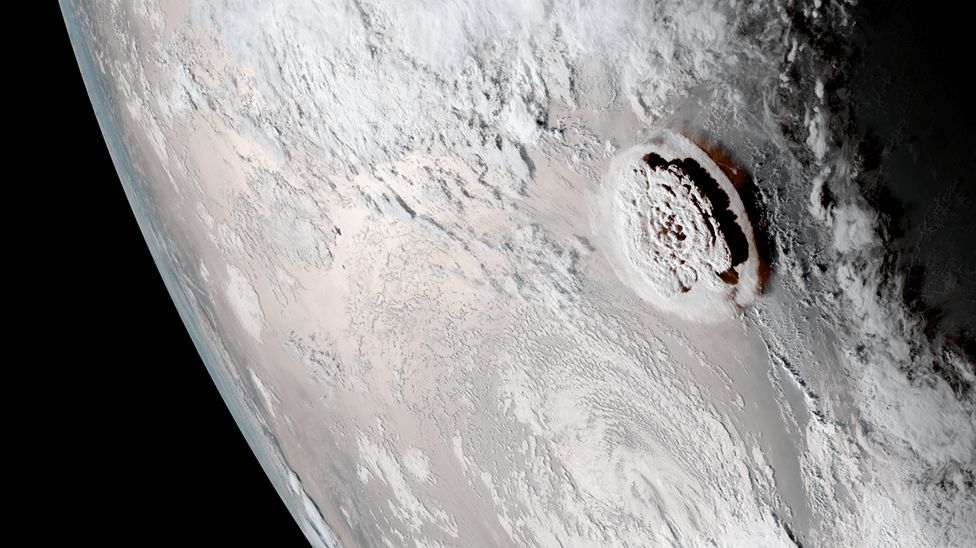
Satellite image of the eruption

A massive volcanic eruption in Tonga, on Saturday, triggered a tsunami that spread across the Pacific in a matter of hours.

Waves hit Australia, New Zealand and Japan as well as the west coasts of North and South America, and an atmospheric shockwave was detected around the world.

Thousands of people in Tonga are thought to be in need of outside help, with buildings destroyed and communications disrupted.

Here’s what we know about how and why it spread so widely and violently.

Where is Tonga?

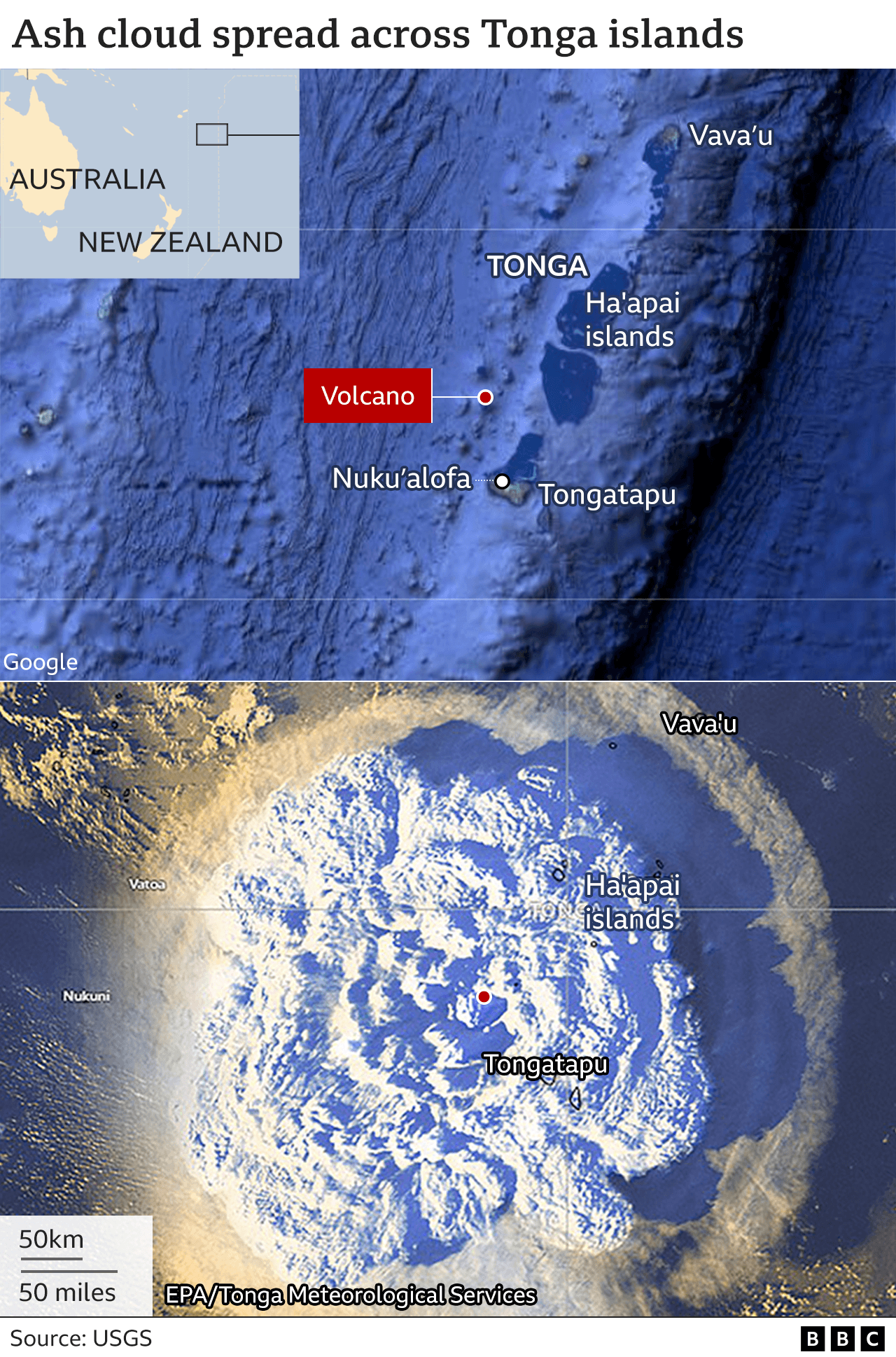
Tonga is made up of about 170 islands, many uninhabited, about 2,000 miles (3,300km) east of Australia.

The volcano, Hunga-Tonga-Hunga-Ha’apai, sits 40 miles north of the capital, Nukuʻalofa.

Graphic with a map of Tonga and a satellite image showing the extent of the ash cloud shortly after the eruption.

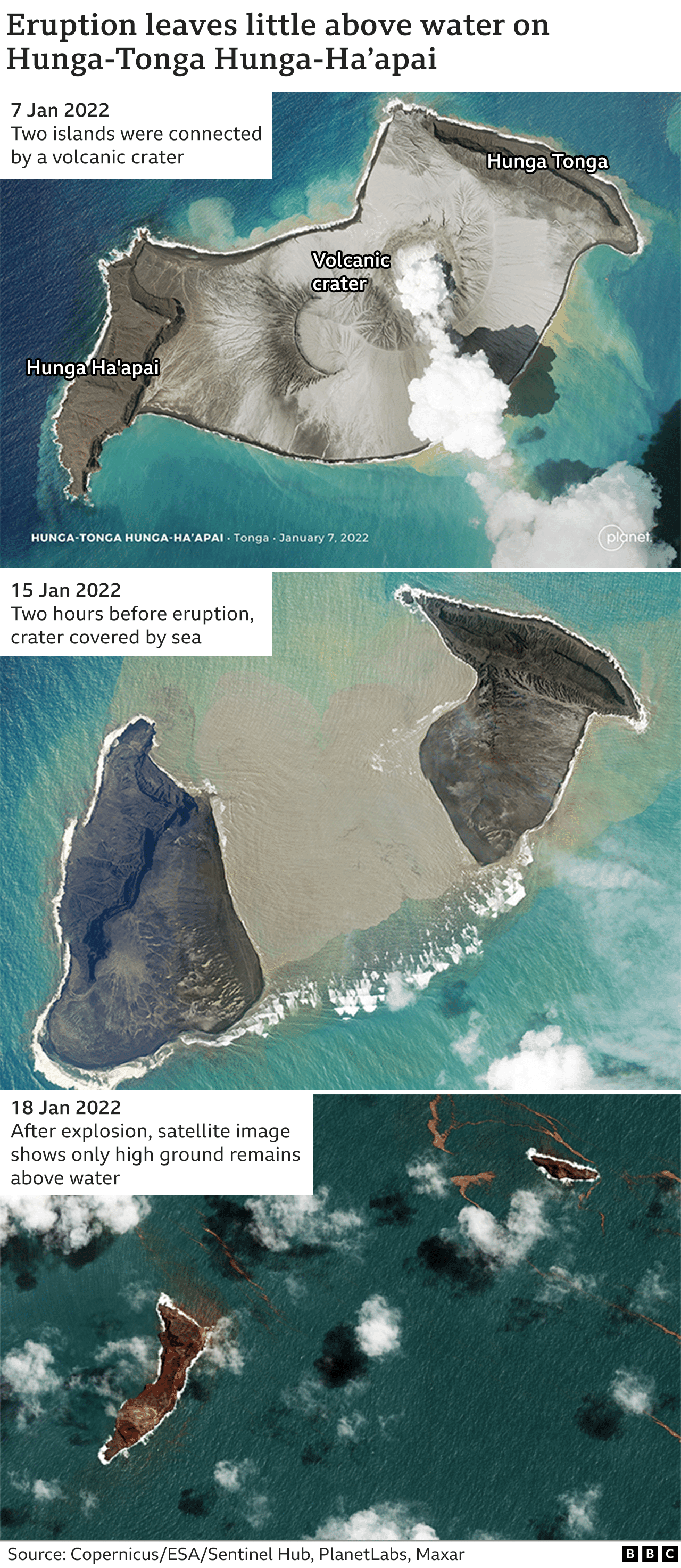
On Saturday, the centre of the volcano sank, disappearing under the sea.

About two hours later, it erupted, with devastating force.

When the eruption had ended, almost all of the volcano and the land around it had disappeared.

Graphic showing the extent of the ash cloud.

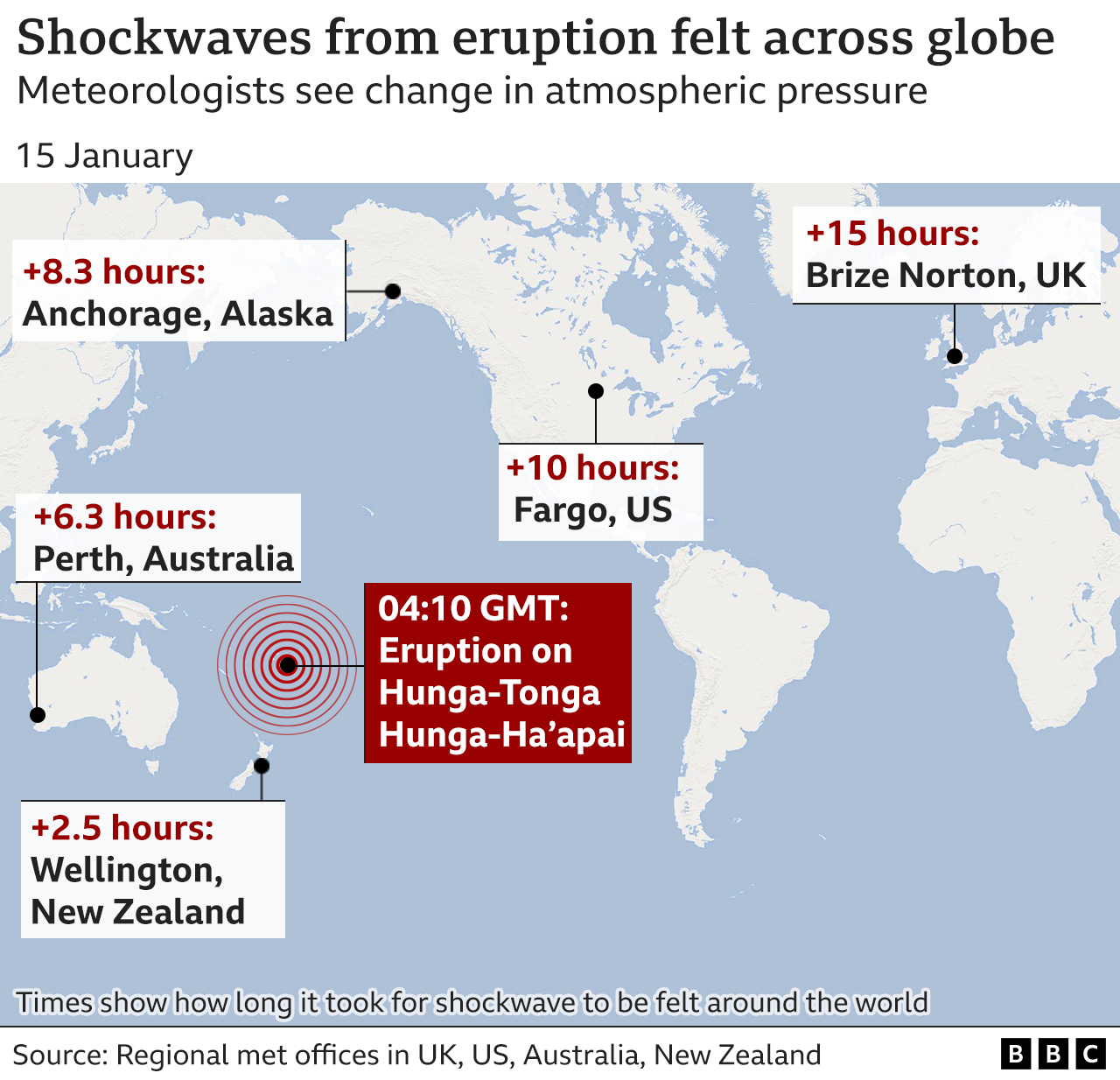
The eruption set off a massive atmospheric shockwave travelling at about 300m (1,000ft) per second.

Pressure changes were detected on the other side of the world, in Europe, 15 hours later.

Map showing movement of the pressure wave

The explosion was heard across the Pacific, from Fiji to Alaska.

How quickly did the tsunami spread?

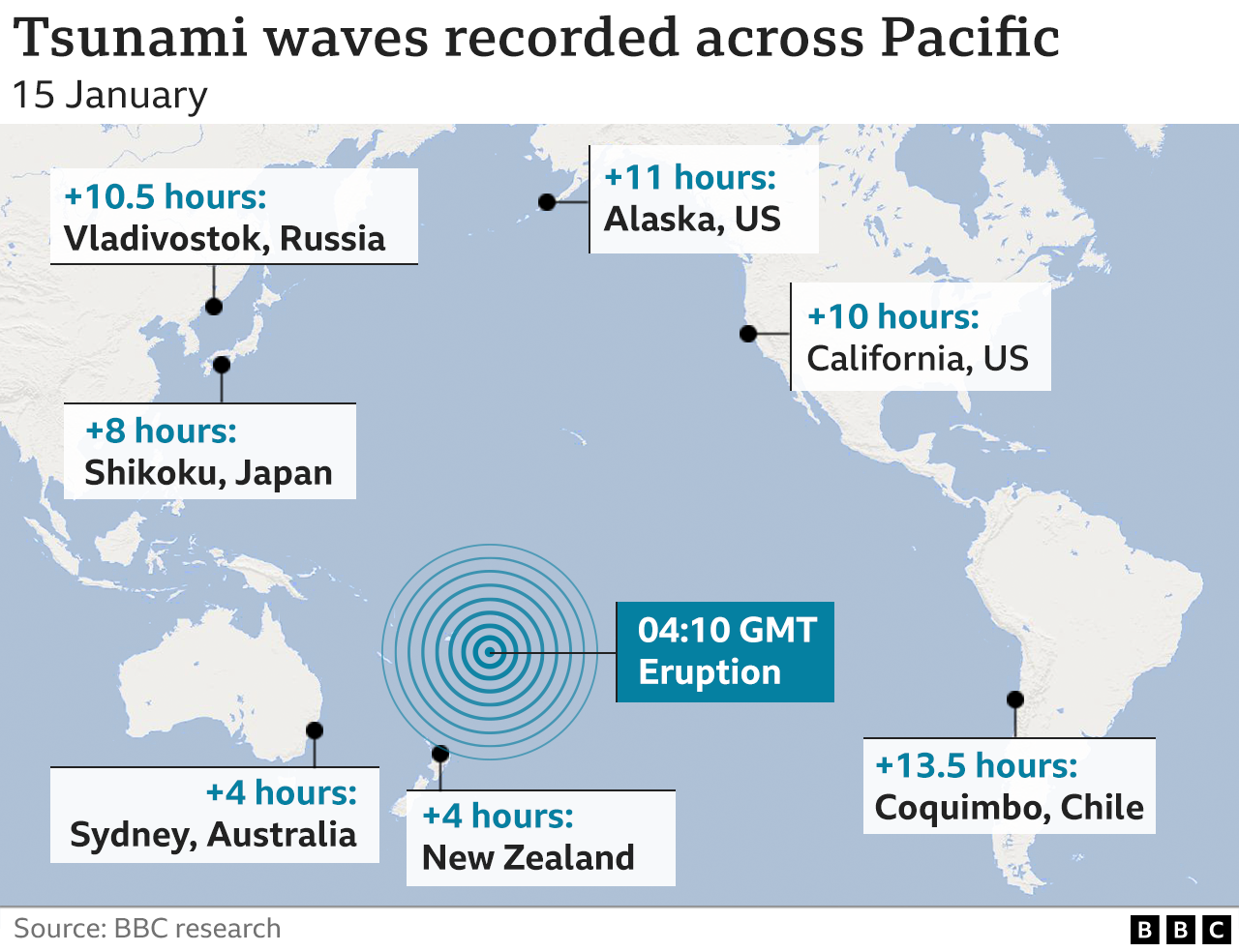
Waves from the tsunami spread rapidly across the Pacific.

They took less than five hours to reach New Zealand, about 10 to reach Alaska.

Experts say the tsunami may have been caused by the collapse of debris on the ocean floor and boosted by the pressure wave pushing down on the surface of the water.

The waves continued through Sunday and were still being recorded in Australia on Monday.

Map showing movement of the tsunami waves.

Tsunami waves can be much more destructive than normal waves, even when they are not particularly high.

A normal wave might take 15 seconds to wash up the shore and flow back out.

Some of the tsunami waves in Australia were under 1m but lasted almost 30 minutes.

They kept moving onshore for 15 minutes and took about 15 minutes to move back out.

Why was the eruption so violent?

The exact reasons why this eruption was so violent are still being assessed by experts.

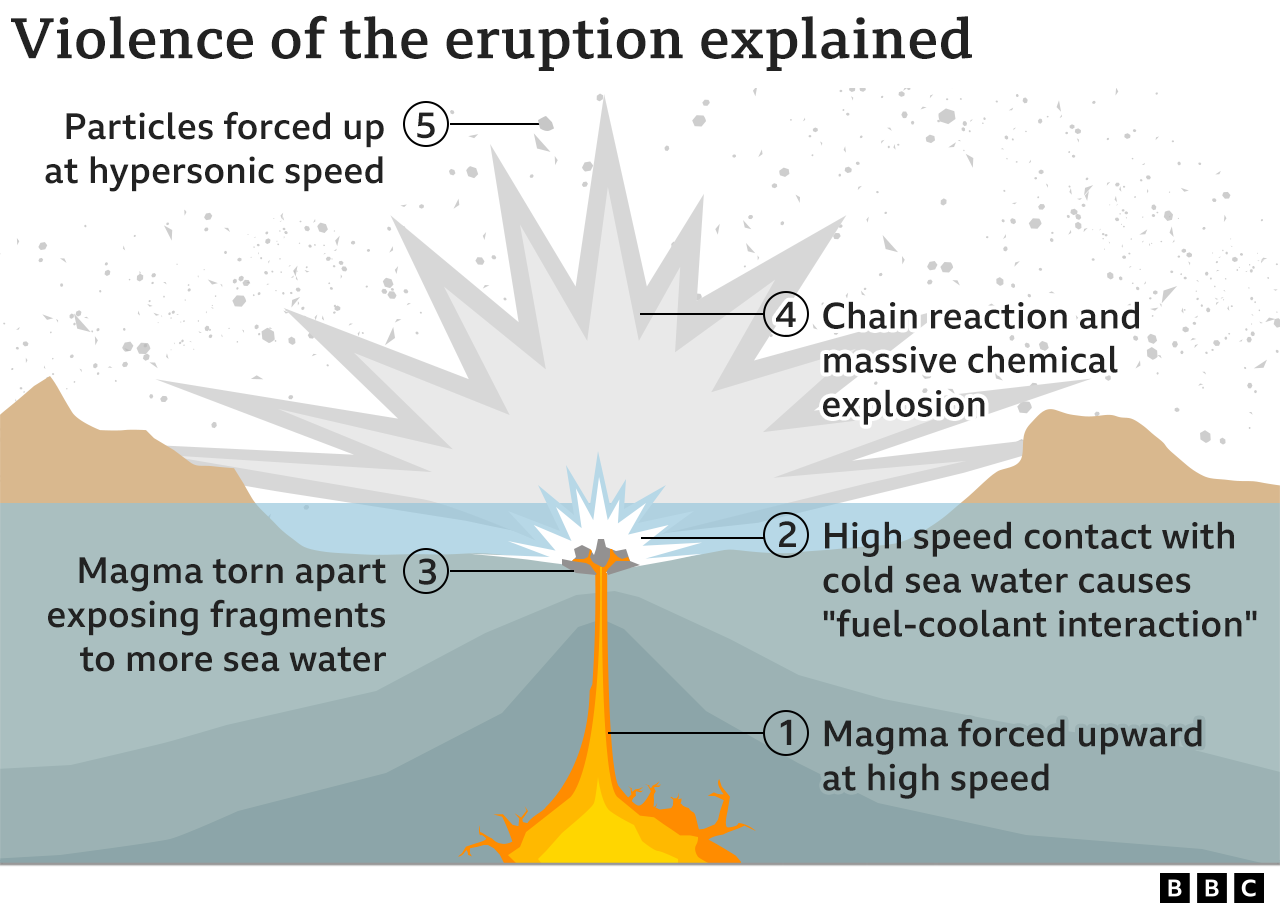
Some believe the speed with which the molten magma was blasted out of the volcano may have played a big part.

When magma filled with volcanic gas is forced through sea water at high speed, there is no time for a layer of steam to cool it.

And this “fuel-coolant interaction” causes a massive chemical explosion, researchers say.

Deeper water could have suppressed this – but the volcano’s surface was just 150-200m under the sea.

Infographic on the violence of the eruption

What is the situation on the ground now?

Communications with Tonga have been severely disrupted, making it difficult to assess the scale of the destruction.

On Tuesday, the Tongan government issued its first update since the eruption, saying the country had been hit by an “unprecedented disaster”.

Some of the smaller islands have been particularly badly affected, with all the houses destroyed on one and just two left on another.

Aid efforts have been hampered by ash falling from the volcano.

Volunteers have been sweeping the runway of the main airport to allow planes bringing much needed drinking water and supplies to land.

In its update, the Tongan government said the internet was down, but some local phone services were available and work was under way to restore full communications.

BBC

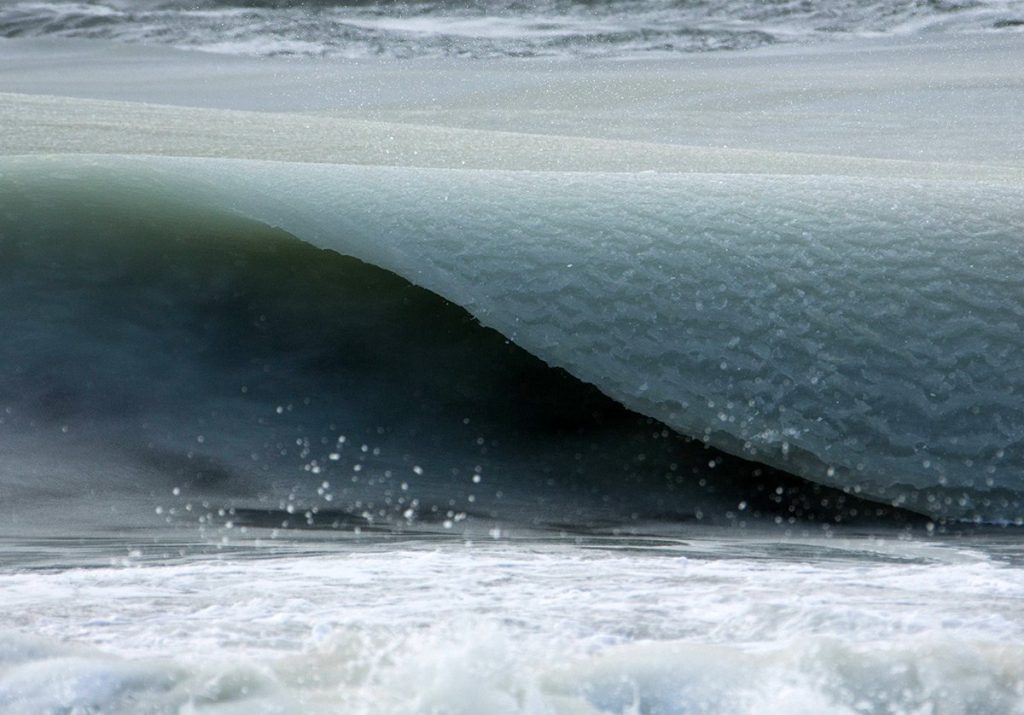
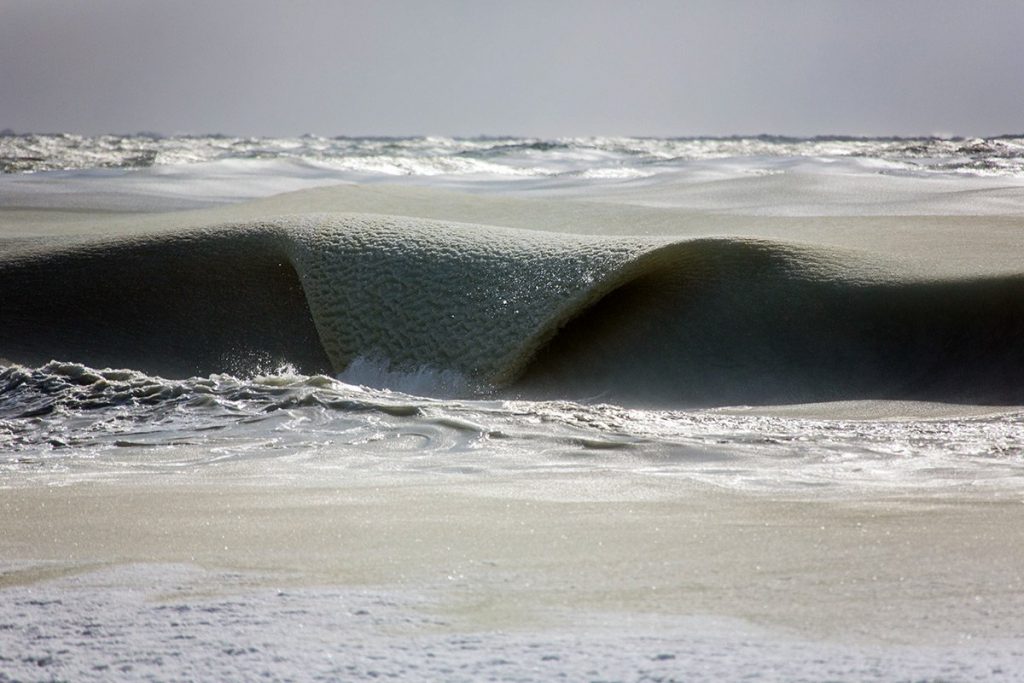
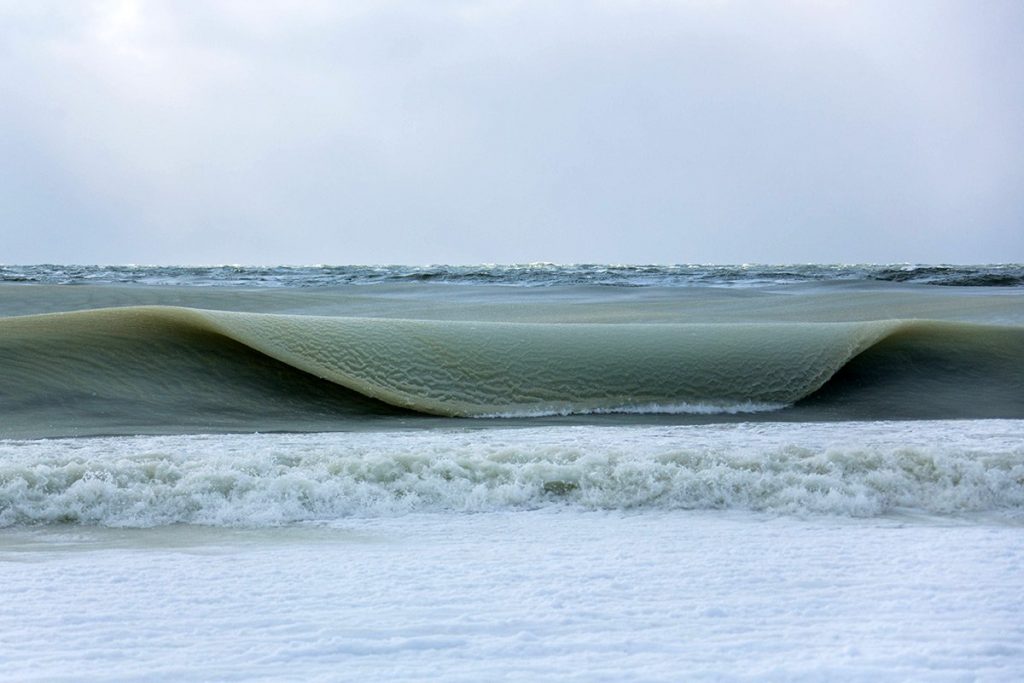
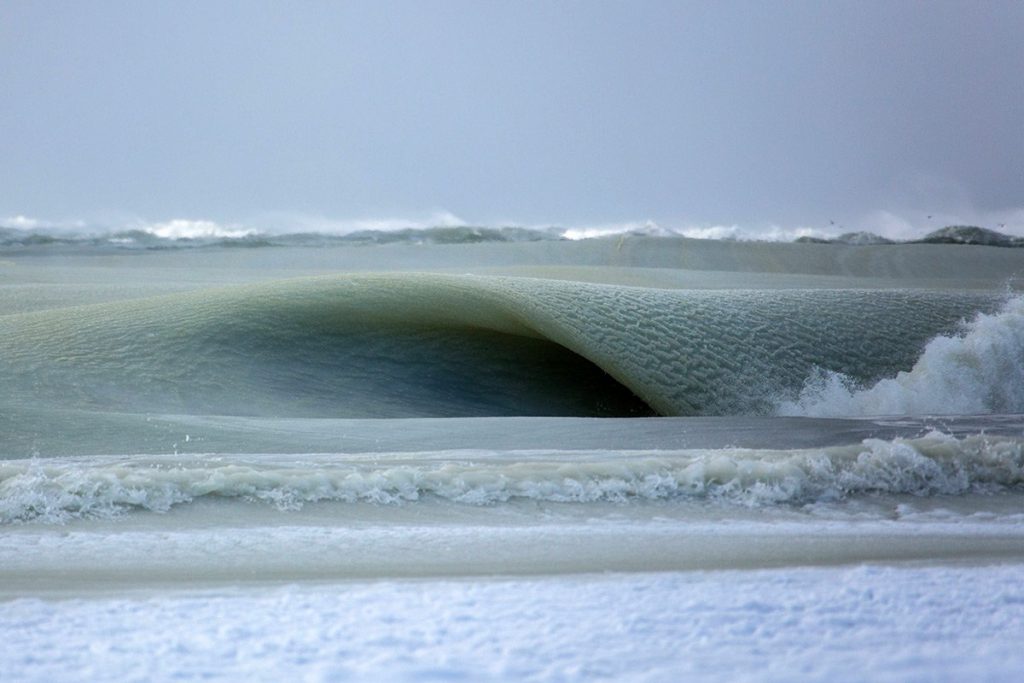
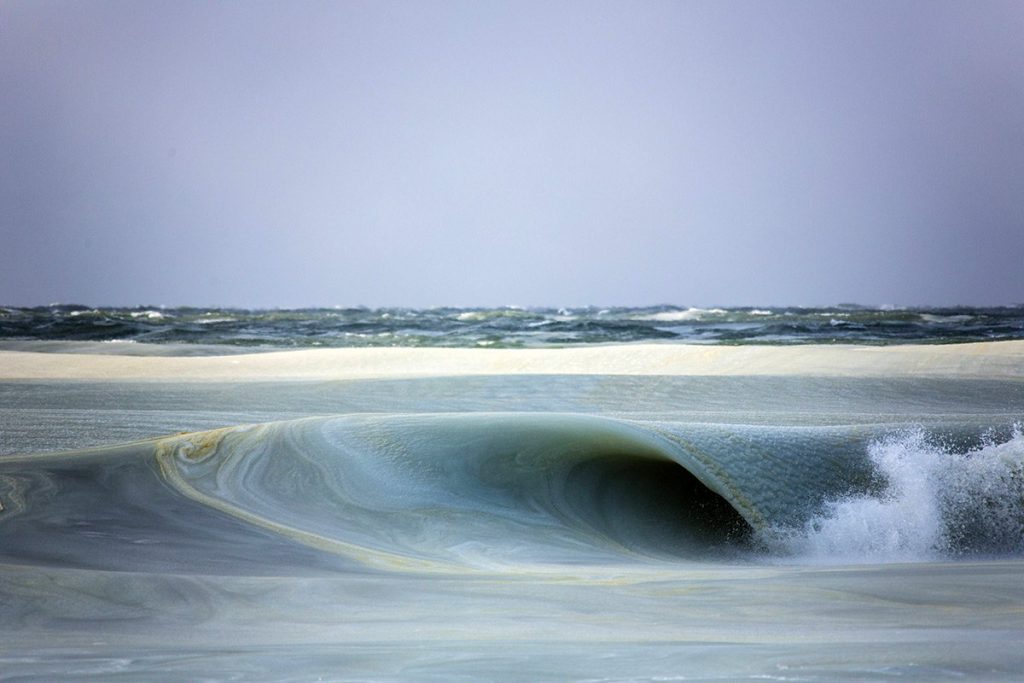
Nearly Frozen Waves Captured On Camera By Nantucket Photographer

Beautiful, Giant, And Nearly Frozen Waves Are Captured On Camera By Nantucket Photographer

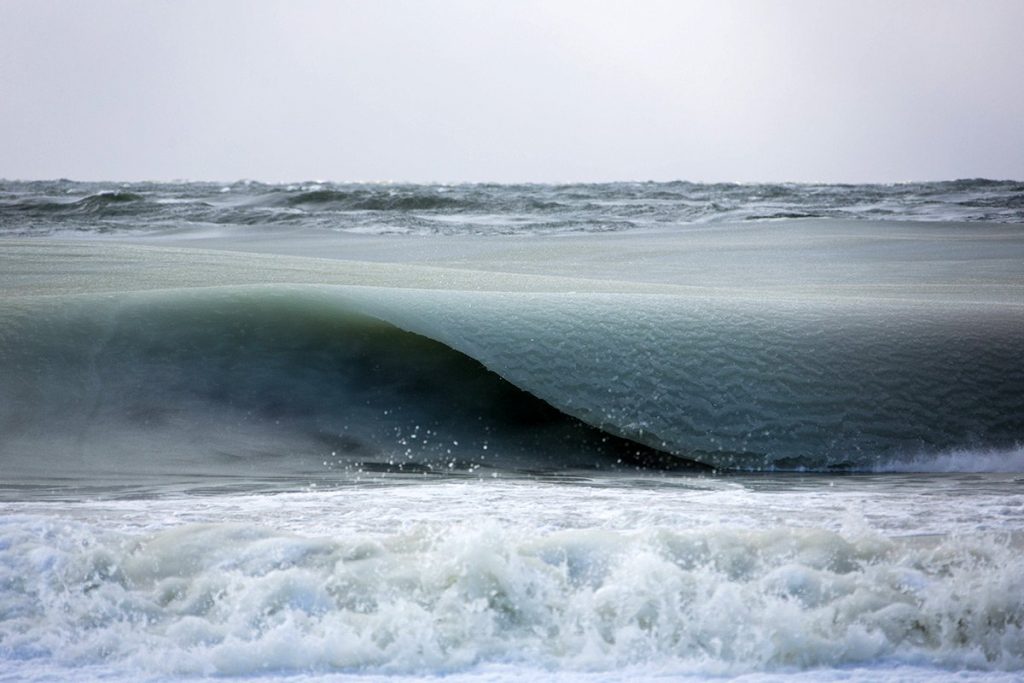
Photographer Jonathan Nimerfroh found himself staring at an ocean full of Slurpee. The waters of the Atlantic Ocean looked like it due to the unusually cold temperatures that were making it freeze. Lakes freeze every year, but oceans freezing is a rare sight.

The photographer/surfer/ocean enthusiast set out to capture the beauty of this rare event. While the partially-frozen waves churned and hit the shore, they appeared to be made out of something thicker than water. Jonathan describes the sight as follows, “The wind was howling from the southwest which would typically make rough or choppy conditions, not so good for surfing. But since the surface of the sea was frozen slush, the wind did not change the shape. They were perfect dreamy slush waves.” The pictures below show this bizarre phenomenon.

They were a strange, thick consistency.

His photo series “Slurpee Waves” is breathtaking.

The unusual look of the waves comes from the shifts in the water and air temperature.

When he took these photos, the temperature in Nantucket was 19°F.

In “Stay Wild Magazine,” he talked about the day he took the photos: “Just been super cold here. The harbor to the mainland is frozen solid … The day after I took these it actually froze up the shoreline for 200 yards out.”

Jonathan is “obsessed with the ocean,” and, in addition to his sea-centric photography, is an avid surfer.

Check out this video to see the Slurpee waves in action:

All-Star Sinkholes

In the last few years, news of unexpected sinkholes swallowing cars, houses and people have made headlines with disturbingly high frequency. These reports are mainly coming from Florida, the U.S., where almost the entire state is karst terrain (made of limestone), which means it has the potential for sinkholes. Mexico, Belize and parts of Italy and China are also karst area, but the phenomenon of sinkholes suddenly appearing in apparently stable grounds is mostly American. Experts estimate thousands of sinkholes form every year in Florida alone.

Sinkholes form when water flowing underground has dissolved rock, mostly limestone and sometimes clay, below the surface, leading to the formation of underground voids. When the surface layer can no longer take the weight of whatever that’s above, it collapses into the void forming sinkholes. These sinkholes can be dramatic, because the surface land usually stays intact until there is not enough support. Then, a sudden collapse of the land surface can occur.

asink

A giant sinkhole caused by the rains of Tropical Storm Agatha is seen in Guatemala City on May 31, 2010. More than 94,000 people were evacuated as the storm buried homes under mud, swept away a highway bridge near Guatemala City and opened up sinkholes in the capital. (Casa Presidencial / Handout / Reuters)

asink1

An aerial view of the damaged Gran Marical de Ayacucho highway in the state of Miranda outside Caracas December 1, 2010. Thousands of Venezuelans fled their homes after landslides and swollen rivers killed at least 21 people and threatened to cause more damage. (Photo by Miranda Government/Reuters)

asink2

A construction vehicle lies where it was swallowed by a sinkhole on Saint-Catherine Street in downtown Montreal, August 5, 2013. (Photo by Christinne Muschi/Reuters)

asink3

Pamela Knox waits for rescue after a massive sinkhole opened up underneath her car in Toledo, Ohio in this July 3, 2013 handout photo provided by Toledo Fire and Rescue. Toledo firefighters later rescued Knox without major injuries. Fire officials told a local TV station that a water main break caused the large hole. Picture taken July 3, 2013. (Photo by Lt. Matthew Hertzfeld/Toledo Fire and Rescue/Handout via Reuters)

asink4

A stranded car is hoisted from a collapsed road surface in Guangzhou, Guangdong province, September 7, 2008. The road collapsed on Sunday afternoon and trapped the car in a hole, which measured 5 meters (16.4 feet) in depth and 15 meters (49.2 feet) in diameter, local media reported. Further investigation is underway. Picture taken September 7, 2008. (Photo by Reuters/China Daily)

asink5

An aerial view shows the debris of a residential building and a destroyed road in the village of Nachterstedt, July 18, 2009. Three residents were missing in the eastern German village of Nachterstedt after their lakeside home and another building suddenly collapsed early Saturday into the water. A 350-metre stretch of shoreline gave way next to an old open-cast coalmine converted to a lake, about 170 kilometres south-west of Berlin. (Photo by Reuters/Gemeindeverwaltung Nachterstedt)

asink6

Rescue workers remove a bus with a crane from a Lisbon street hole November 25, 2003. The bus was parked on a Lisbon street when the ground began to open up and gobble it. No casualties were reported. (Photo by Jose Manuel/Reuters)

asink7

A truck is seen in a hole after part of the structure of a bridge collapsed into a river in Changchun, Jilin province May 29, 2011. Two truck passengers were injured, while the cause of the accident is still under investigation, local media reported. (Photo by Reuters/China Daily)

asink8

Cars lie in a sinkhole, caused when a road collapsed into an underground cave system, in the southern Italian town of Gallipoli March 30, 2007. There were no injuries in the overnight incident, according to local police. (Photo by Fabio Serino/Reuters)

asink9

A giant sinkhole that swallowed several homes is seen in Guatemala City February 23, 2007. At least three people have been confirmed missing, officials said. (Photo by Reuters/Stringer)

asink10

A large sinkhole opened on East Monument Street in Baltimore in summer 2012. The sinkhole appeared above a 120-year-old drainage culvert after heavy rains, causing evacuations and closing the road. (Algerina Perna/Baltimore Sun Photo)