I’m not sure why so many music groups have named their bands after insects. Insects have their role in nature, bird feed, eating dead corpses etc., but insects are really disgusting little creatures. Now don’t tell that to David Suzuki, he gained his Ph.D studying the organism Drosophila melanogaster (fruit flies). Some people find them interesting. But to me bugs are bad little buggers. Always getting into places where they shouldn’t be.
So when these musicians were thinking up a name for the band, why the bug names? I think the acid and other mind stimulants may have had something to do with it. I once had a friend who took some magic mushrooms, he described in vivid detail how he hallucinated that he was transforming into a praying mantis. So I think there is a definite correlation between psychedelics and insect band names.
So here are some bands named after the creepy-crawlies. m
The Crickets
Papa Roach (maybe some connection to a burnt joint here).
The Beatles (it has been well documented that these guys delved into the Lysergic acid diethylamide).
Adam and the Ants (these guys actually thought they were pirates, where the ants come in is anybody’s guess).
Barking Spyders (drugs involved here without a doubt).
Bees Make Honey (sounds like a hippie band).
The Bollweevils, (never heard of that insect) punk band from Chicago.
Centipedes
Daddy Longlegs
The Flys
Iron Butterfly (these guys look like experimenters).
The Bees
The Scorpions (this band could really rock).
I wasn’t sure if I should have included Sting.
I’m sure there are many more insect bands out there that I missed.
Stanley Allison “Stan” Rogers (November 29, 1949 – June 2, 1983) was a Canadian folk musician and songwriter.
Rogers was noted for his rich, baritone voice and his finely-crafted, traditional-sounding songs which were frequently inspired by Canadian history and the daily lives of working people, especially those from the fishing villages of the Maritime provinces and, later, the farms of the Canadian prairies and Great Lakes.
Rogers died alongside 22 other passengers (23 fatalities in all) most likely of smoke inhalation on June 2, 1983, while travelling on Air Canada Flight 797 (a McDonnell Douglas DC-9) after performing at the Kerrville Folk Festival. The airliner was flying from Dallas, Texas to Toronto and Montreal when an in-flight fire forced it to make an emergency landing at the Greater Cincinnati Airport.
Smoke was filling the cabin from an unknown source, and once on the ground, the plane’s doors were opened to allow passengers to escape. Halfway through the evacuation of the plane, the oxygen rushing in from outside caused a flash fire. Rogers was one of the passengers still on the plane at the time of the fire. Eyewitness reports published at the time said that a man of Rogers’ height and build escaped the plane, but then turned and went back inside, apparently to assist in the rescue of others.
His remains were cremated and his ashes scattered in the Atlantic Ocean off the coast of Nova Scotia.
He sang songs that the average person could relate to.
WHITE COLLAR HOLLER
Well, I rise up every morning at a quarter to eight
Some woman who’s my wife tells me not to be late
I kiss the kids goodbye, I can’t remember their names
And week after week, it’s always the same
And it’s Ho, boys, can’t you code it, and program it right
Nothing ever happens in the life of mine
I’m hauling up the data on the Xerox line
Then it’s code in the data, give the keyboard a punch
Then cross-correlate and break for some lunch
Correlate, tabulate, process and screen
Program, printout, regress to the mean
Then it’s home again, eat again, watch some TV
Make love to my woman at ten-fifty-three
I dream the same dream when I’m sleeping at night
I’m soaring over hills like an eagle in flight
Someday I’m gonna give up all the buttons and things
I’ll punch that time clock till it can’t ring
Burn up my necktie and set myself free
Cause no’one’s gonna fold, bend or mutilate me.
Stan’s version of Farewell to Nova Scotia is the best rendition out there.
The sun was setting in the west
The birds were singing on every tree
All nature seemed inclined to rest
But still there was no rest for me
Farewell Nova Scotia
The sea-bound coast
Let your mountains dark and dreary be
For when I am far away
On your briny ocean tossed
Will you ever heave a sigh
Or a wish for me
I grieve to leave my native land
I grieve to leave my comrades all
And my parents whom I held so dear
And the bonny, bonny lassie
That I do adore
The drums they do beat
And the wars do alarm
The Captain calls, I must obey
So farewell, farewell
To my Nova Scotia home
For it’s early in the morning
That I’m far, far away
I had three brothers and they are at rest
Their arms are folded on their chests
But a poor, simple sailor just like me
Must be tossed and driven
On the deep, blue sea
“My Ding-a-Ling” is a novelty song written and recorded by Dave Bartholomew. It was covered by Chuck Berry in 1972 and became his only number-one Billboard Hot 100 single in the United States. Later that year, in a longer unedited form, it was included on the album The London Chuck Berry Sessions.
The song tells of how the singer received a toy consisting of “silver bells hanging on a string” from his grandmother, who calls them his “ding-a-ling”. According to the song, he plays with it in school, and holds on to it in dangerous situations like falling after climbing the garden wall, and swimming across a creek infested with snapping turtles. From the second verse onward, the lyrics consistently exercise the double entendre in that a penis could just as easily be substituted for the toy bells and the song would still make sense.
The lyrics with their sly tone and innuendo (and the enthusiasm of Berry and the audience) caused many radio stations to refuse to play it. British morality campaigner Mary Whitehouse tried unsuccessfully to get the song banned. “One teacher,” Whitehouse wrote to the BBC’s Director General, “told us of how she found a class of small boys with their trousers undone, singing the song and giving it the indecent interpretation which—in spite of all the hullabaloo—is so obvious… We trust you will agree with us that it is no part of the function of the BBC to be the vehicle of songs which stimulate this kind of behaviour—indeed quite the reverse.”
In Icons of Rock, Scott Schinder calls the song “a sophomoric, double-entendre-laden ode to masturbation”. Robert Christgau remarked that the song “permitted a lot of twelve-year-olds new insight into the moribund concept of ‘dirty'”.
During a short spoken introduction to the song on the single, Berry refers to the song as “our alma mater”.
The controversy was lampooned in The Simpsons episode “Lisa’s Pony”, in which a Springfield Elementary School student attempts to sing the song during the school’s talent show. He barely finishes the first line of the refrain before an irate Principal Skinner pushes him off the stage, angrily proclaiming “This act is over!”
The Trans-Canada Highway (French: Route Transcanadienne; abbreviated as TCH or T-Can is a transcontinental federal-provincial highway system that travels through all ten provinces of Canada from the Pacific Ocean on the west to the Atlantic on the east. The main route spans 7,821 km (4,860 mi) across the country, one of the longest routes of its type in the world.
Met a woman in Vancouver
Nearly drove me outta my mind
She told me she was looking for a man that could satisfy
She was married to a law man
And life was passing her by
In a two room shack
And now she wanted to fly
You know a man of hunger is a man of fear
And being hungry for your love
Is being hungry for my blood
A jealous man can make a big man run
And I am running like the devil through the morning sun
Trans-Canada highway, take me home
Trans-Canada highway, take me home, take me home
Moved out of town in a hurry
He’s chasing me mile after mile
I’m driving ‘coz I’m knowing that I’ve got his lady with me
I see a sign for Toronto
Almost making me smile
The border’s in sight, I think I’m gonna be free
You know a man of hunger is a man of fear
And being hungry for you love
Is being hungry for my blood
A jealous man can make a big man run
And I am running like the devil for the morning sun
Trans-Canada highway, take me home
Trans-Canada highway, take me home, take me home
The morning paper had a photograph
Of his burnt out wreck and it made me laugh
I told the lady, but the lady ran
And now the papers say, I’m a wanted man
On the Trans-Canada highway, take me home
Trans-Canada highway, take me home, take me home
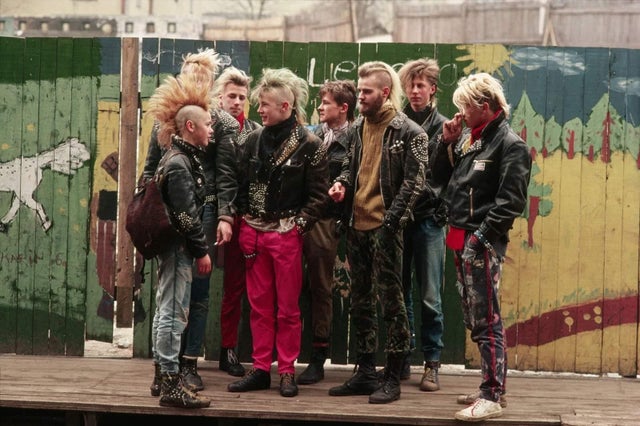
The Misfits are an American punk rock band often recognized as the progenitors of the horror punk subgenre, blending punk and other musical influences with horror film themes and imagery. The group was founded in 1977 in Lodi, New Jersey, by vocalist, songwriter and keyboardist Glenn Danzig, and drummer Manny Martínez. Jerry Only joined on bass guitar shortly after. Over the next six years, membership would change frequently with Danzig and Only the only consistent members. During this time period, they released several EPs and singles, and with Only’s brother Doyle as guitarist, the albums Walk Among Us (1982) and Earth A.D./Wolfs Blood (1983), both considered touchstones of the early-1980s hardcore punk movement. The band has gone through many lineup changes over the years, with bassist Jerry Only being the only constant member in the group.
Randy Crawford (born Veronica Crawford, February 18, 1952, Macon, Georgia) is an American jazz and R&B singer. She has been more successful in Europe than in the United States, where she has not entered the Billboard Hot 100 as a solo artist. She has had multiple top five hits in the UK, including her 1980 #2 hit, “One Day I’ll Fly Away”.
She led R&B veterans The Crusaders on the transatlantic hit “Street Life” (1979). This song stayed atop the U.S. jazz chart for twenty weeks and has since become both a rare groove and disco classic.
Street Life Lyrics, video below
I play the street life Because there’s no place I can go Street life It’s the only life I know Street life And there’s a thousand cards to play Street life Until you play your life away You never people see Just do you wanna be And every night you shine Just like a superstar The type of life that’s played A temptin’ masquerade You dress you walk you talk You’re who you think you are Street life You can run away from time Street life For a nickel, for a dime Street life But you better not get old Street life Or you’re gonna feel the cold There’s always love for sale A grown up fairy tale Prince charming always smiles Behind a silver spoon And if you keep it young Your song is always sung Your love will pay your way beneath the silver moon Street life, street life, street life, oh street life Hmm, Yeah, oh I play the street life Because there’s no place I can go Street life It’s the only life I know Street life There’s a thousand cards to play Street life Until you play your life away Oh ! Street life, street life, street life, oh street life…
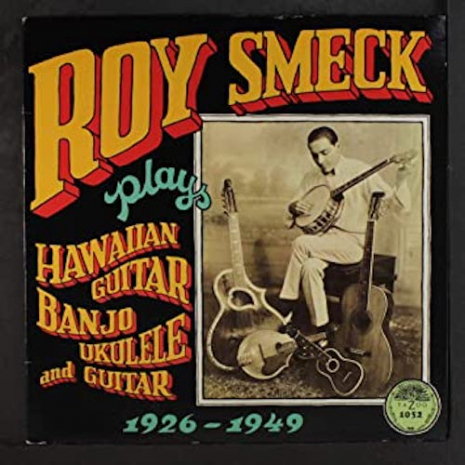
One of the many rumors passed around the Internet (imagine that!) concerns musician and ukulele player Roy Smeck, known as “The Wizard of the Strings.” It turns out that a lot of people seemed convinced that Smeck was actually Eddie Van Halen’s father and an innovator of “two-hand-tapping,” a method of playing a stringed instrument by tapping the strings with an object or your fingers. The technique has been traced back to the late 1700s, but as far as the popularization of two-hand-tapping, that honor belongs to Roy Smeck – a visionary ukulele player who rose to fame as one of vaudeville’s premier attractions. Smeck’s popularity was such that he was invited to play at President Franklin D. Roosevelt’s inauguration celebration in 1933. Getting back to the popular notion Smeck was EVH’s dad…after the devastating loss of Eddie earlier this month, keyboard warriors started sharing videos of Smeck tapping away on his uke with lightning speed, with the caption “this is Eddie Van Halen’s father.” I suppose it was an easy mistake to make, given the skill level Smeck possessed, and its eerie similarity to one of Eddie’s calling cards, his blink-and-you-missed-it guitar tapping wizardry.
Ed’s real father, Jan Van Halen, was, of course, a great musician in his own right and mentor to both Eddie and Alex Van Halen. He was also born twenty years after Smeck in 1920. To my knowledge, Eddie has never credited Smeck as a source of inspiration for his style. Though he has given the nod to another musician known for his finger-tapping innovations, Genesis guitarist Steve Hackett. In a 2012 interview with Ultimate Guitar, Hackett credited himself as being the “inventor of tapping on record,” which isn’t really true as guitarist Jimmie Webster was known for his tapping (or the sexy-sounding “touching”) technique, which you can hear on at least one recording, Webster’s Unabridged, from 1959.
Roy Smeck was born in 1900 in Pennsylvania. Starting at a young age, the future virtuoso would teach himself to play the guitar, steel guitar, banjo, octo-chorda (or “octachorda,” an eight-string steel guitar), jaw harp, harmonica, and his weapon of choice, the ukulele. While still in his early 20s, Smeck would become one of vaudeville’s most successful stars without uttering a single word during his energetic performances. Smeck preferred to dance for his fans while he frantically tapped on his uke. He’d also play it upside down with the same alarming speed and precision. His early exposure in vaudeville would lead to a myriad of incredible opportunities. His music would be featured along with the 1926 film Don Juan—the very first film to use Vitaphone sound-on-disc, which allowed both music and other sounds to be played in sync with the moving picture. His Pastimes, a short preceding Don Juan, featured an electrifying uke performance by Smeck would send his star soaring. The following year, he was approached by Jay Krause, the president of the largest string instrument manufacturer in the U.S. (at the time), the Harmony Company of Chicago. In a 1984 interview with an 84-year-old Smeck, he recalled Krause’s proposal that Smeck “produce” a Hawaiian guitar, uke, banjo, and guitar exclusively for Harmony. Smeck’s bosses at Warner objected to the use of the word Vitaphone for the line. Smeck and Kraus changed directions slightly by naming the various instruments as “The Roy Smeck Vita-Uke,” The Roy Smeck Vita-Guitar,” etc.






 The MarkoZen Blog