KWK Promes, an architecture firm in Poland, calls the concrete house with movable walls “The Safe House.” It’s located in a small village outside of Warsaw, and is as elegant as it is secure, with glass walls throughout when the concrete slabs are pulled back.
Over 8,000 square feet, it’s built for real world protection, According to the KWK Promes website, “the clients wanted the feeling of maximum security in their future home.” After crossing an outer gate, visitors have to wait in a “safety zone” before concrete slabs are moved to let them in. Additionally, there’s a drawbridge that leads to the swimming pool.
A drawbridge that leads to a terrace on top of the pool
This takes irrational paranoia to a whole new level. Or does it?
The Harry S. Truman Sports Complex is a sports and entertainment facility located in Kansas City, Missouri. It is home to two major sports venues: Arrowhead Stadium—home of the National Football League’s Kansas City Chiefs, and Kauffman Stadium—home of Major League Baseball’s Kansas City Royals. The complex also hosts various other events during the year.
Kauffman Stadium at bottom has a capacity of 40,000. Arrowhead Stadium at the top has a capacity of 76,420.
The era of plantation mansion construction in the U.S. South ran roughly from the 1770’s until the outbreak of the Civil War in 1860. The rich plantation owners (farmers that had more than 50 slaves) grew a variety of crops which were for the most part exported to Europe. The main crop however was cotton. The plantation owners built big houses, many of which fall into the category of mansions.
It must always be remembered much of the wealth acquired by these plantation owners came on the backs of Black slaves.
The Cotton Belt
In colonial Delaware, Georgia, Maryland, North Carolina, South Carolina, and Virginia, the earliest plantation houses tended to follow British-derived folk forms such as the hall and parlor house-type and central-passage house-type.
Grander structures during the later colonial period usually conformed to the neoclassically-influenced Georgian and Palladian styles, although some very early and rare Jacobean structures survive in Virginia. Following the Revolutionary War, Federal and Jeffersonian-type neoclassicism became dominant in formal plantation architecture.
When the cotton boom years began in the 1830s, the United States was entering its second neoclassical phase, with Greek Revival architecture being the dominant style. By this point trained architects were also becoming more common, and several introduced the style to the South. Whereas the earlier Federal and Jeffersonian neoclassicism displayed an almost feminine lightness, academic Greek Revival was very masculine, with a heaviness not seen in the earlier styles.
Greek Revival would remain a favorite architectural style in the agrarian South until well after the Civil War, but other styles had appeared in the nation about the same time as Greek Revival or soon afterward. These were primarily the Italianate and Gothic Revival. They were slower to be adopted in whole for domestic plantation architecture, but they can be seen in a fusion of stylistic influences. Houses that were basically Greek Revival in character sprouted Italianate towers, bracketed eaves, or adopted the asymmetrical massing characteristic of that style.
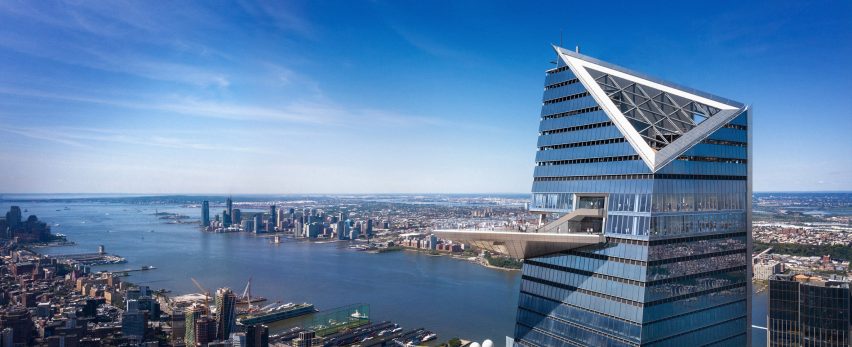
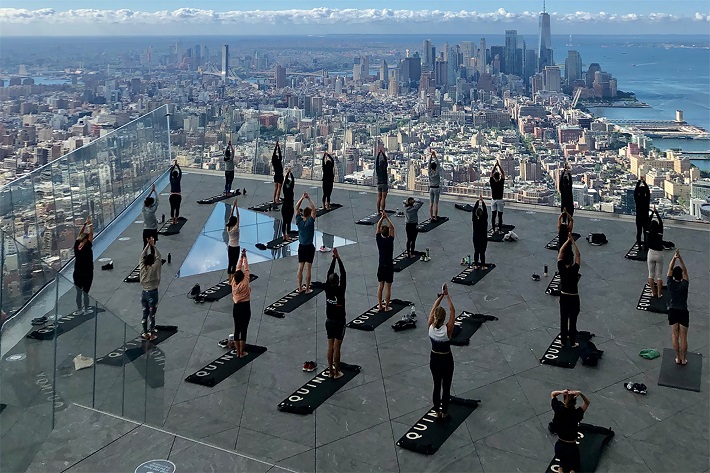
30 Hudson Yards (also the North Tower) is a super-tall skyscraper in the West Side area of Manhattan. Located near Hell’s Kitchen, Chelsea, and the Penn Station area, the building is part of the Hudson Yards Redevelopment Project, a plan to redevelop the Metropolitan Transportation Authority’s West Side Yard. It is the sixth-tallest building in New York City.
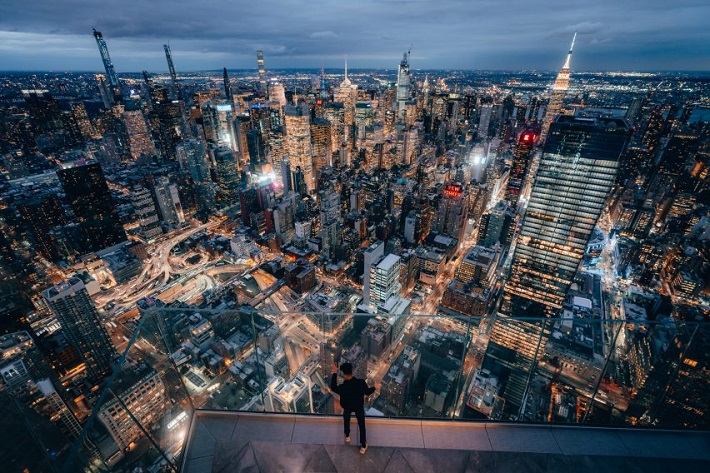
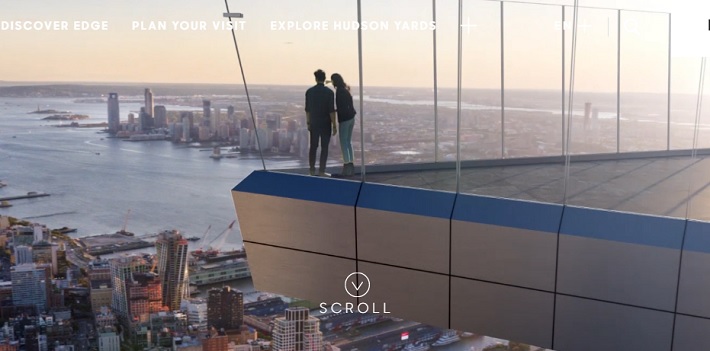
The building has a triangular observation deck jutting out from the 100th floor, with a bar and event space on the 101st floor. This observation deck, at 1,100 feet, opened in March 2020 and is the second highest outdoor observation deck in the Western Hemisphere, after Toronto’s CN Tower Outdoor SkyTerrace (342m or 1,122 feet). (New York’s One World Trade Center has an observation deck on floors 100-102, at 1,268 feet and Chicago’s Willis Tower has an observation deck on its 103rd floor, at 1,354 feet; however, they are both enclosed.) It offers new skyline views to the south and east of Manhattan, the surrounding boroughs, and New Jersey.
The Chemosphere is a strange looking house located in the San Fernando Valley area of Los Angeles. It was built in 1960 by by American architect John Lautner. It is a one story octagon with around 2200 square feet (200m2) of living space. Most distinctively, the house is perched atop a concrete pole nearly thirty feet high. This innovative design was Lautner’s solution to a site that, with a slope of 45 degrees, was thought to be practically unbuildable. Access is by a long stairway and a cable railway.
Because of a concrete pedestal, almost 20 feet (6.1 m) in diameter, buried under the earth and supporting the post, the house has survived earthquakes and heavy rains.
The building was first used in a dramatic film as a futuristic residence in the 1964 ABC-TV program “The Outer Limits: The Duplicate Man,” based on a science fiction story by American author Clifford D. Simak. Exterior scenes for the television episode were shot on location; a detailed sound-stage set of the house’s interior was built.
The lot had been given to a young aerospace engineer by his father-in-law; despite his own limited means, the engineer, Leonard Malin, was determined to live there. Malin had US $30,000 to spare. The cost to build Chemosphere, US $140,000 (equivalent to $1.21 million in 2019), was subsidized partly by barter with two sponsoring companies, the Southern California Gas Company and the Chem Seal Corporation. Chem Seal provided the experimental coatings and resins to put the house together and inspired the name Chemosphere. (Lautner originally wanted to call the house Chapiteau.) In the end Malin paid US$80,000 in cash. The Malins and their four children lived there until rising costs and the demise of the aerospace industry forced them to sell in 1972.
In 1976, the house’s second owner, Dr. Richard Kuhn, was stabbed to death at his home in a robbery by two men, who were subsequently convicted and sentenced to life in prison.
By 1997, the interior had become run down; for over 10 years it had been rented out and used for parties and as a result the interior finishes had undergone major and anachronistic alteration.[1] Because of its unique design it proved to be a difficult sell and sat on the market for most of its time as a rental property.
Since 1998, it has been the Los Angeles home of Benedikt Taschen, of the German publishing house Taschen, who has had the house restored; the only current problem with the residence is the relatively high cost of maintenance. The recent restoration, by Escher GuneWardena Architecture, won an award from the Los Angeles Conservancy. Preservation architect Frank Escher wrote the first book on Lautner a few years after moving to Los Angeles in 1988, and oversees the John Lautner Archives. During restoration the architects added details that were unavailable 40 years before, as the technology simply did not exist. The gas company tile was replaced by random-cut slate, which could not be cut thin enough in 1960, despite Lautner’s desire for such a finish. The architects also replaced the original thick framed windows with frameless glass. The owners commissioned a pastiche rug by German painter Albert Oehlen and a hanging lamp of bent plexiglas strips by Jorge Pardo, a Los Angeles artist.
Some people can go up as high as the sky and they don’t think twice about it. On high ladders, cranes, beams on high buildings or climbing up a soaring communications tower these guys never flinch.
Some of the best photos of this behaviour were taken during the construction of the Empire State Building in New York City. Construction of the 102 story building was completed in 14 months. An amazingly fast time for such a giant building.
Excavation of the site began on January 22, 1930, and construction on the building itself started symbolically on March 17—St.Patrick’s Day—per Al Smith’s influence as Empire State, Inc. president. The project involved 3,400 workers, mostly immigrants from Europe, along with hundreds of Mohawk iron workers, many from the Kahnawake reserve near Montreal. According to official accounts, five workers died during the construction. Governor Smith’s grandchildren cut the ribbon on May 1, 1931.
Some photos of the construction workers way way up:
Must be waiting for more girders.
Looks like they ordered out. No pizza back then so this must be cookies.
And today workers still go very high to construct very high structures and for maintenance.
The photo below shows workers doing maintenance on the highest communications tower in the United States. It is a TV tower in Sioux Falls, South Dakota. These guys went up 2,200 feet. That is a 1,000 feet higher than the Empire State Building.
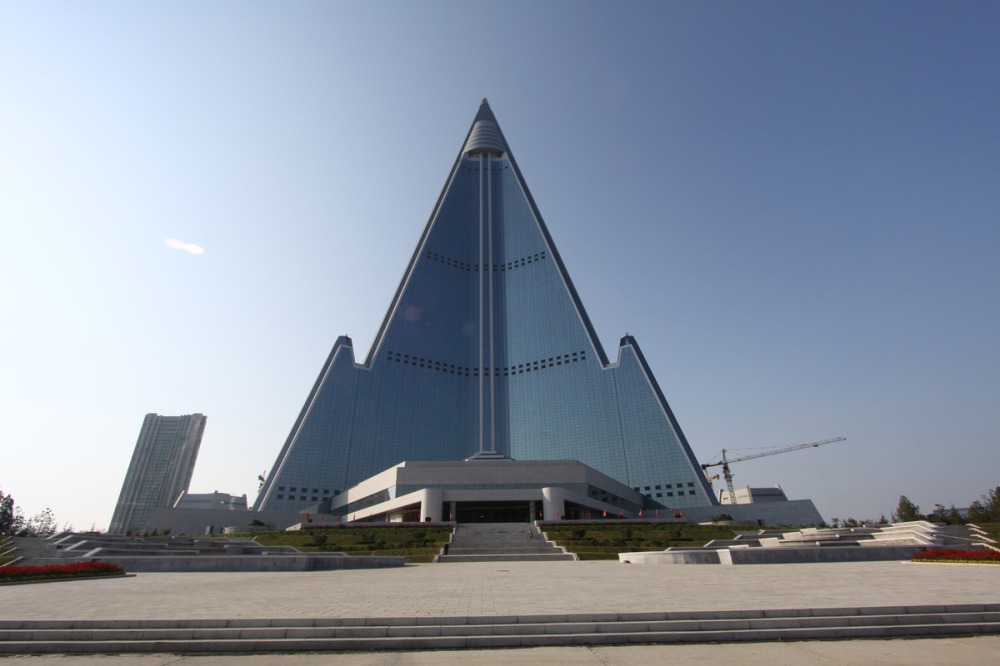
Pictures have emerged showing the inside of a 105-storey pyramid-shaped hotel that has been under construction in Pyongyang for 25 years.
North Korea began building the Ryugyong hotel in 1987, but construction was halted for 16 years when funds ran out.
Although work restarted in 2008, the hotel has become, for many, a symbol of North Korea’s thwarted ambitions.
The tour company that took the pictures say the hotel is now due to open in two or three years time.
Few people have been allowed inside the notorious hotel, which has been variously dubbed the “The Hotel of Doom” or “The Phantom Hotel”.
When conceived, the Ryugyong was intended to communicate to the world an impression of North Korea’s burgeoning wealth.
But other economic priorities meant that the hotel had to be put to one side, and it remained untouched until a city-wide “beautification scheme” was introduced five years ago.
At that time, external construction was forecast to take until the end of 2010, with work on the inside being completed in 2012 at the earliest.
But the photo of the interior taken by Koryo Tours, a Beijing-based company that specialises in travel to North Korea, shows a vast concrete lobby with barriers around the edge of each floor.
The bare interior has no sign of cabling, wiring or pipes, let alone furnishings
RYUGYONG HOTEL 330m (1,083ft) high, 105 floors. Construction started 1987, halted from 1993-2008.
With a sleek black facade set into a remote mountain side emblazoned with an eagle crest, you’d be forgiven for thinking the ominous-looking building in the South Tryolean town of Margreid was a James Bond set. It certainly resembles something Sir Ken Adam, the set designer responsible for Dr No.’s Subterranean bunker and the atmospheric Pentagon War Room in Dr. Strangelove, might have come up with. It is, in fact, a fire station designed by Italian architects Bergmeister Wolf. The architects were approached in 2010 to build a fire station in a cliff of sheer rock. The reason such a challenging spot was chosen was to conserve the small amount of arable land in the area. “The building could have been placed on a normal lot,” explained the architects, “but the community decided to build the fire station into the rock, saving valuable land for use as agriculture.”
The town of Margreid is located among breathtaking alps of northern Italy.
If you think the exterior is striking by itself, wait till you get a good look inside. Tucked away in the side of a cave, the interior of the station has a sophisticated design, that has won international architecture awards around the world. Three caverns had to be blasted into the mountain, in order to form a cave deep enough to fit the structure, which also serves as a good insulator for heat.
This genius structure was done by acclaimed Northern Italy architecture firm Bergmeisterwolf, which has offices in Italy and Austria. The interior of the building is definitely a sight to behold, with sleek and futuristic accents that you can simply marvel at.
The Woody Allen 1973 film Sleeper was on the tube the other day. The movie is quite funny and interesting in terms of its science fiction angle. The futuristic cars were sensational. But what really attracted my attention was the strange curved house. Something to behold.
When architect Charles Deaton designed the “Sculptured House” on Genesee Mountain just outside Denver in Colorado, he had definite ideas about its unique design. “People aren’t angular. So why should they live in rectangles?” he said.
There’s no way anyone could confuse this house with the rectangular homes of the 1960s. The 7,500-square-foot home is three levels and curves unpredictably. It was designed as a sculpture first; the floor plan for the home was drawn up later (thus it was given the name, “Sculptured House”).
The Deaton-designed house was built in 1963. Delzell Inc. was the original builder of the house on an experimental permit, Clifford M Delzell was owner operator of Delzell Inc.
The interior of the Sculptured House went largely unfinished and was vacant for almost three decades until entrepreneur and one-time Denver, Colorado economic-development chief John Huggins purchased the house in 1999. He built a large addition designed by Deaton with Nick Antonopolous before Deaton’s death in 1996, and commissioned Deaton’s daughter, Charlee Deaton, to design the interior, completed in 2003.
In 2006, fellow Denver entrepreneur Michael Dunahay purchased the house from Huggins. By late 2010, Dunahay had become delinquent on the nearly $2.8 million outstanding balance of his $3.1 million mortgage on the house, and the Public Trustee in Jefferson County, Colorado scheduled a foreclosure auction for November 10, 2010. The house was sold again in November 2010.
Woody Allen released Sleeper 37 years ago, and it’s still one of his top-ten grossing films. It generated about $18 million in sales at the time, but when that figure is adjusted for inflation, it grossed about $52.5 million, making it Woody Allen’s fifth most financially successful film. Sleeper famously ended with the line: “Sex and death: two things that come once in a lifetime. But at least after death you’re not nauseous.”









 The MarkoZen Blog