A diver has died after being attacked by a shark in front of his daughter, off the Tasmanian coast in Australia. The pair were collecting scallops near the town of Triabunna on Saturday morning when the attack happened.
The woman returned to their boat with the shellfish, but became concerned after her father, who was in his late 40s, did not resurface. She jumped back into the water to check on him and saw him being mauled by “a very large shark”, according to police.
“She immediately returned to the surface where she raised the alarm through setting off a flare and by making an emergency phone call,” said Tasmania Police Inspector David Wiss.
Earlier sighting
Sailors in the area rushed to the scene and hauled the man from the sea using the air line he was attached too.
But his injuries were too severe and he was pronounced dead.
The term shark attack is used to describe an attack on a human by a shark. Every year around 75 attacks are reported worldwide. Despite their relative rarity, many people fear shark attacks after occasional serial attacks, such as the Jersey Shore shark attacks of 1916, and horror fiction and films such as the Jaws series. Out of more than 480 shark species, only three are responsible for two-digit number of fatal unprovoked attacks on humans: the great white, tiger and bull; however, the oceanic whitetip has probably killed many more castaways, not recorded in the statistics.
Actor Robert Shaw between takes during the filming of the movie “Jaws.”
Russian president Vladimir Putin had a close call with a grizzly bear in north-central Siberia two days ago. Putin was swimming in an ice cold river when a giant 800 pound grizzly ran out of the tree line straight for the outdoor enthusiast Putin. Putin had to swim for his life just to keep ahead of the bone crushing jaws and flesh piercing claws of the mad bear. Just as the crazed grizzly was going to pounce on Vlad, the president’s security detail opened up with rocket propelled grenades and AK-47 machine guns, bringing the berserk grizzly down with a massive fusillade of firepower.
Vladimir breast stroking for his life
According to reliable sources, Vlad was mentally shaken after the incident. Prez Putin feels he has a metaphysical rapport with wild creatures. And this incident just didn’t jive with that perception. The Moscow Sun-Times is reporting that Vladimir is considering hunting the giant grizzlies in the near future.
A thousand miles to the west in Afghanistan, another bizarre attack occurred. In the towering Hindu Kush mountains of Afghanistan, what can only be described as a huge Yeti type creature ambushed a platoon of Taliban fighters. The anti-government Taliban had stopped in a mountain pass for a goat barbeque. All seemed well, the bearded Jihadists were mingling after the feast, discussing the after-life martyr paradise where they would be treated to free wine and unlimited virgin girls. When up from behind the group a fifteen foot brown Yeti stealthily snuck up and sent the Taliban mountain men to that very paradise they were lauding.
Just prior to the attack the Taliban had set up a camera for a group selfie
U.S. Special Forces soldiers came across the scene while on patrol and discovered the camera among the carnage. The Jihadists had been ripped to shreds the American commander reported. A Delta operator with the American patrol was later quoted as saying, “first we have to fight these suicidal Taliban fanatics, now we have a giant Sasquatch thingamajig lurking out there somewhere, what the f#@k is next in this crazy place?”
This was reported 2 months ago. Since then all U.S. forces have evacuated Afghanistan.
Eugene Bostick, an 80-year-old retiree in Fort Worth, Texas, spends his days operating what just might be the coolest train in the world. His homemade dog train takes rescued strays out for fun rides around the neighborhood and in the surrounding woods.
Eugene and his brother Corky live on a dead-end street where many locals bring their unwanted dogs to leave them behind. Eugene began adopting them and taking them for rides with his tractor. “We started feeding them, letting them in, taking them to the vet to get them spayed and neutered. We made a place for them to live,” Eugene told Dodo.
“I seen this guy with a tractor who attached these carts to pull rocks. I thought, ‘Dang, that would do for a dog train.’ I’m a pretty good welder, so I took these plastic barrels with holes cut in them, and put wheels under them and tied them together,” Eugene continued. “Whenever they hear me hooking the tractor up to it, man, they get so excited.”
“I started out with my tractor… I’d put 4-5 dogs in there and take them riding”
“All of a sudden, a couple more dogs showed up. I said, ‘Oh, that’s not enough room’ – and that’s when I came up with THAT”
“I’m a pretty good welder, so I took these plastic barrels with holes cut in them, and put wheels under…”
Now, the 80-year-old retiree takes his rescued dogs on a train ride twice a week
“Whenever they hear me hooking the tractor up to it, man, they get so excited”
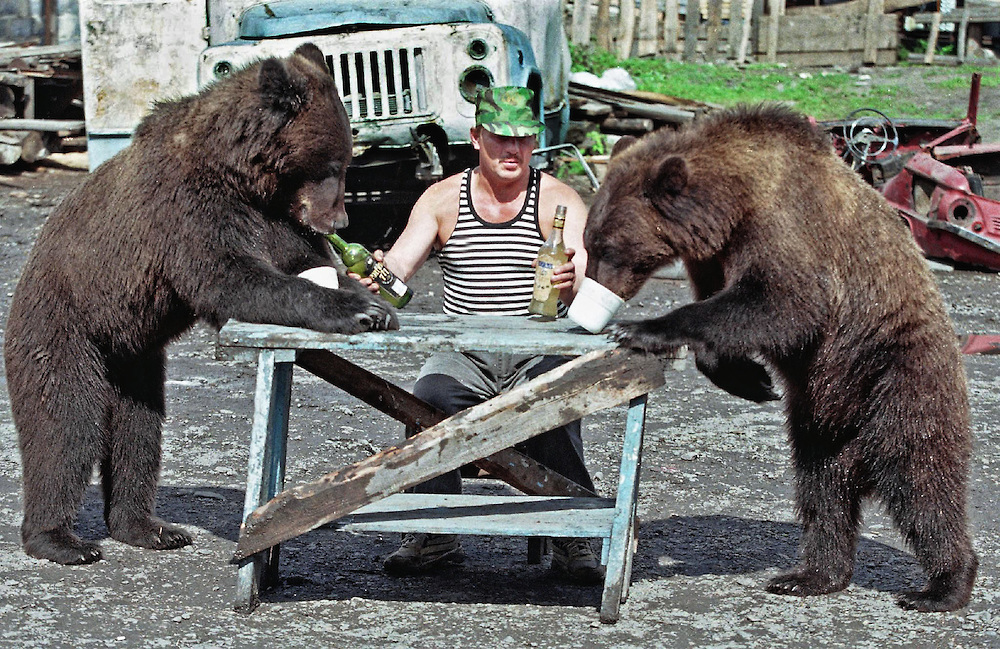
These two specimens don’t care about contemplation, they’re in a beer drinking contest!
MOS02-20010903-MARIINSK, RUSSIAN FEDERATION: Businessman Nikolai Kirpichnikov gives medovukha (self made alcohole drink based on honey) to his bears (bears like this drink very much and they receive it time to time) in the yard of his house in the town of Mariinsk in Kemerovo region (eastern Siberia), Saturday, 01 September 2001. Nikolay Kirpichnikov found three bear cubs four years ago in the forest when their mother was killed by a poachers. Untill now all three bears live in his house ian iron cage.
In this part of Canada the only snakes we have are harmless garter and green snakes. However, here in Manitoba we do have the Narcisse Snake Pits, see below. Although harmless, when I stumble upon a snake, I still jump and my heart rate goes up 50 percent. I can’t imagine being in a place infested with killer vipers.
Ilha da Queimada Grande, The Snake Island
Ilha da Queimada Grande, nicknamed Snake Island, is a 430,000-square-meter island located about 33 km off the coast of the state of São Paulo, Brazil. The island is home to a variety of snakes including an endemic species called the Golden Lancehead Viper (Bothrops insularis), which is one of the most venomous snakes in the world. According to a 2015 estimate, there are between two and four thousand snakes on the island, which equates to an average of one snake per 75 square meters over the entire island. Exaggerated claims suggest there are as many as five snakes per square km. Local folklore is also filled with stories of horrible deaths suffered by those who wandered onto the shores including that of a fisherman who landed onto the island in search of bananas, and the family of a lighthouse keeper who lived there.
Hope this guy has heavy boots and Kevlar pants.
Officially, there never has been any report of a human being bitten by the golden lancehead viper, so the toxicity of its venom on humans couldn’t be tested, but other lanceheads are responsible for more human morbidity and deaths than any other group of snakes in either North or South America. A bite from a lancehead carries a seven percent chance of death, and even with treatment, victims still have a three percent chance of dying. Death usually results from intestinal bleeding, kidney failure, hemorrhage in the brain and severe necrosis of muscular tissue. The venom actually melts flesh and tissue making it easier for the snake to digest. Tests have found that the venom of the golden lancehead viper is the fastest acting in the genus Bothrops.
The snakes on Queimada Grande were originally the same species as those on the mainland, when the island and the mainland were a connected landmass. Between 10,000 and 12,000 years ago when the sea level rose, Queimada Grande was isolated from mainland Brazil and the snake population was marooned. With no small mammals to hunt, the snakes adapted to life to the trees because their main source of food were the birds that passed over the island on their migration. The islanders learned to hold it high in the trees by the tail, and pluck birds who rested on the branches. Their venom also evolved to become five times more potent as that of their brethren on mainland. This was required to kill the birds faster, otherwise they would fly away. When there are no passing birds, they filled themselves with lizards, centipedes, slugs and frogs.
The island is currently off-limits to human, and the Brazilian government strictly controls who visits the island and when. Visitors are mostly biologists and researchers, who are granted special permission to visit the island in order to study the golden lanceheads. The Brazilian navy does make an annual stop on the island for maintenance of the lighthouse, which, since the 1920s, has been automated.
Despite the dangers, wildlife smugglers sneak into the island to trap the golden lanceheads which fetch a high price in the black market.
Mean looking SOB
Family photo
Bush whacker
This is one badass serpent
The Narcisse Snake Pits are located 6 km north of the rural settlement of Narcisse in the province of Manitoba in Canada. Fifty kilometres north of Winnipeg. These pits harbour the largest concentration of Red-sided Garter Snakes in the world. During winter, the snakes hibernate inside subterranean caverns formed by the area’s water-worn limestone bedrock. Shortly after the snow melts in late April and early May, tens of thousands of these snakes slip out of their limestone dens and hang out on the surface of the ground performing their mating rituals in great tangled heaps.
The male snakes are usually the first to awaken from the long winter hibernation and reach the surface where they wait patiently for the females to come out. As the females slither out of the caves, the males pounce on the helpless females eager to mate with them. As many as 50 or more males attack a single female forming a writhing, moving “mating ball” of snakes. These massive snake balls are everywhere – on ledges, tree limbs, on plants and on the ground. Some mating balls slowly roll down rocks like tangled balls of twine. Professor Mason, a professor of zoology from Oregon State University estimated that there were 35,000 snakes at one pit alone and more than 250,000 in the general area.
There are four active snake dens at the Narcisse Wildlife Management Area. The dens are connected by a three-kilometer self-guiding interpretive trail. Tourists come from all over the world to view this spectacle from observation platforms built next to the dens, as do many scientists to study these non-venomous creatures.
The population of red-sided garter snakes around Narcisse was roughly 70,000 until terrible weather in 1999 killed tens of thousands of them before they could reach their winter dens. This tragedy triggered concern about the snakes’ biannual migratory path, which cuts right across Highway 17. Every year, ten thousand snakes trying to get to or from their winter dens had been crushed under the wheels of vehicles. This had not been a problem before, because the vast population compensated for the losses. After the winter of 1999, however, the population of garter snakes was dangerously low, causing Manitoba Hydro and volunteers to intervene.
Foot-high snow fences were built to force snakes into 15-cm tunnels that went under Highway 17. Since some snakes still managed to squeeze under the fence and onto the road, signs were put up during the migratory season urging motorists to slow down to avoid accidentally driving over snakes. These measures worked, and now less than a thousand snakes per season are killed on the highway.
Even though I live near this place, I’m never going anywhere even close to those pits.
On a 1,666-square-foot curved LED screen in Tokyo’s Shinjuku district, a gigantic cat looms over the crowd near a busy railway station. Part of an experiment in “digital signage,” the scale of the feline is startling. Finally a pet cat worthy of Godzilla!
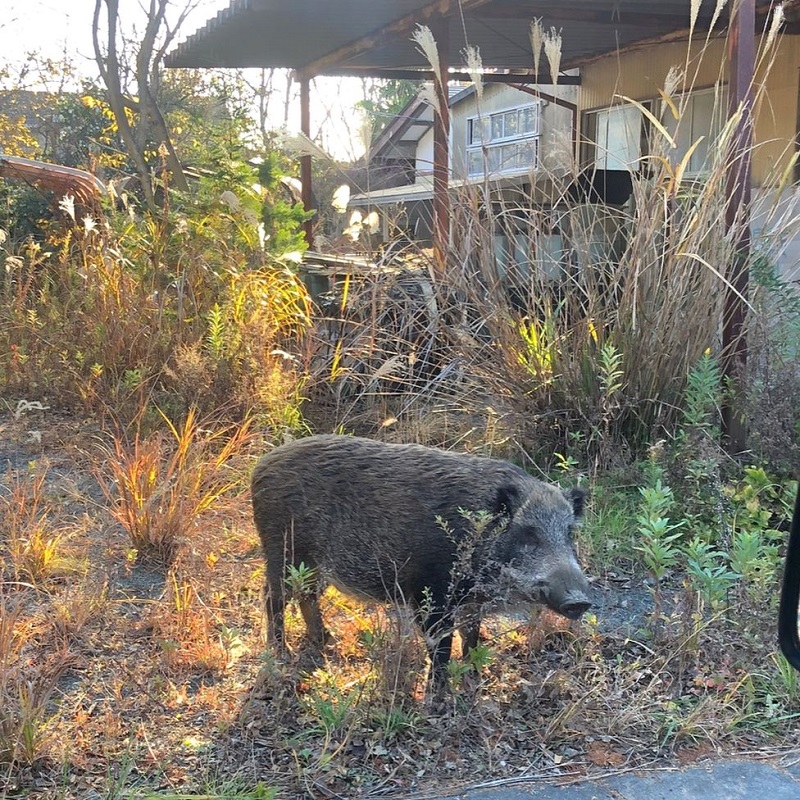
“Once people were gone, the boar took over,” explains Donovan Anderson, a researcher at Fukushima University in Japan.
His genetic study of the wild boar that roam in an area largely abandoned after Japan’s 2011 nuclear disaster – has revealed how the animals have thrived.
Using DNA samples, he also discovered that boar have bred with domestic pigs that escaped from farms.
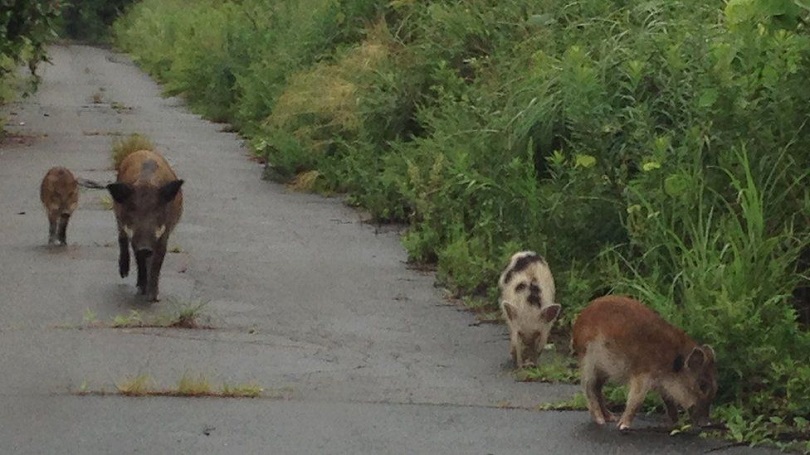
This has created wild pig-boar hybrids that now inhabit the zone.
“While the radiation hasn’t caused a genetic effect, the invasive domestic pig species has,” Mr Anderson explained.
Spotted wild boar are indicative of the interbreeding with domestic pigs following the 2011 disaster
The disaster at Fukushima’s nuclear power plant was caused by the biggest earthquake ever to hit Japan. A gigantic wave surged over defences and flooded the nuclear reactors. Subsequently, a zone surrounding the damaged plant – akin to Chernobyl’s exclusion zone – was evacuated.
The findings, published in the journal Proceedings B, paint a biological picture from a vast experiment that was caused by a nuclear disaster. The scientists used DNA to track the legacy of the event on the landscape – finding out what happens to wild animals in a radiation-contaminated area that is suddenly deserted by humans and, at the same time, invaded by domestic livestock.
Examining the DNA of the wild boar and escaped domestic pigs showed that what researchers called a “biological invasion” could be seen in the boar’s genes.
It also revealed that those domestic pig genes have been gradually “diluted” over time.
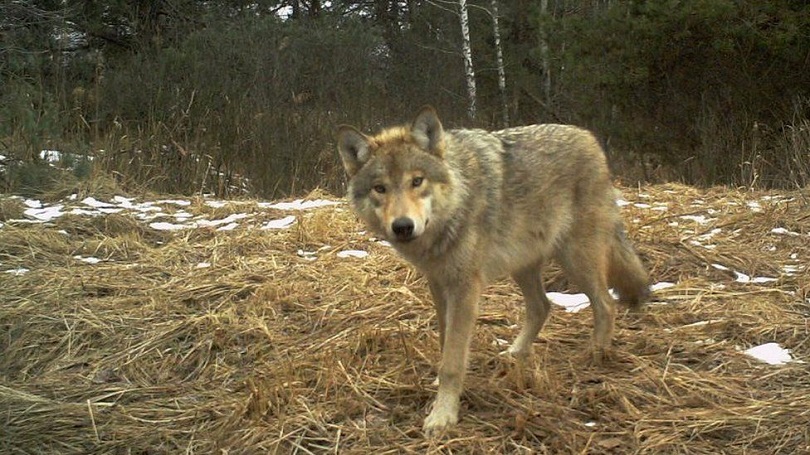
Lack of hunting by humans may have contributed to the success of wolves in the Chernobyl exclusion zone
“I think the pigs were not able to survive in the wild, but the boar thrived in the abandoned towns – because they’re so robust,” explained Donovan Anderson.
So, he said, while the evacuated area was the origin of this hybridisation, or cross-breeding, the hybrid pigs then go on to breed with wild boar. As Prof Shingo Kaneko from Fukushima University’s Institute of Environmental Radioactivity put it: “Those invasive genes are disappearing, and the natural situation is coming back.”
Since 2018, people have started to move back into previously abandoned areas near Fukushima.
“Humans are really the only predators for these wild boar,” said Mr Anderson. “So as people come back, it’ll be really interesting to see what the boar do.”
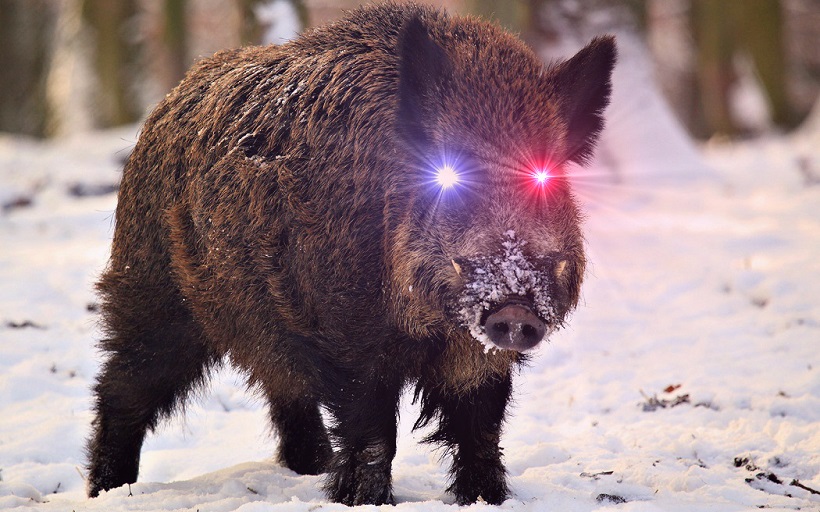
Thankfully no mutations have occurred. Or did they?







 The MarkoZen Blog
