The picture below is not that of a painting. It was taken inside the Namib-Naukluft Park in Namibia, in a strange and alien landscape called Dead Vlei. Although sounds similar to “dead valley”, Dead Vlei is not an actually valley. The term means “dead marsh” (from English dead, and Afrikaans vlei, a lake or marsh in a valley between the dunes).
Deadvlei is a white clay pan located near the more famous salt pan of Sossusvlei, scattered with hundreds of dead Acacia trees that once thrived when water from the Tsauchab River soaked this piece of land. Some 900 years ago the river diverted its course, leaving Dead Vlei literally high and dry. Dead Vlei has been claimed to be surrounded by the highest sand dunes in the world, the highest reaching 300-400 meters which rest on a sandstone terrace.
A curious piece of trail camera footage from Canada shows a mysterious set of lights that rise up from the ground and then float across the sky. The peculiar scene was reportedly captured on June 21st on the property of Anne Vickers in the community of Caledon, Ontario. Sharing the footage with MUFON, she indicated that the trail camera was seemingly activated by a raccoon that was roaming around in her yard. In the video, shortly after the creature caused the motion-activated device to start filming, what appears to be an object sporting nine lights in a straight line emerges from the tall grass next to the animal, which has no reaction to the eerie aerial interloper. The peculiar UFO then flies overhead and vanishes from view.
According to Vickers’ MUFON report, “this property has no houses nearby, or any roads, and it’s not a flight path for airplanes.” She goes on to note that “there were 50-foot trees behind the lights” and, as such, argues that “there is no way it could have flown through them.” As for what the object might have been, setting aside the extraterrestrial hypothesis, some observers have suggested that it could have been some kind of drone, though why it would be lurking on Vickers’ property is another mystery altogether. More skeptical observers have also posited that the footage may be a digital creation, which sadly cannot be discounted in this day and age.
Death was a garage rock and protopunk demo band formed in Detroit, Michigan, in 1971 by the brothers Bobby (bass, vocals), David (guitar), and Dannis (drums) Hackney. The African American trio started out as an R&B band but switched to rock after seeing an Alice Cooper show. Music critic Peter Margasak (incorrectly denoting the youngest brother) retrospectively wrote of their musical direction: “The youngest of the brothers, guitarist David, pushed the group in a hard-rock direction that presaged punk, and while this certainly didn’t help them find a following in the mid-70s, today it makes them look like visionaries.” The band broke up by 1977 but reformed in 2009 when the Drag City label released their 70s demos for the first time.
If you need me, call me. No matter where You are, no matter how far. Just call my Name. I’ll be there in a hurry. On that You can depend and never worry. (You see, my love is alive It’s like a Seed that only needs the thought of you to Grow. So if you feel the need for company, Please, my darling, let it be me. I may not Be able to express the depth of the love I feel for you, but a writer put it very nicely When he was away from the one he loved. He said down and wrote these words:)
No wind, (No wind) no rain, (no rain) Nor winter’s cold Can stop me, babe (oh, babe) baby (baby) If you’re my goal
No wind, no rain, Can stop me, babe If you wanna go
I know, I know you must follow the sun Wherever it leads But remember If you should fall short of your desires Remember life holds for you one guarantee You’ll always have me
And if you should miss my love One of these old days If you should ever miss the arms That used to hold you so close, or the lips That used to touch you so tenderly Just remember what I told you The day I set you free
Ain’t no mountain high enough Ain’t no valley low enough (Say it again) Ain’t no river wild enough To keep me from you
Ain’t no mountain high enough Ain’t no valley low enough (Say it again) Ain’t no river wild enough To keep me from you
Ain’t no mountain high enough Nothing can keep me To keep me from you
Ain’t no mountain high enough Ain’t no valley low enough (One more time) Ain’t no river wild enough (Say it again) To keep me from you
Ain’t no mountain high enough Nothing can keep me To keep me from you
An U.S. flag flies at Patriot Park where a collection of monuments stand in tribute to veterans in Columbia Falls, Maine, Saturday, May 27, 2023. The Worcester family hopes to build a $1 billion world’s tallest flagpole theme park nearby. (AP Photo/Robert F. Bukaty)
COLUMBIA FALLS, Maine (AP) — Lobster boat engines rumble to life in quiet coves. Lumberjacks trudge deep into the woods. Farmers tend expanses of wild blueberries. Maine’s Down East region is where the sunlight first kisses a U.S. state’s soil each day, where the vast wilderness and ocean meet in one of the last places on the East Coast unspoiled by development.
Which makes it a striking backdrop to one family’s bold vision for the region: a flagpole jutting upward from the woodlands toward spacious skies — the tallest one ever, reaching higher than the Empire State Building. And atop it? A massive American flag bigger than a football field, visible from miles away on a clear day.
To promoters, the $1 billion project, funded in part by donations, would unite people of all political stripes and remind them of shared values in an era of national polarization. Here’s how Morrill Worcester, founder of Worcester Wreath, tells it: “We want to bring Americans together, remind them of the centuries of sacrifice made to protect our freedom, and unite a divided America.”
So far, the project — called the Flagpole of Freedom Park — has done precisely the opposite. In Columbia Falls, population 485, the place closest to the patch of land where the pole would rise, the debate has laid bare community and cultural flashpoints.
Does the quiet area want the visitors it would bring? Would the massive undertaking scar the landscape? How do you balance development and environmentalism? How do traditional industries fare alongside service-economy jobs?
And perhaps most significant of all: How does an American town demonstrate its love of country in an era when even the Stars and Stripes themselves have been politicized?
The flagpole alone is an audacious proposal. It would be 1,461 feet tall, surpassing the Empire State Building, with elevators bringing people to observation decks where they could see clear to Canada. Frets one resident: “It’s like putting the Eiffel Tower in the Maine wilderness.”
But that isn’t all. Morrill Worcester envisions a village with living history museums telling the country’s story through veterans’ eyes. There would be a 4,000-seat auditorium, restaurants and monument walls with the name of every deceased veteran dating to the Revolution. That’s about 24 million names. Slick presentations showed what amounted to a patriotic theme park, replete with gondolas to ferry visitors around.
In Columbia Falls, many were stunned by the scale. It would require paving over woods for parking spaces and construction of housing for hundreds, maybe thousands of workers, potentially transforming this oasis into a sprawl of souvenir shops, fast-food restaurants and malls.
From overhead, the landscape here remains a sprawling green canopy. Below are dozens of streams, ponds and lakes brimming with trout and historic runs of Atlantic salmon. Deer, moose, black bears, beaver and fisher cats wander the forest floor. Interspersed with the woods are wild blueberry barrens.
This definitely would be the MOTHER of all Flagpoles!
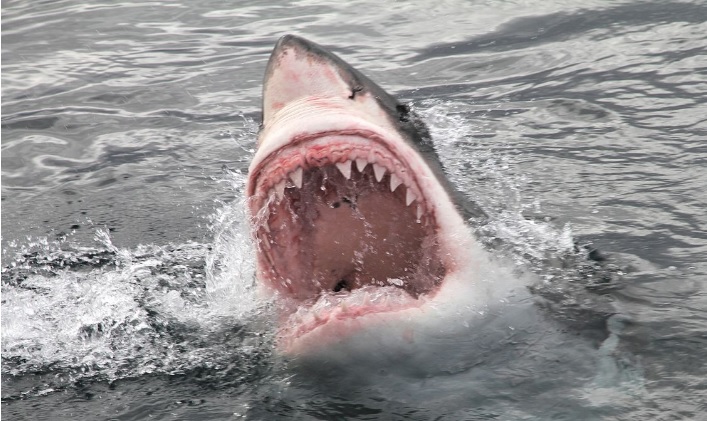
NatGeo Sharkfest episode focuses on stories of whales and dolphins saving people from sharks. But are they really trying to protect us?
Martin Richardson was swimming in the Red Sea in Egypt when he was attacked by a mako shark (Isurus oxyrinchus). He was bitten approximately five times and was waiting to die when something unusual happened.
“There was no reason for the shark to stop,” he said in “Saved from a Shark,” a new show from National Geographic. “I had lost approximately 5 pints [2.8 liters] of blood. You only have 8 to 9 [pints, or 4.5 to 5 L] in your body. I was waiting for a feeding frenzy… I knew it was circling me… I turned away and looked at the mountains. I gave up.”
At this moment, a group of dolphins appeared just behind Richardson, and the attack stopped. He was then pulled onto a boat that had been racing to get to him before the shark did and rushed to hospital, where needed more than 300 stitches. “I firmly believe the dolphins saved my life,” he said.
Do whales and dolphins really protect humans from sharks? “Saved from a Shark” — part of NatGeo’s SharkFest — looks closely at four cases where people were seemingly protected from the predators in the water.”Being saved by another animal is certainly a very romantic notion,” Tom Hird, marine biologist and shark conservationist, said in the program.
But it’s not so clear that’s what’s actually going on in most cases.
Mike Heithaus, professor in the department of biological sciences at Florida International University, said it’s unlikely dolphins were intentionally saving Richardson’s life.
“The dolphins see a big cloud of blood, they know a shark is in the area.” If they had young, they’d want to scare the shark away from the young. “They may not have been trying to save Martin,” he said in the show.
In another case explored in the film, Nan Hauser, director of the Cook Islands Whale Research, revisited the moment in 2017 when a humpback whale (Megaptera novaeangliae) she was diving with saved her from a huge tiger shark (Galeocerdo cuvier) that was stalking her. In footage shot during the encounter, Hauser is approached by the whale, pushed and then lifted onto its snout.
“[The whale is] looking at me and I know he’s got something to tell me,” she said in the program. “I do not understand. He wants me to understand. I look down into the deep blue. And I then I see [the tiger shark] right below me.
“I know — and the whale knows — this is a serious situation and I want to get out of the water. Then all of a sudden I was swooped up by the whale… now he’s got me right on the front of his face.”
The footage captured shows the whale engaging in a behavior similar to what it would do to protect a calf, Heithaus said.
Howether, Heithaus said the most unusual case was when a group of lifeguards swimming off the coast of New Zealand were encircled by a group of dolphins. Unbeknownst to the group, a great white shark (Carcharodon carcharias) was stalking them. “I’m used to having dolphins swimming alongside me, but this was totally different,” Rob Howes, one of the lifeguards in the water, said in the program.
One of the larger male dolphins charged towards him, and he then realized it was targeting the approaching shark. “Everything built to a big crescendo. Then everything went calm. The shark disappeared very quickly. It was bizarre.”
Heithaus said in most cases, whales and dolphins are probably not protecting humans for altruistic reasons — more likely they are trying to protect themselves or their young. But with the lifeguards in New Zealand, “this is one case where it really seemed like the dolphins were protecting people,” he told Live Science in an email.
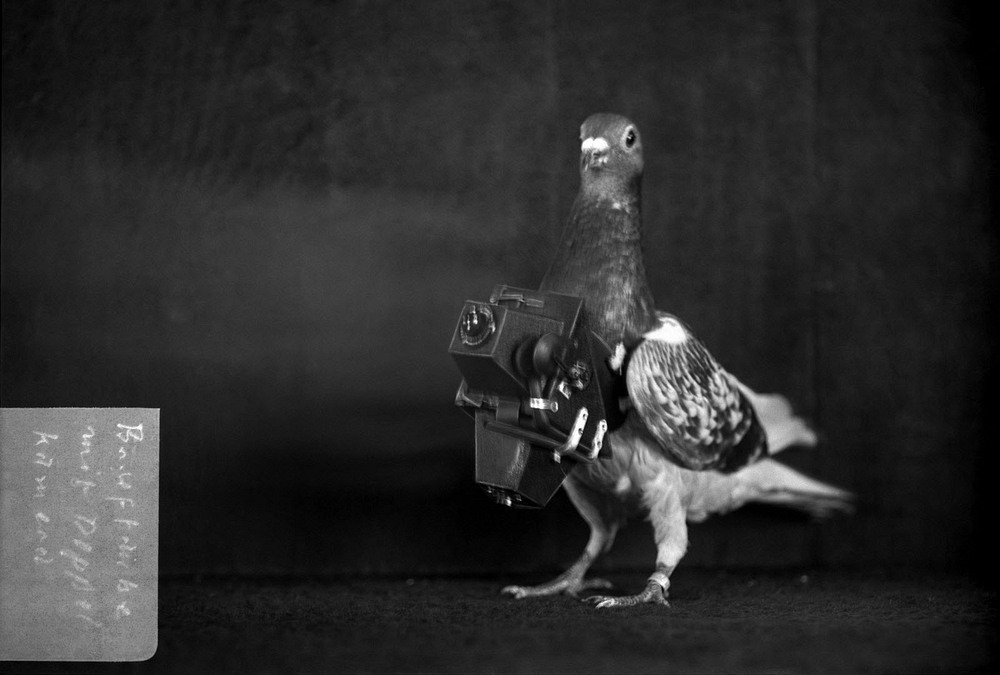
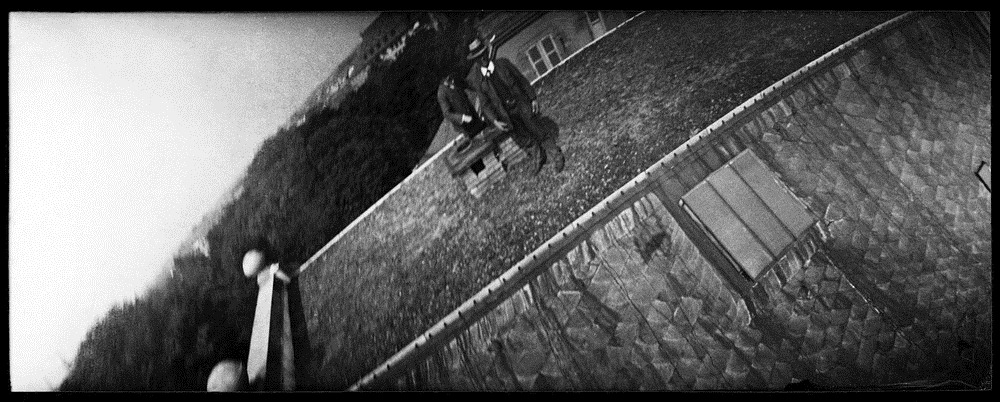
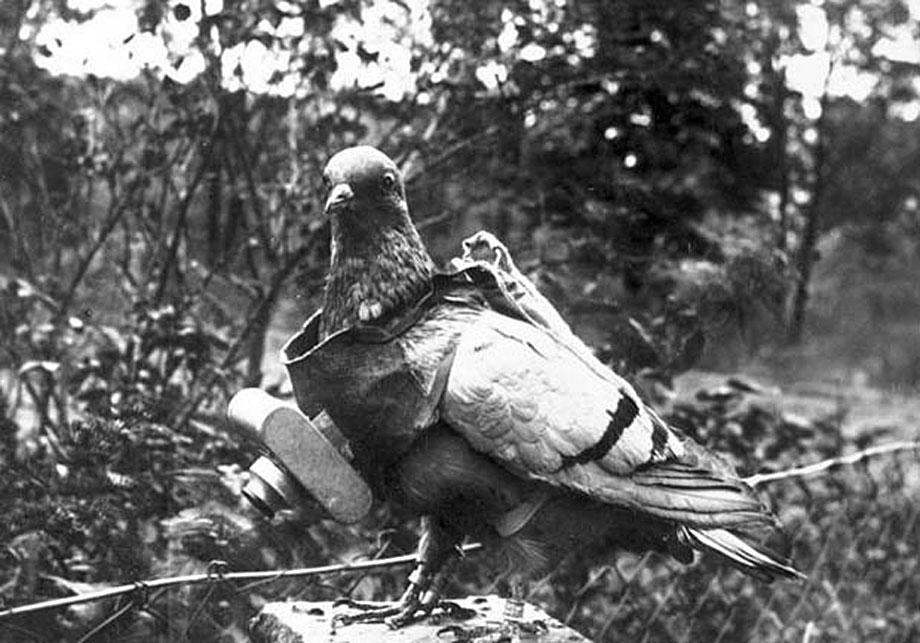
At the turn of the last century, when aviation was still in its infancy, a German named Julius Neubronner submitted a patent for a new invention—a miniature camera that could be strapped to the breast of a pigeon so that the bird could take flight and snap pictures from the air.
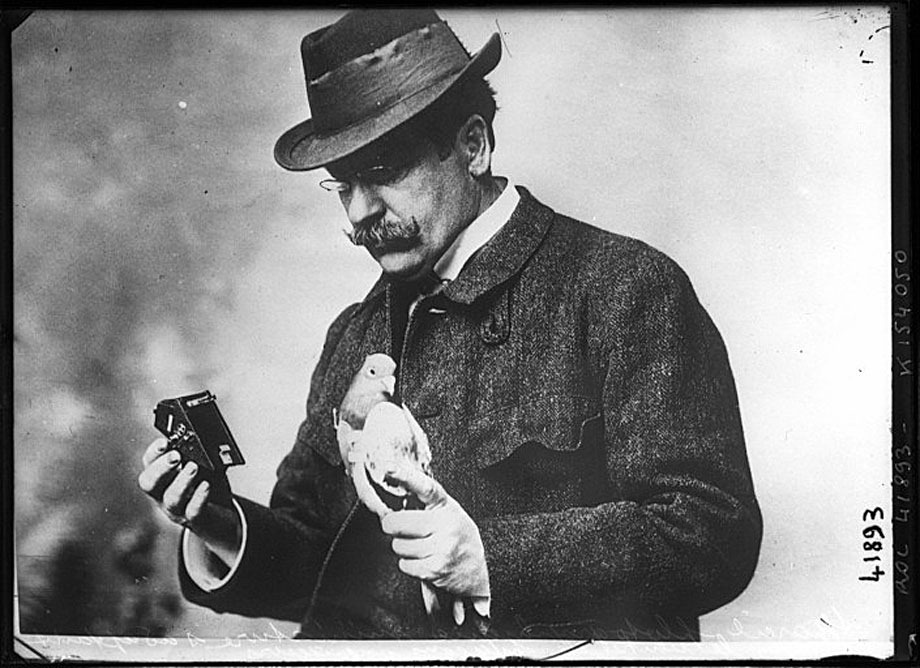
Julius Neubronner was an apothecary who employed pigeons to deliver medications to a sanatorium located near his hometown Kronberg, near Frankfurt. An apothecary is one who makes medicines. A pharmacist is a more modern word, but in many German speaking countries, such as Germany, Austria and Switzerland, pharmacies are still called apothecaries.
Apothecary was Julius Neubronner’s family profession. His father was an apothecary, and so was his grandfather. In those days, homing pigeons were used extensively to carry messages and small supplies. It was Julius’s father’s idea to use pigeons to receive prescriptions from the sanatorium and send out medicinal supplies in a hurry—a practice that continued for more than half a century until the sanatorium closed.
One day, Neubronner let out a pigeon on an urgent errand but it didn’t return. When several days passed and there was still no sign of the bird, Neubronner assumed the pigeon was lost, or it got caught and killed by predators. A month later, the lost messenger showed up unexpectedly at Neubronner’s place. The bird appeared well fed, which got Neubronner into thinking. Where had he gone? Who had fed him?
Neubronner decided that he would start tracking his pigeons’ future travels.
Julius Neubronner with one of his pigeons.
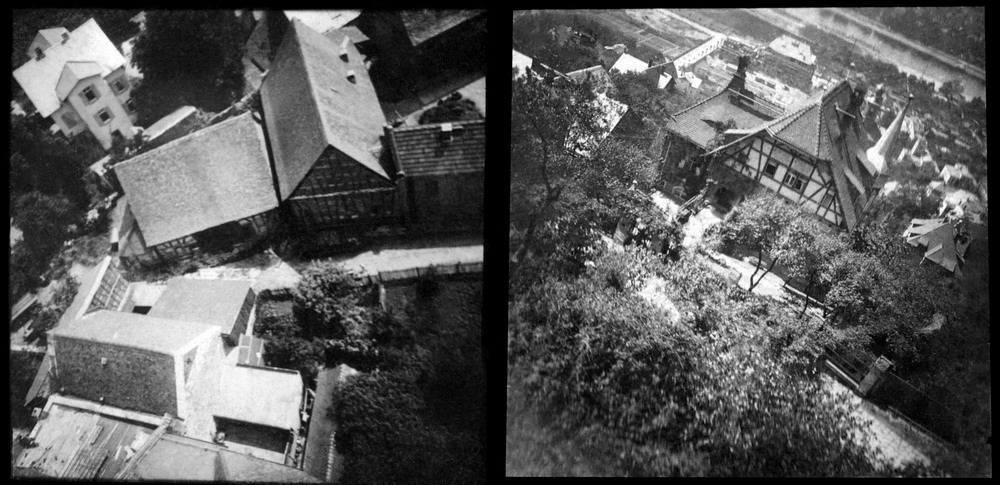
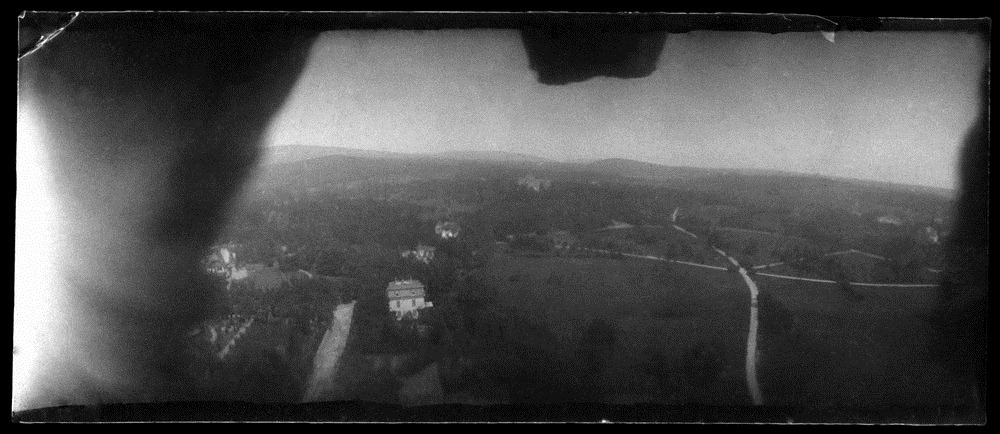
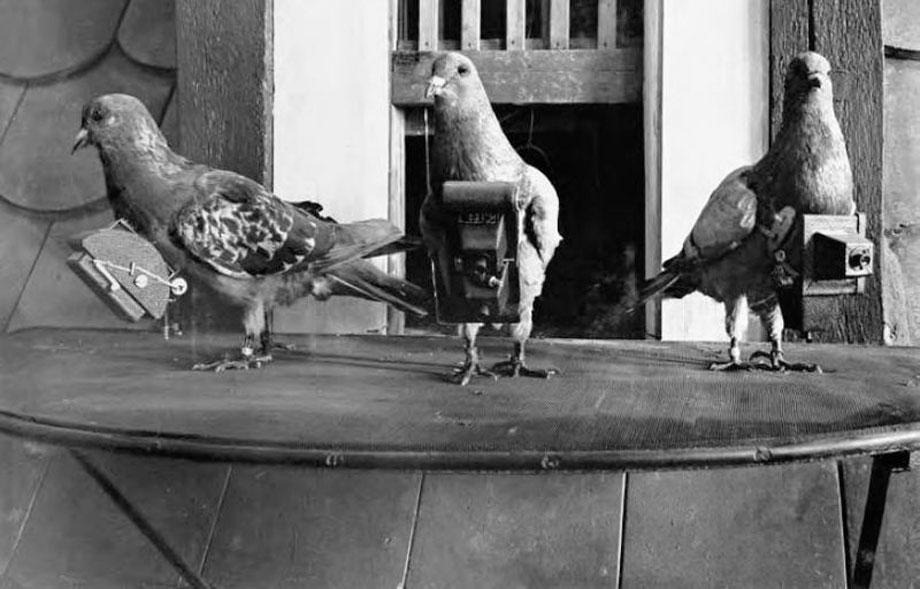
Being a passionate do-it-yourself amateur photographer, it didn’t take long for Neubronner to fashion a miniature wooden camera which he fitted to the pigeon’s breast by means of a harness and an aluminum cuirass. A pneumatic system in the camera opened the shutter at predetermined intervals and the roll of film, which moved along with the shutter, took as many as thirty exposures in a single flight. The entire rig weighed no more than 75 grams—the maximum load the pigeons were trained to carry.
The pictures turned out so good that Neubronner started making different models. One system, for instance, was fitted with two lenses pointing in opposite directions. Another one took stereoscopic images. Eventually, Neubronner applied for a patent, but the patent office threw out his application citing that such a device was impossible as they believed a pigeon could not carry the weight of a camera. But when Neubronner presented photographs taken by his pigeons, the patent was granted in 1908.
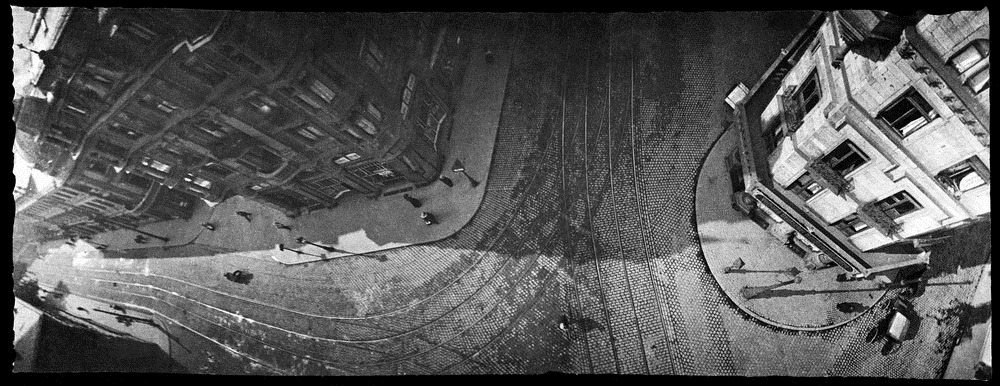
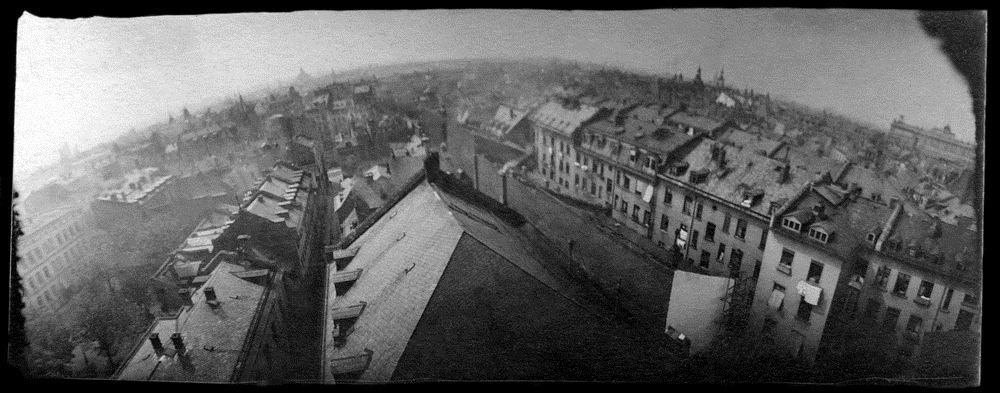
Aerial photograph of Frankfurt.
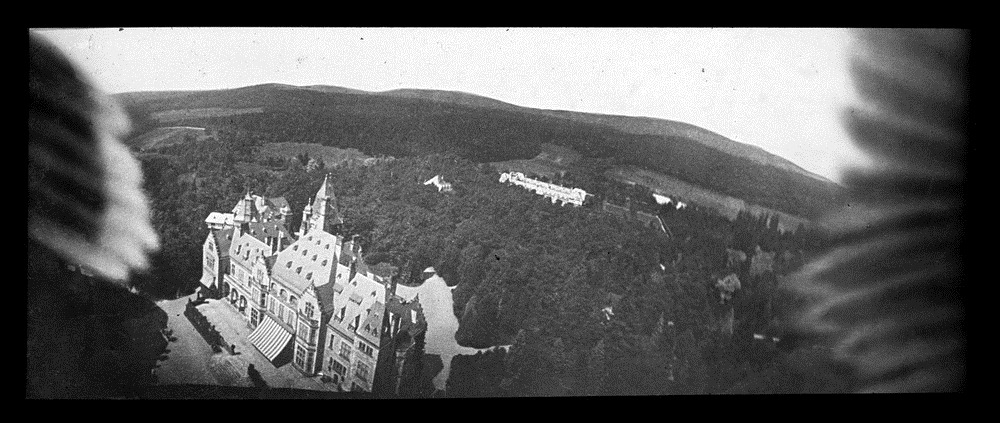
Aerial photograph of Schlosshotel Kronberg.
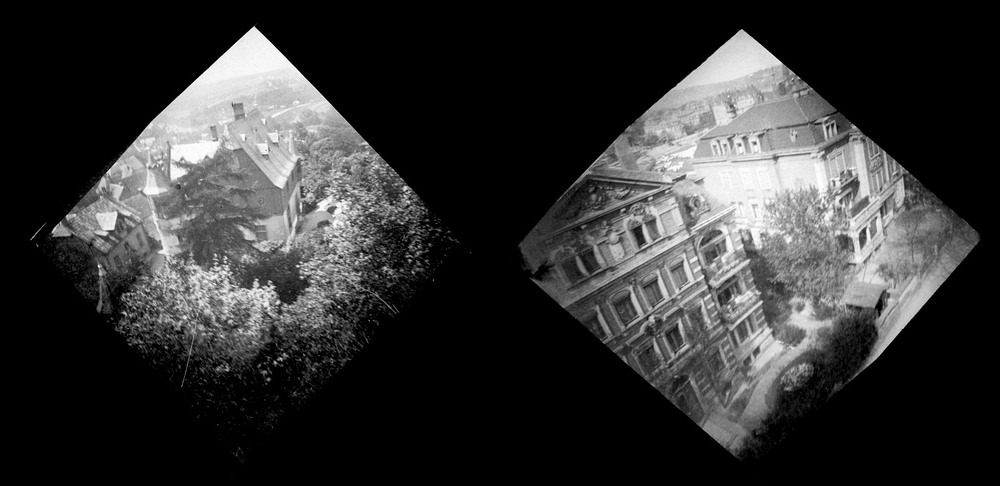
Neubronner exhibited his photographs in several international photographic exhibition gaining him accolades. In one such exhibition in Dresden, spectators watched as the camera-equipped carrier pigeons arrived at the venue, and the photos were immediately developed and turned into postcards which they could purchase.
The technology was soon adapted for use during the First World War, despite the availability of surveillance aircraft then. Pigeons drew less attention, could photograph enemy locations from a lower height, and were visibly indifferent to explosions on a battlefield.
Neubronner’s avian technology saw use in the Second World War too. The German army developed a pigeon camera capable of taking 200 exposures per flight. The French too claimed they had cameras for pigeons and a method to deploy them behind enemy lines by trained dogs. Around this time, Swiss clockmaker Christian Adrian Michel perfected a panoramic camera and an improved mechanism to control the shutter. Pigeon photography was in use as late as the 1970s, when the CIA developed a battery-powered pigeon camera, though the details of the camera’s use are still classified.
Aerial photographs of Dresden.
Today, aerial photography has been replaced by aircrafts, satellites, and more recently, by affordable drones. But the legacy of Julius Neubronner’s pigeon photography lives on in these images which are among the very early photos taken of Earth from above.
Bonus fact: So what happened to Neubronner’s pigeon who stayed away from the owner for a month and returned fattened up? It had flown away to Wiesbaden, some twenty kilometers away, and was taken care of by a restaurant chef.
TAVARUA, FIJI — Larry Page, the co-founder of Google, has spent much of the COVID-19 pandemic on tropical islands in Fiji, entering the country via a government system that allows wealthy individuals to avoid COVID-19 travel restrictions, according to Business Insider.
Page has stayed mostly on Tavarua island, to the west of the main Fijian island, according to two different people who have seen him there in the past year, cited by Insider. Fiji has closed its borders to tourists and business passengers during the pandemic. However, it has made an exception for ‘for yachts and pleasure craft wanting to explore our islands,’ in the form of what it calls “Blue Lanes.”
Under the system of Blue Lanes, yacht owners can enter the country with minimal restrictions, including a negative COVID test. They must quarantine for 14 days, but this includes time spent travelling on their vessels. Page’s time in…
Vanilla, a 28-year-old chimpanzee, had never been outside of a cage or enclosure. She is one of the surviving chimps from the New York-based Laboratory for Experimental Medicine & Surgery in Primates (LEMSIP). Vanilla and her sister, Shake, have a new island home at Save the Chimps in Fort Pierce, Florida.

![adeadvlei-17[6]](https://markozen.com/wp-content/uploads/2023/07/adeadvlei-176.jpg)
![adeadvlei-8[2]](https://markozen.com/wp-content/uploads/2023/07/adeadvlei-82.jpg)
![adeadvlei-9[5]](https://markozen.com/wp-content/uploads/2023/07/adeadvlei-95.jpg)
![adeadvlei-16[2]](https://markozen.com/wp-content/uploads/2023/07/adeadvlei-162.jpg)
 Abgestorbene Akazien im Dead vlei, Namibia







 The MarkoZen Blog