Thomas Barbèy grew up in Geneva, Switzerland, across the street from the “Caran D’ache” factory, the largest manufacturer of art supplies. He started drawing seriously at the age of 13, using black “encre de Chine” and gouaches for color. His influences were Philippe Druillet, Roger Dean and H.R. Giger.
After living in Geneva for 17 years and designing posters for musical bands, he decided to move to Italy. Thomas lived in Milan for 15 years making a living as a successful recording artist, lyricist and fashion photographer. Today, he resides in Las Vegas and travels the world, taking his camera wherever he goes.
Thomas has been a photographer for over twenty years now and prefers to use his old Canon AE1s when he shoots in 35mm or his RB67 when he shoots in medium format. More recently, he has been doing Black and White Photomontages for the sole purpose of doing Fine Art, without working for a specific client.
He’s combined several images taken over a period of twenty years to create surreal situations with the help of the enlarger in a dark room. His work has a specific style and is very characteristic. He only works with Black and White, including Sepia toning at times. Thomas exhibits in galleries throughout the world and is included in many private collections.
The Graphics Interchange Format (better known by its acronym GIF) is a bitmap image format that was introduced by CompuServe in 1987 and has since come into widespread usage on the World Wide Web due to its wide support and portability.
The format supports up to 8 bits per pixel for each image, allowing a single image to reference its own palette of up to 256 different colors chosen from the 24-bit RGB color space. It also supports animations and allows a separate palette of up to 256 colors for each frame. These palette limitations make the GIF format less suitable for reproducing color photographs and other images with continuous color, but it is well-suited for simpler images such as graphics or logos with solid areas of color.
A two-year-old boy in Utah is being hailed as a hero after he somehow summoned the strength to move a dresser that had toppled over and trapped his twin brother.
The incredible incident occurred last week when the two rambunctious toddlers, Bodie and Brock Shoff, were climbing on top of the set of drawers and their combined weight caused it to fall to the floor.
In the process, Brock became dangerously wedged under the dresser, much to the consternation of his brother Bodie.
Rather than run and get help, the level-headed youngster simply regains his bearings from the fall, assesses the situation, and then sets about rescuing his brother.
Although the first few attempts prove futile, eventually Bodie seems to muster a miraculous level of force and actually moves the dresser from atop the struggling Brock, allowing him to squirrel out from the predicament.
Amazingly, the boys’ parents were completely unaware of what had happened until they spotted the downed dresser on the nanny cam monitor and rushed into the room.
Initially uneasy about sharing the video with the world, the Shoff’s ultimately concluded that the frightening scene should be seen so that other parents could be more aware of such dangers in the home.
Fortunately, in this instance, young Brock was up and running moments after being freed from the dresser, seemingly no worse for wear from the jaw-dropping misadventure.
The effort is scientific in nature and isn’t related to a Pentagon task force also investigating the phenomena.
Clouds are seen behind the NASA’s Vehicle Assembly Building at the Kennedy Space Center on February 7, 2008 at Cape Canaveral, Florida. | Mark Wilson/Getty Images
NASA announced Thursday that it’s launching a scientific study of reported sightings of UFOs, the latest in a wave of federal agencies trying to understand the nature of a series of unidentified aircraft flying in protected airspace in recent years.
The goal of the study, which is due to be wrapped up in nine months, is meant to improve aircraft safety while gaining a better overall understanding of the aircraft, which the government refers to as “unmanned aerial phenomena,” or UAPs.
“NASA is uniquely positioned to address UAPs,” said Daniel Evans, the agency’s assistant deputy associate administrator for research. “Who other than us can use the power of data and science to look at what’s happening in our skies?”
NASA plans to recruit some of the nation’s leading scientists and aeronautics experts to participate in the study.
“There are phenomena we don’t understand,” said David Spergal, leader of the study and president of the Simons Foundation, a New York-based academic organization. “How do we start to make progress on a very limited set of observations? We start by trying to figure out what data is out there.”
The project is separate from the Pentagon’s effort, which is gathering information from a host of federal intelligence agencies on the phenomena over the past few years. NASA plans to share its findings publicly once the study is complete.
“It’s extremely important to us that this remains a fully-transparent, open and therefore unclassified study,” Evans said. “We’re going to have public meetings about this, too.”
NASA stressed the project will be conducted no differently than any other scientific investigation the space agency undertakes, and will cost no more than $100,000.
The announcement comes amid soaring interest in UFOs by Congress, the administration and the American public. In May, Defense Department officials testified before a House Intelligence subcommittee on the progress of the Pentagon’s Airborne Object Identification and Management Synchronization Group.
Scott Bray, deputy director of naval intelligence, testified that the group has received more than 400 UAP reports, noting that the stigma for reporting incidents has been reduced.
Bray also testified that the Pentagon observed an increasing number of UAP sightings since the early 2000s, a fact that has puzzled lawmakers as questions emerge whether the phenomena present a national security threat by a potential adversary.
Like the Pentagon, NASA also hopes its efforts will help reduce the stigma associated with reporting UAPs. While the findings may also help in the agency’s search for alien life, more data likely will be needed to draw those conclusions as the organization has no evidence UAPs are extraterrestrial in origin.
Thomas Zurbuchen, NASA’s associate administrator for science, said he believes the possibility of the sightings representing extraterrestrial life is a high bar to reach and that a better understanding lies in the data used in the study, some of which already exists in public archives.
“We have demonstrated over the past years our interest in the overall question of finding life elsewhere and also finding intelligent life elsewhere using the tools of science,” Zurbuchen said.
NASA Administrator Bill Nelson has already made public comments about the sightings, emphasizing their mystery may be cause for concern.
“We hope it’s not an adversary here on Earth that has that kind of technology,” Nelson said at an October virtual discussion at the University of Virginia. “But it’s something.”
The Crusher, Mad Dog, Macho Man, Grizzly Smith, Man Mountain Mike and The Brooklyn Brawler are all typical names for wrestlers. But some names are just hilarious. Hopefully some of the names below will make others chuckle.
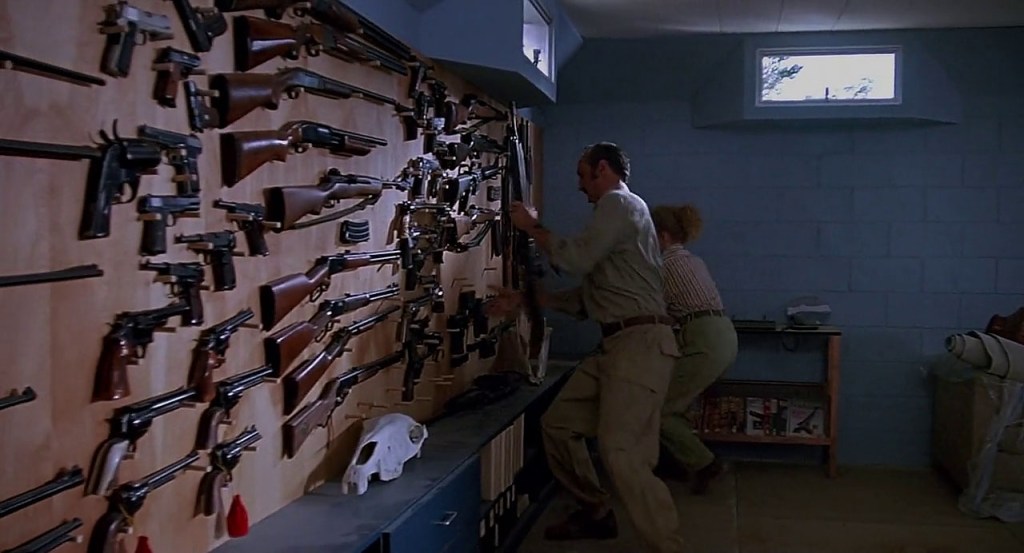
I do consider the widespread and easy acquisition of assault weapons in the United States to be a major problem. Tighter controls have to be implemented.
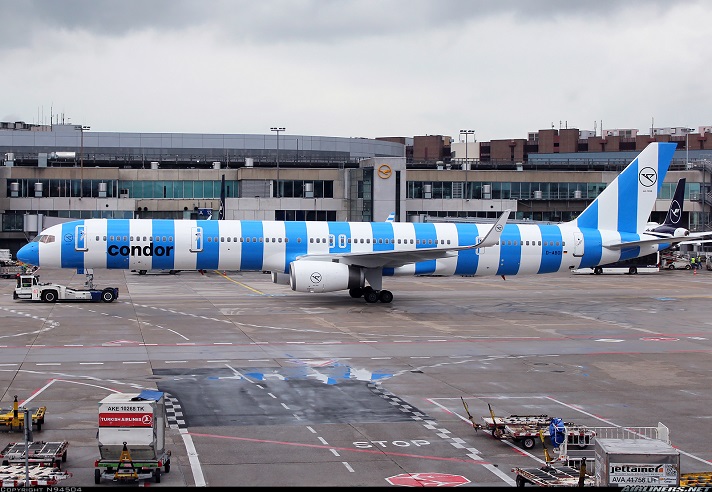
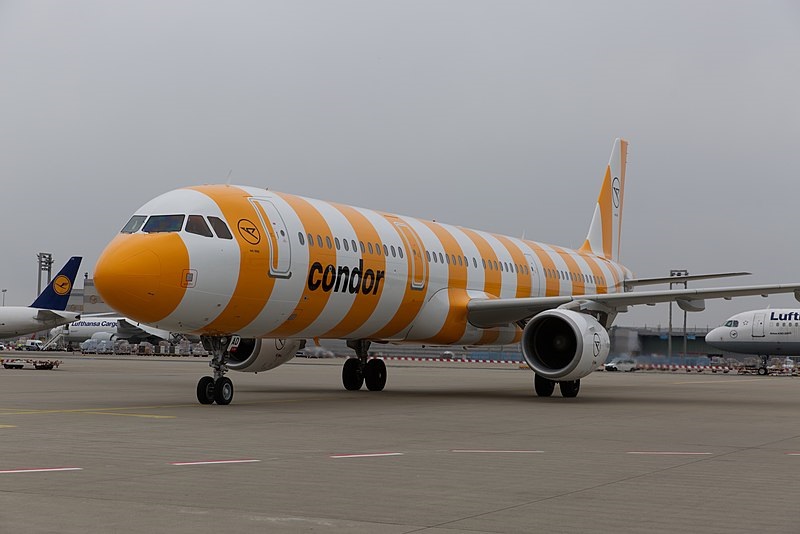
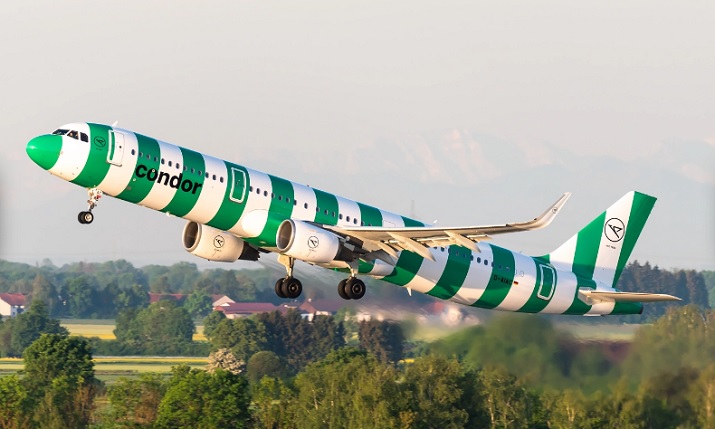
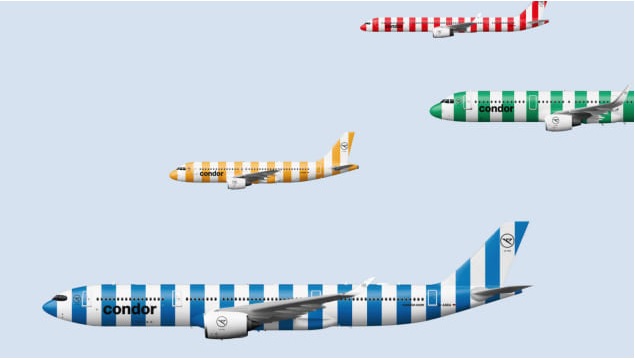
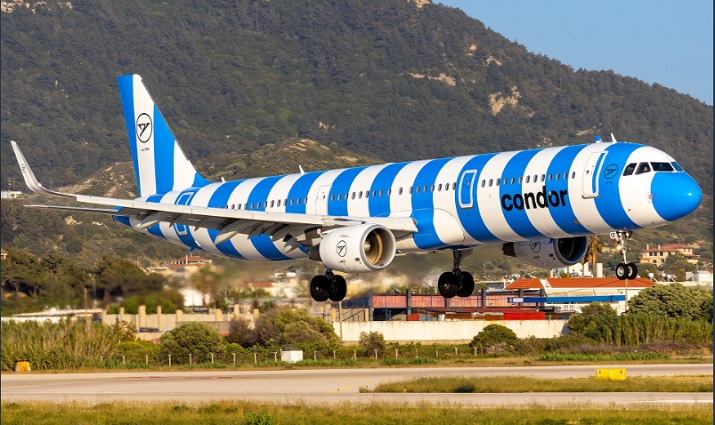
(CNN) — Most airplane exteriors look more or less the same — white backdrop, bold lettering, company logo — but every now and again, an airline unveils a livery that stands out from the pack. Take All Nippon Airways’ “Flying Honu” A380s, designed to resemble bright colored turtles, or the stunning indigenous art that adorns one of Qantas’ Boeing 787-9 Dreamliners. German airline Condor is the latest carrier to step up its livery game with a simple yet stylish paint job. Condor’s fleet is tricked out in candy-colored bold stripes, inspired by “parasols, bath towels and beach chairs,” according to the airline. Condor was owned by British holiday company Thomas Cook, which collapsed in 2019. Now the leisure airline is striking out on its own, with a new look to celebrate. The colorful stripes, designed by Berlin creative agency Vision Alphabet, aim to evoke nostalgia for vacations past and excitement for vacations of the future. There are five color options: Condor says the blue stripes represent the sea, the yellow stripes recall sunshine, red represents “passion”, green represents “island” and a beige-gold stripe should make travelers think of a sandy beach.
The airline suggests the stripes also represent “the diversity of Condor’s guests, employees and the multitude of opportunities to discover the world with Condor.”
Ralf Teckentrup, Condor’s CEO, said in a statement that the colorful stripes are the airline’s “new trademark.” Accordingly, it’s not just Condor’s exterior that’s been reimagined. Condor’s logo on its social media account is now emblazoned with stripes, while boarding passes and inflight items like blankets are being reimagined. Condor promises crew uniforms will also “shine in the new design,” with more details and photos to come.
Condor has over 50 aircraft in its fleet, and promises the majority will be painted by 2024. Expect to see six of the striped aircraft in operation by this summer, with these aircraft flying to destinations including the Canary Islands, Greece and Egypt.
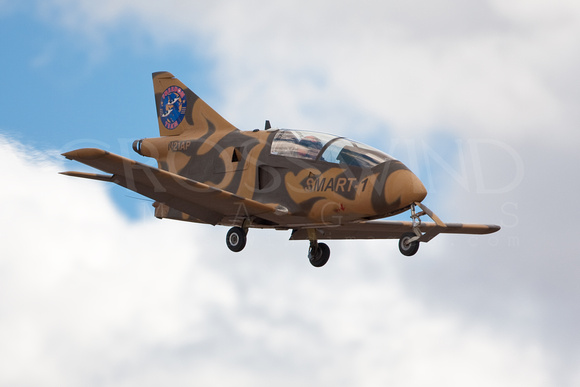
The BD-5 Micro is a series of small, single-seat homebuilt aircraft created in the late 1960s by US aircraft designer Jim Bede and introduced to the market primarily in “kit” form by the now-defunct Bede Aircraft Corporation in the early 1970s.
In total, only a few hundred BD-5 kits were completed, although many of these are still being flown today. The BD-5J version holds the record for the world’s lightest jet aircraft, weighing only 358.8 lb (162.7 kg).
With the demise of the Bede Aircraft Company, the BD-5 entered a sort of limbo while builders completed their kits. The early safety problems and the challenge of adapting a suitable engine exacerbated delays. Over the next few years, however, solutions to most of these problems arrived in one form or another. Many other changes have also been incorporated to improve the original design. Today the BD-5 is a rewarding, if demanding aircraft.
General Characteristics
Crew: one, pilot
Length: 12 ft to 13.5 ft w/stretch kits (3.88 m to 4.11 m)
Wingspan: 14 ft to 21 ft 6 in (4.26 m to 6.55 m)
Height: 5 ft 2 in (1.6 m)
Wing area: Depends on wing used (-5A, -5B or -5J)
Empty weight: 167 kg and up
Loaded weight: 407 lb to 809 lb
Max. takeoff weight: 1,100 lb (530 kg)
Powerplant: 1 × Various reciprocating engines, from Rotax to Turbo Honda; turboprop with modified Solar T62; jet with Microturbo Couguar or TRS-18,
















 The MarkoZen Blog