Videos posted to social media this past week show massive silver orbs crashing through the streets of central London. The giant shiny spheres were part of an art installation called “Four World Set” by artist Tom Shannon. High winds from a storm swept the art installation away. The piece, composed of a stack of four chrome-colored spheres, was commissioned by electronic music duo Mount Kimbie and had just been unveiled the day before. On Instagram, Kai Campos of Mount Kimbie posted, “I’m absolutely gutted that more people won’t get to see it this week.”
Month: November 2022

An Unquenchable Thirst for Beer
A SINGLE GUY LIVED IN THIS TOWNHOUSE FOR 8 YEARS IN OGDEN, UTAH. THEY THOUGHT HE WAS THE BEST RENTER BECAUSE HE NEVER CALLED OR COMPLAINED AND WAS NEVER LATE ON A PAYMENT. THESE PICTURES DON’T EVEN COME CLOSE TO WHAT IT REALLY LOOKED LIKE. CENTURY 21 HAD ALREADY MOVED SOME OF THE CANS OUT AND HAD CAVED IN TUNNELS THAT HE HAD MADE TO GET TO THE BEDROOM, BATHROOM, AND KITCHEN.All this, yet, you still don’t see any dust or scattered clothes or any dirty dishes anywhere. Other than having a minor drinking problem, he was basically a very clean, organized person. Add to this he was concerned about his health, proved by the fact that he drank a “Light” beer.

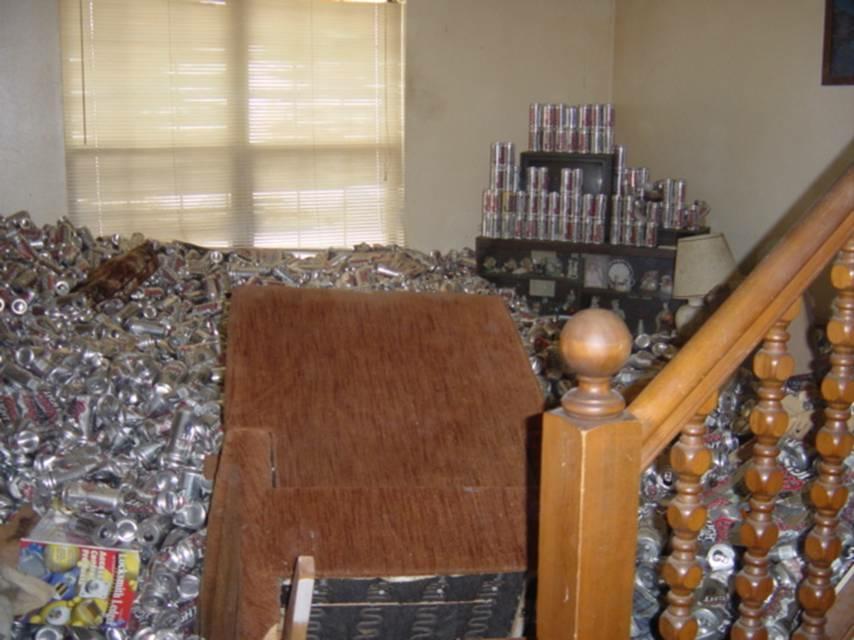


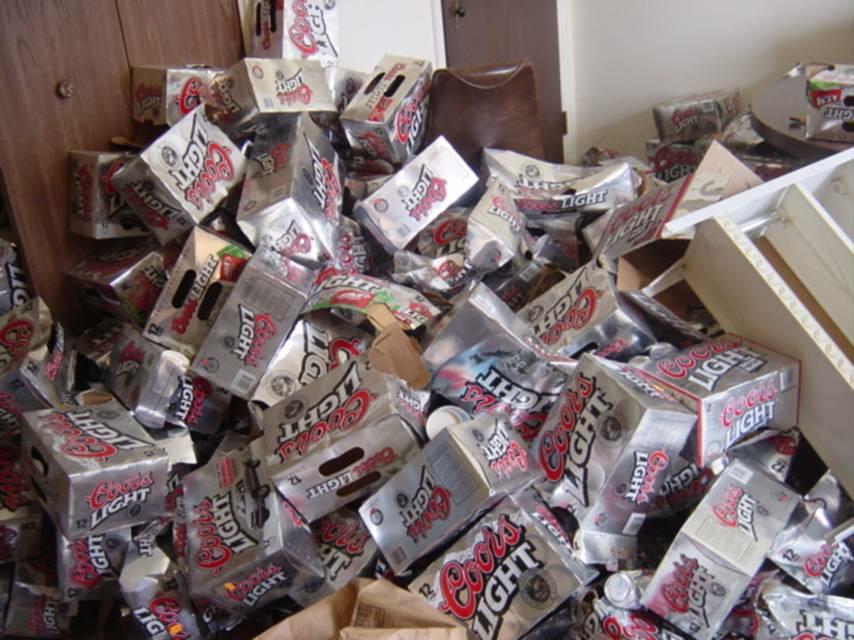
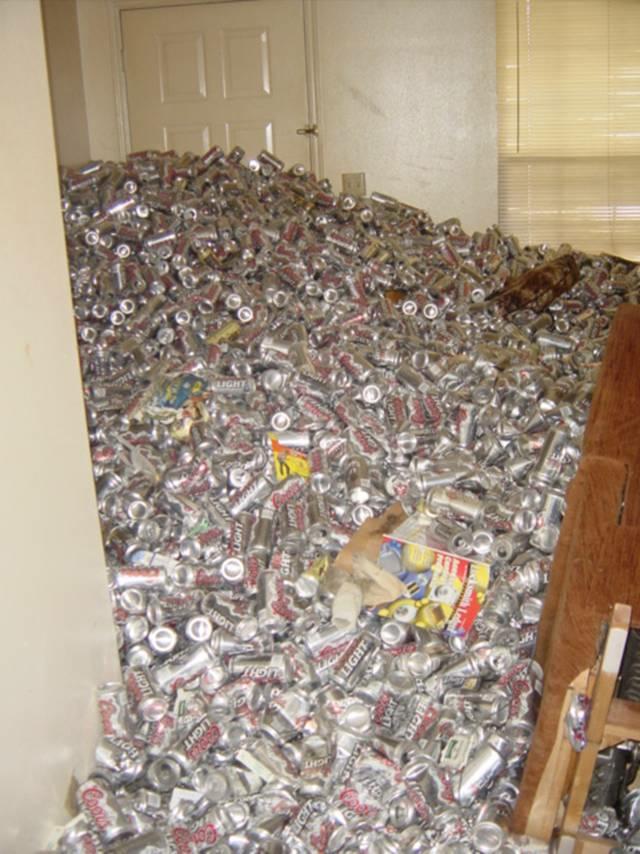
Origins: Yow! Most of us would probably be hard-pressed to find the time to collect (or buy) as many beer cans as are pictured here, transport them to our residence, and distribute them in various rooms — never mind actually drinking that much brew. But that’s what evidently happened here.
According to Salt Lake City television station KSL, the above-displayed images were real pictures of an Ogden, Utah residence taken in 2005. Century 21 property manager Ryan Froerer was alerted by a Realtor to come check on a townhouse that the latter described as “the sickest thing he’s ever seen.” Mr. Froerer found the residence possessed of a nauseating smell, its front door blocked by debris, the furnishings inside buried under mountains of beer cans, and rooms stacked to the ceiling with beer boxes. He snapped a few photos of the interior and e-mailed them to friends, pictures that worked their way around the world via the Internet.
Here’s another one:
Paul is Dead: The Bizarre Conspiracy of Paul McCartney’s Supposed Death
Celebrities have long been magnets for rumors and conspiracy theories. Their high profiles and lifestyles invite it, the general public eager to eat up any little bit of talk about their favorite famous people. Often these are just passing fads that inevitably blow over and are forgotten, but some have managed to lodge themselves firmly into history, and here we get into one of the most baffling and persistent conspiracy theories the world of music has ever seen.
In 1967 the English rock band The Beatles were at the height of their unprecedented success and were in the midst of taking the world by storm. Formed in Liverpool in 1960 and comprised of the members John Lennon, Paul McCartney, George Harrison and Ringo Starr, The Beatles had enjoyed a meteoric rise to the stratosphere of stardom, and by that time were already international stars and considered to be pioneers in recording, songwriting and artistic presentation, as well as leaders of the era’s youth and sociocultural movements, and there seemed to be no stopping them. It is perhaps no surprise that with so many eyes on them and considering their immense popularity that rumors and tabloid-style schlock would swirl around them, but some of these were weirder than others, and perhaps the most enduring and bonkers of these is the time Paul McCartney supposedly died and was replaced by a look-alike impostor.
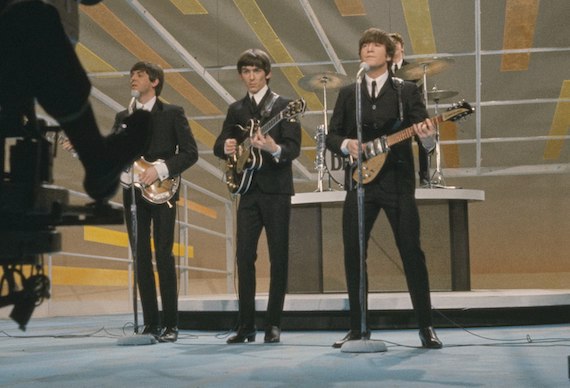
The rumor began in early 1967, when there were whispers that Paul had died in a car crash. The story was incredibly specific, as far as such rumors go. Paul had apparently gotten into an argument with his band mates on November 9, 1966 during a Beatles recording session and had driven off angrily in his car. After this, he had gotten into a gruesome traffic accident at 5 o’clock in the morning that had actually decapitated him, and he been pronounced dead at the scene. The remaining Beatles, not wanting to upset the public, then supposedly went about finding a look-alike to replace him, sometimes identified as a “William Campbell”, “Billy Shears” or “William Shears Campbell,” who they had then extensively trained to impersonate McCartney and then they had continued business as usual. Now this in and of itself isn’t so strange, as rock stars have long been erroneously declared dead either through misunderstanding or deliberate hoaxes, only to turn up perfectly fine, but in this case the ones perpetuating the rumors claimed to have proof hidden in the various works of the Beatles, where they were said to have dropped subtle hints and clues of the cover-up scam.
At the time, much was being made of the fad among some musicians of using a technique called “backmasking,” in which a message is recorded backward onto a track that is meant to be played forward, usually for artistic, comedic and satiric effect. This had led to many artists’ music being analyzed and played backwards looking for hints and hidden messages, and apparently The Beatles’ albums were chock full of blatant backmasked messages proving that Paul McCartney was dead. For instance, the intro from the song Revolution 9 supposedly holds the words “Turn me on, dead man” when played backwards, and the at the end of Strawberry Fields Forever, John allegedly says “I buried Paul.” The song Here Comes The Sun played backwards at 78 rpm allegedly says, “Woe is Paul,” and their self-titled double LP, also known as the “White Album,” was also supposed to hold certain lyrics that implied that Paul was dead, including a line from the song Glass Onion where Lennon sings “Here’s another clue for you all / The walrus was Paul,” with fans eagerly declaring that “walrus” is Greek for “corpse.” Also on the White Album is the song I’m So Tired, a portion of which when played backwards supposedly says “Paul is dead, man, miss him, miss him.” It was all further fueled by the fact that at the time The Beatles had recently temporarily retired from live performances, and it did not help matters that The Beatles were already notorious for hiding references to other songs in their lyrics that encouraged clue hunting, so dropping hints that Paul was dead would not have been abnormal behavior for them.
It all got pretty out of hand, but it likely would have died down if the rumor hadn’t been fueled by its explosion in the United States in 1969. In September of that year, Tim Harper, an editor of the Drake Times-Delphic, the student newspaper of Drake University in Des Moines, Iowa wrote an article addressing the rumors called Is Beatle Paul McCartney Dead?, which had the effect of starting heated discussion among the students. Then, on 12 October 1969, a caller to the Detroit radio station WKNR-FM told disc jockey Russ Gibb about the rumor and its clues on live radio, after which other high-profile stations picked it up and discussed it, and the whole thing really took off to take on a grand life of its own, with all manner of supposed clues that Paul McCartney was dead coming out of the woodwork.
In addition to the supposed backmasked lines from various albums, there were allegedly all sorts of visual clues offered up supporting the theory. Many of these are on album covers, such as the back cover of Sgt. Pepper, where every Beatle is photographed facing the viewer except McCartney, and the front cover of Magical Mystery Tour depicts one unidentified band member in a differently colored suit from the other three, as well as every member of the band holding red roses, whereas McCartney is holding a black one. There is also the interpretation of the Abbey Road album cover as depicting a funeral procession, with Lennon representing a heavenly figure dressed in white, Ringo in black as the undertaker, George Harrison wearing denim that supposedly identifies him as the gravedigger, and McCartney barefoot and out of step with the others signifying the corpse. A white Volkswagen Beetle can also be seen on the cover bearing the characters LMW 281F, with the “281F” supposedly meaning “IF Paul had been alive he would have been 28” and the “LMW” standing for “Linda McCartney, widow.” There was even pointed out that the imposter McCartney is holding a cigarette in his right hand when the real Paul always held it in the left. There was even the rumor that if you hold up a reflective butter knife to a portion of the back album cover of Abbey Road you will see a skull reflected back.

Throughout all of this both representatives for The Beatles and the other band members constantly adamantly denied the rumors, but it was such an entrenched urban legend by then that there was little they could do to prove Paul was in fact alive. McCartney himself was flabbergasted by the whole thing, which he watched from seclusion at his farm in Scotland, where he had been spending some down time with his family. There was so much curiosity that there were news crews lurking about secretly filming him there and releasing the footage to let people scrutinize it and decide if it was really him or not. He mostly tried to ignore it all, but the rumor was the centerpiece of countless radio shows and magazine articles and he was feeling the squeeze about it all. He would say:
Someone from the office rang me up and said, ‘Look, Paul, you’re dead.’ And I said, ‘Oh, I don’t agree with that.’ They said, ‘Look, what are you going to do about it? It’s a big thing breaking in America. You’re dead.’ And so I said, leave it, just let them say it. It’ll probably be the best publicity we’ve ever had, and I won’t have to do a thing except stay alive. It was a bit weird meeting people shortly after that, because they’d be looking at the back of my ears, looking a bit through me. And it was weird doing the “I really am him” stuff. So I managed to stay alive through it.
It indeed did boost album slaes, but McCartney would eventually get so tired of it that he granted an interview with Life Magazine, after apparently throwing a bucket of water on them, in order to clear the air a bit and try to dispel the whole thing. This did have the effect of dimming it down a bit, but a lot of people still refused to believe that he was really Paul McCartney. Nevertheless, he gave some more thoughts on the matter, explaining:
Perhaps the rumour started because I haven’t been much in the press lately. I have done enough press for a lifetime, and I don’t have anything to say these days. I am happy to be with my family and I will work when I work. I was switched on for ten years and I never switched off. Now I am switching off whenever I can. I would rather be a little less famous these days.

Although the rumors died down slightly over the years, the “Paul is Dead” legend certainly did not completely expire. People were still talking about it well into the 70s, to the point that it became a subject of academic study in America in the fields of sociology, psychology and communications. The stubborn urban legend has even persisted right up to recent years, and still is discussed and even believed by many. There was even an analysis done in 2009 by two forensic research consultants for Wired magazine that compared the skull of McCartney in photos taken before and after his alleged death, and they would further throw fuel on the rumors by coming to the conclusion that the photos were not of the same man. The Paul is Dead theory has become one of the most famous legends of rock, indeed the most famous of any celebrity, period, continuing to inspire gossip and intrigue. It just won’t die and some people still think that Paul McCartney died back in 1966. Biographer Ian MacDonald would say of it in his book Revolution in the Head:
Given its origins as an item of gossip and intrigue generated by a select group in the “Beatles cult”, “Paul is dead” serves as a genuine folk tale of the mass communications era. It is the most monumental hoax since Orson Welles’ War of the Worlds broadcast persuaded thousands of panicky New Jerseyites that Martian invaders were in the vicinity.
What are we to make of this phenomenon? Why is it that this urban legend has gotten so out of hand? The fact is, as of this writing, Paul McCartney is still alive, but people still insist that this is not really him. It is all an intriguing and bizarre look into the building of an urban legend and how celebrity can draw to it some weird stories, and it has managed to remain a persistent and very popular rumor in the history of rock.
A Robot with no name
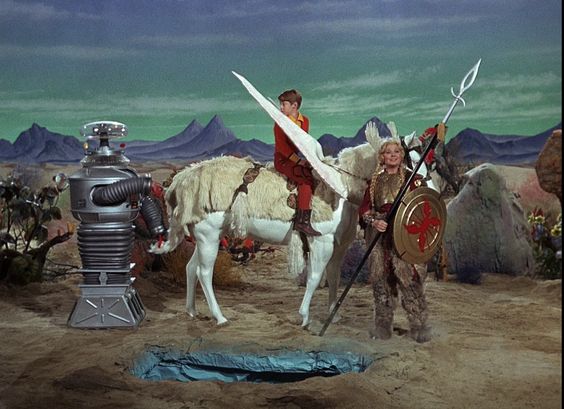
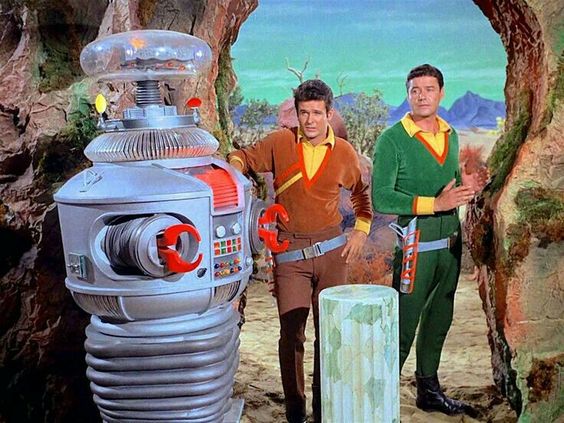
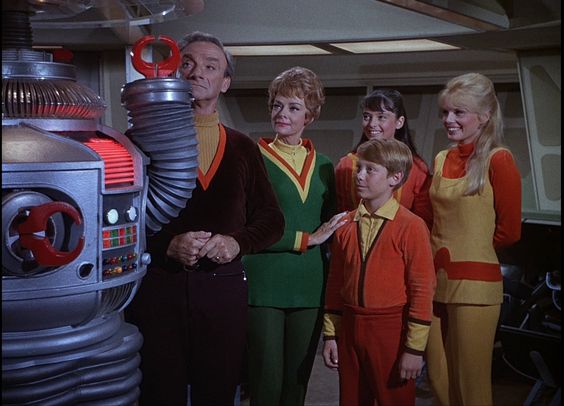
Lost in Space is an American science fiction television series, created and produced by Irwin Allen, which originally aired between 1965 and 1968 on CBS. The series was inspired by the 1812 novel The Swiss Family Robinson. The series follows the adventures of the Robinsons, a pioneering family of space colonists who struggle to survive in the depths of space. The show ran for 83 episodes over three seasons. The first season comprised 29 episodes that ran 1 hour apiece, filmed in black and white. Later, for seasons 2 and 3, the episodes would be 54 minutes long and shot in color.
The robot attached to the crew was only referred to as “Robot”.




Black Canadian Lynx Captured on Film for the First Time Ever
For the first time ever, a Canadian lynx sporting a striking coat of black fur has been captured on film. The remarkable creature was reportedly spotted roaming around a residential neighborhood in the town of Whitehorse in the Yukon territory. No doubt realizing what they were seeing was incredibly rare, the witness managed to capture around thirty seconds of footage featuring the animal as it was around 150 feet away. In the video, a dog can be heard furiously barking in the background while the seemingly unperturbed animal sits in some grass and the slowly ascends a set of concrete steps.
A subsequent examination of the footage by wildlife experts confirmed that the creature is a Canadian lynx with melanism, which is a genetic condition that causes an animal to possess an increased amount of black pigmentation in its fur, feathers, or skin. This is the first time that scientists have ever documented the phenomenon in this particular species of lynx, which usually sport fur that is reddish brown in the warmer months and then turns silver as temperatures drop. While melanism can sometimes to be an animal’s benefit, depending on their habitat and living conditions, experts suggest that, in this instance, being entirely black almost certainly works against the animal’s best interest when trying to stay camouflaged in the snowy Yukon territory’s winter months.
 The MarkoZen Blog