


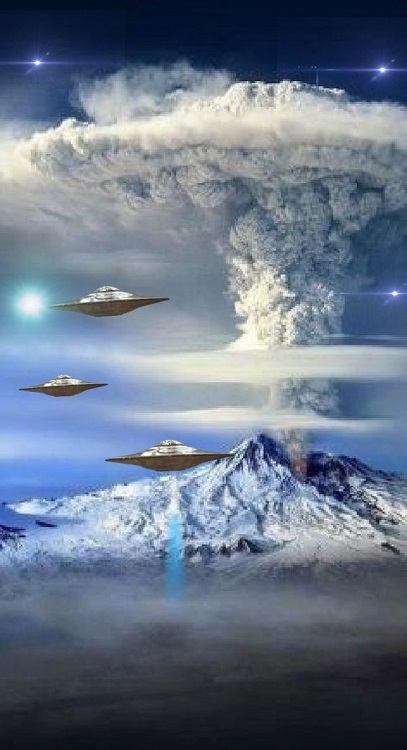

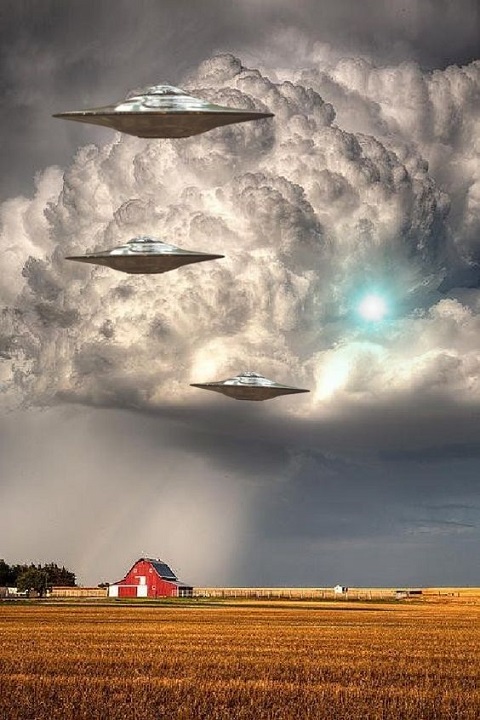

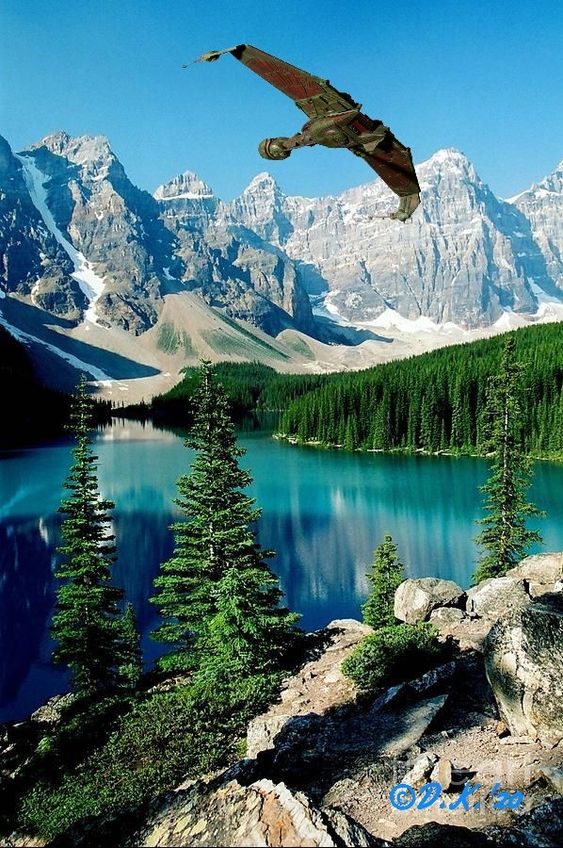

Wouldn’t want to be abducted by these evil looking villainous malevolent beings from outer space.






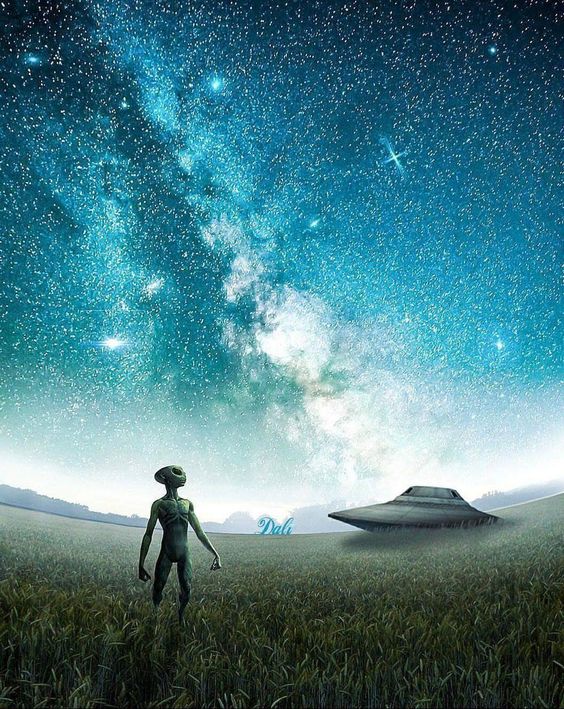
Finally a nice benevolent outsider!

Video below
A jaw-dropping video from Canada shows a fishing guide hauling in a massive 10-foot-long sturgeon that could easily be mistaken for some kind of mythical monster. The incredible catch reportedly occurred earlier this month along British Columbia’s Fraser River as Yves Bisson was assisting angler Dan Lallier on a trip to the popular fishing location. Their day took a memorable turn when the pair snagged a huge fish that left even the seasoned guide amazed. “After jumping out of the water two times during the fight, we all looked at each other in disbelief at the enormous size,” Bisson marveled, “we knew it was something special.”
After reeling in the impressive catch, it was determined that the sizeable fish was a sturgeon that measured approximately ten feet long and weighed a whopping 600 pounds. Remarkably, the creature is believed to be around 100 years old and sported no tags, which surprised the pair because it suggests that this was the first time that the denizen of the deep had ever been captured. Since sturgeons are an endangered species in Canada, the mighty fish fortunately did not wind up becoming a meal and, instead, it was tagged and released back into the water where, Bisson mused, “I’m sure it will live for another 100 years.”
Footage of the fantastic fish (which can be seen above) was posted to social media and quickly went viral as viewers could not believe their eyes upon seeing the staggering catch. For fans of mysterious creatures, the Bisson’s video is particularly instructive as the sturgeon is very often considered a strong candidate for various ‘monsters’ spotted in aquatic locations around the world. While the idea of a really big fish being mistaken for a curious cryptid akin to Nessie may sound implausible, one look at Bisson’s video shows how just such a scenario might easily unfold.


An “urban explorer” has been charged after he was seen in an online video leaping and doing somersaults atop a downtown Toronto skyscraper.
In a video posted to YouTube, Russian stuntman Oleg Cricket can be seen leaping, sliding and rolling on the ledge of a skyscraper. In another shot, he appears to be jumping between beams, with the CN Tower as his backdrop. In one of the final shots, Cricket is shown doing a handstand on a ledge, high above city streets.
Police arrested Cricket on Nov. 12, 2021. He has been charged with breaking and entering and mischief, Toronto police say.
Cricket is well-known for his vertigo-inducing acrobatic feats atop skyscrapers in various cities. He records his stunts and puts them on YouTube and other social media channels, where his followers number in the hundreds of thousands.
Another man who was allegedly with Cricket is facing the same charges.
The building, 8 Mercer Street

The Royal Winter Fair in the western Manitoba city of Brandon is an agricultural exhibition held annually at the end of March. On average approximately 110,000 visitors pass through the turnstiles to check out the amazing critters yearly. The major events are cattle and horse competitions, equestrian, team horse wagons, hog chases, heifer round-ups, petting zoo, Royal fiddle competition, Barrel Racing, K-9 Equine relay and tiny pony chuck wagon races.
The fair is held at the Keystone Arena which has a capacity of 5,000 for the fair. The Royal Winter Fair is a great outing for all the family, including Grandma and Grandpa.


Spot and Trigger are about to take off!


Young cattle and their young handlers.

Masterfeed Supreme Bull (CNW Group/Royal Agricultural Winter Fair.


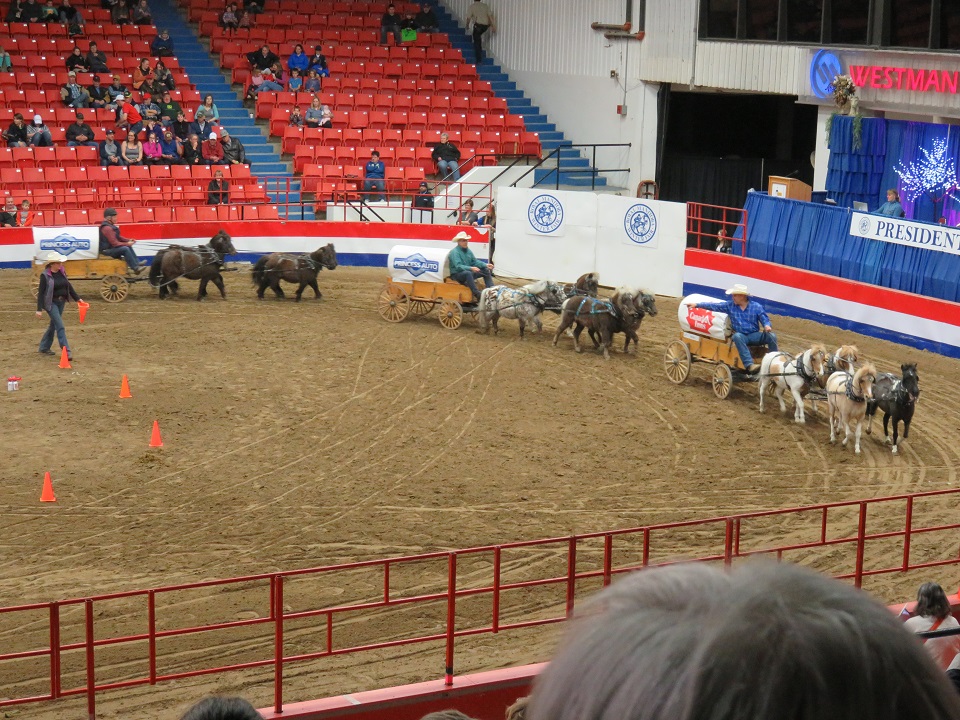


These are really small horses!


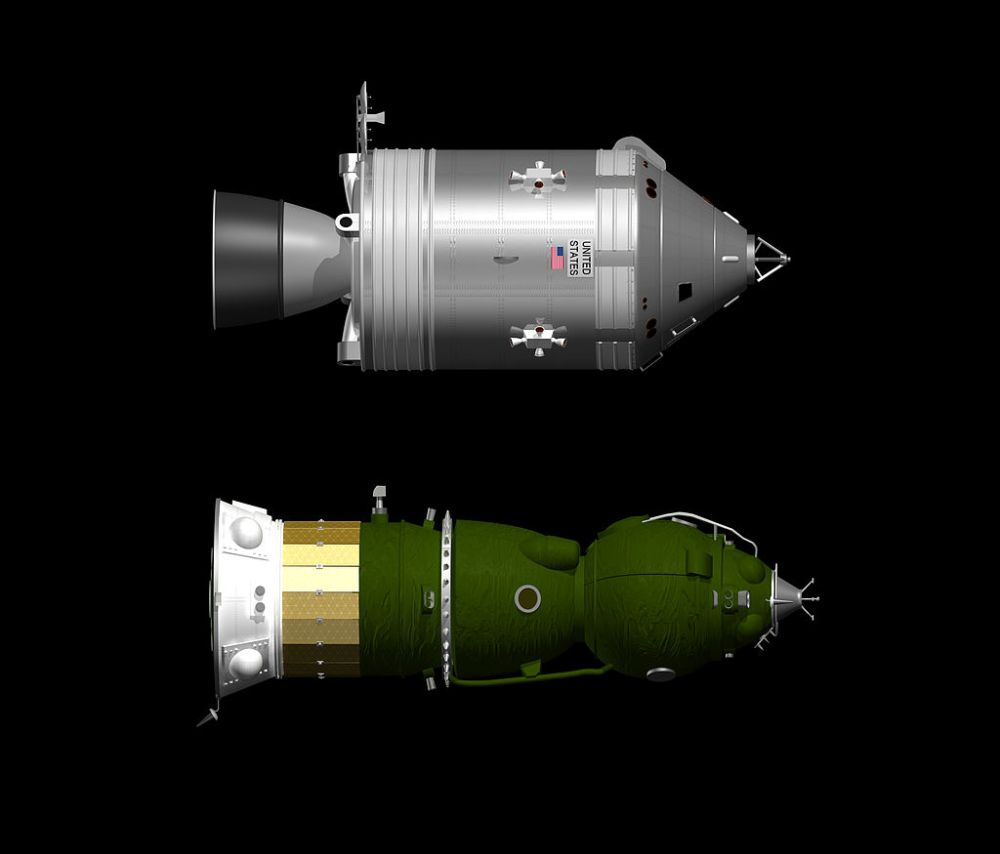
All the activities done by two astronauts is done by one. To make the craft lighter, the LK only fits the one cosmonaut, who was supposed to peer through a tiny window on the side of the craft to land it. After landing the vehicle the pod separates from the landing gear, as with the Apollo Lunar Module, but uses the same engine for landing as it does for take off as another weight savings.
The L2 Lunar Orbit Module designed to transport the LK into orbit around the moon was similarly stripped down. There’s no internal connection between the two craft so the cosmonaut had to space walk outside to get into the LK and head towards the surface. When the LK rejoined the L2 for the return trip home, the now likely exhausted cosmonaut would then climb back out into the abyss of space. The LK would then be thrown away.


There were numerous political, scientific and financial reasons why the Soviets didn’t make it to the moon first, including a space agency with split priorities and therefore not single-mindedly dedicated to this goal. Neil Armstrong walked on the moon first on July 20, 1969, besting the Russians, who were still planning to visit the moon in the upcoming years.
They had the equipment, but they didn’t have the rockets.
Getting to the moon requires launching a command module and a lander. Both are heavy objects and require massive amounts of thrust to get into orbit. The Soviet’s planned to use their N-1 rocket, but two failed launches in 1971 and 1972 destroyed dummy landing and control modules, as well as the rockets themselves, and led to the program being shelved for lack of a proper launch vehicle.
The LK was sent into space for numerous test missions. The first two unmanned flights were successful tests of the vehicle through a simulated orbit. The third flight ended when the N-1 rocket crashed. The fourth test in 1971 was a success, but years later the decaying test module started to return to Earth with a trajectory that would put it over the skies of Australia.
NASA explains in a report on the Soviet space program how they had to convince the Australians it wasn’t a nuclear satellite:
To allay fears of a nuclear catastrophe, representatives of the Soviet Foreign Ministry in Australia admitted that Cosmos 434 was an “experiment unit of a lunar cabin,” or lunar lander
Eventually, the program was deemed too expensive and unnecessary in light of the NASA success. The Soviets moved onto building space labs, successfully, and the remaining parts of the lunar program were destroyed or dispersed, including this amazing collection of parts hidden in the back of the Moscow Aviation Institute.


Some interesting photos showing tracks from the moon landings. It is amazing that there were six manned landings from 1969 to 1972 when state of the art Apollo NASA computers were less powerful than today’s smart phones.
(CBS/AP)
WASHINGTON – A robotic spaceship circling the moon has snapped the sharpest photos ever of the tracks and trash left by Apollo astronauts in visits from 1969 to 1972.
NASA’s Lunar Reconnaissance Orbiter got close enough to see the astronauts’ path when they walked on the moon. The photos also show ruts left by a moon buggy and even backpacks pitched out of the lunar landers before the U.S. visitors returned to Earth.

Tracks left by astronauts Alan Shepard and Edgar Mitchell on both Apollo 14 moon walks (Credit: NASA)
The photos were taken two weeks ago from 13 to 15 miles above the moon’s surface and show the landing sites for Apollo 12, 14 and 17. These photos offer a sharper look that more clearly distinguishes man-made objects from moon rocks.
The closest images are of the Apollo 17 site from 1972, the moon visit.
“The images look very spectacular, as you can see for yourself,” Mark Robinson, an Arizona State University, Tempe scientist, who is the principal investigator of LRO’s camera, told reporters at a news briefing.

Tracks made in 1969 by Apollo 12 astronauts Pete Conrad and Alan Bean, the third and fourth humans to walk on the moon (Credit: NASA)
“From a science standpoint, [the images] are important for two reasons,” Robinson said. “They tell us something about the photometric properties of the moon – why are they darker? Scientists are working to investigate that question. In a more practical sense, it allows us to find the exact spot where samples were collected.”
However, he was less optimistic about finding remains of the flags left behind by various Apollo moon missions, saying that the banners would have fared poorly against a combination of the moon’s extremes of hot and cold, not to mention constant ultraviolet radiation.
“If the flags are still there, they’re probably in pretty rough shape,” he said. The pictures were taken two weeks ago and show the landing sites for Apollo 12, 14 and 17. The closest images are of the 1972 Apollo 17 site, the last moon mission.

Paths left by astronauts and moon buggies in 1972 Apollo 17 mission (AP/NASA)
Apollo 17 Commander Eugene Cernan wrote in an email to The Associated Press that the photo gives him a chance to revisit those days, “this time with a little nostalgia and disappointment. Nostalgia because those special days are fondly etched in my memory and disappointment because it looks like now we will not be going back within the days I have left on this planet.”
Two years ago, images from the same spacecraft from 30 and 60 miles out showed fuzzier images. But this year the orbiter dipped down to take about 300,000 more close-ups. The trails left by the astronauts are clear, but the places where backpacks were discarded, Apollo 17’s moon buggy, and the bottom parts of the three lunar landers are blurry.
“You have to really look at it for a long time to figure out what you’re looking at,” Robinson said. For example, when it comes to the moon buggy he said, “if you squint really hard you can resolve the wheels and that the wheels are slightly turned to the left.”
At first, scientists thought they had a bit of a mystery: They saw more stuff than they expected. It turned out to be packing material and an insulation blanket, Robinson said.
After 40 years there does not seem to be much moon dust covering the manmade trails. It probably will take about 10 million to 100 million years for dust to cover them, Robinson said.
The photos were released a few days after the debut of the new fictional movie “Apollo 18” and before Thursday’s planned launch of NASA’s twin robotic spaceships to explore the moon’s gravity.

Thankfully, no loggers took it down, nor forest fires nor earthquakes!
Just a quiet life in a California forest for all these years … 3,200!
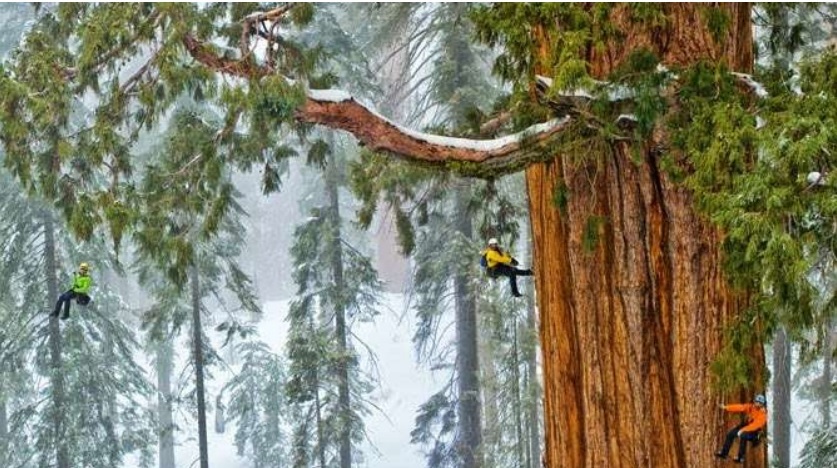
Not every tree has a nickname, but ‘The President’ has earned it.
This giant sequoia stands at 247 feet tall & is estimated to be over 3,200 years old.

Imagine, this tree was already 700 years old during the height of ancient Greece’s civilization and
1200 years old when Jesus lived while Rome was well into its rule of most of the western world
and points beyond.
The trunk of The President measures 27 feet across, with 2 billion needles from base to top.
Because of its unbelievable size, this tree has never been photographed in its entirety, until now.
National Geographic photographers have worked along with scientists to try and create the first
photo that shows The President in all its glory.
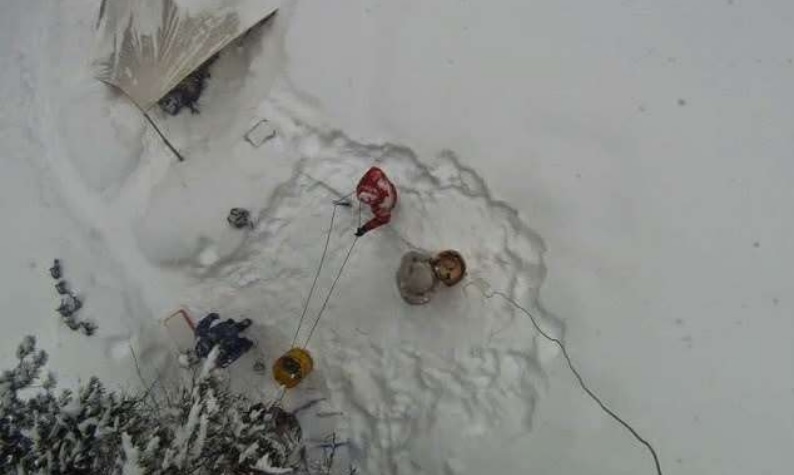
They had to climb the tree with pulleys and levers and took thousands of photos. Of those, they
selected 126 and stitched them together to get this incredible portrait of The President.
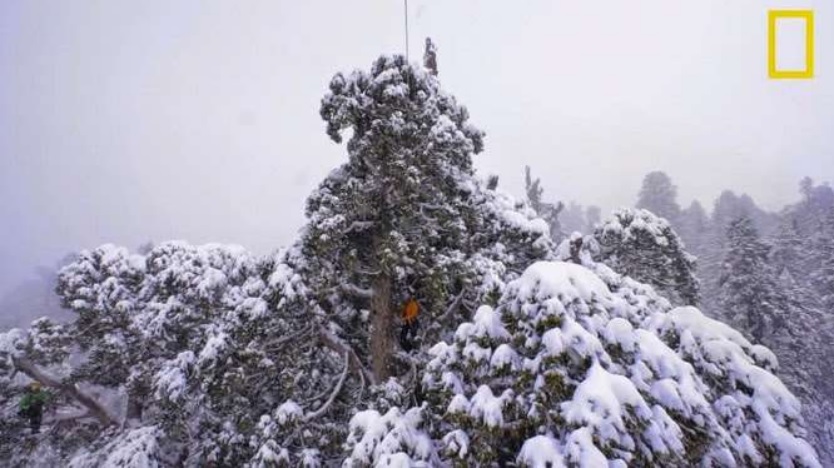
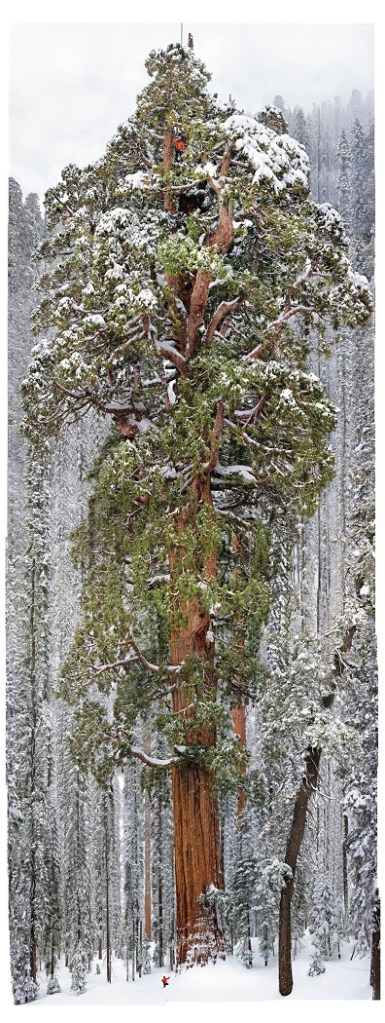
The man near the trunk of the tree is a good indicator of the tree’s size – Incredible, isn’t it?
Did you notice the man near the top of the tree?
 The MarkoZen Blog