Eerie Red Pillar of Light in Night Sky Mystifies Houston Residents

A spooky-looking red pillar of light appeared in the night sky over Houston earlier this week and caused a brief sensation before the source of the strange glow was seemingly identified. The odd incident reportedly unfolded on Wednesday at around 8:30 in the evening when several people living in the eastern part of the city noticed something rather out of the ordinary on the horizon. Local TV stations were soon flooded with calls about the puzzling scene with one outlet indicating that they were “inundated with videos and photos” of the peculiar red pillar of light. As one can expect in this day and age, social media was rife with all manner of theories for what might be behind the weirdness, though thankfully it didn’t take too long for the mystery to be solved.

Often the proverbial first line of defense when it comes to possible UFO events, local meteorologists appear to have put the pieces of the puzzle together and while the anomaly was not alien in nature, how it came about is fairly fantastic. The source of the illumination was found to likely be flaring that was occurring at a Houston refinery at the same time as the mass sighting. The light appeared in the clouds hovering over a different part of the city because it was being reflected onto tiny ice crystals in the sky which gave it the elongated pillar-like appearance.

Spy Bases: Secretive HQs of the World’s Intelligence Agencies 

danger

Architecture is a language, one used by institutions to say something about themselves.

The same basic principle is true for the world’s spy agencies. All show their secrecy in their buildings, while some may appear starkly utilitarian, and some may even be frightening and alienating. But they also have their quirks and differences, whether it be an isolated complex hidden by trees, in a location that’s never been officially disclosed, or a prominent complex built by superstar architects and put on prominent display in the middle of a capital city.

United States: Central Intelligence Agency

ciax1

If John Brennan becomes the next CIA director — a likely event — he’ll be working from inside a complex that could blend into a business park anywhere in America. But this park contains the headquarters of America’s foreign intelligence agency.

Protected from prying eyes by a wooded belt in suburban Langley, Virginia, just northwest of Washington, D.C., the complex is actually two sets of buildings connected to a central core, with each set built at different times. The first half of the building and designed by New York architecture firm Harrison and Abramovitz — who had a role in designing the United Nations headquarters — dates back to 1963. It’s a sign of its times, and built from sterile pre-fabricated concrete.  But by the 1980s, the agency was running out of space. Today, the complex is much larger, with an added west wing of two glass office towers, designed by Detroit architects Smith, Hinchman & Grylls in the 1980s.

The CIA also has a penchant for art and assorted knick-knacks. The agency has a chunk of the Berlin Wall on display, and an A-12 Oxcart spy plane. There’s a museum inside the building with all sorts of weird memorabilia inside, from a robotic fish to a Cold War-era mini-submarine. Outside the cafeteria on the grounds of the headquarters’ new wing is the copper sculpture Kryptos, containing 869 encrypted characters on four plates. The final plate, with its 97 characters, is still unbroken. The cafeteria is remarkably pleasant and airy for a government building, actually, with enormous windows and green views. (The food, however, is not quite as pleasing.)

danger1

United States: National Security Agency

There are clear views of the National Security Agency’s headquarters off the Patuxent Freeway, just skirting Fort Meade, Maryland, about 15 miles southwest of Baltimore. But we wouldn’t advise getting any closer, as the NSA is the highly secretive agency responsible for the U.S. government’s codebreaking and collecting communications from around the world. The NSA’s headquarters also fits the part, rising blank and expressionless above a desert of parking lots. Completed in 1986, it resembles a collection of stubby, black, reflective monoliths like from 2001: A Space Odyssey. And according to the Center for Land Use Interpretation, the complex has an estimated 10 acres of underground space.

But like the CIA during the Cold War, the NSA in recent years has outgrown its own building. Fort Meade altogether has grown extremely rapidly as defense agencies relocate there and the NSA boosts its Cyber Command headquarters. Defense and government contractors now have offices surrounding the place, and contract and government jobs have surged, largely due to growth at the base more generally, and partly because of growth at the NSA. The Baltimore Business Journal reported that the base is expected to add an eye-popping 42,500 jobs by the end of the decade. The Defense Department even paved over part of the base’s golf course for the headquarters of the Defense Media Activity organization, the Pentagon’s media wing. Hopefully the Pentagon and the NSA will include a lot more parking.

danger2

United Kingdom: Secret Intelligence Service

There’s perhaps no spy headquarters more recognizable than the SIS Building, headquarters of the British Secret Intelligence Service, or MI6. It’s not only smack-dab in the middle of London, but has been featured in six James Bond movies, and blown up in two of them. Designed by architect Terry Farrell, the structure has been compared to a cross between a Babylonian ziggurat and a power plant. And it’s built like a veritable fortress, capable of withstanding bomb attacks. There are also reportedly extensive underground areas.

It’s also put its defenses to use. In September 2000, militants suspected to be from the Real Irish Republican Army — a splinter faction of the Irish paramilitary group — fired a rocket-propelled grenade round at the building’s eighth floor, causing no injuries. In a demonstration of just how heavily armored the building is, the rocket reportedly bounced off a glass window.

danger3

Russia: Federal Security Service

The Lubyanka building — the yellow, neo-Baroque former headquarters of Russia’s spies — is still the most recognizable symbol of Russian secrecy, even if the bulk of their office space has moved elsewhere. Dating to 1897, the building once housed an insurance company before becoming the headquarters for the feared Soviet spy agency KGB. It was remodeled by Stalin. (The basement contained a KGB prison.) The building was then transferred to the KGB’s successor agency, the Federal Security Service (FSB), after the collapse of the USSR.

According to cybersecurity analyst Jeffrey Carr’s book Inside Cyberware: Mapping the Cyber Underworld, the building today houses the FSB’s Communications Security Center, which oversees and encrypts Russian government computer security systems; and the Center for Licensing, Certification, and Protection of State Secrets, which handles export licenses for cryptographic and surveillance technology. Twin suicide bombing attacks in 2010 also came close to the building — one of the blasts exploded at the nearby Lubyanka metro station.

CDU-Innenexperte Bosbach rechnet mit 1,5 Milliarden fuer BND-Neubau

Germany: Federal Intelligence Service

Germany’s chief spy agency, which in German goes by the name Bundesnachrichtendienst (BND), is proud of its spiffy new headquarters. ABC has reported that it’s “set to be one of the most technologically sophisticated buildings in the world” once it opens in 2014. Located within walking distance of the Reichstag building in Berlin and on the site of a former East German soccer stadium, the BND has even gone online to show off of its facades of “natural stone, render, fair-faced concrete, brick or metal.” It has room for 4,000 employees, and has weird blob art. The agency is also touting its architect, Jan Kleihues, the son of famous architect Josef Paul Kleihaus, who was known for museums in Germany and Chicago.

But the design is also perhaps more open than the Germans would like. In July 2011, Munich news magazine Focus reported that the building’s blueprints were stolen from the construction site. According to Focus, the blueprints contained “the exact function of every single room, the thickness of each wall, the exact position of every toilet and every emergency exit and every security checkpoint.” The theft hasn’t ended Berlin’s plans. However, it was reported to have forced an estimated $1.8 billion interior redesign.

danger7

France: Directorate-General for External Security

This walled compound doesn’t stand out — because it’s not supposed to. It would be an ordinary and undistinguished complex of buildings, that is, if you ignore the high walls topped with spikes and a tall sensor tower. Located on the eastern edge of the Paris city limits is the headquarters for the French Directorate-General for External Security (DGSE), the agency responsible for France’s overseas intelligence works. It’s headquarters also nicknamed “the swimming pool” for its proximity to a facility used by the French Swimming Federation, and Google Maps has even blurred its image in satellite photographs.

danger8

China: Ministry of State Security

The building seen above is not the main headquarters for the Chinese Ministry of State Security (MSS), but a regional office in China’s central Hubei Province. The official headquarters is a little harder to spot. Attempts to track it down have led to frequent — but mistaken — associations with the Ministry of Public Security: the giant Borg-like structure in downtown Beijing which houses China’s national police command. A closer bet for the main MSS offices is a low-key compound in Beijing’s northwest.

The MSS is also different from many Western intelligence agencies because it handles both foreign and domestic intelligence, instead of splitting them up like the CIA and FBI. Hence the reason why it has regional offices inside China, in addition to carrying out Chinese espionage overseas. The Hubei office also sends something of a statement, with its imposing columns, wedding cake facade, sensor dishes and observation perch. Another photo shows what appears to be a police officer on duty, in case anyone gets the wrong idea and wanders a little too closely.

U.S. Intelligence Utah Data Center

The Utah Data Center (UDC), also known as the Intelligence Community Comprehensive National Cybersecurity Initiative Data Center, is a data storage facility for the United States Intelligence Community that is designed to store data estimated to be on the order of exabytes or larger. Its purpose is to support the Comprehensive National Cybersecurity Initiative (CNCI), though its precise mission is classified. The National Security Agency (NSA) leads operations at the facility as the executive agent for the Director of National Intelligence. It is located at Camp Williams near Bluffdale, Utah, between Utah Lake and Great Salt Lake and was completed in May 2014 at a cost of $1.5 billion.

Critics believe that data center has the capability to process “all forms of communication, including the complete contents of private emails, cell phone calls, and Internet searches, as well as all types of personal data trails—parking receipts, travel itineraries, bookstore purchases, and other digital ‘pocket litter’.” In response to claims that the data center would be used to illegally monitor email of U.S. citizens, in April 2013 an NSA spokesperson said, “Many unfounded allegations have been made about the planned activities of the Utah Data Center, … one of the biggest misconceptions about NSA is that we are unlawfully listening in on, or reading emails of, U.S. citizens. This is simply not the case.”

In April 2009, officials at the United States Department of Justice acknowledged that the NSA had engaged in large-scale overcollection of domestic communications in excess of the United States Foreign Intelligence Surveillance Court’s authority, but claimed that the acts were unintentional and had since been rectified.

In August 2012, The New York Times published short documentaries by independent filmmakers titled The Program, based on interviews with former NSA technical director and whistleblower William Binney. The project had been designed for foreign signals intelligence (SIGINT) collection, but Binney alleged that after the September 11 terrorist attacks, controls that limited unintentional collection of data pertaining to U.S. citizens were removed, prompting concerns by him and others that the actions were illegal and unconstitutional. Binney alleged that the Bluffdale facility was designed to store a broad range of domestic communications for data mining without warrants.
Documents leaked to the media in June 2013 described PRISM, a national security computer and network surveillance program operated by the NSA, as enabling in-depth surveillance on live Internet communications and stored information. Reports linked the data center to the NSA’s controversial expansion of activities, which store extremely large amounts of data. Privacy and civil liberties advocates raised concerns about the unique capabilities that such a facility would give to intelligence agencies. “They park stuff in storage in the hopes that they will eventually have time to get to it,” said James Lewis, a cyberexpert at the Center for Strategic and International Studies, “or that they’ll find something that they need to go back and look for in the masses of data.” But, he added, “most of it sits and is never looked at by anyone.”

The UDC was expected to store Internet data, as well as telephone records from the controversial NSA telephone call database, MAINWAY, when it opened in 2013.

In light of the controversy over the NSA’s involvement in the practice of mass surveillance in the United States, and prompted by the 2013 mass surveillance disclosures by ex-NSA contractor Edward Snowden, the Utah Data Center was hailed by The Wall Street Journal as a “symbol of the spy agency’s surveillance prowess”.

Binney has said that the facility was built to store recordings and other content of communications, not only for metadata.

According to an interview with Snowden, the project was initially known as the Massive Data Repository within NSA, but was renamed to Mission Data Repository due to the former sounding too “creepy”.

An article by Forbes estimates the storage capacity as between 3 and 12 exabytes in the near term, based on analysis of unclassified blueprints, but mentions Moore’s Law, meaning that advances in technology could be expected to increase the capacity by orders of magnitude in the coming years.

Toward the end of the project’s construction it was plagued by electrical problems in the form of “massive power surges” that damaged equipment. This delayed its opening by a year.

The finished structure is characterized as a Tier III Data Center, with over a million square feet, that cost over 1.5 billion dollars to build. Of the million square feet, 100,000 square feet are dedicated to the data center. The other 900,000 square feet are utilized as technical support and administrative space.

Assiniboine River Ice Flow

This post was blogged in 2018. This year there has been substantially more snow in Manitoba. So something more intense could be on the horizon. Updates on the way.

The Assiniboine and Red river watersheds.

Assiniboinerivermap

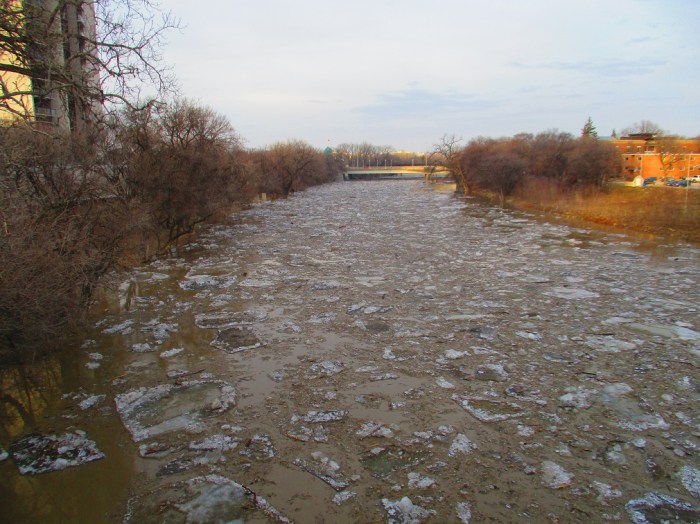
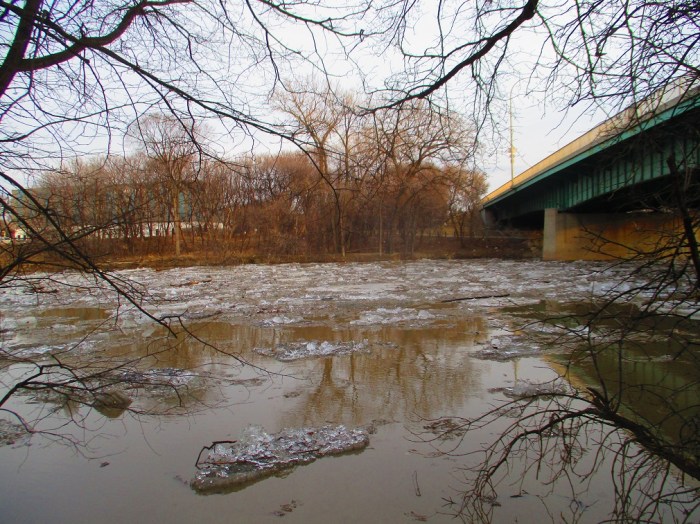
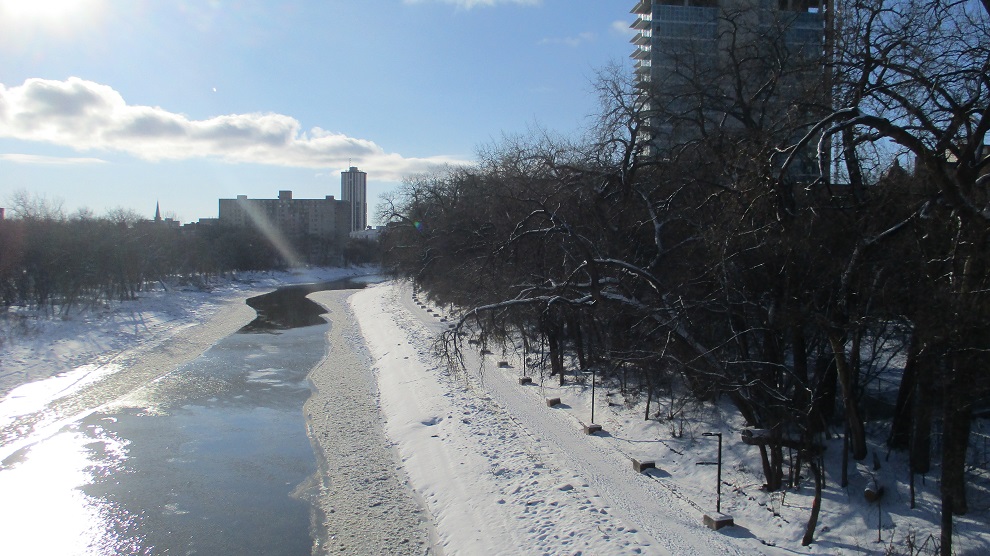
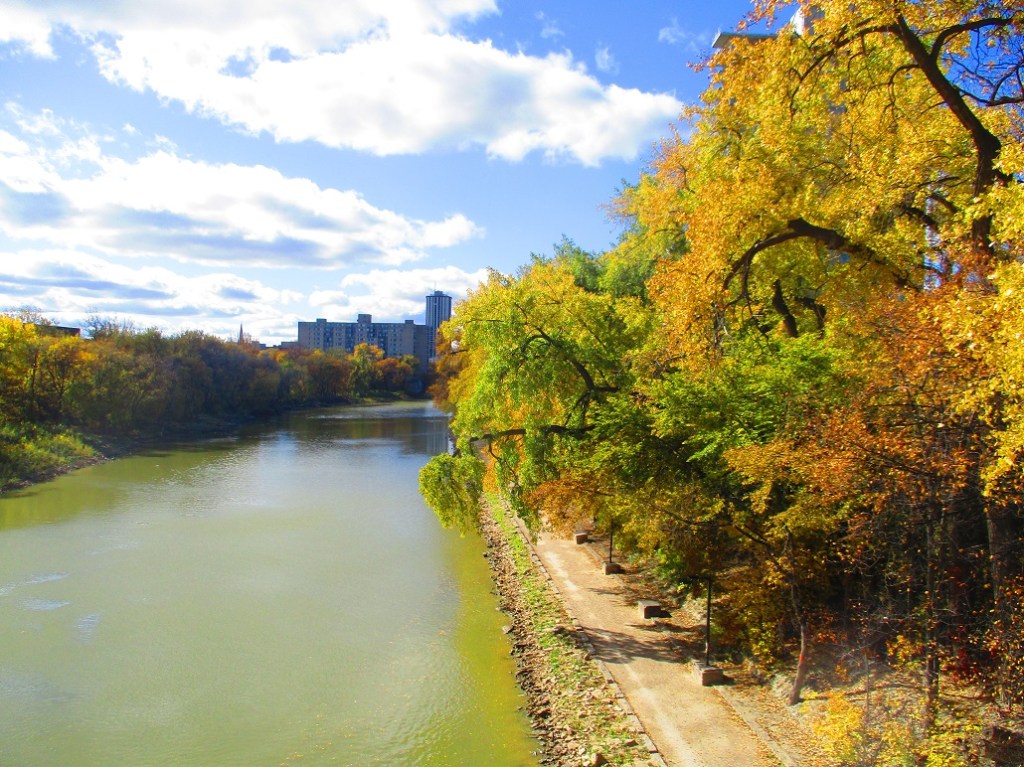
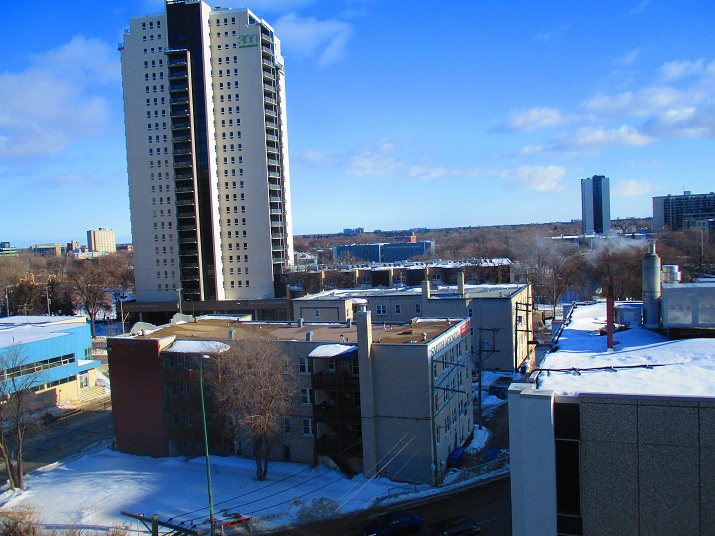
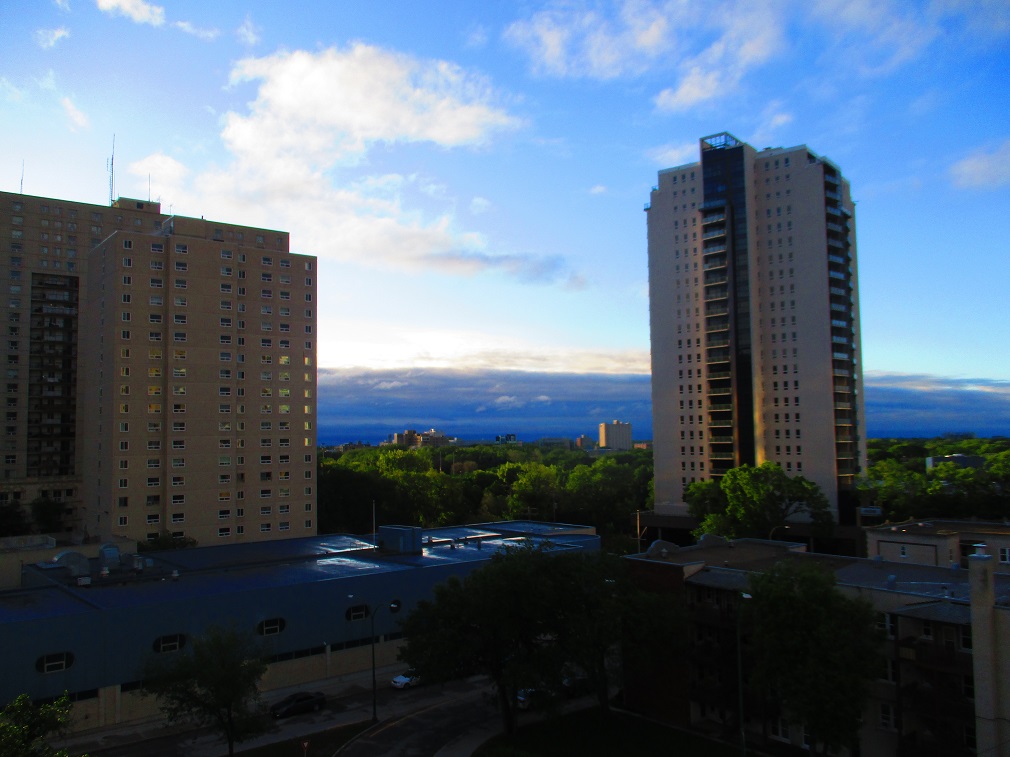
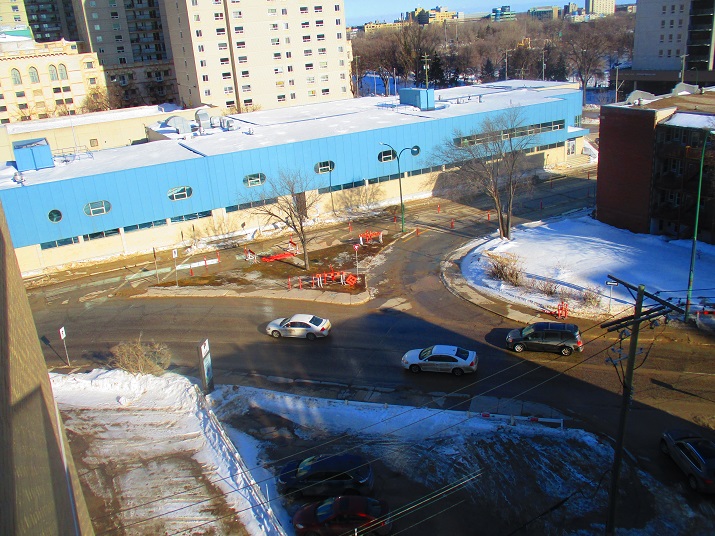
The big melt is underway in Manitoba. The Assiniboine River has substantially risen in the last few days. The current is hauling the broken ice on the Assiniboine into the Red River in downtown Winnipeg.

hice
hice1
hice3
hice4

Crystal like ice that looks pretty cool

hice5

Inside Google’s Giant Data Centers 


Inside the internet: Google allows first ever look at the eight vast data  centres that power the online world

  • Data centres range from vast warehouses in  Iowa to a converted paper mill in Finland
  • Buildings are so large Google even provides  bicycles for engineers to get around them
  • Street View tour of North Carolina facility  reveals Stormtrooper standing guard

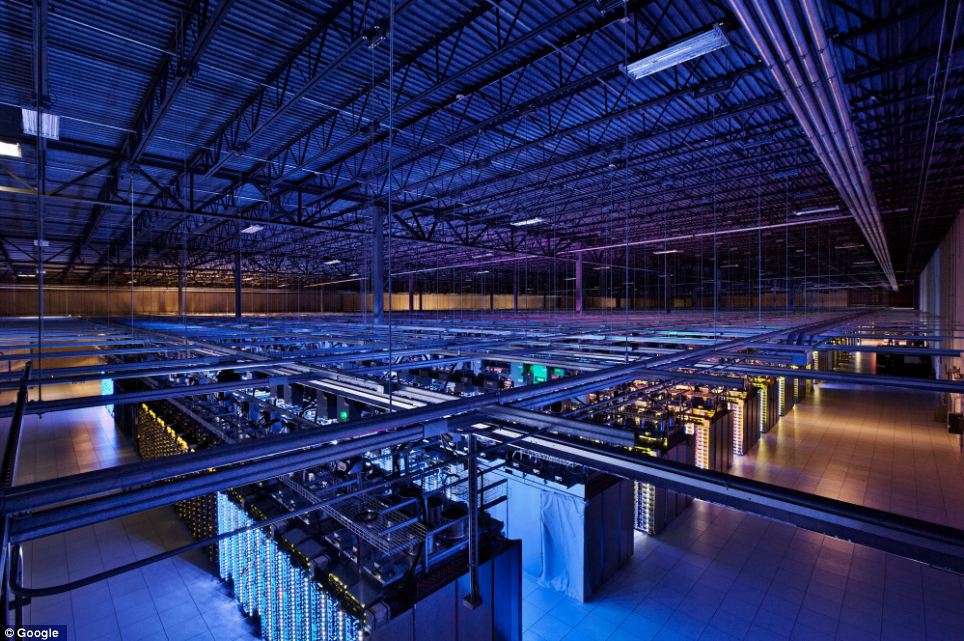
Google has given a rare glimpse inside the  vast data centres around the globe that power its services.

They reveal an intricate  maze of computers that process Internet search requests, show  YouTube video  clips and distribute email for millions of people.

With hundreds of thousands of servers,  colourful cables and even bicycles so engineers can get around quickly, they  range from a converted paper mill in Finland to custom made server farms in  Iowa.

One of Google’s server farms in Council Bluffs, Iowa, which provides over  115,000 square feet of space for servers running services like Search and  YouTube

‘Very few people have stepped inside Google’s  data centers, and for good reason: our first priority is the privacy and  security of your data, and we go to great lengths to protect it, keeping our  sites under close guard,’ the firm said.

‘While we’ve shared many of our designs and  best practices, and we’ve been publishing our efficiency data since 2008, only a  small set of employees have access to the server floor itself.

‘Today, for the first time, you can see  inside our data centers and pay them a virtual visit.

‘On Where the Internet lives, our new site  featuring beautiful photographs by Connie Zhou, you’ll get a never-before-seen  look at the technology, the people and the places that keep Google  running.’

The site features photos from inside some of  the eight data centers that Google Inc. already has running in the U.S., Finland  and Belgium.

Google is also building data centers in Hong  Kong, Taiwan, Singapore and Chile.

Virtual tours of a North Carolina data center  also will be available through Google’s ‘Street View’ service, which is usually  used to view photos of neighborhoods around the world.

The photographic access to Google’s data  centers coincides with the publication of a Wired magazine article about how the  company builds and operates them.

The article is written by Steven Levy, a  journalist who won Google’s trust while writing ‘In The Plex,’ a book published  last year about the company’s philosophy and evolution.

Google colour codes its servers depending on their location, while piping in the  buildings is coded depending on what it carries – with cool water in blue tubes  and warm in red

Google’s Douglas County data centre in Georgia is so large the firm provides  Google branded bicycles for staff to get around on

The data centers represent Google’s  nerve  center, although none are located near the company’s headquarters  in Mountain  View, Calif.

As Google blossomed from its roots in a Silicon Valley garage, company co-founders Larry Page and Sergey Brin  worked  with other engineers to develop a system to connect low-cost  computer servers  in a way that would help them realize their ambition to provide a digital  roadmap to all of the world’s information.

Initially, Google just wanted enough  computing power to index all the websites on the Internet and deliver  quick  responses to search requests. As Google’s tentacles extended into  other  markets, the company had to keep adding more computers to store  videos, photos,  email and information about their users’ preferences.

A street view tour published by Google also reveals a hidden surprise – A  Stormtrooper standing guard over a server in Google’s North Carolina server farm

The insights that Google gathers  about the  more than 1 billion people that use its services has made the  company a  frequent target of privacy complaints around the world.

The latest missive came Tuesday in  Europe,  where regulators told Google to revise a 7-month-old change to  its privacy  policy that enables the company to combine user data  collected from its  different services.

Google studies Internet search  requests and  Web surfing habits in an effort to gain a better  understanding of what people  like. The company does this in an effort to show ads of products and services to  the people most likely to be  interested in buying them. Advertising accounts  for virtually all of  Google’s revenue, which totaled nearly $23 billion through  the first  half of this year.

Even as it allows anyone with a Web  browser  to peer into its data centers, Google intends to closely guard  physical access  to its buildings. The company also remains cagey about  how many computers are  in its data centers, saying only that they house  hundreds of thousands of  machines to run Google’s services.

Google’s need for so many computers  has  turned the company a major electricity user, although management  says it’s  constantly looking for ways to reduce power consumption to  protect the  environment and lower its expenses.

Here hundreds of fans funnel hot air from the server racks into a cooling unit  to be recirculated in Oklahoma. The green lights are the server status LEDs  reflecting from the front of the servers

The Iowa campus network room, where routers and switches allow data centers to  talk to each other. The fiber cables run along the yellow cable trays near the  ceiling.

Even the water pipes reflect Google’s brand: These colorful pipes are  responsible for carrying water in and out of an Oregon data center. The blue  pipes supply cold water and the red pipes return the warm water back to be  cooled.

In Hamina, Finland, Google chose to renovate an old paper mill to take advantage  of the building’s infrastructure as well as its proximity to the Gulf of  Finland’s cooling waters.

Google’s server farm in Douglas County, Iowa

Denise Harwood, a Google Engineer, diagnoses an overheated CPU. For more than a  decade, Google has built some of the world’s most efficient servers.

Each server rack has four switches, connected by a different coloured cable.  Colours are kept the same throughout data centres so staff know which one to  replace in case of failure.

Video shows red truck driving through tornado in central Texas

ELGIN, Texas – It was like a scene out of the movie “Twister” when a truck drove through a tornado in Central Texas on Monday.

The video above, shot by storm chaser Brian Emfinger of Live Storms Media, shows a red truck driving down a road in Elgin, Texas, as it gets blown over onto its side by a tornado. The truck was then spun around before getting flipped back upright onto its wheels.

Amazingly, the truck was able to drive away as the twister went on to knock down trees and power lines along the road.

Newly restored ‘American Dream’ limo breaks its own record as world’s longest car

‘I found the car ten years ago. It was rotting in New Jersey,’ says Mike Manning, who repaired the ride

CBC Radio · Posted: Mar 11, 2022 6:35 PM ET | Last Updated: March 14

On March 1, Guinness recertified the renovated American Dream limo at a length of 30.54 metres, about 4 centimeters longer than its first record, following its remodel by Mike Manning and his students. (Submitted by Mike Manning)

There is only one car out there that you can take for a spin, then lounge in its swimming pool, land on its helipad and golf on its putting green — and it’s called the American Dream.

The newly restored vehicle, built out of six 1976 Cadillac Eldorado limos, is a showstopper with 26 wheels and space for up to 75 people. Last week, Guinness World Records declared it the longest car in the world.

The American Dream rose to fame in the late 1980s, when it was first assembled by Hollywood’s favourite car designer Jay Ohrberg. But the limo was so long that it soon became difficult to drive and park.

“I found the car about 10 years ago,” Mike Manning, president of the automotive teaching museum Autoseum, told As It Happens guest host Gillian Findlay. “It was rotting in New Jersey.”

That’s when he decided to buy the rusty and long forgotten car — and dreamt of the day he’d bring it back to its former glory.

Just a decade ago, the American Dream was covered in graffiti with flat tires and broken windows. (Submitted by Mike Manning)

A rough road to recovery

Just a decade ago, the American Dream was covered in graffiti with flat tires and broken windows.

“You’d look at it and say this is junk, just call it up and get rid of it,” Manning said. “But I always knew that it had some value. Not so much the money value, but just a history…. I knew it couldn’t be destroyed.”

He started to restore the Caddy with his students at the technical teaching museum, but ran out of money to support the project. Then the museum lost the lease on its space in Nassau County, N.Y.

Manning couldn’t find another place to store the American Dream, so he gave it up and listed it on eBay.

In 2019, a real estate developer with an enormous car collection bought it — and came up with a plan to pay Manning and his students to complete the restoration process in Orlando, Fla.

Michael Dezer owns the Dezerland Park Car Museum and Tourist Attractions, which is where the American Dream will soon be showcased.

Manning and his students had their work cut out for them. The windshield was broken, the dashboard deteriorated and every panel of the car’s exterior had to be reassembled and bent to the shape of the car, before they could even start on the interior. (Submitted by Mike Manning)

The new and improved American Dream

Manning and his students had to replace a lot of the limo with donor parts from Cadillac Eldorados because, over time, the car had become so badly destroyed.

The windshield was broken, the dashboard deteriorated and every panel of the car’s exterior had to be reassembled and bent to the shape of the car.

His team then redid the roof, all the glass, the interior, the tires and the brakes. Once the body was ready, they got the engine running, fixed the gas tank and lights.

“It was something that was impossible and I felt that I could do it,” Manning said. “People said I was crazy for even trying it, but … you see it and you just don’t want to let it go.’

“You kind of look back on things when you grew up; it’s nostalgia. And once they’re gone, they’re gone. So to be able to preserve something like that was very important.”

The newly restored vehicle, built out of six 1976 Cadillac Eldorado limos, is a showstopper with 26 wheels and space for up to 75 people. (Submitted by Mike Manning.)

Manning went on to explain how the lengthy limo was never really built to be driven around, but as more of a showpiece.

Now that it’s fixed, though, he can confirm that it is ready to ride.

“We drive it basically in a straight line,” he said. “We can drive it, but we have to get it to [somewhere] like an airport … because you need a big turn radius.”

The American Dream actually broke its own record for longest car in the world.

In 1986, Guinness measured the newly built limo to be 18.28 metres (60 feet). The original designer later extended it to 30.5 metres (or 100 feet) long.

On March 1, Guinness recertified the renovated ride at a length of 30.54 metres, just under four centimetres longer than its first record.

Mike Manning is the president of Autoseum, an automotive teaching museum in Mineola, New York. (Submitted by Mike Manning.)

Currently, there is a big spot in the Dezerland Park Car Museum waiting for the longest limo to park its wheels.

“I had a very small operation in New York City and people would come see it from all over the place,” Manning said. “I think people will come … it’s something definitely [to] see when you’re down there.”