From the 1981 Cheech & Chong flick Nice Dreams

From the Indonesian movie “The Act of Killing”.
Hercules in New York is a 1970 low-budget fantasy comedy film. It is notable for being the first feature film to star (a then-unknown) Arnold Schwarzenegger, who was about 22 years old when the film was produced. It is further notable for being one of the films that Schwarzenegger admits regretting having appeared in.
In the scene a bear escapes from the Central Park zoo. Arnie confronts the bear and the fight begins. They grapple for a while then Hercules body slams the bear. After he has the bear down Herc starts choking the furry brute and punches it into submission.

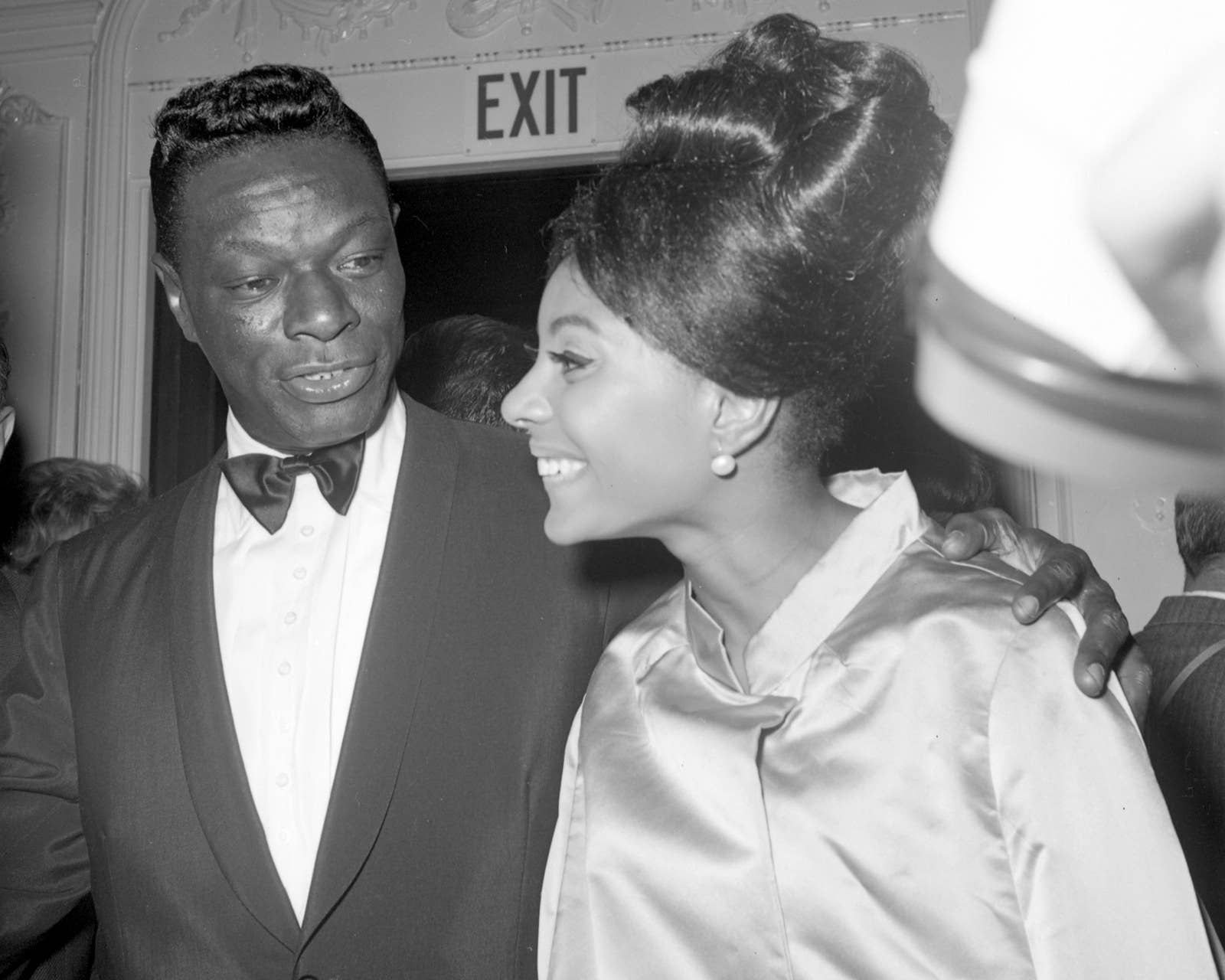
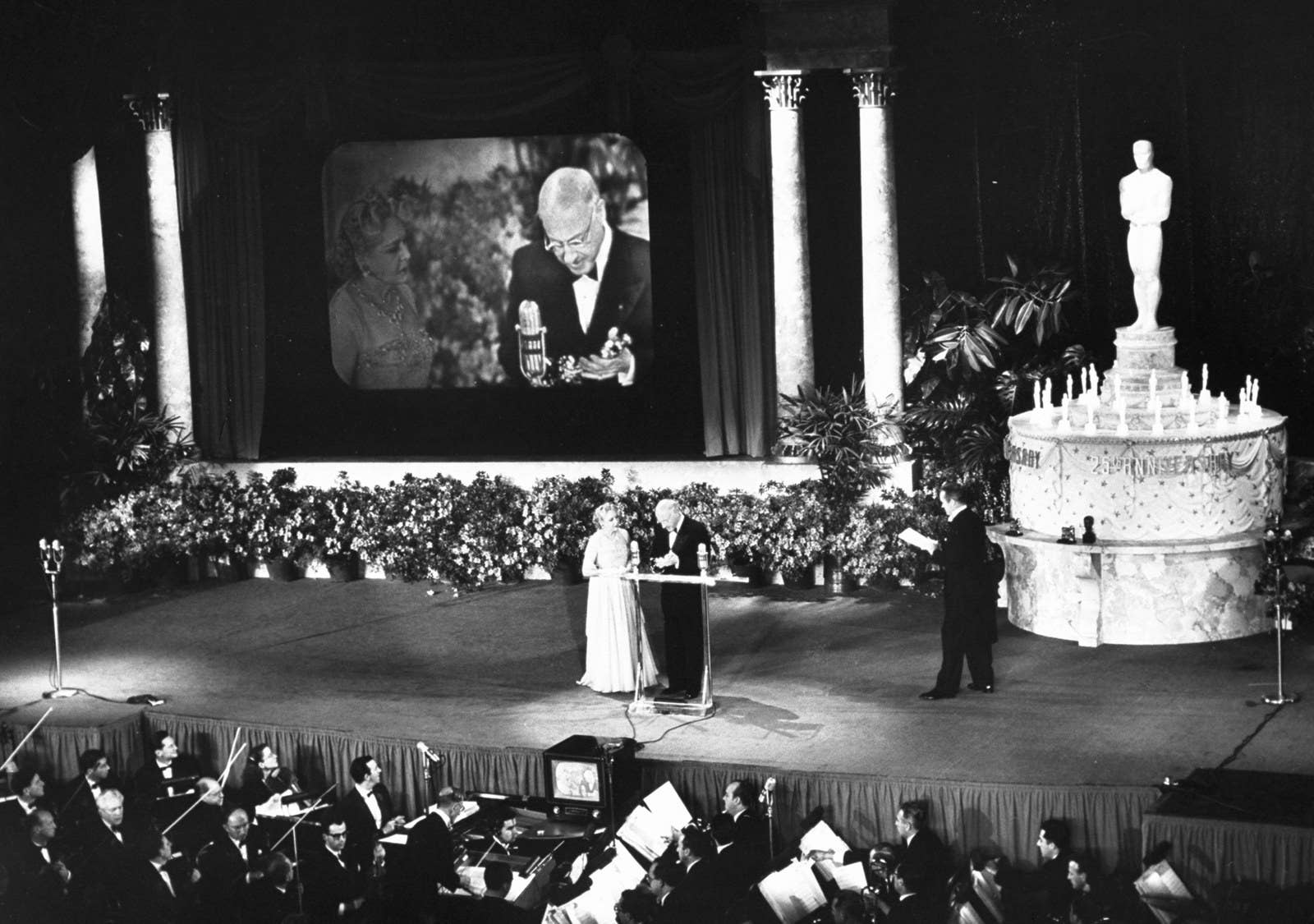
Mary Pickford (left) stands on stage with Cecil B. DeMille (center) and Bob Hope after presenting an award during the first televised Academy Awards show on March 1, 1953.

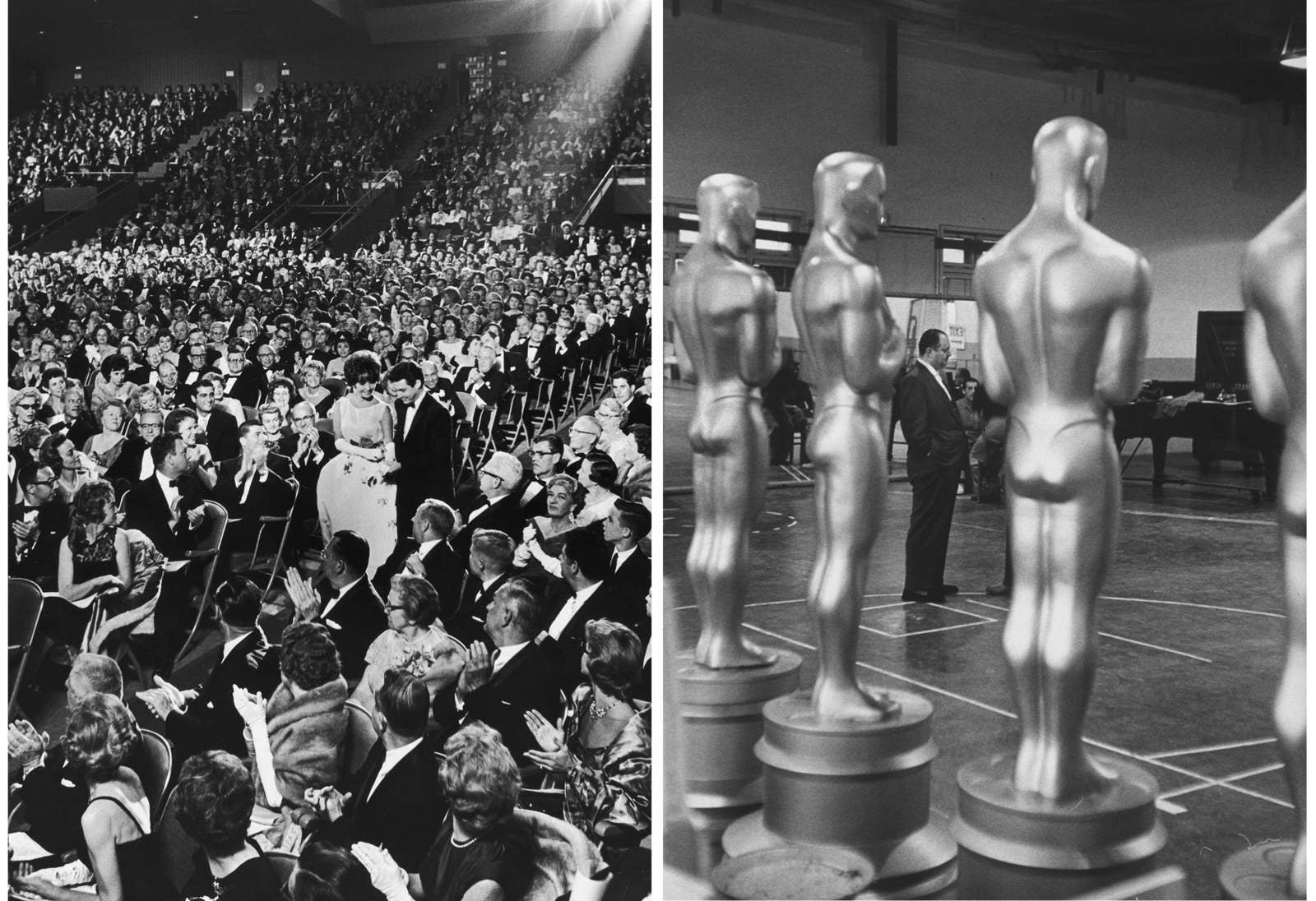
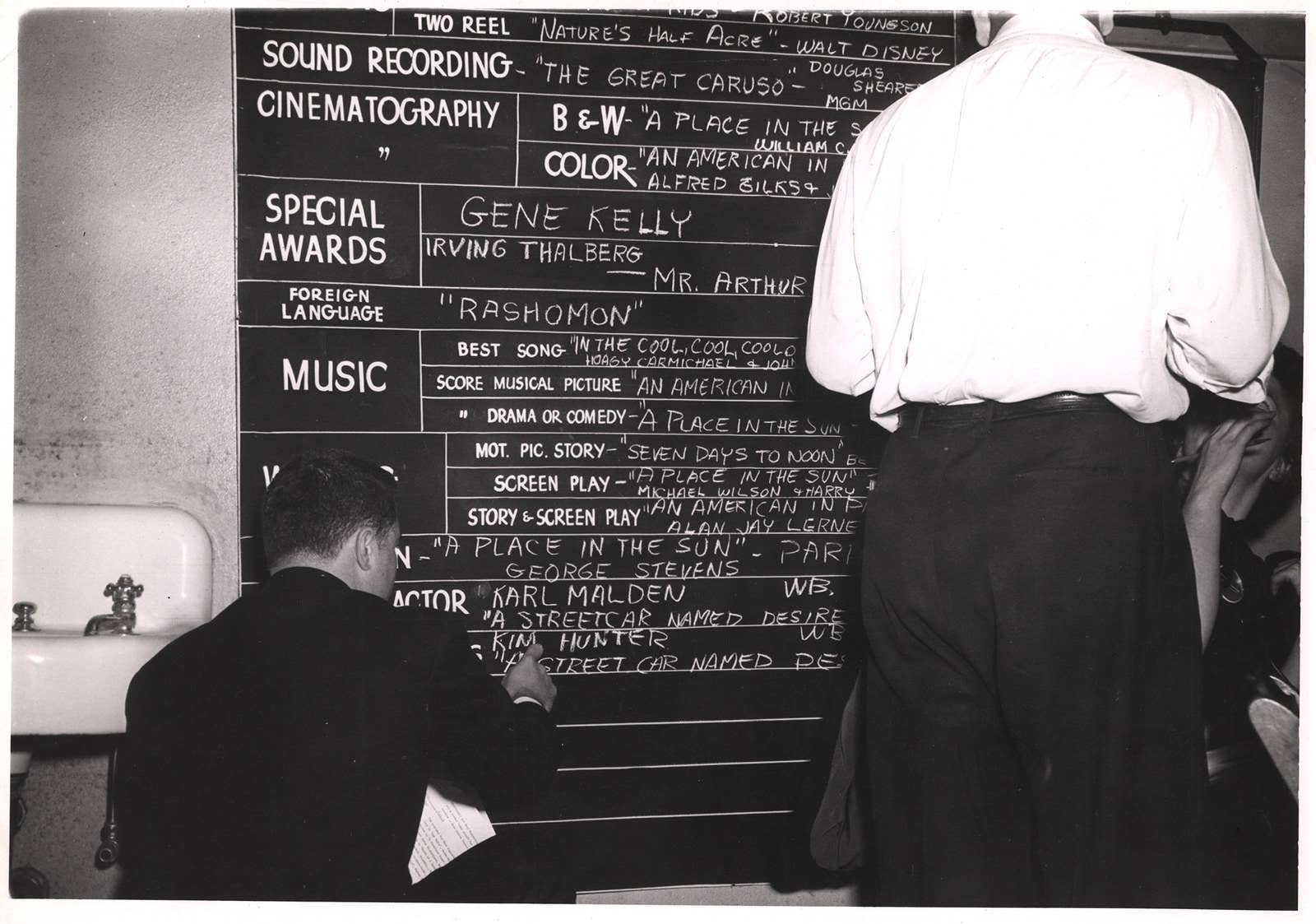
An Academy Awards staff writes the names of the winners on a chalkboard on March 20, 1952.
William Lovelace / Getty Images
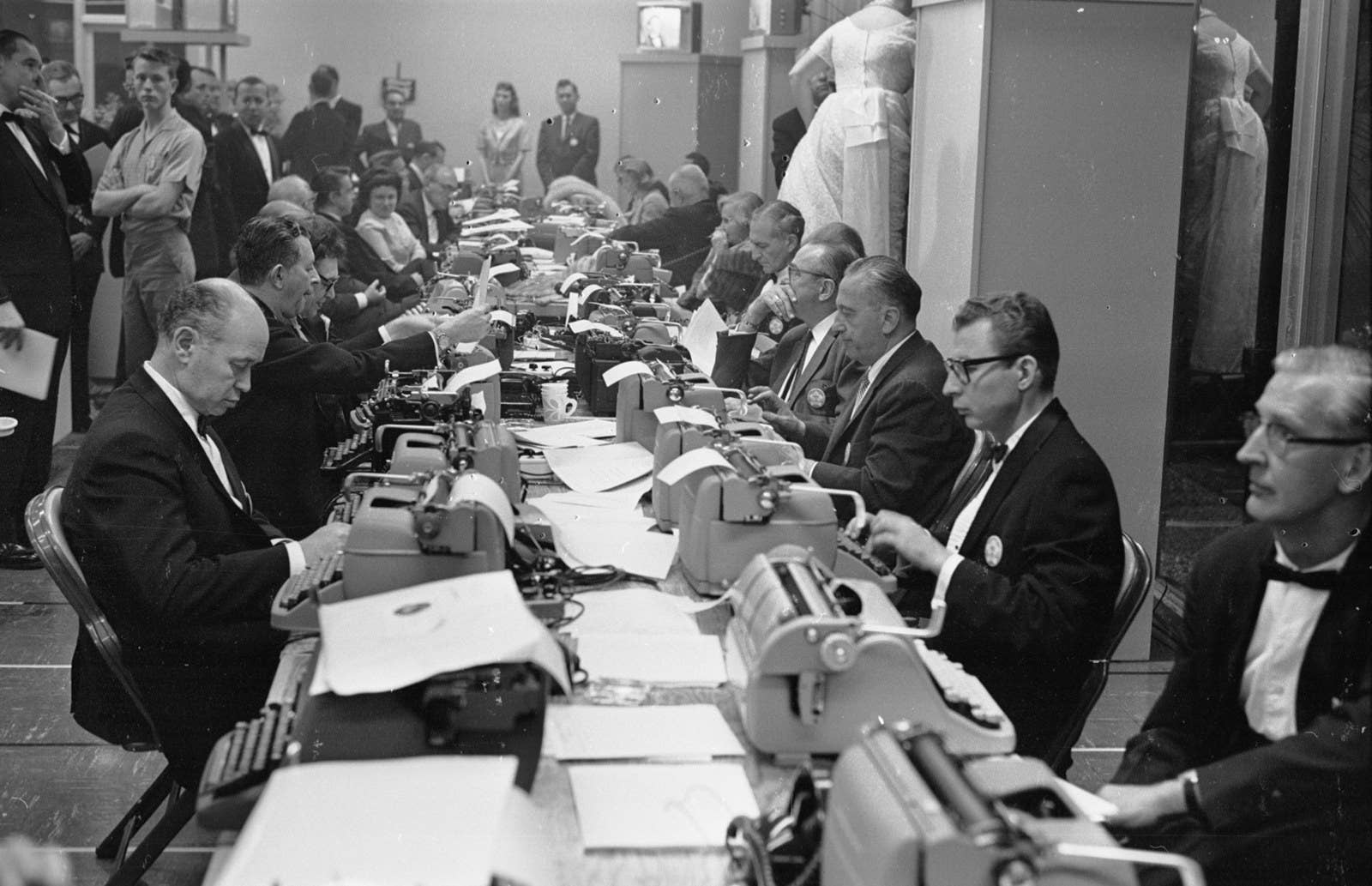
Journalists type up their reports in the press room on April 11, 1962.
Silver Screen Collection / Getty Images
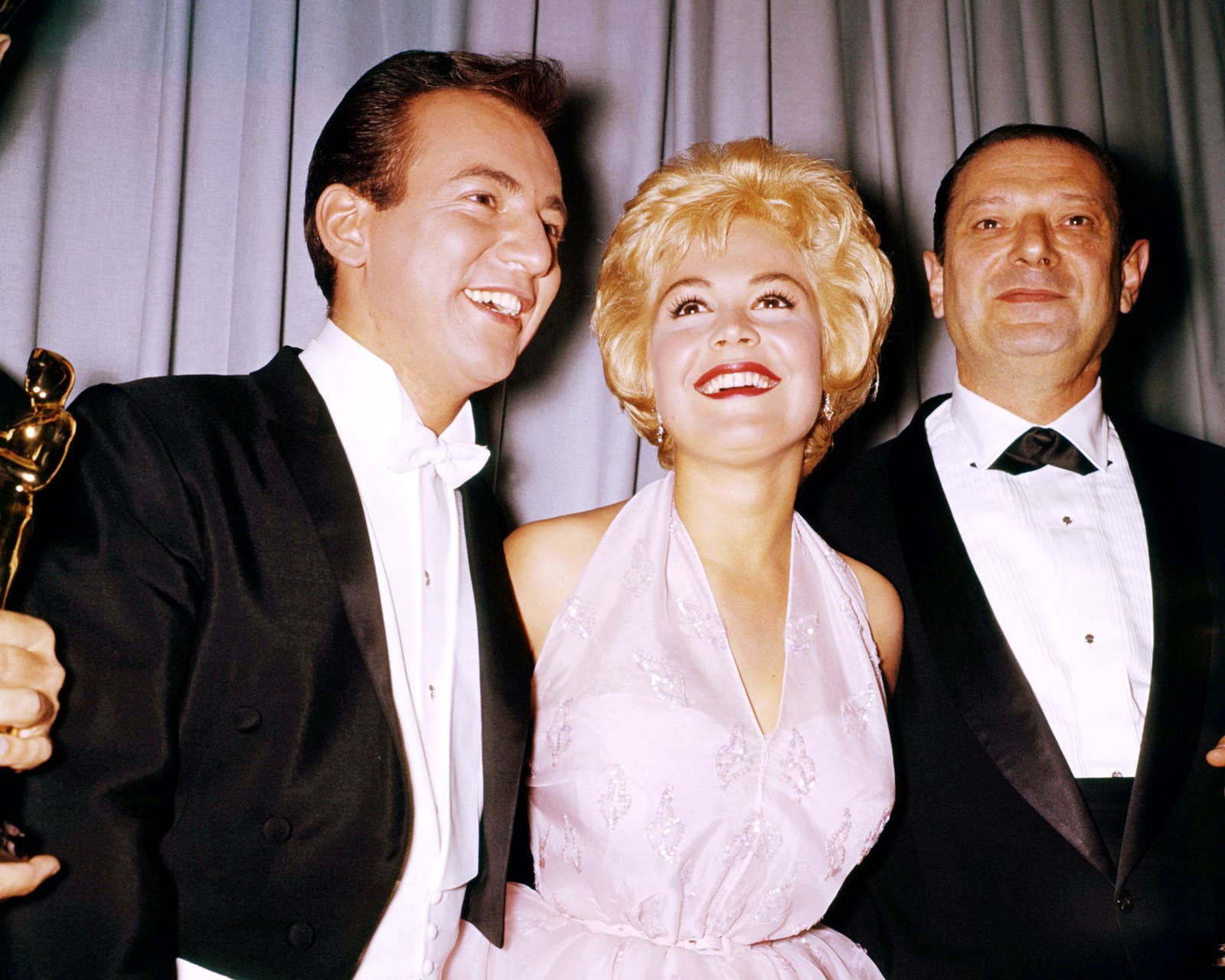
Singer Bobby Darin (left), actor Sandra Dee (center), and composer Harry Sukman (right) pose for a photo at the 33rd Academy Awards on April 17, 1961.
Hulton Archive / Getty Images
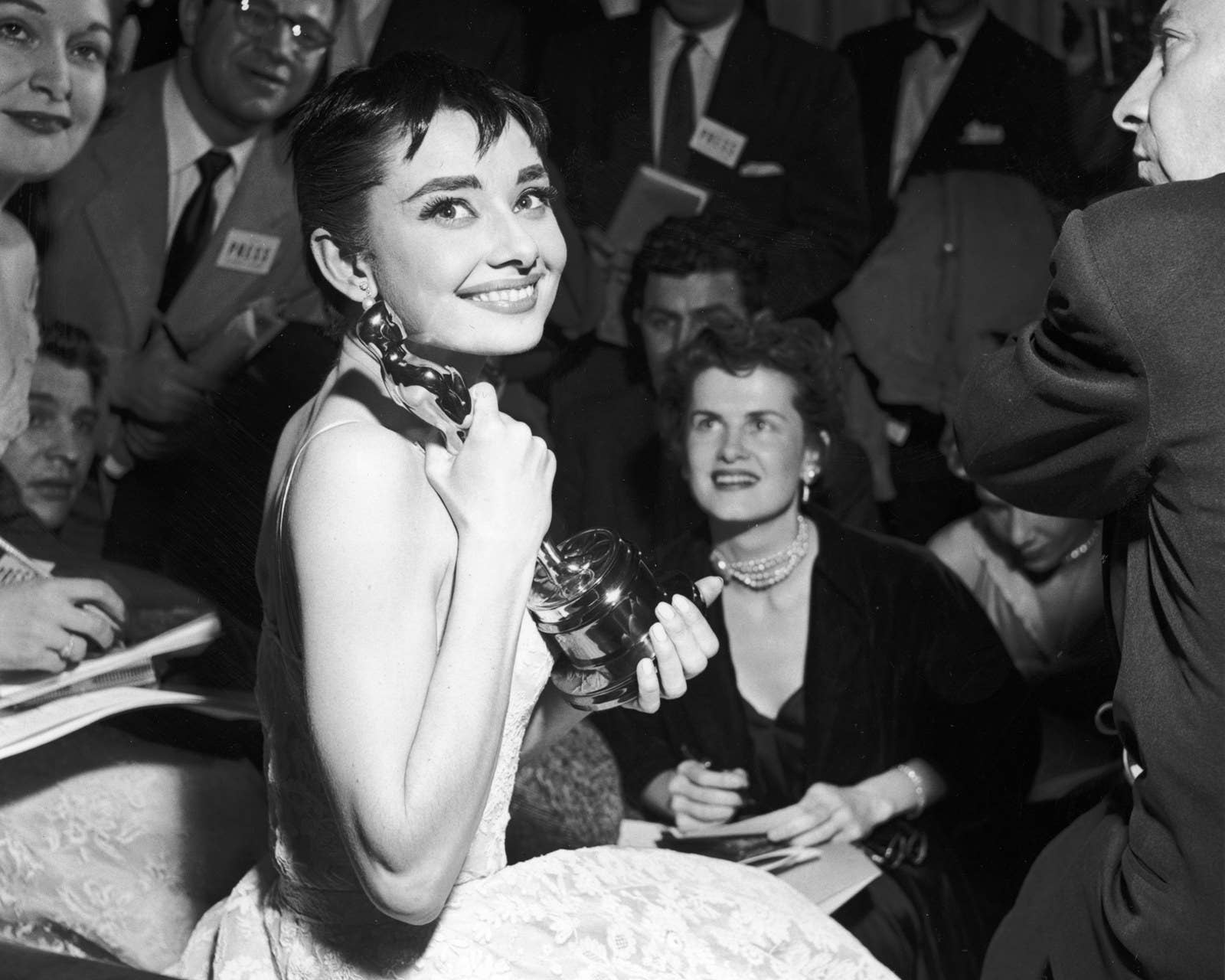
Actor Audrey Hepburn is surrounded by reporters as she shows off her Best Actress Oscar she won for her role in Roman Holiday, at the Academy Awards ceremony on March 25, 1954.
New York Daily News Archive / Getty Images
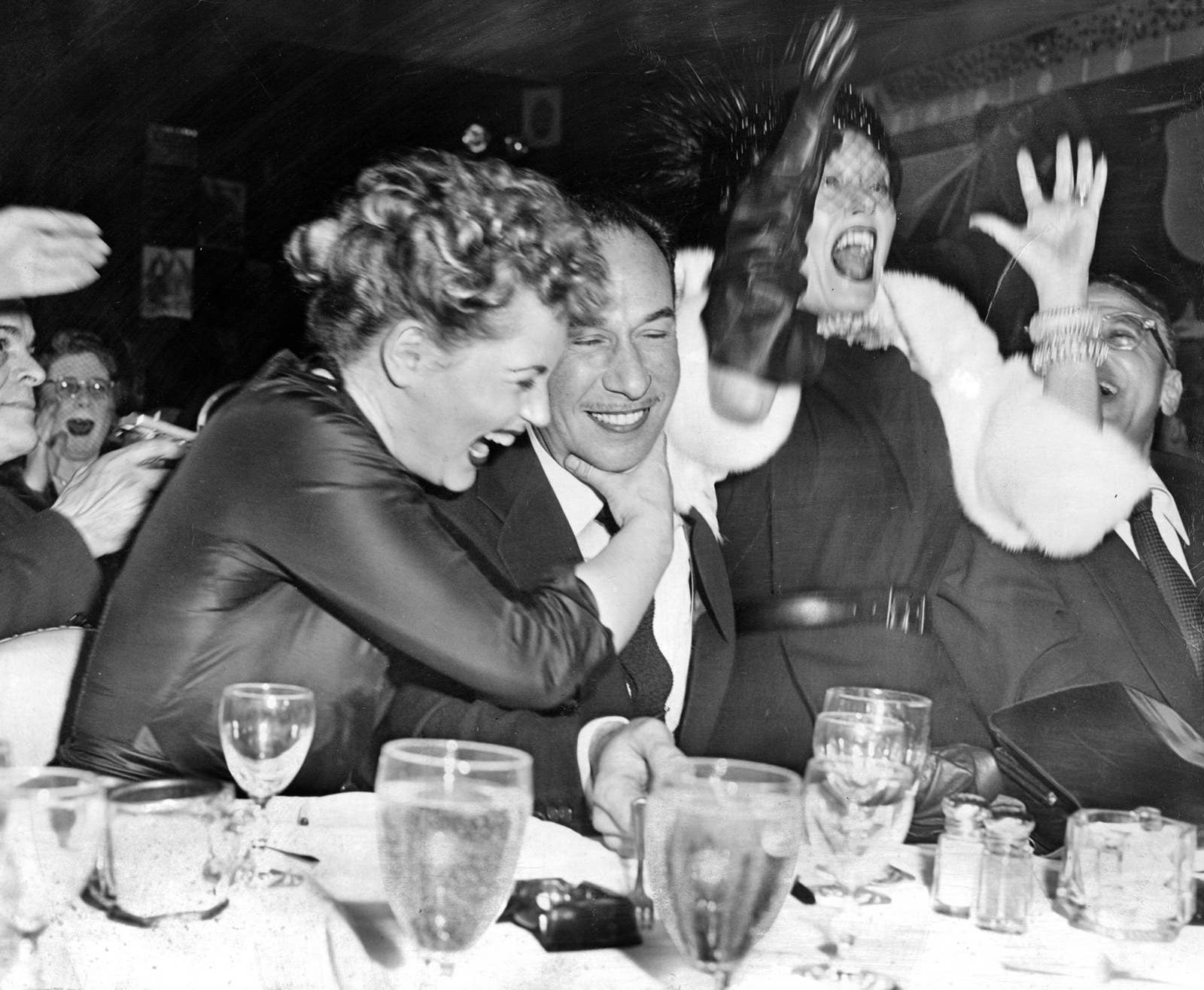
José Ferrer (center) is hugged by Judy Holliday (left) upon hearing the news that Ferrer’s portrayal of Cyrano de Bergerac had earned him the Academy Award as 1950’s Best Actor. Holliday was named as the year’s Best Actress. Gloria Swanson (right), who was in contention for the Best Actress award, jumps with joy over Ferrer’s success.
Brich / BRICH / AP/REX/Shutterstock
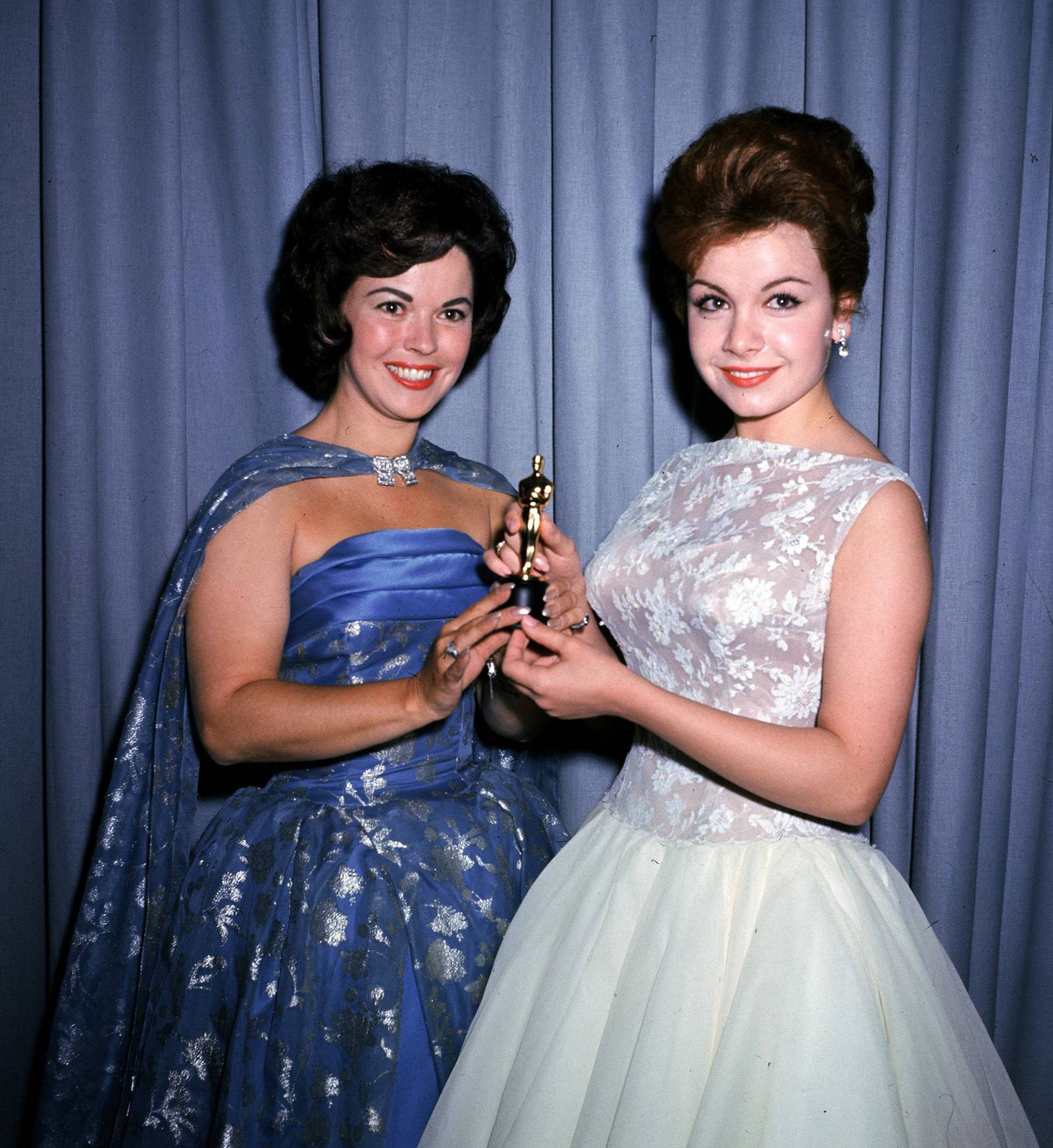
Actor Annette Funicello (right) and former child film star Shirley Temple (left) hold a miniature Oscar statuette at the annual Academy Awards in April 1961.
Silver Screen Collection / Getty Images
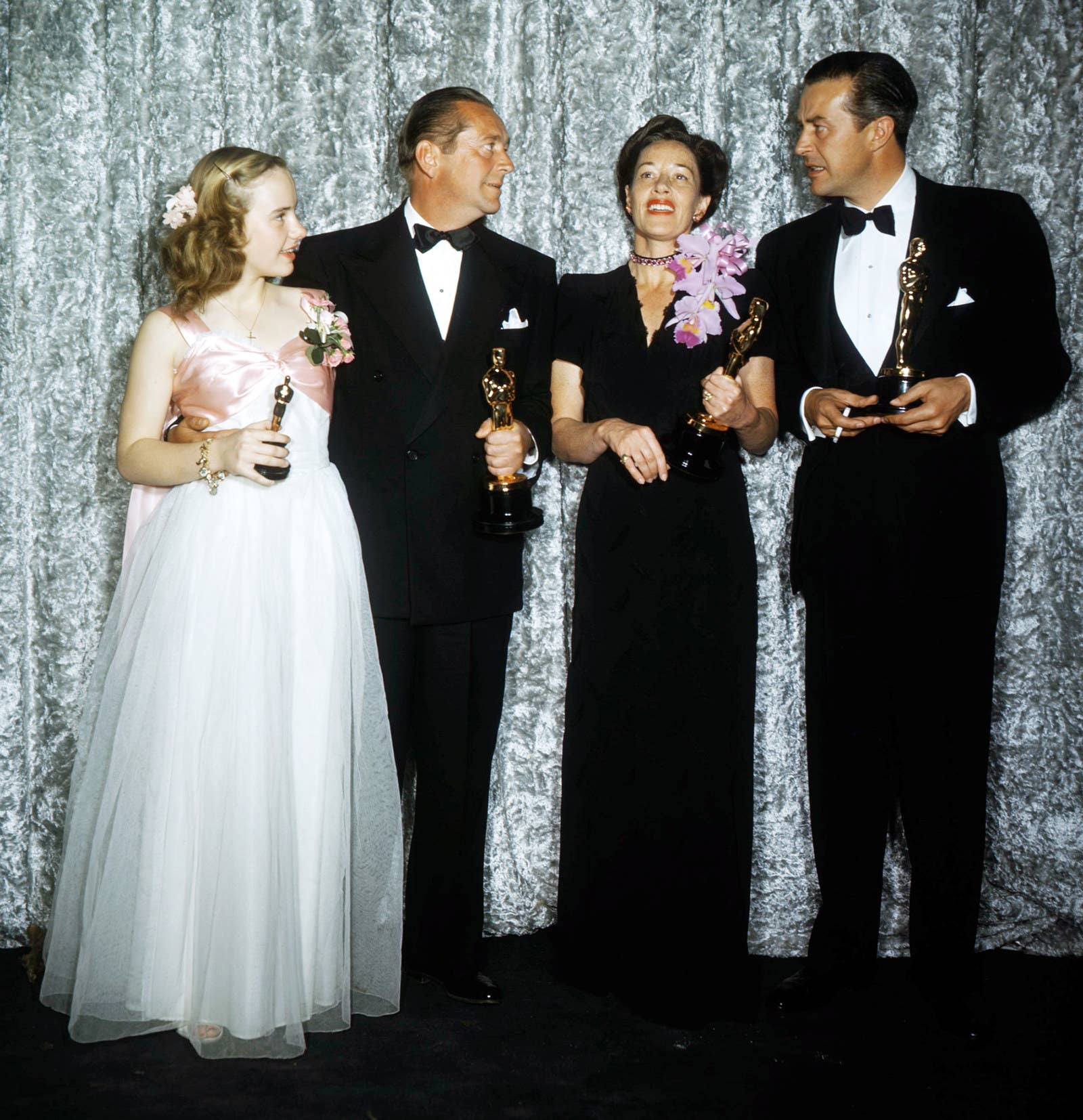
Oscar winners (left to right) Peggy Ann Garner, James Dunn, Ann Revere, and Ray Milland pose for the press at the 18th Academy Awards on March 7, 1946.
Frank Worth, Courtesy Of Capital / Getty Images
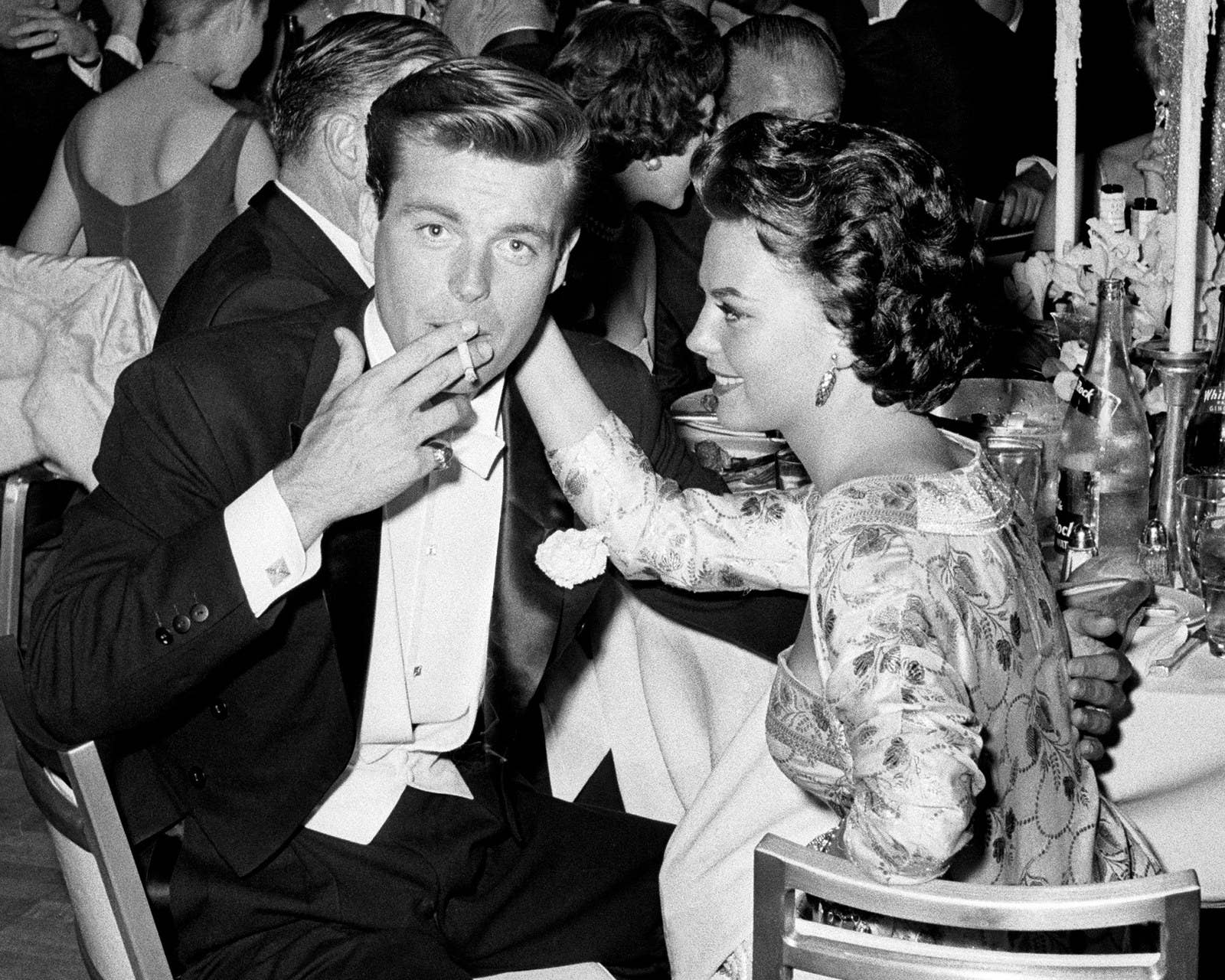
Husband and wife actors Robert Wagner and Natalie Wood attend an Oscar dinner in 1959.
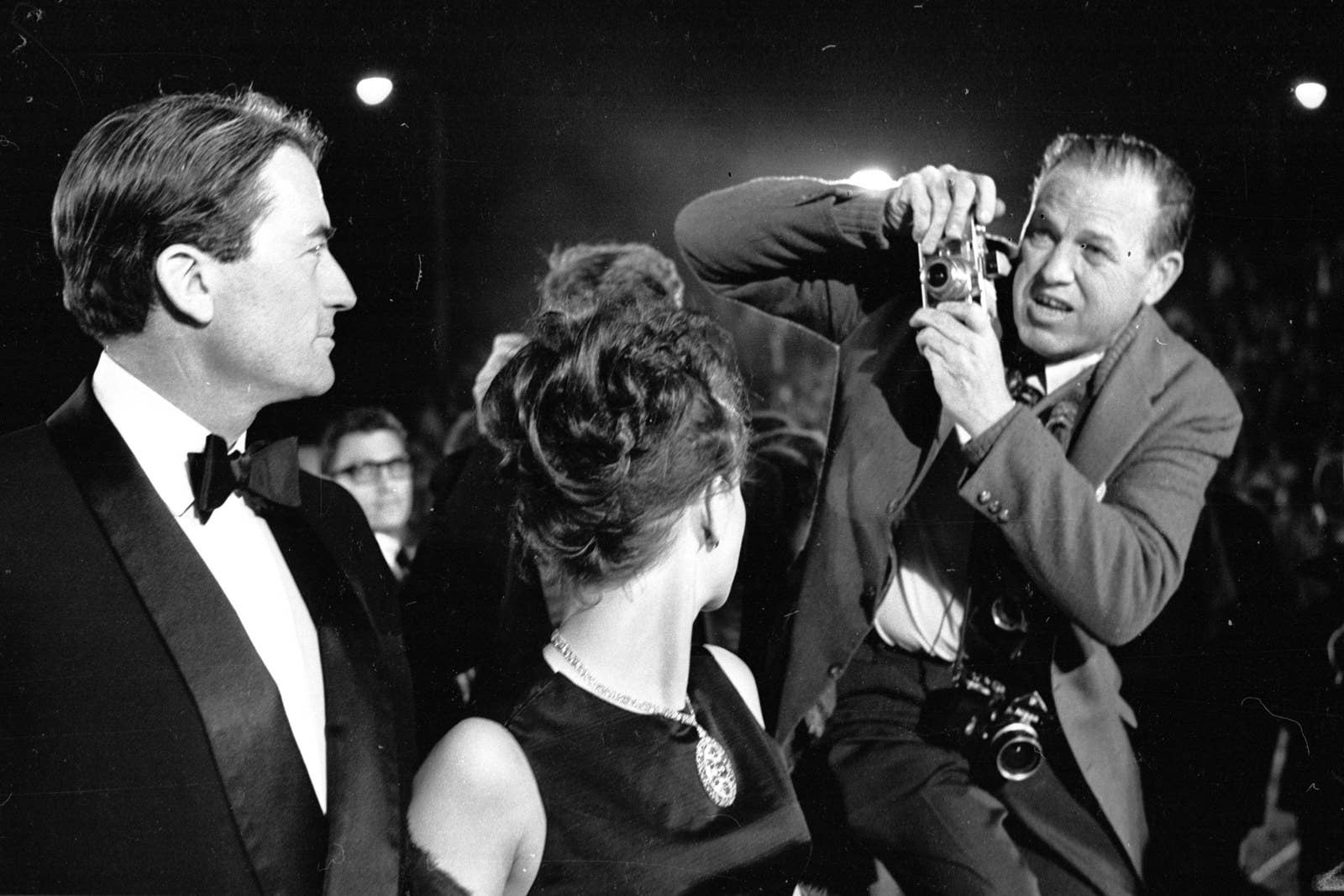
William Lovelace / Getty Images
Actor Gregory Peck and his wife Veronique are photographed at the Oscars ceremony on April 11, 1962.

Jack Albin / Getty Images
Actor Patty Duke holds her Oscar statuette and her pet chihuahua, Bambi, while seated next to Andy Prine during the Academy Awards afterparty on April 1963.
Getty Images
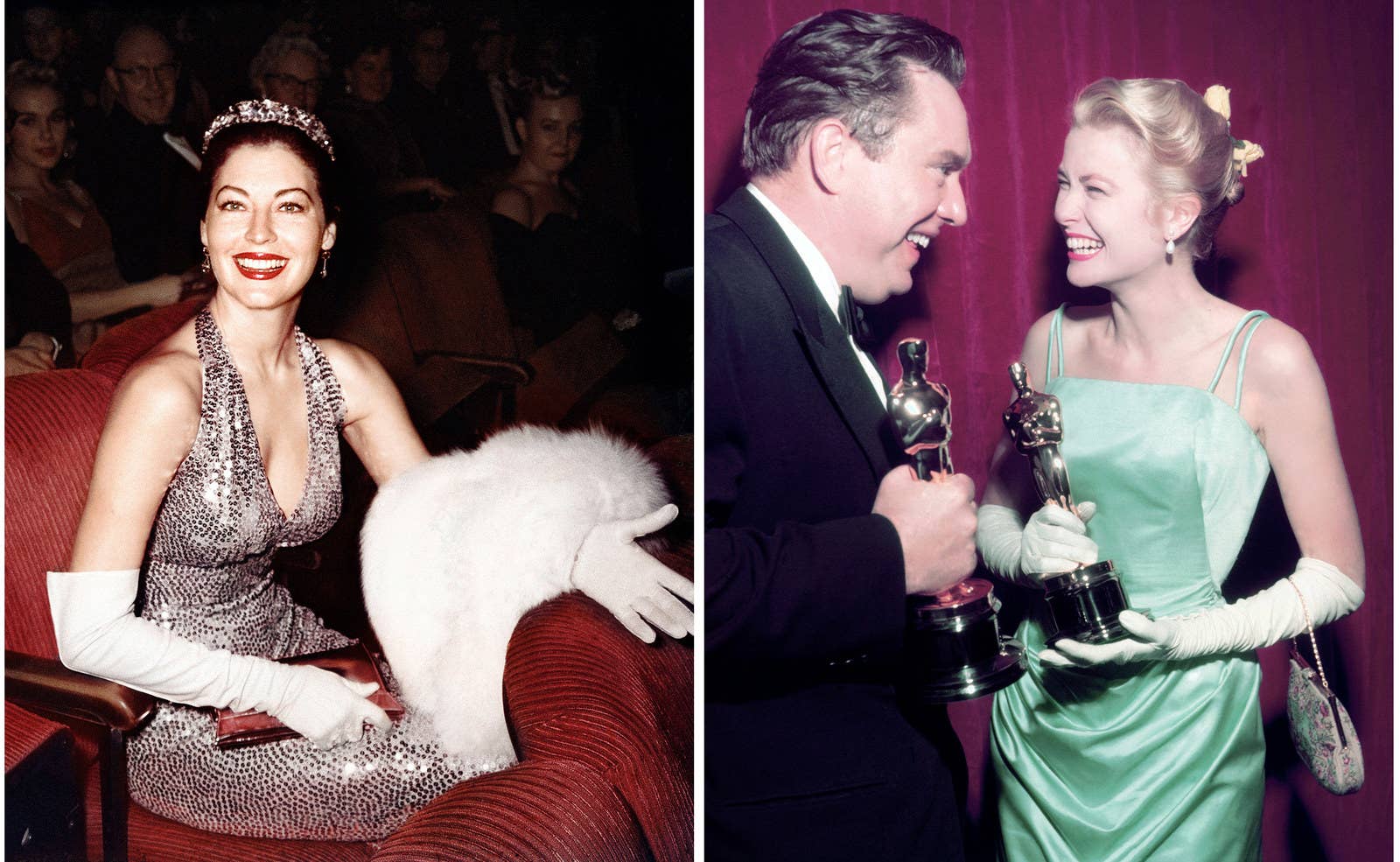
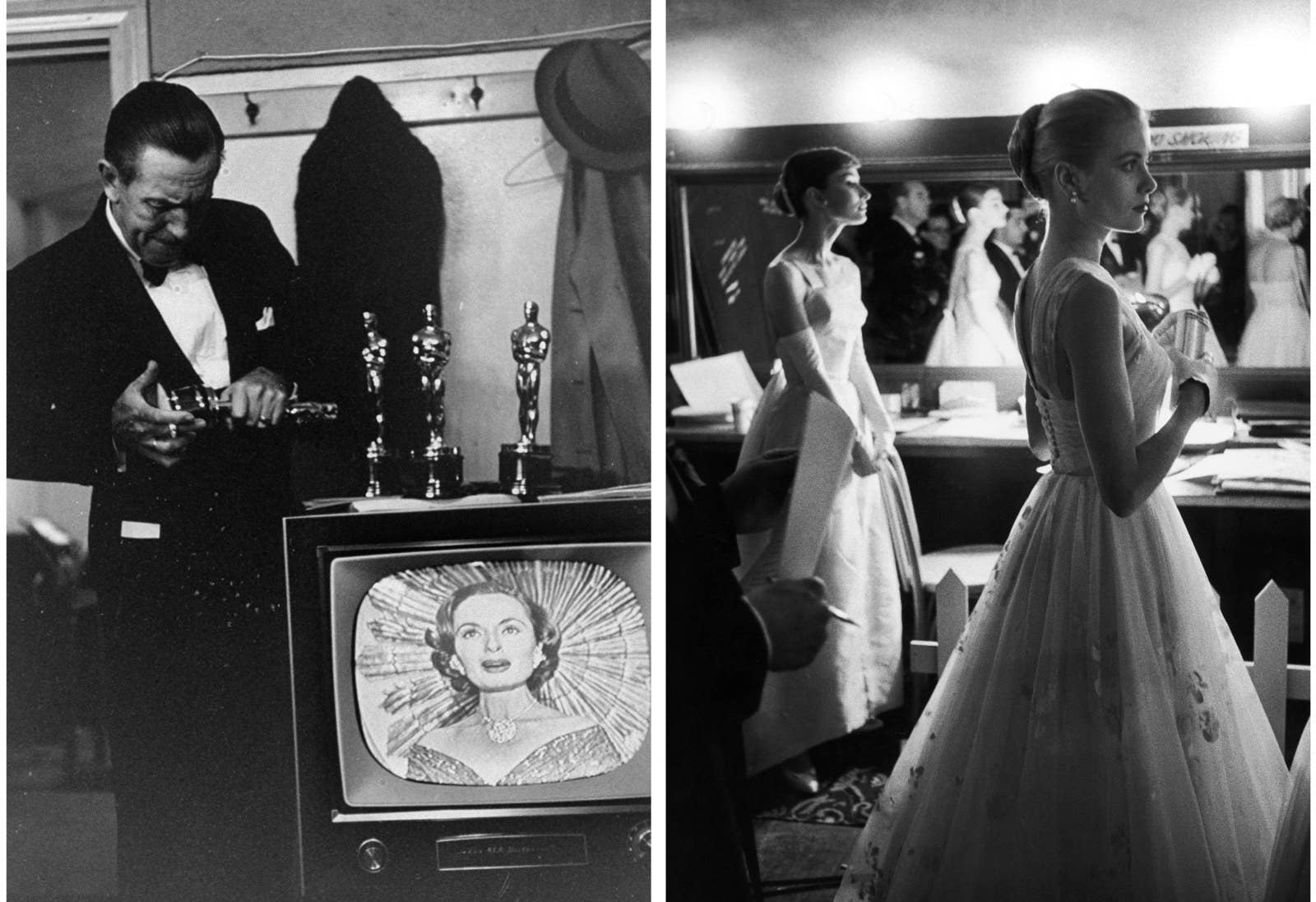
Left: Walt Disney repairs one of four Oscars he won at the Academy Awards on April 1, 1954. Right: Award presenters Audrey Hepburn (left) and Grace Kelly (right) wait backstage at the 28th Academy Awards on March 21, 1956.
It might look like as space hopper surrounded by model helicopters, but the 16-rotor E-Volo is an entirely new kind of
helicopter – which can hover motionless in the air without input from the pilot.
Its bold engineer, Thomas Senkel, took the machine on its first manned flight this week – lasting 1 minute 30 seconds.
It’s not the first electric helicopter flight – but this is a new kind of machine, steered simply by joystick, with the pilot
sitting above the rotors. Senkel says it could revolutionise transport.
SCROLL DOWN
FOR VIDEO

The three inventors claim their flying machine could be used for inspecting pipelines, as an air ambulance or for taking aerial photographs – as well as just for fun.
Once they have solved the problem of how to keep it in the air for longer – and support more people – Senkel hopes it might replace helicopters for good.
It’s far easier to fly than ordinary helicopters – it’s steered by rotor speed, which is computer-controlled, so the pilot just needs to use a joystick as if playing a videogame, rather than controlling multiple complex controls at once.
Senkel describes the easy-to-use machine as ‘good-natured’ and potentially capable of replacing the helicopter in many
situations.

A one-hour flight would cost around six euros in electricity. The machine has few parts, which could wear out, meaning the
aircraft needs little maintenance.
E-volo say their aircraft is special because of the ‘simplicity of its engineered construction without complicated mechanics,
and redundant engines.’
In an emergency, it can land even if four of its 16 rotors fail. And since the propellers sit below the pilot, a safety parachute can also be deployed.
The controls could be integrated with GPS software, the three friends claim, and the machine could even automatically avoid obstacles and direct itself to predetermined locations. E-Volo have already completed several successful ‘drone’ flights with the vehicle, controlled remotely from the ground.
Popular Science magazine had many articles devoted to automobile safety back in the 1930’s, 1940’s, 50’s and 60’s. The car explosion in those decades revealed many problems and concerns as cars became bigger and faster. Many of the tips Pop Sci brings up from back in the day could be utilized in today’s world of mass automobile use.


If this cover image doesn’t terrify you into driving safely, we don’t know what will. According to the illustrator, driving 30 miles and hour is as dangerous as driving on the roof of a building.
Manitoba Public Insurance should start preaching these same basic rules. I don’t know about the one of suspecting every pedestrian of suicide.
1. Learn to judge the conditions of the road and the drivers. 2. It isn’t how fast you can go, it’s how fast you can stop. 3. Keep one car length between you and the car in front of you for every 10 miles on your speedometer. 4. Suspect every pedestrian of suicide. 5. Every intersection is a crash point, so slow down. 6. Signal properly. 7. Expect the worst from the other car.

Speed limits in certain States back in 1960 was 30 mph. That would be about 52 kph.

In 2020, Clarence Iron, Earl Wood, and John Chabot debuted calling for the NHL in Nêhiyawêwin (ᓀᐦᐃᔭᐍᐏᐣ; the Plains Cree language) during a Montreal Canadiens versus Carolina Hurricanes game. Building on their coverage beginning in 2019 of Rogers Hometown Hockey in Cree, APTN now hosts HNIC in Cree every Saturday night with announcer Clarence Iron calling alongside host Earl Wood and analysts John Chabot and Jason Chamakese. Although broadcasts in Nêhiyawêwin were postponed during the pandemic-shortened 2020-21 season, a large push for them to return ensured the return of consistent, weekly Plains Cree hockey coverage. The team behind Cree broadcasting is also working to translate hockey terms into the language, such as “slapshot” (ᓱᐦᑭᐸᑲᒥᐍᐸᐦᐍᐤ sohki-pakamiwepahwew), “faceoff” (ᓇᐸᑭᐘᓂᐢ napakiwanis), and “rink” (ᓱᓂᐢᑿᑕᐦᐃᑫᐏᑲᒥᐠ soniskwatahikewikamik).
Japanese Snow Monkeys (Macaques) enjoying a dip in the hot springs.
 The MarkoZen Blog