





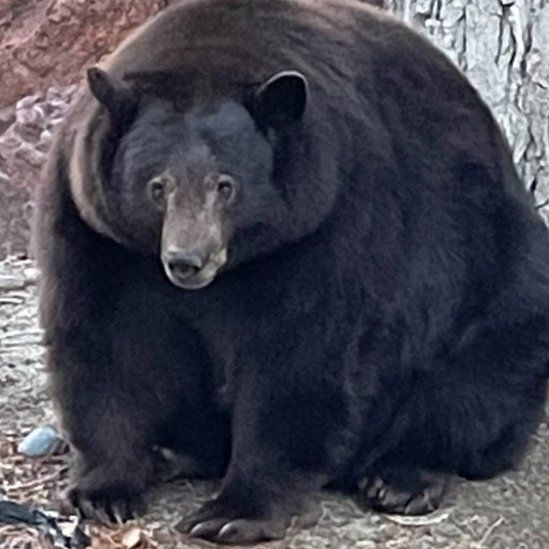
A massive black bear named Hank the Tank is wanted by California police for breaking into dozens of homes in a Lake Tahoe neighbourhood since last summer.
The bear burglar weighs 500lbs (227kg), much more than the average bear, and appears to have skipped hibernation in winter due to a constant food supply.
Authorities say euthanisation may be necessary because the wild animal has grown so comfortable around humans.
Wildlife groups are calling for him to be relocated to a sanctuary.
Hank earned his nickname by hungrily barging his way into locked and occupied homes.
“It’s learned to use its size and strength to force its way into homes,” says California Department of Fish and Wildlife spokesman Peter Tira. “It’ll barge through garage doors, it’ll barge through front doors. It’ll go through windows.”
Also crowned “King Henry” in the press, Hank is “readily identifiable due to [his] exceptionally large size and dark coat with a lighter muzzle”, according to the South Lake Tahoe Police Department.
Normal non-lethal methods of bear “hazing”, such as bean bag munitions, sirens, and dry-firing police tasers (which “makes a clicky-clack noise that the bears hate”) have not been successful in driving Hank away.
The Bear League, a local wildlife advocacy group, says that Hank got to be his size (black bears average around 100-300lbs) due to his raging appetite for human food.
They have called for Hank to be trapped and sent to a sanctuary instead of killed, and for Lake Tahoe residents to be more vigilant about securing their food and rubbish.
“He’s not subsisting on a diet of ants and berries like a lot of wild bears do,” Mr Tira tells BBC News.
“In Tahoe there’s year-round access to high caloric food – whether we’re talking about leftover pizza or ice cream or just trash,” he continues. “It’s easier to find that kind of food than to work for hours to remove grubs from a dead log.”
Officials have received more than 150 calls about Hank. He has broken into nearly 40 homes, sometimes causing severe damage, in just the last six months.
“I’ve been in town 40 years and I’ve been locking my doors recently and I’ve never done that,” local Tim Johnson told CBS News after the latest break-in by Hank on Friday night.
“The more we don’t feed them, the more this isn’t going to be the case.”






BBC
Winnipeg winter has third-highest snowfall since 1872: meteorologist

Winnipeg has received more snow than usual this year. The amount of snow dumped on the city so far this winter is among the highest since records have been kept, beginning in the late 19th Century.

Only two years have seen more of the white stuff than we have this season.
“Winnipeg has so far this winter, picked up 157 cm (5’2″) of snow,” meteorologist Rob Paola said.
“That puts us in the third-most amount of snow up to this point since we’ve kept track of snowfall records in Winnipeg — extending back to 1872.”
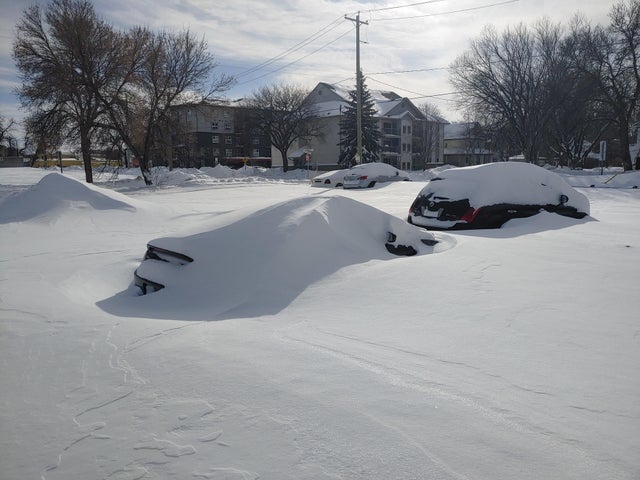
Most of that snow, Paola said, has fallen since Dec. 21. Up to that point, the city wasn’t looking at anything remarkable in terms of precipitation.
“We had about 37 cm of snow (up to Dec. 21), which was actually a little bit below average for our snowfall up to that point,” he said.
“Over the past 60 days, we’ve picked up 120 cm of snow. That’s an average of about 15 cm a week for two straight months.”
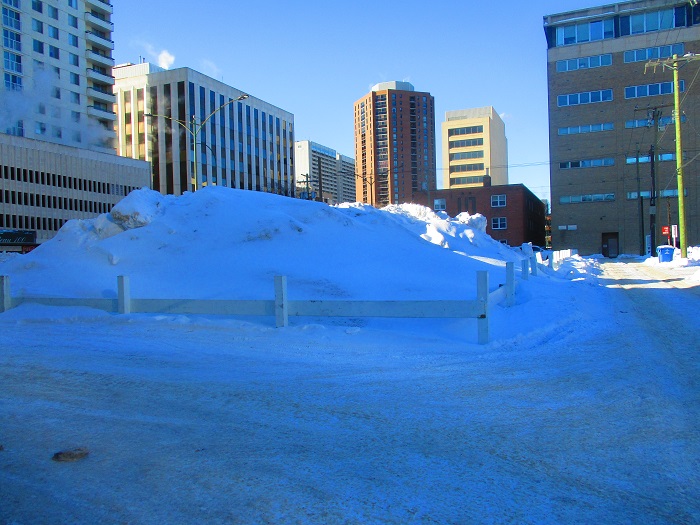
Although frustration with shovelling excess snow has been pretty universal, Paola said one group that won’t be complaining is farmers, who will be able to replenish their parched soil after dealing with drought conditions last year.
“It’s going to be a lot better than the situation we were in last year where we had very minimal snow cover.
“The snow cover was gone by the first week of march last year and there wasn’t much precipitation in spring, and that led to the extreme dryness in the summer as well.”
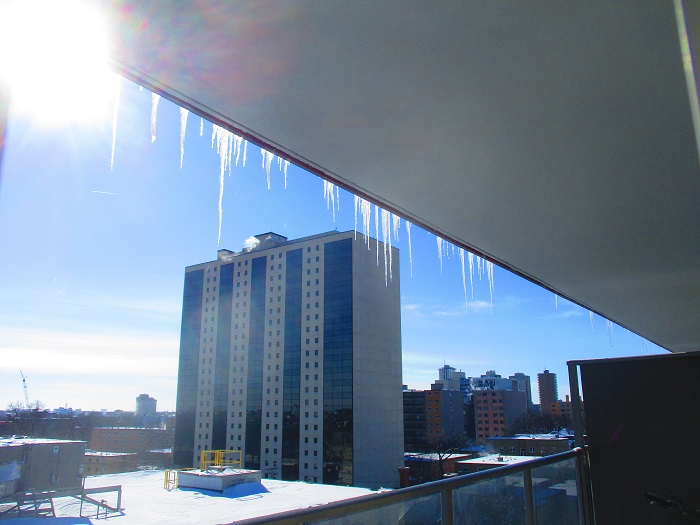
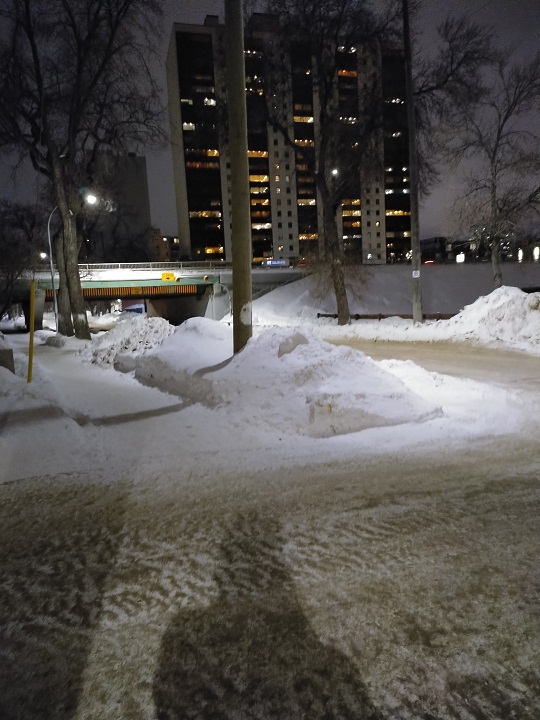
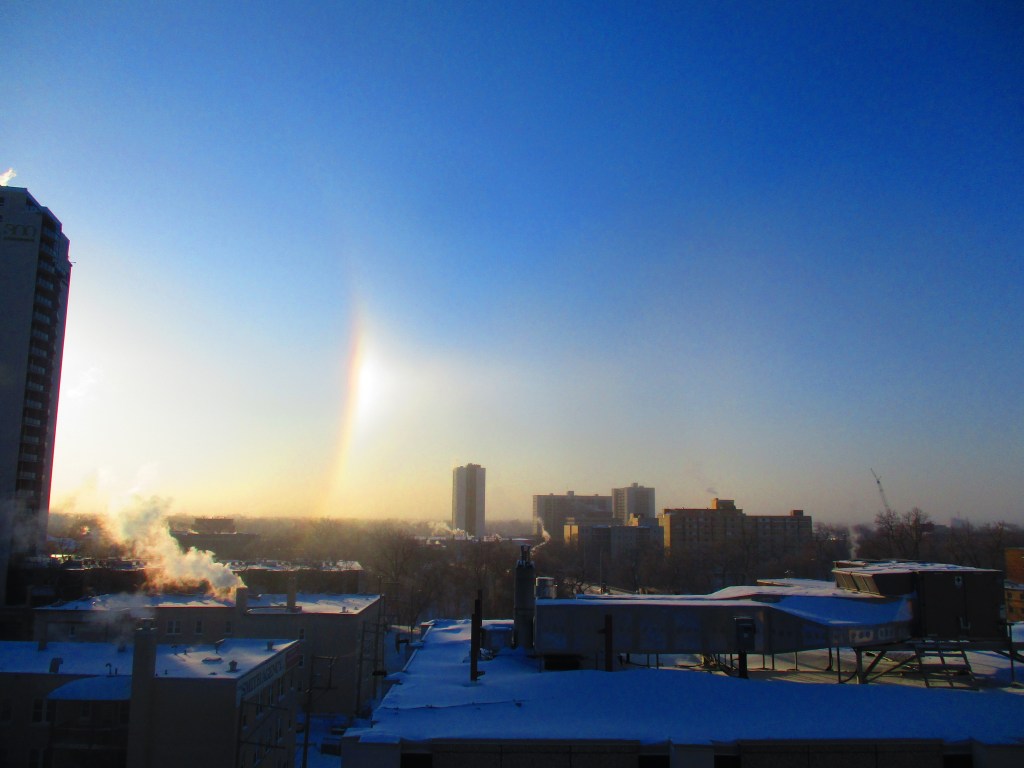
It has also been a brutally cold winter. Sun Dogs (above) are a regular occurrence.
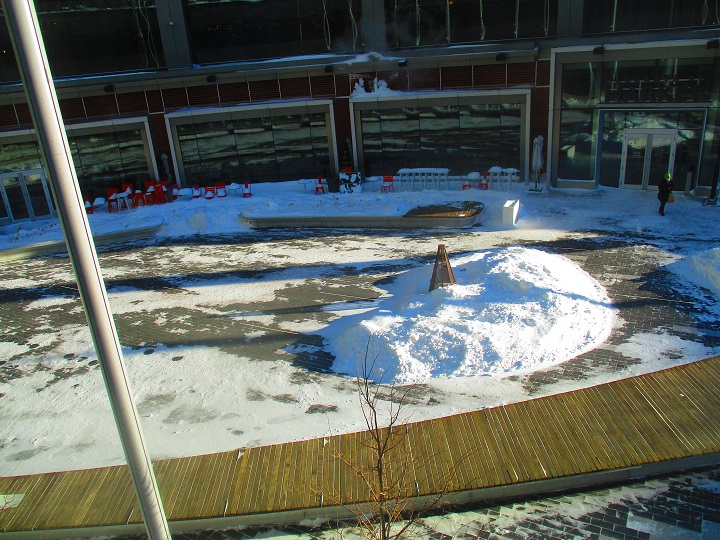

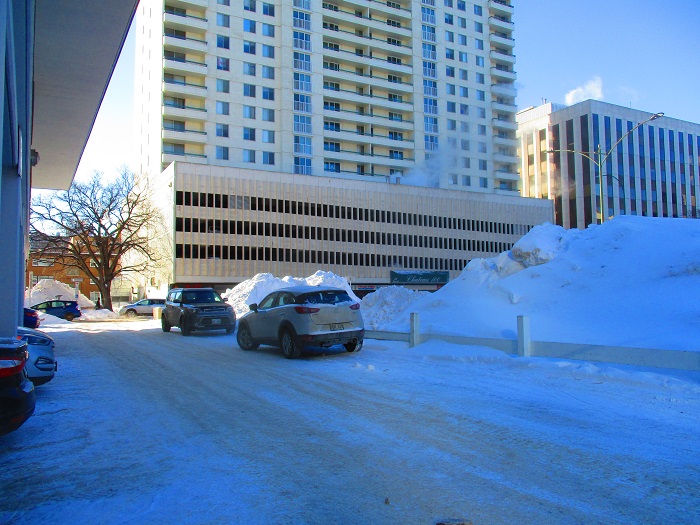


Today is 22/2/22.


Elephant and Queleas, Tanzania

Base jumping, Yosemite national park, California

Water Buffalo India

Great White checking out the shark cage

Cheetahs in Kenya checking out the tourists
.

Leopard (left) stealing a Cheetahs kill

Elephants moving through the Serengeti
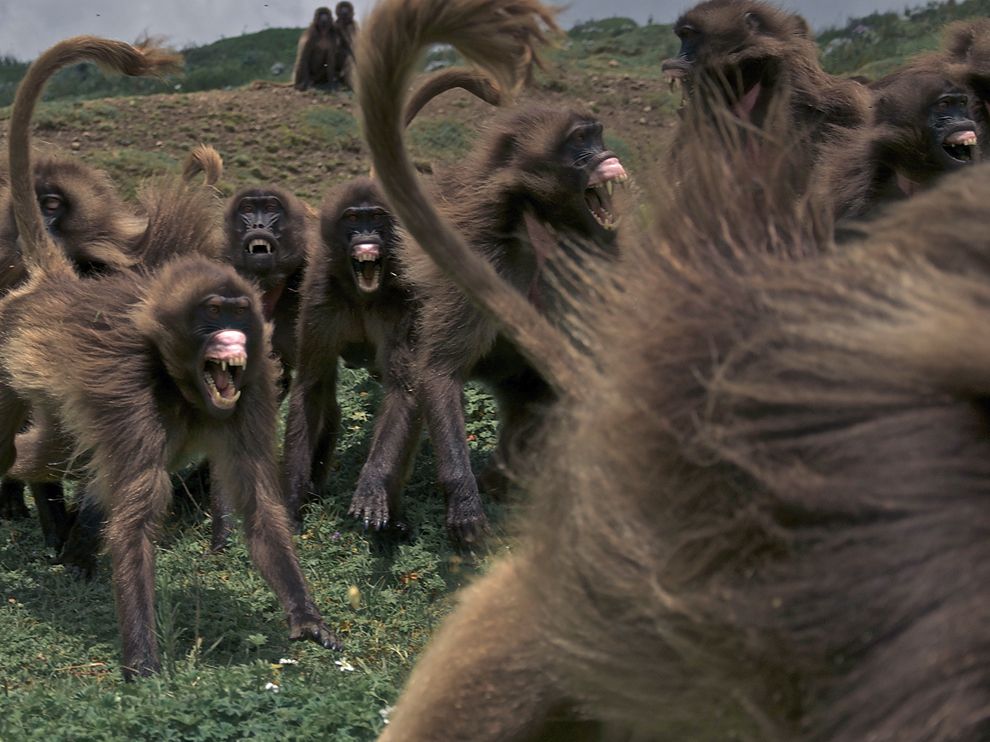
Geladas monkeys Ethiopia

Giraffes and Gazelles Namibia

Child and buffalo in Vietnam

Harvesting Kash flowers India

Kyrgyz girls Afghanistan

Mountain gorilla and baby

Chicken farm Pennsylvania

Climbing redwood trees in California

Lions in the Serengeti

Sleeping white lion South Africa

Tigers India

Free rock climbing Yosemite California

Lake Wakatipu New Zealand

Lions chilling out in Tanzania
It was in January OF 1944 that Benoit Mandelbrot fell in love with geometry, “in its most concrete and sensual form.”
”That part of geometry in which mathematics and the eye meet.”
During a math class, when Mandelbrot was nineteen years of age, at the Lycee du Parc in Lyon, young Benoit realized he could visualize algebra as geometric images. The class professor had been discussing a mathematical problem when Mandelbrot became instantly aware that he had the ability to change algebra into pictures. He then realized that once you can see pictures, the answer to a problem is obvious.
In 1958, Mandelbrot left France and joined IBM in America. It was here that Mandelbrot’s knowledge of visualizing problems was to prove very important.
Engineers at IBM had found an issue with transmitting computer information over telephone lines. Mandelbrot graphed the noise data, and noticed something that surprised him—no matter the time scale the graph looked similar, whether over one day, one hour, or one minute, or one second, the pattern remained constant. This reminded Mandelbrot of the Cantor Set, where a line is broken down into infinite recurring sets, and Helge von Koch’s “Snowflake,” where an iteration of a triangle creates an infinite length. Koch’s “Snowflake” is the earliest form of fractal.
Bringing these elements together, Mandelbrot developed a “theory of roughness” which he used to show that another dimension existed between 2-D and 3-D, this suggested there was a mathematical order to the seeming mess/chaos of the natural world. With the use of IBM computers, Mandelbrot proved his theory by producing a set of fractals in 1979.
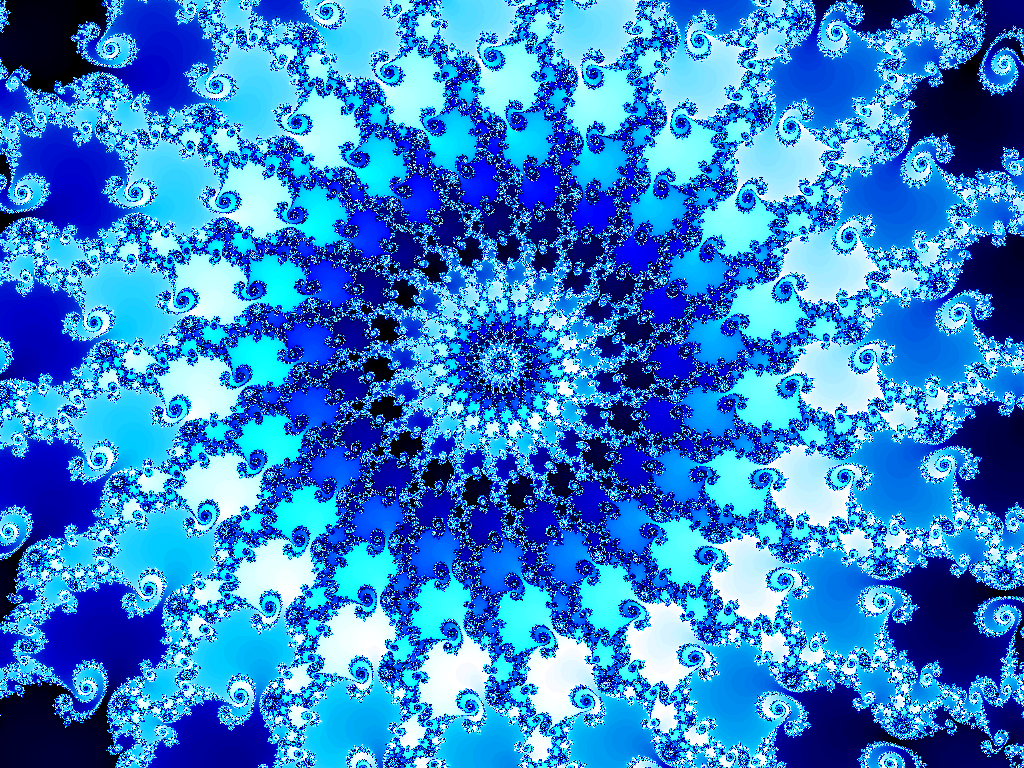
Mandelbrot set images are made by sampling complex numbers and determining for each whether the result tends towards infinity when a particular mathematical operation is iterated on it. Treating the real and imaginary parts of each number as image coordinates, pixels are colored according to how rapidly the sequence diverges, if at all. Did you get that?





 The MarkoZen Blog