Choctaw Indians Raised Money for Irish Famine Relief 

choctaw-irish-famine-swf

On March 23, 1847, the Indians of the Choctaw nation took up an amazing collection. They raised $170 for Irish Famine relief, an incredible sum at the time worth in the tens of thousands of dollars today.

They had an incredible history of deprivation themselves, forced off their lands in 1831 and made embark on a 500 mile trek to Oklahoma called “The Trail of Tears.” Ironically the man who forced them off their lands was Andrew Jackson, the son of Irish immigrants.

On September 27, 1830, the Treaty of Dancing Rabbit Creek was signed. It represented one of the largest transfers of land that was signed between the U.S. Government and Native Americans without being instigated by warfare. By the treaty, the Choctaws signed away their remaining traditional homelands, opening them up for European-American settlement. The tribes were then sent on a forced march

As historian Edward O’Donnell wrote “Of the 21,000 Choctaws who started the journey, more than half perished from exposure, malnutrition, and disease. This despite the fact that during the War of 1812 the Choctaws had been allies of then-General Jackson in his campaign against the British in New Orleans.’

Now sixteen years later they met in their new tribal land and sent the money to a U.S. famine relief organization for Ireland. It was the most extraordinary gift of all to famine relief in Ireland. The Choctaws sent the money at the height of the Famine, “Black 47,” when close to a million Irish were starving to death.

Thanks to the work of Irish activists such as Don Mullan and Choctaw leader Gary White Deer the Choctaw gift has been recognized in Ireland.

In 1990, a number of Choctaw leaders took part in the first annual Famine walk at Doolough in Mayo recreating a desperate walk by locals to a local landlord in 1848.

In 1992 Irish commemoration leaders took part in the 500 mile trek from Oklahoma to Mississippi. The Choctaw made Ireland’s president Mary Robinson an honorary chief. They did the same for Don Mullan.

Even better, both groups became determined to help famine sufferers, mostly in Africa and the Third World, and have done so ever since.

The gift is remembered in Ireland. The plaque on Dublin’s Mansion House that honors the Choctaw contribution reads: “Their humanity calls us to remember the millions of human beings throughout our world today who die of hunger and hunger-related illness in a world of plenty.”

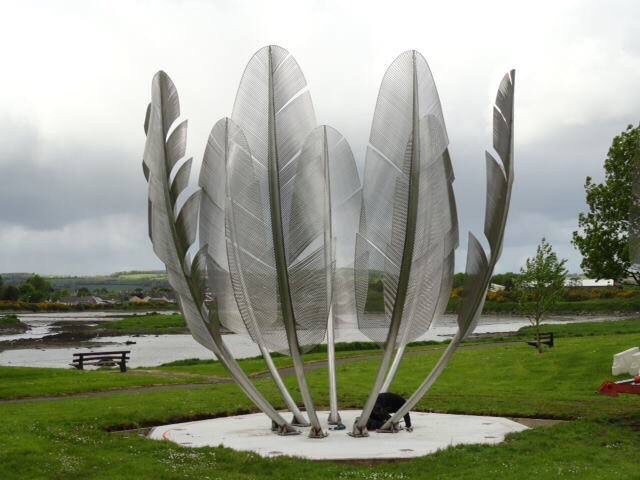
Choctaw contribution memorial in Ireland
red

The Great Irish Famine led to the massive Irish migration to America.

Alligator rescued from frigid river in Pennsylvania

Dec. 7 (UPI) — The owner of a Pennsylvania reptile sanctuary rescued a 3-foot alligator spotted by fishermen in the frigid waters of a river.

Christina Obrecht, owner of Christina’s Reptile and Animal Sanctuary in Palmerton, responded with volunteer Dana Ortiz when fisherman Logan Bauer and his father spotted the 3-foot gator in the water while they were fishing in the Lehigh River at Kimmett’s Lock, in the Allentown area.

“I never seen anything like it and couldn’t believe my dad when he told me it was in the water,” Bauer told WFMZ-TV.

Ortiz filmed video as Obrecht plucked the alligator out of the water.

“I went on the water, and was able to get in a little closer to grab him,” Obrecht told the Times News. “I grabbed him by the head, got him out and put him in the duffel bag for transportation.”

Obrecht said the gator didn’t put up much of a fight due to being exhausted from the cold.

“We knew that he would be very inactive, especially because alligators can withstand cooler temperatures, however once it gets too cold, they become severely inactive, so we knew that he wouldn’t act completely wild,” she said.

Obrecht said the alligator was likely a pet that was abandoned by its owner when it became too large to keep. She said the alligator wouldn’t have survived for very long in the river due to the cold temperatures.

“Sometimes these pet owners are even embarrassed to call a place. We definitely want to stress to never to be embarrassed. Everyone makes mistakes. Alligators do not make good pets. If you ever have an alligator, please call a facility. There’s always someone around to help,” Obrecht said.

Animal Rama

My girl at doggy daycare today. She is beauty and she’s grace.

Phoenix Park, Dublin, Ireland.

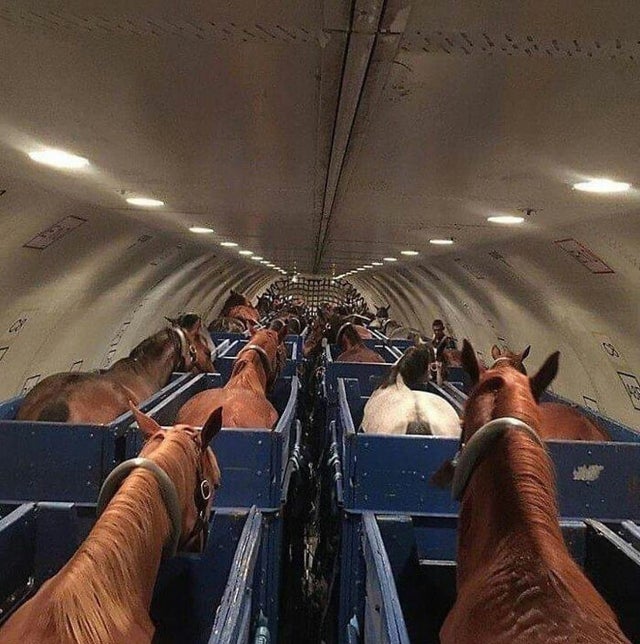
Equine Air. Because sometimes even horses need to fly.

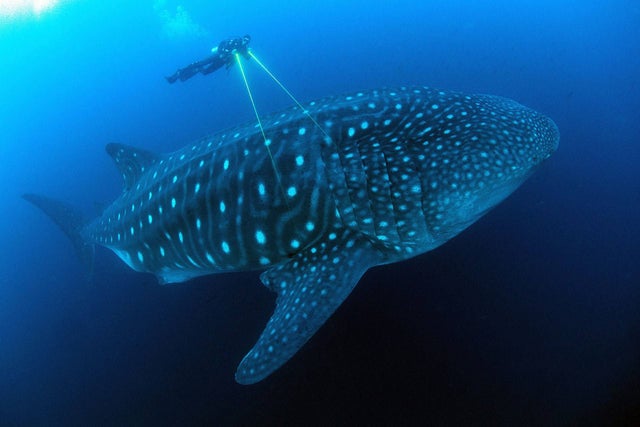
A ~15 m long whale shark at Galápagos Islands

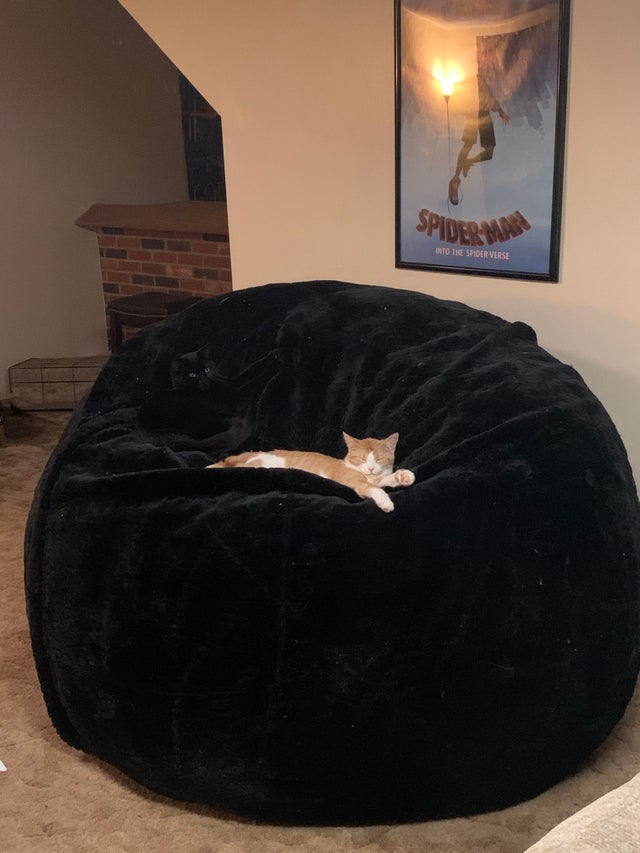
Two cats

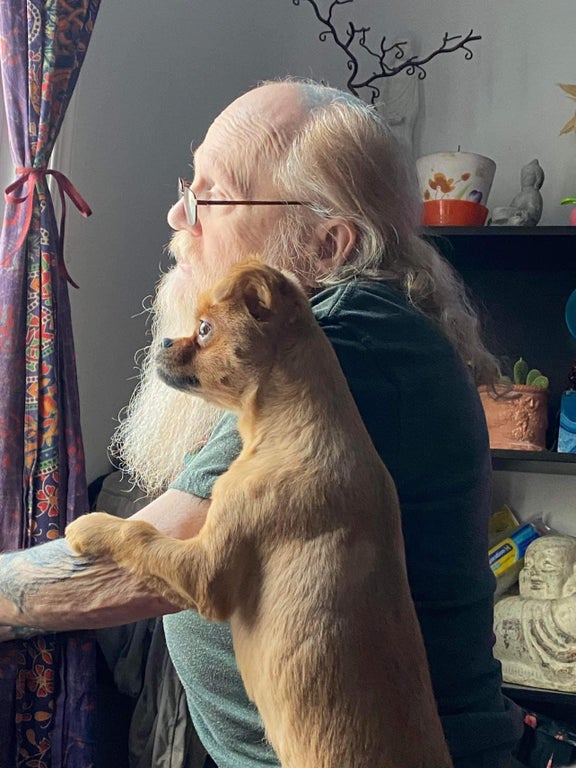
Anticipation of mom coming home.

Baron, the blue-eyed, bath-loving Japanese cat

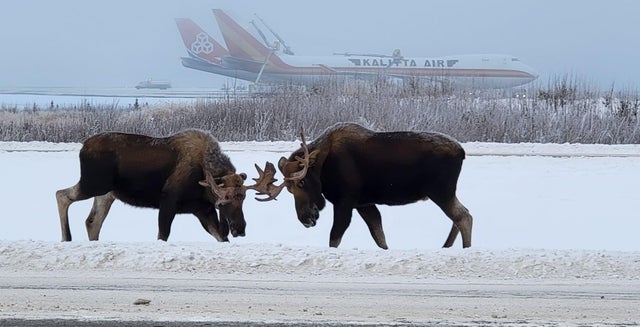
Quite the sight in Anchorage, Alaska. This was seen right next to Ted Stevens International Airport.

Wild and Crazy Statues from around the World  

Mustangs, Las Colinas, Texas

stats

Expansion, New York

stats1

The Monument of an Anonymous Passerby, Wroclaw, Poland

stats2

Salmon Sculpture, Portland, Oregon

stats3

People of the River by Chong Fah Cheong, Singapore

stats4

The Knotted Gun, Turtle Bay, New York

stats5

 Break Through From Your Mold, Philadelphia, Pennsylvania

stats6

Black Ghost, Klaipeda, Lithuania

stats7

stats8

Les Voyageurs, Marseilles, France

stats9

 Nelson Mandela, South Africa

stats10

 De Vaartkapoen, Brussels, Belgium

stats11

 Cattle Drive, Dallas, Texas, USA

stats12

Hippo Sculptures, Taipei, Taiwan

stats13

 Mihai Eminescu, Onesti, Romania

stats14

 Man Hanging Out, Prague, Czech Republic

stats15

Rundle Mall Pigs, Adelaide, Australia

stats16

Kelpies, Grangemouth, UK (To put this into scale, note the man at the bottom, middle).

stats17

kelpies

Boxing gloves. Pan Am Boxing Club, Winnipeg, Canada.

box

box1

Space Alien Cat from the Planet Cheron 

Bele from the planet Cheron in the Star Trek episode “Let That Be Your Last Battlefield.”

half

Venus the Cat, she has to be from the planet Cheron.

half1

The owner insists Venus is not photo-shopped or painted. See video below.

National Geographic

The three-year-old tortoiseshell has her own Facebook page and a YouTube video that’s been viewed over a million times, and appeared on the Today Show.One look at this cat and you can understand why: One half is solid black with a green eye—the other half has typical orange tabby stripes and a blue eye.

How does a cat end up looking like that? Leslie Lyons, a professor at the University of California, Davis, who studies the genetics of domestic cats said she’s never seen a cat exactly like Venus.

“She is extremely, extremely rare,” Lyons said. “But you can explain it and you can understand it.”

Many reports about Venus refer to the cat as a “chimera.” In mythology, a chimera is a mishmash monster made up of parts of different animals. A feline chimera is a cat whose cells contain two types of DNA, caused when two embryos fuse together.

Among cats, “chimeras are really not all that rare,” Lyons said. In fact, most male tortoiseshell cats are chimeras. The distinctively mottled orange and black coat is a sign that the cat has an extra X chromosome.

But female cats, said Lyons, already have two X chromosomes so they can sport that coat without the extra X. That means Venus is not necessarily a chimera.

To find out would require genetic testing, said Lyons. With samples of skin from each side of the cat, “we can do a DNA fingerprint—just like on CSI—and the DNA from one side of the body should be different than the other.”

Cat’s Blue Eye Another Mystery

If Venus isn’t actually a chimera, then what would explain her amazing face?

“Absolute luck,” Lyons said. One theory: perhaps the black coloration was randomly activated in all the cells on one side of her face, while the orange coloration was activated on the other, and the two patches met at the midline of her body as she developed.

Cat fanciers who are transfixed by Venus’s split face may be missing the real story: her single blue eye. Cat eyes are typically green or yellow, not blue.

A blue-eyed cat is typically a Siamese or else a cat with “a lot of white on them,” she explained.

Venus appears to have only a white patch on her chest, which to Lyons is not enough to explain the blue eye.

“She is a bit of a mystery.”

The ‘Banned Trailer’ from The Exorcist 

In my humble opinion the The Exorcist is the most frightening horror movie ever made.  Nothing ever created before or since contains the chilling notions and graphic images put forward in that film.  The Hellraiser movies get honourable mention.

The Exorcist will scare the meanest, nastiest and badest hombres out there.

exorcist_jpg_crop_upscale_q85

William Friedkin’s 1973 masterpiece, The Exorcist, was a landmark in horror cinema, a cultural phenomenon, and (if adjusting for inflation) the ninth highest-grossing film of all time.

The film makes minimal use of music—a stylistic choice which gives the film an air of stark realism despite the supernatural events depicted onscreen. Of the minimal music used in the film, most famous is Mike Oldfield’s “Tubular Bells,” which went on to become a smash so huge that it essentially birthed the Virgin empire.

Before Friedkin settled on Oldfield’s prog masterpiece, he had originally commissioned a score from Lalo Schifrin, who had famously done soundtrack work for Cool Hand LukeDirty Harry, and the instantly recognizable Mission Impossible TV show theme.

Schifrin’s atonal Exorcist score was very much in the vein of Krzysztof Penderecki (whose “Cello Concerto No. 1” of Polymorphia was used in the film’s final edit) with the addition of Bernard Herrmann-esque “fright stabs.”

This score was used in an advanced trailer which some have called the “banned trailer.” As the stories go, this trailer literally made audiences sick when it was shown. It’s unclear if the sounds and images were simply upsetting or if the flashing images actually caused seizures in some viewers.

Below the banned trailer and a short film showing audience reaction to the movie.