When you need to transport large cargo, goods, and materials from one place to another, the ship is the ideal choice even though they are extremely slow. Thousands of cargo carriers ply the world’s seas and oceans each year, and they handle the bulk of international trade. Then there are heavy lift ships that are designed to carry excessively large loads that even cargo ships cannot bear, such as other ships, drilling rigs or anything else too large or heavy to be easily transported on a conventional ship.
Heavy lift ships are of two types: semi-submerging capable of lifting another ship out of the water and transporting it; and vessels that augment unloading facilities at inadequately equipped ports. Semi-submerging are more commonly known as a “flo/flo” for float-on/float-off. These vessels have a long and low well deck that can go down under water allowing oil platforms, other vessels, or other floating cargo to be moved into position for loading. The tanks are then pumped out, and the well deck rises higher in the water, lifting its cargo, and is ready to sail wherever in the world the cargo needs to be transported.
The world’s first heavy lift vessel was MV Lichtenfels (118 long tons; 132 short tons) constructed in the 1920s by the Bremen based shipping company DDG Hansa. After World War II, DDG Hansa became the world’s largest heavy lift shipping company. Today that title is owned by Dockwise which currently operates 19 heavy lift ships – the world’s largest fleet of semi-submersible vessels of various sizes and types.
The flo/flo industry’s largest customer base is the oil industry. They have transported many oil drilling rigs from their construction site to the drilling site at roughly three to four times the speed of a self-deploying rig.
In 1988, the heavy lift ship Mighty Servant 2 towed the guided missile frigate USS Samuel B. Roberts, which was nearly sunk by a naval mine in the central Persian Gulf. Eleven years later, MV Blue Marlin transported the U.S. guided missile destroyer USS Cole from Aden, Yemen to Pascagoula, Mississippi, after the warship was damaged in a bombing attack on 12 October 2000.
In 2004, Blue Marlin carried the world’s largest semi-submersible oil platform, 60,000 tonne semi-submersible production rig, Thunder Horse, over 15,000 nautical miles from Okpo, Korea to Corpus Christi, Texas.
Many of the larger ships of this class are owned by the company Dockwise, including Mighty Servant 1, MV Blue Marlin, and MV Black Marlin. The company is currently building another heavy weight named the Vanguard that will have 50% greater lifting capacity and 70% greater deck area than the largest heavy lift ship now in service, the Blue Marlin. At 275 meters (902 feet) long and 70 meters (230 feet) wide, the Vanguard can lift 110,000 tonnes and travel across oceans at 14 knots.
Dockwise Tern in the process of loading an oil platform
The heavy lift vessel MV Blue Marlin with its deck cargo of the Sea-Based X-Band Radar enters Pearl Harbor, Hawaii, after completing a 15,000-mile journey from Corpus Christi, Texas, on January 9, 2006.
MV Mighty Servant 2 carries USS Samuel B. Roberts from Dubai to Newport, R.I., in 1988. The ship struck an underwater mine in the Persian Gulf.
Crime spree in the neighbourhood? One of these should deter the bad guys.
Manned Mobile Surveillance System
Elevated, Highly Mobile Security Solutions
Vantage point is everything when it comes to surveillance. SkyWatch™ mobile observation towers provide a high level platform for an array of surveillance options. Every portable tower includes the basics for the comfort and safety of the officer inside through adjustable heat and air conditioning, tinted sliding glass windows and comfortable seating. And no matter the application, only one person is required to set up and deploy a unit.
The SkyWatch portable surveillance tower can easily be relocated and is rugged enough to handle even the most primitive off-road conditions. Each of our hydraulic security tower models are adaptable for cameras, radios, public address systems and other equipment integration. Now, one officer can cover an area previously requiring three or more personnel.
SkyWatch manned mobile surveillance towers are available in two models – Sentinel and Frontier. The SkyWatch Sentinel provides the high profile deterrence and surveillance capabilities police officers and security professionals need – from a prisoner working party to disaster response. The SkyWatch Frontier provides the most robust and flexible surveillance options for high level security scenarios. The Frontier also comes in either one or two-man cabs.
Following a storm that swept over the region, a city in southern Egypt found itself under siege from a swarm of scorpions that scurried into the community and stung more than 500 people. The unsettling incident reportedly began on Friday evening when torrential rains pounded the area around the city of Aswan, resulting in widespread flooding. As residents struggled to deal with the fallout from the inclement weather, they were soon faced with a more troubling problem as the storm caused the region’s scorpion population to flee their underground burrows and take shelter inside people’s homes.
IMAGE SOURCE,AFP VIA GETTY IMAGES Image caption,Scorpions are regularly washed into Egypt’s streets by heavy rain and take refuge in houses (file photo)
On Friday night alone, a staggering 503 individuals were stung by the creepy creatures, causing the country’s Ministry of Health to issue a warning to residents about the situation. Dozens of different scorpion species reside in Egypt, including two particularly troubling types: the fat-tailed scorpion, which boasts venom that can kill a person within an hour, and the nightmarishly named ‘deathstalker,’ which possesses a less-lethal sting, but one that can also kill children and badly sicken adults.
Fortunately, the region is familiar with the dangers that come from the deadly creatures that have called the area home for hundreds of years and, as such, ample supplies of antivenom were rushed to hospitals in order to treat the massive wave of afflicted people. Meanwhile, some enterprising individuals have found a silver, albeit very dangerous, lining to the influx of scorpions as people have now begun wrangling the deadly animals, since their venom is highly valuable to scientists and medical professionals.
Spanish photographer Antonio Aragón Renuncio has won Environmental Photographer of the Year 2021 for his photo of a child sleeping inside a house destroyed by coastal erosion on Afiadenyigba beach in Ghana.
The image, entitled The Rising Tide Sons, highlights the rising sea levels in West African countries, which are forcing thousands of people to leave their homes.
Mr Renuncio receives £10,000 prize money.
The Environmental Photographer Of The Year competition, now in its 14th year, showcases some of the world’s most inspirational environmental photography.
The award celebrates humanity’s ability to survive and innovate and supports the calls to action in the United Nations Sustainable Development Goals.
The winners of this year’s competition were revealed at the UN Climate Change Conference (COP26) in Glasgow.
Here are other winning photos from the competition, with descriptions by the photographers.
Young Environmental Photographer of the Year: Inferno, by Amaan Ali, taken in Yamuna Ghat, New Delhi
“A boy fighting fires in a forest near his home in Yamuna Ghat, New Delhi, India.”
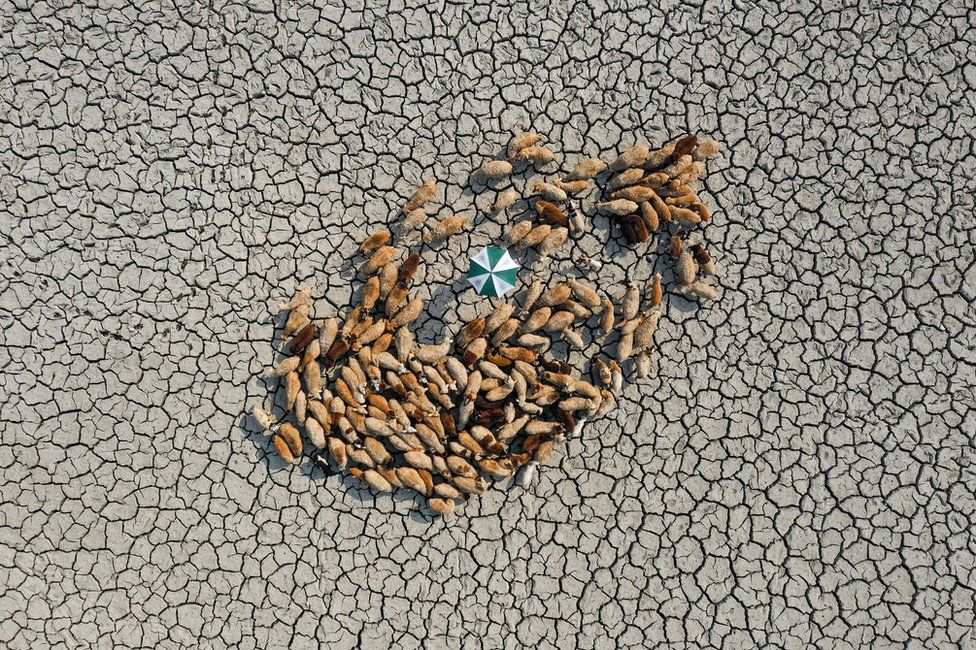
The Resilient Award: Survive for Alive, by Ashraful Islam, taken in Noakhali, Bangladesh
“Flocks of sheep search for grass amongst the cracked soil.
“Extreme droughts in Bangladesh have created hardships for all living beings.”
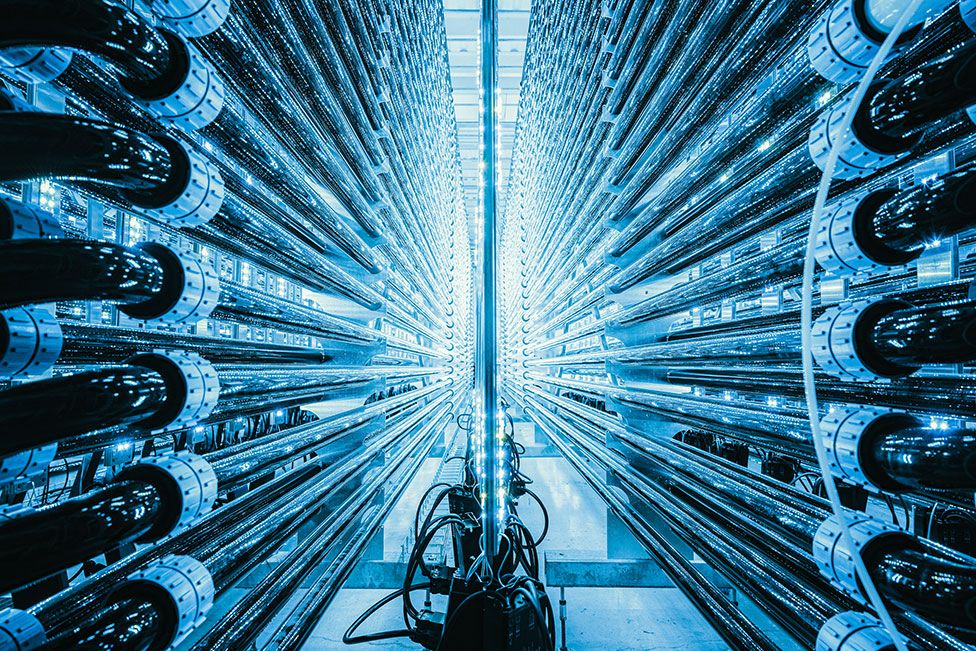
Sustainable Cities winner: Net-zero Transition – Photobioreactor, by Simone Tramonte, taken in Reykjanesbær, Iceland
“A photobioreactor at Algalif’s facilities in Reykjanesbaer, Iceland, produces sustainable astaxanthin using clean geothermal energy.
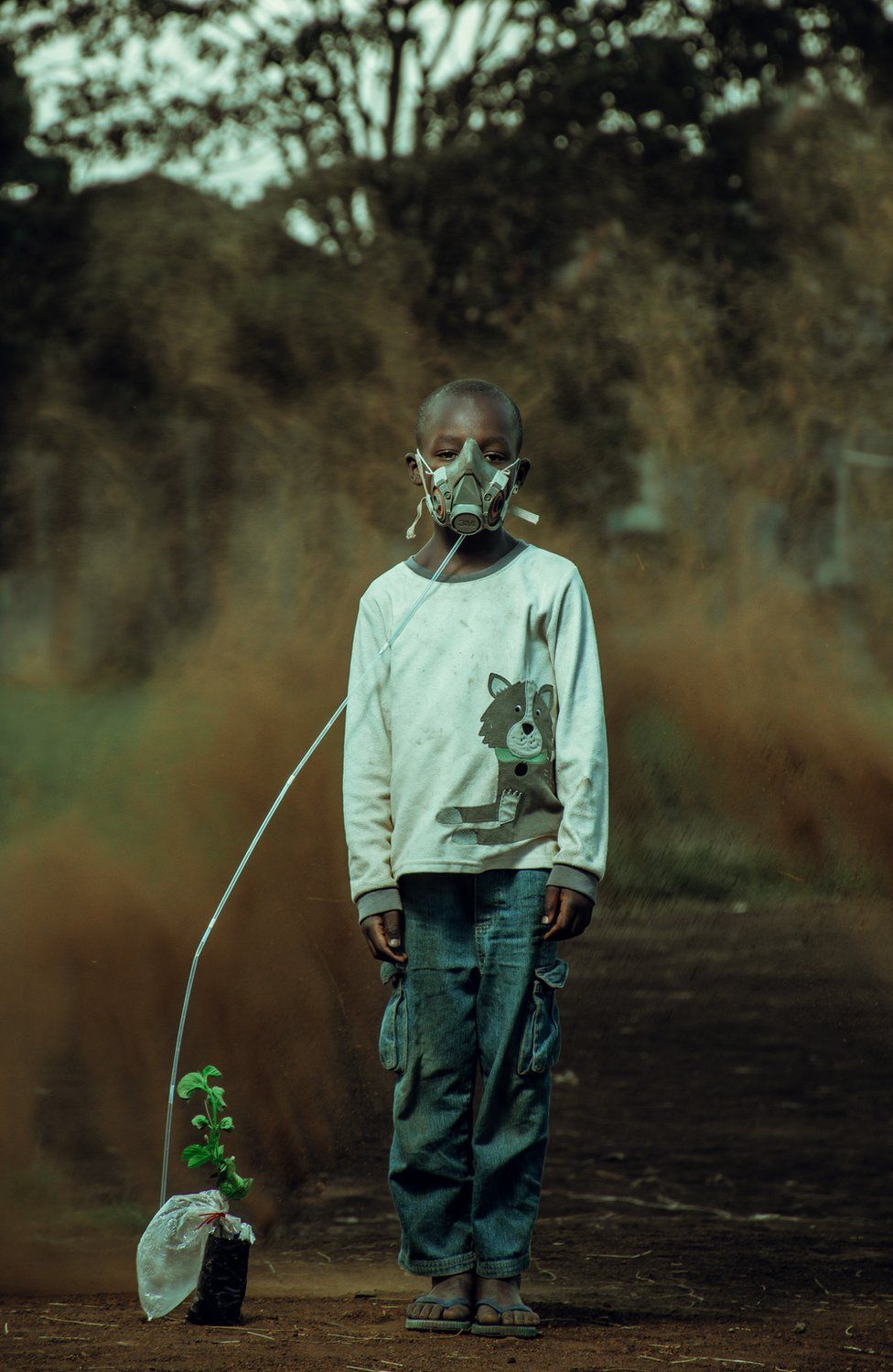
Climate Action winner: The Last Breath, by Kevin Ochieng Onyango, taken in Nairobi, Kenya
“A boy takes in air from the plant, with a sand storm brewing in the background, in an artistic impression of the changes to come.”
Water and Security winner: Green Barrier, by Sandipani Chattopadhyay, taken at Damodar river, West Bengal, India
“Irregular monsoon seasons and droughts cause algal bloom on the Damodar river, India.
“Algal blooms prevent light from penetrating the surface and prevent oxygen absorption by the organisms beneath, impacting human health and habitats in the area.”
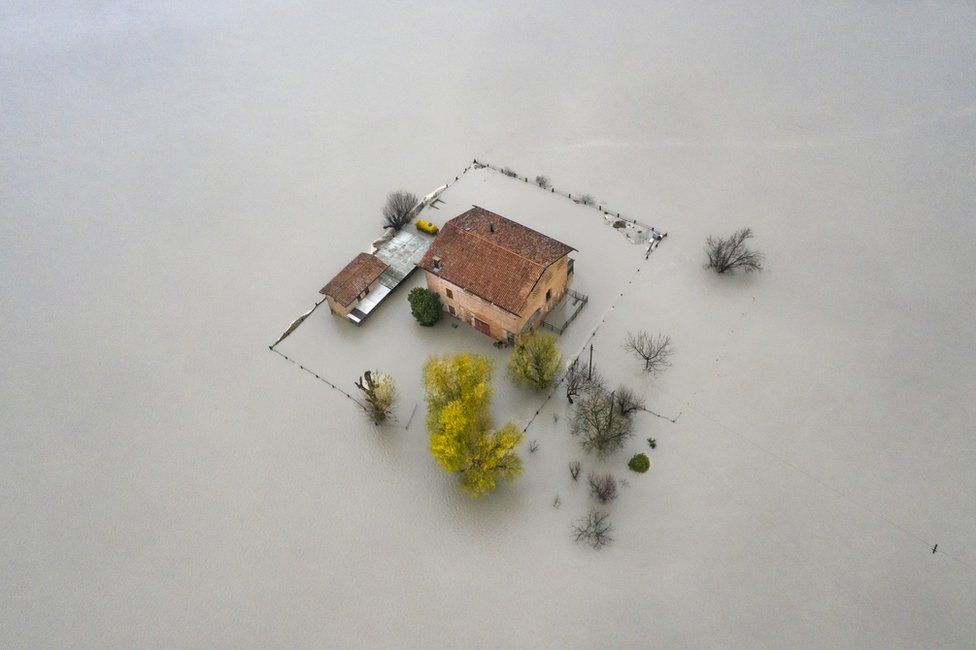
Environments of the Future winner: Flood, by Michele Lapini, taken at River Panaro, Nonantola, Modena, Italy
“A house is submerged by the flooding of the River Panaro in the Po Valley due to heavy rainfall and melting snow.”
Here are some of the shortlisted images in the competition.
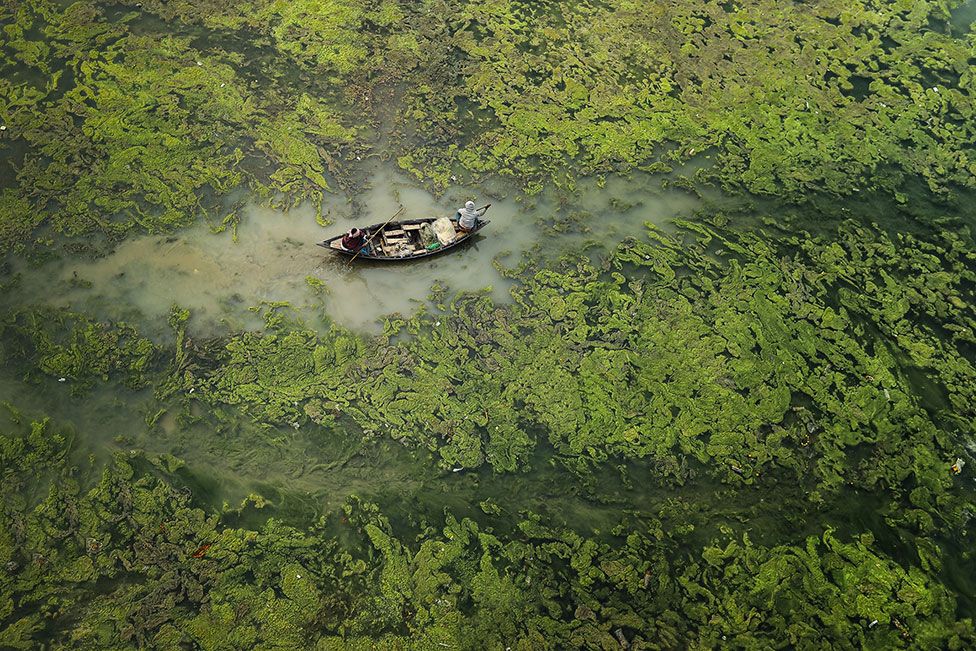
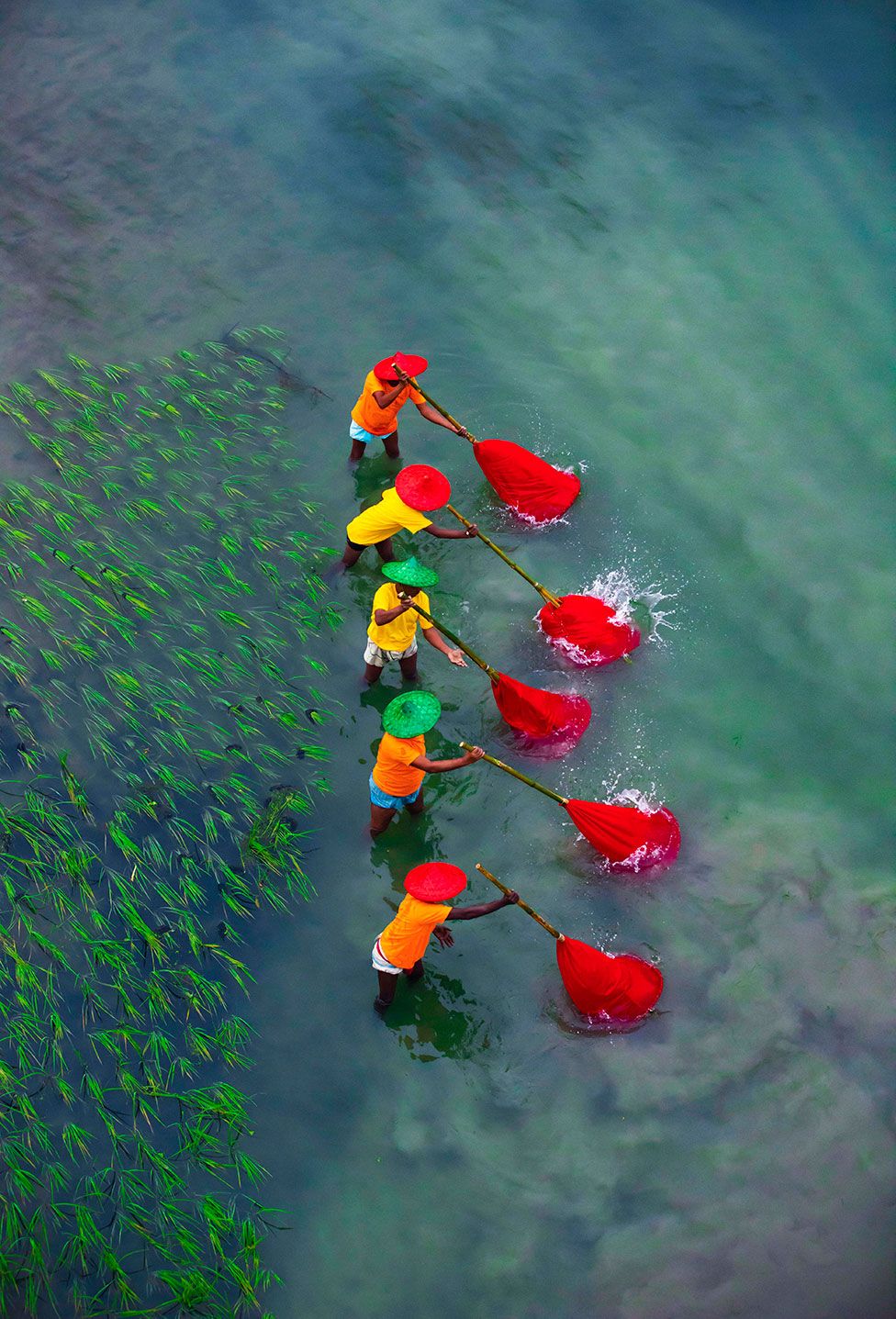
Fishing in River, by Ashraful Islam, taken in Sirajgong, Bangladesh
“Algae accumulates and fills the whole river, then many boatmen come here to fish in the water.
“The river is filled with green moss.”
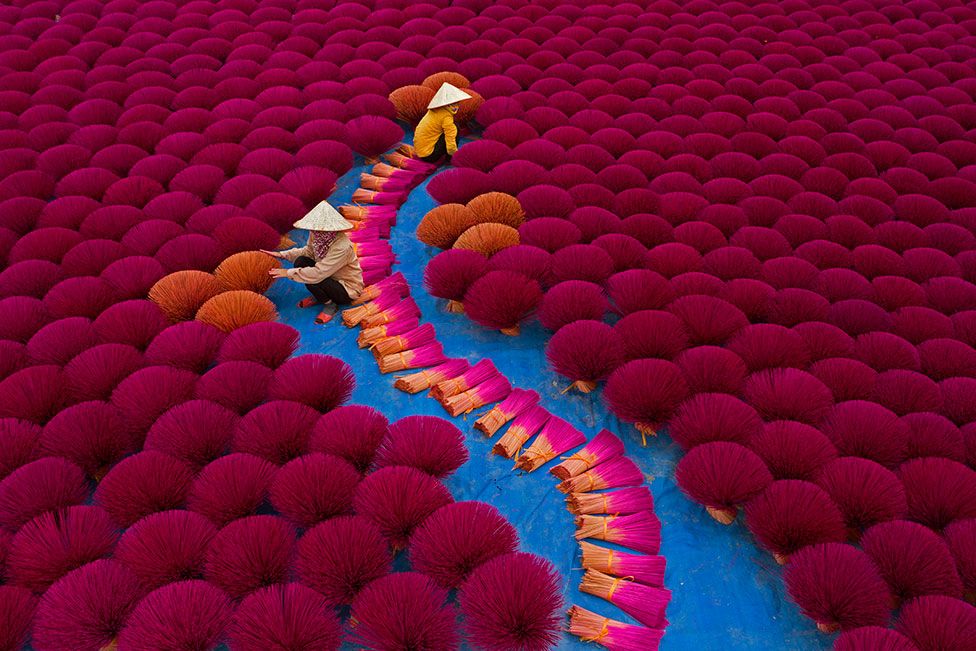
Drying Incense, by Azim Khan Ronnie, taken in Hanoi, Vietnam
“Vietnamese workers sit, surrounded by thousands of incense sticks in Quang Phu Cau, a village in Hanoi, Vietnam, where the sticks have been traditionally made for hundreds of years.
“Incense plays an important role in the spiritual lives of Vietnamese people.”
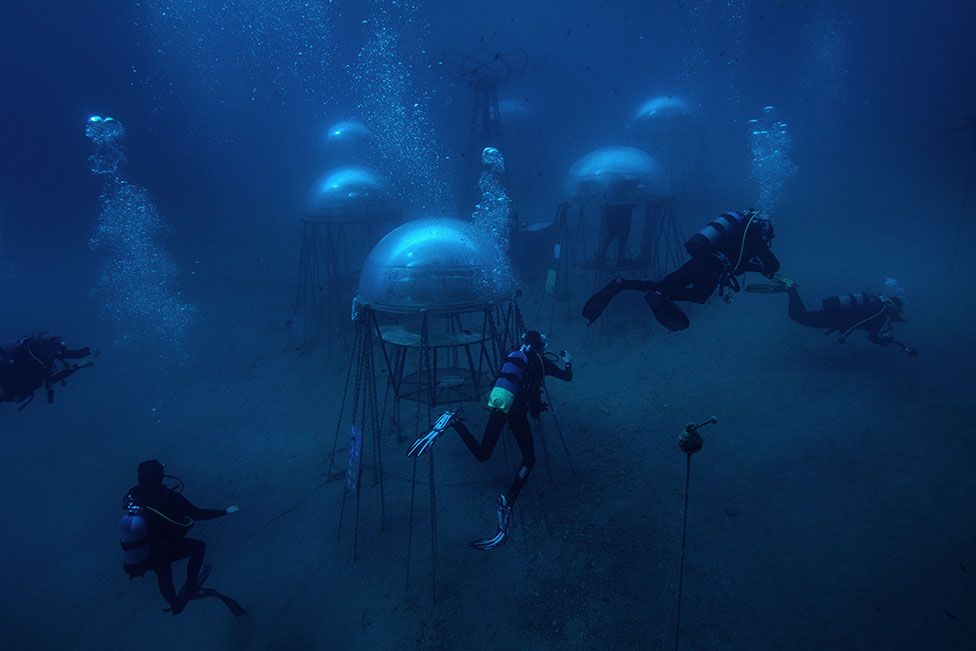
The Nemo’s Garden, by Giacomo d’Orlando, taken in Noli, Italy
“The Nemo’s Garden represents an alternative system of agriculture especially dedicated to areas where environmental conditions make plant growth extremely difficult.
“This self-sustainable project aims at making underwater farming a viable eco-friendly solution to counteract the increasing climate-change pressures on our future.”
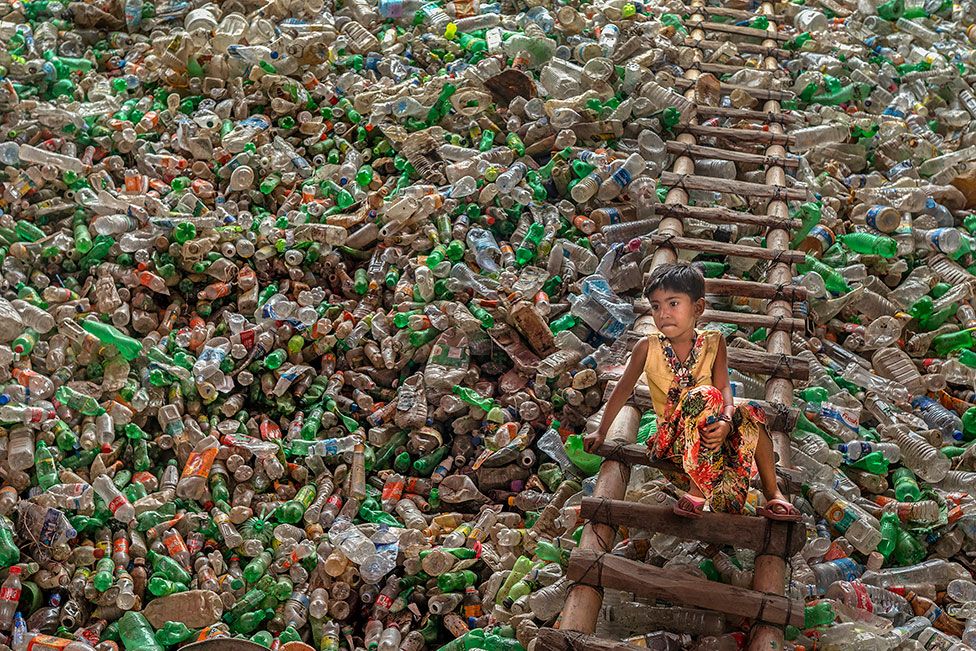
Environment Confined in Plastic, by Subrata Dey, taken in Chittagong, Bangladesh
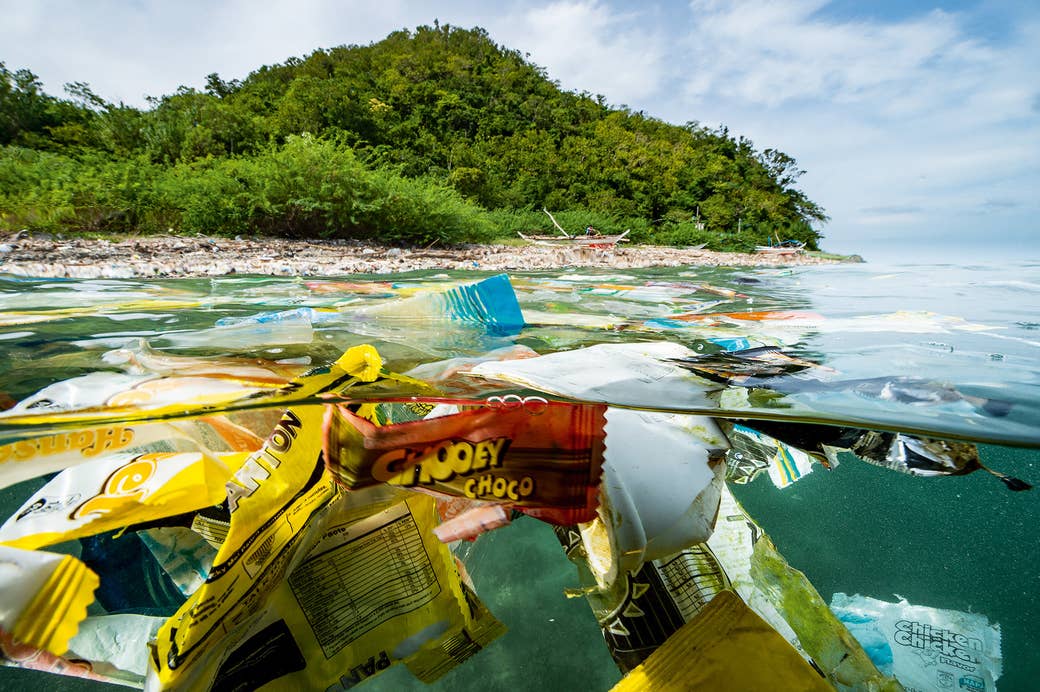
“I captured this picture from a plastic-recycling factory in Chittagong, Bangladesh.
“Plastic recycling helps protect the environment from plastic pollution and greenhouse gas emissions.”
Clean Energy, by Pedro de Oliveira Simões Esteves, taken in Serra de São Macário, Portugal
“Wind-energy turbines, moments before the sun sets over the mountains on a cloudy day.”
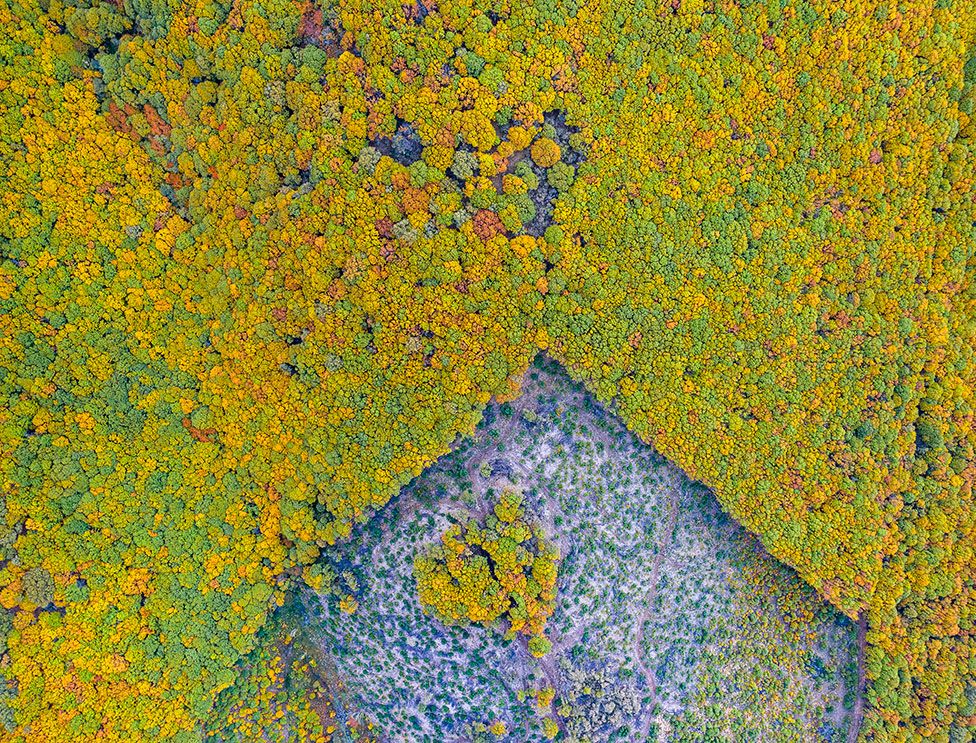
The Polygonal Forest, by Roberto Bueno, taken in Sierra de Béjar, Salamanca, Spain
“A good management of forests is fundamental to contain climate change.
“This is a chestnut forest managed by wood owners in a sustainable way.
“They cut trees in polygonal areas and in the middle of them they leave smaller areas with trees that help the natural reforestation of the wood.”
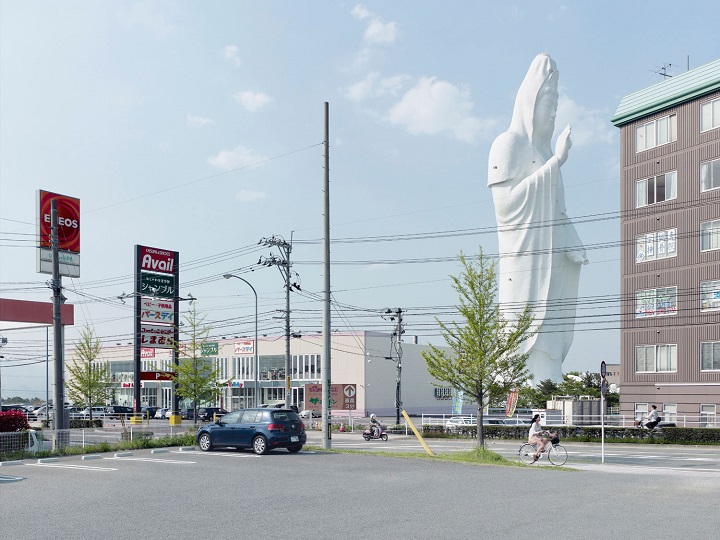
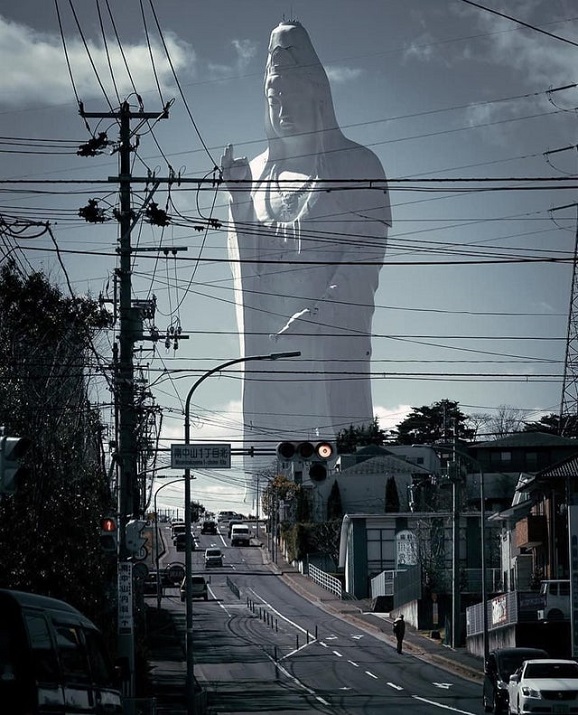
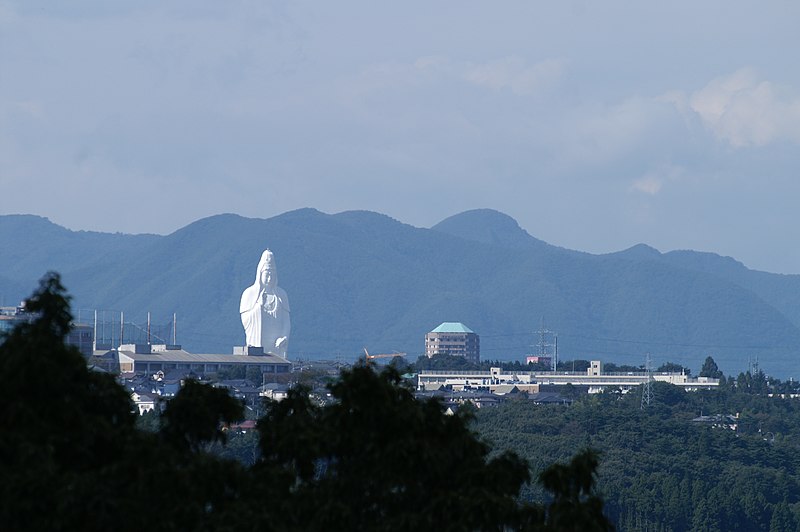
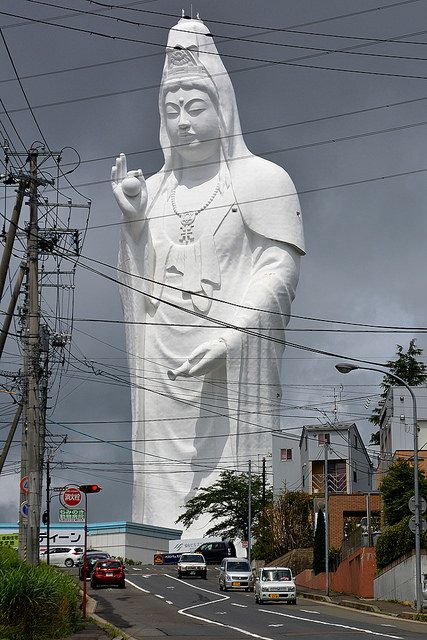
Sendai Daikannon, officially known as the Sendai Tendou Byakue Daikannon,is a large statue of Byakue Kannon bearing a gem in her hand located in Sendai, Japan.
It is among the tallest statues in the world, and is the tallest statue of a goddess in Japan. As of 2018, it is the fifth tallest statue in the world at 100 metres (330 ft). At the time of its completion in 1991, it was the tallest statue in the world, but has since been surpassed for that title.
The statue depicts a manifestation of the Bodhisattva Kannon known as Byakue Kannon, meaning “White-robed Kannon”, bearing the cintamani gem (如意宝珠, Nyoihōju) in her hand.
There is a small entry fee to enter the statue itself. Inside on the first floor are many large statues of Buddha and mythical kings. Visitors take an elevator to the 12th level then walk down the stairs and ramps to the ground. At each level there are eight Buddhas displayed in timber cabinets, 108 in all.
“It’s heartbreaking in a way how much has been lost,” photographer David Doubilet told BuzzFeed News. “In some ways the photos are all that’s left, which is also a little crazy to think about.”
The ocean may truly be the final frontier — despite a long maritime history, we have only just begun to explore the waters that cover 70% of the globe. What lies beneath the surface, as opposed to at the edge of the horizon, has been a constant source of fascination for David Doubilet, a longtime underwater photographer.
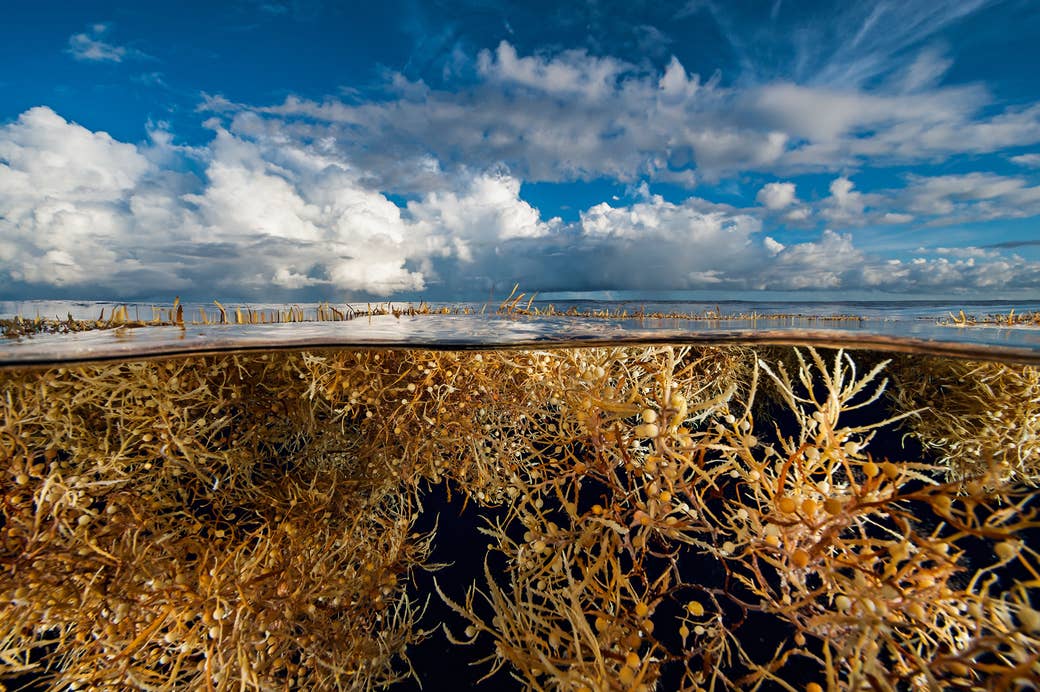
Over the course of 50 years with National Geographic, Doubilet has pioneered the split-frame image showing both above and below the water’s surface in a single frame. His work examines the connection between the two worlds, proving a remarkable insight into the impact that humans have on a realm we know little about. A collection of his favorites is now available in a new book, Two Worlds: Above and Below the Sea, and he took the time to talk with us about what it’s like to shoot film underwater and why these pictures matter so much now.
David Doubilet
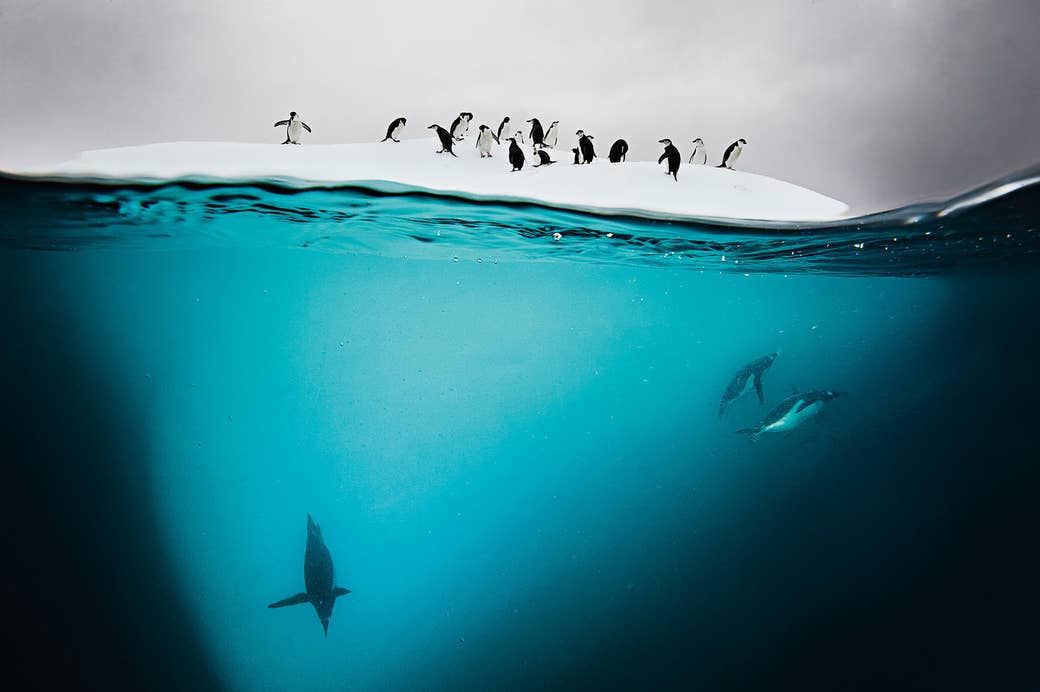
Gentoo and chinstrap penguins on an ice floe near Danko Island, Antarctica
How did this get started?
What I love about this is that the surface of the sea is the most important border on our planet. It divides the air world, the known world where we all live, and the water world, which, up till the last 75 years or so, has been something of a mystery. Underwater photographers really have been trying to connect people with the ocean.
These half-and-half images are my favorite images to make. It began with a vision that I had when I was around 9 years old, swimming around the jetty of the Ocean Beach Club in New Jersey. I would swim with my head above the water and see the lifeguard blowing his whistle at me, screaming. I’d see people on the beach, I’d see clouds passing by. I’d see a whole different world. And I put my head just below and here’s a silent, welcoming world full of shafts and green light and fish hiding beneath the boulders of the jetty, waving seaweeds, groups of passing fish. It was the boundary of Two Worlds.
Fast forward to a five-decade-long career as an underwater photographer and storyteller for National Geographic magazine. It’s been an incredible partnership that has provided the perspective of time in the sea and a platform to show the world these pictures, and at the same time, promoting curiosity, exploration, discovery, and creativity. When I began working underwater, I thought the oceans were infinite… I was wrong; they are fragile and finite. Over time, the story coverages started with discovery, and now we are circling back to conserving those discoveries — something I did not expect in my lifetime.
A part of the storytelling is to find an image that distills a sense of place in one frame. For me, that image is the half-and-half image — the one that connects the surface to the hidden world below. It is a joy to look for and make these photographs. Not every assignment produces a half-and-half picture, but I scout for them endlessly. Some succeed and some do not. I like the artistic and technical challenge of making them.
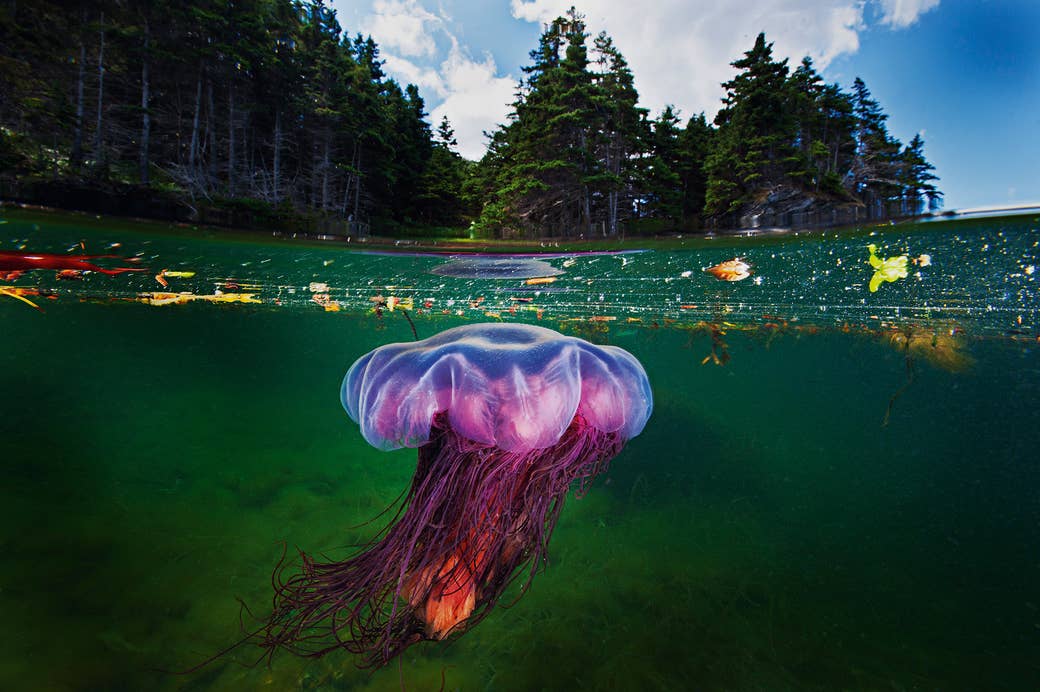
Lion’s mane jellyfish drifting in the shallow bays of Bonne Bay Fjord located in Gros Morne National Park, Newfoundland, Canada
Can you talk about that a little?
You have to use a camera with a super wide-angle lens and large round dome in the front, which corrects for the magnification of water. This original concept and design can be attributed to National Geographic photographer Bates Littlehales.
The first challenge: to light for the underwater half using submerged strobes. The next hurdle is focus in both surface and subsurface worlds. Shooting at highest f-stop helps accomplish this. And then there are the dreaded water droplets. There are always unwanted droplets that will appear in the image right where you do not want them to. You can rinse the camera dome repeatedly, use Rain-X, your own spit, a potato — yes, a potato — or in my case, I use toothpaste wiped on the dome and rinsed off. But by far the biggest challenge of all is finding that place that tells a story about two worlds in one frame.
You learned to photograph underwater on film, and you still encourage photographers learning to dive to start with black and white. Can you talk a little bit about what it’s like working underwater?
First of all, before digital, you had 36 exposures, and that’s it. That’s all you got [on a roll of film]. No one in their right mind would go underwater right now with a card that has only 36 pictures.
Number two, underwater, you can’t change lenses. And number three, you can’t see what you’re shooting, which is the most important. As my friend Jay Maisel would say, you shoot as much as you can, because paranoia pays. And finally, there’s focus, you know, everything underwater is one-third larger. So that’s what these big domes correct, and that’s what some of the special wide-angle lenses correct for.
With technology now, you get moments that you couldn’t get before. When you’re underwater, a lot of things happen with color. First of all, red disappears in literally a foot of water. If you go diving, a red shirt is red in the first foot of water; by like 10 feet, it’s kind of a maroon, by 60 feet, that red is black. And this is in clear, beautiful Caribbean or mid-Pacific water. So to restore the spectrum, you can now take down a strobe — we call it a bottle of sunlight — and you illuminate the side of a reef system. A black sponge then turns out to be brilliant crimson.
You have to be careful shooting — you just don’t want to tramp on everything — but the closer you are to something, the more brilliant the pictures are.
As far as marine mammals go, they’re in charge, they’ll either accept you or reject you. You’re not gonna scare a whale away because you’re in the water. The whale is gonna move and leave or they’ll come right by you and ignore you. Or the whale will look in your eye. I’ve had a turtle basically follow me all over, over a reef system, so much so that he would put his flippers around my tank and look over my shoulder, and it’s me and the turtle.
David Doubilet
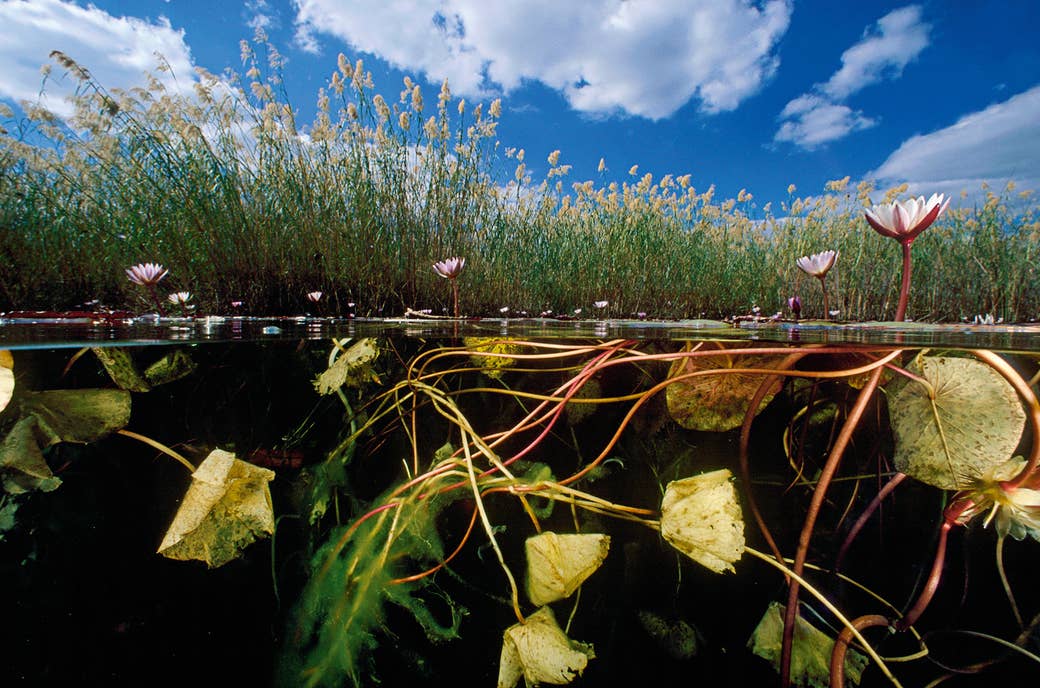
The rich lily forest tumble beneath a dense canopy of papyrus in the deepwater Nxamaseri Channel of the Okavango Delta, Botswana.
That’s amazing. Can you talk a little bit about why this vision of above and below is particularly important now?
We are in a time and a place on this planet where everything is changing. It’s not just climate change that is affecting the oceans… there is overharvest, habitat destruction, and coral disease. We are at a crossroads, a time where we have to stop talking and start doing. I really just have a single goal: Connect people to the sea.
I mentioned before that the best thing that National Geographic has given me is the perspective of time in the sea. It’s the most valuable thing that I can imagine. I decided to put that to work.
As an example, it occurred to me that after five decades in the sea as a journalist, I have an archive that is basically the ocean through the lens of time. We now know that corals are a thermometer for the oceans and that temperatures are rising, causing loss of corals around the planet… But what does that really look like? I decided to go into my archives to locate healthy reef pictures and return to that exact same spot on the reef after severe coral bleaching events. I returned to the Great Barrier Reef and Guam. The mission was to create powerful pairs of before and after coral bleaching images that show a healthy reef then and coral cemeteries now… pairings that wake people up. Tumon Bay, Guam, appears in the book. We photographed there in 2005 and came back and photographed in 2017 after three years of coral bleaching. Coral bleaching happens when heat causes stress that in turn causes the coral to expel beneficial algae that also gives coral nutrients and its color. The triple bleaching event in Guam was extreme and the coral did not survive. The effect is alarming.
A sargassum canopy of macroalgae in the Sargasso Sea near Bermuda. The sargassum weed canopy acts as a nursery for countless marine creatures that need cover and protection from predation.
Can you talk a little bit about how diving has changed over the last 50 years? Like there’s obviously been bleaching events, but then are there other elements that have changed either in terms of technology or in terms of what you’re seeing?
The reefs have changed wildly in the [past] 50 years or even 60 years. I first saw a coral when my father took me down to the Bahamas when I was 12 years old. The coral reef was made up of these great forests of elkhorn coral, which is brown, wonderful-looking coral [that’s] kind of almost the redwoods of a good coral world. And beneath that waft endless schools of fish, and throughout the Caribbean, that’s what it used to look like. Now 90% of the elkhorn has vanished throughout its range.
But there are a few places where it hangs on and even thrives: The Gardens of the Queen, an archipelago 50 miles off the southern coast of Cuba where it survives because of a wonderful combination of geopolitics and geography. Fidel Castro had a great interest in the sea because he was a diver and he had foresight to preserve some areas. Now this corner of the Caribbean off Southern Cuba is a time capsule in the sea.
Yes, we must tell the hard truths about the challenges, but there is hope and resilience. Some corals survive the coral bleaching to reproduce, creating more heat-tolerant corals. We see effective conservation measures with the creation of Marine Protected Areas, UNESCO World Heritage Sites, and National Parks. We see shark sanctuaries like the Bahamas and Palau, where sharks are celebrated and considered valuable to both the economy and the environment.
Can you talk a little bit about how geopolitics and the ocean interact?
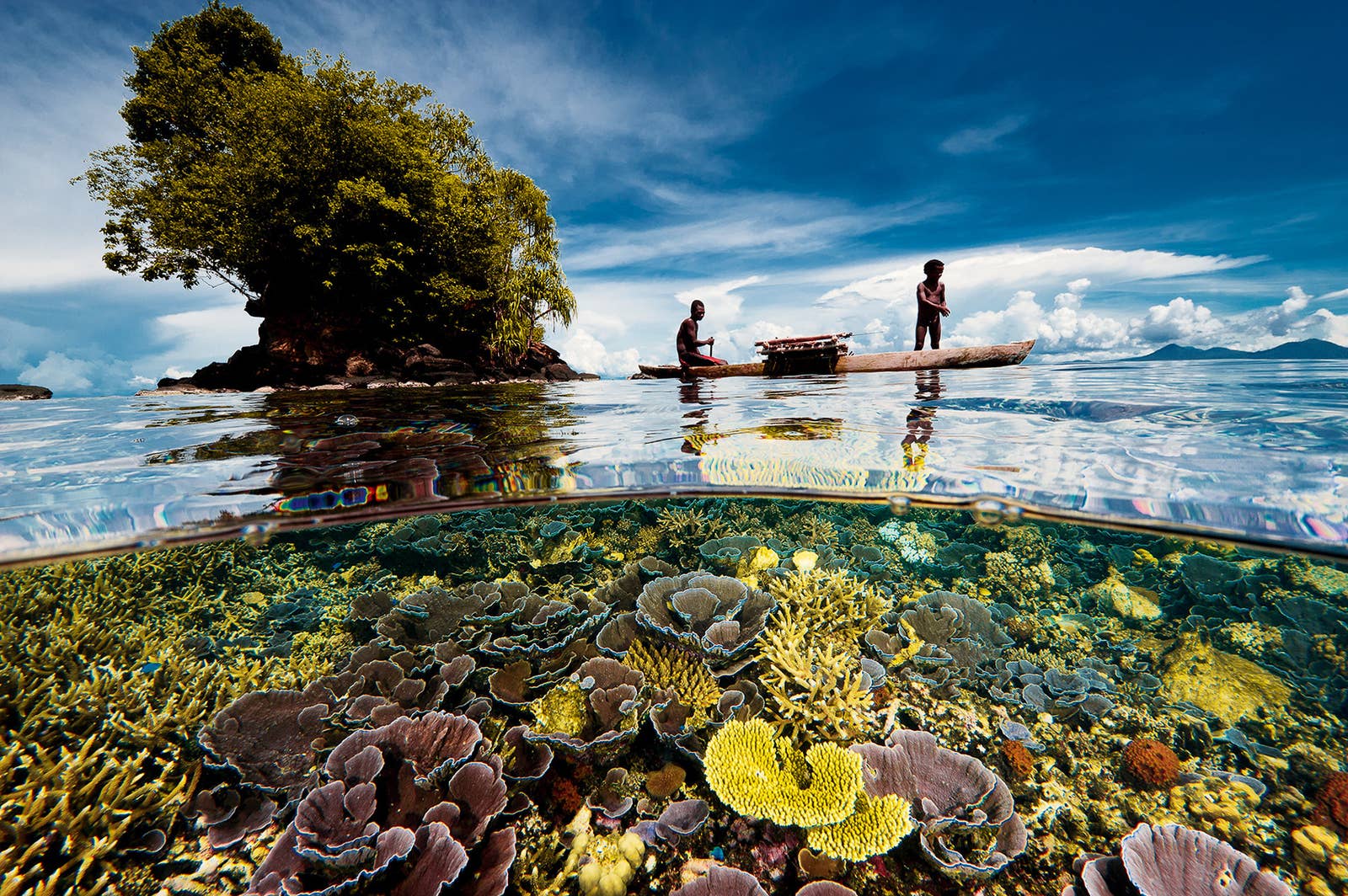
We have seen the greatest conservation wins where the conservation involves the community. They are sometimes called community-based marine protected areas, and we see them functioning very well in some areas of the Coral Triangle: the Philippines, Papua New Guinea, and Indonesia.
In some areas, it comes down to aggressive protection from poaching through eyes on remote reefs 24/7/365. An example of this is the Philippines’ coral crown jewel: Tubbataha Reefs Natural Park. Remote atolls in the center of the Sulu Sea. Accessible to diving tourists for only a few months, rangers reside on the reef 365 days a year guarding against poaching.
It’s heartbreaking in a way how much has been lost. Um, and in some ways the photos are all that’s left, which is also a little crazy to think about.
Final thoughts?
When I began diving, every dive was a voyage of discovery. It still is. Every time I go on the water, it’s still something exciting. However, now we are documenting the time in a place, and it may disappear. So it’s different; we’re also hopefully celebrating places that are going to be successful. As a journalist, this is telling the most important story on a planet and is ongoing. The greatest show on Earth is Earth itself.
Yes, the oceans are in trouble and our individual choices collectively make a big difference. We all rely on the sea for oxygen and other resources… we are stakeholders, and we should protect what is at stake whether we live on the coast or inland. I see incredible hope in #NextGenOcean and collaboration.
This book documents the largest, most important border on the planet… the surface of the sea. It is an invitation to know, understand, and protect the other 71% of planet Earth…
As the oceans go, so do we.
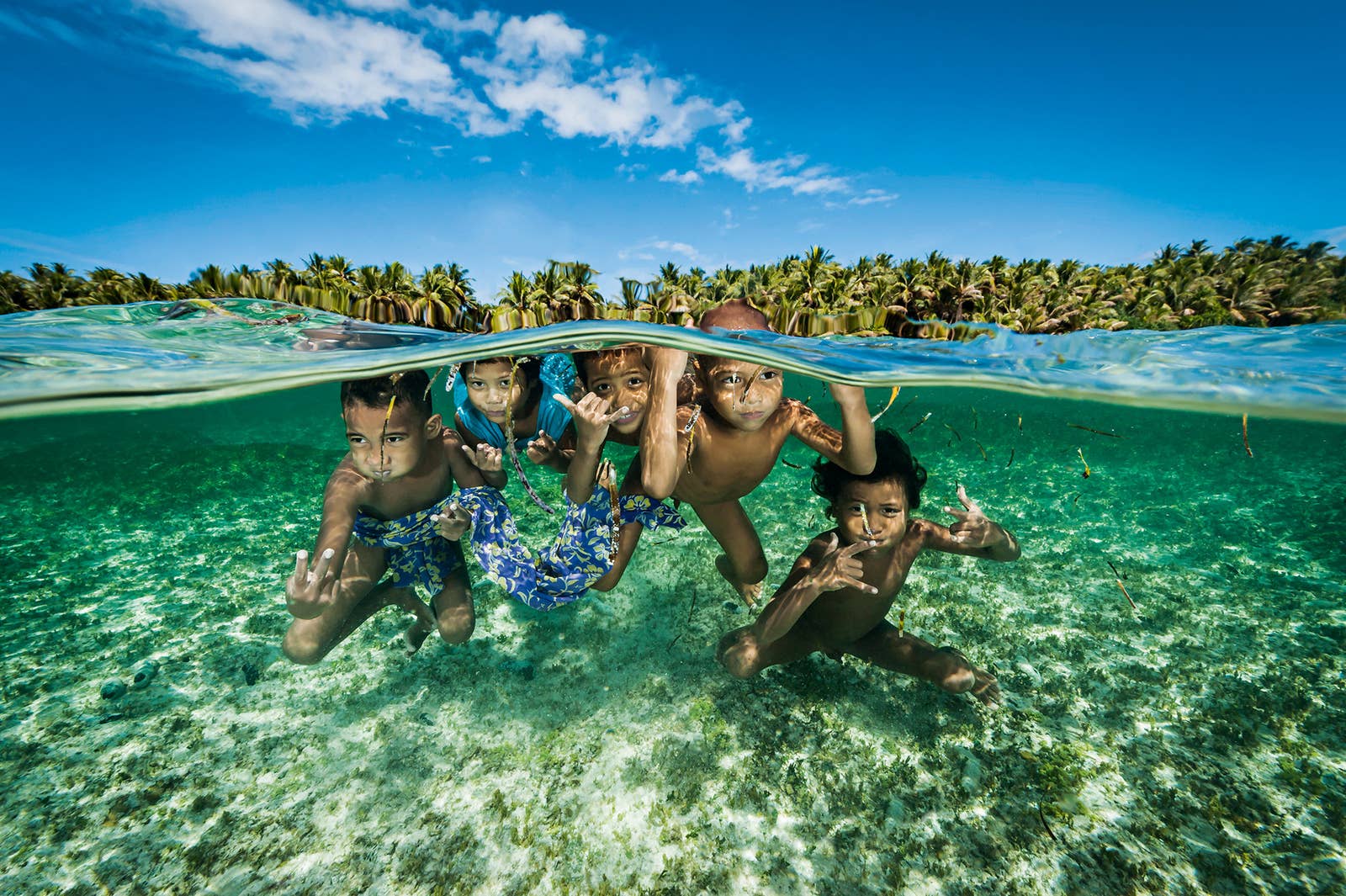
A fisher with his young son in an outrigger from a village on the Willaumez Peninsula on New Britain Island, Kimbe Bay, Papua New Guinea.
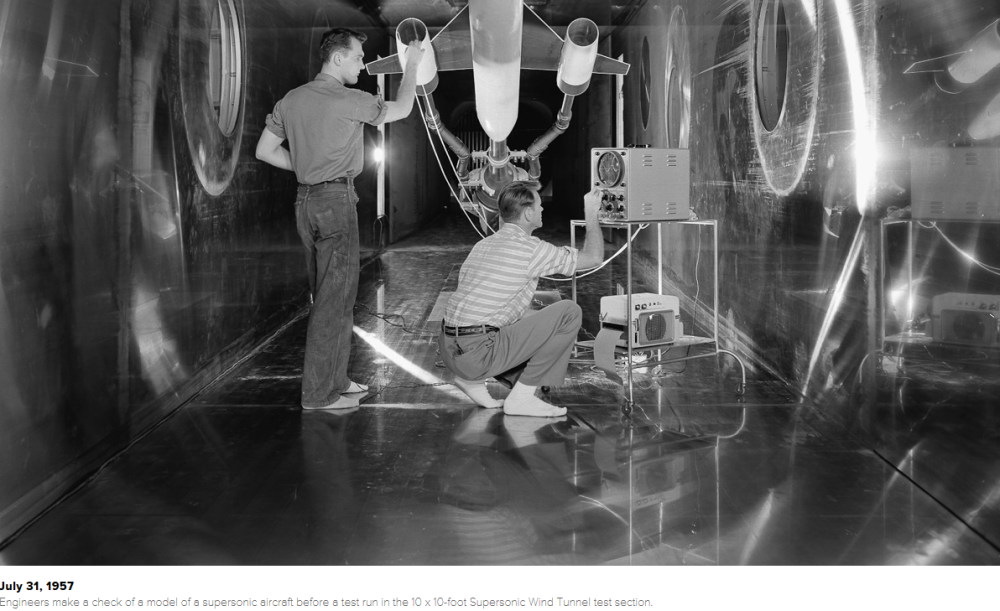
Before any NASA craft is cleared for liftoff, it must undergo exhaustive testing in one of the administration’s 42 major wind tunnels, which range from just a few inches wide to cavernous enough to contain a full-sized airplane.
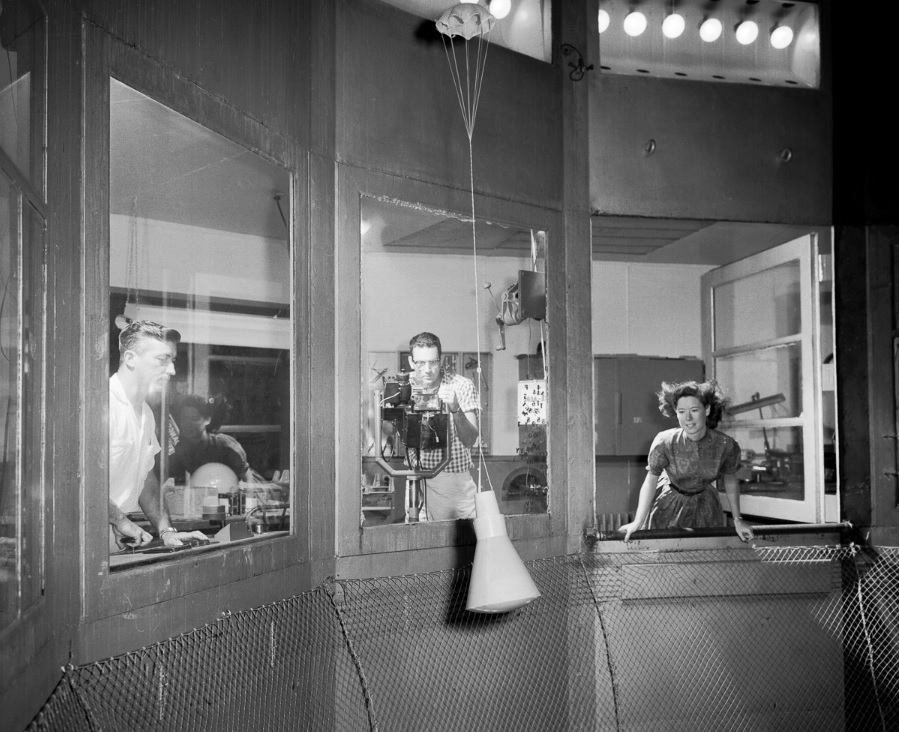
With an aircraft model held on a stationary post, air is accelerated through the tunnel by fans, allowing engineers to study the effects of different designs on flight characteristics such as lift, drag and stability.
NASA’s earliest wind tunnel predates NASA itself, and was built in 1920 at the Langley Research Center, then under the auspices of the National Advisory Committee for Aeronautics (NACA).
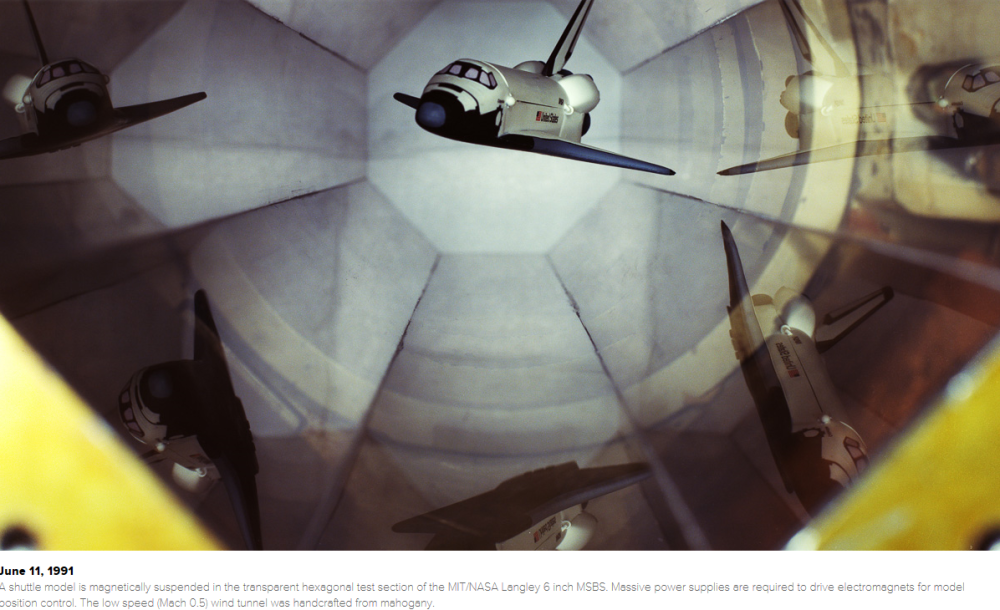
As flight technology became more advanced and complex, so did the testing facilities. Specialized tunnels were developed to simulate subsonic, transsonic, supersonic and even hypersonic speeds — five times the speed of sound. Some tunnels can approximate the fiery heat of atmospheric re-entry, while others can test the effects of ice buildup at high altitudes. Some newer facilities can magnetically suspend aircraft models in midair, eliminating aerodynamic interference from support structures.
Today, NASA-operated wind tunnels are routinely used to test and tweak military and civilian aircraft.
Sept 11, 1959 A Mercury capsule model in the Spin Tunnel.
c. 1960
A 10-story bank of vanes which turn the air around one of the four corners of the 40 x 80-foot Wind Tunnel at Ames Research Center.
c. 1962
Technicians install a model of an Apollo command module in the 9 x 6-foot Thermal Structures Tunnel for tests of possible heat shield materials.
April 14, 1975
A space shuttle model undergoes a wind tunnel test simulating the ionized gasses that surround a shuttle as it reenters the atmosphere.
April 1, 1980
A Marshall Space Flight Center engineer holds a replica of the proposed Liquid Booster Module while observing the testing of a small Space Shuttle orbiter model at Wind Tunnel 14.
Nov. 17, 1986
NASA technician W.L. Jones inspects a transport model Pathfinder I between test runs at Langley’s National Transonic Facility.
April 10, 1990
The Pioneer Aerospace Parafoil undergoes testing in the world’s largest wind tunnel, the 80 x 120-Foot Tunnel at NASA’s Ames Research Center in Mountain View, California.






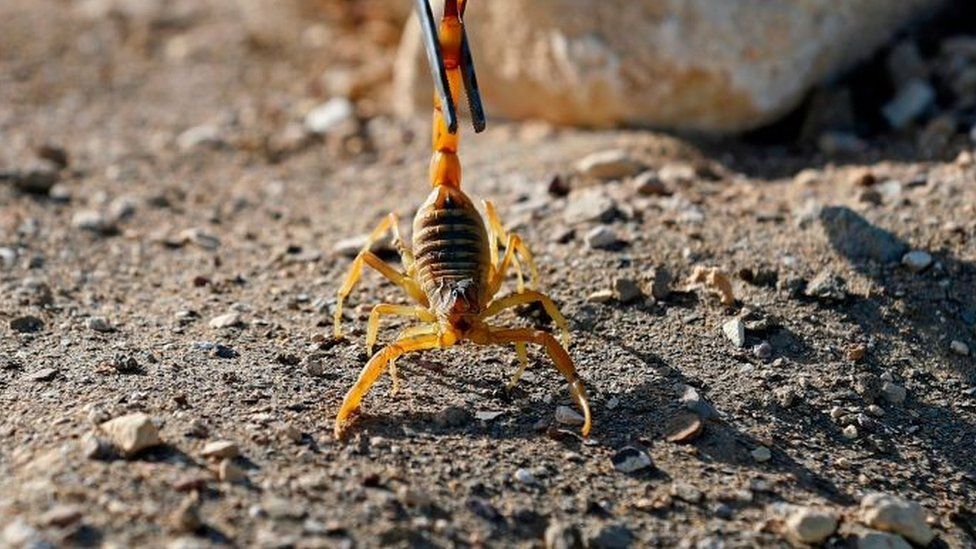 IMAGE SOURCE,AFP VIA GETTY IMAGES Image caption,Scorpions are regularly washed into Egypt’s streets by heavy rain and take refuge in houses (file photo)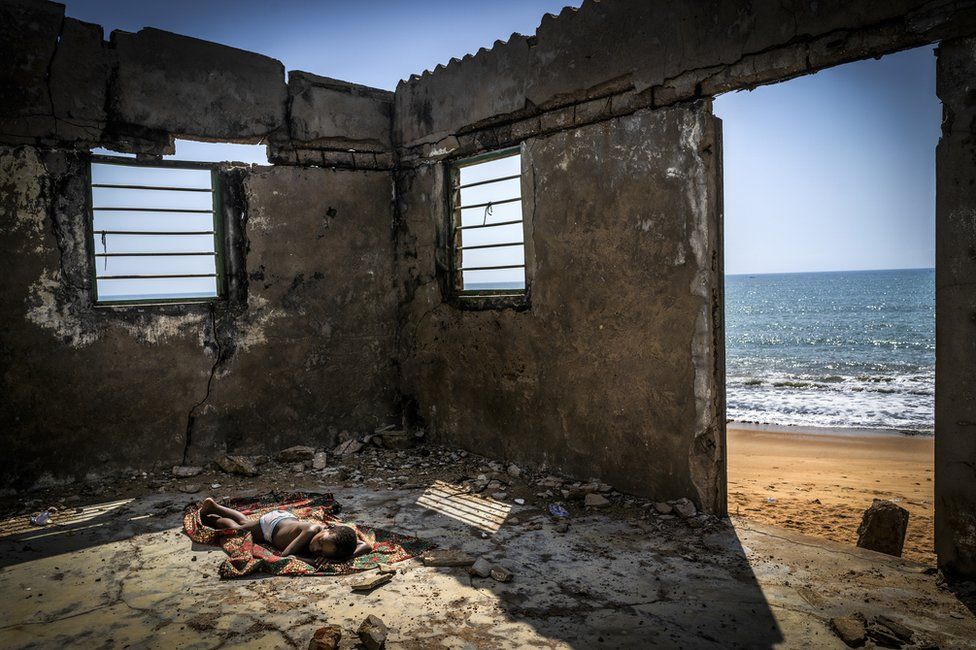















 The MarkoZen Blog