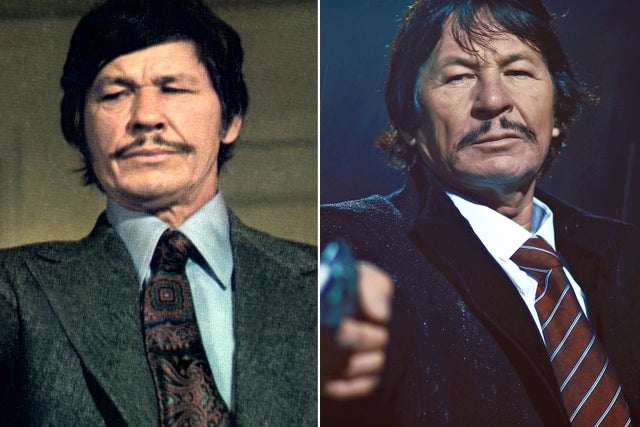
American actor Charles Bronson & the “Hungarian Charles Bronson”, actor Robert Bronzi.
Hungarian born performer Robert Bronzi is world traveled actor and professional horseman with a love for the wild west and classic American film. Bronzi has worked as a Carpenter, Horsetrainer, Musician and former Military Service Member. Professionally Trained Actor at Maria Mezey Theatre School (Budapest) as well as stuntman, acrobat and Judo Player. Robert speaks multiple languages including English, Spanish and Hungarian.
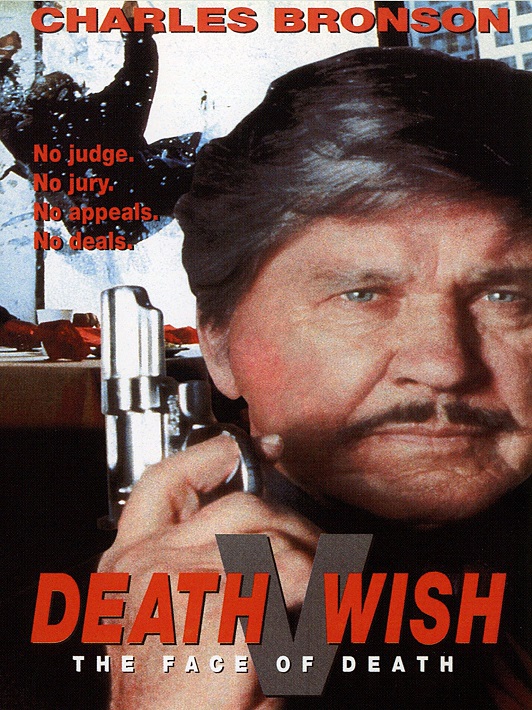
Charles Bronson was one of, if not the most, hardcore action stars ever. His gruff demeanor, no-nonsense delivery, and ruthless attitude inspired a whole generation of butt-kicking actors. Sadly, Bronson passed away in 2003, but a Hungarian actor is attempting to continue the late actor’s legacy. Of course, it doesn’t hurt that he happens to look exactly like the Death Wish star.
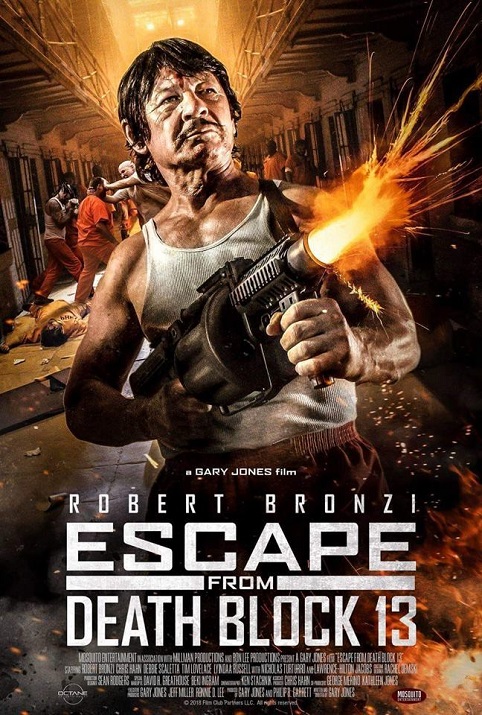
Robert Kovacs, AKA Robert Bronzi, made the leap from European Wild West stage shows to Hollywood after Puerto Rican film director Rene Perez spotted his photo on the wall of a bar in Spain and thought it was a still of Bronson from some mystery movie. Perez met with Bronzi and ended up bringing him to America to star in the 2017 horror western From Hell to the Wild West. Since then, Bronzi has appeared in a number of action films where the main selling point has been his uncanny likeness to Bronson. Last year there was the Death Wish-like revenge film Death Kiss and western Once Upon a Time in Deadwood, and up next he’ll star in the prison escape action Escape from Death Block 13.
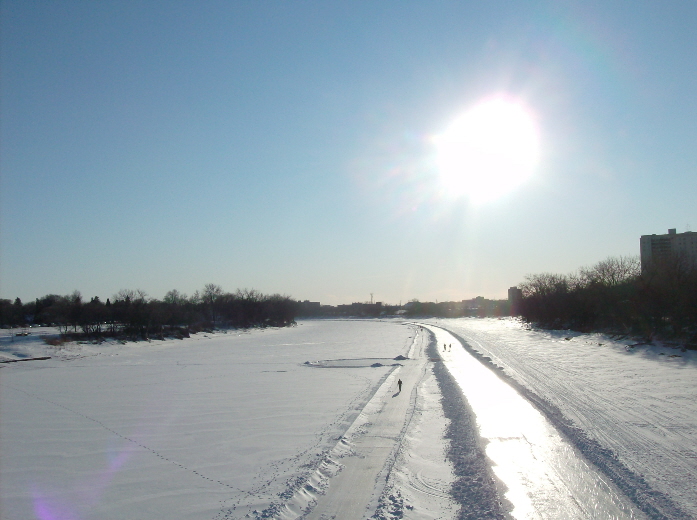
The sunny side is always so much better than the shaded side.
Seen the carnival at Rome Had the women, I had the booze All that I can remember now Is little kids without no shoes
So, I saw that train and I got on it With a heartful of hate and a lust for vomit Now I’m walking on the sunnyside of the street
Stepped over bodies in Bombay Tried to make it to the U.S.A. Ended up in Nepal Up on the roof with nothing at all And I knew that day I was going to stay right where I am On the sunnyside of the street
Been in a palace, been in a jail I just don’t want to be reborn a snail Just want to spend eternity right where I am On the sunnyside of the street
As my mother wept it was then I swore To take my life as I would a whore I know I’m better than before I will not be reconstructed
Just want to stay right here The sunnyside of the street The sunnyside of the street The sunnyside of the street The sunnyside of the street
Yang Kyoungjong (c. 1920 – April 7, 1992) was a Korean soldier who fought during World War II in the Imperial Japanese Army, the Soviet Red Army, and later the German Wehrmacht.
In 1938, at the age of 18, Yang was in Manchuria when he was conscripted into the Kwantung Army of the Imperial Japanese Army to fight against the Soviet Union. At the time Korea was ruled by Japan. During the Battles of Khalkhin Gol, he was captured by the Soviet Red Army and sent to a labour camp. Because of the manpower shortages faced by the Soviets in its fight against Nazi Germany, in 1942 he was pressed into fighting in the Red Army along with thousands of other prisoners, and was sent to the European eastern front.
In 1943, he was captured by Wehrmacht soldiers in Ukraine during the Third Battle of Kharkov, and was then pressed into fighting for Germany. Yang was sent to Occupied France to fight in a battalion of Soviet prisoners of war known as the “Eastern Battalion”, serving in a battalion located on the Cotentin peninsula in Normandy, located close to Utah Beach. After the D-Day landings in northern France by the Allied forces, Yang was captured by paratroopers of the United States Army in June 1944. The Americans initially believed him to be Japanese in German uniform, and he was placed in a prisoner-of-war camp in the United Kingdom. At the time, Lieutenant Robert Brewer of the 506th Parachute Infantry Regiment, 101st Airborne Division, reported that his regiment captured four Asians in German uniform after the Utah Beach landings, and that initially no one was able to communicate with them. Yang later emigrated from Russia to the United States, where he lived until he died in Illinois in 1992.
Yang Kyongjong (left) in Wehrmacht attire following capture by American paratroopers in June 1944 after D-Day__
Died
April 7, 1992 Illinois, United States
Allegiance
Empire of Japan Soviet Union Nazi Germany
Years of service
Imperial Japanese Army: 1938–1939 Soviet Red Army: 1942–1943 Wehrmacht: 1943–1944
Trolltunga (“Troll tongue”) is a rock formation situated about 1,100 metres (3,600 ft) above sea level in Ullensvang Municipality in Vestland county, Norway. The cliff juts horizontally out from the mountain, about 700 metres (2,300 ft) above the north side of the lake Ringedalsvatnet.
Popularity of the hike to Trolltunga and rock formation itself has exploded in recent years. The increased popularity has turned Trolltunga into a national icon and a major tourist attraction for the region. Until 2010, fewer than 800 people hiked to Trolltunga each year. In 2016 more than 80,000 people hiked[3] the 27-kilometre (17 mi) round-trip from the village of Skjeggedal, making it one of Norway’s most popular hikes.
This is a very challenging hike, at least 10 hours on rough terrain. There are no shelters on the hike route and no places to buy supplies. However, there is a plan to build a lodge roughly halfway where hikers can rest.
Access
Trolltunga is located 17 kilometres (11 mi) from the town of Odda. The city of Bergen, is about 190 kilometres (120 mi) from the site via main roads.
The trailhead is located by a small parking area with toilet facilities at Skjeggedal, about 7 kilometres (4.3 mi) from Norwegian National Road 13 in Tyssedalen, near the dam at the end of Ringedalsvatnet. Parking costs 500 kr per day for the lower car park (approx. 62 USD or 52 EUR).
The hike from the parking area to Trolltunga and back again is a 27-kilometre (17 mi) round-trip distance with a 1,100-metre (3,600 ft) gain in elevation, and it takes approximately 10–12 hours, including breaks.
Near the parking area at Skjeggedal there is a funicular called Mågelibanen (it is not in operation). The trail to Trolltunga begins here, on the left side of the funicular. It is marked with red Ts painted in the terrain, and signs along the route that marks the distance left to Trolltunga and to the starting point at Skjeggedal.
For the first 1.5 kilometres (0.93 mi), up to the Måglitopp, the trail rises about 450 metres (1,480 ft). From here the track surfaces slightly out before it gets steep again, rising another 330 metres (1,080 ft) up from Gryteskaret to Trombåskåret. This section is the steepest part on this hike. But in recent years this section have been improved by Nepalese sherpas, making it easier to traverse.
After this 4-kilometre (2.5 mi) steep climb from the parking area, the next section slopes down towards Store Floren. The trail continues over Hesteflåene and the dried out river Endåno, before it gets steeper up to Endanuten and crosses the dried river to Tyssestrengene. From here the trail goes on past glacial potholes, then continues past Tysshøl, and finally approaches Trolltunga, about 13.5 kilometres (8.4 mi) from the starting point at Skjeggedal.
Safety
Thousands of tourists visit Trolltunga during the four summer months, a number which has greatly increased from 500 per year to 80,000 between 2009 and 2016. No safety railing has been constructed on the edge of the cliff so as not to harm the natural beauty of the cliff, although a few small metal hooks have been installed as footholds to climb down to the rock.
On 5 September 2015, a 24-year-old Australian woman fell to her death off Trolltunga. It is believed to be the first recorded death from a fall there.
There are widely publicised photos of people hanging off the cliff or doing a hand stand on it. Most often they are manipulated. The elite climber Magnus Midtbø suspended himself from Trolltunga wearing a safety harness, but a version where the rope was erased has been spread in media.
The approach to and retreat from Trolltunga is a demanding hike, and 10–12 hours are needed for the round trip. In later years there have been up to 40 rescue actions annually. Surprisingly not because of the dangerous cliff, but due to the demanding hike back to Tyssedal. People get lost in fog or get injured during the hike or don’t have the endurance for such a demanding hike.
It is planned to build a lodge halfway between Trolltunga and Tyssedal, which will provide accommodation for hikers en route from Trolltunga.
Personally I wouldn’t go anywhere near that ledge.
When you need to transport large cargo, goods, and materials from one place to another, the ship is the ideal choice even though they are extremely slow. Thousands of cargo carriers ply the world’s seas and oceans each year, and they handle the bulk of international trade. Then there are heavy lift ships that are designed to carry excessively large loads that even cargo ships cannot bear, such as other ships, drilling rigs or anything else too large or heavy to be easily transported on a conventional ship.
Heavy lift ships are of two types: semi-submerging capable of lifting another ship out of the water and transporting it; and vessels that augment unloading facilities at inadequately equipped ports. Semi-submerging are more commonly known as a “flo/flo” for float-on/float-off. These vessels have a long and low well deck that can go down under water allowing oil platforms, other vessels, or other floating cargo to be moved into position for loading. The tanks are then pumped out, and the well deck rises higher in the water, lifting its cargo, and is ready to sail wherever in the world the cargo needs to be transported.
The world’s first heavy lift vessel was MV Lichtenfels (118 long tons; 132 short tons) constructed in the 1920s by the Bremen based shipping company DDG Hansa. After World War II, DDG Hansa became the world’s largest heavy lift shipping company. Today that title is owned by Dockwise which currently operates 19 heavy lift ships – the world’s largest fleet of semi-submersible vessels of various sizes and types.
The flo/flo industry’s largest customer base is the oil industry. They have transported many oil drilling rigs from their construction site to the drilling site at roughly three to four times the speed of a self-deploying rig.
In 1988, the heavy lift ship Mighty Servant 2 towed the guided missile frigate USS Samuel B. Roberts, which was nearly sunk by a naval mine in the central Persian Gulf. Eleven years later, MV Blue Marlin transported the U.S. guided missile destroyer USS Cole from Aden, Yemen to Pascagoula, Mississippi, after the warship was damaged in a bombing attack on 12 October 2000.
In 2004, Blue Marlin carried the world’s largest semi-submersible oil platform, 60,000 tonne semi-submersible production rig, Thunder Horse, over 15,000 nautical miles from Okpo, Korea to Corpus Christi, Texas.
Many of the larger ships of this class are owned by the company Dockwise, including Mighty Servant 1, MV Blue Marlin, and MV Black Marlin. The company is currently building another heavy weight named the Vanguard that will have 50% greater lifting capacity and 70% greater deck area than the largest heavy lift ship now in service, the Blue Marlin. At 275 meters (902 feet) long and 70 meters (230 feet) wide, the Vanguard can lift 110,000 tonnes and travel across oceans at 14 knots.
Dockwise Tern in the process of loading an oil platform
The heavy lift vessel MV Blue Marlin with its deck cargo of the Sea-Based X-Band Radar enters Pearl Harbor, Hawaii, after completing a 15,000-mile journey from Corpus Christi, Texas, on January 9, 2006.
MV Mighty Servant 2 carries USS Samuel B. Roberts from Dubai to Newport, R.I., in 1988. The ship struck an underwater mine in the Persian Gulf.
Crime spree in the neighbourhood? One of these should deter the bad guys.
Manned Mobile Surveillance System
Elevated, Highly Mobile Security Solutions
Vantage point is everything when it comes to surveillance. SkyWatch™ mobile observation towers provide a high level platform for an array of surveillance options. Every portable tower includes the basics for the comfort and safety of the officer inside through adjustable heat and air conditioning, tinted sliding glass windows and comfortable seating. And no matter the application, only one person is required to set up and deploy a unit.
The SkyWatch portable surveillance tower can easily be relocated and is rugged enough to handle even the most primitive off-road conditions. Each of our hydraulic security tower models are adaptable for cameras, radios, public address systems and other equipment integration. Now, one officer can cover an area previously requiring three or more personnel.
SkyWatch manned mobile surveillance towers are available in two models – Sentinel and Frontier. The SkyWatch Sentinel provides the high profile deterrence and surveillance capabilities police officers and security professionals need – from a prisoner working party to disaster response. The SkyWatch Frontier provides the most robust and flexible surveillance options for high level security scenarios. The Frontier also comes in either one or two-man cabs.
Following a storm that swept over the region, a city in southern Egypt found itself under siege from a swarm of scorpions that scurried into the community and stung more than 500 people. The unsettling incident reportedly began on Friday evening when torrential rains pounded the area around the city of Aswan, resulting in widespread flooding. As residents struggled to deal with the fallout from the inclement weather, they were soon faced with a more troubling problem as the storm caused the region’s scorpion population to flee their underground burrows and take shelter inside people’s homes.
IMAGE SOURCE,AFP VIA GETTY IMAGES Image caption,Scorpions are regularly washed into Egypt’s streets by heavy rain and take refuge in houses (file photo)
On Friday night alone, a staggering 503 individuals were stung by the creepy creatures, causing the country’s Ministry of Health to issue a warning to residents about the situation. Dozens of different scorpion species reside in Egypt, including two particularly troubling types: the fat-tailed scorpion, which boasts venom that can kill a person within an hour, and the nightmarishly named ‘deathstalker,’ which possesses a less-lethal sting, but one that can also kill children and badly sicken adults.
Fortunately, the region is familiar with the dangers that come from the deadly creatures that have called the area home for hundreds of years and, as such, ample supplies of antivenom were rushed to hospitals in order to treat the massive wave of afflicted people. Meanwhile, some enterprising individuals have found a silver, albeit very dangerous, lining to the influx of scorpions as people have now begun wrangling the deadly animals, since their venom is highly valuable to scientists and medical professionals.











 Empire of Japan
  Soviet Union
  Nazi Germany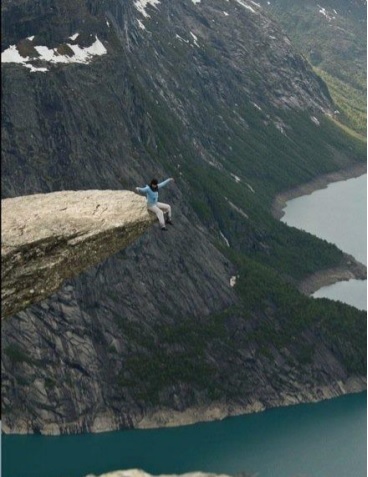
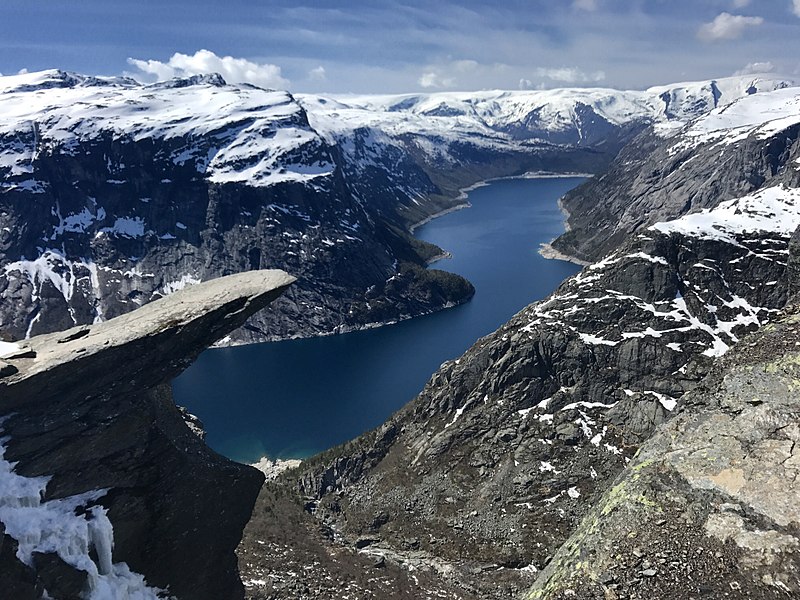
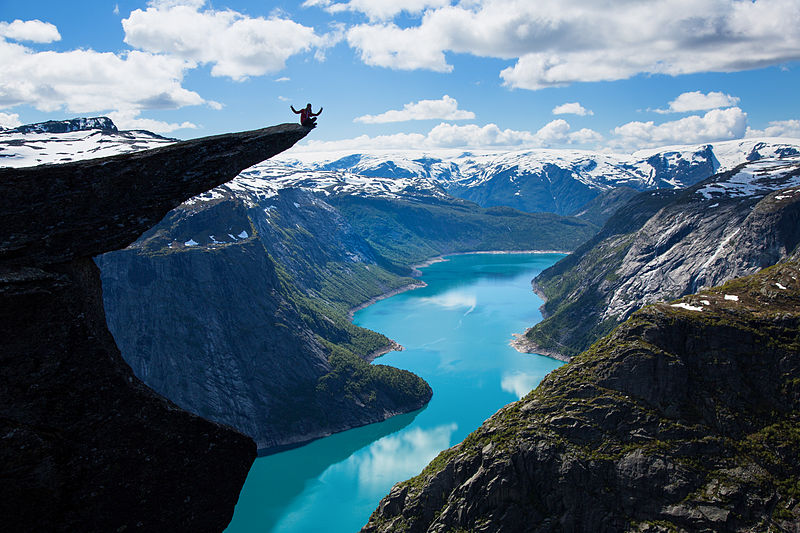






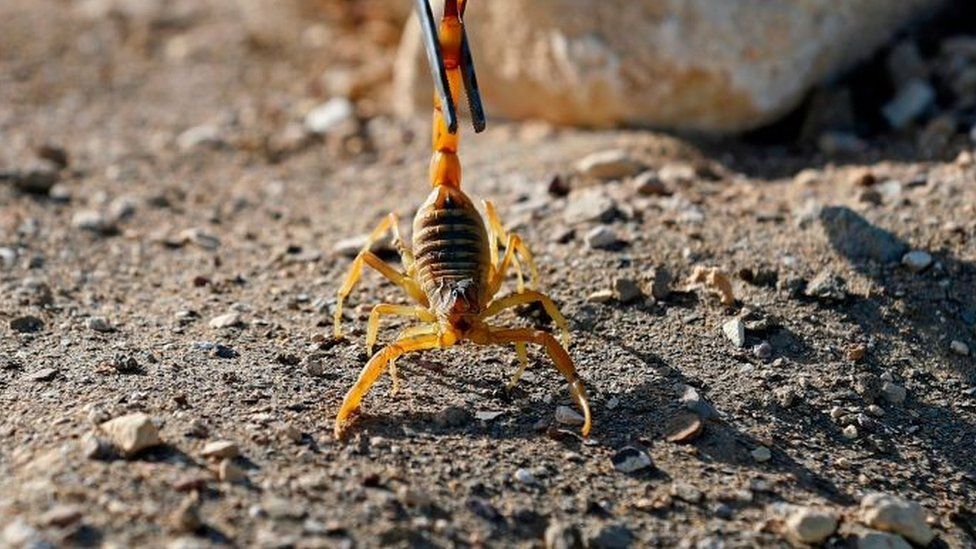 IMAGE SOURCE,AFP VIA GETTY IMAGES Image caption,Scorpions are regularly washed into Egypt’s streets by heavy rain and take refuge in houses (file photo)
 The MarkoZen Blog