Now that is a wall!










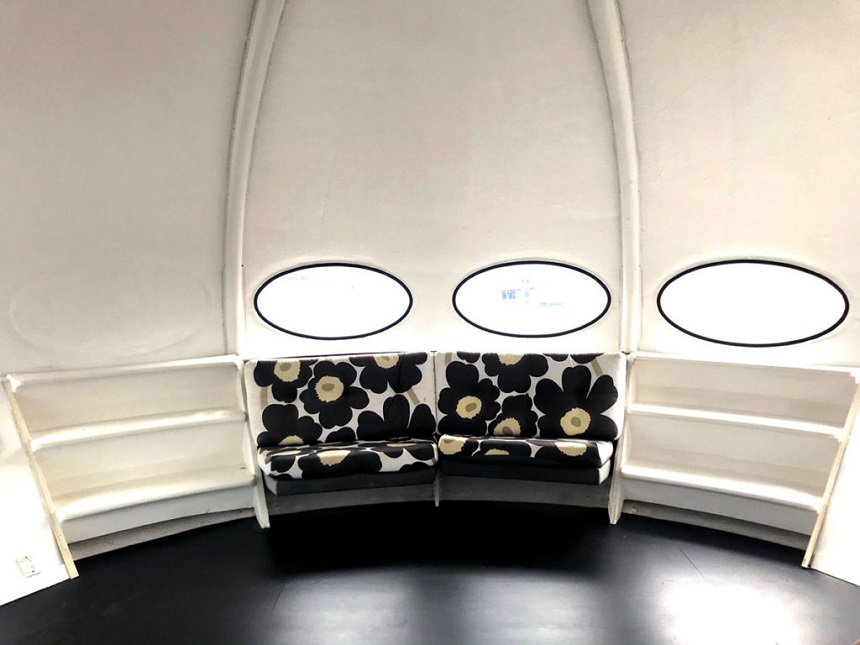
An incredibly rare Futuro House has been put up for sale in New Zealand, where less than ten of the flying saucer-shaped residences exist. The brainchild of Finnish architect Matti Suuronen, approximately 100 of the homes were constructed over the course of the 1960s and ’70s. Since that time, a great number of the houses have fallen into disrepair, making the remaining residences something of an expensive collector’s item with some becoming roadside attractions and one, in California, was transformed into an Airbnb.
This particular Futuro House is reportedly located in the city of Christchurch and has been on display at various sites throughout the city over the last 14 years. For fans of the famed residences, the home serves as something of a museum as it contains a number of placards detailing the history of the odd buildings. Although there is no listed asking price for the ‘UFO House,’ an initial estimate placed the value at around $200,000, though that price could climb considerably higher given the rarity of the residence as well as its pristine condition.


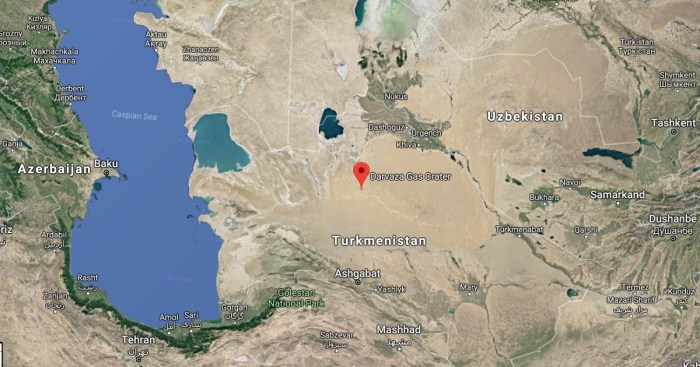
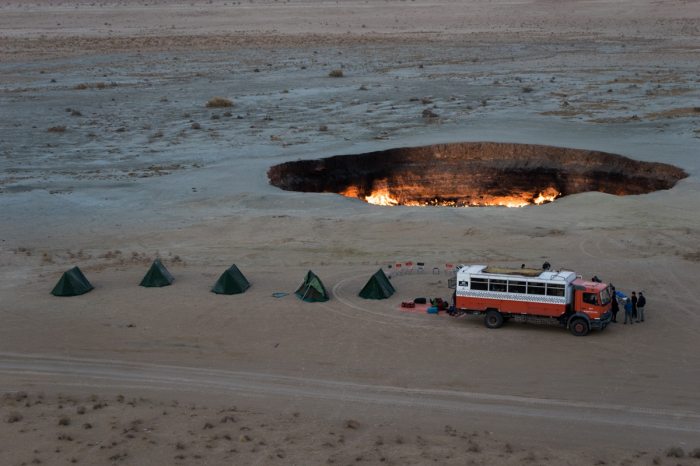
The Darvaza gas crater, known locally as the “Door to Hell” or ”Gates of Hell”, is a natural gas field in Derweze, Turkmenistan, that collapsed into an underground cavern, becoming a natural gas crater. Geologists set it on fire to prevent the spread of methane gas, and it has been burning continuously since 1971. The diameter of the crater is 69 metres (226 ft), and its depth is 30 metres (98 ft).
The crater is a popular tourist attraction. Since 2009, 50,000 tourists have visited the site. The gas crater has a total area of 5,350 m2. The surrounding area is also popular for wild desert camping.
The gas crater is located near the village of Derweze, also known as Darzava. It is in the middle of the Karakum Desert, about 260 kilometres (160 mi) north of Ashgabat, the capital of Turkmenistan. The gas reserve found here is one of the largest in the world. The name “Door to Hell” was given to the field by the locals, referring to the fire, boiling mud, and orange flames in the large crater, which has a diameter of 70 metres (230 ft). The hot spots range over an area with a width of 60 metres (200 ft) and to a depth of about 20 metres (66 ft).
According to Turkmen geologist Anatoly Bushmakin, the site was identified by Soviet engineers in 1971. It was originally thought to be a substantial oil field site. The engineers set up a drilling rig and operations to assess the quantity of oil available at the site. Soon after the preliminary survey found a natural gas pocket, the ground beneath the drilling rig and camp collapsed into a wide crater and was buried.
Expecting dangerous releases of poisonous gases from the cavern into nearby towns, the engineers thought it best to burn the gas off. It was estimated that the gas would burn out within a few weeks, but it has instead continued to burn for more than four decades.

In April 2010, the president of Turkmenistan, Gurbanguly Berdimuhamedow, visited the site and ordered that the hole should be closed. In 2013, he declared the part of the Karakum Desert with the crater a nature reserve.
The crater was featured in a Die Trying episode titled “Crater of Fire”. Explorer George Kourounis became the first person to ever set foot at the bottom, gathering samples of extremophile microorganisms. The episode was broadcast on the National Geographic Channel on July 16, 2014.
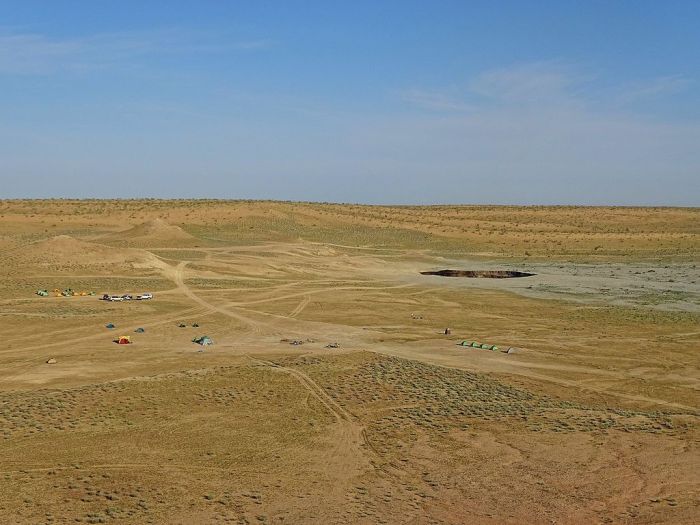
Camping on the edge of the “Gates of Hell”


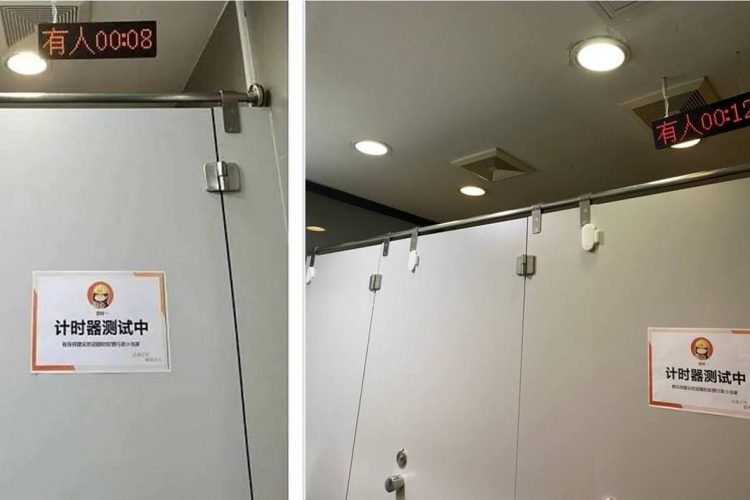
Beijing-based technology company Kuaishou recently sparked outrage on Chinese social media after videos of digital timers over employee toilet stalls went viral online.
The photos showed digital timers hanging over each cubicle and small sensors installed on the cubicle doors to trigger the timers. Chinese social media users slammed the company for monitoring and timing its office workers’ time in the toilet to increase productivity and its profits, with some calling the practice a breach of human rights and privacy. Some on the other hand defended the company, saying that some employees abused bathroom breaks, using it as an opportunity to waste time on their phones.
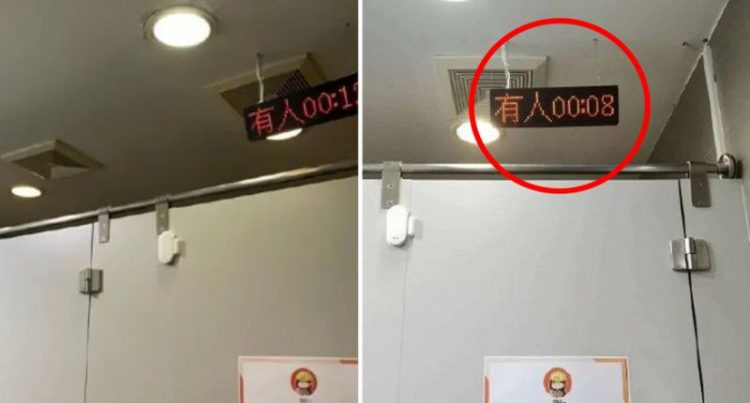
Online feedback was generally negative, and eventually Kuaishou came out with an explanation to try and calm spirits. in an official press release, the online video-sharing platform claimed that the timers weren’t meant to limit employees’ toilet usage, but rather a solution to a “serious” toilet shortage problem.
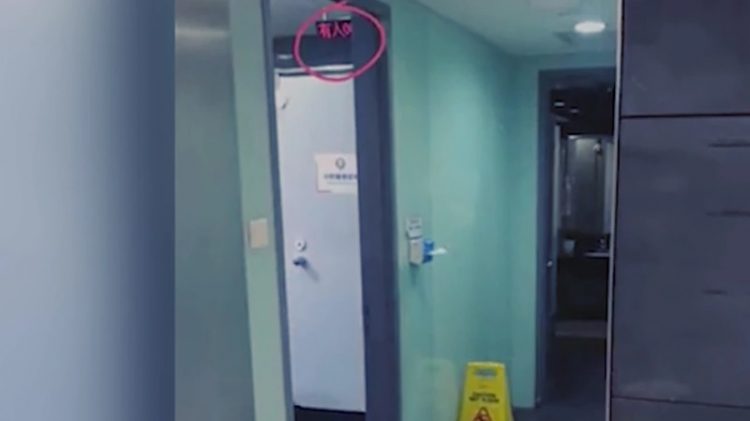
The Kuaishou office building reportedly suffers from a shortage of restrooms, and because of its layout, new facilities cannot be constructed. The company says it decided to install the the timers, which also work as counters, to see how many people used a cubicle and for how long, in order to determine how many portable toilets needed to be installed to accommodate its staff.
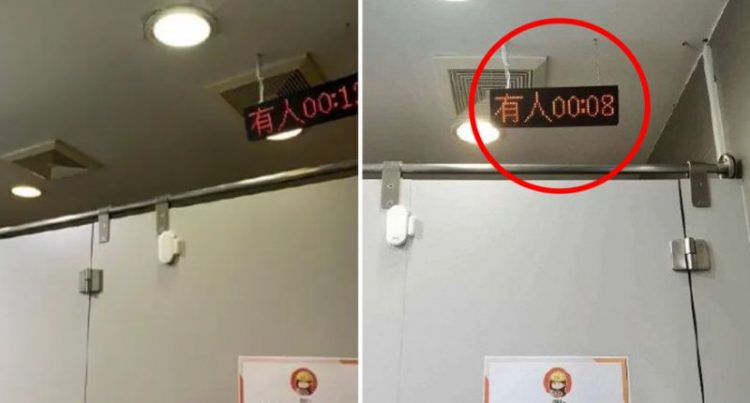
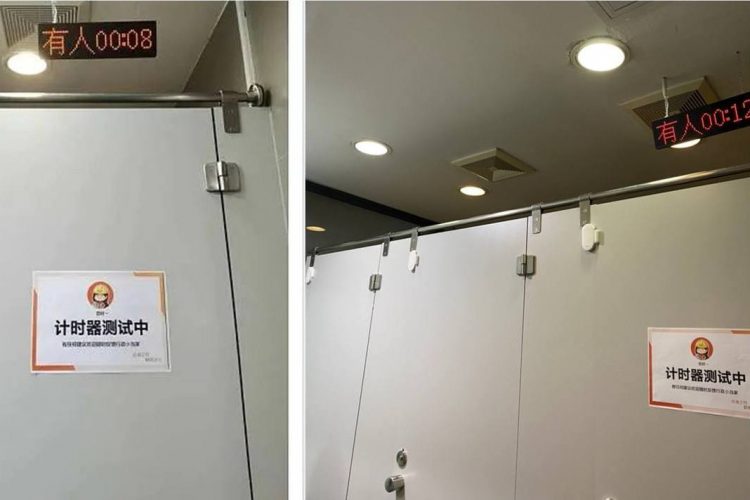
Although the explanation does make some sense, many social media users were not convinced, with some claiming that the company was only interested in increasing its profits by any means necessary.
Employee toilet use monitoring is not unheard of in China. Hong Kong-based Apple Daily reports that one company in Shanghai limits employees’ toilet use to a total of 10 minutes each day, while others monitor how much time employees spend in the bathroom.


The name Afghanistan invokes images of a dry and arid country with mountainous terrain, endless desert, thorn bushes and mud houses. But at the center of this depressing landscape is a series of spectacular lakes with water so blue that it looks almost like ink.
Band-e Amir is a series of six incredibly deep blue lakes in the heart of the central Afghanistan. The lakes are situated in the foothills of the Hindu Kush, the second highest mountain range in the world, 80 kilometers from the ancient town of Bamiyan, where the Taliban destroyed the world’s tallest Buddha statues in 2001. Surrounded by pink towering limestone cliffs almost in complete lack of vegetation, the stunning lakes seems totally out of place.
The beautiful lakes were created by the carbon dioxide rich water that is drawn from the spring melt-water in the surrounding mountains and came out from faults and cracks…
View original post 221 more words
Most of us have seen these iconic landmarks one way or another, be it just pictures or the actual buildings in real life when visiting the popular landmarks ourselves. Many architects have spent hundreds of hours perfecting these landmarks so visitors like us could enjoy their view regardless of circumstances. But how many of us have actually seen what they actually look like from above?
Budget Direct decided to provide us with the answer by having their innovative insurance team take and render these six breathtaking pictures that they kindly shared with us in the midst of a worldwide pandemic. They portrayed the beautiful famous places by offering us a new perspective on even the most photographed tourist spots.
So, scroll down and see what iconic places such as the Eiffel Tower or Sydney Opera House look like from above.
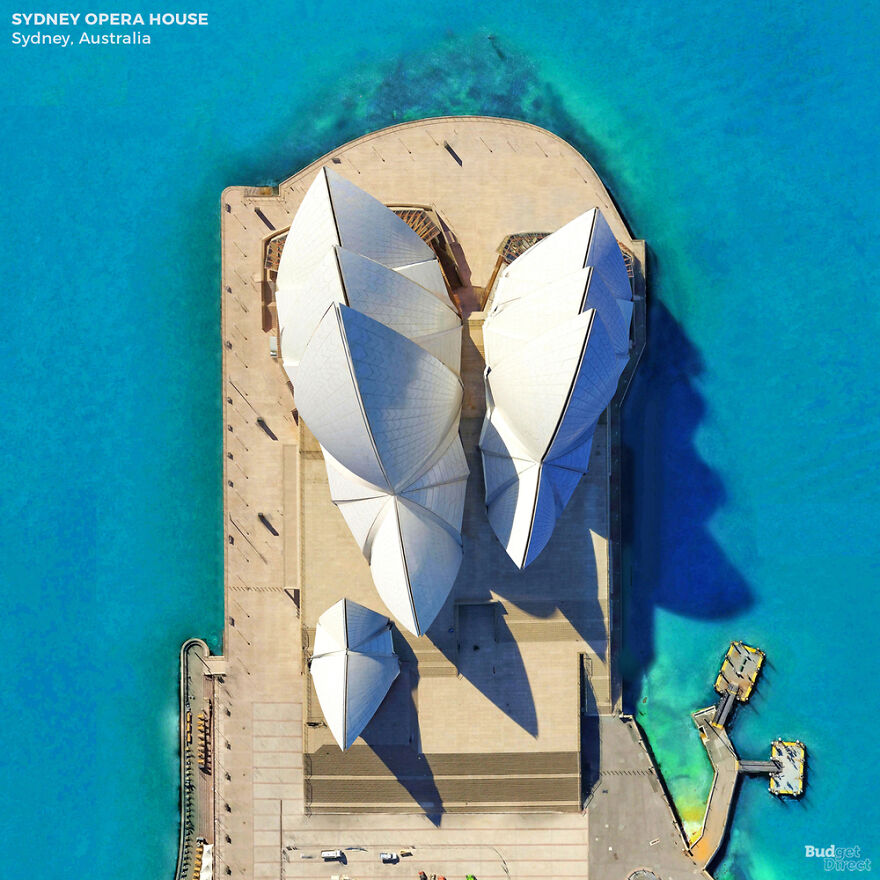
“With Kronborg in mind,” wrote Sydney Opera House’s architect, Jørn Utzon, “I was convinced that a new building in such a position as to be seen from all sides, had to be a large sculptural building.” Utzon was keenly aware of how the structure would occupy Sydney Harbour since he lived near Kronberg Castle, which occupies a similar position beyond a steep drop, sandwiched by the coasts of Denmark and Sweden.
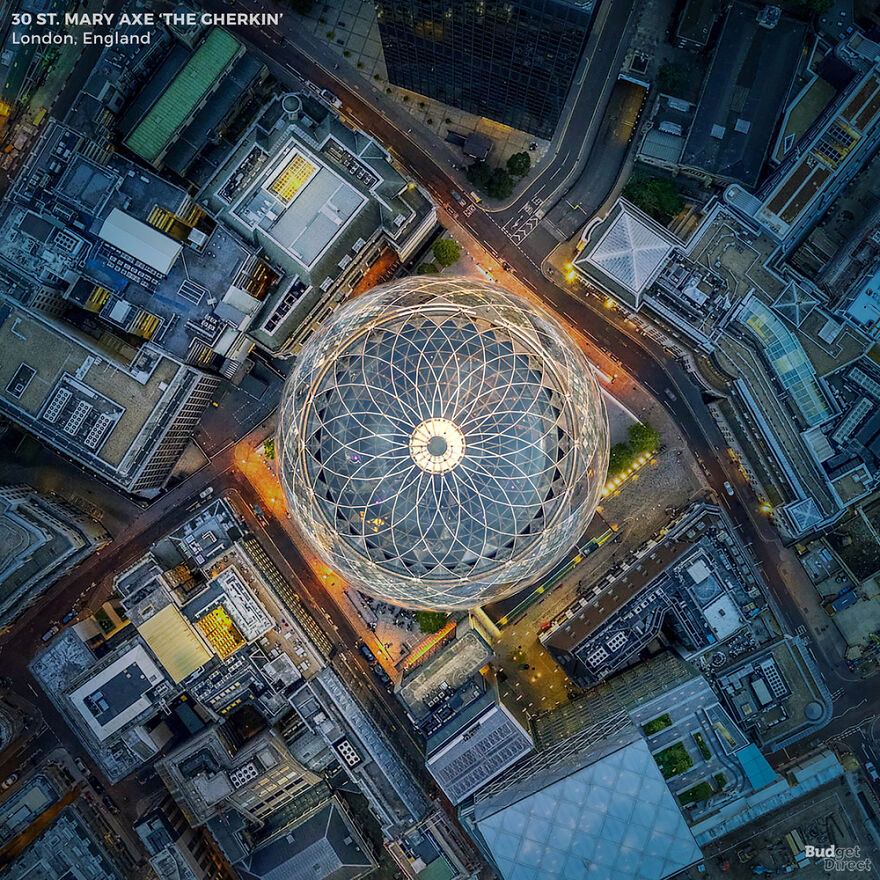
You need to levitate 180m to reach the top of London’s second-tallest building. On the way up, you’ll notice that the building puffs outwards and then inwards again from its circular ground-level footprint. This leaves plenty of space for people to mill about like ants down on the ground while allowing for 47,000m2 of interior floor space.
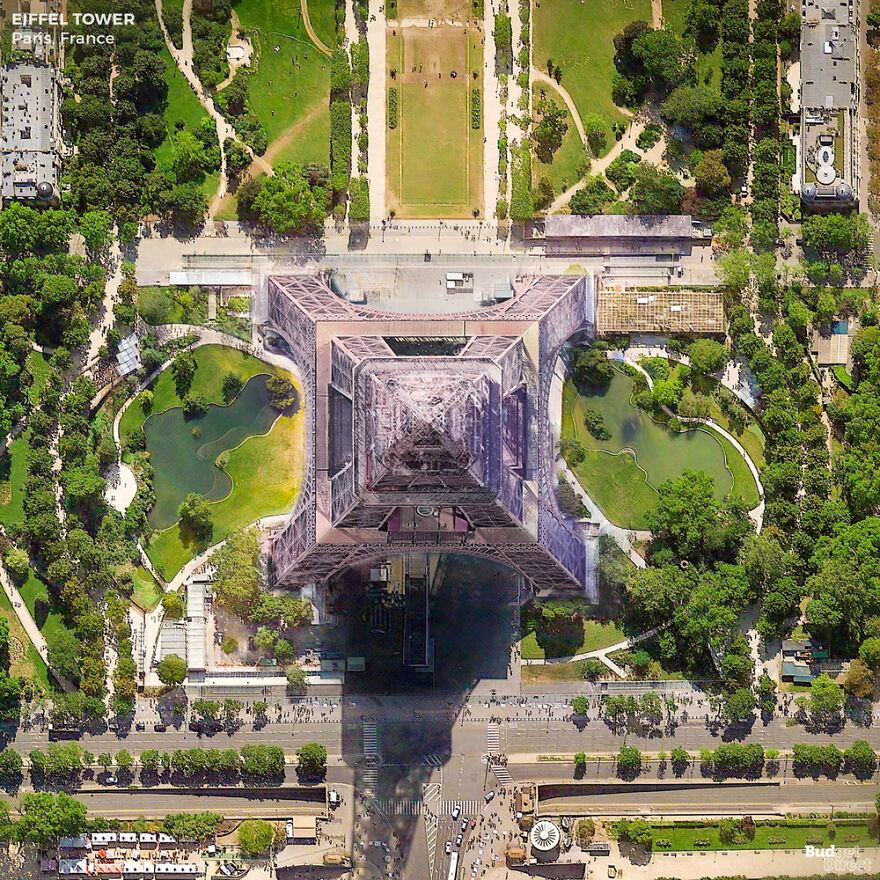
X marks the spot. Cuddled by kidney-shaped lawns at the tip of the Champ de Mars, it may take you a moment to identify the Eiffel Tower. The centre of the X is the meeting point of four iron lattice piers that begin on the ground 300m below.
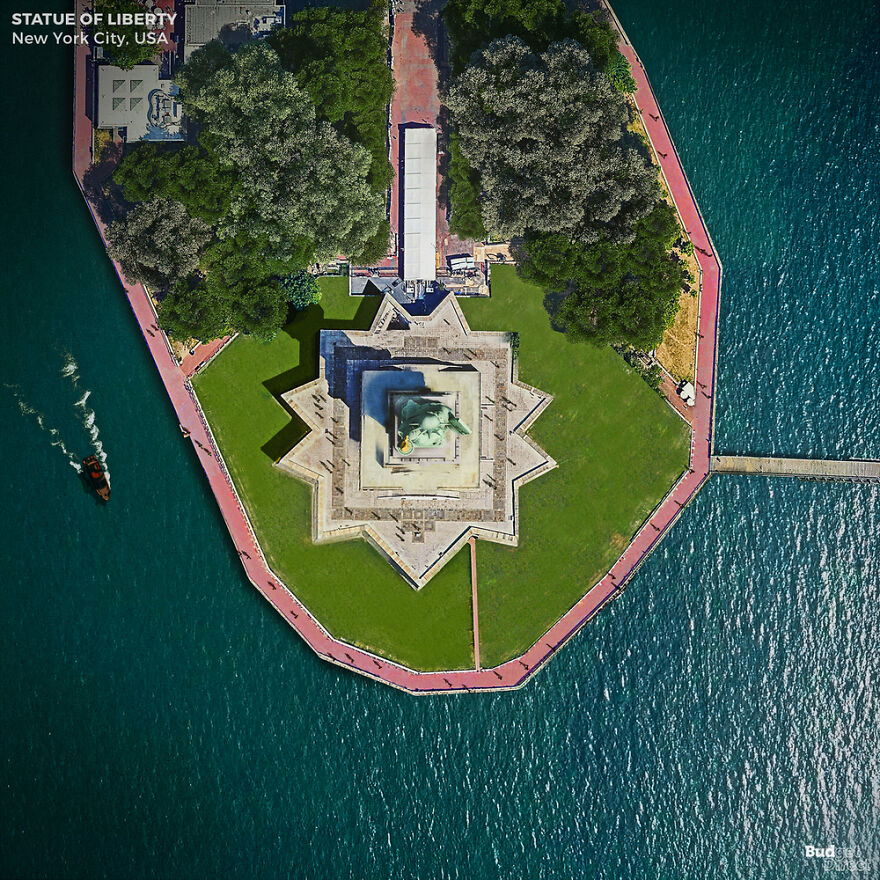
An aerial view of the Statue of Liberty offers a clear look at the 11-pronged star on which it sits. The star may look like it was designed for the purpose, but it is actually a former fort, built a year before the War of 1812 to protect New York Harbor. Tour boats and commuter ferries pass there today.
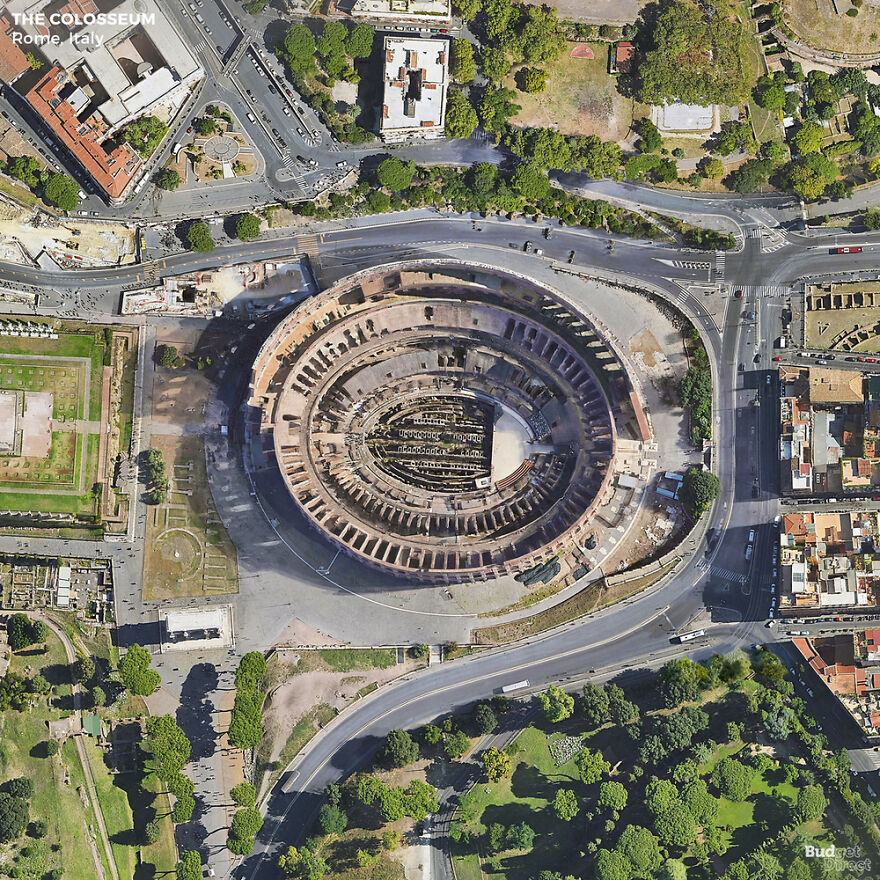
This head-down view of the Colosseum looks pretty different to when it was first built for animal hunts, executions, and gladiator battles, nearly 2,000 years ago. Somewhere between 50-90,000 people of all classes would have gathered here, protected from the sun by enormous vela (canvas awnings) wrangled by hundreds of strong men, probably from the Roman navy.

Legend has it Myanmar’s most sacred Buddhist stupa is 2,600 years old, making it the world’s oldest Buddhist stupa and the oldest landmark on our list. Scholars estimate it’s a remarkable 11-15 centuries old. Either way, the building has been enhanced over the years. The golden roof has been replenished by devotees, including the 15th-century Queen Shin Sawbu (BinnyaThau), who donated her bodyweight in gold.
From boredpanda.com


 The MarkoZen Blog