The Falkland Islands are popular again. Since the discovery of massive offshore oil reserves.

Interesting how oil dictates geopolitical relations.  Governments and corporations are obssessed with finding and then pumping oil.  Seemingly unimportant areas of the world that were once regarded as no more than boondock hinterlands, become the life of the party when oil is discovered under them.  Such is the case with the Falkland Islands.

Falkland_Islands_in_United_Kingdom_svg

The Falkland Islands ( Spanish: Islas Malvinas) are an archipelago located in the South Atlantic Ocean on the Patagonian Shelf. The principal islands are about 310 miles (500 kilometres) east of the Patagonian coast at a latitude of about 52°S. The archipelago which has an area of 4,700 square miles (12,173 square kilometres) comprises East Falkland, West Falkland and 776 smaller islands. The islands, a British Overseas Territory, enjoy a large degree of internal self-government, with the United Kingdom guaranteeing good government and taking responsibility for their defence and foreign affairs. The capital is Stanley on East Falkland.

Controversy exists over the Falklands’ original discovery and subsequent colonisation by Europeans. At various times there have been French, British, Spanish, and Argentine settlements. Britain re-established its rule in 1833, though the islands continue to be claimed by Argentina. In 1982, following Argentina’s invasion of the islands, the two-month-long undeclared Falklands War between both countries resulted in the surrender of all Argentine forces and the return of the islands to British administration.

The population, estimated at 2,841, primarily consists of native Falkland Islanders, the vast majority being of British descent. Other ethnicities include French, Gibraltarian, and Scandinavian. Immigration from the United Kingdom, Saint Helena, and Chile has reversed a former population decline. The predominant and official language is English. Under the British Nationality Act of 1983, Falkland Islanders are legally British citizens.

Falkland_Islands_topographic_map-en_svg

On 2 April 1982, Argentina invaded the Falkland Islands and other British territories in the South Atlantic. By exploiting the long-standing feelings of Argentines towards the islands, the nation’s ruling military junta sought to divert public attention from Argentina’s poor economic performance and growing internal opposition. The United Kingdom’s reduction of military capacity in the South Atlantic is considered to have encouraged the invasion.

The United Kingdom sent an expeditionary force to retake the islands. After short but fierce naval and air battles, the British forces landed at San Carlos Water on 21 May, and a land campaign followed leading to the British taking the high ground surrounding Stanley on 11 June. The Argentine forces surrendered on 14 June 1982. The war resulted in the deaths of 255 British and 649 Argentine soldiers, sailors and airmen, as well as 3 civilian Falklanders.

falklands war

The United Kingdom and Argentina both claim responsibility for the Falkland Islands. The UK bases its position on continuous administration of the islands since 1833 (apart from 1982) and the islanders having a “right to self determination, including their right to remain British if that is their wish”.  Argentina posits that it gained the Falkland Islands from Spain, upon becoming independent from it in 1816, and that the UK illegally occupied them in 1833.

Diplomatic relations between the United Kingdom and Argentina, which were severed at the outbreak of the Falklands War in 1982, were re-established in 1990. In 2007, Argentina reasserted its claim over the Falkland Islands, asking for the UK to resume talks on sovereignty.  In 2009, British prime minister Gordon Brown met with Argentine president Cristina Fernández de Kirchner and declared that there would be no talks over the future sovereignty of the Falkland Islands.  As far as the United Kingdom and the Falkland Islands are concerned, no pending issue to resolve exists.

Argentina seems to have gotten very interested in the Islands again since the discovery of oil reserves offshore near the Islands.

A 1995 agreement between the UK and Argentina had set the terms for exploitation of offshore resources including oil reserves as geological surveys had shown there might be up to 60 billion barrels (9.5 billion cubic metres) of oil under the seabed surrounding the islands. However, in 2007 Argentina unilaterally withdrew from the agreement; Falklands Oil and Gas Limited then signed an agreement with BHP Billiton to investigate the potential exploitation of oil reserves. Due to the difficult climatic conditions of the southern seas exploitation will be difficult, though economically viable; the continuing sovereignty dispute with Argentina is also hampering progress.

Falkland Islands Economic Zone

FalklandEconomicZone

In February 2010 exploratory drilling for oil was begun by Desire Petroleum, but the results from the first test well were disappointing. Two months later, on 6 May 2010, Rockhopper Exploration announced that “it may have struck oil”.  Subsequent tests showed it to be a commercially viable find; an appraisal project was launched and on 14 September 2011.  

Not sheep farms and penguin populated backwaters anymore.

Falkland_Islandsx

Village of Goose Green
Falkland_Islandsx1

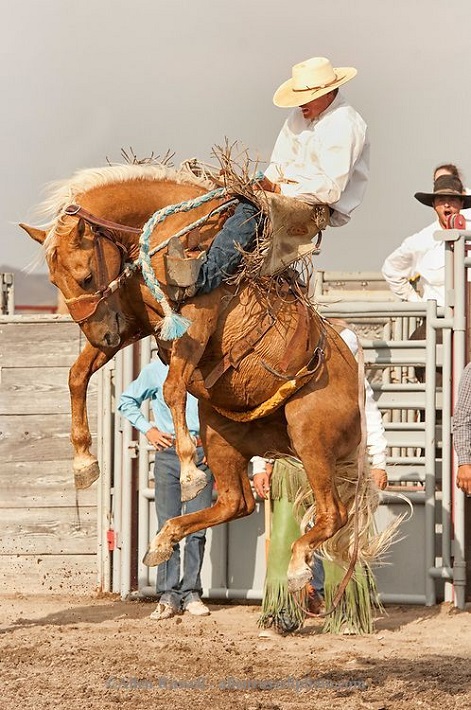
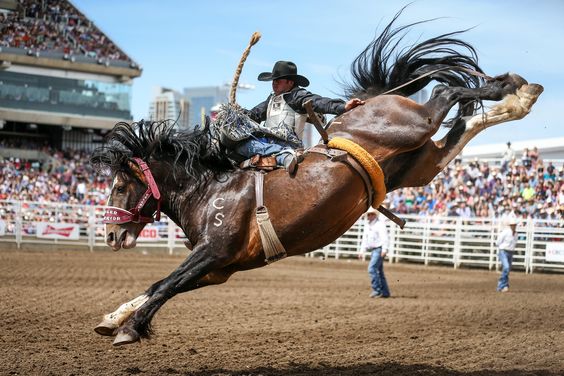
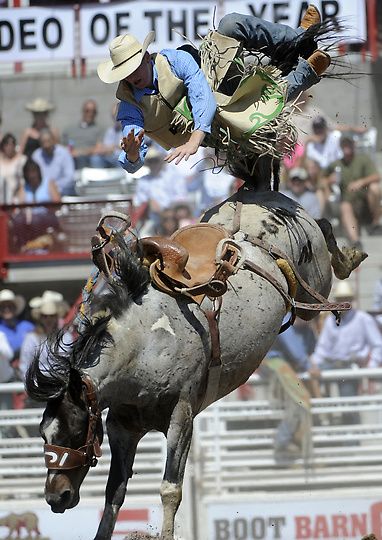
The Yippee Ki Yay Action of the Rodeo

Rodeo is a competitive equestrian sport that arose out of the working practices of cattle herding in Spain and Mexico, expanding throughout the Americas and to other nations. It was based on the skills required of the working vaqueros and later, cowboys, in what today is the western United States, western Canada, and northern Mexico. Today, it is a sporting event that involves horses and other livestock, designed to test the skill and speed of the cowboys and cowgirls. American style professional rodeos generally comprise the following events: tie-down roping, team roping, steer wrestling, saddle bronc riding, bareback bronc riding, bull riding and barrel racing. The events are divided into two basic categories: the rough stock events and the timed events. Depending on sanctioning organization and region, other events such as breakaway roping, goat tying, and pole bending may also be a part of some rodeos.

American rodeo, particularly popular today within the Canadian province of Alberta and throughout the western United States, is the official state sport of Wyoming, South Dakota, and Texas. The iconic silhouette image of a “Bucking Horse and Rider” is a federal and state-registered trademark of the State of Wyoming. The Legislative Assembly of Alberta has considered making American rodeo the official sport of that province. However, enabling legislation has yet to be passed.


Caleb Nichols goes airborne after getting bucked by his bronc during the Cheyenne Frontier Days Rodeo on Friday, July 29, 2011. AAron Ontiveroz, The Denver Post

Historical Entertainment Technology Leap

“Video Killed The Radio Star”

I heard you on the wireless back in ’52
Lying awake intently tuning in on you
If I was young it didn’t stop you coming through
Oh-a-oh

They took the credit for your second symphony
Rewritten by machine on new technology
And now I understand the problems you can see

Oh-a-oh
I met your children
Oh-a-oh
What did you tell them?

Video killed the radio star
Pictures came and broke your heart
Oh-a-a-a oh

And now we meet in an abandoned studio
We hear the playback and it seems so long ago
And you remember the jingles used to go:

Oh-a-oh
You were the first one
Oh-a-oh
You were the last one

Video killed the radio star
In my mind and in my car
We can’t rewind, we’ve gone too far
Oh-a-a-a oh
Oh-a-a-a oh

Video killed the radio star
In my mind and in my car
We can’t rewind, we’ve gone too far
Pictures came and broke your heart
Put the blame on VTR…

You are the radio star
Video killed the radio star
You are the radio star
Video killed the radio star
You are the radio star
Video killed the radio star
You are the radio star
Video killed the radio star
You are the radio star

Oh-a-oh, oh-a-oh…

The Colorful Jets of the Japan Air Self-Defense Force

The Japan Air Self-Defense Force (航空自衛隊, Kōkū Jieitai), or JASDF, is the aviation branch of the Japan Self-Defense Forces responsible for the defense of Japanese airspace and other aerospace operations.  The JASDF carries out combat air patrols around Japan, while also maintaining an extensive network of ground and air early warning radar systems. The branch also has an aerobatic team known as Blue Impulse and has recently been involved in providing air transport in several UN peacekeeping missions.

The JASDF had an estimated 45,000 personnel in 2005, and as of 2013 operates 791 aircraft.  Of those 791 aircraft in service approximately 350 are fighter aircraft.

Most of the aircraft below are Aggressor Jets.  Aggressors are used as training opposition aircraft and thus painted in the colour schemes of potential enemy air forces.  The Jets are painted in Russian, North Korean and mainland Chinese schemes. The bottom three images are JASDF paint schemes.


J-1, Japanese variant of the American F-16 Falcon


japs


F-15 Eagle Aggressors


japs01


japs2


japs6


japs7


japs8


japs10


Hollywood will try anything once

roy


Now this, I want to see….

Sharp-shooter…

Vagabond…

Roy Orbison is traveling West with 7 of his brand new songs…

The wildness of the times gets into the people themselves, and then…

Anything can happen…

A trunk full of gold…

A wagon full of trouble…

And a head filled with songs makes him…

The Fastest Guitar Alive

Roy Orbison’s 1967 film saw him star as Johnny Banner, a Southern spy, with a bullet-shooting guitar, who has a plan to rob gold bullion from the US Mint, in San Francisco, with the aid of the Confederate army. This was low budget fodder, scripted by Robert E. Kent (best known for Diary of a Madman and Rock Around the Clock) and directed by Michael D. Moore (who later worked as Second Unit Director with Steven Spielberg on Indiana Jones), and is now best known for its 7 songs performed by the the Big “O”.

Rock N’ Roll Forever By Danny & the Juniors

Danny & the Juniors are a doo-wop quartet from Philadelphia comprising Danny Rapp, Dave White, Frank Maffei and Joe Terranova. Formed in 1955, they are most widely recognized for their hit single “At the Hop”, which was released in 1957. They are sometimes erroneously stated as being an Italian-American band (lead singer Danny Rapp was actually of Irish extraction).

Rock, (rock), (rock).Oh, baby, rock, (rock), (rock).
Oh, baby, rock, (rock), (rock).

Oh, baby, rock, (rock), (rock).

Oh, baby, rock and roll is here to stay./(Rock, rock, rock.)
It will never die./(Rock, rock, ro-ah-ah-ock.)
It was meant to be that way,/(Rock, rock, rock.)
Though I don’t know why./(Rock, rock, rock.)
I don’t care what people say,/(Ah-ah-ahh.)
Rock and roll is here to stay./(Rock, rock, rock.)
(We don’t care what people say,)
(Rock and roll is here to stay.)

Rock and roll will always be./(Rock and roll.)
I dig it to the end./(Rock and roll-woh-woh.)
It’ll go down in history,/(Rock and roll.)
Just you watch, my friend./(Rock and roll.)
Rock and roll will always be./(Ah-ahh.)
It’ll go down in history./(Rock and roll.)
(Rock and roll will always be.)
(It’ll go down in history.)

((Everybody rock, everybody rock.))
((Everybody rock, everybody rock. ))
((Rock on, everybody rock.))
Everybody ((rock and roll,))
((Everybody rock and roll-))(oh-oh,)
((Everybody rock and roll,))
((Rock on, everybody rock and roll.))

Rock and roll is here to stay./(Rock, rock, rock.)
It will never die./(Rock, rock, ro-ah-ah-ock.)
It was meant to be that way,/(Rock, rock, rock.)
Though I don’t know why./(Rock, rock, rock.)
I don’t care what people say,/(Ah-ah-ahh.)
Rock and roll is here to stay./(Rock, rock, rock.)

Rock and roll will always be./(Rock and roll.)
I dig it to the end./(Rock and roll-woh-woh.)
It’ll go down in history,/(Rock and roll.)
Just you watch, my friend./(Rock and roll.)
Rock and roll will always be./(Ah-ah-ahh.)
It’ll go down in history./(Rock and roll.)

Now, if you ((don’t like rock and roll,))
Think ((what)) you’ve been missin’.
((But if you like to Bop 1 and Stroll 1 ,))
((Come around and listen.))
((Let’s all start to have a ball,))
((Everybody rock and roll.))

[Outro: Each man in turn:]
Rock, (rock), (rock).
Oh, baby, rock, (rock), (rock).
[Fade.]
Oh, baby, rock, (rock), (rock).

White Rabbits


One of the oddest and yet hilarious scenes from any movie.  Early seventies flick titled Thunderbolt and Lightfoot.  Clint Eastwood and Jeff Bridges characters are hitch hiking and get picked up by a crazed hillbilly who is plastered from inhaling carbon monoxide.  The hillbilly for some unexplained and strange reason has a trunk full of white rabbits.

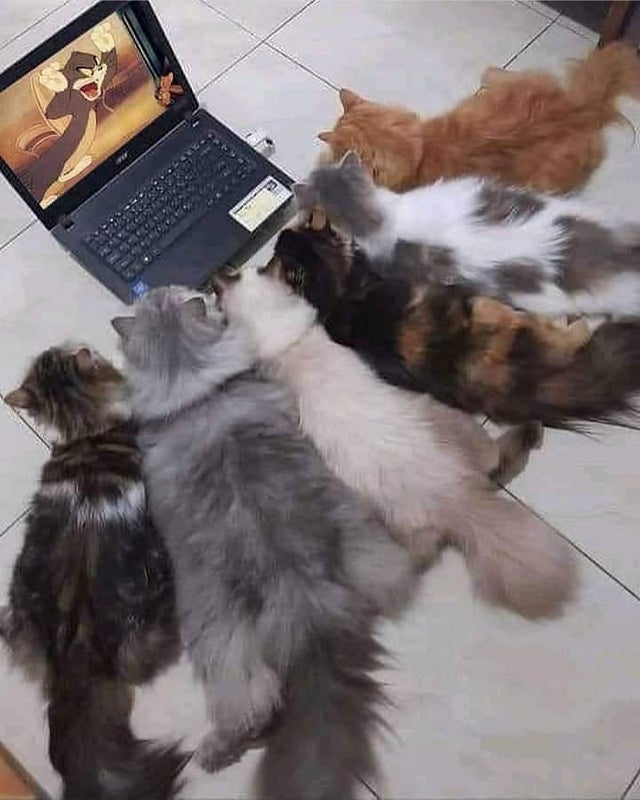
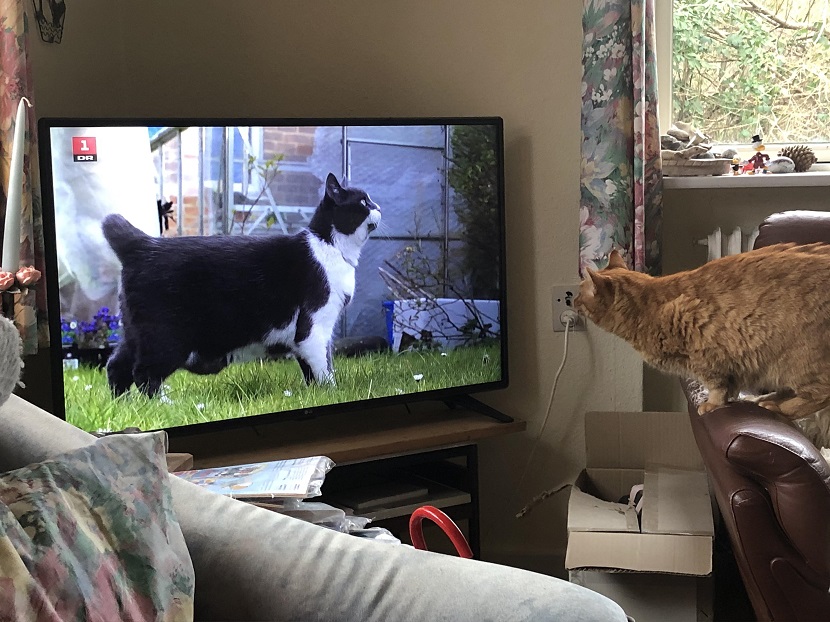
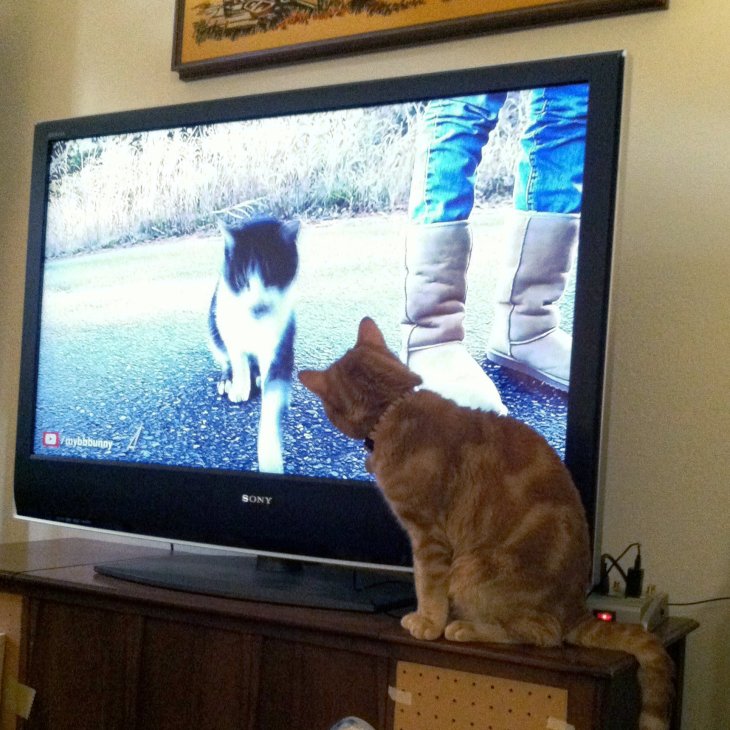
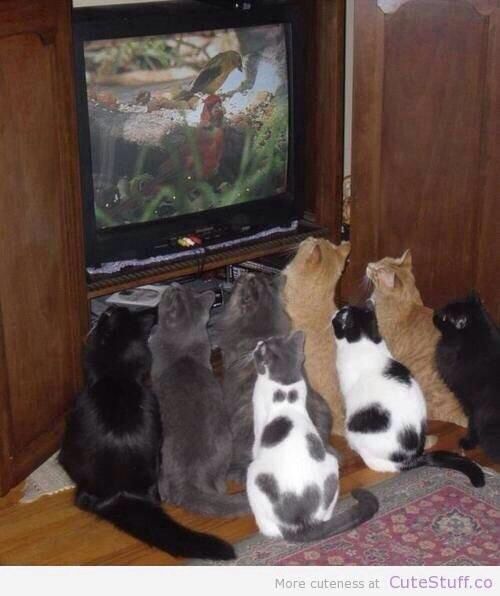
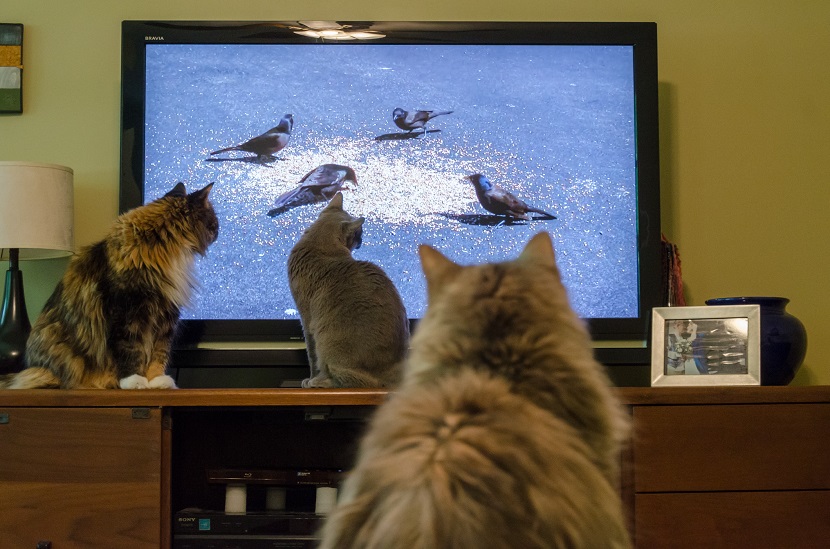
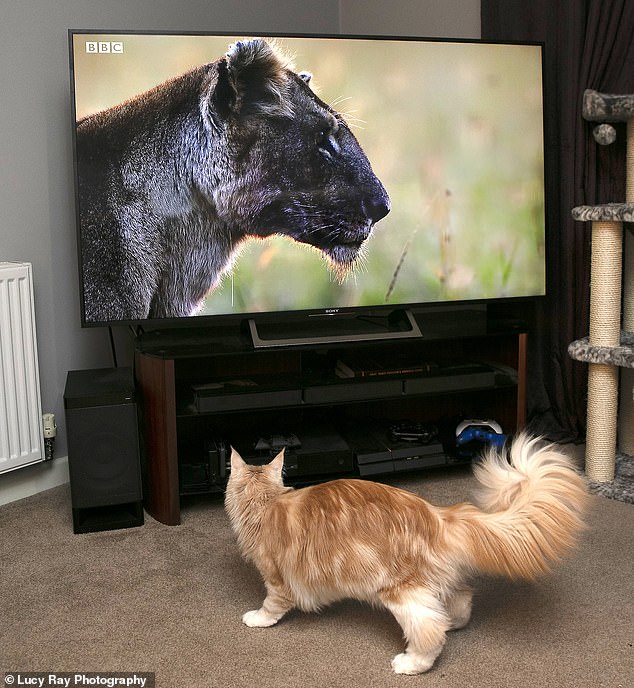
Cats Watching TV

It’s possible that cats that seem to become engrossed in television programs may have a higher prey drive than other cats. Because of that, their attention might be more easily caught by movements and changing colors on the TV, which can make them think there might be a rodent or bird in the room.


We’ve created a monster. Tubby now thinks any rectangular object is fair game to stare at. Picture frames for example. He also sits next to our monitors waiting for something to move.

I once had a cat that used to get glued to the TV screen when downhill skiing was on.