The Pink Lake of Australia

Lake Hillier is a saline lake on the edge of Middle Island, the largest of the islands and islets that make up the Recherche Archipelago in the Goldfields-Esperance region, off the south coast of Western Australia. It is particularly notable for its pink colour. A long and thin shore divides the Southern Ocean from the lake.
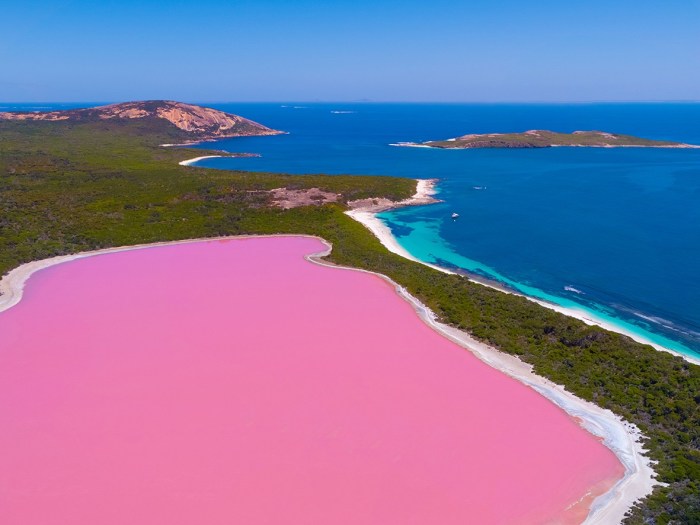
Lake-Hillier-Landscape

Lake Hillier is about 600 metres (2,000 ft) in length by about 250 m (820 ft) in width. The lake is surrounded by a rim of sand and a dense woodland of paperbark and eucalyptus trees with a narrow strip of sand dunes covered by vegetation separating its northern edge from the northern coast of Middle Island. The most notable feature of the lake is its pink colour. The vibrant colour is permanent, and does not alter when the water is taken in a container. The pink colour is considered to be due to the presence of the organism Dunaliella salina. Air is the best mode of transportation for viewing the lake. At one point in its history the lake was used to collect salt.

lake1

Lake Hillier was visited by the Matthew Flinders’ expedition on 15 January 1802. Flinders’ journal entries are considered to be the first written records of the lake. Flinders observed the pink lake after ascending the island’s highest peak (now called Flinders Peak), describing the lake as follows:

In the north-eastern part was a small lake of a rose colour, the water of which, as I was informed by Mr. Thistle who visited it, was so saturated with salt that sufficient quantities were crystallised near the shores to load a ship. The specimen he brought on board was of a good quality, and required no other process than drying to be fit for use.

Flinders visited Middle Island again in May 1803; he intended “to stop a day or two in Goose-Island Bay, for the purposes of procuring geese for our sick people, seal oil for our lamps, and a few casks of salt from the lake on Middle Island”. It is reported that Flinders subsequently named the lake after William Hillier, a crew member of Investigator who died of dysentery on 20 May 1803 prior to the expedition’s departure from Middle Island.

In 1889, Edward Andrews investigated the commercial possibilities of producing salt from Lake Hillier, and briefly moved onto the island with both of his sons. They left after working the salt deposits for about one year.

The lake was subject to salt mining during the late 19th century. The salt mining enterprise is reported as failing for a number of reasons including “the toxicity of the salt collected for consumption”.

lake2
lake4

The only living organisms in Lake Hillier are microorganisms including Dunaliella salina, which causes the salt content in the lake to create a red dye which helps produce the colour, as well as red halophilic bacteria present in the salt crusts. Despite the unusual hue, the lake exhibits no known adverse effects upon humans. From above, the lake appears a solid bubble gum pink, but from the shoreline it appears more of a clear pink hue. The shoreline is also covered in salt crust deposits.

Despite the high salt content levels (comparable to those of the Dead Sea), Lake Hillier is safe to swim in. However, there are very few ways to reach Lake Hillier. Aeroplane scenic flights are the most common method, with 6 flights a day departing Esperance Airport, flying over Lake Hillier via the nearby Cape Le Grand National Park. Cruises are also an option for passengers wanting to visit the isolated lake, and surrounding forest area.

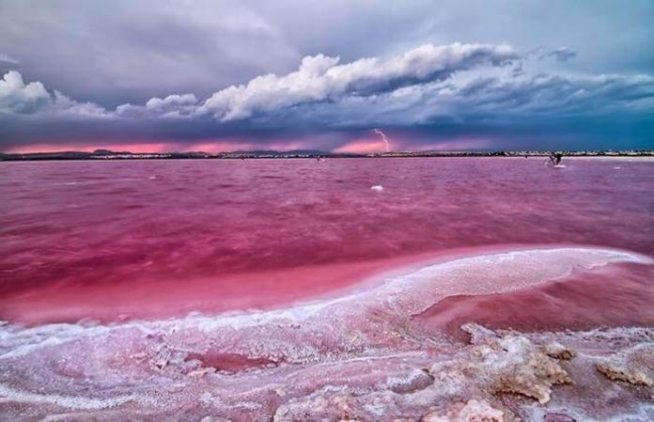
lakeLAGO-HILLIER-2
lake3
Lake-Hillier-Voucher

Giant sinkhole with a forest inside found in China

A team of Chinese scientists has discovered a giant new sinkhole with a forest at its bottom. 

The sinkhole is 630 feet (192 meters) deep, according to the Xinhua news agency, deep enough to just swallow St. Louis’ Gateway Arch. A team of speleologists and spelunkers rappelled into the sinkhole on Friday (May 6), discovering that there are three cave entrances in the chasm, as well as ancient trees 131 feet (40 m) tall, stretching their branches toward the sunlight that filters through the sinkhole entrance.

“This is cool news,” said George Veni, the executive director of the National Cave and Karst Research Institute (NCKRI) in the U.S., and an international expert on caves. Veni was not involved in the exploration of the cave, but the organization that was, the Institute of Karst Geology of the China Geological Survey, is NCKRI’s sister institute.

A site for sinkholes

This image shows a typical karst sinkhole called a tiankeng in Chongqing, China. (Image credit: Eastimages/Getty Images)

The discovery is no surprise, Veni told Live Science, because southern China is home to karst topography, a landscape prone to dramatic sinkholes and otherworldly caves. Karst landscapes are formed primarily by the dissolution of bedrock, Veni said. Rainwater, which is slightly acidic, picks up carbon dioxide as it runs through the soil, becoming more acidic. It then trickles, rushes and flows through cracks in the bedrock, slowly widening them into tunnels and voids. Over time, if a cave chamber gets large enough, the ceiling can gradually collapse, opening up huge sinkholes.
“Because of local differences in geology, climate and other factors, the way karst appears at the surface can be dramatically different,” he said. “So in China you have this incredibly visually spectacular karst with enormous sinkholes and giant cave entrances and so forth. In other parts of the world you walk out on the karst and you really don’t notice anything. Sinkholes might be quite subdued, only a meter or two in diameter. Cave entrances might be very small, so you have to squeeze your way into them.” 

In fact, 25% of the United States is karst or pseudokarst, which features caves carved by factors other than dissolution, such as volcanics or wind, Veni said. About 20% of the world’s landmass is made of one of these two cave-rich landscapes. 

The new discovery took place in the Guangxi Zhuang Autonomous Region, near Ping’e village in the county of Leye, according to Xinhua. Guangxi is known for its fabulous karst formations, which range from sinkholes to rock pillars to natural bridges and have earned the region UNESCO world heritage site designation.

Why sinkholes matter

The sinkhole’s interior is 1,004 feet (306 m) long and 492 feet (150 m) wide, Zhang Yuanhai, a senior engineer with the Institute of Karst Geology, told Xinhua. The Mandarin word for such enormous sinkholes is “tiankeng,” or “heavenly pit,” and the bottom of the sinkhole did indeed seem like another world. Chen Lixin, who led the cave expedition team, told Xinhua that the dense undergrowth on the sinkhole floor was as high as a person’s shoulders. Karst caves and sinkholes can provide an oasis for life, Veni said.

“I wouldn’t be surprised to know that there are species found in these caves that have never been reported or described by science until now,” Lixin said. 

In one West Texas cave, Veni said, tropical ferns grow abundantly; the spores of the ferns were apparently carried to the sheltered spot by bats that migrate to South and Central America.

Not only do sinkholes and caves offer refuge for life, they are also a conduit to aquifers, or deep stores of underground water. Karst aquifers provide the sole or primary water source for 700 million people worldwide, Veni said. But they’re easily accessed and drained — or polluted.

“Karst aquifers are the only types of aquifers that you can pollute with solid waste,” Veni said. “I’ve pulled car batteries and car bodies and barrels of God-knows-what and bottles of God-knows-what out of the active cave stream.” 

The new discovery brings the number of sinkholes in Leye County to 30, according to Xinhua. The same researchers have previously discovered dozens of sinkholes in Northwest China’s Shaanxi province and a cluster of interconnected sinkholes in Guangxi, China Daily reported.

Minimum Wage and Beer Purchase Power

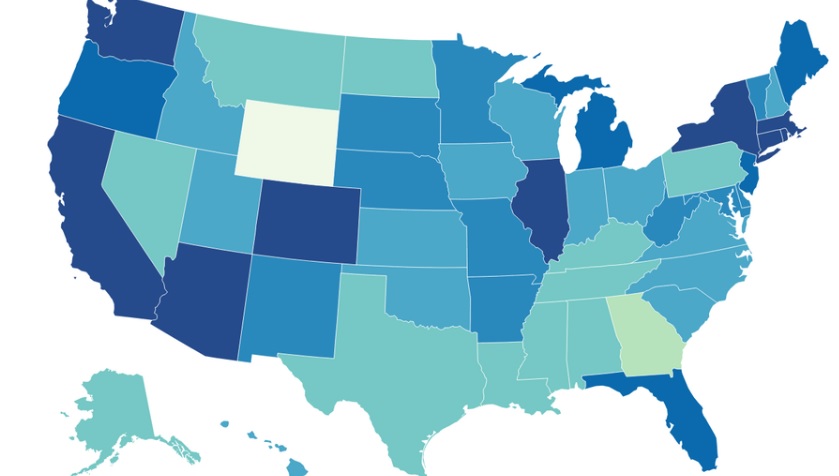
Below are the 10 states with the highest alcohol consumption.

10. South Dakota (2.87 gallons per capita)

9. Idaho (2.92 gallons per capita)

8. Alaska (2.94 gallons per capita)

7. Wisconsin (2.98 gallons per capita)

6. Vermont (3.08 gallons per capita)

5. Montana (3.11 gallons per capita)

4. North Dakota (3.26 gallons per capita)

3. Nevada (3.46 gallons per capita)

2. Delaware (3.72 gallons per capita)

1. New Hampshire (4.76 gallons per capita)

The Super Volcano that could change everything

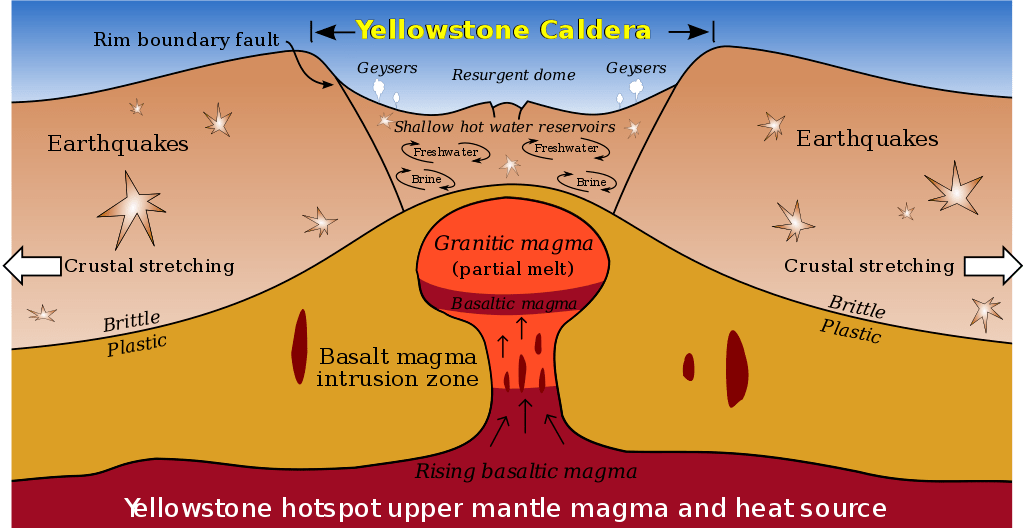
The supervolcano that lies beneath Yellowstone National Park in the US is far larger than was previously thought, scientists report.

A study shows that the magma chamber is about 2.5 times bigger than earlier estimates suggested.

A team found the cavern stretches for more than 90km (55 miles) and contains 200-600 cubic km of molten rock.

The findings are being presented at the American Geophysical Union Fall Meeting in San Francisco.

Prof Bob Smith, from the University of Utah, said: “We’ve been working there for a long time, and we’ve always thought it would thought it would be bigger… but this finding is astounding.”

If the Yellowstone supervolcano were to blow today, the consequences would be catastrophic.

The last major eruption, which occurred 640,000 years ago, sent ash across the whole of North America, affecting the planet’s climate.

Now researchers believe they have a better idea of what lies beneath the ground.

The team used a network of seismometers that were situated around the park to map the magma chamber.

Dr Jamie Farrell, from the University of Utah, explained: “We record earthquakes in and around Yellowstone, and we measure the seismic waves as they travel through the ground.

“The waves travel slower through hot and partially molten material… with this, we can measure what’s beneath.”

volcano

The team found that the magma chamber was colossal. Reaching depths of between 2km and 15km (1 to 9 miles), the cavern was about 90km (55 miles) long and 30km (20 miles) wide.It pushed further into the north east of the park than other studies had previously shown, holding a mixture of solid and molten rock.

“To our knowledge there has been nothing mapped of that size before,” added Dr Farrell.

The researchers are using the findings to better assess the threat that the volatile giant poses.

“Yes, it is a much larger system… but I don’t think it makes the Yellowstone hazard greater,” explained Prof Bob Smith.

“But what it does tell us is more about the area to the north east of the caldera.”

He added that researchers were unsure when the supervolcano would blow again.

Some believe a massive eruption is overdue, estimating that Yellowstone’s volcano goes off every 700,000 years or so.

YellowstoneFalloutAshBed

Although fascinating, the new findings do not imply increased geologic hazards at Yellowstone, and certainly do not increase the chances of a ‘supereruption’ in the near future. Contrary to some media reports, Yellowstone is not ‘overdue’ for a supereruption.

Media reports were more hyperbolic in their coverage.

A study published in GSA Today, the monthly news and science magazine of the Geological Society of America, identified three fault zones where future eruptions are most likely to be centered. Two of those areas are associated with lava flows aged 174,000–70,000 years, and the third is a focus of present-day seismicity.

In 2017, NASA conducted a study to determine the feasibility of preventing the volcano from erupting. The results suggested that cooling the magma chamber by 35 percent would be enough to forestall such an incident. NASA proposed introducing water at high pressure 10 kilometers underground. The circulating water would release heat at the surface, possibly in a way that could be used as a geothermal power source. If enacted, the plan would cost about $3.46 billion. On the other hand, according to Brian Wilson of the Jet Propulsion Laboratory, such a project might trigger rather than prevent an eruption.

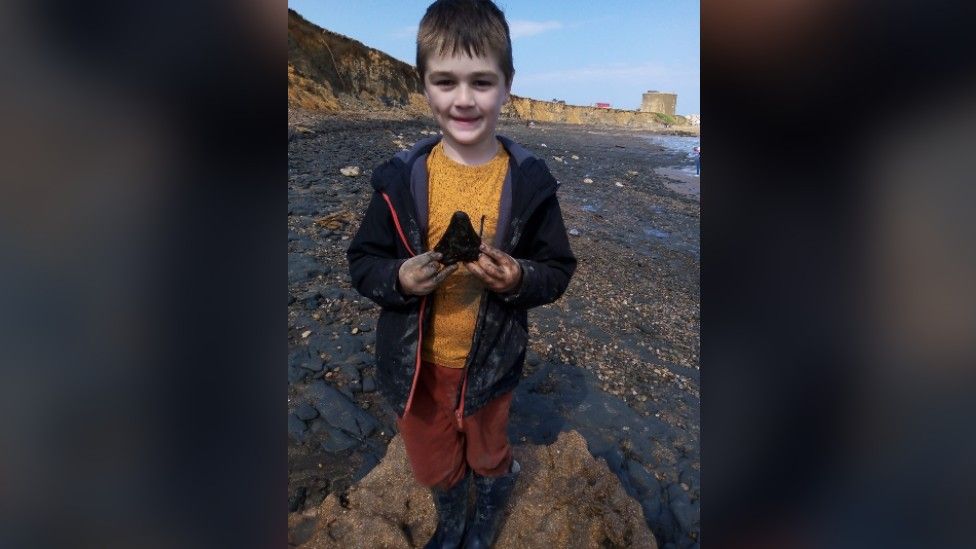
Boy, six, finds giant megalodon shark tooth on Bawdsey beach

Sammy Shelton
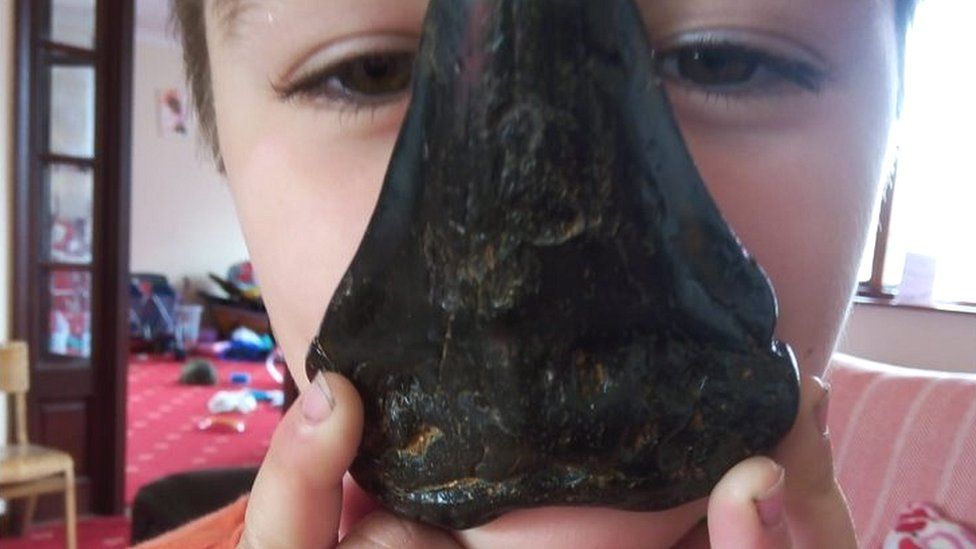
Image caption,Sammy Shelton found the giant tooth on a Suffolk beach

A six-year-old boy has found a shark tooth belonging to a giant prehistoric megalodon that could be up to 20 million years old.

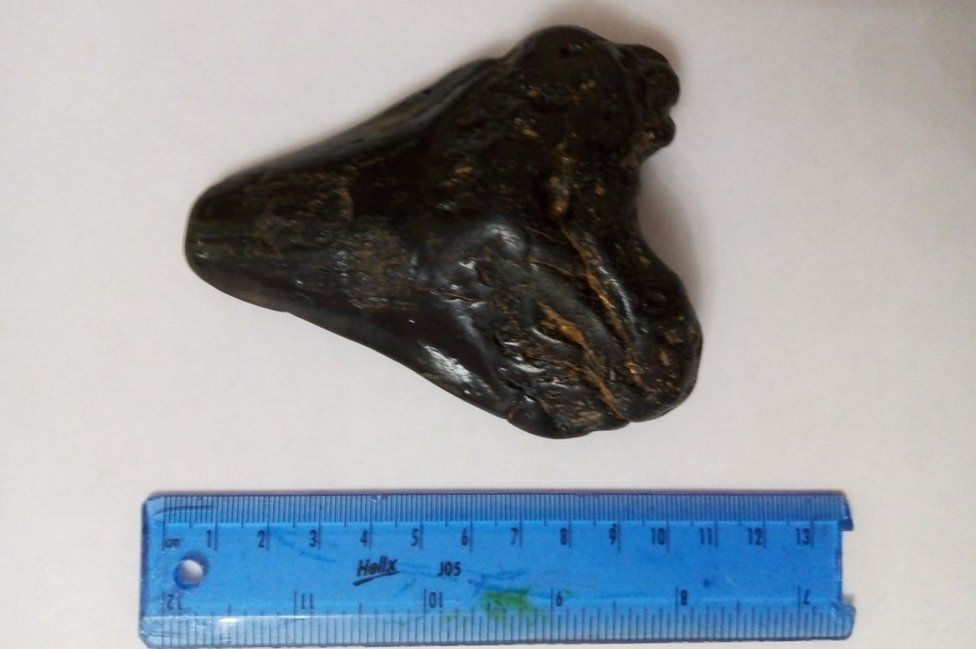
Sammy Shelton found the 10cm-long (4in) tooth on Bawdsey beach in Suffolk during a bank holiday break.

It has been confirmed as belonging to a megalodon – the largest shark that ever existed – by expert Prof Ben Garrod.

His dad Peter Shelton said Sammy was sleeping with it near his bed as he was “very attached to it”.

The pair, from Bradwell near Gorleston-on-Sea in Norfolk, were searching for fossils when they came across the giant shark’s tooth, as first reported in the Great Yarmouth Mercury.

“Sammy was very excited as we’d seen fragments of shark teeth on the beach, but nothing as big and heavy as this,” Mr Shelton said.

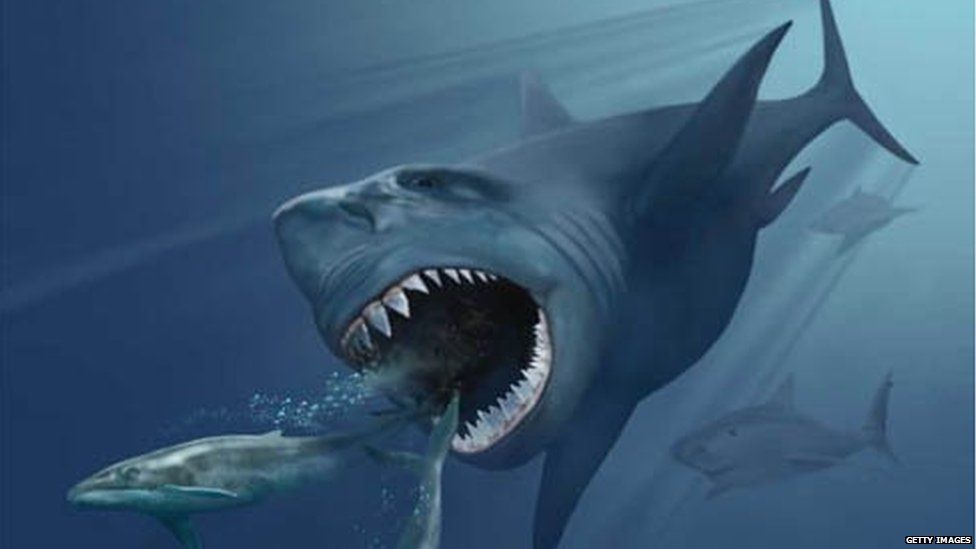
Artist's impression of a megalodon
Image caption,Megalodon was a giant and dwarfed all other sea creatures
Sammy Shelton holding a shark's tooth on a beach
Image caption,Sammy found the tooth on the beach beneath Bawdsey’s eroding sandy cliffs while on holiday on 30 May

Photographs of the find were sent to Prof Garrod, a broadcaster and evolutionary biologist at the University of East Anglia in Norwich.

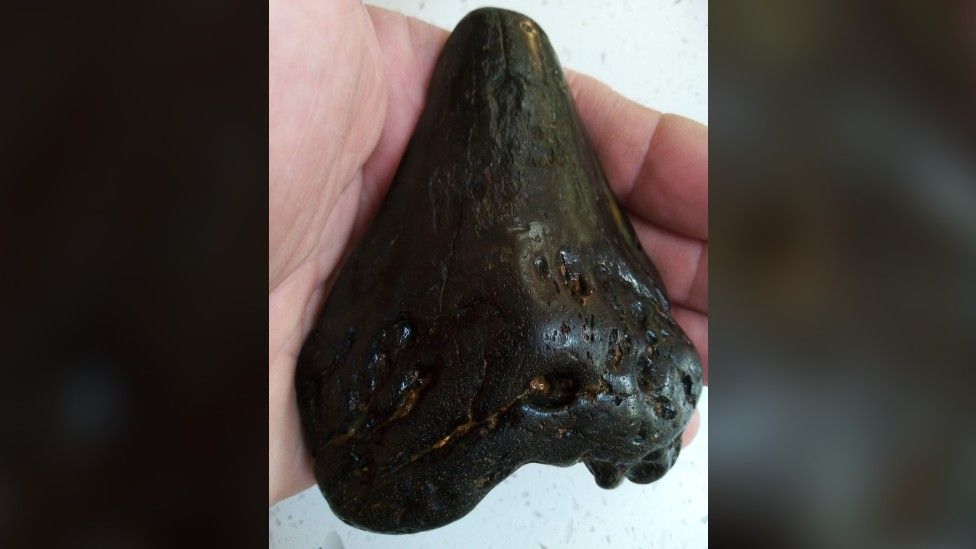
“It belonged to a megalodon, the largest ever shark – and its teeth are not often found around the UK coastline,” he said.

“Maybe just a handful a year, but this is a particularly good example, in really good condition, whereas they are usually quite worn when found.”

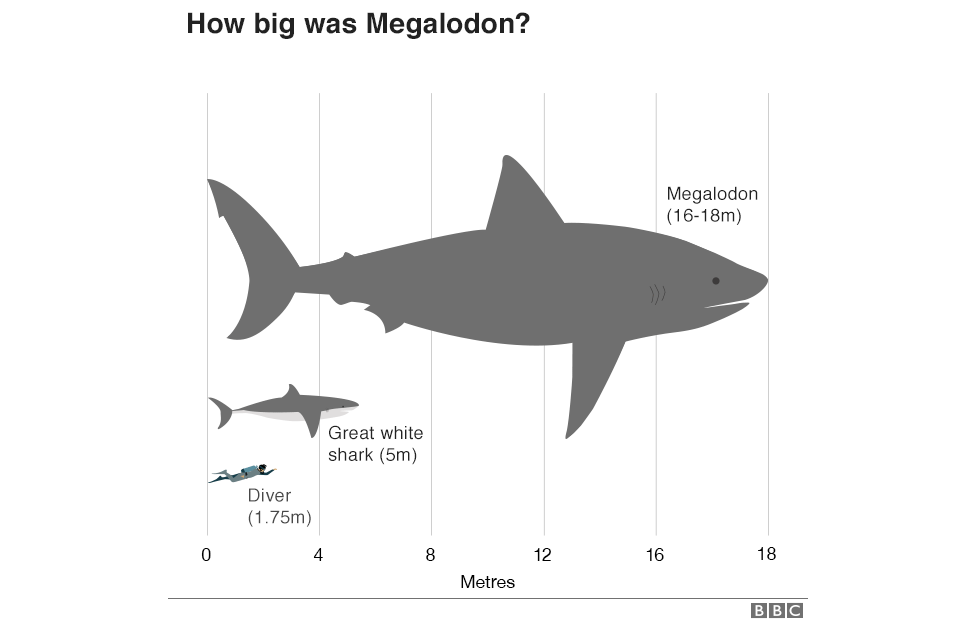
Megalodon was a maximum of 16 - 18 metres long, great white sharks are 5 metres and humans about 1.75 metres

The megalodon could grow up to 18m (60ft) in length, scientists estimate, and weigh up to 60 tonnes, he said.

Dwarfing anything else swimming in the waters at the time, these were “specialist whale eaters – they were ambush hunters,” Prof Garrod said.

Shark's tooth in a hand
Image caption,The tooth was said to be in very good condition

The megalodon dominated all the seas around the world other than those parts of the oceans surrounding Antarctica.

presentational grey line

The megalodon

  • The cartilaginous fish (whose skeleton is made of cartilage rather than bone) was a carnivore and had no known predators
  • It could eat anything it liked, but its favourite food was whales, although seals would also have been on the menu
  • Most of this shark’s hunting was in the open sea (juveniles lived closer to shore) and it attacked its prey near the surface, when it came up for air
  • Megalodon could swim at high speed in short bursts so tended to rush its prey from beneath
  • It would first aim to disable its prey by injuring a flipper or the tail, then once unable to swim properly, the victim would be easy to finish off
  • Lived from about 20 million years ago, long after the dinosaurs became extinct 65 million years ago

Source: BBC Science

presentational grey line

The name means “big tooth” and the giants were active from about 22 million years ago until about three million years ago when they became extinct.

Sammy’s find was “a really big thing” for the little boy, Prof Garrod said.

“Not many people who look for a megalodon tooth actually find one,” he said.

“I know – I’ve been searching since I was a child and I knew all the beaches around the area – but I still haven’t found my megalodon.”

Shark's tooth next to a ruler
Image caption,The tooth measures about 10cm

Sammy’s excitement has been shared with his friends at school, and he took the tooth to his beaver cubs group, after which he was awarded his explorer badge, his father said.

Sammy described the “massive” tooth as his best-ever find, and said it was just lying there on the sand and pebbles.

BBC

Elon Musk says he would allow Donald Trump back on Twitter

Trump was barred from the platform in January 2021 in the final days of his presidency amid unrest following the Jan. 6 attack on the U.S. Capitol.

Tech billionaire Elon Musk said Tuesday that he would allow former President Donald Trump back on Twitter after Musk completes his plan to buy the company, giving the most concrete example yet of how his vision of social media would play out in reality.

Musk said at an event sponsored by The Financial Times that it was “morally bad” and “foolish in the extreme” for Twitter to “permanently suspend” Trump in January 2021 after Trump’s supporters violently stormed the U.S. Capitol, according to a video of the event posted online.

“I do think that it was not correct to ban Donald Trump,” Musk, the CEO of Tesla, said at the newspaper’s Future of the Car event by remote video.

“I think that was a mistake, because it alienated a large part of the country and did not ultimately result in Donald Trump not having a voice,” he said, citing Trump’s newly launched tech platform, Truth Social.

“I would reverse the permanent ban,” Musk said.

The heavyweight Cattle breed in the World

Chianina

The Chianina is an Italian breed of cattle, formerly principally a draught breed, now raised mainly for beef. It is the largest and one of the oldest cattle breeds in the world. The famous bistecca alla fiorentina (‘beefsteak Florentine style’) is produced from its meat.

One of the oldest breeds of cattle, the Chianina originates in the area of the Valdichiana, from which it takes its name, and the middle Tiber valley. Chianina cattle have been raised in the Italian regions of Tuscany, Umbria and Lazio for at least 2200 years.

Chianina_Bulle

The Chianina is both the tallest and the heaviest breed of cattle. Mature bulls stand up to 1.8 m (5 ft 11 in), and castrated oxen may reach 2 m (6 ft 7 in). It is not unusual for bulls to exceed 1,600 kg (3,500 lb) in weight. Males standing over 1.51 m (4 ft 11 in) at 12 months are considered top-grade. A Chianina bull named Donetto holds the world record for the heaviest bull, reported by one source as 1,740 kg (3,840 lb) when exhibited at the Arezzo show in 1955, but as 1,780 kg (3,920 lb) and 1.85 m (6 ft 1 in) tall at the age of 8 by others including the Tenuta La Fratta, near Sinalunga in the province of Siena, where he was bred. Cows usually weigh 800–900 kg (1,800–2,000 lb), but commonly exceed 1,000 kg (2,200 lb); those standing over 1.65 m (5 ft 5 in) are judged top-grade. Calves routinely weigh over 50 kg (110 lb) at birth. The coat of the Chianina is white; very slight grey shading round the eyes and on the foreparts is tolerated. The skin, muzzle, switch, hooves and the tips of the horns are black.

At the end of 2010 there were 47,236 head registered in Italy, of which more than 90% were in Tuscany, Umbria and Lazio; it is, after the Marchigiana, the second indigenous beef breed of Italy.

Chianina1

Don’t want one these beasts to get agitated when you are nearby.

Chianina2
Chianina3

Their history as draft animals means that Chianinas were bred for docile temperaments, as they had to work closely with people. That good disposition is important in a cow as large as the Chianina.

Chianina4