







A couple comic book covers.


The lost city of Caral boasts pyramids just as old as those in Egypt and is the oldest city in the New World.
Relatively speaking, the Incas are recent history. One unfortunate consequence of the fame of the Incas is that they tend to crowd out the long and rich history of the region with its many kingdoms and civilizations that went before. Some pre-Inca cultures were incorporated into the Inca Empire, while others were ancient history by the time the Incas appeared on the scene.
The oldest city now known in the Americas is that of Caral. It flourished at around the same time as the Egyptian pyramids were being built. The ruins of ‘Sacred City of Caral-Supe’ or simply ‘Caral,’ is a reminder of just how old the history of what is today Peru really is. Another ancient pre-Inca city in the Peruvian desert to explore is Chan Chan. Peru is a country with a very rich history.
Caral is considered both the oldest (known) city in the Americas and one of the oldest in the whole world. It history stretches back around 5000 years rivaling the age of Ancient Egypt and its pyramids. No other site in the Americas has been found with Caral’s diversity of monumental buildings and ceremonial and administrative functions.
The city of Caral was part of the ancient Caral culture. It is believed to have developed between 3000 and 1800 BC and is considered the oldest of the pre-Hispanic civilizations.
Caral Culture: Developed Between 3000 and 1800 BC
To put that into context, that is much older than the civilizations of Mesoamerica. The Olmec civilization is considered a progenitor to the complex civilizations of Mesoamerica (the Olmecs were responsible for the “colossal heads” and the first use of chocolate). But the Caral Culture is believed to have developed around 1,500 years earlier than the Olmec culture.
As is understood now, Caral could be thought of as the cradle of Andean civilization – and eventually the Incas. It appears that Caral was the model urban design that was subsequently adopted by Andean civilizations over the following four millennia.

Exceptionally well-preserved, the site is impressive in terms of its design and the complexity of its architectural, especially its monumental stone and earthen platform mounts and sunken circular courts. UNESCO
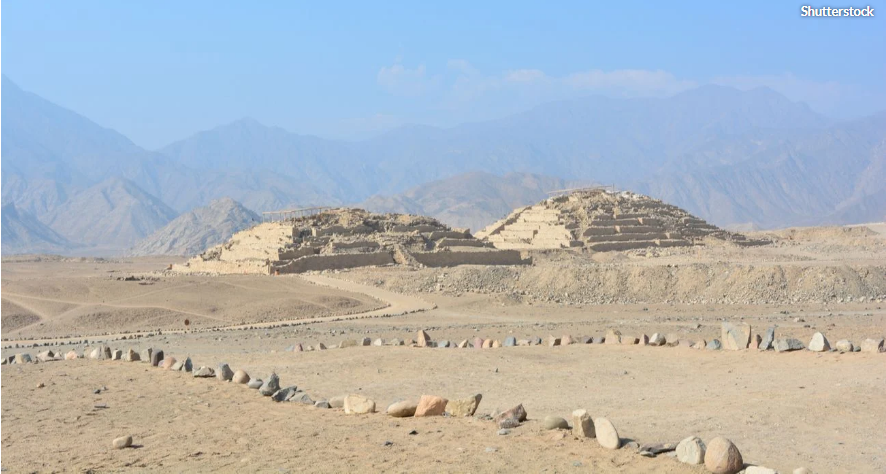
As one visits Caral today, one will see a windswept desert with what appears to be six dunelike mounds. But these are not works of nature, they are human-made pyramids. They are what remains of a city that once flourished there almost 5,000 years ago.
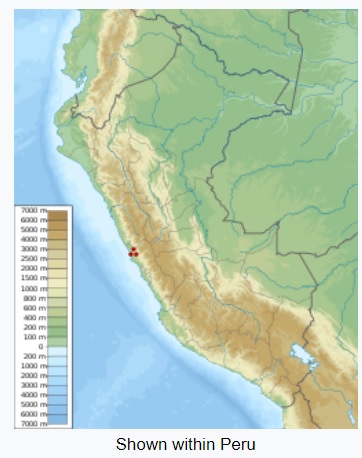
Closely associated with the city of Caral was the early fishing city of Áspero or El Áspero situated on on the west coast of Peru, near the mouth of the Supe River. Here excavations have found the remains of human sacrifices (two children and a newborn). It also has large platform mounds.
The Supe Valley has fertile lands and is close to the sea. The ancient inhabitants were fishermen, farmers, and seafarers.
The city is believed to have been the home of over 3,000 inhabitants and is now the best studied and one of the largest Norte Chico sites known.

Caral is today an important archeological site with the remains of what was the main city of the Caral civilization. It is located in present-day Peru in the Supe Valley near the town of Caral – around 180 km or 110 miles north of Lima.
Caral was inhabited between approximately 26th century BC and 20th century BC, and the site includes an area of more than 60 hectares (150 acres). Caral has been described by its excavators as the oldest urban center in the Americas, a claim that was later challenged as other ancient sites were found nearby, such as Bandurria, Peru. Accommodating more than 3,000 inhabitants, it is the best studied and one of the largest Norte Chico sites known.
The city was declared a UNESCO World Heritage Site in 2009. In early 2021, tensions arose between squatters claiming land rights and archaeologists researching the site as housing construction encroached on the site.
Shady’s findings suggest it was a gentle society, built on commerce and pleasure. No indications of warfare, such as battlements, weapons, or mutilated bodies, have been found at Caral. This contrasts with the older civilisation of Sechin Bajo where depictions of weapons are found. In one of the temples, they uncovered 32 flutes made of condor and pelican bones and 37 cornetts of deer and llama bones. One find revealed the remains of a baby, wrapped and buried with a necklace made of stone beads.

A jaw-dropping video from Mexico shows the moment when a humpback whale burst forth from beneath the surface of a bay and landed onto a boat of unsuspecting passengers. The wild incident reportedly occurred earlier this month off the coastal community of Topolobampo as a handful of small vessels were out on the water. Whatever serenity may have been experienced that day was no doubt shattered when one particular boat ventured too close to a juvenile whale and wound up causing the giant creature to go on the attack.
In the shocking footage of the encounter, the agitated aquatic animal can be seen suddenly breaching from the water and rising high up into the air before crashing down onto the boat as horrified witnesses scream out in terror. The beast’s proverbial pancaking of the vessel left its four unfortunate passengers needing to be hospitalized with two sustaining significant injuries. The boat itself was also badly damaged, though it surprisingly managed to stay afloat despite having been slammed by seven tons of ornery whale.

A test card, also known as a test pattern or start-up/closedown test, is a television test signal, typically broadcast at times when the transmitter is active but no program is being broadcast (often at sign-on and sign-off).
Used since the earliest TV broadcasts, test cards were originally physical cards at which a television camera was pointed, allowing for simple adjustments of picture quality. Such cards are still often used for calibration, alignment, and matching of cameras and camcorders. From the 1950s, test card images were built into in monoscope tubes which freed up the use of TV cameras which would otherwise have to be rotated to continuously broadcast physical test cards during downtime hours.

Electronically generated test patterns, used for calibrating or troubleshooting the downstream signal path, were introduced in the late-1960s. These are generated by test signal generators, which do not depend on the correct configuration (and presence) of a camera, and can also test for additional parameters such as correct color decoding, sync, frames per second, and frequency response. These patterns are specially tailored to be used in conjunction with devices such as a vectorscope, allowing precise adjustments of image equipment.
The audio broadcast while test cards are shown is typically a sine wave tone, radio (if associated or affiliated with the television channel) or music (usually instrumental, though some also broadcast with jazz or popular music).
Digitally generated cards came later, associated with digital television, and add a few features specific of digital signals, like checking for error correction, chroma subsampling, aspect ratio signaling, surround sound, etc. More recently, the use of test cards has also expanded beyond television to other digital displays such as large LED walls and video projectors.



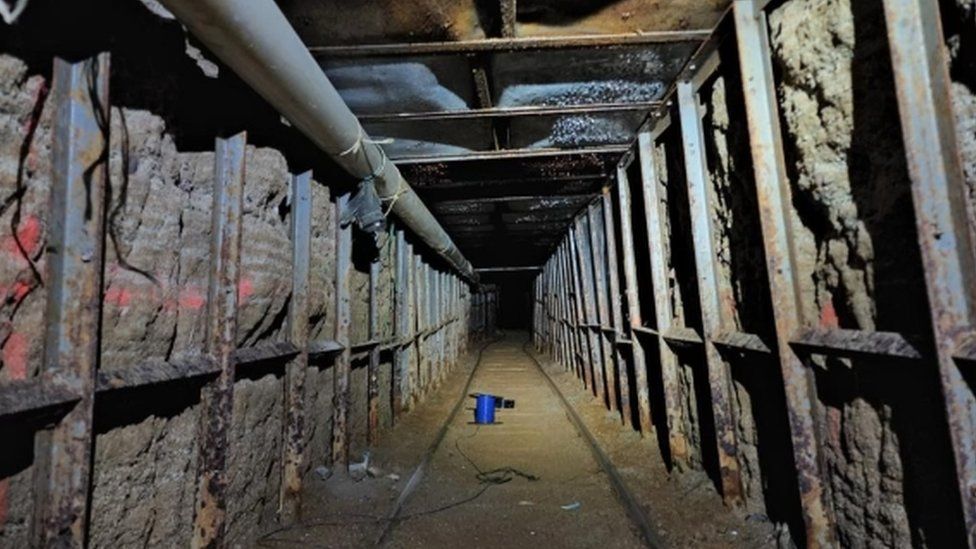
A huge drugs tunnel has been found running from Tijuana in Mexico to a warehouse in San Diego in the US.
With a length of 1,744ft (531m), the passage had a rail track, electricity and a ventilation system.
US authorities had been carrying out surveillance at a property previously used as a stash house for smuggling cocaine when they made the discovery.
They seized cocaine, methamphetamine and heroin. Six people are being held on drug-trafficking charges.
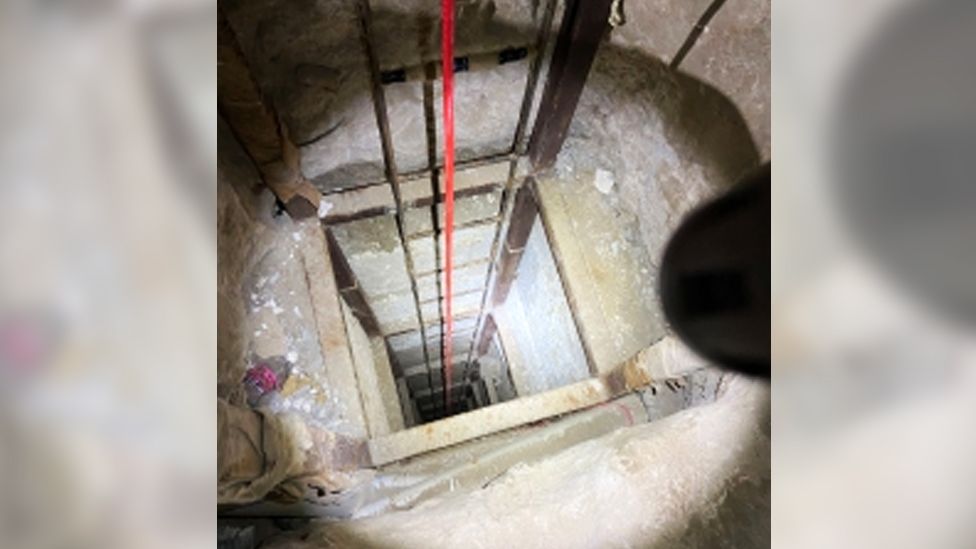
The US Attorney’s Office for the Southern District of California said the tunnel was 61ft (18m) deep and 4ft (1m) in diameter.
Prosecutors say that before the discovery, officers saw several vehicles come and go from the property in Tijuana and the warehouse on Friday 13 May.
They were then stopped and searched, the drugs were seized and arrests were made.
When officers entered the warehouse, the cross-border tunnel exit point was found carved out of the floor.
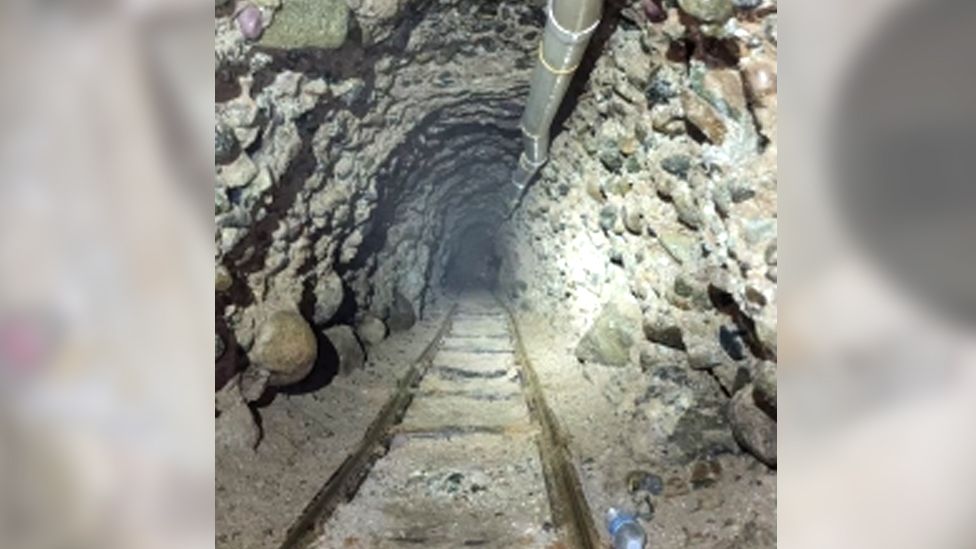
The attorney’s office said 1,762lb (799 kg) of cocaine, 164lb (74kg) of methamphetamine and 3.5lb (1.5kg) of heroin had been seized.
The suspects, aged between 31 and 55, could face a life sentence in prison and a $1m fine if found guilty.
“There is no more light at the end of this narco-tunnel,” said US Attorney Randy Grossman.
“We will take down every subterranean smuggling route we find to keep illicit drugs from reaching our streets and destroying our families and communities.”
The last tunnel found in California was in 2020. That one is also the longest to date, measuring 4,309ft (1,313m) in length. Since 1993, 90 of these types of secret passage have been discovered.
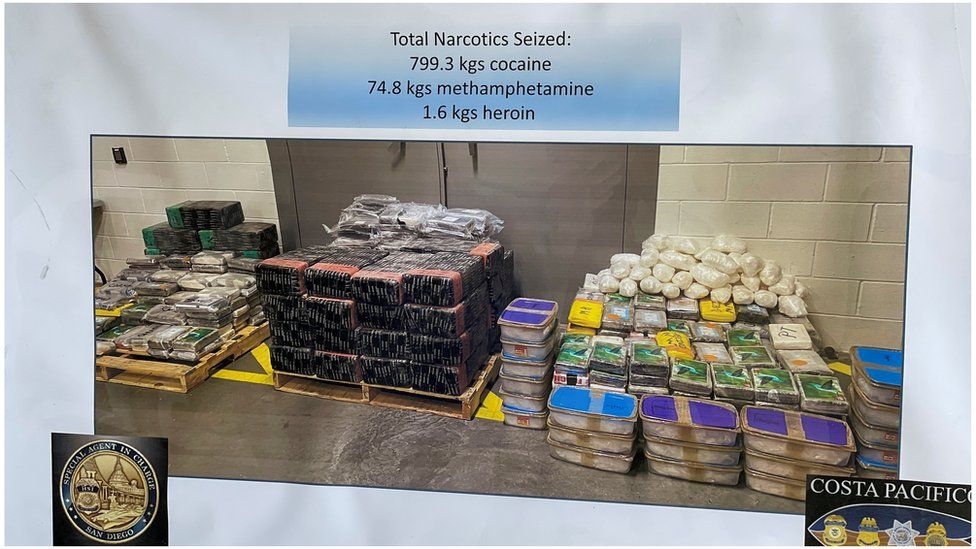
A picture of the drugs seized during this investigation
BBC
Lingotto is a district of Turin, Italy, and the location of the Lingotto building in Via Nizza. This building once housed an automobile factory built by Fiat. Construction started in 1916 and the building opened in 1923. The design (by young architect Matté Trucco) was unusual in that it had five floors, with raw materials going in at the ground floor, and cars built on a line that went up through the building. Finished cars emerged at rooftop level, where there was a rooftop test track. It was the largest car factory in the world at that time. For its time, the Lingotto building was avante-garde, influential and impressive—Le Corbusier called it “one of the most impressive sights in industry”, and “a guideline for town planning”. 80 different models of car were produced there in its lifetime, including the Fiat Topolino of 1936.


The factory became outmoded in the 1970s and the decision was made to finally close it in 1982. The closure of the plant led to much public debate about its future, and how to recover from industrial decline in general. An architectural competition was held, which was eventually awarded to Renzo Piano, who envisioned an exciting public space for the city. The old factory was rebuilt into a modern complex, with concert halls, theatre, a convention centre, shopping arcades and a hotel. The eastern portion of the building is the headquarter of the Automotive Engineering faculty of the Polytechnic University of Turin. The work was completed in 1989. The track was retained, and can still be visited today on the top floor of the shopping mall and hotel.


I fact checked all of these using Snopes.com and Wikipedia and they seem to be accurate.












The platypus is one of the few living mammals to produce venom. The venom is made in venom glands that are connected to hollow spurs on their hind legs; it is primarily made during the mating season. While the venom’s effects are described as extremely painful, it is not lethal to humans.
The different chemicals in the venom have a range of effects from lowering blood pressure to causing pain and increasing blood flow around the wound. Coagulating effects have been seen during experiments on laboratory animals, but this has not been observed consistently. Unlike snake venom, there appears to be no necrotising component in the platypus’s venom. While some muscle wastage has been observed in cases of envenomation in humans, it is likely due to the inability to use the limb while the effects of the venom persist. It is unknown whether the pain caused is a result of the associated edema around the wound or the venom has a component that acts directly on the pain receptors.
Although powerful enough to paralyse smaller animals, the venom is not lethal to humans. Yet, it produces excruciating pain that may be intense enough to incapacitate a victim. Swelling rapidly develops around the entry wound and gradually spreads outward. Information obtained from case studies shows that the pain develops into a long-lasting hyperalgesia that can persist for months but usually lasts from a few days to a few weeks. A clinical report from 1992 showed that the severe pain was persistent and did not respond to morphine.
In 1991 Keith Payne, a former member of the Australian Army and recipient of the Victoria Cross (Australia’s highest award for valour), was struck on the hand by a platypus spur while trying to rescue the stranded animal. He described the pain as worse than being struck by shrapnel. A month later he was still experiencing pain in that hand. In 2006, Payne reported discomfort and stiffness when carrying out some physical activities such as using a hammer. Wikipedia.






 The MarkoZen Blog