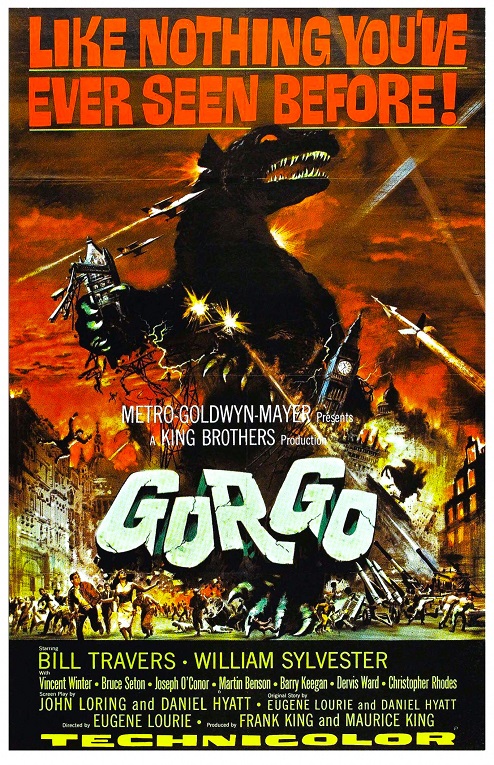
Two Godzilla movies had been made before the Brits got monster fever and unleashed the Beast Gorgo!
Gorgo is a 1961 science fiction giant monster film directed by Eugène Lourié, an international co-production of the United Kingdom, the United States, and Ireland. The story is about a ship’s captain and his pearl diving crew who, with other fishermen on an island and an orphaned boy, discover and capture a gigantic amphibious sea creature and take it to London for public exhibition. This results in the creature’s much larger mother invading London in search of her offspring, causing catastrophic destruction across the city.
The film was originally intended to be set in Japan as an homage to Godzilla; the setting was then changed to France, and then finally to the British Isles. According to Bill Warren’s film book Keep Watching the Skies, southern Australia was also considered for a locale, but the producers supposedly decided that audiences “wouldn’t care” if a monster attacked Australia; its alleged lack of worldwide recognisable landmarks for Gorgo to destroy was also cited as a consideration.
The location where Gorgo first appears, the fictional Nara Island, is an anagram of the Aran Islands, off Ireland’s west coast. The exterior scenes set in Ireland were filmed at Bulloch Harbour and Coliemore Harbour, both near the County Dublin town of Dalkey. Other scenes were filmed at the MGM-British Studios in Borehamwood, Hertfordshire.
Scenes where Gorgo is driven through the streets of London were shot on a Sunday morning, when there was little other traffic. The film studio wanted Gorgo to fight the military, despite director Eugène Lourié’s objections.
Gorgo’s special effects were achieved by suitmation and miniaturisation, a technique pioneered in the Godzilla films. The younger Gorgo was smaller than most giant monsters, so the sets around him were built to a larger scale, leading to an enhanced sense of realism. The creatures were also shot with then-pricey slow-motion cameras to create a sense of scale. The effects were complex and are well respected by special effects artists and fans. The film is also sometimes praised for its innovative ending, in which, unusually for such films, the monsters survive and prevail.
Police in the Chinese city of Chongqing has begun using specially-trained squirrels in their war against drug traffickers.
The Police Dog Brigade of the Criminal Police Detachment in Hechuan District, Chongqing has successfully bred the first batch of drug-sniffing squirrels in China. The breakthrough was part of the country’s national key research and development project, which sought, among others, the creation of new training methods for anti-drug animals. Apparently, scientists have been aware of squirrels’ keen sense of smell for a long time, but rodent training methods were apparently not advanced enough until now.
Chinese news outlets recently reported that the Police Dog Brigade of Hechuan District had successfully trained six drug-detecting squirrels which will soon start working alongside police, helping them find hidden forbidden substances.
Yin Jin, the lead trainer of the Hechuan police dog brigade, told journalists that he and his team managed to train the six squirrels using internally-developed technology and training methods. The rodents were reportedly trained to scratch at the place where they detected drugs.
Tests showed that not only are the squirrels just as efficient as sniffer dogs at detecting drugs, but they also have the added advantage of being smaller, faster, and the ability to reach high places that dogs could never check.
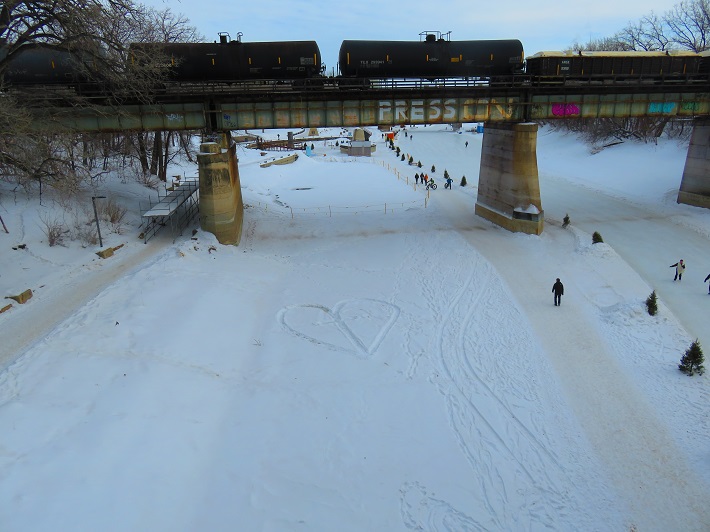
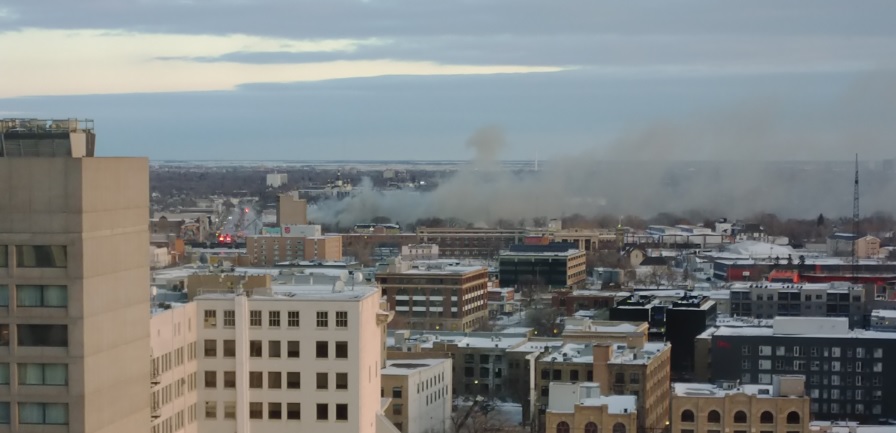
Canadian Museum For Human Rights and CN Rail main line.
Snowmobiles on the Red River. This is rare to see. As far as I could determine it is illegal to ride off road vehicles within Winnipeg city limits, this includes snowmobiles.
Hardcore Christmas decorations on an apartment balcony.
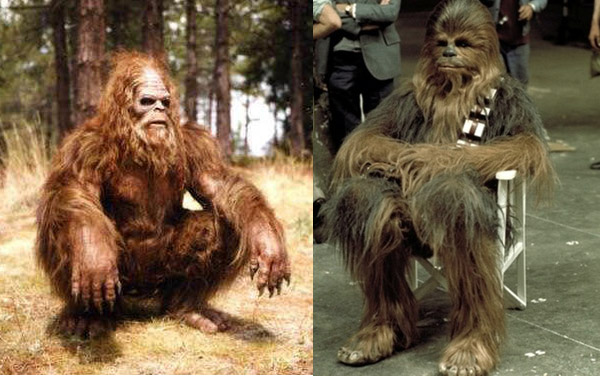
Are Sasquatches related to Wookies? The possibilities are mind-boggling.
Sasquatch having a crap at left, Wookie relaxing after a crap at right.
Rather than being a missing link between man and the apes, Bigfoot may possibly be an alien entity. This intriguing possibility is derived from evidence in several solid UFO cases.
The earliest clues date back to 1888, when a cattleman described an encounter with friendly Indians in Humboldt County, California. They led him to a cave where he saw a hefty humanoid creature covered in long, shiny black hair, with no neck, sitting cross-legged.
One Indian told him three of these “Crazy Bears” had been cast out of a small moon that dropped from the sky and landed.The “moon” then ascended back into the air. So it’s highly likely the “Crazy Bears” were really Bigfoots, and the “moon,” a spacecraft.
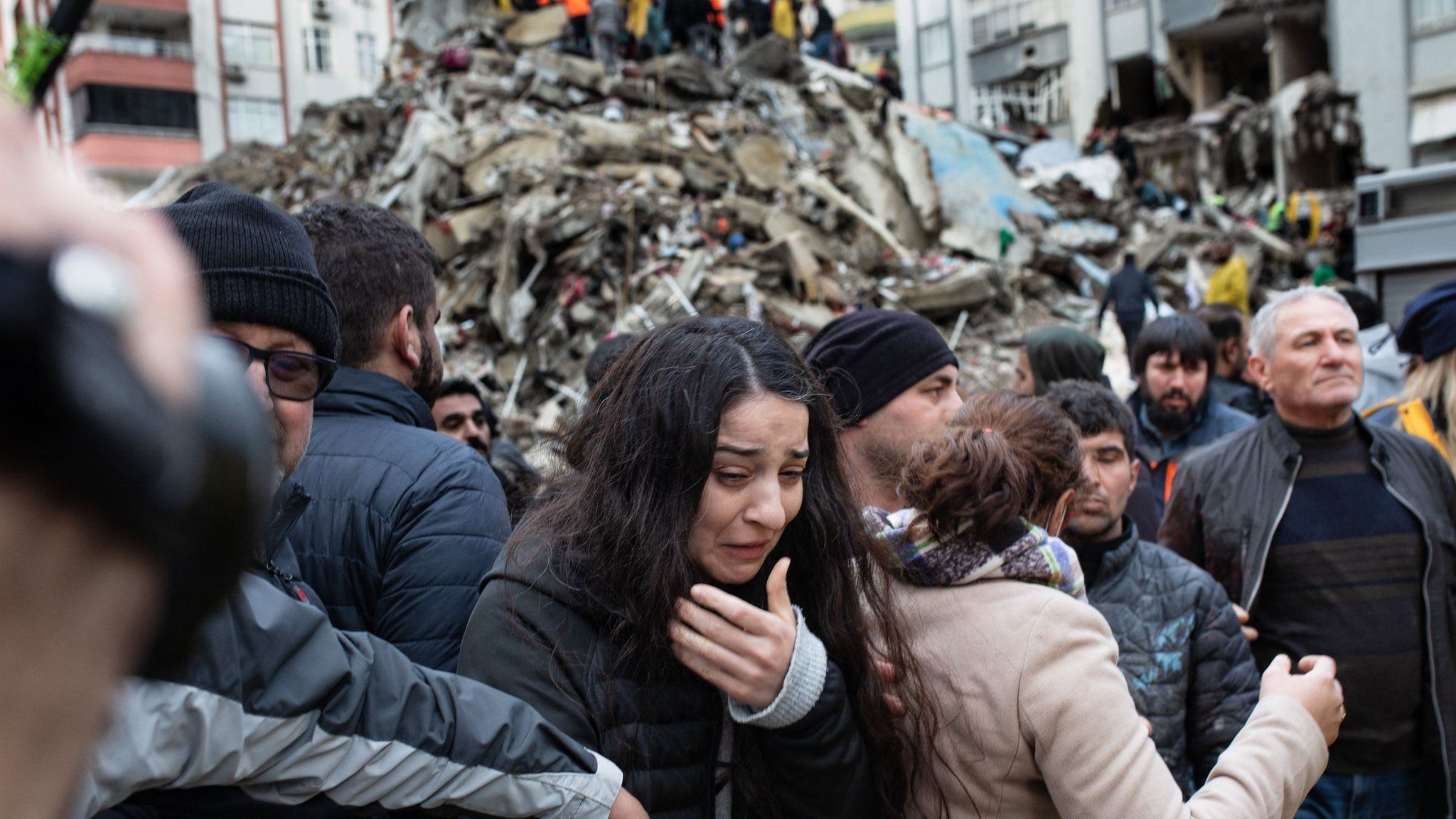
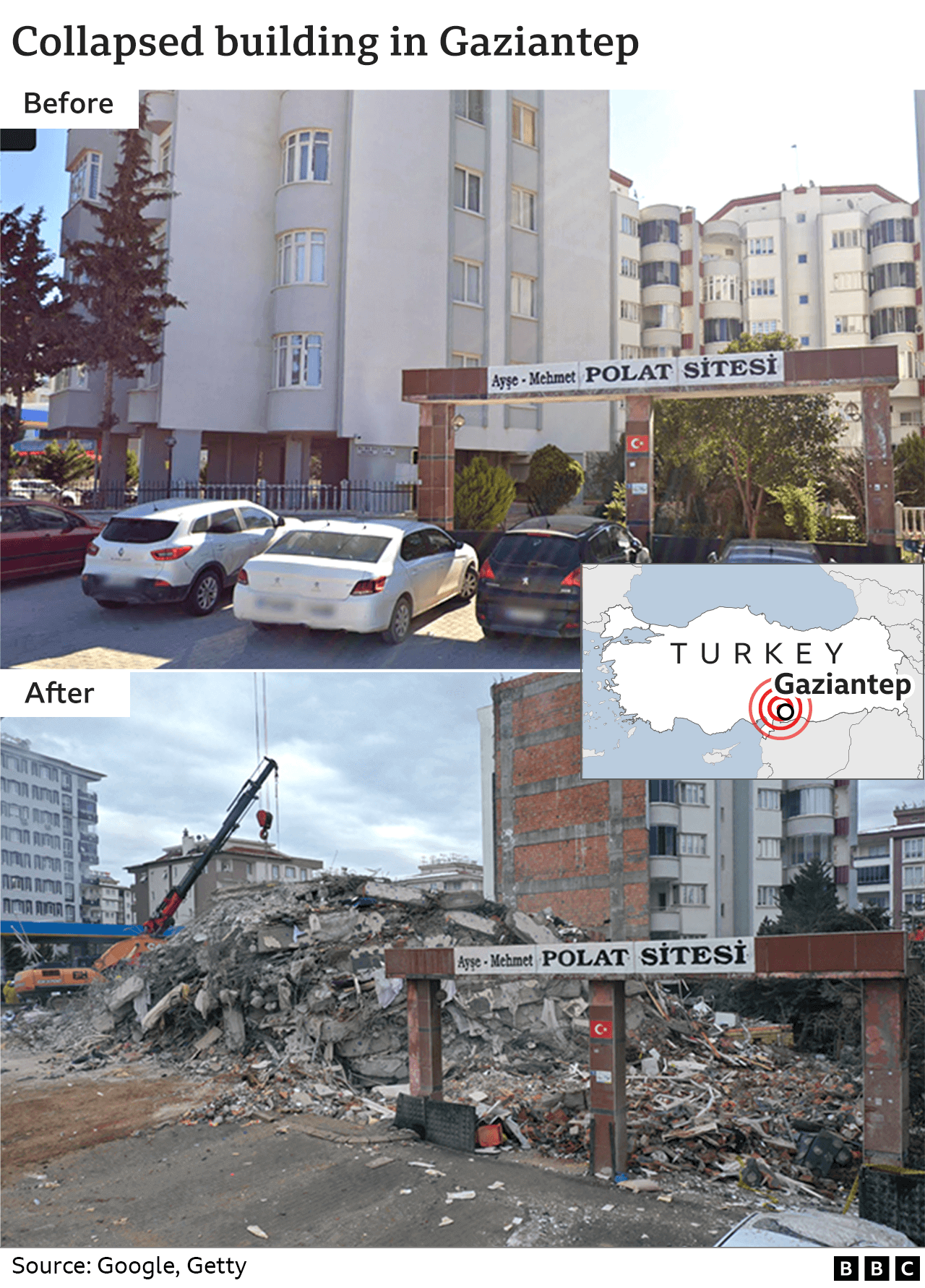
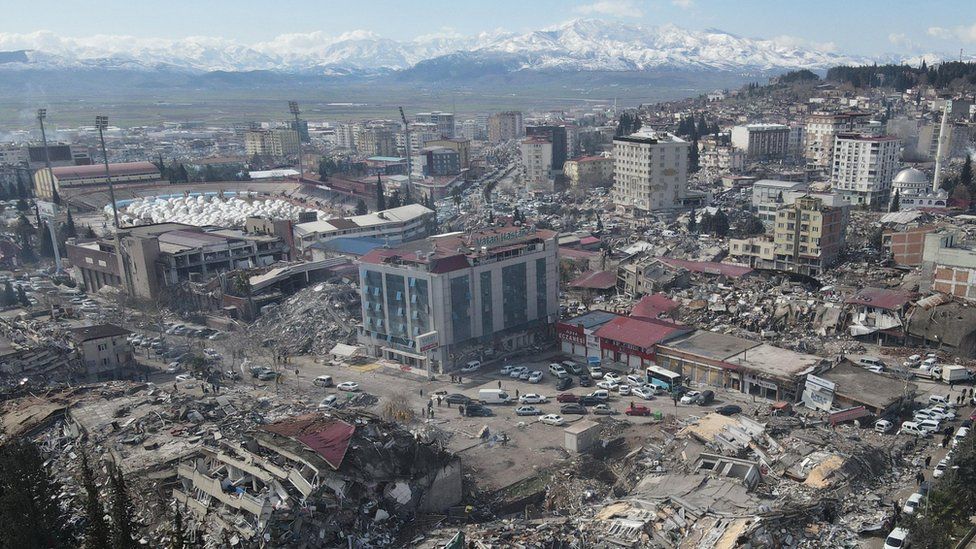
Two huge earthquakes and a series of aftershocks have hit Turkey, Syria and the surrounding region, killing more than 11,000 people and causing widespread destruction.
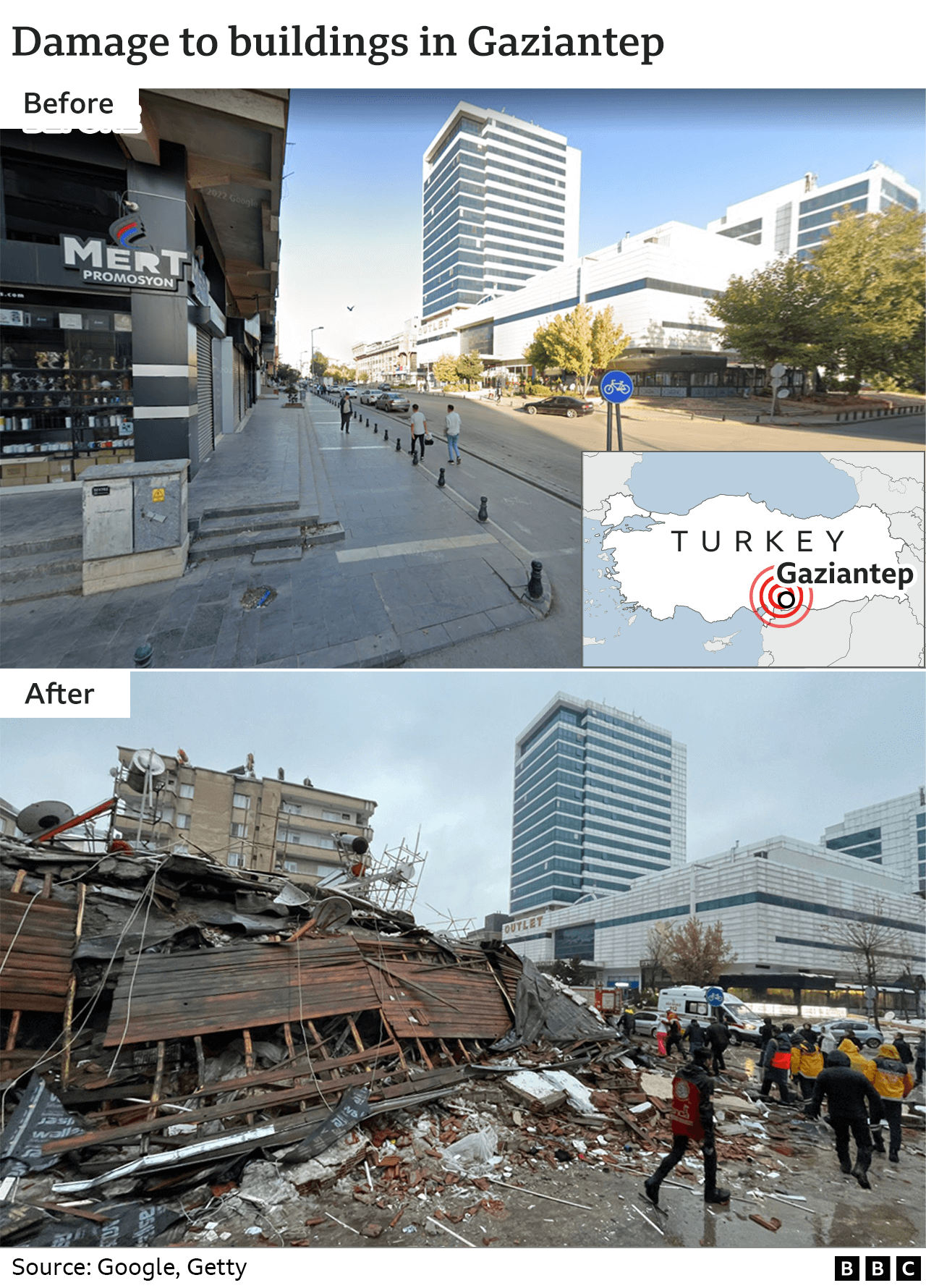
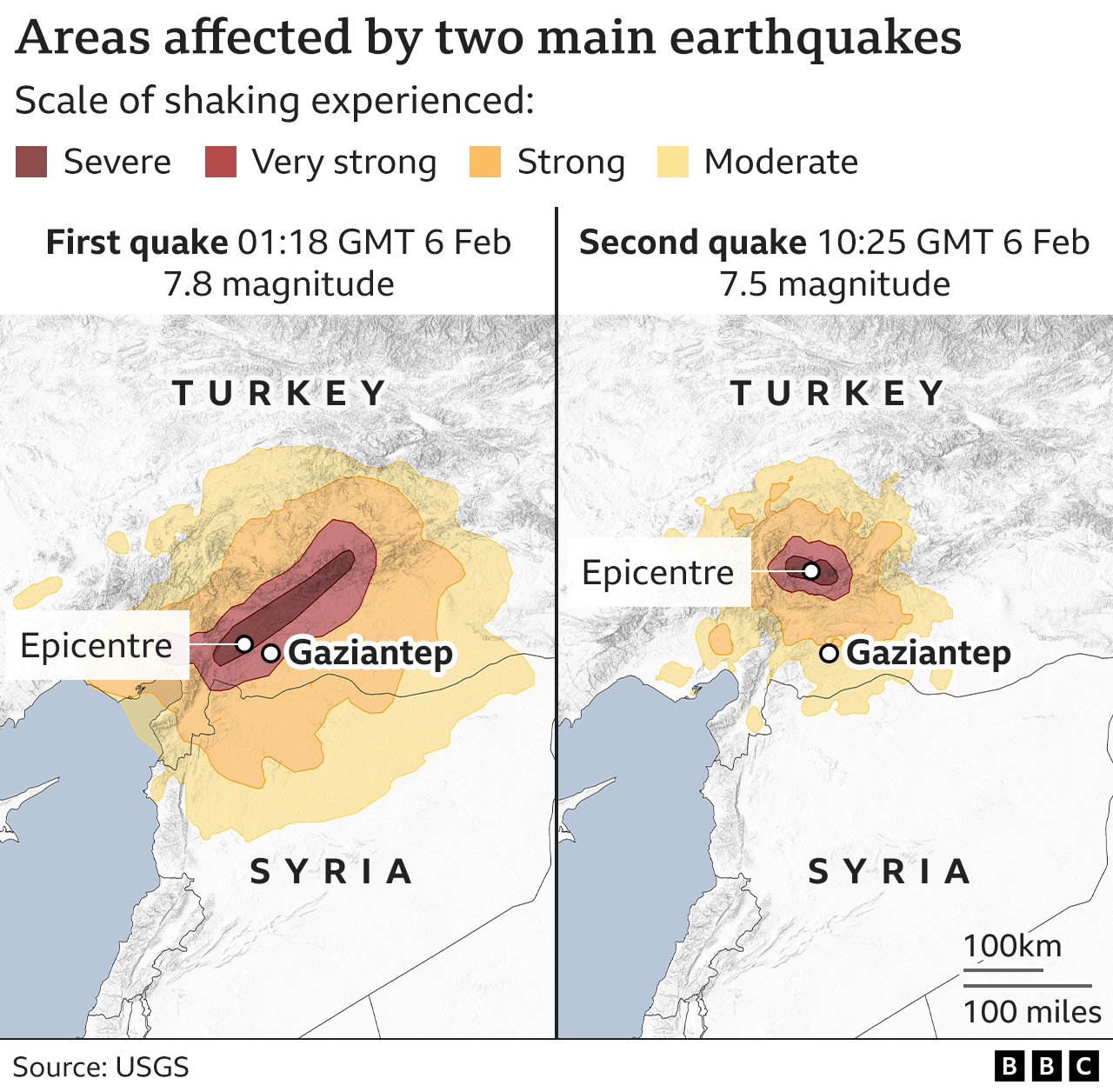
The first earthquake, which struck in the early hours of 6 February, was registered as 7.8, classified as “major” on the official magnitude scale. Its epicentre was near Gaziantep – a city of more than two million people.
The intensity of the tremors also brought down tower blocks and public buildings in northern Syria and the quake was felt as far away as Cyprus and Lebanon, both about 250 miles (400km) from the epicentre.
In Turkey, more than 8,500 people are confirmed to have died, with tens of thousands injured and thousands of buildings destroyed.
The first earthquake was followed by numerous aftershocks, including one quake which was almost as large as the first – registering as magnitude 7.5 – about nine hours later with its epicentre about 60 miles (100km) further north in the Elbistan district of Kahramanmaras province.
Image caption,The second quake devastated the city of Kahramanmaras
On Tuesday, Turkey’s President Recep Tayyip Erdogan declared a three month state of emergency in the south-east of the country, covering 10 cities affected.
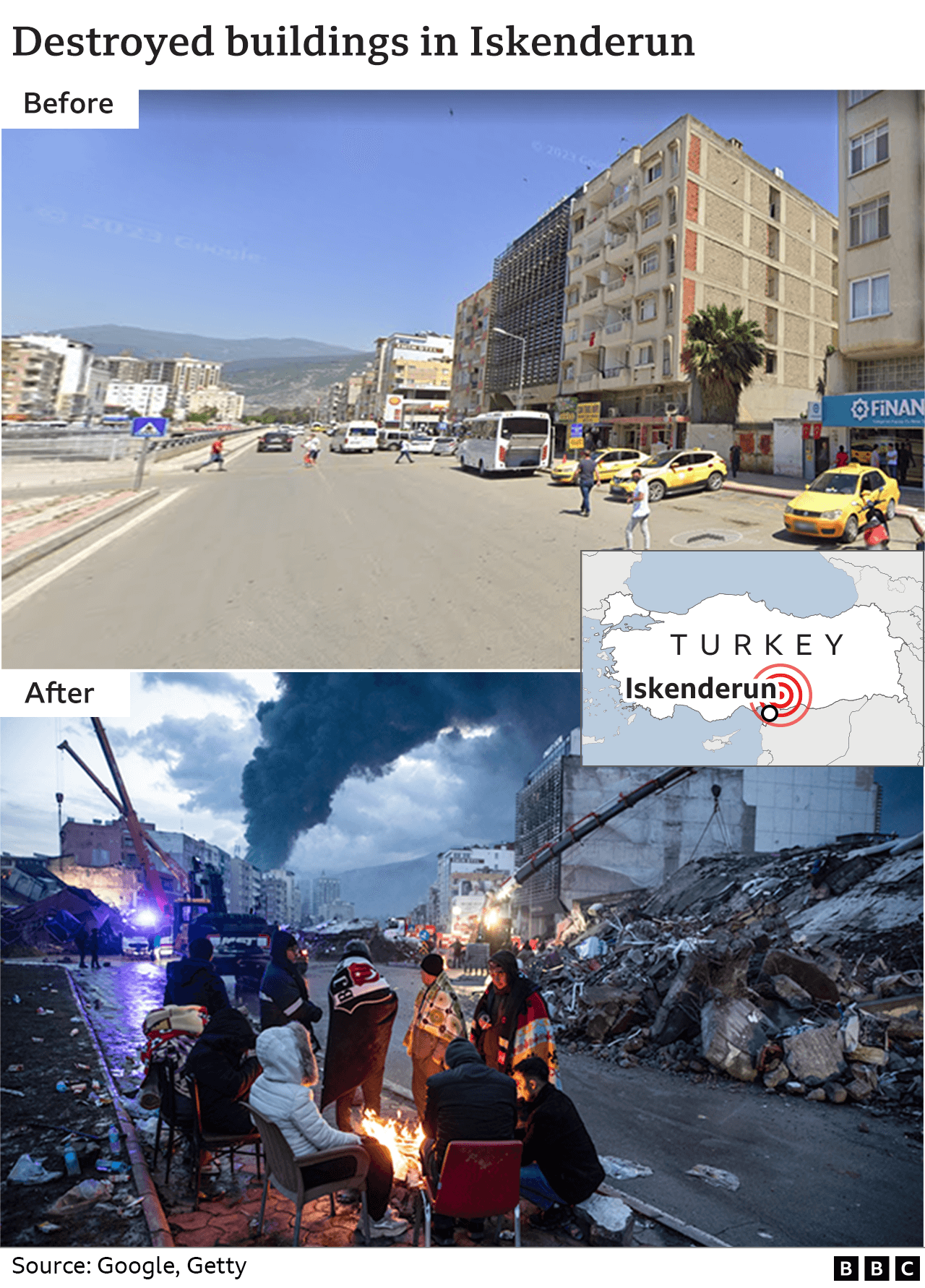
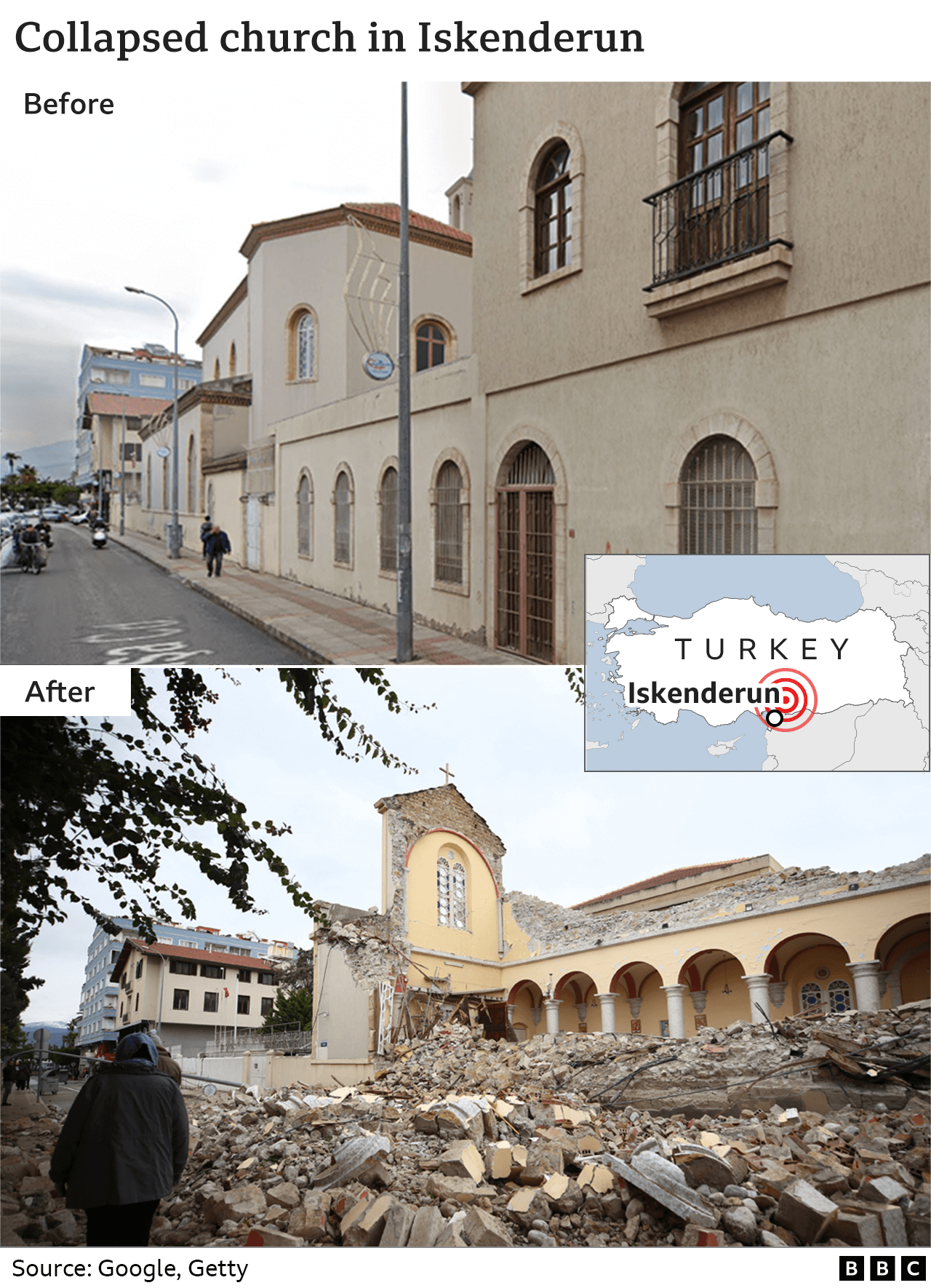
In the Mediterranean port city of Iskenderun, in the province of Hatay, about 75 miles (120km) from Gaziantep, buildings and docks were reduced to rubble.
A fire at the port of Iskenderun has also hampered aid efforts with many containers destroyed and those stuck in the port blocking supplies being brought in.
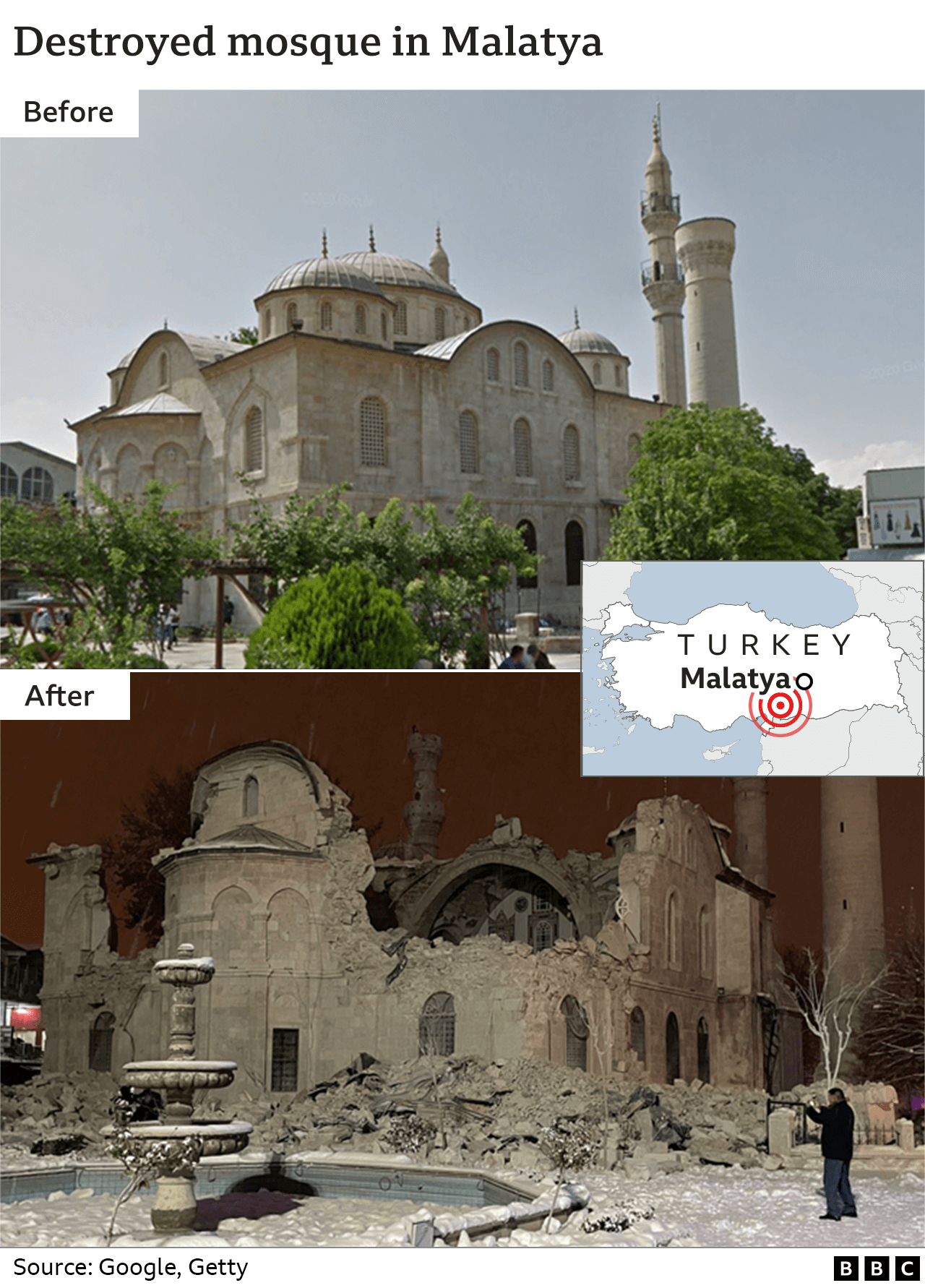
The historic Yeni Camii mosque, in Malatya, more than 100 miles (160km) from the epicentre, was extensively damaged. Its domes collapsed, leaving it exposed to the winter sky. The mosque was destroyed by a huge earthquake in 1894 and, after reconstruction, damaged by another quake in 1964.
Collapsing buildings killed more than 2,500 people across Syria. In the city of Aleppo, the ancient citadel ravaged by a decade of war has been further damaged by the quake.
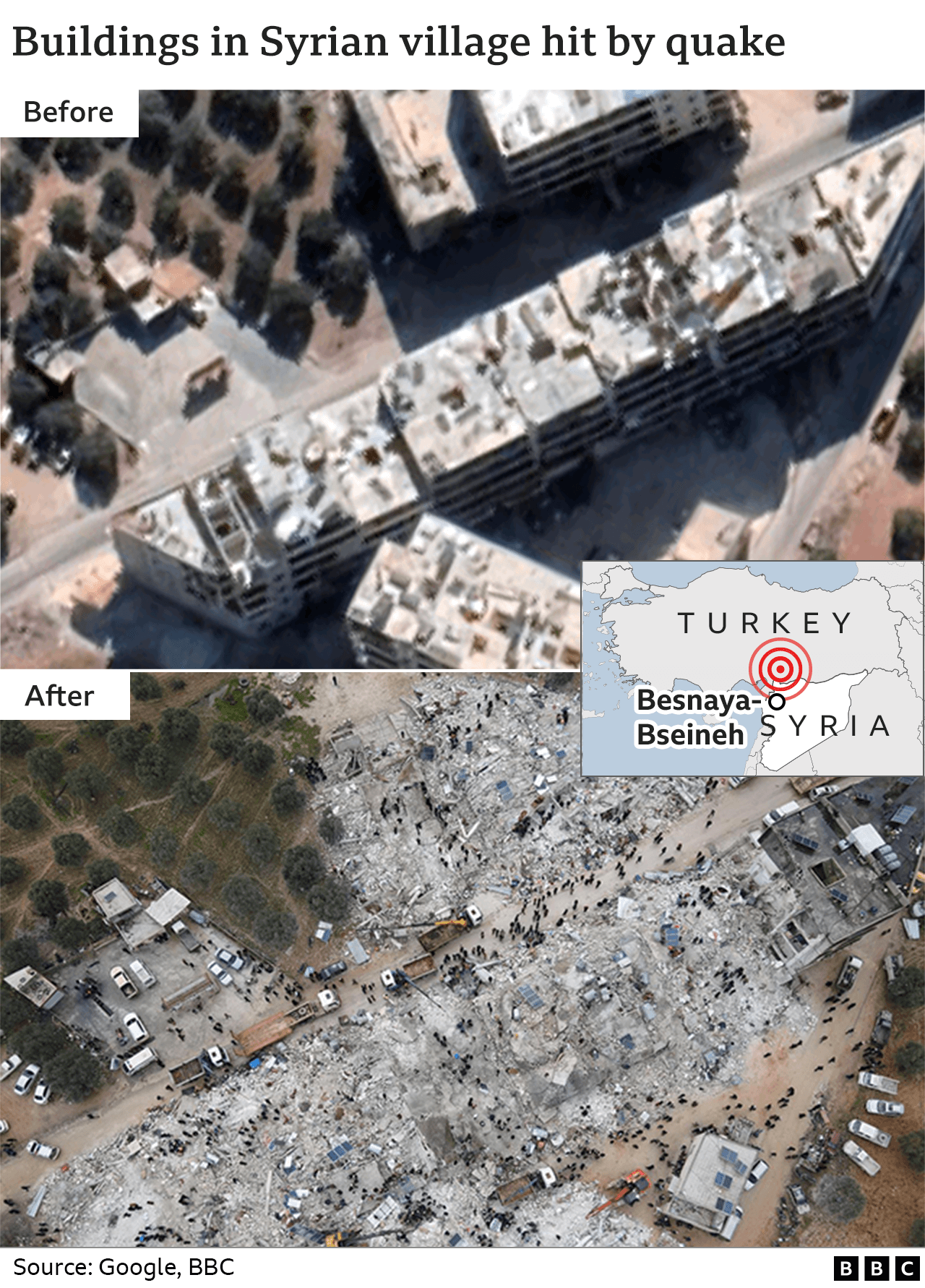
In the village of Besnaya-Bseineh, a large block of residential and commercial buildings was reduced to rubble.
I watched a movie the other day and when ‘The End’ text appeared a really catchy song started. So I listened to the song and began watching the credits. It seemed to never end, credit after credit with name after name. A question arose in my head; how many people are in a crew for a Hollywood film?
By Stephen Follows
Last week I ran a course in Malaysia for the Met Film School and the Malaysian Government. Malaysia is set to be a popular destination for Hollywood projects, thanks mostly to the 30% tax break and the brand new Pinewood Studio complex. The studio is not officially open yet but already ‘Marco Polo’ has set up shop and is hiring. The Malaysian government is funding courses to prepare locals for work on huge Hollywood productions and my course last week was for would-be…
The ancient Egyptian pyramids have stood for thousands of years and are among the world’s most enduring monuments. But what did the pyramids look like when they were first built?
A digital reconstruction of a Giza pyramid by Australian insurance company Budget Direct.
The Egyptian pyramids erupting from the sands at Giza are a testament to human ingenuity and engineering. Raised to mark the tombs of ancient pharaohs, these great structures have stood for thousands of years.
But over the millennia, the pyramids have changed, largely due to construction workers’ repurposing of in-demand materials and looting. So what did the pyramids look like when they were built?
When the ancient Egyptian pyramids were originally erected, both in Giza and elsewhere, they didn’t look sandy brown as they often do today; rather, they were covered in a layer of shiny sedimentary rock.
“All the pyramids were cased with fine, white limestone,” Mohamed Megahed(opens in new tab), an assistant professor at the Czech Institute of Egyptology at Charles University in Prague, told Live Science. The limestone casing would have given the pyramids a smooth, polished layer that shined bright white under the Egyptian sun.
Builders used around 6.1 million tons (5.5 million metric tons) of limestone during the construction of the Great Pyramid of Giza alone, according to National Museums Scotland(opens in new tab), which displays one of the original limestone blocks. The Great Pyramid — also called Khufu’s Pyramid after the pharaoh Khufu, who commissioned it during his reign (circa 2551 B.C. to 2528 B.C.) — is the largest and oldest of all the standing pyramids in Giza. However, its casing stones were later repurposed for other building work under Egyptian rulers, as was the case for most pyramid shells.
There’s evidence that the casing stones began being stripped under Tutankhamun’s reign (circa 1336 B.C. to 1327 B.C.), and this continued until the 12th Century A.D., Egyptologist Mark Lehner explained in a PBS NOVA(opens in new tab) Q&A thread. An earthquake in A.D. 1303 would also have loosened some of the stones, according to BBC News(opens in new tab).
Today, the Giza pyramids still retain some of their original limestone casing, though it looks slightly more weathered than in ancient times. “You can see it on the top of the Pyramid of Khafre in Giza,” Megahed said.
The Pyramids of Giza today. In order from left to right: The Pyramid of Menkaure, the Pyramid of Khafre and the Great Pyramid. (Image credit: WitR via Shutterstock)
The Pyramid of Khafre, named after the pharaoh Khafre (who reigned circa 2520 B.C. to 2494 B.C.), has casing stones leftover around its peak that give the impression that a second peak is wedged on top of the first. In ancient Egypt, this pyramid also had red granite casing around its lower levels, Egyptologist Miroslav Verner wrote in his book “The Pyramids: The Archaeology and History of Egypt’s Iconic Monuments(opens in new tab)” (The American University in Cairo Press, 2021). The third and smallest of the three main pyramids in Giza, the Pyramid of Menkaure — named after the pharaoh Menkaure, who reigned circa 2490 B.C. to 2472 B.C. — also sported red granite casing around its lower echelons.
There’s nothing at the top of the Giza pyramids today, but originally they hosted capstones — also called pyramidions — covered in electrum, a mix of gold and silver, according to Megahed. The pyramidions would have looked like pointy jewels at the tips of the pyramids.
Most pyramidions have been lost over time, but there are a few surviving examples in museums. These specimens reveal that pyramidions were carved with religious imagery. For example, the British Museum(opens in new tab) has a limestone pyramidion covered in hieroglyphics from Abydos, an archaeological site in Egypt, that depict deceased people worshipping the ancient Egyptian god Osiris and undergoing mummification from the jackal-headed Anubis.
Considering the pyramids’ former splendor, absent features today can appear like open wounds. Perhaps the best example of this is evident on the Pyramid of Menkaure. “When you see the Menkaure’s pyramid from the north, you can see a great gash, like a big depression,” Yukinori Kawae(opens in new tab), an archaeologist at Nagoya University’s Institute for Advanced Research in Japan, told Live Science.
The Pyramid of Menkaure’s gash may be a visual blight that wouldn’t have existed in ancient times, but the benefit of such damage is that today, it provides a window into the pyramids.
“This is also the important area for archaeologists because we can see the internal structures of the pyramids,” Kawae said.
A creepy piece of security camera footage from Peru shows what some believe to be the ghost of a little girl running through a store. The eerie video was reportedly captured last month at a shopping center in the city of Pucallpa and subsequently wound up being shared on TikTok, where it amassed over a million views in just a few days. In the footage, which appears to have been filmed after the store had closed, a small figure can be seen dashing down a hallway between racks of clothing. The curious trespasser then briefly lingers behind a display before running back to where it had come from at an incredible speed.
It has been suggested that the figure in the video could be the ghost of a girl who died when she was accidentally electrocuted at the shopping center back in 2018. That said, some media outlets have strangely postulated that the odd interloper is actually a goblin or similarly “diminutive being” like an elf. Meanwhile, skeptical observers argue that the ‘apparition’ is the result of some kind of trickery likely created by somehow altering the speed of the video. As of now, the nature of the figure remains a mystery.




















 The MarkoZen Blog