Walking along just kicking stones Minding my own business I come face to face, with my foe Disguised in violence from head to toeI holla and I bawl (Ku Klux Klan) But dem naw let me go now (Ku Klux Klan) To let me go was not dem intention Dem seh one nigger the less The better for the show Stand strong black skin and take your blow It’s the Ku, the Ku Klux Klan Ku Klux Klan (Ku Klux Klan) Here to stamp out blackman yah The Ku, the Ku Klux Klan heh!To be taught a lesson not to walk alone I was waiting for the Good Samaritan But waiting was hopeless It was all in vain The Ku Klux Klan back again I holla and I bawl (Ku Klux Klan) Dem naw let me go now (Ku Klux Klan) Dem seh one nigger the less The better the show Stand strong blackskin and take your blow The Ku, Ku Klux Klan Ku Klux Klan (Ku Klux Klan) Rape, lynch, kill and maim Things can’t remain the same yah no!Blackman do unto the Klan AS they would do to you In this case hate they neighbour Those cowards only kill who they fear That’s why they hide behind The hoods and cloaks they wear I holla and I bawl (Ku Klux Klan) Dem naw let me go no (Ku Klux Klan)Oh no, oh no Ku Klux Klan (Ku Klux Klan) Here to stamp out black man yah Rape, lynch, kill and maim Things can’t remain the same yah No, no, no, no (Ku Klux Klan)
In one of several recent – and bizarre – scientific discoveries, scientists now believe penguins ‘could be aliens’.
UK researchers subsequently believe that studying penguins could help them identify other living beings existing in other worlds.
The strange revelation came after traces of a chemical known as phosphine were found in the bird’s poo.
Experts have been left baffled due to not knowing how phosphine exists on Earth, as the chemical is located a whole 38 million miles away in Venus.
In order to find out how the penguin’s poo contained traces of the chemical, scientists are now planning to study the lifestyle of gentoo penguins, according to The Daily Star. The gentoo penguin is most common in the Falkland Islands.
Dr Dave Clements of Imperial College, London, told the Daily Star how scientists are ‘convinced’ that the finding of phosphine is ‘real’. However, he admitted they don’t know ‘what’s making it’.
He explained:
There are some anaerobic bacteria that produce phosphine. It’s found in pond slime and the guts of badgers and penguin guano.
It may be to do with defence or signaling against competing bacteria.
Last year, the gas which encompasses Venus was also found to have had traces of the chemical within – a surrounding of which is a similar atmosphere to Earth.
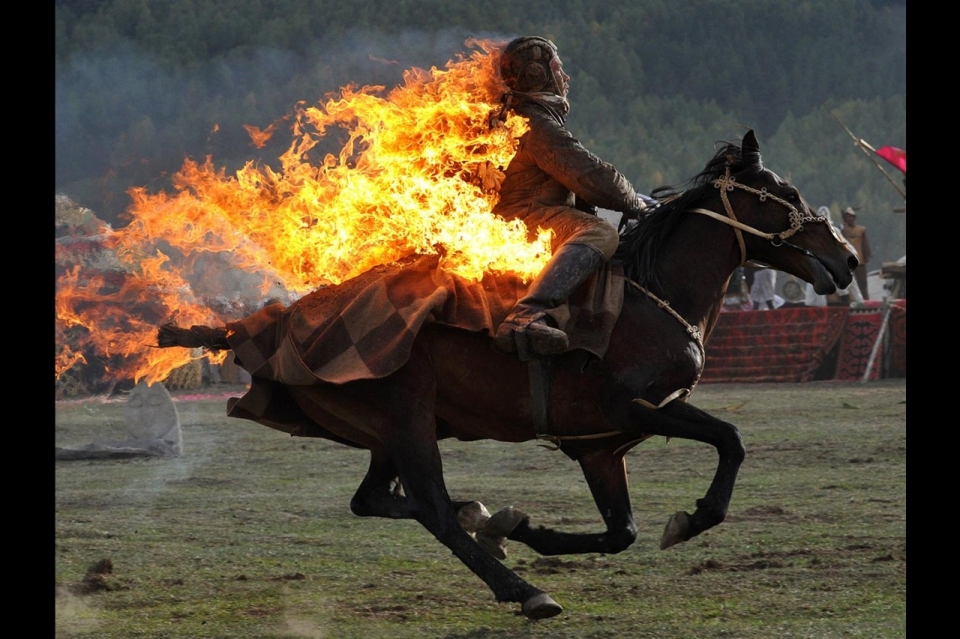
World Nomad Games are an international sport competition dedicated to ethnic sports practiced in Central Asia. The main countries taking part in those games are the former Soviet republics of Kyrgyzstan, Kazakhstan, Azerbaijan, Uzbekistan, Turkmenistan, Tajikistan, and Russia (especially Sakha, Buryatia, Altay, Kalmykia, Bashkortostan republics, etc.) as well as other countries like Mongolia, Turkey, and Afghanistan. The first two World Nomad Games were held in Cholpon-Ata, Kyrgyzstan.
A Kyrgyz stuntman performs during the first World Nomad Games in the countryside of Kyrgyzstan, September 10, 2014. The competition drew hundreds of athletes from 20 countries.
Kyrgyz and Tajik horsemen compete in the traditional Central Asian sport of Buzkashi. In this game, riders compete for control of a goat carcass, scoring points for getting it in the opponent’s goal.
A Tajik man dressed in national costume demonstrates his skill with bow and arrow.
Genghis Khan would be proud.
A golden eagle attacks a chained wolf, part of a competition built around hunting with birds of prey. No Humane Society on the Asian steppes.
Kyrgyz men skin a sheep on the edges of the games.
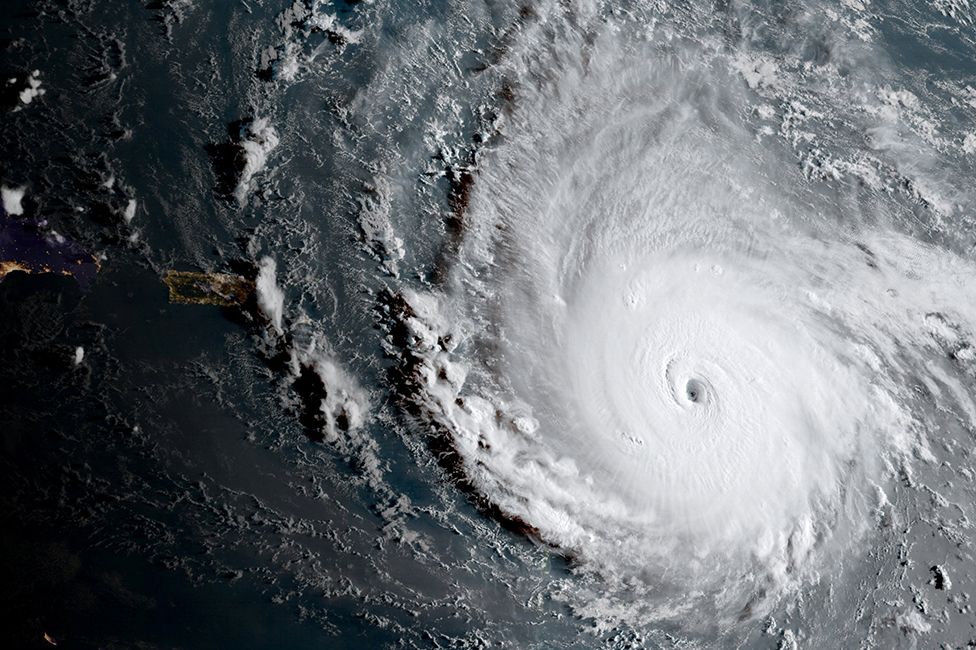
As hurricane Ida pounds Louisiana and other areas of the southeast some background.
As we enter hurricane season, when there is a greater chance of more powerful storms developing in the Atlantic, here is a guide to how deadly storms form, how they are measured and why they happen where they do.
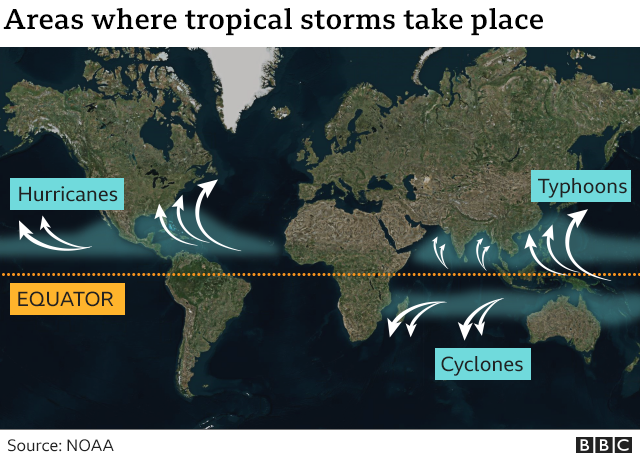
Hurricanes are the biggest and most violent storms on the planet. Every year, between June and November they hit the Caribbean, the Gulf of Mexico and the eastern coast of the United States, sometimes leaving a trail of destruction in their wake.
In the Pacific Ocean, they are known as cyclones. In the Indian Ocean and southern Pacific, they are known as typhoons. They are all tropical storms, but they are only called hurricanes in the north Atlantic and north-eastern Pacific.
Where do hurricanes start?
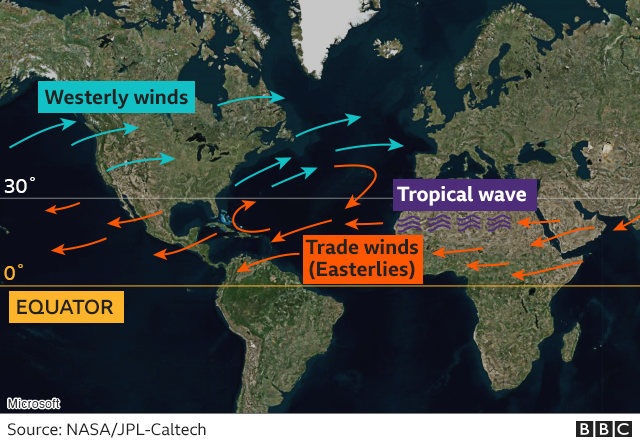
Most hurricanes that form in the Atlantic are the result of an atmospheric phenomenon known as a tropical wave.
The wave starts as a type of atmospheric trough that creates an area of relatively low air pressure – usually in western Africa, in mid-July.
If the conditions are right for it to develop, the low pressure starts to move west, with the help of the trade winds or easterlies.
When it reaches the Atlantic, the tropical wave has the potential to become a hurricane – but for this to happen it needs enough energy in the form of heat and wind.
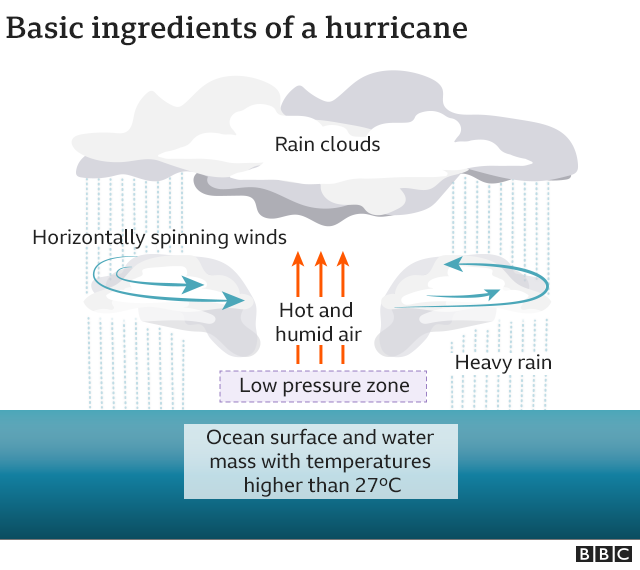
In fact, it needs a deep layer of warm water, with a surface water temperature above 27C.
It also needs the right winds – horizontally swirling winds to concentrate the storm and a weak vertical wind shear rising from the surface of the sea.
If the wind shear changes too much as it rises, it can disrupt the flow of heat and humidity needed to create the hurricane.
The final ingredient is a concentration of rain clouds and high humidity in the area.
This all needs to happen in the right place – generally between 10 and 30 degrees latitude in the northern hemisphere, where the rotation of the Earth helps the winds converge and rise in the area of low pressure.
When a tropical wave encounters all these elements, they all start to interact over an area between 50km (31 miles) and 100km wide.
“The movement of the tropical wave is a trigger for the storm,” says Jorge Zaval Hidalgo, general co-ordinator of Mexico’s National Weather Service.
What does a hurricane look like?
The storm is the catalyst – and the dance of heat, air and water begins.
The area of low pressure cools the humid, warm air rising from the ocean, which fills the clouds.
The condensation of this air releases heat, which lowers the pressure even more, drawing more humidity from the ocean and the storm builds.
The winds converge and rise within the area of low pressure, spinning counter clockwise, giving the hurricane its trademark shape.
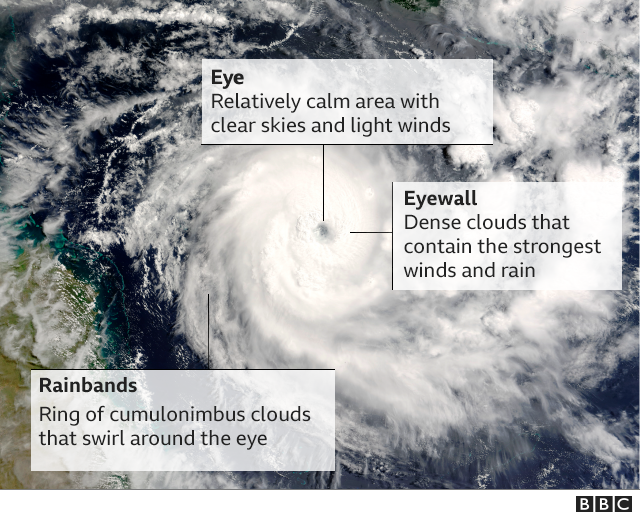
While the storm becomes more powerful, the eye of the hurricane – the central area about 30-60km wide on average – remains relatively calm.
Around it, rises the eye wall of dense clouds and most intense winds.
Beyond that are the spiral bands of cloud, where there is the most rain.
The wind speeds are what determine the moment at which we can call this phenomenon a hurricane.
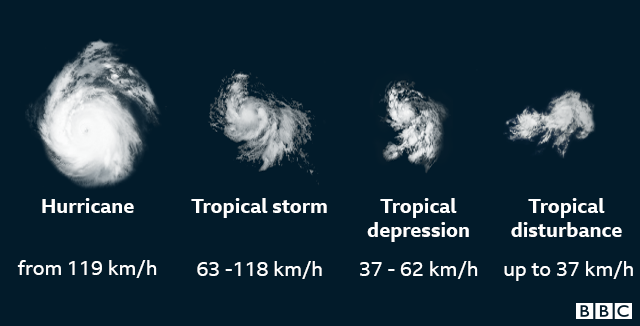
At its birth, it is a tropical depression. As it gathers strength, it becomes a tropical storm. When speeds reach more than 118km an hour, it is a hurricane.
How do you compare hurricanes?
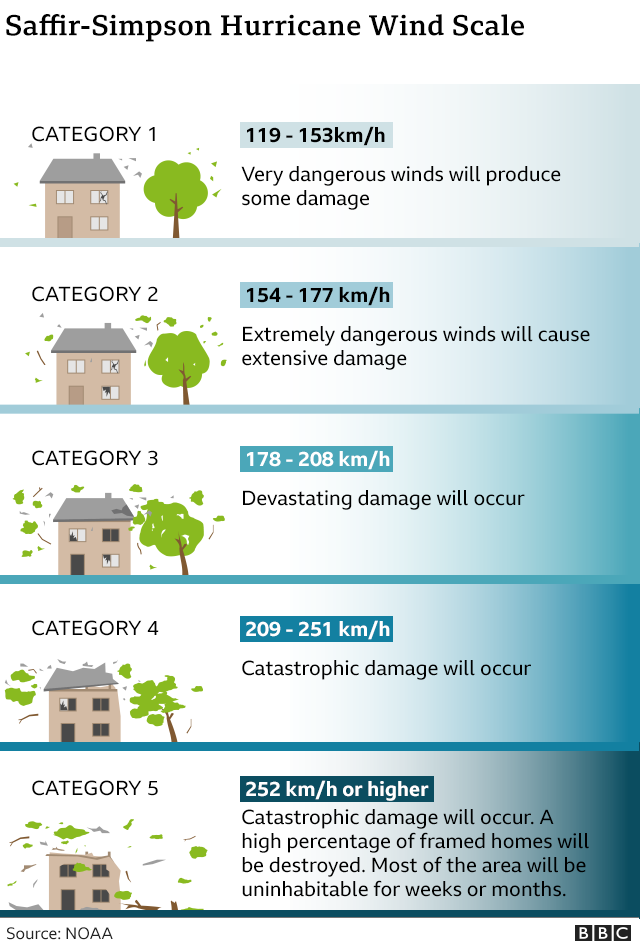
However, hurricanes can be classified in five categories depending on the sustained wind speeds. In the Atlantic, the Saffir-Simpson wind scale is used to measure their destructive power.
One hurricane’s winds can produce about half as much energy as the electrical generating capacity of the entire world, according to the National Oceanic and Atmospheric Administration (NOAA).
However, it is not the winds that cause the most destruction and loss of life, but the storm surge and flooding caused by the hurricane’s rain.
In the United States, for example, the storm surge caused by tropical cyclones in the Atlantic were responsible for nearly half of hurricane-related deaths between 1963 and 2012, according to the American Meteorological Society.
The level of destruction caused by a hurricane is also going to depend on other circumstances, such as the speed at which it hits, the terrain and local infrastructure in the affected area.
“The damage or danger associated with a tropical cyclone does not necessarily correspond to its category. For example, the highest level storm will not necessarily mean more rain,” Mr Hidalgo told the BBC.
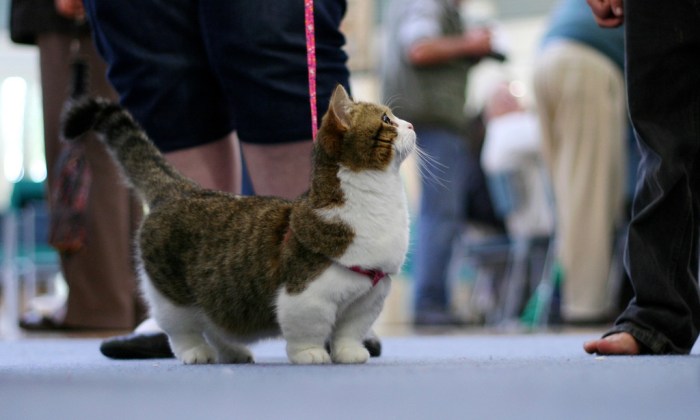
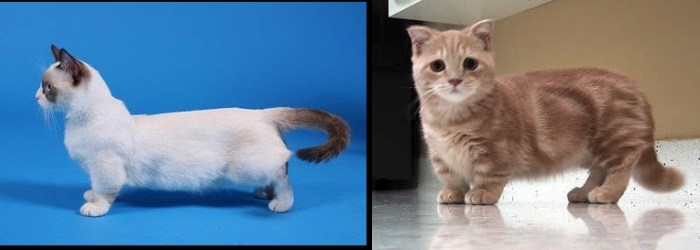
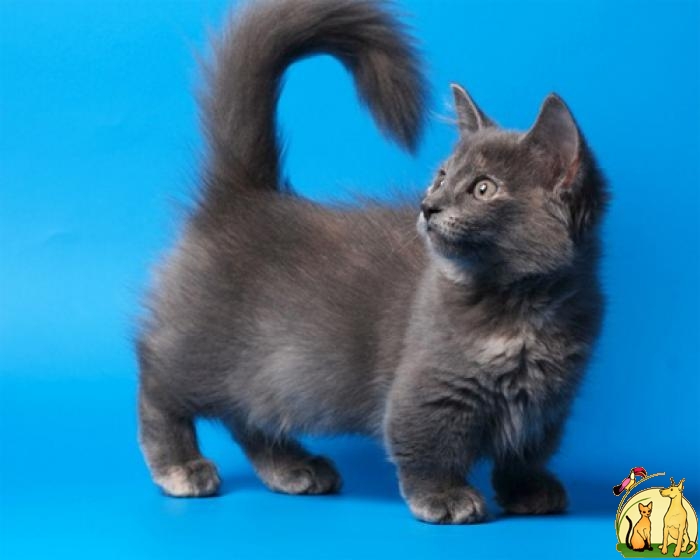
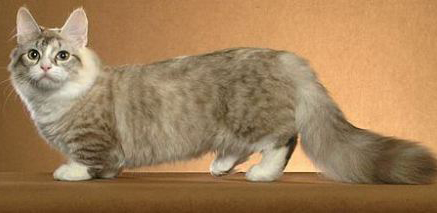
The Munchkin is a relatively new breed of cat characterized by its very short legs, which are caused by a naturally occurring genetic mutation. Much controversy erupted over the breed when it was recognized by The International Cat Association in 1995 with critics voicing concern over potential health and mobility issues.
Short-legged cats have been documented a number of times around the world since the 1940s. A British veterinary report in 1944 noted four generations of healthy short-legged cats which were similar to normal cats except for the length of the legs. This line disappeared during the Second World War but other short-legged cats were spotted in Russia during 1956 and the United States in the 1970s.
In 1983, Sandra Hochenedel, a music teacher in Louisiana, found two pregnant cats who had been chased by a bulldog under a truck. She kept one of the cats and named her Blackberry and half of her kittens were born short-legged. Hochenedel gave a short-legged male kitten from one of Blackberry’s litters to a friend, Kay LaFrance, and she named the kitten Toulouse. It is from Blackberry and Toulouse that today’s Munchkin breed is descended.
The Munchkin is generally described as a sweet-natured, playful, people-oriented, outgoing and intelligent cat which responds well to being handled. The shortness of their legs does not seem to interfere with their running and leaping abilities. The Munchkin has similar characteristics to normal domestic cats, due to their frequent use as out-breeding It is a small to medium-sized cat with a moderate body type and medium-plush coat. Male Munchkins typically weigh between 6 and 9 pounds (3–4 kg) and are usually larger than female Munchkins, which typically weigh between 4 and 8 pounds. The hind legs can be slightly longer than the front which creates a slight rise from the shoulder to the rump.
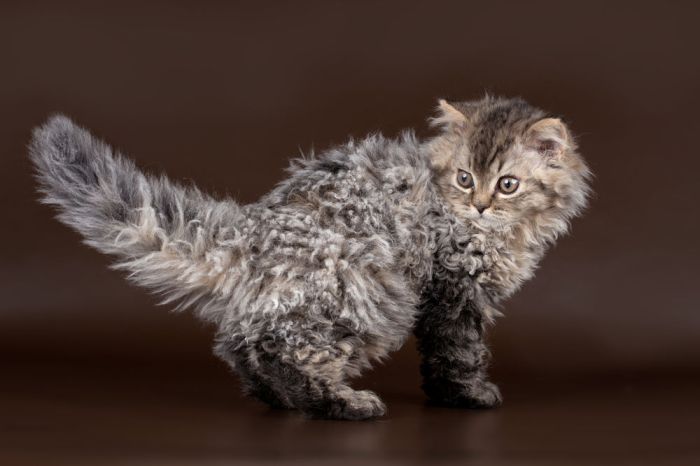
The Munchkin has been crossed with the curly-coated LaPerm to create the Skookum, the hairless Sphynx to create the Minskin and Bambino, with the extremely curly-coated Selkirk Rex to produce the Lambkin, the Persian breed group which includes Himalayans and Exotic Shorthair, to create the Napoleon and crossed with the Bengal to create the Genetta.









 The MarkoZen Blog