Ponyhenge

Lincoln, Massachusetts

No one really knows how these old hobby horses got here, but the herd keeps growing. 

ON A SMALL SLICE OF wide-open pasture in the town of Lincoln, Massachusetts, broken-down rocking horses, plastic ponies and other assorted horse toys have been holding court. As if by magic, ponies have been proliferating along this winding country road, resulting in the peculiar “Ponyhenge.”

The plastic and metal horses started arriving anonymously sometime in 2010, with the placement of a lone hobby horse along picturesque Old Sudbury Road, about 15 miles west of Boston. How and why the rusty little fellow appeared is a mystery, even to Lincolnites who’ve been around a while. One story has the first horse hanging around after a kid’s short-lived lemonade stand, another that he was left over from a Christmas display.

Whatever the real story might be, after the first one appeared things started to get strange. More horses—hobby horses, rocking horses, and horse figurines—began appearing at the site. They are periodically rearranged, sometimes in a circle, sometimes in rows like race horses. Other times they are simply scattered and knocked around, as if they’ve come back from a long night of carousing.

The herd has been growing faster of late, with twice as many horses put out to pasture as there were a couple of years ago. Oddly, no one takes them away—the arrangement only morphs and grows, much to the delight of the family that owns the land. As the owner told the Boston Globe in 2015, “There was something lovely about it being anonymous, and now every time we go away, another one appears.”

Know Before You Go

Lincoln is about 15 miles west of Boston. Follow Rt-117 going west and turn left onto Old Sudbury Road. Ponyhenge will be about half a mile down on your left (just after you pass Boyce Farm Road). For GPS directions, set the address to “39 Old Sudbury Rd. Lincoln MA”. 

While it’s on privately owned land, Ponyhenge is open to anyone who wants to visit.

Atlasobscura.com

Ship carrying thousands of luxury cars sinks in the Atlantic after burning for weeks

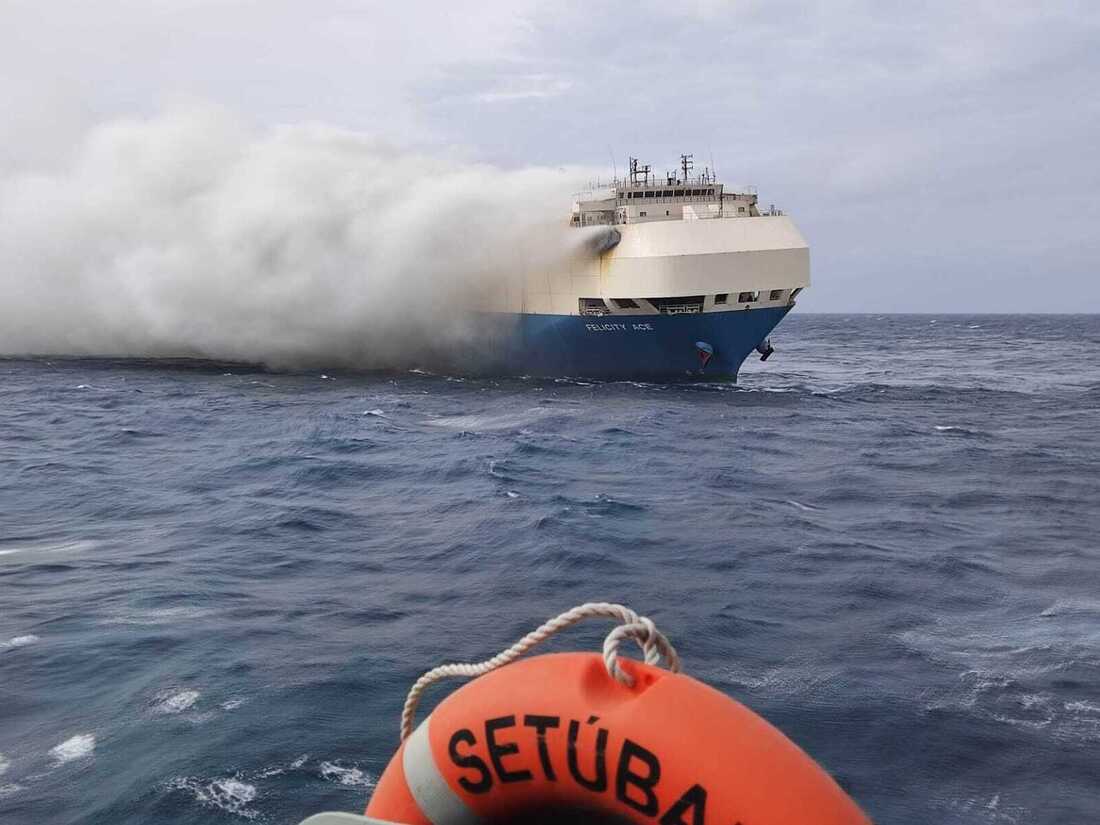
Smoke billows from the burning Felicity Ace car-transport ship as seen from a Portuguese navy vessel southeast of the mid-Atlantic Portuguese Azores islands. The large cargo vessel carrying cars from Germany to the U.S. sank in the mid-Atlantic 13 days after a fire broke out on board.

A large cargo ship that was carrying luxury cars from Germany to the U.S. sank Tuesday in the mid-Atlantic — nearly two weeks after a fire broke out on board, according to Portuguese navy officials.

Officials confirmed that the ship, Felicity Ace, lost stability and sank about 250 miles off Portugal’s Azores islands as it was being towed to land. The ship sank in a location outside Portugal’s economic zone in an area that’s nearly 2 miles deep.

In its statement, the Portuguese navy said that only a few pieces of debris and a small amount of oil were visible where the ship sank and that tugboats were breaking up the patch of oil with hoses.

One of the vessels that had been monitoring the Felicity Ace was en route to Ponta Delgada in the Azores to pick up pollution containment equipment, Portuguese navy officials said.

The 650-foot-long vessel is capable of carrying 4,000 cars. It is unclear how many vehicles were on board the ship.

European auto manufacturers declined to comment regarding exactly how many cars and what models were on board the ship, The Associated Press reported. However, Porsche customers in the U.S. were being contacted individually by their dealership.

“We are already working to replace every car affected by this incident and the first new cars will be built soon,” Angus Fitton, vice president of public relations at Porsche Cars North America Inc., told the AP.

The Portuguese navy rescued all 22 members of the crew from the ship, which was scheduled to arrive in Davisville, R.I., on Feb. 16. The crew was taken by helicopter to Faial island in the Azores, the AP reported. None of the crew members was hurt.

Volkswagen confirmed to The Wall Street Journal that insurance has covered the loss of its vehicles, which could be at least $155 million, insurance experts told the Journal. The total estimated loss for all the cargo, which included Porsches, Bentleys, Lamborghinis and Volkswagens, is close to $440 million, the Journal reported.

The Kubasonics

Tribute to our Ukrainian pals.

The Kubasonics are a Ukrainian-Canadian speed-folk band based in St. John’s, Newfoundland. Originally from Edmonton, Alberta, The Kubasonics are honoured in the Ukrainian Canadian community for recreating traditional Ukrainian melodies, with a twist. Humorous or surprising alterations to time-honored songs create a sound that is often described as a “folk fusion.” To create their unique sound, the Kubasonics incorporate traditional Ukrainian instruments such as the tsymbaly, drymba and Hurdy-gurdy into the context of a western rock band.

The Supernatural Sheep of Slovenia’s Door-to-Door Carnival

To bring spring, hundreds of hirsute revelers roam the country’s villages.

If spring is nigh, and hordes of people are roaming around in sheep costumes making lots of noise, it’s a safe bet you’ve found yourself at Kurentovanje in Ptuj, in northeastern Slovenia. This annual rite of spring carnival begins 11 days before Ash Wednesday—and if you’re in the area, you’ll know.

The core of the carnival consists of groups of Kurenti—folks wearing gigantic sheepskin costumes—going door to door at local homes, forming circles around the residents, and jumping around, shaking sticks adorned with hedgehog skins. The point is to make enough noise to chase away the remnants of winter and other associated evil spirits.

“In fact, it is a special feeling of power and some kind of supernatural energy,” says one participant in a UNESCO video about the festival. “When you put your cap on you somehow go through a certain transformation from the ordinary man to a true Korant [Korent], a supernatural being.” It is a transformation one may make many times in one’s life: Many begin participating with the Kurenti as young children, only to subsequently bring their own children and grandchildren into the fold.

Though Kurentovanje is now a multigenerational phenomenon, and was inscribed in 2017 to UNESCO’s list of the Intangible Cultural Heritage of Humanity, it is in fact a fairly recent arrival in Ptuj. Though the festival draws on the Kurenti—old folkloric figures—the first organized iteration took place only in 1960. Local historian Drago Hasl was eager to find a way to preserve folk traditions, which found themselves under threat from modernization. He succeeded: Just ask any of the Ptuj residents who answer their doors and are surrounded by spring-bearing sheep.

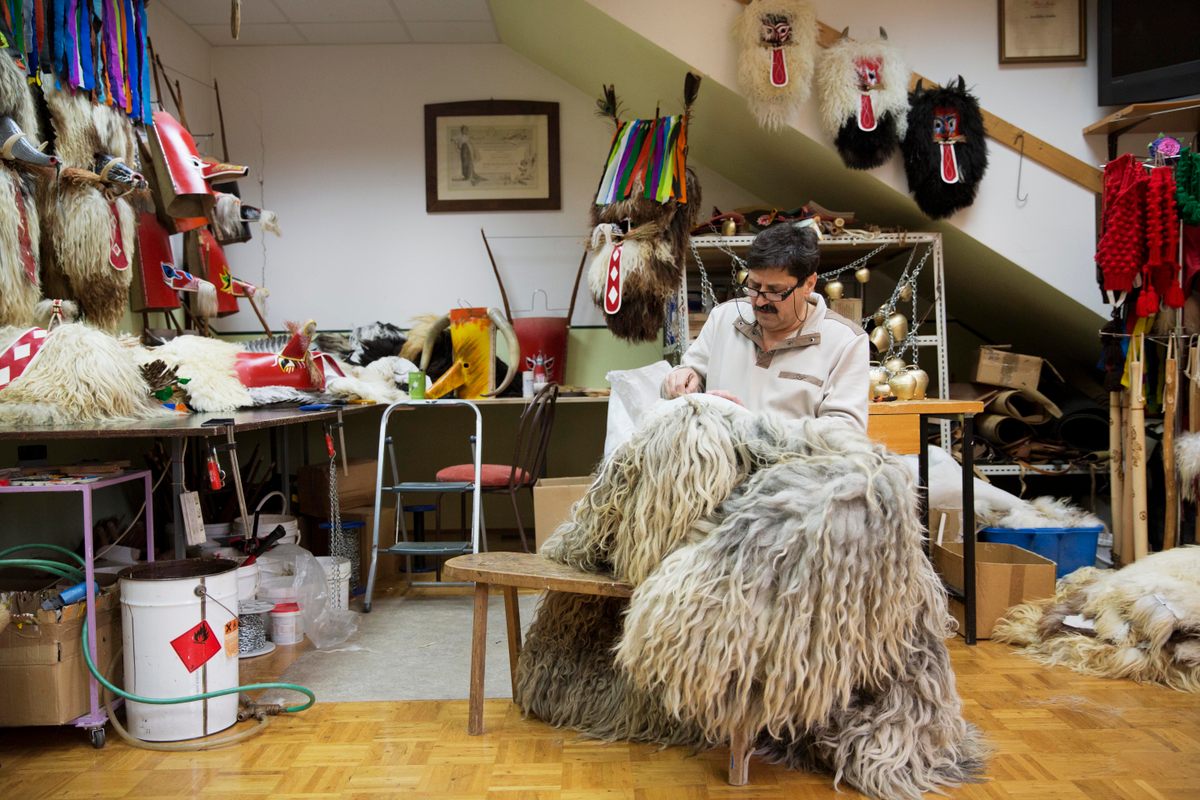
Marko Klinc fixes a Kurent costume in his workshop. Sheepskins are used for the handmade coats and masks.
A Kurent and the devil behind him received handkerchiefs at homes they visited in the village of Zabovci.
A group of Kurenti from the village of Zabovci passes a group wearing Donald Duck costumes before the village parade.
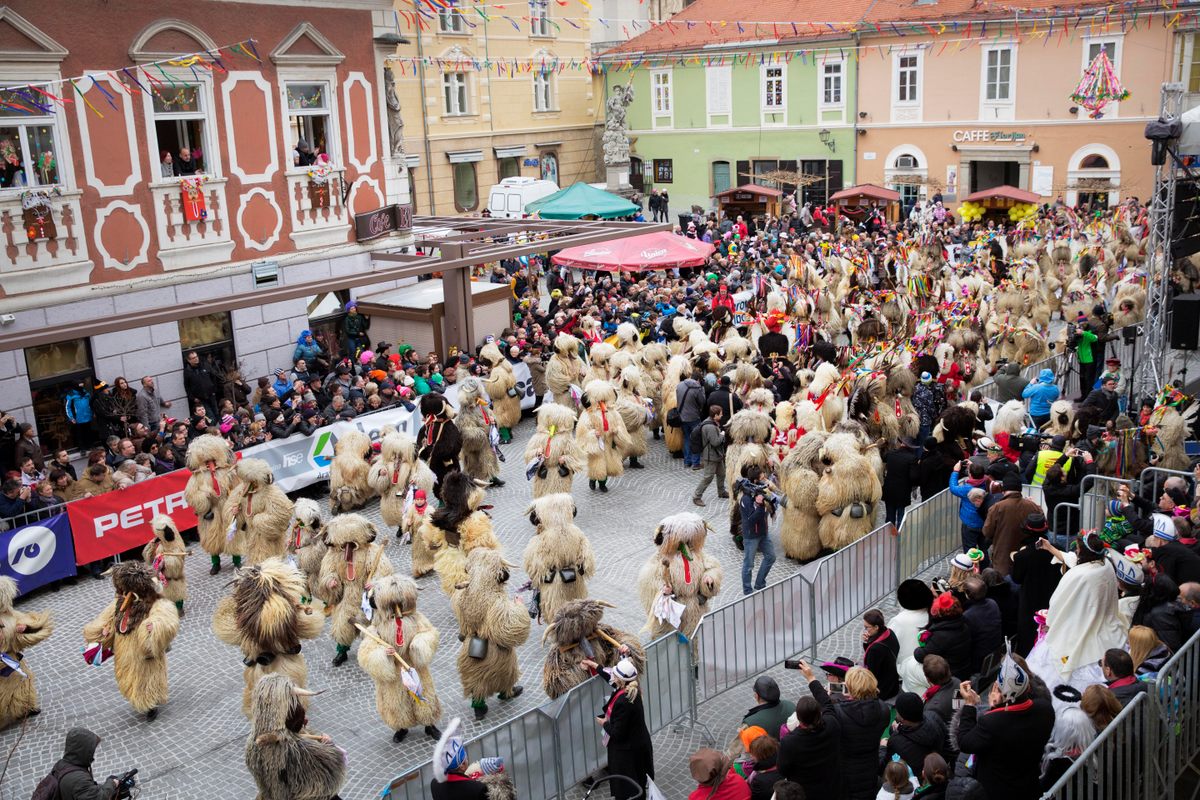
Hundreds of Kurenti from all over Slovenia descend on Ptuj for the traditional International Carnival Parade.
A Kurent holds a drink during his door-to-door rounds. Traditionally, only unmarried men were allowed to wear the Kurent costume, but not all residents can participate in festivities.
Kurenti enter the Slovene national parliament in the capital Ljubljana, as they do every year to bring good fortune and secure pledges of government support for festivities.
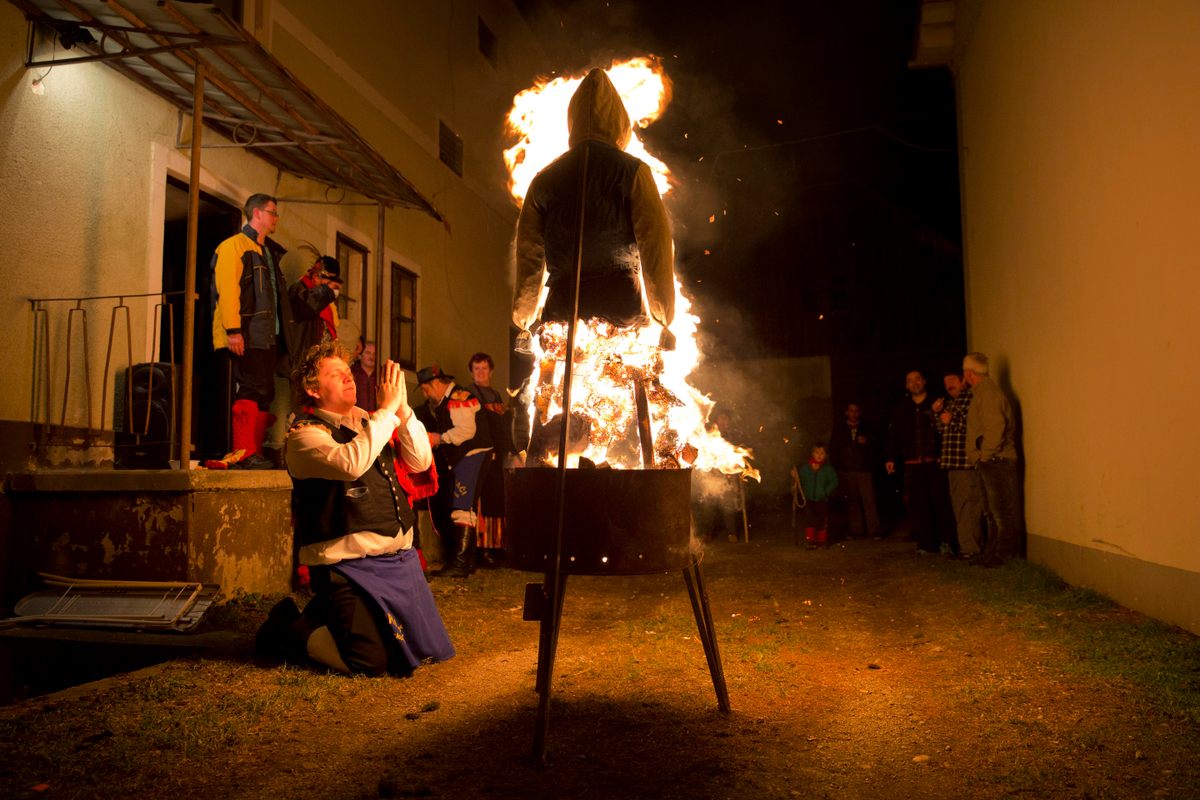
On the last day of the carnival period, the Carnival mask is burned and buried.

World’s Largest Jet Cargo Aircraft Destroyed in Russian Attack on Ukraine

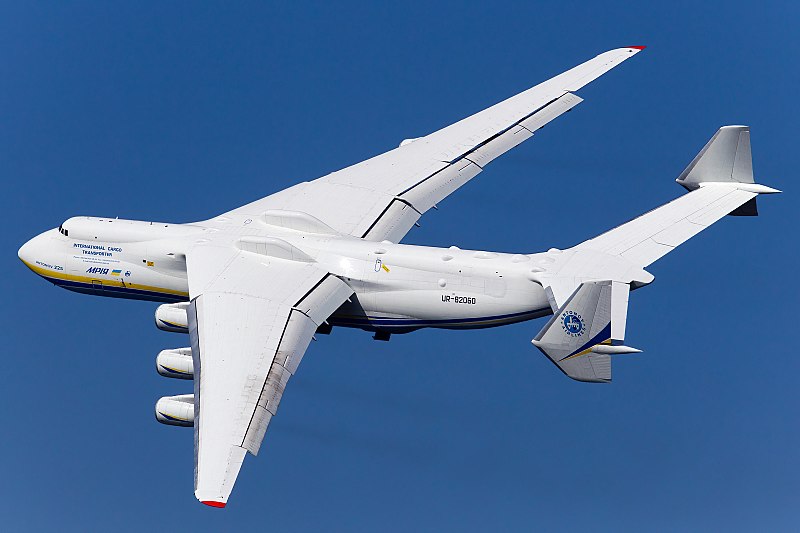
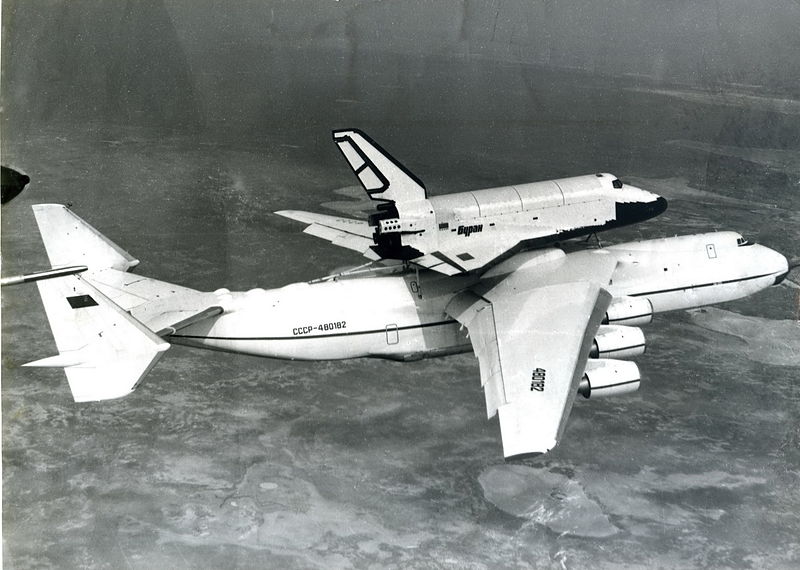
The Antonov An-225 Mriya (Ukrainian: Антонов Ан-225 Мрія, lit. ”dream’ or ‘inspiration”; NATO reporting name: Cossack) was a strategic airlift cargo aircraft that was designed by the Antonov Design Bureau in the Ukrainian SSR within the Soviet Union during the 1980s. Originally, this unique aircraft was developed as an enlargement of the Antonov An-124 to transport Buran-class orbiters. After successfully fulfilling its Soviet military missions, it was mothballed for eight years. It was then refurbished and reintroduced into commercial operation with Antonov Airlines, carrying oversized payloads. While a second airframe with a slightly different configuration was partially built, construction was halted more than once due to a lack of funding and interest. This second aircraft was last brought up to 60–70% completion in 2009.

As an oversized aircraft, the Antonov An-225 Mriya held multiple records which included; heaviest aircraft ever built, and largest wingspan of any aircraft in operational service. Other records held by the An-225 were cargo related in terms of weight and length as the Antonov An-225 has the capability to carry up to 640 tonnes (705 short tons). The An-225 attracted a high degree of public interest, so much that it managed to attain a global following due to its size and its uniqueness. People frequently visited airports to see its scheduled arrivals and departures.

The An-225 was at Hostomel Airport when Russian forces launched an attack on the airport on 24 February 2022, as part of the invasion of Ukraine. The aircraft was destroyed in the fighting.

An-225 carrying Buran (1.01) in 1989

Records
The airlifter holds the absolute world record for an airlifted single-item payload of 189,980 kg (418,830 lb), and an airlifted total payload of 253,820 kg (559,580 lb). It also transported a payload of 247,000 kg (545,000 lb) on a commercial flight.

On 11 September 2001, carrying four main battle tanks[9] at a record load of 253.82 tonnes (279.79 short tons) of cargo, the An-225 flew at an altitude of up to 10,750 m (35,270 ft) over a closed circuit of 1,000 km (620 mi) at a speed of 763.2 km/h (474.2 mph). The hire cost can be US$30,000 (GB£23,220) per hour.

On 11 August 2009, the heaviest single cargo item ever sent by air freight was loaded onto the An-225. At 16.23 m (53 ft 3 in) long and 4.27 m (14 ft 0 in) wide, its consignment, a generator for a gas power plant in Armenia along with its loading frame, weighed in at a record 189 tonnes (417,000 lb).

General characteristics

Crew: 6
Capacity: 253,820 kilograms (559,580 lb)
Length: 84 m (275 ft 7 in)
Wingspan: 88.4 m (290 ft 0 in)
Height: 18.1 m (59 ft 5 in)
Wing area: 905 m2 (9,740 sq ft)
Aspect ratio: 8.6
Empty weight: 285,000 kg (628,317 lb)
Max takeoff weight: 640,000 kg (1,410,958 lb)
Fuel capacity: more than 300,000 kg (661,000 lb)
Cargo hold: volume 1,300 m3 (46,000 cu ft), 43.35 m (142.2 ft) long × 6.4 m (21 ft) wide × 4.4 m (14 ft) tall
Powerplant: 6 × Progress D-18T turbofans, 229.5 kN (51,600 lbf) thrust each
Performance

Maximum speed: 850 km/h (530 mph, 460 kn)
Cruise speed: 800 km/h (500 mph, 430 kn)
Range: 15,400 km (9,600 mi, 8,300 nmi) with maximum fuel; range with 200 tonnes payload: 4,000 km (2,500 mi)
Service ceiling: 11,000 m (36,000 ft)
Wing loading: 662.9 kg/m2 (135.8 lb/sq ft)
Thrust/weight: 0.234

Vladimir Putin’s War Room makes Dr. Strangelove War Room look Puny

Vladimir Putin’s massive, triple-decker war room.

war room

MOSCOW — “Gentlemen. You can’t fight in here. This is the war room!”

It could have been a scene straight out of “Dr. Strangelove” when President Vladimir V. Putin stepped into the Russian Ministry of Defense’s brand new, three-tiered, multibillion-dollar control center this week, for a war briefing that had its fair share of movie-like pageantry.

On movie-theater-size screens, live broadcasts showed long-range strategic bombers taking off from Russian air bases to fly sorties over Syria. Putin instructed commanders in Syria to “make contact with the French and work with them as allies” as Russia seeks a central role in a proposed anti-terrorist coalition.

war room1
war room2

But the real star of the show may have been the building itself, which is designed to be a new nerve center for the Russian military that will coordinate military action around the world, including ballistic missile launches and strategic nuclear deployments.

The building is roughly the equivalent of the U.S. National Military Command Center used by the Pentagon, but as one Russian state news agency noted in a breathless headline this week, “Russian Defense Data Center Outperforms US Facility Threefold: Official.”

The center, which is fortified and said to sit on top of a maze of underground tunnels, is on the Frunze Naberezhnaya on the left bank of the Moscow river, a little over two miles from Red Square.

room

It was finished in 2014 and is part of a massive, decade-long modernization of Russia’s army, which has cost hundreds of billions of dollars, but has also produced noted improvements, from the expertise of Russian troops deployed during the Crimea operation to the recent cruise missile strikes launched from the Caspian Sea.

The new national defense center also includes a helicopter pad that was deployed on the Moscow River late last year and can accommodate Russia’s Mi-8 transport helicopter. In case of a war, it would be the country’s premier communications center, and one Russian commander compared it to the military headquarters of the Soviet Union during World War II.

war room3

Another room with a large round table and more giant monitors.

war room4
war room5

Minister of Defense Sergei Shoigu said that the center is a step toward “forming a single information space for solving tasks in the interests of the country’s defense.”

As Worldviews noted during Russia’s International Army Games in August, Russia’s military has sought to raise its public profile through savvy media branding.

At the briefing, army personnel sat in color-coded rows with matching headsets and water bottles bearing the Russian army brand (their flagship store recently opened on Tverskaya Street here, Moscow’s equivalent of Fifth Avenue). The briefing was covered on Russian national television from at least four distinct camera angles.

Andrei Kolesnikov, a reporter who has covered Putin for the past 15 years and is known for his lyrical, fawning reports of the Russian president, waxed introspective as he covered the briefing Tuesday.

“When this building and this room were opened a year ago, I was somewhat perplexed: Yes, it all looks very persuasive, and the Pentagon might even only dream of something like this, if only in a nightmare. But why? Who will need these screens the size of small soccer fields with grandstands for viewers?

war room3a

“And here was the answer. Every spot was filled. Russia’s entire high army command were the viewers. Or was it like the warming bench, and at any moment everyone was ready to go on the field …”

Later in the piece, he added: “My soul of course was not filled with delight and trembling at the hellish power of this armada. But I was perturbed, yes, I was.”

The War Rooms from the movies take a backseat to this giant high-tech cavern.

Dr. Strangelove

war room7 strangelove

WarGames 1983

war room6 wargames

‘You Only Live Twice”, James Bond.

war room8 you only live twice