Test flight by Jeff Bezos-owned Blue Origin puts company big step closer to offering space tourism

CBS News

Blue Origin engineers check out a New Shepard crew capsule after a successful unpiloted test flight on December 12, 2017, the company’s sixth successful launch in a row; it was the first flight of an upgraded capsule featuring the large windows designed to give future space tourists panoramic views

 BLUE ORIGIN

Blue Origin, owned by Amazon founder Jeff Bezos, launched a reusable New Shepard sub-orbital rocket from the company’s west Texas launch site Tuesday, boosting an unpiloted crew capsule out of the dense lower atmosphere for a brief foray into space before a parachuted descent to Earth.

The booster, meanwhile, plunged back to the launch site tail first, re-starting its hydrogen-fueled BE-3 main engine to slow down, deploying four legs and settling to a picture-perfect touchdown on a circular landing pad.

The launching, the first using an upgraded booster and a crew capsule equipped with the large windows that will offer space tourists spectacular panoramic views, was carried out in secrecy, and Blue Origin did not acknowledge the flight until around 11 p.m. EST.

“Successful first flight of #NewShepard today with the largest windows in space and commercial payloads on board,” Blue Origin tweeted. “Wholly successful mission.”

Added Bezos: “#NewShepard had a successful first flight of Crew Capsule 2.0 today. Complete with windows and our instrumented test dummy. He had a great ride.”

121217-nslaunch.jpg

The New Shepard rocket returns to Earth with a rocket-powered touchdown on December 12, 2017

 BLUE ORIGIN


The crew capsule was released after the booster’s engine shut down, soaring to an altitude of 322,000 feet — about 61 miles — before arcing back toward Earth. Small drogue chutes deployed to stabilize the spacecraft followed by three large chutes that slowed the ship for a gentle 1-mph touchdown near the launch site.

The booster, flying on its own, steered itself back to a rocket-powered touchdown, kicking up a cloud of dust as it descended to an on-target landing.

It was Blue Origin’s seventh New Shepard flight overall and it’s sixth success in a row. It was the company’s first test flight since a dramatic launch Oct. 5, 2016, that simulated an in-flight abort and its first using a new, upgraded booster and a crew capsule equipped with windows.

121217-nslanding.jpg

The New Shepard crew capsule descends to Earth under parachutes after reaching the edge of space in a sub-orbital test flight on December 12, 2017

 BLUE ORIGIN

“Crew Capsule 2.0 features large windows, measuring 2.4 feet wide, 3.6 feet tall,” the company said in a caption to its YouTube video. “(It) also included 12 commercial, research and education payloads onboard.”

Blue Origin is developing the reusable New Shepard rocket and spacecraft to carry up to six space tourists, researchers and/or experiments on brief sub-orbital flights above the discernible atmosphere more than 62 miles up, or 100 kilometers. That’s the somewhat arbitrary but widely recognized “boundary” of space.

Once released from the booster, passengers in the relatively spacious crew cabin will experience four to five minutes of weightlessness as the spacecraft arcs over and begins falling back to Earth, enjoying a spectacular panoramic view through the largest windows ever designed for spaceflight.

Plunging back into the dense lower atmosphere, passengers will experience up to five times the pull of gravity at sea level before the parachutes deploy for landing.

Assuming continued testing goes well, Blue Origin hopes to being launching passengers within the next year-and-a-half or so. No word yet on how much a ticket might cost.

 

True Lies (1994): Body Count Breakdown

I have watched True Lies many times, I’m not sure exactly how many times. It’s a crazy action movie. I’ve often thought how may people get terminated in that movie, and I don’t mean fired from a job. The flick is a killfest from start to finish. So I looked it up and the details are below.

0000true lies terrorists

(previously done by luvmetender)

[CHARACTER KILLS]

Harry Tasker (Arnold Schwarzenegger): 66
Helen Tasker (Jamie Lee Curtis): 12
Faisil (Grant Heslov): 3
Salim Abu Aziz (Art Malik): 1
Juno Skinner (Tia Carrere): 1

0000truelies

[CORPSE BREAKDOWN]

“Here’s my invitation”: 5
-Harry blows up hut, killing 5 embassy guards in the blast

Ski Chase: 12
-Harry shoots 12 guards during chase

Toilet Shootout: 2
-Harry shoots Mahmoud
-Salim shoots Yusif

Ride: 1
-Harry smashes Simon’s face in his imagination

Escape: 10
-Harry throws a scalpel into 1 terrorist’s eye
-Harry breaks Samir’s neck
-Harry stabs 1 terrorist in the stomache with a meat hook
-Harry breaks 1 terrorist’s neck using an AK-47’s strap
-Harry forces 2 terrorists to stab each other
-Harry shoots 3 terrorists
-Harry shoots the terrorist holding Helen

Crashing the Party: 22
-Harry breaks 2 terrorists’ necks
-Harry blows up some explosive barrels with a grenade, killing 4 terrorists in the explosion and setting 1 terrorist on fire
-Harry shoots 2 terrorists
-Helen accidentally drops an Uzi down a flight of stairs and it fires continuously, killing 11 terrorists
-Harry shoots 2 more terrorists

Compound: 9
-Harry breaks 1 terrorist’s neck
-Harry guns down 6 terrorists with dual Uzis
-Harry blows up 2 terrorists with makeshift flamethrower

Bridge: 9
-Marine fighter jets blow up the first truck, killing the driver
-1 terrorist is accidentally hit and killed by the backblast of an RPG by one of his buddies, and is subsequently blown out the front of the truck and run over
-Marine fighter jets blow up the second truck with missiles, killing the 2 terrorists inside
-The third truck (thanks to a bird landing on it) falls off the destroyed bridge and explodes, killing the 3 terrorists inside
-Helen and Juno struggle over pistol and accidentally shoot Ackbar (shared)
-The limo crashes into the water with Juno still inside

Office Building: 15
-Faisil shoots 3 terrorists
-Harry mows down 12 terrorists with jet’s twin machine guns

“You’re fired!”: 5
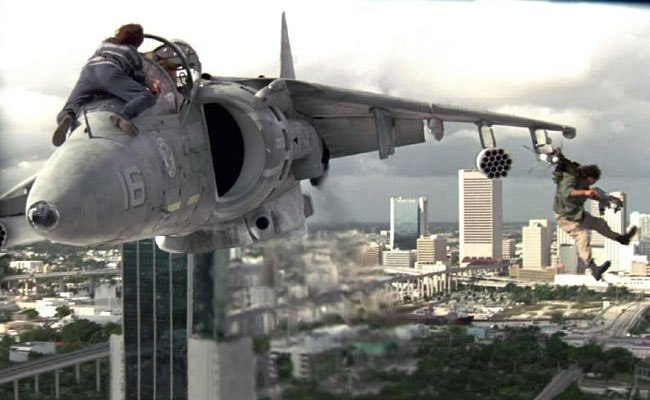
-Harry ejects jet’s sidewinder missile with Salim still dangling onto it into helicopter carrying 4 terrorists, blowing it up and killing all 5 of them in the explosion

(NOTE: Simon’s kill in Harry’s imagination is counted because both Arnie and Paxton acted out the scene.)

It is somewhat sad that such violence permeates Hollywood movies. But it is all about making the money, isn’t it?

Ice Road Truckers to the Rescue

Ice road to Churchill complete; goods to arrive by Wednesday

The town of Churchill will be getting an early Christmas present this year.

A winter road link has been completed between Gillam and the northern community that lost its rail line in the spring due to severe flooding.

The distance from Gillam to Churchill is 300 kms or 175 miles.

ice roadzzz

The ice road was a joint project between Polar Industries, Fox Lake Cree Nation and Churchill’s Remote Area Services.

ice-road-pic

“The guys finished up late [Thursday] night and they’re on their way back out to Gillam so we can start our actual journey with freight on Sunday,” explained Polar Industries president Mark Kohaykewych. Polar Industries is featured on the popular TV series ‘Ice Road Truckers’.

“We’re doing a spiritual, traditional ceremony since we are crossing Fox Lake traditional land. We’ve been accepting a lot of freight the last week and the trucks are leaving to head up to Gillam for Sunday afternoon.”

Since making the announcement that the ice road would be built, Kohaykewych has continually stated he hoped the road would be ready for Christmas. Thanks to no huge snow dumps and cold conditions, the road is ready, though not for huge truckloads.

“We’re just starting off with two, we don’t want to go too heavy on this first journey. We definitely want the ground to harden up and we don’t want to be busting through any rivers or damaging any ice bridges that we’ve created,” Kohaykewych said. “We’re splitting the load between three cat trains, 20,000 pounds a piece.”

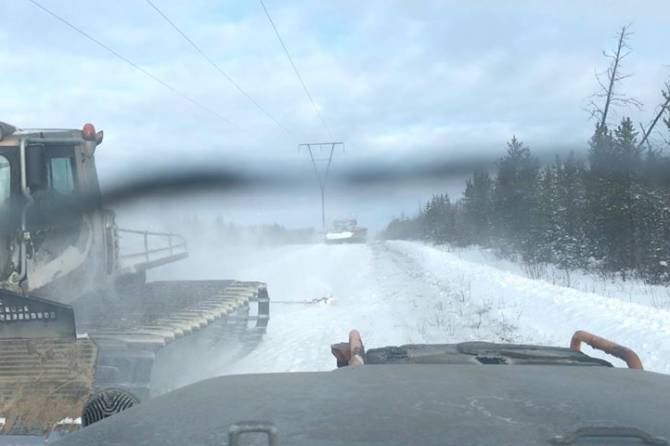
Cat Trains

ice roads1

ice roadss

The ice road was necessitated by the loss of the rail line, which is still nowhere near ready to be used again. The very public battle between OmniTrax, which owns the line, and the federal government has been taken to court.

In the meantime, the ice road will be used to take much needed supplies to the remote northern town through the winter months.

“We’re cross-docking off of the transport trucks onto sleighs that we’ve manufactured and then pulling them with what the general public would know as dozers or cat trains,” Kohaykewych said. “I’m figuring we should be on the road between 30-36 hours.”

ice roadss1

Cat train in Alaska below

ice roadss2

Churchill is known as the Polar Bear Capital of the World. It also has its own trains associated with Polar Bear tourism. The Tundra Buggy trains.

ice roads


1843-1947 The past in color

Retronaut

c. 1930

An overhead view of people on 36th St. between 8th and 9th Aves., New York. Manhattan’s Garment District has been the center of the American fashion industry since at least the turn of the twentieth century – in 1900, New York City’s garment trade was its largest industry by a factor of three. The entire fashion ecosystem, from fabric suppliers to designer showrooms, exists within an area just under a square mile. Native New Yorker Margaret Bourke-White was in her mid-twenties when she took this picture. She would later become Life magazine’s first female photojournalist and, during WWII, the first female war correspondent. The two cars shown are a 1930 Ford Model A 4-Door Sedan, left, and a Ford Model A Sports Coupe, right.

Early photographic technology lacked a crucial ingredient — color. As early as the invention of the medium, skilled artisans applied color to photographs by hand, attempting to convey the vibrancy and immediacy of life in vivid detail (with mostly crude results).

The age-old practice of colorization has been revived with modern digital precision in a new book, The Paper Time Machine.

With images curated by Retronaut creator Wolfgang Wild and colorized according to meticulous period research by Jordan Lloyd of Dynamichrome, the book aims to collapse the divide between historical imagery and present-day viewers.

Featuring 124 photos, from the first known photographic self-portrait, to a young and clean-shaven Abraham Lincoln, to unseen images from the Walt Disney archive, the book presents black-and-white originals alongside startlingly lifelike color remixes.

1863

Confederate prisoners at Seminary Ridge during the battle of Gettysburg. Until 1863, both sides in the American Civil War of 1861-1865 used a parole system for prisoners. A captured soldier vowed not to fight until he had been exchanged for a soldier fighting for the opposition. But in 1863, when this picture was taken, the parole system proved untenable, because Confederate authorities would not recognize a black prisoner as equal to a white prisoner. The direct result was that the number of troops being held in prisons increased massively, on both sides. Just over 400,000 soldiers were taken captured and placed in prison camps during the American Civil War. One in ten of all deaths during the war occurred in a prison camp – a total of more than 55,000 men lost their lives incarcerated.


c. 1864

This Union soldier is believed to be Sergeant Samuel Smith, together with his wife Molle, and daughters Mary and Maggie. Smith served as a soldier in the 119th US Colored Infantry, enlisting at Camp Nelson, Kentucky. Formed during the American Civil War, after Lincoln’s Emancipation Proclamation came into effect on January 1st 1863, the 175 regiments of the United States Colored Troops (USCT) were largely but not exclusively formed of African-American soldiers. In total, around 180,000 free African Americans together with Native Americans, Asian Americans and Pacific Island Americans were enrolled in the USCT – around one tenth of the Union force. Almost 2,700 were killed in combat – but that is a figure dwarfed by a total of 68,000 killed chiefly by disease – the largest cause of death in the War. The regiments were led by white officers.


1918

Oklahoma’s Fort Sill – the burial place of the Native American, Geronimo – housed static kite balloons, inflated with hydrogen such as this one. The balloons were deployed for the observation of artillery attacks, and were secured with guiding cables by groups of ground staff. Six troops were killed in the accident captured here on camera, at Henry Post Field at the Fort. The hydrogen in a balloon was ignited by a what is believed to have been a static electricity charge, created as the folds of the balloon fabric were rubbed together. Thirty more troops were injured.


1905

The “Empire State Express” (New York Central Railroad) passes through Washington Street, Syracuse, New York. The Empire State Express was the flagship train of the New York Central and Hudson River Railroad. It also had world renown as the first passenger train with a speed scheduled above 50 mph, as well as undertaking the longest scheduled nonstop run, between New York City and Albany, for 143 miles. Trains have run on the roads of Syracuse, New York since 1859, earning the city the sobriquet “the city with the trains in the streets.” As well as the obvious safety concerns, the situation also brought noise, dirt and pollution to Syracuse citizens. At peak points, around sixty trains ran along Washington Street – though that era finally came to an end in 1936 with the arrival of an elevated railroad and a new station on Erie Boulevard East. The final train to run on Syracuse streets was the Empire State Express – eastbound.


1918

Celebrations on Wall Street, New York following the surrender of Germany. This picture is almost what it seems – but not quite. We know the exact moment this picture was taken, 1:52 PM on Thursday November 7th, 1918 – four days before the end of World War One. The premature report of the end of the Great War originated in a casual lunchtime conversation between Admiral Henry Wilson, commander of the American Naval forces in French waters, and Roy Howard, President of United Press. Wilson passed on a report of a telephone call he had received from a friend employed in the American Embassy declaring an armistice had been signed. Howard, believing he had just been handed the greatest news story of the his career years, circumnavigated the various systems of checks and censorship in place, going so far as to forge the signature of his foreign editor. He transmitted the story to New York unscrutinized, giving the time of cessation of hostilities as 2pm – eight minutes after this picture was taken. Traders on Wall Street were the first to be aware of the news, and trading ended at 1pm. As the news spread, the entire city was caught up in the celebrations. The next day, the New York Times described the United Press transmission as “the most flagrant and culpable act of public deception.” The Armistice treaty signed at the end of World War One by the Allies and Germany at Compiègne, France, went into effect on the eleventh day of the eleventh month at the eleventh hour, 1918. Yet close to 3,000 men lost their lives on the final day of the War, as, despite the announcement of the Armistice, fighting did not actually cease until that specific moment.
 

July 7, 1865

The hanging of the conspirators in the assassination of Lincoln, at Fort McNair, Washington D.C. The assassination of Lincoln in April 1865 by John Wilkes Booth was part of a conspiracy to bring down the Union government. The plot would have seen the simultaneous killing by conspirators of the President; Vice-President Andrew Johnson; and Secretary of State William Seward. Only Booth succeeded. While Booth was killed before he could stand trial, other conspirators were taken and imprisoned. Three months after the assassination, on July 7th, four of them – Lewis Powell, David Herold, George Atzerodt, and Mary Surratt – were hung at Fort McNair. The scene was captured by Scottish photographer Alexander Gardner. The gallows was constructed specifically for the occasion. Mary Surratt, whose Washington boarding house was a primary location in the conspiracy, became the first woman to be executed by the US federal government.


1919

Soldiers of the 369th ‘Harlem Hellfighters’ wearing the Cross of War medal pose for a photo on their trip back to New York. In this picture we see: front row (left to right) – Private Ed Williams; Herbert Taylor; Private Leon Fraitor; Private Ralph Hawkins. Back row (l-r) – Sergeant H. D. Prinas; Sergeant Dan Storms; Private Joe Williams; Private Alfred Hanley; and Corporal T. W. Taylor. When America joined the Great War, the first African-American regiment to fight was the 369th Infantry, transported to France at the end of 1917. The racism and discrimination the soldiers encountered had begun during training in America, and continued in Europe, with many white US soldiers refusing to fight alongside the 369th. After April 1918, under the control of the French Army, such discrimination lessened. Nicknamed the “Harlem Hellfighters,” the members of the 369th were renowned for bravery, ability and ferocity. On their return to New York City after 1918, they received a euphoric welcome, marching up Fifth Avenue.


1900

Mulberry Street was at the very centre of Manhattan’s Little Italy, an ethnic neighborhood that followed from the mass immigration to New York of Italians after the 1880s. By the turn of the twentieth century, nine out of ten people in the Fourteenth Ward of Manhattan had an Italian background. Mulberry Street itself took its name from the Mulberry trees that grew around Mulberry Bend – the point in the street where it curved around what was then the Collect Pond. This scene, shot in 1900, shows something of the breadth of activity of Little Italy – vegetable stalls; barefooted children; shoe, boot and clothing merchants; a wagon of barrels and sacks; furniture removal men; and blankets, quilts and rugs left out to air – or to sell.


1910

“11 a.m. Newsies at Skeeter’s Branch, Jefferson near Franklin. They were all smoking. St. Louis, Missouri.” As a photographer working for social reform, Lewis Hine found a number of advantages in photographing “newsies” – boys who sold newspapers on street. Unlike the work he did photographing child workers in mines, factories and mills, Hine could photograph the boys without either seeking permission from employers, or, more typically, circumnavigating them. The photographs could be achieved with more time, and with more focus and attention on the subjects he shot. To achieve this sense of direct connection, Hine would bring his camera down to the eye level of his subjects. Not only taking photographs of child workers, Hine also talked to them and sought to document and record their experience. n aggregate, he created a body of work that displayed an unacceptable standard of living for many thousands of children and which ultimately achieved a change in cultural understanding of what it means to be a child, and in the law.


1885

Sitting Bull and Buffalo Bill. Taken at William Notman’s studios in Montreal, Quebec, during Buffalo Bill’s Wild West Show, in August of 1885, this photograph bore the title “Foes in ’76 – Friends in ’85.” Sitting Bull was 54 when he agreed to join William Cody’s Buffalo Bill’s Wild West in 1885. Paid a signing bonus of $125, and $50 a week, his role in what was essentially an American circus was to ride round the arena once per show, in the opening procession. Sitting Bull was the star attraction – but after four months, he had had enough, and returned to the Standing Rock Reservation. It was a far cry from 1876, when, as spiritual leader to the Lakota Sioux, Sitting Bull had inspired his tribe in the defeat of Custer’s 7th Cavalry at the Battle of Little Big Horn. Following the battle, Sitting Bull was driven into exile in Canada, until starvation forced him to surrender to the US Government. Transferred onto Standing Rock, Sitting Bull was was shot and killed by a Reservation police officer in 1890.


1896

The “Street of Gamblers,” Chinatown, San Francisco. Two men and one woman on board the American brig Eagle were the very first Chinese immigrants to San Francisco. From 1849, Chinese people were drawn by the laboring opportunities for the construction of the Transcontinental Railroad, as well as the California Gold Rush – though racial discrimination was pronounced and enshrined in law, culminating in the Chinese Exclusion Act of 1892, which outlawed immigration from China for the next decade. San Franciscan studio photographer Arnold Genthe was drawn to San Francisco’s Chinatown, capturing many hundreds of photographs of its people – often without their knowledge. The pictures are true to the culture Genthe saw – although he also cropped out Western elements. Here, Genthe has captured the essence of a Chinese hutong market transposed into San Francisco, crowded with men wearing black chángshān shirts and sporting the Manchu queue hairstyles – mandatory for all Chinese men until the 1910s. Excepting Genthe’s images, very few photographs remain of San Francisco’s Chinatown prior to the earthquake and fires of 1906. Most photographic collections were lost, but Genthe’s survived, stored in a bank vault.


July 1947

Portrait of Art Hodes, Kaiser Marshall, Henry (Clay) Goodwin, Sandy Williams, and Cecil (Xavier) Scott, Times Square, New York. Although born in the Ukraine, Jazz pianist Art Hodes was brought up in Chicago, and spent most of his career in “The Windy City”. Hodes became known for the Chicago Jazz style, but in order to find success, he had had to move to New York, in 1938. Here, Hodes and his River Boat Jazz Band – Joseph “Kaiser” Marshall on drums, Henry “Clay” Goodwin on trumpet, Sandy Williams on trombone and Cecil “Xavier” Scott played clarinet and tenor sax – are playing on a horse drawn cart to promote their concert that night – with special guest Louis Armstrong and Jack Teagarden. Writer and (self-taught) photographer William P. Gottlieb spent the ten years from 1938 to 1948 interviewing and photographing the leading, largely New York-based, jazz musicians of the time, including Duke Ellington, Ella Fitzgerald, Dizzy Gillespie, and Billie Holiday. A columnist for the Washington Post, Gottlieb started to take his own pictures when the Post wouldn’t pay a photographer.


The Little HondaJet

Honda has always had a reputation of building vehicles that the average person could afford.  They started off building smaller cars, trucks and motorcycles.  And these vehicles were extremely reliable and durable.  Honda is continuing the tradition, but this time on the aviation side of things.  The HondaJet.

The HondaJet is the smallest corporate jet ever built.  It seats 4 passengers only, but that should be sufficient to fly around the top dogs in the company.  And this jet is very impressive to look at.


The Honda HA-420 HondaJet is the first general aviation aircraft developed by the Honda Motor Company.

Honda began to study small sized business jets in the late 1980s, using engines from other manufacturers. The Honda MH02 was fabricated and assembled at Mississippi State University’s Raspet Flight Research Laboratory in the late 1980s and early 1990s. The MH02 was a prototype using composites with an organic matrix.

The HondaJet made its maiden flight in December 2003. It debuted to the public at the EAA AirVenture air show  in Oshkosh, Wisconsin, in July 2005. On July 25, 2006, Honda returned to Oshkosh to announce it would commercialize the HondaJet. Honda established the Honda Aircraft Company to seek both type and production certification of the HondaJet. Production is to take place in the United States. The company began taking customer orders in the fall of 2006. The price was about $3.65 million US. The plan is to build 70 jets per year.

In August 2006 Honda and Piper Aircraft announced a partnership to market the HondaJet.

The aircraft is made at Piedmont Triad International Airport, Greensboro, North Carolina, USA. The plant for making the aircraft was started in 2007 and was completed in 2011.  In July 2011 the Honda Company allowed members of the media to tour the facility, which was still under construction. At that time company representatives announced that certification was expected, and production of the airplane would begin late in 2012.


General characteristics

  • Crew: 1-2 crew members
  • Capacity: 5 passengers (6 Passengers for AirTaxi)
  • Length: 41.70 ft (12.71 m)
  • Wingspan: 39.87 ft (12.15 m)
  • Height: 13.21 ft (4.03 m)
  • Max takeoff weight: 9,200 lb (4,173 kg)
  • Powerplant: 2 × GE Honda HF120 turbofan engines, 1,880lbf each (Bypass Ratio= 2.9) (8.04kN) each

Performance

  • Maximum speed: 420 KTAS (778 km/h, 483 mph)
  • Cruise speed: 420 KTAS (FL300)
  • Range: 1400 nm (1611 mi, 2,593 km) (VFR Range)
  • Service ceiling: 43,000 ft (13,107 m)
  • Rate of climb: 3990 ft/min (20.27 m/s)

Avionics
Garmin G3000 glass cockpit


Honda plans to ramp up production to 80 units per year after March 2019. Sixteen aircraft were delivered in the first three quarters of 2016, reaching a 36 per year production rate. In 2017, 15 were produced in the first quarter, and the annual target is between 55 and 60 aircraft. In the first half of 2017, a total of 24 aircraft were delivered to customers and it became the most-delivered jet in its category for that period. As of late August 2017, a total of 53 jets had been delivered to customers in the U.S., Mexico and Europe.


History of Ambulances in Winnipeg

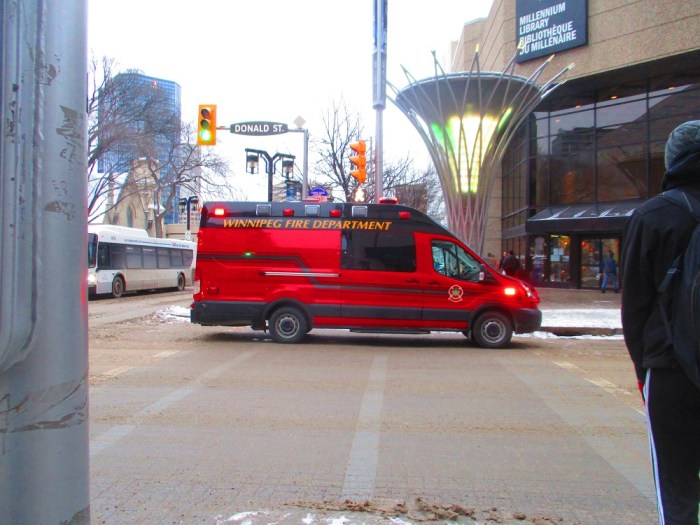
Winnipeg Fire Paramedic Service (WFPS) provides Fire and EMS services to the City of Winnipeg, Manitoba. It operates from 27 Fire stations, 2 stand-alone Ambulance stations, and 3 administration offices across the city. WFPS has two equally important divisions: The Winnipeg Fire Department (WFD) and Winnipeg Emergency Medical Services (WEMS), using a centralized dispatch system.

In 1882, the City of Winnipeg established the Winnipeg Fire Department, followed by the Winnipeg Ambulance Department in 1974. Prior to 1974, ambulance services were provided by local private ambulance companies. In 1983 the Winnipeg Fire Department introduced the use of first responders to start assisting the Winnipeg Ambulance Department on medical calls. As of 2000, both departments amalgamated to form the Emergency Response Service of Winnipeg, which was later renamed as the Winnipeg Fire Paramedic Service.

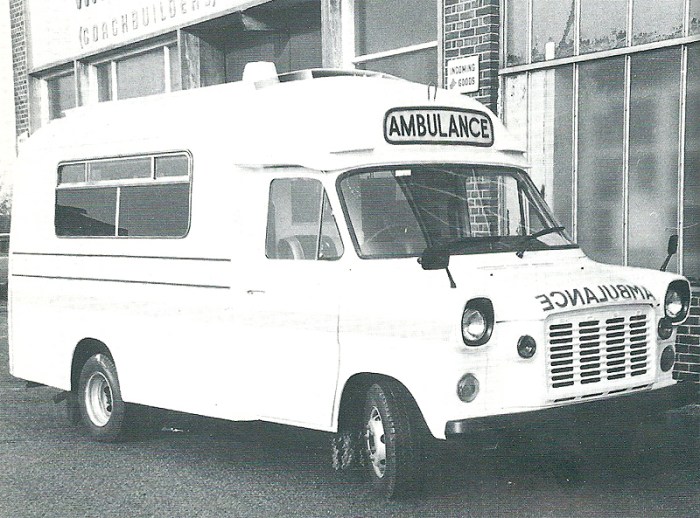
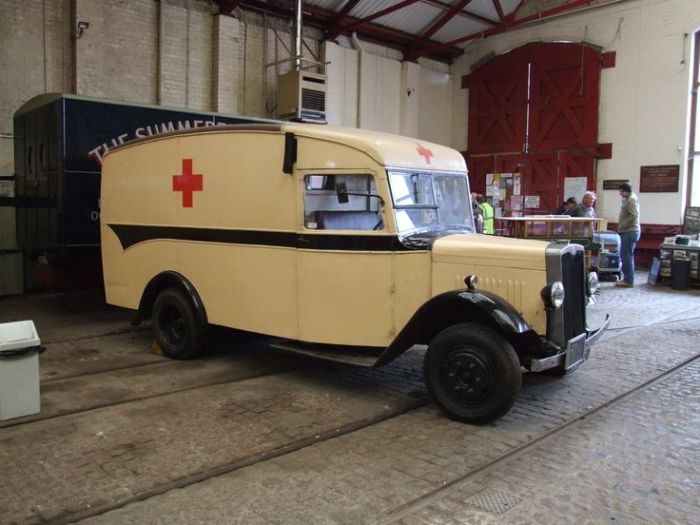
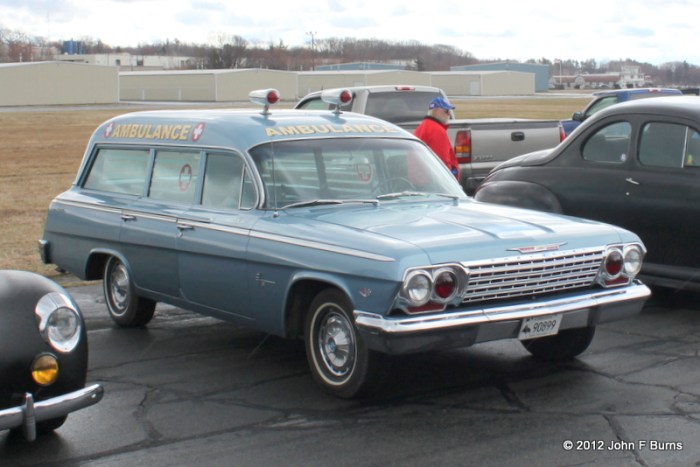
A couple of the very early private ambulances

ambulance4

ambulance3

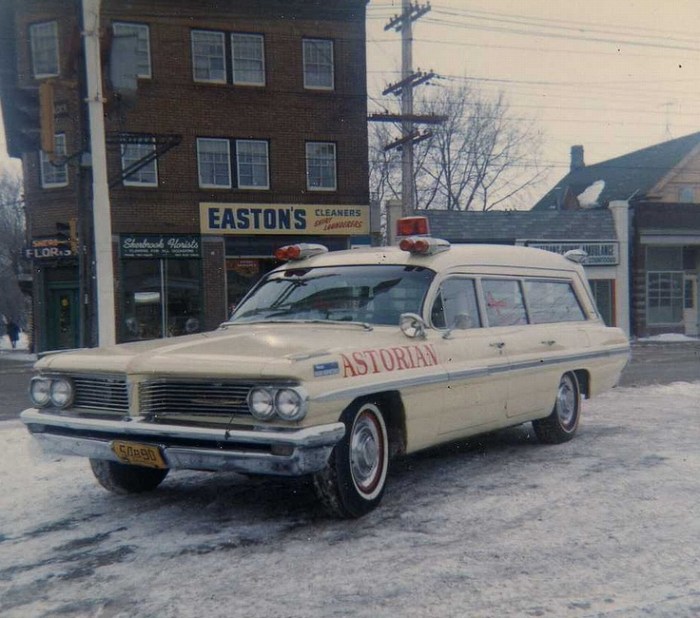
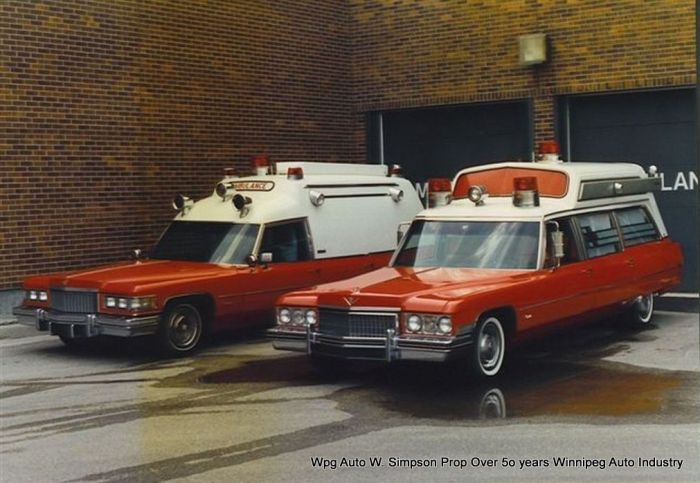
Private ambulances from the sixties and seventies

ambulace

ambulance

ambulance2

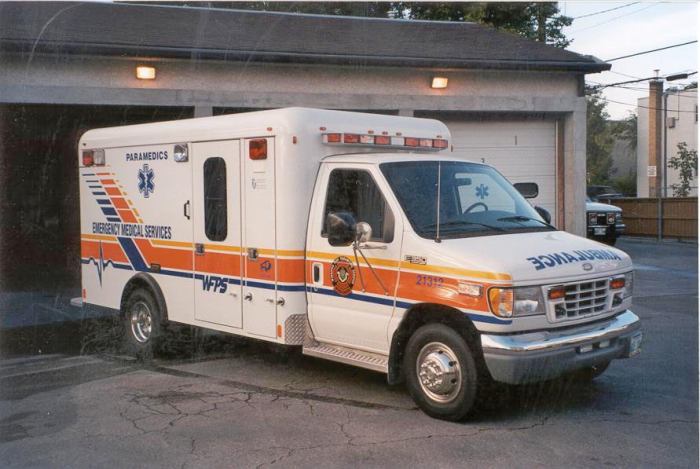
The box ambulances that first appeared in the late eighties

ambulance1

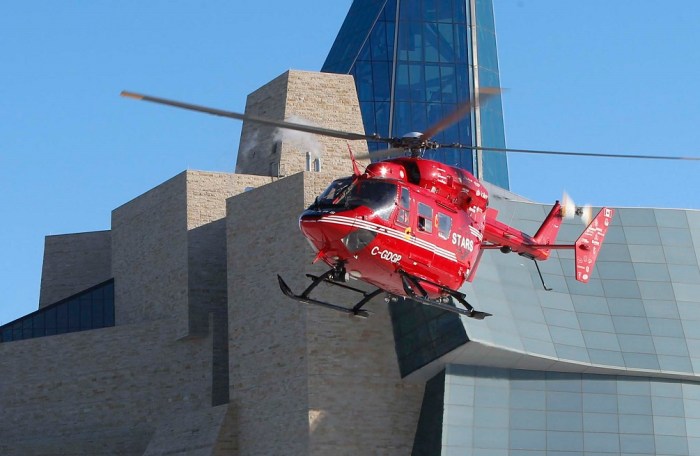
A Stars helicopter ambulance that has served the Manitoba area since 2011

20151129 cup3.jpg

 Major Incident Response Vehicle (MIRV) vehicle

MIRV_and_PACERs

Below is a Fire Squad Vehicle.

IMG_1089


Uncontacted Peoples

The Brazilian government has confirmed the existence of a previously unknown group of so-called uncontacted people who have remained isolated from industrial society.

The Brazilian government agency charged with protecting the country’s indigenous tribes took aerial photographs of the group’s Amazon dwellings. The photos were released by Survival International, an advocacy group for indigenous people.

Survival International research director Fiona Watson talked to Wired.com about the photos.

House
The structure of the dwelling is very different from those seen in photographs of another uncontacted Amazon group that were released in February. Unlike those small, open dwellings, these are large and enclosed.

“Probably 20 or 30 people could fit in there,” said Watson. “You can see smaller structures toward the back of the house. These could be areas for cooking, or storing things. I’ve been to indigenous villages where they have separate structures for keeping the large birds from which they pluck feathers to make arrows.”


Below are photographs taken of an uncontacted group found along the Peru-Brazil border in 2008.  These jungle inhabitants seem annoyed, or terrified, at the airplane taking the pictures.  They are pointing their arrows at the plane.  This plane must have blown their minds.  Never would they have seen such a large bird of prey.  They must have thought this giant rigid bird was going to pounce on their people.  Some of them look like medicine shamans, painted in a dark colour.


Uncontacted people, also referred to as isolated people or lost tribes, are communities who live, or have lived, either by choice or by circumstance, without significant contact with globalised civilisation.

Few peoples have remained totally uncontacted by modern civilisation, and almost all current groups are in danger of being unwillingly contacted. Indigenous rights activists call for such groups to be left alone in respect of their right to self-determination. A number have chosen to make contact either exceedingly difficult or dangerous for those trying to reach them.

The majority of such communities are located in densely-forested areas in South America and New Guinea. Knowledge of the existence of these groups comes mostly from infrequent (and often violent) encounters by neighbouring tribes, and also from aerial footage. A major problem with contacting isolated people is that they will lack any immunity to common diseases, which can be devastating to a closely-contained population with no natural immunity.

Areas of the world where uncontacted peoples live.

Star Wars versus Aliens

ali


Guillem H. Pongiluppi is a thirty-something Spanish artist with a whole bunch of colorful talents to his palette. He’s a painter, illustrator, a matte and concept artist who’s worked on best-selling games, films and TV shows—from David Jones’ Warcraft to international productions for National Geographic and the BBC. He’s a cool guy.

He is also a fan of the movies Star Wars and Aliens. And what better way to share your love of something great than to create a series of fantastic fan art paintings that mash these two movies up into a series called Star Wars vs. Aliens.


ali1


ali2


ali3


ali4


ali5


ali6


ali7


ali8


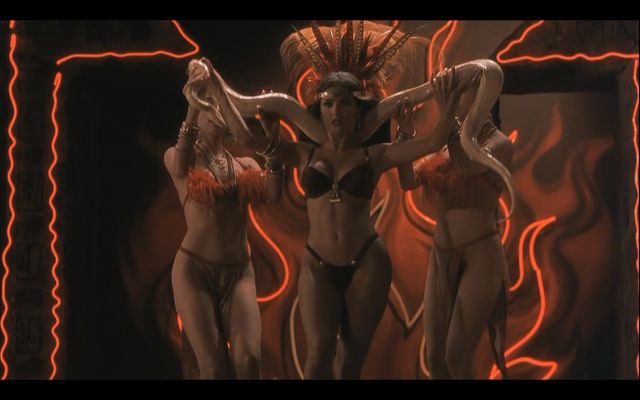
Salma Hayek in “From Dusk till Dawn”

From Dusk till Dawn is a 1996 American action horror film directed by Robert Rodriguez and written by Quentin Tarantino. It stars George Clooney, Tarantino, Harvey Keitel and Juliette Lewis. After enjoying modest success at the box office, it has since become a cult film. The film was conceived by Robert Kurtzman who hired Tarantino to write the script as his first paid writing assignment.

dusk

Santanico Pandemonium, formerly Esmeralda or Kisa, is a fictional character from the From Dusk till Dawn film series. She is the primary Queen Vampire of the “Titty Twister”, a strip club in the middle of a desolate part of Mexico. In the film series, she is portrayed by Salma Hayek and Ara Celi. The name of Santanico is based on the Mexican Nunsploitation film Satánico pandemonium. Although the original film was not very successful at the box office, the film has achieved a cult status because Hayek’s role as Santanico was generally well received by viewers.