Mind Blowing Thrill Rides

Below are a few totally extreme thrill rides that allow the brave at heart to push it to the limit.  These rides are extremely high up.  These are not for people who suffer from a fear of heights.

The first three are situated on the top of the Stratosphere Tower in Las Vegas, Nevada.

The tower is 1,149 feet tall.  It is part of a complex that includes a hotel and various casinos. 

The first ride is a free fall contraption called The “Big Shot,” a thing that shoots you up about 10 stories above the top of the tower and then drops you in a sickening bouncy movement (sort of a reverse bungee-jump).

The next is a completely crazy heart stopper called Insanity, a thing that hangs you out over the edge of the tower and spins you around at 40 miles and hour (See Below).  This is a ride where you really hope the maintenance people are doing their jobs correctly.  If this ride screws up you will have a thousand foot free fall that will last seconds.  You will have a bit of time to reflect on your transgressions in life before you splatter into a thousand pieces.

This next one is for only the bravest fool idiot thrill riders.  If this thing malfunctions it is a thousand foot head first dive into the pavement of the Las Vegas Strip.  The “X-Scream,” an open-air car that launches you on a teeter-totter style track over the side of the building.  The cart goes back as the track teeters with the front up.  As the track teeters with the front going downward the cart rolls rapidly right to the front before stopping abruptly.  You have got to be out of your mind to do this without a parachute.

The next mind bender is the tallest roller coaster in the world.  Kingda Ka is a roller coaster located at Six Flags Great Adventure in Jackson, New Jersey, USA. It is the tallest and fastest roller coaster in the world. The train is launched by a hydraulic launch mechanism to 128 miles per hour (206 km/h) in 3.5 seconds.   At the end of the launch track, the train climbs the main top hat tower, reaching a height of 456 feet (139 meters).

Now if this thing doesn’t make you wet or crap yourself nothing will.

There is no way I would even attempt to go on any of these rides unless I was highly medicated on fear reducing substances.  The people that go on these rides are brave.  No two ways around that.  They also have to be a bit crazy.  These thrill riders must also be people that don’t contemplate the what ifs.  What if a bolt slips off, what if a goose shits on the track causing a slippage of a wheel, what if a maintenance guy was drunk and forgot to grease the undercarriage.  Too many what ifs for me.

The most extreme thrill ride thing I ever did was a Zipper ride at a country fair in rural Manitoba a few years ago.  My friend and I got on the ride in the middle of the afternoon.  There was nobody else on the ride at that time of day.  So the ride operator asked us if we had strong stomachs, feeling macho we both said hell yes.  As soon as we were airborne the operator gunned the machine for all it was worth and kept it pumped for 12 minutes.  I think he was testing the ride to see what its limits were. 

I was convinced that our cage was going to break off and we were going to fly 500 meters into the air and land in a farmer’s field.  When I got off the ride I was ghost white, my stomach was in my upper shoulder area, my ass was where my stomach used to be and my head felt like it was coming off a  Extra Old Stock twelve beer hang over.  I took a deep breath as I walked away from that Zipper and deeply appreciated my second chance at life.

Interesting Images

140 million year Old, 500 Kg dinosaur femur discovered In France, 2019.


Cool Christmas decorations. The guy is into the spirit.

Amazing water pattern created by spinning ball


Full Moon in LA


Fire meets ice


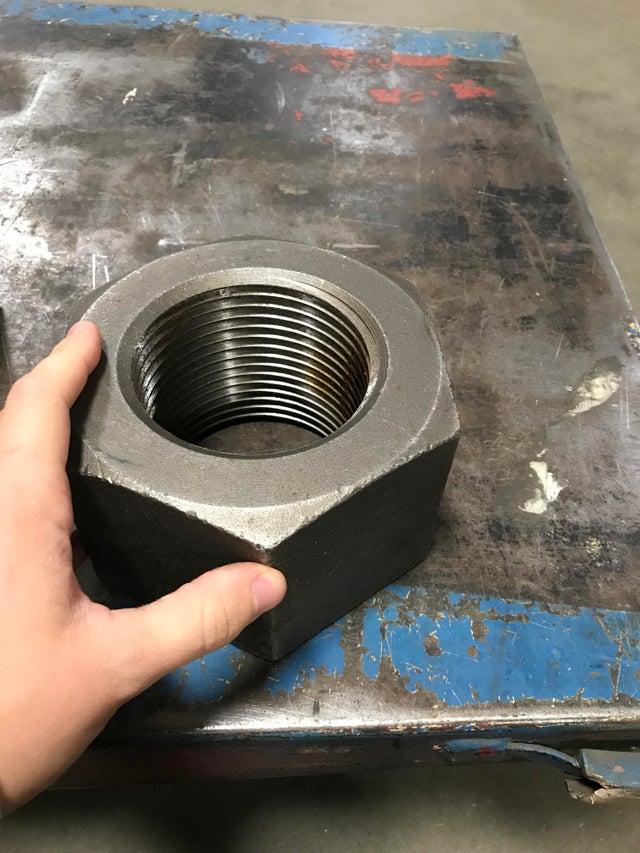
The Mother of all nuts


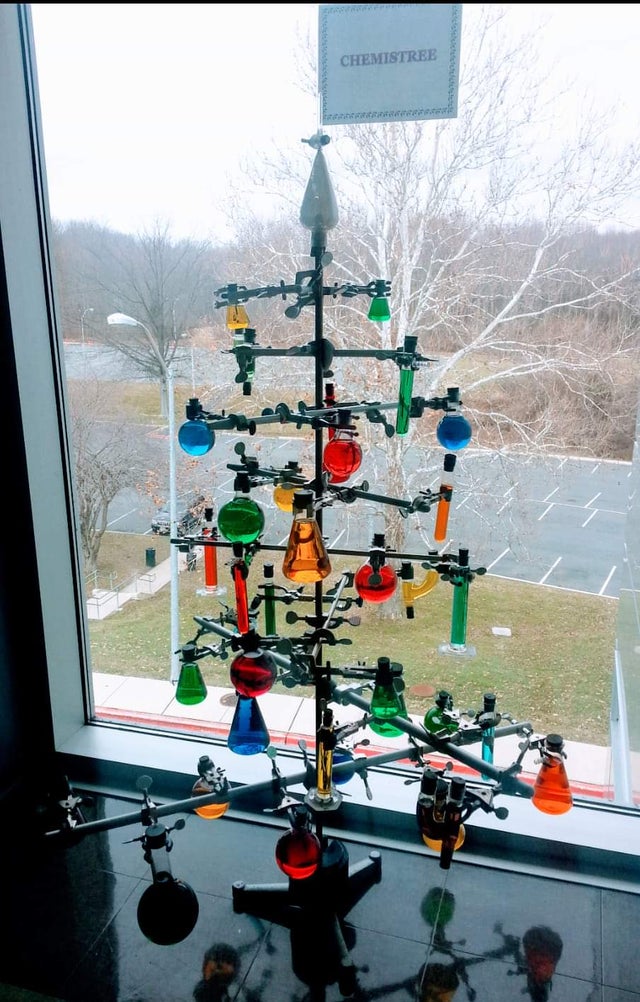
It’s a Chemistree!


Coca-Cola (1899 – 2020)


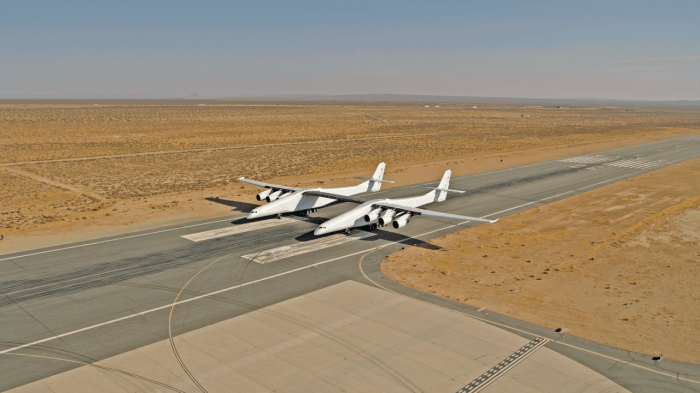
Stratolaunch

The Scaled Composites Model 351 Stratolaunch is an aircraft built for Stratolaunch Systems by Scaled Composites to carry air-launch-to-orbit rockets. It was announced in December 2011 and rolled out in May 2017. The twin-fuselage design is the aircraft with the longest wingspan ever flown at 385 feet (117 m), surpassing the Hughes H-4 Hercules flying boat’s of 320 feet 11 inches (97.82 m). The Stratolaunch is intended to carry a 550,000-pound (250,000 kg) payload and has a 1,300,000-pound (590,000 kg) maximum takeoff weight.

The aircraft first flew on April 13, 2019, at the Mojave Air and Space Port, reaching 17,000 ft (5,200 m) and 165 kn (305 km/h) in a 2 h 29 min flight.

General characteristics

  • Length: 238 ft (73 m) 
  • Wingspan: 385 ft (117 m) 
  • Height: 50 ft (15 m) 
  • Empty weight: 500,000 lb (226,796 kg) 
  • Gross weight: 750,000 lb (340,194 kg) with no external payload
  • Max takeoff weight: 1,300,000 lb (589,670 kg) 
  • External payload: 550,000 lb (250,000 kg)
  • Powerplant: 6 × Pratt and Whitney PW4056 turbofan, 56,750 lbf (252.4 kN) thrust each 
  • Maximum speed: 460 kn (530 mph, 850 km/h) 
  • Range: 1,000 nmi (1,200 mi, 1,900 km) radius
  • Ferry range: 2,500 nmi (2,900 mi, 4,600 km) 


NASA’s high flying telescope

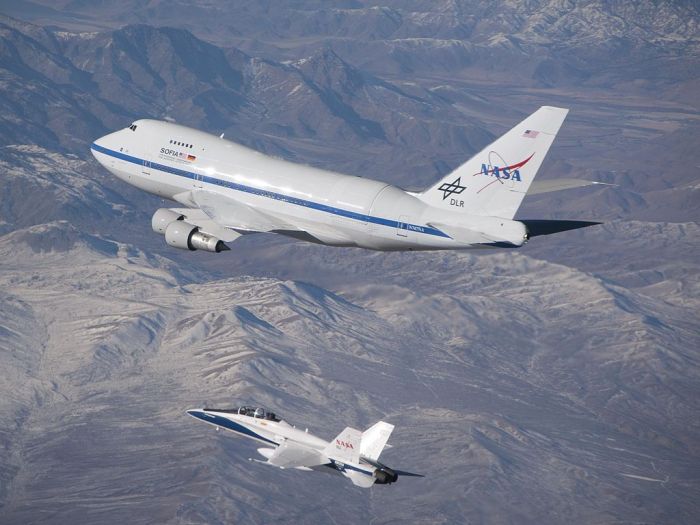
The Stratospheric Observatory for Infrared Astronomy (SOFIA) is a joint project of NASA and the German Aerospace Center (DLR) to construct and maintain an airborne observatory. NASA awarded the contract for the development of the aircraft, operation of the observatory and management of the American part of the project to the Universities Space Research Association (USRA) in 1996. The DSI (Deutsches SOFIA Institut) manages the German parts of the project which are primarily science and telescope related. SOFIA’s telescope saw first light on May 26, 2010. SOFIA is the successor to the Kuiper Airborne Observatory.


aanasa


SOFIA is based on a Boeing 747SP wide-body aircraft that has been modified to include a large door in the aft fuselage that can be opened in flight to allow a 2.5 m (8.2 ft) diameter reflecting telescope access to the sky. This telescope is designed for infrared astronomy observations in the stratosphere at altitudes of about 12 kilometres (41,000 ft). SOFIA’s flight capability allows it to rise above almost all of the water vapor in the Earth’s atmosphere, which blocks some infrared wavelengths from reaching the ground. At the aircraft’s cruising altitude, 85% of the full infrared range will be available. The aircraft can also travel to almost any point on the Earth’s surface, allowing observation from the northern and southern hemispheres.

Once ready for use, observing flights were expected to be flown 3 or 4 nights a week. Originally scheduled to be operational for 20 years, in its tentative budget for the fiscal year 2015 NASA announced that unless Germany’s aerospace center would contribute significantly more than previously agreed upon, the observatory would be grounded by 2015. The SOFIA Observatory is based at NASA’s Neil A. Armstrong Flight Research Center at LA/Palmdale Regional Airport, California, while the SOFIA Science Center is based out of NASA Ames Research Center, in Mountain View, California.


aanasa1


SOFIA uses a 2.5 m (8.2 ft) reflector telescope, which has an oversized, 2.7 m (8.9 ft) diameter primary mirror, as is common with most large infrared telescopes. The optical system uses a Cassegrain reflector design with a parabolic primary mirror and a remotely configurable hyperbolic secondary. In order to fit the telescope into the fuselage, the primary is shaped to an f-number as low as 1.3, while the resulting optical layout has an f-number of 19.7. A flat, tertiary, dichroic mirror is used to deflect the infrared part of the beam to the Nasmyth focus where it can be analyzed. An optical mirror located behind the tertiary mirror is used for a camera guidance system.

The telescope looks out of a large door in the port side of the fuselage near the airplane’s tail, and initially carried nine instruments for infrared astronomy at wavelengths from 1–655 micrometres (μm) and high-speed optical astronomy at wavelengths from 0.3–1.1 μm. The main instruments are the FLITECAM, a near infrared camera covering 1–5 μm; FORCAST, covering the mid-infrared range of 5–40 μm, and HAWC, which spans the far infrared in the range 42–210 μm. The other four instruments include an optical photometer and infrared spectrometers with various spectral ranges. SOFIA’s telescope is by far the largest ever to be placed in an aircraft. For each mission one interchangeable science instrument will be attached to the telescope. Two groups of general purpose instruments are available. In addition an investigator can also design and build a special purpose instrument. On April 17, 2012, two upgrades to HAWC were selected by NASA to increase the field of view with new detector arrays and to add the capability of measuring the polarization of dust emission from celestial sources.

The open cavity housing the telescope will be exposed to high-speed turbulent winds. In addition, the vibrations and motions of the aircraft introduce observing difficulties. The telescope was designed to be very lightweight, with a honeycomb shape milled into the back of the mirror and polymer composite material used for the telescope assembly. The mount includes a system of bearings in pressurized oil to isolate the instrument from vibration. Tracking is achieved through a system of gyroscopes, high speed cameras, and magnetic torque motors to compensate for motion, including vibrations from airflow and the aircraft engines. The telescope cabin must be cooled prior to aircraft takeoff to ensure the telescope matches the external temperature to prevent thermally induced shape changes. Prior to landing the compartment is flooded with nitrogen gas to prevent condensation of moisture on the chilled optics and instruments.

DLR is responsible for the entire telescope assembly and design along with two of the nine scientific instruments used with the telescope, NASA is responsible for the aircraft. The manufacturing of the telescope was subcontracted to European industry. The telescope is German; the primary mirror was cast by Schott AG in Mainz, Germany with lightweight improvements, with grinding and polishing completed by the French company SAGEM-REOSC. The secondary silicon carbide based mirror mechanism was manufactured by Swiss CSEM. A reflective surface was applied to the mirror at a facility in Louisiana but the consortium now maintains a mirror coating facility in Moffett Field, allowing for fast recoating of the primary mirror, a process that is expected to be required 1-2 times per year.


aanasa2


The primary science objectives of SOFIA are to study the composition of planetary atmospheres and surfaces; to investigate the structure, evolution and composition of comets; to determine the physics and chemistry of the interstellar medium; and to explore the formation of stars and other stellar objects. While SOFIA aircraft operations are managed by NASA Dryden, NASA’s Ames Research Center in Mountain View, California, is home to the SOFIA Science Center which will manage mission planning for the program. On 29 June 2015, the dwarf planet Pluto passed between a distant star and the Earth producing a shadow on the Earth near New Zealand that allowed SOFIA to study the atmosphere of Pluto.

F/A-18 mission support aircraft shadows SOFIA during a functional check flight.


aanasa3

Wikipedia

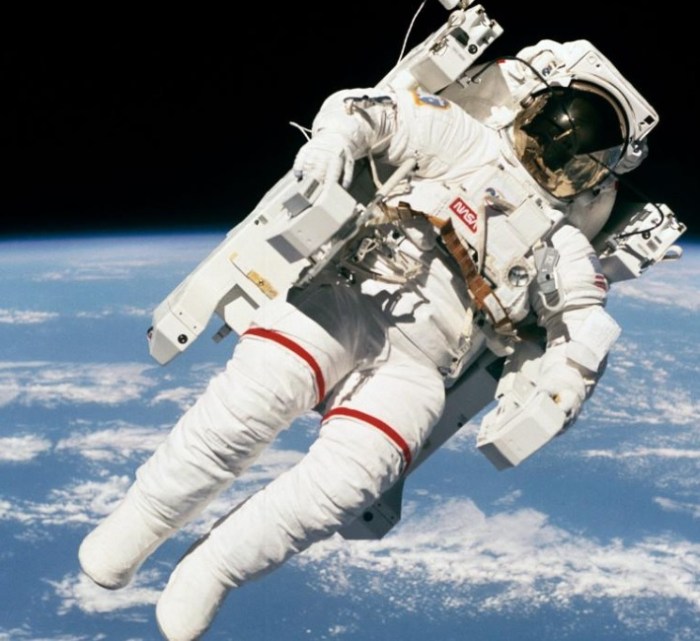
Really Cool Spacewalk

On February 7, 1984, Bruce McCandless became the first human to float free from any earthly anchor when he stepped out of the space shuttle Challenger and flew away from the ship. In a still-startling NASA image from that mission, untethered McCandless hangs 320 feet from Challenger, suspended above our impossibly blue planet and appearing paradoxically powerful and fragile against the yawning vastness of the cosmos.


But McCandless’s most memorable spacewalks, immortalized by a photo taken later during the mission, took place on his very first spaceflight. He’d been asked to test a new 300-pound Manned Maneuvering Unit, or MMU, which is basically a nitrogen-powered jetpack that allows astronauts to twist and turn through space as George Clooney’s character did in the movie Gravity. But this was no feature film, and to say that people were nervous about an unrecoverable malfunction is no overstatement.

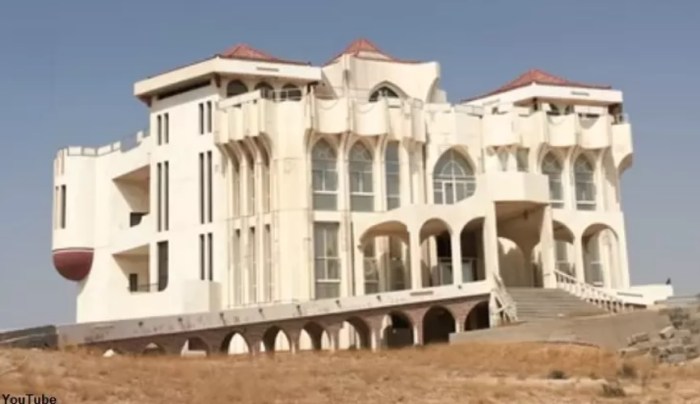
Infamous ‘Haunted’ Palace in UAE Opened to the Public

An abandoned palace in the United Arab Emirates that has long been rumored to be one of the most haunted locations in the Middle East has opened its doors to the public. Known as the Al Qasimi palace, the opulent resident in the city of Ras Al Khaimah was reportedly build back in 1985. However, legend has it, the family who had planned to live at the huge home fled the sight after they experienced unsettling paranormal activity such as furniture moving on its own. One version of the story states that the unnerved residents actually only spent one night at the site before deciding that they’d had enough and wished to never return.

While that version of events may be more hyperbole than genuine history, the Al Qasimi palace has nonetheless sat abandoned since shortly after construction was finished. And, over time, the haunted reputation of the site has grown exponentially to the point that it is included on most shortlists for the spookiest locations in the Middle East. Bolstering the initial story that was attached to the site are claims by local residents that the ghostly faces of children can sometimes be seen peering out the windows of the palace.

Thanks to our modern information age and what appears to be a remarkably lax level of security, the Al Qasimi palace has become a favorite destination of thrill-seekers visiting the region. More than a few daring individuals have posted YouTube videos of themselves exploring the abandoned location and the footage is undoubtedly eerie. Fortunately, those wishing to check out the allegedly haunted residence will soon be able to do so without resorting to trespassing.

That’s because the palace has now been officially been opened up to the public for the first time in decades and, for a small fee of around $20, visitors can explore the site which has been the subject of so many spooky stories over the years. Interestingly, photography inside the residence is prohibited and those caught snapping pictures will be actually be fined for doing so. Lest one suspect that the decision to open the palace is an attempt to shed the site of its haunted reputation, that is seemingly not the case as there are plans to renovate the entire building and transform it into what is described as a ‘horror adventure’ attraction.

Tim Binnall

California man arrested for alleged assault sticks tongue out in mugshot

He was sticking it to authorities.

A California man posed for a mugshot by sticking his tongue out after allegedly assaulting his former landlord and leading authorities on a pursuit, news station KTLA reported.

Paul Stephen Otto, 27, is accused of illegally entering his ex-landlord’s home Friday and putting the man in a chokehold, according to Riverside County Sheriff’s Department.

He then fled the scene in a silver Volvo sedan and was tracked down by officers near Norco Police Station, the report said.

The alleged culprit led authorities on a short chase before he crashed into another vehicle, totaling his car, officials said.

Otto was brought to a nearby hospital, where he was evaluated before he was released to police, KTLA reported.

He was booked into the Robert Presley Detention Center on charges of attempted murder and cruelty to a dependent adult.

He’s being held on $300,000 bail and is set to appear in court Dec. 10.

New York Post