Crimean Bridge, Krasnodar Krai, Russia

Paris, France

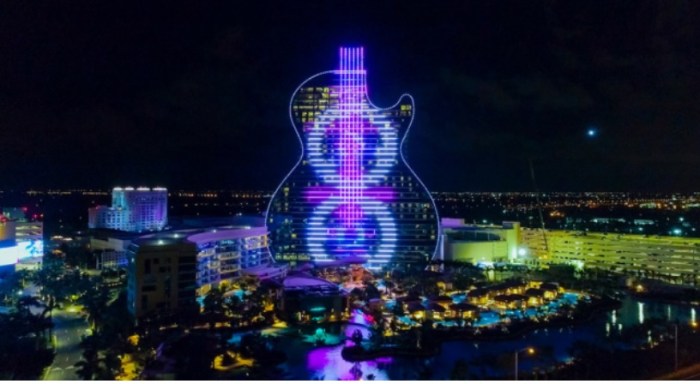
The world’s first guitar-shaped hotel has officially opened for business. Standing 450 feet tall is the new face of the Seminole Hard Rock Hotel & Casino in Hollywood, Florida—a surprisingly striking piece of architecture considering (or because?) it resembles a giant instrument.
The curvaceous building is part of a $1.5 billion expansion on the existing entertainment complex that wrapped up construction this summer. Designed by Hard Rock International’s go-to architect, Steve Peck of the Las Vegas-based firm Klai Juba Wald Architecture, the unprecedented structure took nearly 10 years to design and build. The 36-story hotel is the type of architectural landmark fit for the Hard Rock brand; it even features a rockin’ light show across its reflective glass facade.
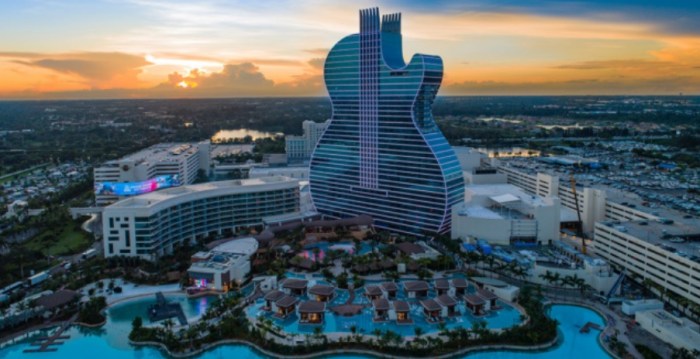
Created in conjunction with DeSimone Consulting Engineers, who led the engineering on the project, the tower blends into the dark sky at night. The design team worked with Boston lighting designer DCL and Montreal digital agency Float4 to integrate 16,800 V-sticks (strips of LED video fixtures) on the rim of the guitar and the six vertical strings that run down its middle. Each evening, the hotel becomes a temporary light installation with interactive choreography set to music from Float4 and LED experts SACO Technologies.

Zaan is known for its charming and iconic green cottages. They just aren’t usually stacked 11 stories high to make one gigantic hotel that many have deemed an architectural monstrosity.
Inspired by the small cottages of the region and Claude Monet’s painting of the blue house of Zaandam, architect Wilfried van Winden set about creating a hotel that was both futuristic and retro simultaneously. Complete with 160 rooms, Turkish baths, a bar, and a swimming pool, Winden’s masterpiece has all the regular amenities of a hotel. Yet its design manages to allude to the idea that there is no place like home.
Altogether, the exterior features nearly 70 cottage facades, each with a varied shade of green and different window layout. Topped off with a red-orange roof, the stacked-cottage Inntel Hotel is one of the first parts of a revitalization campaign in the city, aimed at restoring its buildings without losing the charm of the town’s trademark architecture.


A Chinese local state media report said earlier on Thursday that 100,000 ducks would be sent from the country’s Zheijiang province to Pakistan to eat-up the billions of locusts that are causing mass crop devastation.
Pakistan declared a national emergency earlier this month, saying locust figures were the worst in more than two decades. The media report initially stated ducks would be deployed to the worst affected affected areas — Sindh, Balochistan and Punjab provinces. China had used ducks in the past to chomp through crop-damaging locusts.
The initial media report generated 520 million views on China’s popular social media platform Weibo with netizens rooting for the birds by posting comments including “Heroic ducks in harm’s way!” and “Go ducks! I hope you come back alive!

Update:
Experts assigned to help Pakistan combat its locust infestation have stepped-back from an earlier proposal of deploying some 100,000 ducks to devour the plague of crop-ravaging insects. They suggested pesticide instead.
Pakistani climate not duck-friendly
Professor Zhang Long, a member of the China Locust Disaster Control Task Force and a professor at China Agriculture University, told reporters the Chinese ducks would not be suited to the environmental conditions in Pakistan.
“Ducks rely on water, but in Pakistan’s desert areas, the temperature is very high,” Zhang said. He and the other members of the Chinese specialist group have been designated to help Pakistan fight the locusts.
Instead, Zhang advised the use of chemical or biological pesticides, and suggested using an aircraft to deploy the pesticides, according to China’s CCTV.
Favorable weather conditions and a delayed government response have helped the locusts breed and attack crop areas.
The desert locusts — large herbivores that resemble grasshoppers — arrived in Pakistan from Iran in June and have already ravaged cotton, wheat, maize and other crops.
East Africa and India have also seen mass crop destruction due to locust invasions. In January, the UN called for international help to fight swarms of desert locusts sweeping through East Africa.
Locust swarms can fly up to 150 km (90 miles) a day with the wind, and consume as much in one day as about 35,000 people.

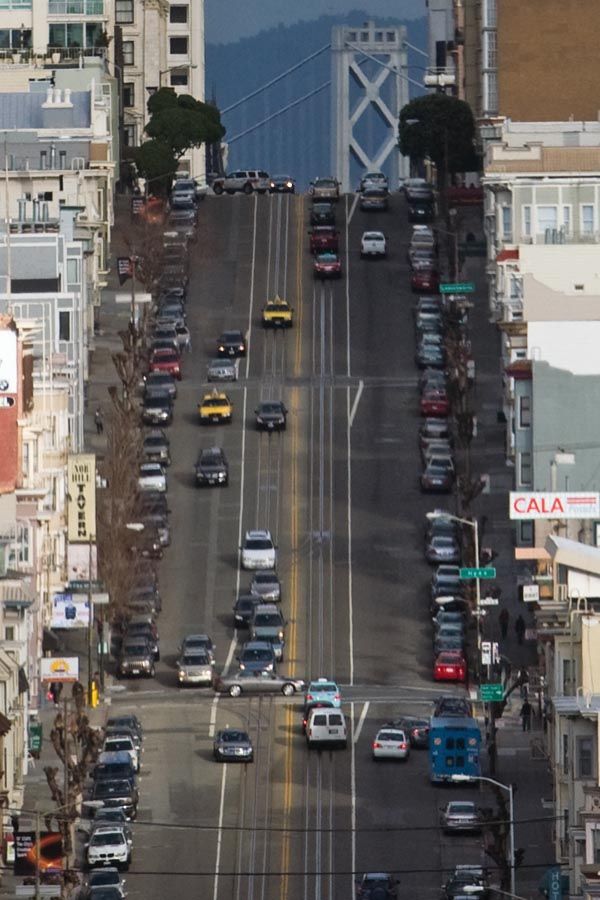
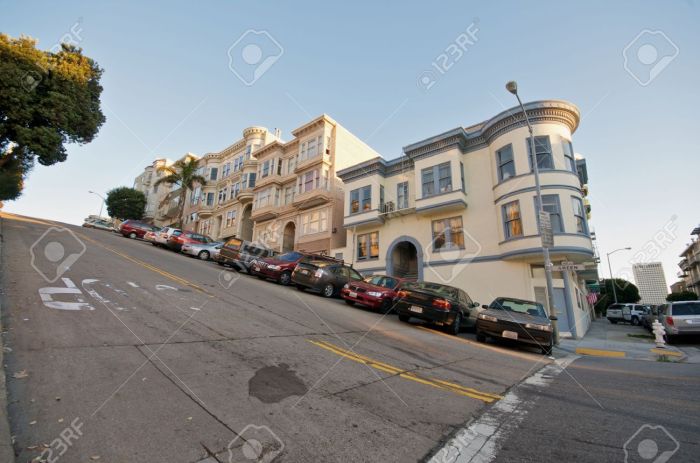
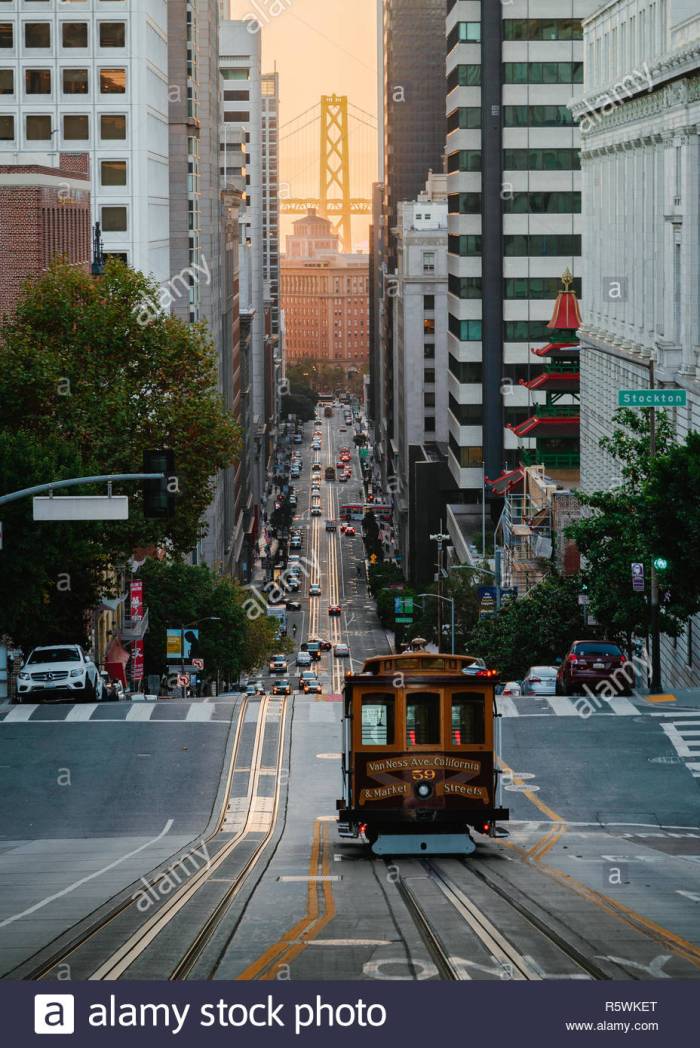
Many years ago I made it to San Francisco on a trip. It is an amazing city in terms of stunning architecture, giant bridges, interesting cultural areas and very original scenes. The geography and topography are unlike any other major city in North America.
San Francisco has very big hills throughout its whole area. This creates very steep streets. Driving down these streets is nerve-wracking when one is not used to them. You come to a cross street and you cannot see the street below. It is like you are approaching a cliff.
One of the effects of these steep streets is that the sidewalks get very hard to walk up. So certain streets consist not of sidewalks, but steps. It was absolutely amazing to see these steps that only the physically fit could, or should tackle. And that an intoxicated person should avoid at all costs.


















Long before President Donald Trump called North Korean leader Kim Jong Un “Little Rocket Man” or met him in person, Trump had an idea to safeguard millions of South Koreans from the dictator’s wrath: Move them. Move them all.
According to an excerpt from Peter Bergen’s new book Trump and His Generals: The Cost of Chaos, posted by Time on Thursday morning, the president made a startling comment during a mid-April 2017 briefing on North Korea.
After seeing a satellite image showing that Seoul — South Korea’s capital, home to 10 million inhabitants — sits just 15 miles south of the country’s heavily militarized border with the North, Trump asked, “Why is Seoul so close to the North Korean border?”
He then made a rather unorthodox suggestion: “They have to move,” Trump said, referring to the city’s residents. “They have to move!” he repeated. Those in attendance at the Oval Office briefing were uncertain whether or not Trump was joking, Bergen writes.
Trump, Bergen notes, had already been briefed numerous times on the danger Seoul faces every day. The city is in direct firing range of thousands of pieces of North Korean artillery that are already lined up along the border between the two countries, also known as the demilitarized zone (DMZ). Around 70 percent of North Korea’s ground forces are within 90 miles of the DMZ, presumably ready to move south at a moment’s notice.
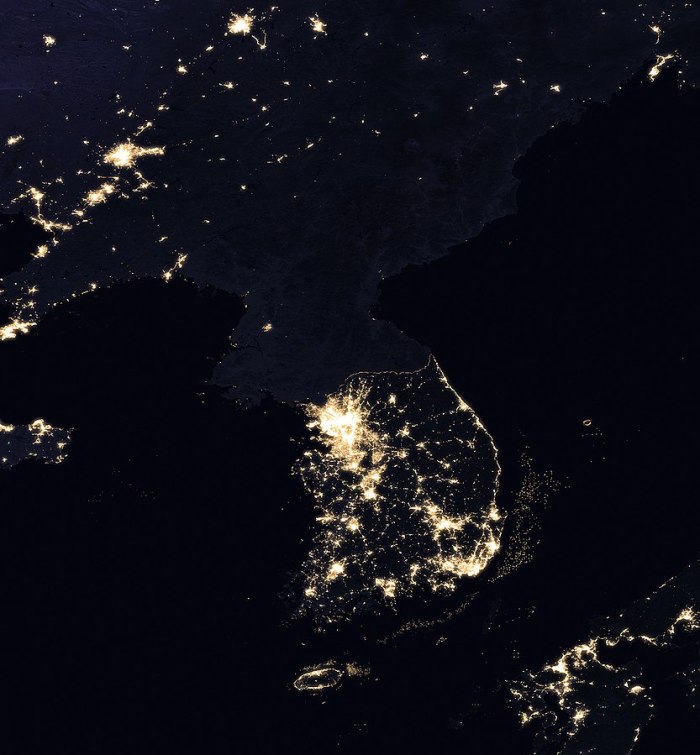
Seoul is the big bright spot middle to the left. South Korea is immersed in lights throughout the country. North Korea has no lights. The one small light on the left is the capital city Pyongyang.
Simulations of a large-scale artillery fight between the North and South produce pretty bleak results. One war game convened by the Atlantic magazine back in 2005 predicted that a North Korean attack would kill 100,000 people in Seoul in the first few days alone. Others put the estimate even higher. A war game mentioned by the National Interest predicted Seoul could “be hit by over half-a-million shells in under an hour.”
Evidently, Trump hadn’t realized just how vulnerable the city’s 10 million citizens were until he saw that satellite photo. So his alarm is understandable. And sure, perhaps he was kidding. But given Trump’s history of suggesting wildly infeasible or downright illegal policy ideas, it’s also entirely possible he was serious.
Pushing 10 million people — roughly the population of the entire country of Sweden — further south on the peninsula would be a nearly impossible exercise. It’s just too many people to move and would cost a fortune in both transportation and relocation, and of course North Korea would notice such a mass migration.
What’s more, North Korea has weapons that can reach all of South Korea, meaning Seoul’s dwellers would need to leave the country entirely to be safer. Now that North Korea has shown it has a missile that could reach the US — potentially carrying a nuclear bomb — it’s hard to fathom where those millions could go to avoid any danger.
While there’s no question Seoul remains a major target and could be decimated in a war with North Korea, the city’s location remains a sticky reality.
The comment is “uniquely Trumpy,” says Catholic University US foreign policy expert Justin Logan, “but it’s a reminder that the nuclear issue, which is all we talk about, is one part of a larger security problem on the [Korean] Peninsula. A nuclear deal wouldn’t deal with the geography or artillery.”
It’s a problem that even Steve Bannon, Trump’s former lead strategist, lamented in an August 2017 interview with the American Prospect. “Forget it,” he said. “Until somebody solves the part of the equation that shows me that ten million people in Seoul don’t die in the first 30 minutes from conventional weapons, I don’t know what you’re talking about, there’s no military solution here, they got us.”
Trump has changed his tune since the early days of his presidency. He no longer calls for drastic measures like a mass movement of civilians, instead preferring to engage Kim directly to convince him to dismantle his nuclear program. That effort has sputtered, and it appears that unless real progress is made soon, North Korea will abandon diplomacy in favor of further ramping up its weapons development.
“The dialogue touted by the US is, in essence, nothing but a foolish trick hatched to keep the DPRK bound to dialogue and use it in favor of the political situation and election in the US,” Ri Thae Song, vice minister in charge of US affairs, told the state-run Korean Central News Agency this week, using the initials for North Korea’s official name.
“The DPRK has heard more than enough dialogue rhetoric raised by the US whenever it is driven into a tight corner,” Ri continued. “So, no one will lend an ear to the US any longer.”
So if Trump wants to avoid a turbulent 2020, he’ll have to come up with a new idea — and fast.

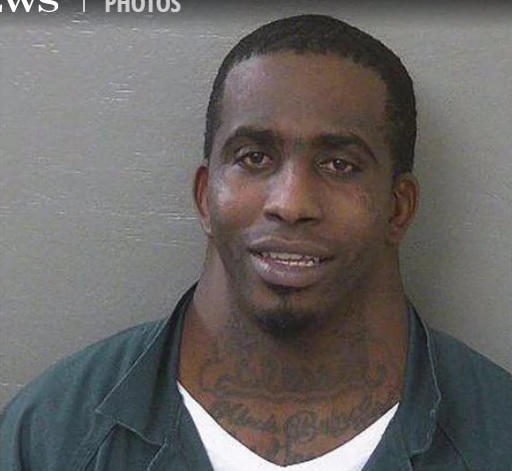
William Bottoms Jr., 29, was convicted of the murders of two Louisiana men on August 9, 2019. Bottoms, whose entire face and neck is covered in tattoos, was found guilty of two counts of second-degree murder for the murders of Muhammad Hussain, 29, and Dedrick Williams, 23, in 2017. Bottoms’ defense lawyer asked the jury at one point during the trial whether his appearance had any effect on their verdict. (East Baton Rouge Parish Sheriff’s office via AP)









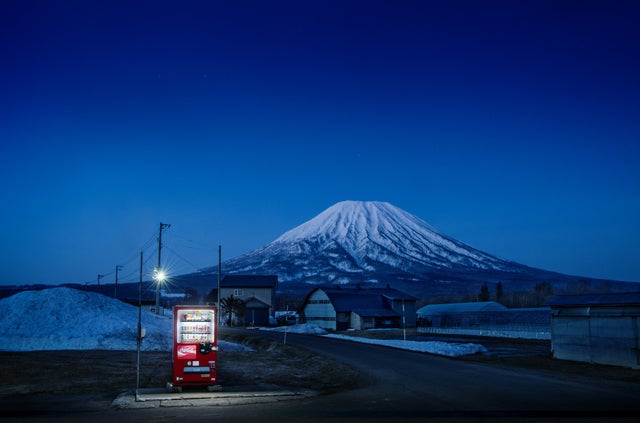
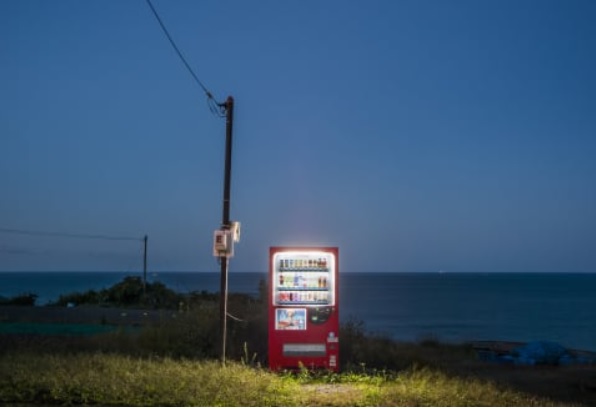
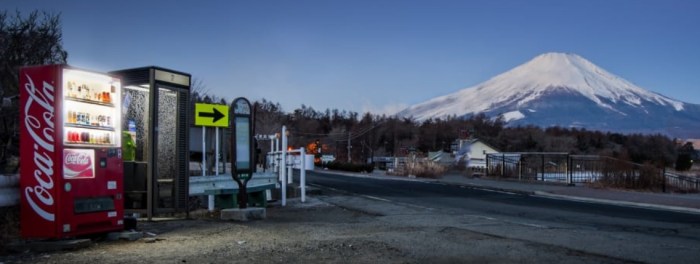
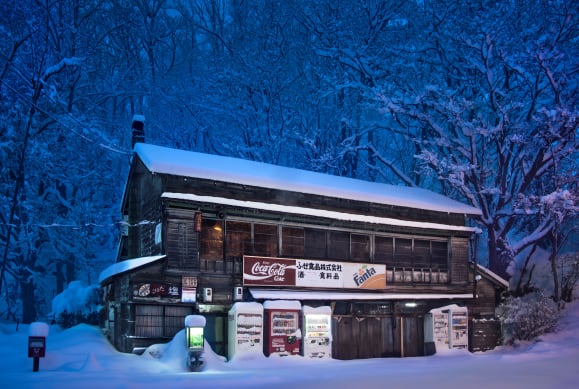
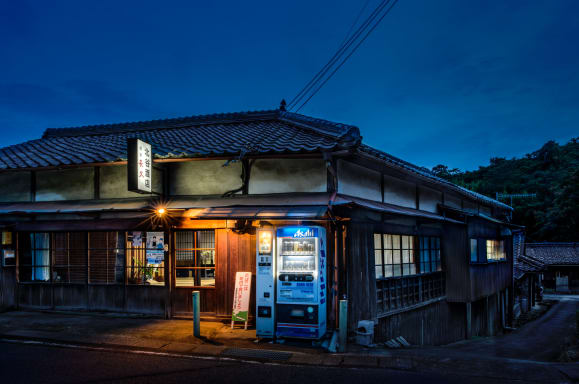
Vending machines are a mainstay of Japanese culture. There are over 5.5 million in the country — one for every 23 people, the highest ratio in the world.
They’re ubiquitous and almost always outdoors, making them immediately stand out to anyone visiting Japan. They sell nearly everything — including some rather peculiar items. Most are stocked with hot and cold drinks. Some have funny English names, like “Pocari Sweat” or “Calpis Water.”
At night, rather than switching off, the machines come to life with vibrant colors and bright lights. Photographer Eiji Ohashi has spent years photographing them across Japan in the dead of the night, and now he has brought the images together in a book titled “Roadside Lights.”
For Ohashi, the machines once served as beacons: “I started this project nine years ago, when I noticed a shiny vending machine near my home as I was coming back from my night shift,” he said in an email interview. “At the time, I was living in a town in the north of Japan that would get hit by terrible blizzards during the winter months. I’d drive my car in (these) conditions and use the light of the vending machines to guide me.”
Japanese culture has an appreciation for process. Signs explaining how to queue, how to get a haircut or how to use the toilet are posted everywhere. Guesswork is loathed.

Ice breaking on the Red River is about to get underway in Selkirk Manitoba.
At the base of Netley Creek Monday morning, crews pieced together three Amphibex machines, which by the end of March, should leave a trail of broken ice 28 kilometres long.
“The mouth of Netley Creek is a really important area on the Red River. If ice jams up in this location, it backs into Petersfield,” said Darrell Kupchik, executive director of North Red waterway maintenance.
Ice breaking is starting around the same time as usual, he said, though noting that “the window of opportunity is very small in ice-breaking.”
In years past, crews who started a bit earlier saw parts of the Red re-freeze, Kupchik cited.

Crews pieced together three Amphibex machines on Monday near Selkirk Man. (Travis Golby/CBC)
The three Amphibex machines, which cost roughly $1.2 million each, were originally designed for clearing out the beds of bodies of water — an act called dredging. They were modified, however, to bear the brunt of ice breaking, Kupchik said.
“Once we start these units up today, we won’t shut them off until the end of March,” Kupchik said.
Once the work is done near Selkirk, the Amphibex machines will move about 120 kilometres north of Winnipeg to the Icelandic River near Riverton, Man., then Fisher River Cree Nation and Brokenhead Ojibway Nation.
The machines will be on stand-by in case ice jams occur in the spring, but once the flood risk is gone, they will undergo maintenance, Kupchik said.





 The MarkoZen Blog