



BBC Magazine
How do you build in the most isolated place on Earth? For decades Antarctica – the only continent with no indigenous population – hosted only the simplest huts as human shelters. But, as Matthew Teller finds out, architecture in the coldest, driest, windiest reaches of our planet is getting snazzier.
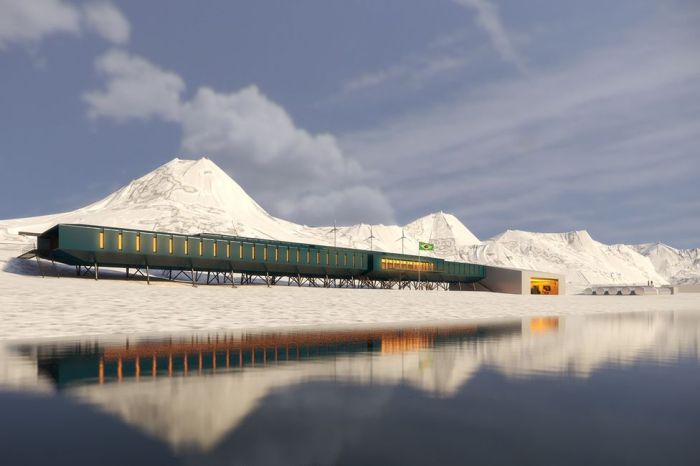
Welcome to Brazil’s Comandante Ferraz Antarctic research station.
It’s an eye-popping, futuristic design – a dark, sleek building, low and long, that is destined to be a temporary waterfront home for up to 65 people at a time.
The price tag is a hefty $100m (£80m). And while a Chinese company is building it, it’s not in China, and almost no-one will ever see it.
After the original burned down in 2012, the Brazilian navy launched an architectural competition for a replacement design – won by a local firm – and then awarded the building tender to a Chinese defence and engineering contractor, CEIEC. It was completed in 2018.

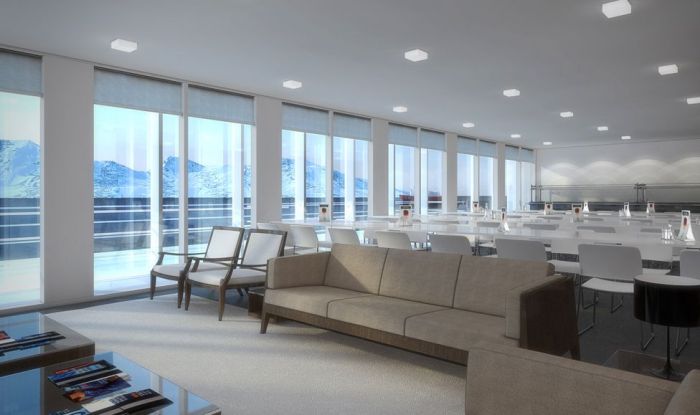
Image caption The upper block will contain cabins, dining and living space; the lower block will house laboratories and operational areas
Located on a small island just off the coast of Antarctica, it lies almost 1,000km (600 miles) south of the tip of South America. No scheduled air routes come close and it’s way off any shipping lanes.
And even if you could reach it yourself, like all Antarctic research stations Comandante Ferraz will be closed to the public. Virtually nobody other than the crews posted there will ever see it in the flesh. So why, you may ask, spend so much on architectural style? Wouldn’t a dull but functional building do just as well?
Brazil is not alone in paying for eye-catching design, though.
In 2013, India unveiled its Bharati station, with a similar modernist design.
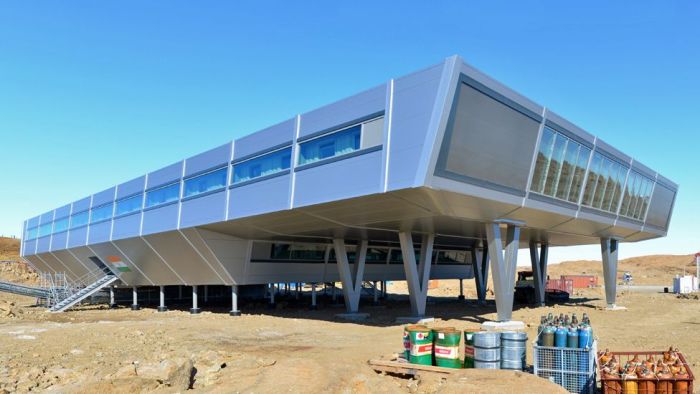
Designed by bof arkitekten, Bharati overlooks the sea and is used to study polar marine life
It was made from 134 prefabricated shipping containers, for ease of transport and construction, but you would never guess it from the outside.
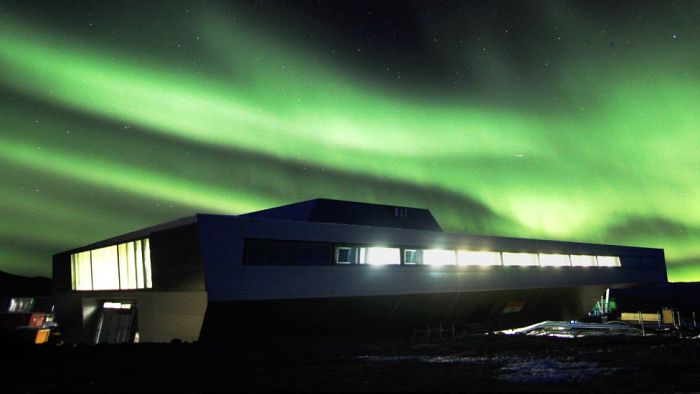
And the following year, South Korea opened its Jang Bogo station – a grand, triple-winged module lifted on steel-reinforced blocks, capable of supporting a crew of 60.
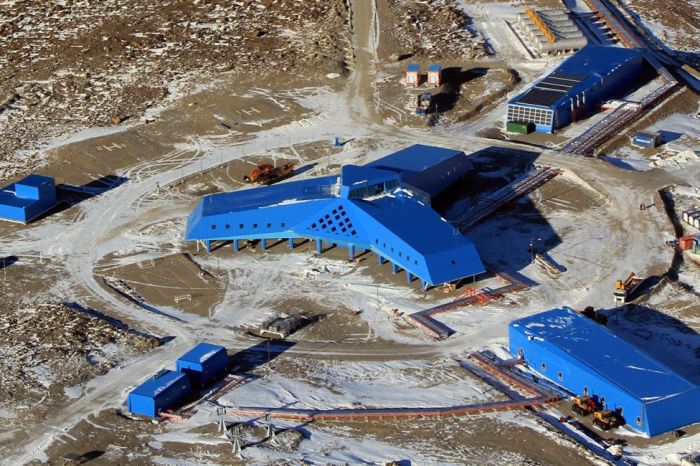
What is the explanation for this architectural flamboyance?
“Antarctic stations have become the equivalent of embassies on the ice,” says Prof Anne-Marie Brady, editor-in-chief of the Polar Journal and author of China as a Polar Great Power.
“They are showcases for a nation’s interests in Antarctica – status symbols.”
Those interests could be purely scientific. But a moratorium on mineral prospecting runs out in just over 40 years’ time, and every Antarctic player also wants to be ready to take advantage, should it not be extended.
Planting a dramatic building on the ice has become the modern equivalent of explorers of old planting a flag.
It wasn’t always like this.
In March 1903, the 33 men of the Scottish National Antarctic Expedition landed on the outlying South Orkney Islands and built a dry-stone shack.
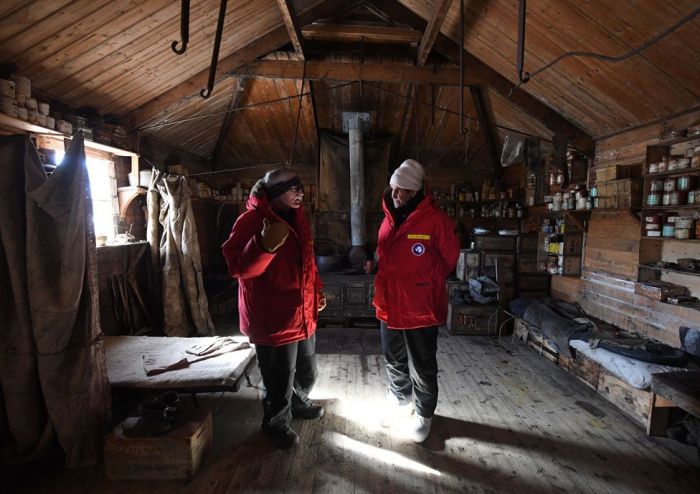
John Kerry visited the hut in November.
Then came a – relative – building boom, spurred by the International Geophysical Year (IGY) of 1957-58, a global project for co-operation in science. The 1959 Antarctic Treaty, which resulted from the IGY, suspended all territorial claims, but that led many countries to set about consolidating their presence in other ways, such as construction.
The treaty’s clause giving countries conducting “substantial research activity” in Antarctica a vote in meetings to determine the continent’s future was another incentive to maintain a physical presence.
The US’s sprawling McMurdo research station dates from this period. Powered from 1962 to 1972 by a nuclear reactor, it is the biggest settlement on the continent, housing a summer population of about 1,200.
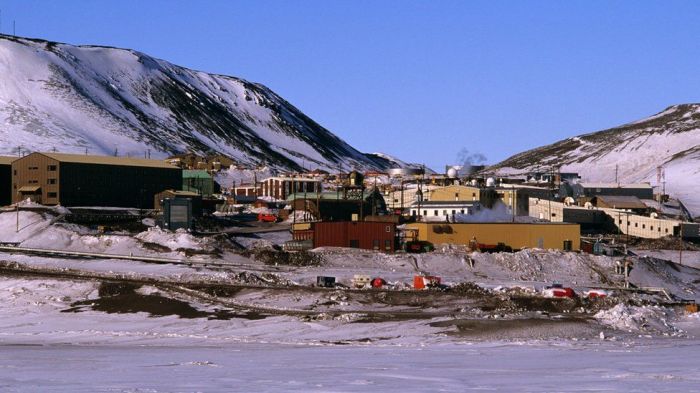
The McMurdo station has a harbour, landing strips on sea ice and shelf ice, and a helicopter pad
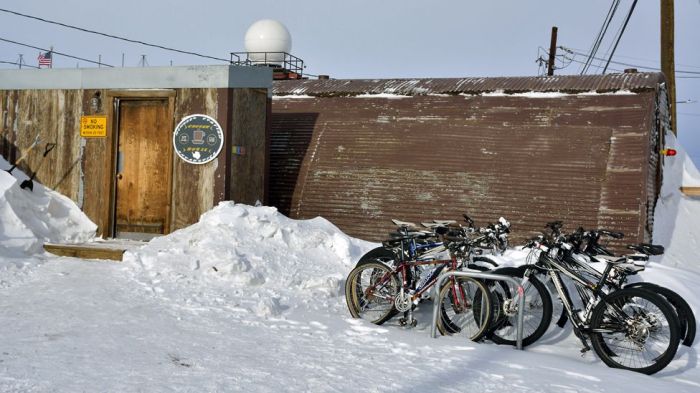
The McMurdo coffee house serves hot drinks to workers and is attached to a small cinema – the chapel of the snows, a non-denominational Christian church, is nearby
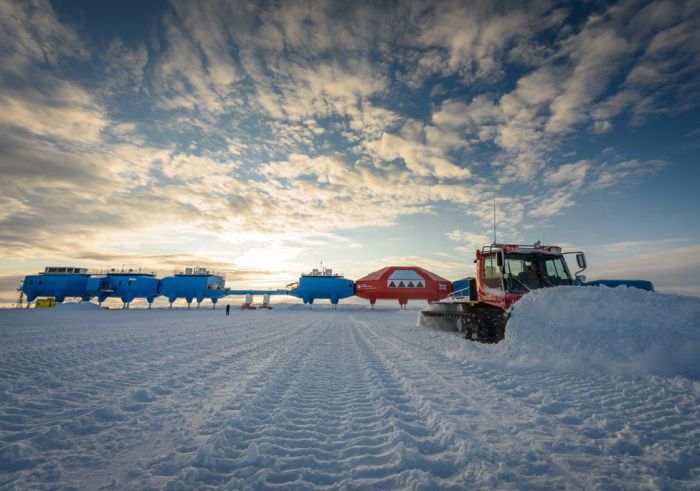
Designed by Hugh Broughton Architects and Aecom, Britain’s Halley VI’s red module contains the communal areas
Halley VI, however, is Antarctica’s first relocatable research station. Its eight connected pods – like giant, colourful train carriages, which can be isolated to limit the spread of fire – sit on hydraulic legs mounted on huge, 8m-long skis. This means that the pods can be detached from each other, dragged by bulldozers to a new location, and the whole station reassembled.
That design is being put to good use, as Halley is currently being moved to avoid a chasm that is opening up in the ice nearby.
And Halley VI is both glamorous and comfortable.

Unlike earlier Halley stations, each bedroom now has a window to the outside
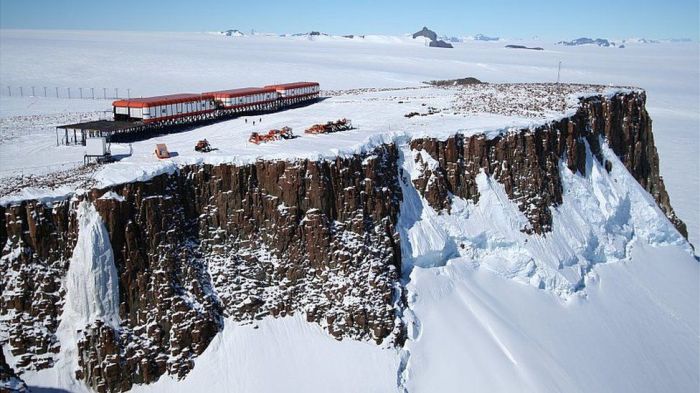
“All the newest bases look good as well as do the science – it’s a reflection of the priorities of our era,” says Anne-Marie Brady.
South Africa was one of the first countries to solve the problem of snow accumulation with its SANAE IV base, which opened in 1997. It was designed with stilt-like legs, which let snow blow under the building.
Germany applied the same concept to its Neumayer III base, which opened in 2009, with an extra refinement. Sixteen hydraulic pillars allow the entire two-storey structure to be raised every year by around a metre. The foot of each pillar is then lifted and replaced on a new firm base of packed snow.
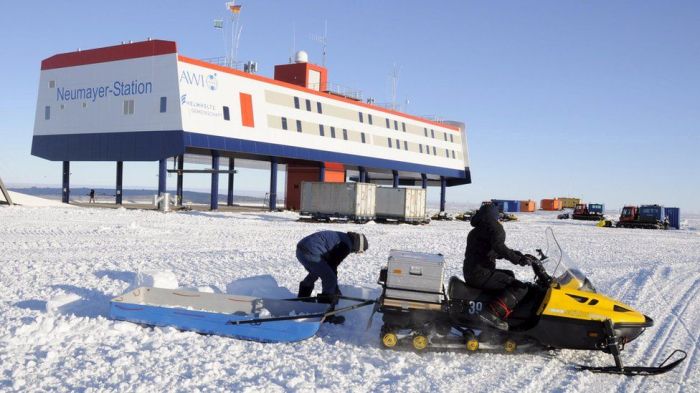
Neumayer III always stands 6m above the ice – up to 50 people live there during the summer and nine in the winter
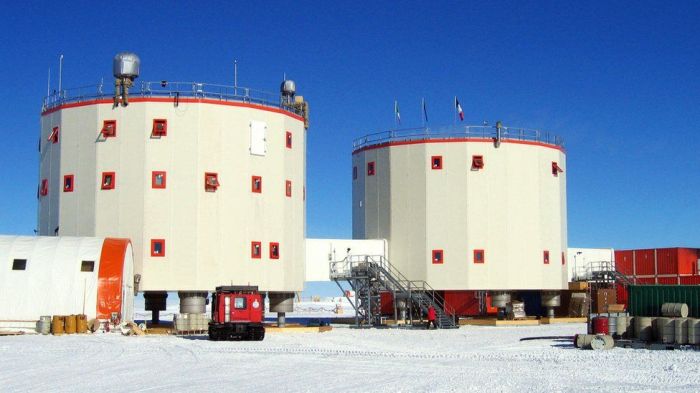
Like the UK’s Halley base, Concordia, an Italian and French research facility is used by the European Space Agency to study the physical and psychological effects of isolation – the nearest people are stationed 600 km (370 miles) away
Another element of Antarctic architecture that has become critical is energy efficiency. Most stations run on polar diesel, which is expensive, polluting and difficult to transport. Belgium’s Princess Elisabeth station, an aerodynamic pod raised on steel legs, is the first with zero emissions.
Since its inauguration in 2009 it has run entirely on solar and wind energy, and – even here – has no heating. The station’s layered design means interior temperatures are maintained from waste heat generated by electrical systems and human activity, and dense wall insulation reduces heat loss to almost zero.
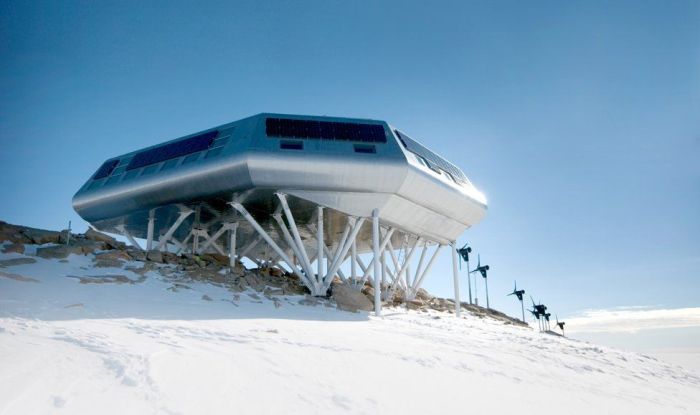
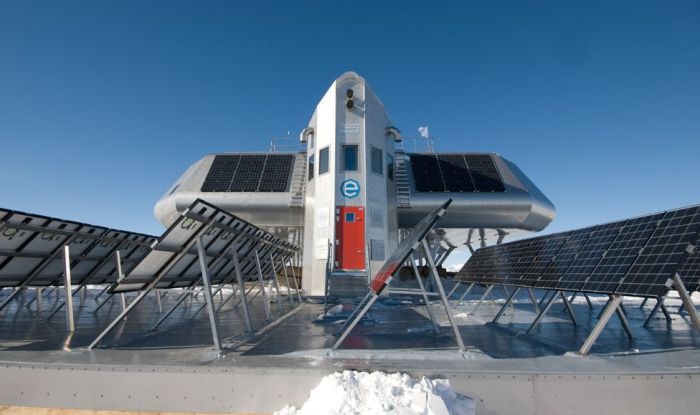
Photovoltaic solar panels also provide electricity, while thermal solar panels melt snow and heat water for bathrooms and kitchens
If the Princess Elisabeth station looks like something out of a Bond movie, China’s latest Antarctic station Taishan – its fourth – has been likened to a flying saucer. It was rush-built in 45 days in 2013-14, and is intended to last only a few years.
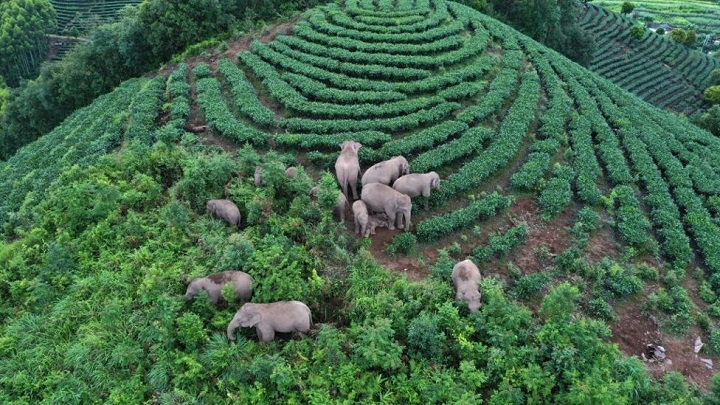
For the past 17 months, a wandering herd of elephants in China has embarked on an adventure of mammoth proportions.
Now, after straying hundreds of kilometres from their nature reserve, the animals are on the final leg of their journey home, Chinese officials announced last week.
From breaking into villagers’ homes to giving birth while on the road, it’s been an epic journey that could have been straight out of The Lord of the Rings.
This is the story of how the fellowship of elephants journeyed there and back again.
Leaving the shire
Tucked in the bottom end of the southern Yunnan province, the sprawling Xishuangbanna National Nature Reserve lies right by the border of Myanmar and Laos.
A lush tropical forest that stretches for about 241,000 hectares – about one and a half times the size of London – it is home to most of Yunnan’s endangered Asian elephants.
Some time in March 2020, a herd of about 14 elephants decided to leave this jungle paradise, heading north.
Nobody batted an eyelid at first. Wild elephants are known to roam freely and regularly in the region, such that one city, Pu’er, even runs “elephant canteens” to feed their large visitors.
Most don’t stray very far, and usually head home after a while. But months after the herd left, officials started to realise that this was no ordinary trip.
This realisation literally hit home earlier this year when reports emerged of the elephants crashing into people’s houses, munching on their crops, and guzzling their water.
CCTV footage of the elephants wandering around the streets of various cities also went viral.
When Brigitte Xie’s parents signed her up for piano classes during the pandemic, they just wanted to keep her busy. Now, she’s become the youngest winner of the prestigious Elite International Music Competition and has been invited to play at Carnegie Hall.
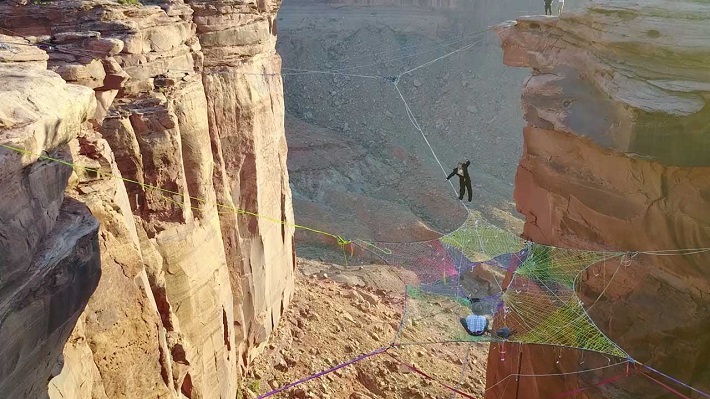
The Moab Monkeys, a Utah-based group of athletes, have no issues with vertigo or adrenaline. They recently set up a spider web net over a canyon near Moab, Utah at a head-spinning height of 400 ft to relax and BASE jump. The hand-woven, pentagonal web is 200ft. away from the nearest cliff.
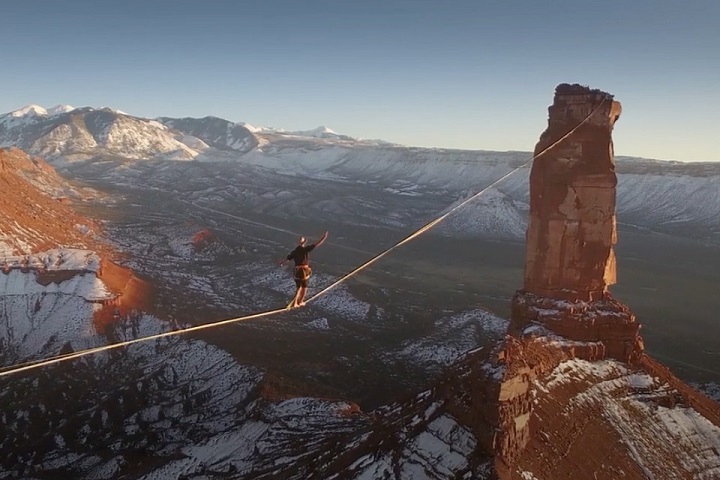
To chill, shoot photos and enjoy the breathtaking views, they first had to walk the 200ft. distance on a rope. Then they left the net by diving into the void through a hole in the middle of the net, landing with their parachutes minutes later.
Moab Monkeys is a group that specializes in slacklining, highlining, BASE jumping and filmmaking. They have performed their stunts in places like Rio and the Austrian Alps. However it’s no coincidence that their hometown is Moab – a town in Southern Utah famous for its Mars-like landscape with canyons, cliffs and arches.


–Charles Bolden made the light-hearted remarks after being questioned by a ten-year-old on Sky News.
Bolden, who became the administrator of NASA back in 2009, had been answering questions put to him by schoolchildren on the channel’s Hot Seat programme when he was asked about alien life.
“I do believe that we will someday find other forms of life or a form of life, if not in our solar system then in some of the other solar systems – the billions of solar systems in the universe,” he said.
When asked about Area 51 he went on to mention that he had visited the secretive base himself.

“I’ve been to a place called that but it’s a normal research and development place,” he said. “I never saw any aliens or alien spacecraft or anything when I was there. I think because of the secrecy of the aeronautics research that goes on there it’s ripe for people to talk about aliens being there.”
Bolden however was confident that evidence of alien life would be found sooner or later.
“Today we know that there are literally thousands, if not millions of other planets, many of which may be very similar to our own earth,” he said. “So some of us, many of us believe that we’re going to find evidence that there is life elsewhere in the universe.”
No Space Aliens at the secretive base. Don’t be so sure.
Area 51


If there are no Aliens at the base, then what in the hell are these things?


What the name of heaven and hell is this then?






 The MarkoZen Blog
