








Bringing Eye Contact back to the 21st Century with the Texting Hat

Okay, so maybe this isn’t a real thing yet… but, c’mon, you know it’s coming! With the tagline “Bringing eye contact back to the 21st century” the Texting Hat is here to solve all your phone zombie problems. What a great invention. You look like you actually care when in reality who gives a f#@k!
Right now they’re not for sale, but the Texting Hat website encourages you to just make your own goddamned hat:

Vintage Circus Posters

The circus, as it we think of it today, originated in Britain in 1768 by inventor Philip Astley. Astley presented shows that included horse riding tricks, acrobats, music and clowns. None of these elements were new to the British public, but Astley was the first to combine them into a single show.
Astley did not call his “Amphitheatre of Equestrian Arts” a circus. That title was awarded to a later rival’s show in 1782, and became the generic term.
In 1793 Englishman John Bill Ricketts brought the circus to the U.S., opening in Philadelphia.
The traveling circus tent was invented by American Joshua Purdy Brown, replacing the usual wooden construction with a full canvas tent. His system became commonplace by the mid 1830s.
The unique character of the American circus emerged: a traveling tent-show coupled with a menagerie and run by businessmen. It was very different model from European circuses, which for the most part remained under the control of performing families.
P. T. Barnum improved on the circus format, introducing circus trains as transport between towns. He also introduced the “freak” show, exhibiting people who were excessively tall or short, fat or thin, or with medical conditions that gave them unusual appearances. Barnum’s format became popular in Europe around the 1900s.
The number of horse riding performances gradually declined in favor of clowns, acrobats, gymnasts and jugglers, stunt acts such as fire eaters and acts involving animals. The incorporation of animals in circus acts or in menageries has almost ceased after concerns over the standards of their accommodation, training and elements of their performances.
These posters, drawn from the Circus Museum in the Netherlands, demonstrate some of the wide-ranging themes used by European circuses across the 20th century.


1915
“Circus Strassburger”


1923
“Circus Busch. The Sensational! Marino, Destroyer of cars. The strongest driver in the world.”

Circa 1918


1932
“Looping the loop in the open ring. Laughing in the face of death! The World Champion Nic. Diavolo. Circus Maxo.”

New Walls at the Fort
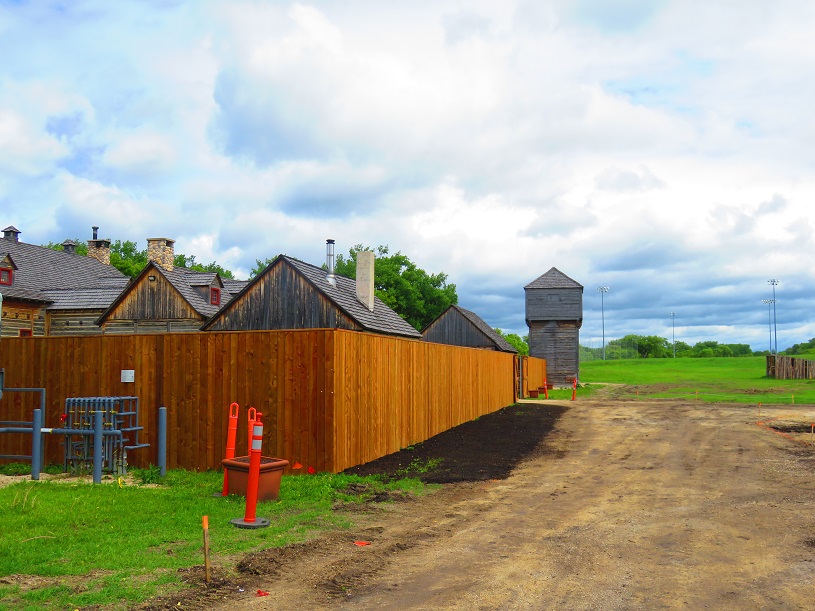
Fort Gibraltar is a replica fort in Winnipeg. The old walls were torn down after an inspection deemed them to be unsafe. New temporary walls have been put up that are 8 feet high. The old walls were 16 feet high.
Some history:
Fort Gibraltar was founded in 1809 by Alexander Macdonell of Greenfield of the North West Company in present-day Manitoba, Canada. It was located at the confluence of the Red and Assiniboine rivers in or near the area now known as The Forks in the city of Winnipeg. Fort Gibraltar was renamed Fort Garry after the merger of North West Company and the Hudson’s Bay Company in 1821, and became Upper Fort Garry in 1835.

Currently:
Old wall

Temporary wall









How Our World Would Look If You Were A Bird

Barcelona

Central Park, New York City

Venice

Amsterdam

Giza Pyramids, Egypt

Niagara Falls

Namib Desert, Namibia

Chicago

Shanghai

Cape Town, South Africa

Moscow

Vancouver

Seattle

Bac Son Valley, Vietnam
 The MarkoZen Blog
