War
Ghost Army of World War II
The Ghost Army was a United States Army tactical deception unit during World War II imitating earlier British operations, officially known as the 23rd Headquarters Special Troops. The 1,100-man unit was given a unique mission within the U.S Army: to impersonate other U.S. Army units to deceive the enemy. From a few weeks after D-Day, when they landed in France, until the end of the war, they put on a “traveling road show” utilizing inflatable tanks, sound trucks, fake radio transmissions and pretence. They staged more than 20 battlefield deceptions, often operating very close to the front lines. Their mission was kept secret until 1996, and elements of it remain classified.
Inspiration for the unit came from the British units who had honed the deception technique for the battle of El Alamein in late 1942. The U.S. unit had its beginnings at Camp Forrest, Tennessee, and was fully formed at Pine Camp, NY (now Fort Drum), before sailing for the United Kingdom in early May 1944. In Britain they were based near Stratford upon Avon, and troops participated in Operation Fortitude, the British-designed and led D-Day deception of a landing force designated for the Pas-de-Calais.
Some troops went to Normandy two weeks after D-Day, where they simulated a fake Mulberry harbour at night with lights which attempted to draw German artillery from the real ones. After which the entire Unit assisted in tying up the German defenders of Brest by simulating a larger force than was actually encircling them.
Inflatable Tanks and Truck


Ghost soldiers were encouraged to use their brains and talent to mislead, deceive and befuddle the German Army. Many were recruited from art schools, advertising agencies and other venues that encourage creative thinking. In civilian life, ghost soldiers had been artists, architects, actors, set designers and engineers.
Although the 23rd Headquarters Special Troops consisted of only 1,100 soldiers, the contingent used equipment pioneered by British forces such as dummy tanks and artillery, fake aircraft and giant speakers broadcasting the sounds of men and artillery to make the Germans think it was upwards of a two-division 30,000 man force. The unit’s elaborate ruses helped deflect German units from the locations of larger allied combat units.
The unit consisted of the 406th Combat Engineers (which handled security), the 603rd Camouflage Engineers, the 3132 Signal Service Company Special and the Signal Company Special.
As the Allied armies moved east, so did the 23rd, and it eventually was based within Luxembourg, from where it engaged in deceptions of crossings of the Ruhr river, positions along the Maginot Line, Hürtgen Forest, and finally a major crossing of the Rhine to draw German troops away from the actual sites.
Inflatable canon

From the air the deception was very convincing.

The visual deception arm of the Ghost Army was the 603rd Camouflage Engineers. It was equipped with inflatable tanks, cannons, jeeps, trucks, and airplanes that the men would inflate with air compressors, and then camouflage imperfectly so that enemy air reconnaissance could see them. They could create dummy airfields, troop bivouacs (complete with fake laundry hanging out on clotheslines), motor pools, artillery batteries, and tank formations in a few hours. Many of the men in this unit were artists, recruited from New York and Philadelphia art schools. Their unit became an incubator for young artists who sketched and painted their way through Europe. Several of these soldier-artists went on to have a major impact on art in the post-war U.S.A . Bill Blass, Ellsworth Kelly, wildlife artist Arthur Singer and Art Kane were among the many artists who served in the 603rd.
The 3132 Signal Service Company Special handled sonic deception. The unit coalesced under the direction of Colonel Hilton Railey, a colorful figure who, before the war, had “discovered” Amelia Earhart and sent her on her road to fame.
Aided by engineers from Bell Labs, a team from the 3132 went to Fort Knox to record sounds of armored and infantry units onto a series of sound effects records that they brought to Europe. For each deception, sounds could be “mixed” to match the scenario they wanted the enemy to believe. This program was recorded on state-of-the-art wire recorders (the predecessor to the tape recorder), and then played back with powerful amplifiers and speakers mounted on halftracks. The sounds they played could be heard 15 miles (24 km) away.

500 pound speakers that could be heard 15 miles (24 kilometres) away.

“Spoof radio”, as it was called, was handled by the Signal Company. Special Operators created phony traffic nets, impersonating the radio operators from real units. They were educated in the art of mimicking a departing operator’s method of sending Morse Code so that the enemy would never detect that the real unit and its radio operator were long gone.
To complement existing techniques, the unit often employed theatrical effects to supplement the other deceptions. Collectively called “atmosphere”, these included simulating actual units deployed elsewhere by the application of their divisional insignia, painting appropriate unit insignia on vehicles and having the individual companies deployed as if they were regimental headquarters units. Trucks/Lorries would be driven in looping convoys with just two troops in the seats near the rear, to simulate a truck full of infantry under the canvas cover. “MP’s” (Military Police) would be deployed at cross roads wearing appropriate divisional insignia and some officers would simulate divisional generals and staff officers visiting towns where enemy agents were likely to see them. A few actual tanks and artillery pieces were occasionally assigned to the unit to make the “dummies” in the distance appear more realistic.

Helicopter Attack
‘Apocalypse Now’ is one of the best war movies ever produced. I’m not glorifying war, it is a terrible horrendous phenomenon that human beings carry out. But it is riveting action packed craziness.


Ukraine war: Could Russia use tactical nuclear weapons?
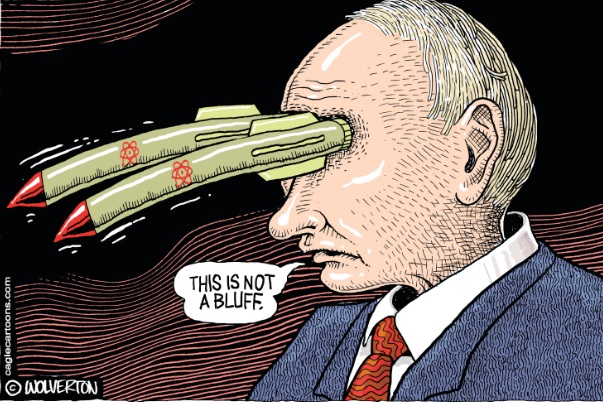
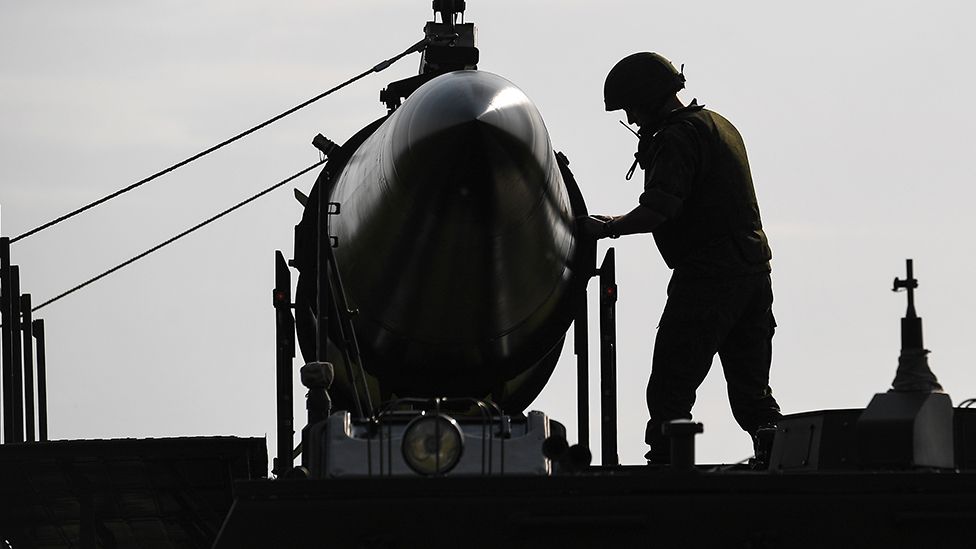
Russia’s President Vladimir Putin has said he’s ready to use nuclear weapons to defend Russian territory, raising the fear he might use a small, or “tactical” nuclear weapon in Ukraine.
US President Joe Biden has warned him that doing so would be the most serious military escalation since World War II.
What are tactical nuclear weapons?
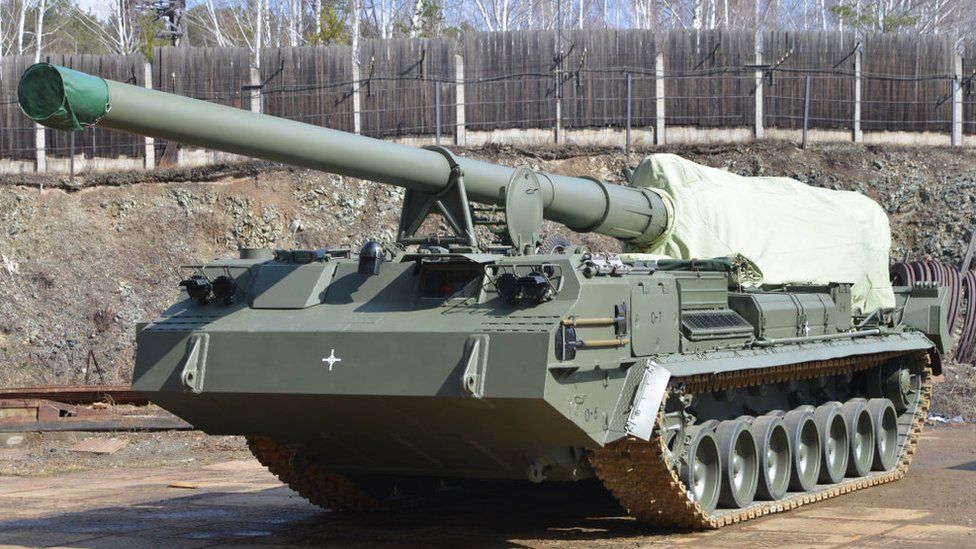
Tactical nuclear weapons are small nuclear warheads and delivery systems intended for use on the battlefield, or for a limited strike.
They are designed to destroy enemy targets in a specific area without causing widespread radioactive fallout.
The smallest tactical nuclear weapons can be one kiloton or less (producing the equivalent to a thousand tonnes of the explosive TNT). The largest ones can be as big as 100 kilotons.
Strategic nuclear weapons are larger (up to 1,000 kilotons) and are launched from longer range.
By comparison, the atomic bomb the US dropped on Hiroshima in 1945 was 15 kilotons.
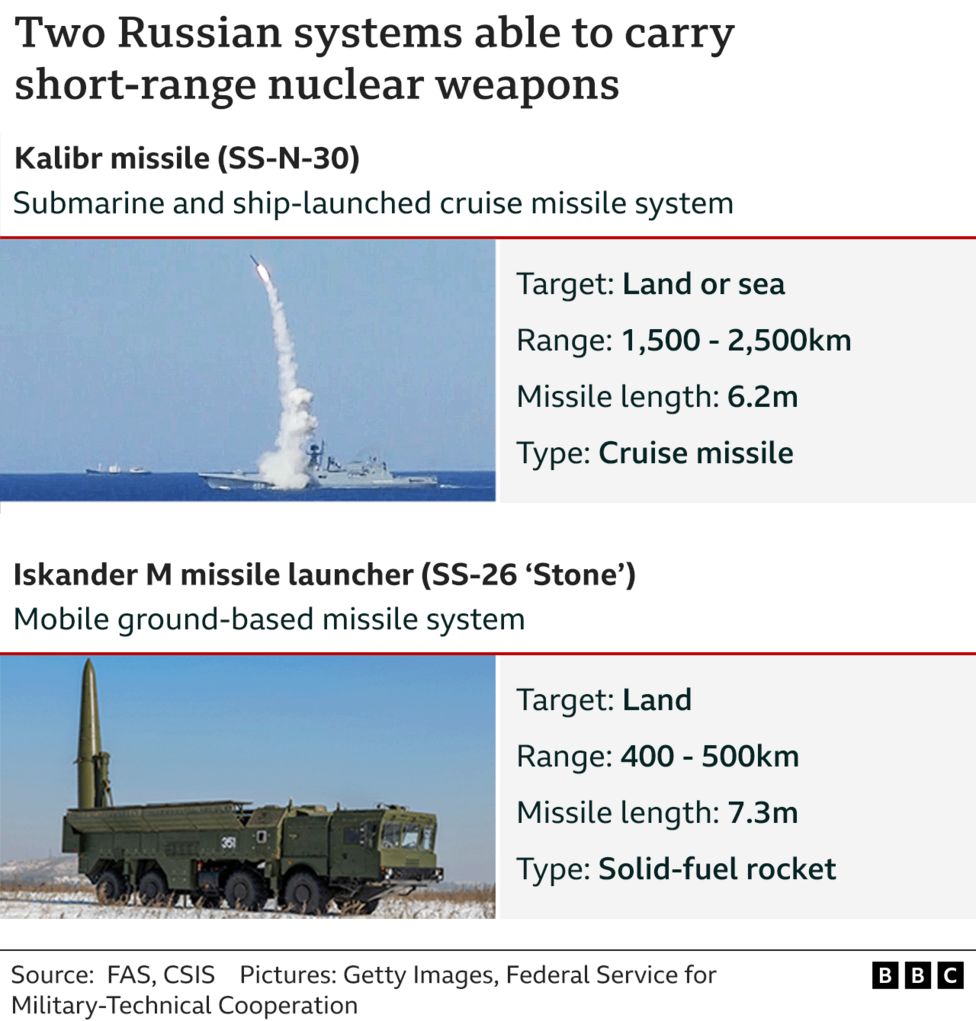
What tactical nuclear weapons does Russia have?
According to US intelligence, Russia has about about 2,000 tactical nuclear weapons.
Its tactical nuclear warheads can be placed on various types of missiles which are normally used to deliver conventional explosives, such as cruise missiles and artillery shells.
Tactical nuclear weapons can also be fired from aircraft and ships – as anti-ship missiles, torpedoes and depth charges.
The US says Russia has recently been investing heavily in these weapons to improve their range and accuracy.
Have tactical nuclear weapons ever been used before?
Tactical nuclear weapons have never been used in conflict.
Nuclear powers such as the US and Russia have found it equally effective to destroy targets on the battlefield by using modern conventional munitions.
In addition, no nuclear-armed country has so far been willing to risk unleashing all-out nuclear war by employing tactical nuclear weapons.
However, Russia might be more willing to use smaller tactical weapons than larger strategic missiles.
“They might not see it as crossing this big nuclear threshold,” says Dr Patricia Lewis, head of the international security programme at the Chatham House think tank.
“They could see it as part of their conventional forces.”
Are Putin’s nuclear threats a real cause to worry?
In February 2022, shortly before invading Ukraine, President Putin placed Russia’s nuclear forces at “special combat readiness” and held high-profile nuclear drills.
More recently, he said: “If the territorial integrity of our country is threatened, we will without a doubt use all available means to protect Russia and our people. This is not a bluff.”
Russia is planning to annex the regions of southern and eastern Ukraine it has occupied after holding self-styled referendums. President Putin says he is ready to defend the “territorial integrity” of the regions “by all means.”
US intelligence see this as a threat to the West not to help Ukraine try and retake these territories, rather than as a sign that he is planning a nuclear war.
But others worry that Russia, if it suffers further setbacks, might be tempted to use a smaller tactical weapon in Ukraine as a “game changer”, to break a stalemate or avoid defeat.
James Acton, a nuclear expert at the Carnegie Endowment for International Pace in Washington DC, says: “I am legitimately worried that in that circumstance, Putin might use a nuclear weapon – most likely on the ground in Ukraine to terrify everyone and get his way. We are not at that point yet.”
How has the US responded?

US President Joe Biden has warned Russia not to use nuclear weapons in the war in Ukraine.
Speaking during an interview with CBS News, Mr Biden said such action would “change the face of war unlike anything since World War Two,” adding: “It’ll be consequential.”
How the US and Nato would respond to any nuclear use is hard to predict. They may not want to escalate the situation further and risk all-out nuclear war but they also might want to draw a line.
However, Russia might also be deterred from using tactical nuclear weapons by another power – China.
“Russia is heavily dependent on Chinese support,” says Dr Heather Williams, nuclear expert at Kings College London.
“But China has a ‘no first use’ nuclear doctrine. So if Putin did use them, it would be incredibly difficult for China to stand by him.
“If he used them, he would probably lose China.”
BBC
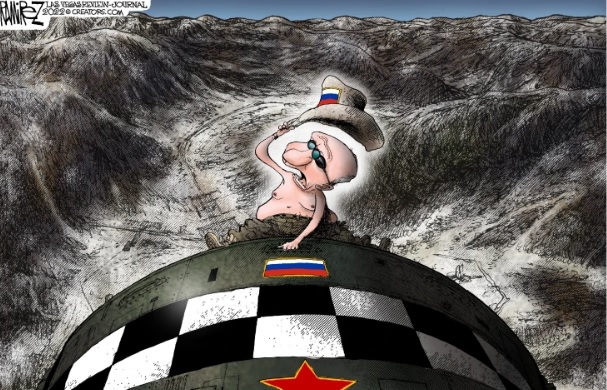
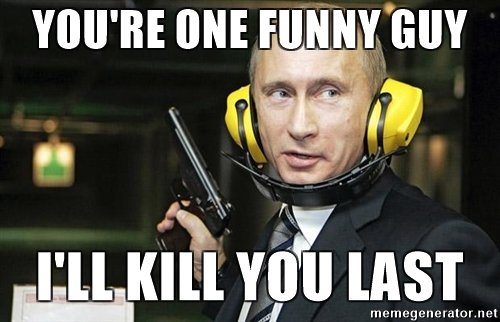
The Mighty Putin The Great
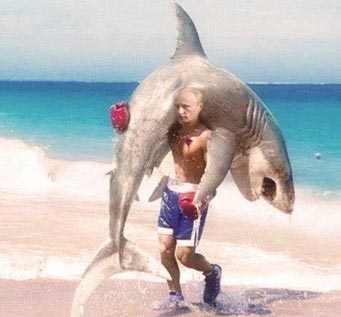
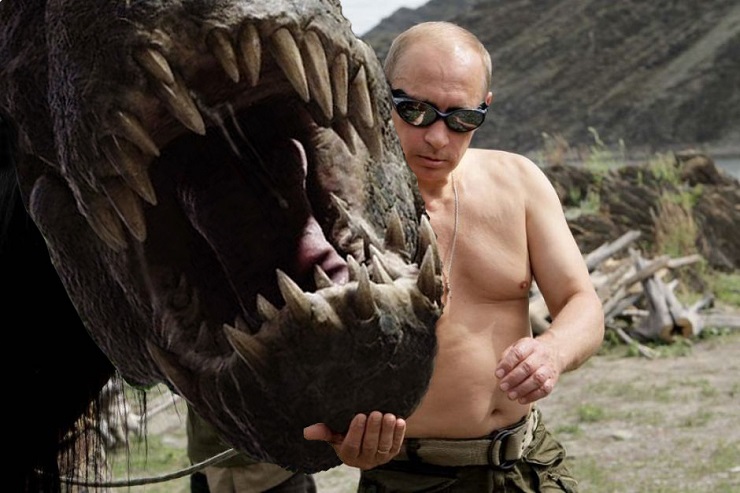
In Russia they are selling figurines of Putin riding a bear, of course he is shirtless.






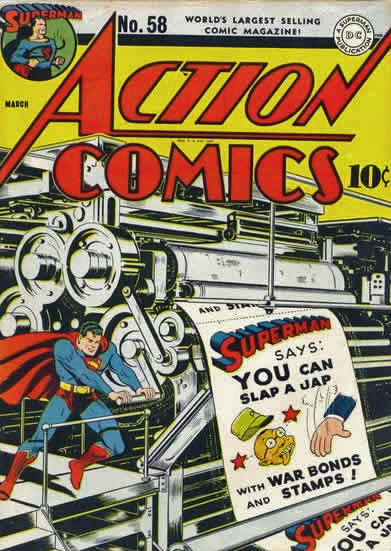
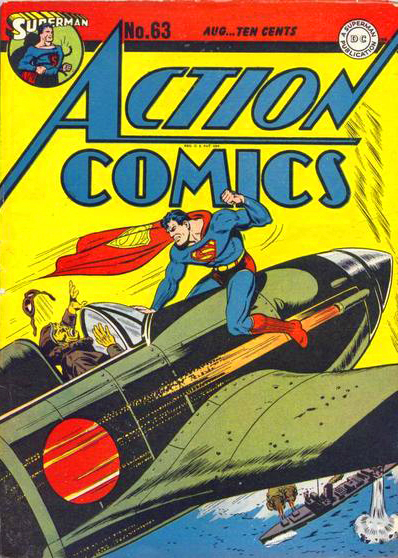
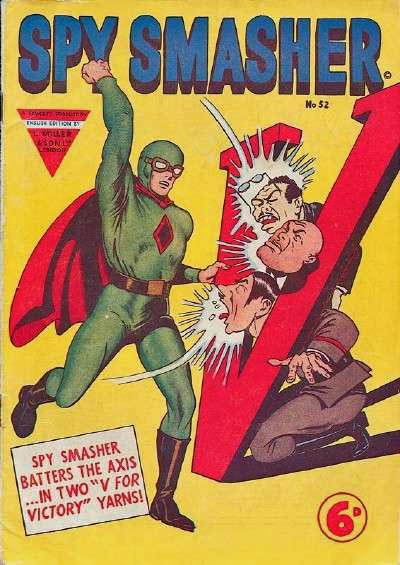
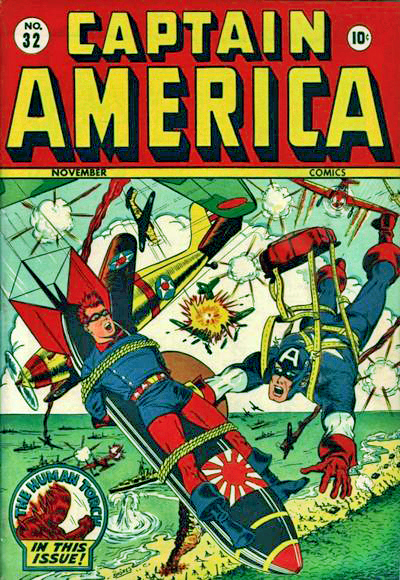
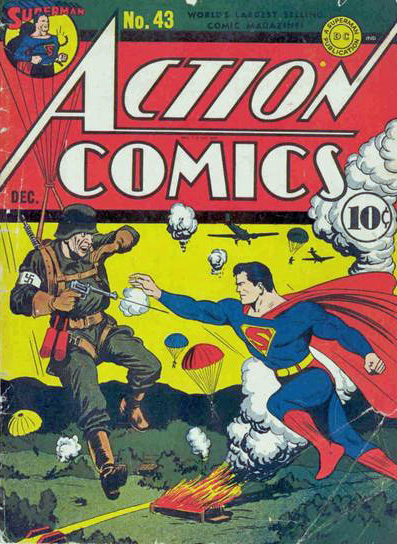
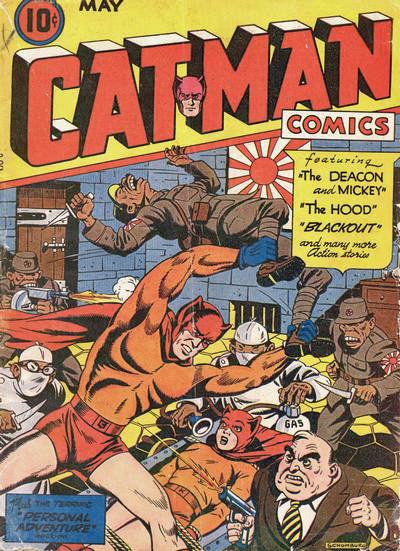
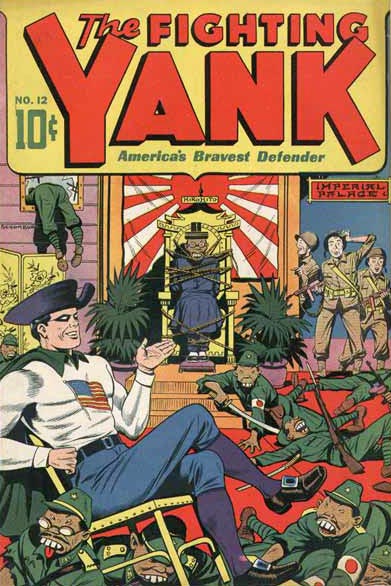
World War II Superhero Comics
These are from the period of WWII. According to today’s standards they are very politically incorrect.





Russian Flagship Battlecruiser Moskva Sunk
A Russian warship that was damaged by an explosion on Wednesday has sunk, Russia’s defence ministry has said.
Moskva, the flagship of Russia’s Black Sea fleet, was being towed to port when “stormy seas” caused it to sink, according to a ministry message.
The 510-crew vessel was an important symbolic and military target, and has led Russia’s naval assault on Ukraine.
Ukraine claims it struck the warship with its missiles, but Russia has made no mention of an attack.
Late on Thursday, however, Russian state media broke the news that the ship had been lost.
“While being towed … towards the destined port, the vessel lost its balance due to damage sustained in the hull as fire broke out after ammunition exploded. Given the choppy seas, the vessel sank,” state news agency Tass quoted the ministry as saying.
Earlier, Russia had said there was a fire on board after ammunition exploded.
Ukrainian military officials said they struck the Moskva with a Ukrainian-made Neptune missile – a weapon designed after Russia’s annexation of Crimea in 2014, and the naval threat to Ukraine in the Black Sea grew.

Earlier in the conflict the Moskva gained notoriety after calling on Ukrainian border troops defending Snake Island in the Black Sea to surrender – to which they memorably radioed a message of refusal which loosely translates as “go to hell”.
Originally built in Ukraine in the Soviet-era, the Moskva entered service in the early 1980s according to Russian media.
The missile cruiser was previously deployed by Moscow in the Syria conflict where it supplied Russian forces in the country with naval protection.
It carries over a dozen Vulkan anti-ship missiles and an array of anti-submarine and mine-torpedo weapons, the reports said.
The Moskva is the second major Russian ship known to have been severely damaged since the invasion began.
Namesake Glory (1979–2000), Moscow (2000–2022)
Builder 61 Kommunara Shipbuilding Plant (SY 445), Nikolayev, Soviet Union
Laid down 1976
Launched 1979
Commissioned 30 January 1983
Decommissioned September 1990
Reinstated April 2000
Identification 121
Fate Sunk on 14 April 2022, responsibility disputed[1]
Notes Flagship of the Black Sea Fleet

 The MarkoZen Blog