Got a thick wallet, and like to drive over hells half acre, here are some vehicles you could use 

BBC

Four military trucks you can buy … and one you can’t

bbc

Land Rover Defender                           

Country of origin: Britain

Briefing: Like the scrappy military transport that would become the Jeep Wrangler, the Land Rover Defender has evolved over its 65-year history, but has never jettisoned an ounce of capability. Available in hard-top, double-cab, pickup and bare-chassis configurations, the Defender is found around the globe, with some 55,000 units in active military service.

Price (Britain, exclusive of VAT): From £21,415 (approximately $34,500)

bbc1

Renault Sherpa                           

Country of origin: France

Briefing: Renault’s mighty Sherpa owes its appeal not only to the olive drab versions piloted by French and NATO soldiers, but to the charismatic appearances of the civilian model in the grueling Dakar Rally. Available by special order in Russia, Africa and the Middle East, the non-military Sherpa can be had as an unarmoured station wagon or pickup, or, for war-zone duty, a fully-armoured wagon. Power comes from a deafening 4.76-litre four-cylinder diesel engine. Its 215hp and 590lb-ft of torque reach all four wheels through a six-speed automatic transmission.

Price (UAE): Approximately 1m dirham ($272,000)

Mercedes-Benz G63 AMG 6x6 Showcar, Dubai 2013

Mercedes-Benz G63 AMG 6×6                           

Country of origin: Austria

Briefing: As production vehicles go, the Mercedes-Benz Geländewagen, otherwise known as the G Class, is ancient. Merely revised during more than 30 years of production, this bricklike military machine in a civilian paintjob still manages to capture the imagination of those who dream of traffic parting with their approach – business tycoons, action-film stars, the Pope. Like the “standard” G63 AMG, the new G63 AMG 6×6 packs a twin-turbo 5.5-litre V8 engine producing 536hp and 560lb-ft of torque. The engine meets the six-by-six drivetrain from Mercedes’ hulking Zetros truck, yielding 15.75in of ground clearance – sufficient to ford water as deep as 40in. Getting behind the wheel of this ultimate G Class, unless you happen to be, say, a James Bond villain, will be tricky. The vehicle is not (legally) destined for North America or right-hand-drive countries, and Mercedes has promised that production volume will be “very small”.

Price (Germany, exclusive of VAT): 379,000 euros (approximately $523,000) VAT- Value Added Tax

bbc4

Paramount Marauder                           

Country of origin: South Africa

Briefing: Ten tonnes of South African stoutness, the Marauder is possessed of a double-skin monocoque that helps it resist virtually all forms of light-arms fire, as well as the occasional anti-tank mine. It also, as Top Gear’s Richard Hammond learned,  is rather good as a city runabout – provided the pilot steers clear of fast-food drive-throughs.

Price: $485,000

bbc5

Oshkosh L-ATV

Country of origin: United States

Briefing: How to replace a fleet of aging Humvees that numbers in the tens of thousands? With a bit of technological derring-do. Wisconsin-based Oshkosh Defense has developed the L-ATV prototype to pick up where the Humvee has left off, carrying a diesel-electric hybrid powertrain that allows the purpose-built vehicle to run near-silent when missions require it. The US government has taken delivery of 22 L-ATV prototypes for testing, but civilian sales do not figure in Oshkosh’s immediate product plans.

Price: N/A

bbc6

~

bbc7

Traktor

Traktor Chelyabinsk, also known as Traktor (Russian: Трактор), is a professional ice hockey team based in Chelyabinsk, Russia. They are members of the Kharlamov Division of the Eastern Conference of the Kontinental Hockey League (KHL). From 1967 to 2009 the team played their home games at the Yunost Sport Palace. In 2009 the team moved to the arena now called Traktor Ice Arena named after Valery Belousov, their present home arena in Chelyabinsk.

Founded in 1947 as a team of the Chelyabinsk Tractor Plant, Traktor have played for the Soviet and Russian championships since 1948. In 1948-1953 the team was called Dzerzhinets and Avangard in 1954 – 1958. The current name was adopted starting with the 1958–59 season.

Robbie Knievel’s Grand Canyon Jump

Robbie Knievel is the son of the late, great American Daredevil Evel Knievel. He continued on the family tradition of jumping motorcycles over wide swaths of buses and other obstacles.

The Grand Canyon jump on May 20, 1999 was one of Knievel’s most famous jumps. The jump was partially based on Robbie’s father’s desire to perform a Grand Canyon jump, yet would end up doing the rocket-propelled Snake River Canyon jump. On May 20, 1999, Robbie jumped his motorcycle for a personal record of 228 feet. However, Knievel lost control of the bike on landing and broke his leg in the ensuing crash.

The Grand Canyon is on average five miles wide from rim to rim, so Jumping that far was pushing it beyond the limit. So they found a spur in the canyon that was very narrow.  So Robbie didn’t really jump the Grand Canyon, he jumped a small spur on the periphery of the canyon. But it was bloody good nevertheless.

robbie k1

A showman just like the Old Man.

robbie knievel
robbie k
Robbie_Knievel_Grand_Canyon-xlarge

To pay homage to his father, Knievel jumped the Caesars Palace fountains in 1989. The jump took place 22 years after Evel Knievel failed to clear the fountains in 1967. Knievel landed safely and became the first to successfully jump the fountains. Following the jump, Knievel stated, “that was for you, Dad”.

Why Almost Everyone in Russia Has a Dash Cam

Wired

How is it possible that a dozen different motorists around the Russian city of Chelyabinsk were able to capture video of a massive meteor flying through the sky? Because almost everyone in Russia has a dash-mounted video camera in their car.

The sheer size of the country, combined with lax — and often corrupt — law enforcement, and a legal system that rarely favors first-hand accounts of traffic collisions has made dash cams all but a requirement for motorists.

“You can get into your car without your pants on, but never get into a car without a dash cam,” Aleksei Dozorov, a motorists’ rights activist in Russia told Radio Free Europe last year.

Do a search for “Russia dash cam crash” in YouTube — or even better, Yandex.ru, the county’s equivalent of Google — and you’ll find thousands of videos showing massive crashes, close calls and attempts at insurance fraud by both other drivers and pedestrians. 

A combination of inexpensive cameras, flash memory and regulations passed by the Interior Ministry in 2009 that removed any legal hurdles for in-dash cameras has made it easy and cheap for drivers to install the equipment.

And it’s turned into an online phenomenon.

YouTube content policing means some of the most disturbing videos get pulled from U.S. video sites almost immediately, but as Marina Galperina reported at Animal New York last year, sites like the Ru CHP LiveJournal community are filled with disturbing videos of profanity-laden fist-fights, massive crashes and gruesome deaths, all captured on camera and shared for the world to see.

But then there are times like today, when dash cams catch a once-in-a-lifetime meteor falling from the sky, from every possible angle — something that couldn’t have happened just a few years ago.

The Car/Truck

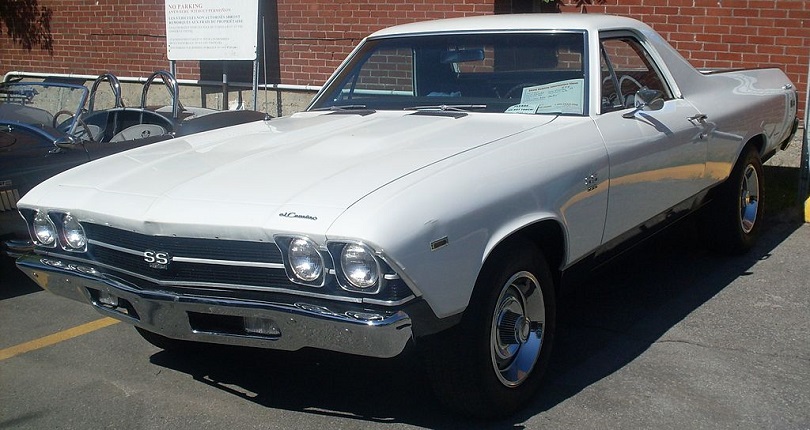
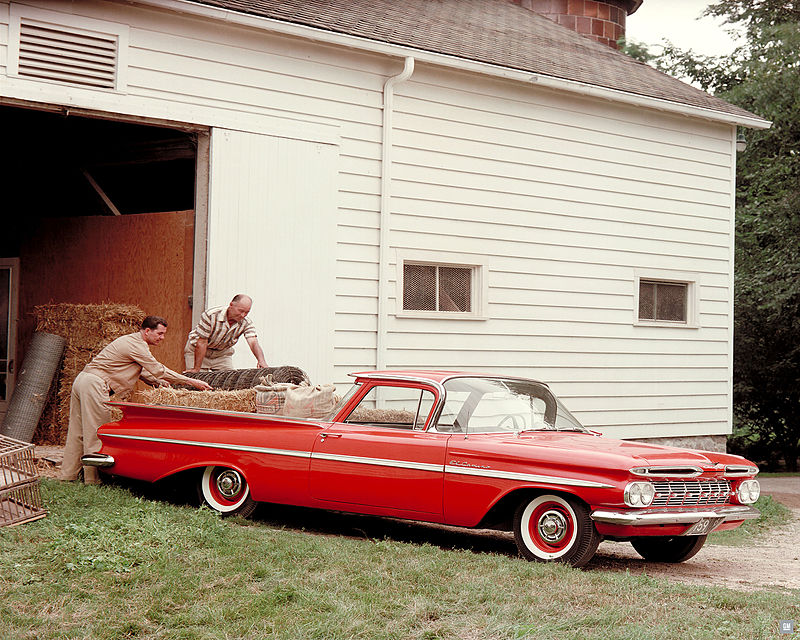
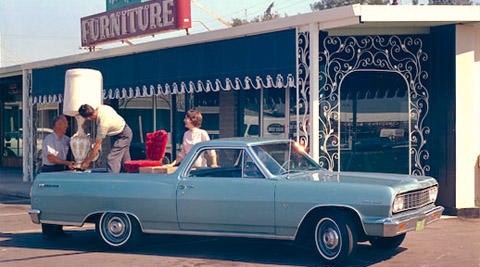
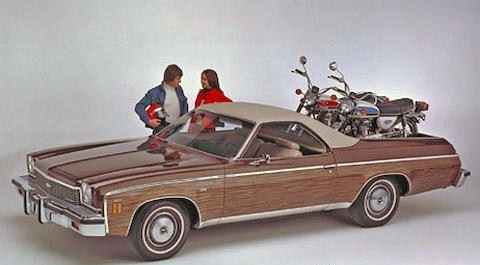
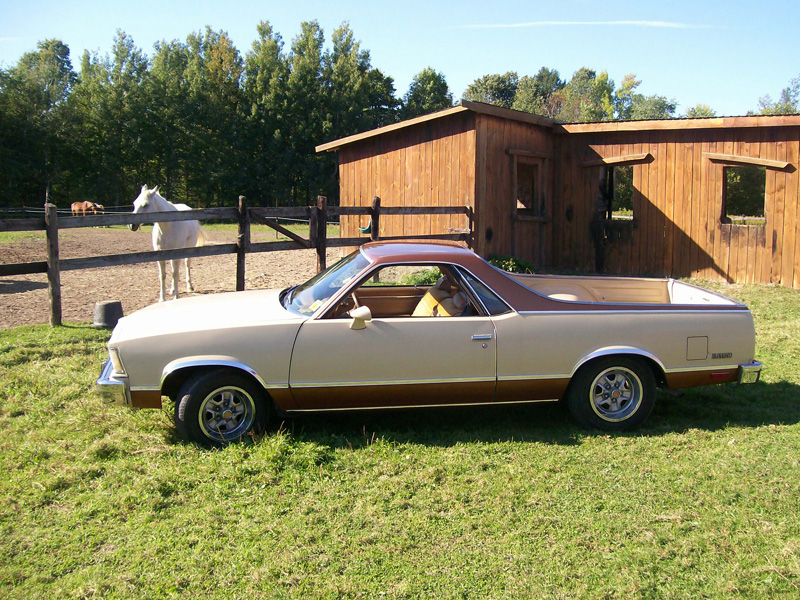
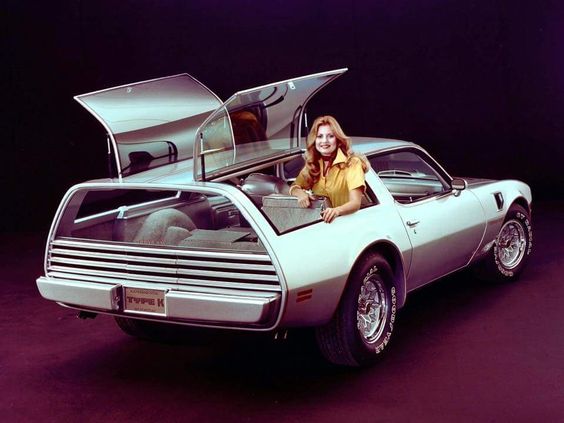
The Chevrolet El Camino is a pickup / coupé utility vehicle that was produced by Chevrolet between 1959–60 and 1964–1987. Unlike a standard pickup truck, the El Camino was adapted from the standard two-door Chevrolet station wagon platform and integrated the cab and cargo bed into the body.

Introduced in the 1959 model year in response to the success of the Ford Ranchero pickup, its first run lasted only two years. Production resumed for the 1964–1977 model years based on the Chevelle platform, and continued for the 1978–1987 model years based on the GM G-body platform.

Although based on corresponding General Motors car lines, the vehicle is classified in the United States as a pickup.

1959 El Camino


1964 El Camino


1973 El Camino


1979 El Camino


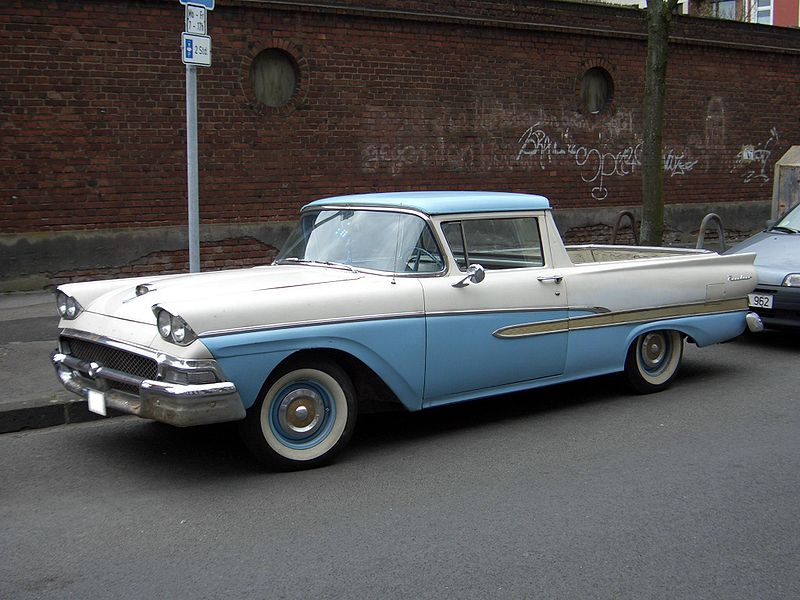
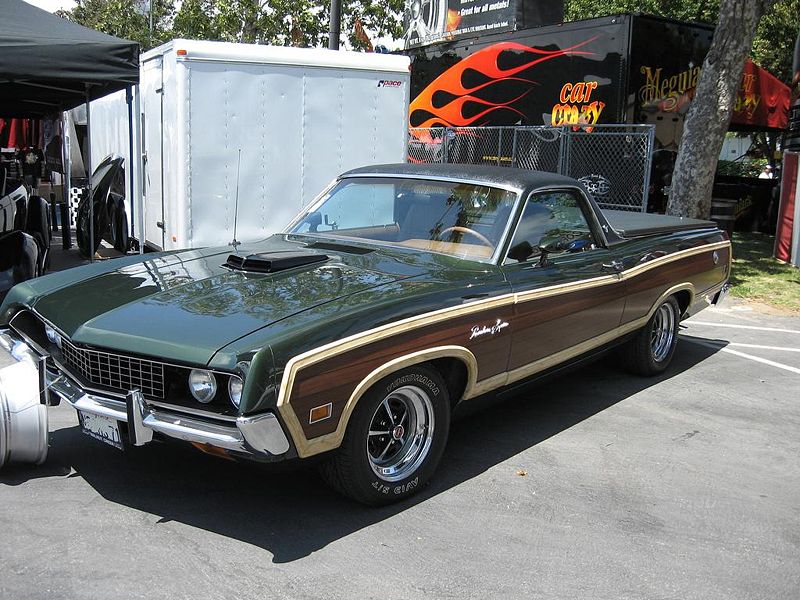
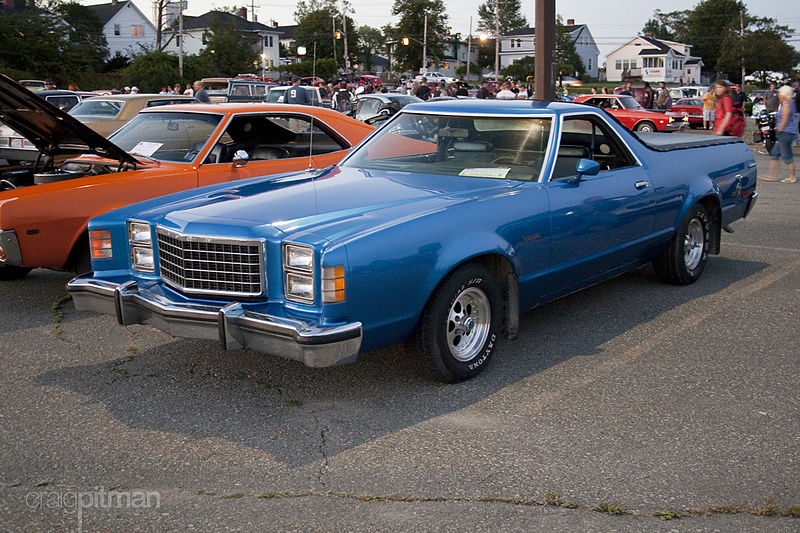
The Ford Ranchero is a Pickup /coupe utility that was produced by Ford between 1957 and 1979. Unlike a standard pickup truck, the Ranchero was adapted from a two-door station wagon platform that integrated the cab and cargo bed into the body. A total of 508,355 units were produced during the model’s production run. Over its lifespan it was variously derived from full-sized, compact, and intermediate automobiles sold by Ford for the North American market.

During the 1970s, the Ranchero name was used in the South African market for a rebadged Australian Ford Falcon utility. Shipped from Australia in complete knock down (CKD) form, these vehicles were assembled in South Africa at Ford’s plant in Port Elizabeth. In Argentina, a utility version of the locally produced Ford Falcon was also called Ranchero.

The original Ranchero sold well enough to spawn a competitor from General Motors in 1959, the Chevrolet El Camino.

1967 Ford Ranchero


1958 Ranchero


1970 Ranchero


1979 Ranchero


An El Camino on fire in downtown Winnipeg in 2016.


Every Riotous Hooligans Worst Nightmare: The Brutish Water Cannon

Watching the riots that developed at the memorial march in Brussels last year I again noticed a huge Water Cannon.  Right-wing thugs showed up at the march screaming anti-migrant and white supremacist chants.  The hooligans got washed good by a gigantic Belgium water cannon.


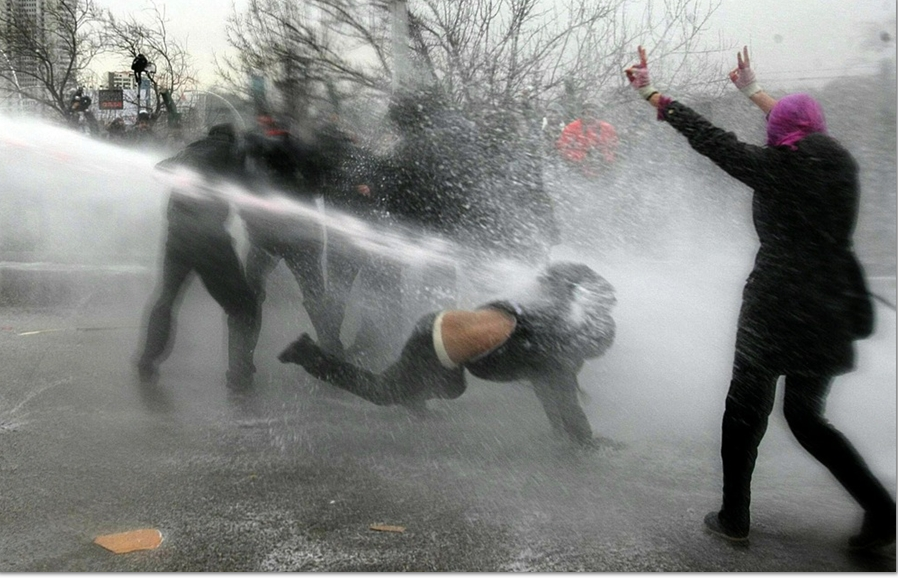
Water cannon on use on a demonstrator

water cannon is a device that shoots a high-velocity stream of water. Typically, a water cannon can deliver a large volume of water, often over dozens of meters. They are used in firefighting, large vehicle washing and riot control.

The first truck-mounted water cannon were used for riot control in Germany in the beginning of the 1930s.

The most modern versions do not expose the operator to the riot, and are controlled remotely from within the vehicle by a joystick. The German-built WaWe 10.000 can carry 10,000 litres (2,200 imp gal) of water, which can deploy water in all directions via three cannons, all of which are remotely controlled from inside the vehicle by a joystick. The vehicle has two forward cannons with a delivery rate of 20 litres per second (260 imp gal/min), and one rear cannon with a delivery rate of 15 litres per second (200 imp gal/min).

Water cannons designed for riot control are still made in the United States and the United Kingdom, but most products are exported, particularly to Africa and parts of Asia such as South Korea.

cannonx

Use of water cannon in riot control contexts can lead to injury or death, with fatalities recorded in Indonesia (in 1996, when the cannon’s payload contained ammonia), Zimbabwe (in 2007, when the use of cannons on a peaceful crowd caused panic), Turkey (in 2013, when the payload was laced with “liquid teargas”), and Ukraine (in 2014, with the death of activist and businessman Bogdan Kalynyak, reportedly catching pneumonia after being sprayed by water cannon in freezing temperatures). South Korea used water cannons containing capsaicin and fluorescent dyes for later screening and arrest in recent protests against its citizens.

Water cannons in use during the 1960s, which were generally adapted fire trucks, would knock protesters down and on occasion, tear their clothes.

On 30 September 2010, during a protest demonstration against the Stuttgart 21 project in Germany, a demonstrator was hit in the face by a water cannon. Dietrich Wagner, a retired engineer, suffered from the damage to his eyelids, a fracturing of a portion of the retinal bone, and damage to the retinas. The eye injuries thus inflicted on the man resulted in near-complete loss of eyesight. Graphic imagery was recorded of the event, sparking a national debate about police brutality and proportionality in the use of state force.

cannon3

Turkish riot police use water cannon to disperse demonstrators during a protest against the destruction of trees in a park brought about by a pedestrian project, in Taksim Square in central Istanbul May 31, 2013. REUTERS/Murad Sezer (TURKEY - Tags: POLITICS CIVIL UNREST ENVIRONMENT CRIME LAW TPX IMAGES OF THE DAY) - RTX106VO

Istanbul above

A few examples of the beasts


Demonstrationsverbot in Berlin! Infolge der Ruhestörungen durch die Aufführung des Remarque-Films "Im Westen nichts Neues" ist ein Demonstrationsverbot für Berlin erlassen worden. Die Polizei sicherte die Strassen und Plätze im Berliner Westen mit Wasserwerfer und grossem Polizeiaufgebot. Der Wasserwerfer der Schutzpolizei am Wittenbergplatz in Berlin zur Verhinderung nächtlicher Demonstrationen.

One of the first water cannon. Germany 1930’s.


cannon6 france

France

cannon6 germany

Germany

cannon8 russia

Russia


cannon9 columbia

Columbia


cannon10 china

China. Typical Chinese approach, if the water cannon don’t knock them down, plow through the crowd with the big blade.


Car Racetrack on the roof!

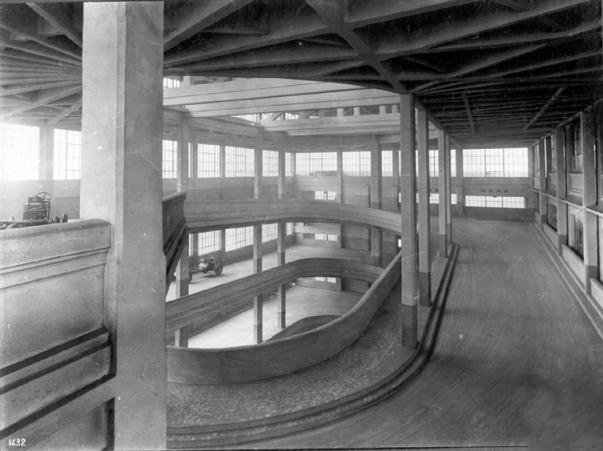
Lingotto is a district of Turin, Italy, and the location of the Lingotto building in Via Nizza. This building once housed an automobile factory built by Fiat. Construction started in 1916 and the building opened in 1923. The design (by young architect Matté Trucco) was unusual in that it had five floors, with raw materials going in at the ground floor, and cars built on a line that went up through the building. Finished cars emerged at rooftop level, where there was a rooftop test track. It was the largest car factory in the world at that time. For its time, the Lingotto building was avante-garde, influential and impressive—Le Corbusier called it “one of the most impressive sights in industry”, and “a guideline for town planning”. 80 different models of car were produced there in its lifetime, including the Fiat Topolino of 1936.


fiat5

The factory became outmoded in the 1970s and the decision was made to finally close it in 1982. The closure of the plant led to much public debate about its future, and how to recover from industrial decline in general. An architectural competition was held, which was eventually awarded to Renzo Piano, who envisioned an exciting public space for the city. The old factory was rebuilt into a modern complex, with concert halls, theatre, a convention centre, shopping arcades and a hotel. The eastern portion of the building is the headquarter of the Automotive Engineering faculty of the Polytechnic University of Turin. The work was completed in 1989. The track was retained, and can still be visited today on the top floor of the shopping mall and hotel.


fiat

fiatlingotto

Ramps leading up to the roof

ligotti

Fiat_Lingotto_Rooftop_Racetrack_2

Fiat_Lingotto_Rooftop_Racetrack_1