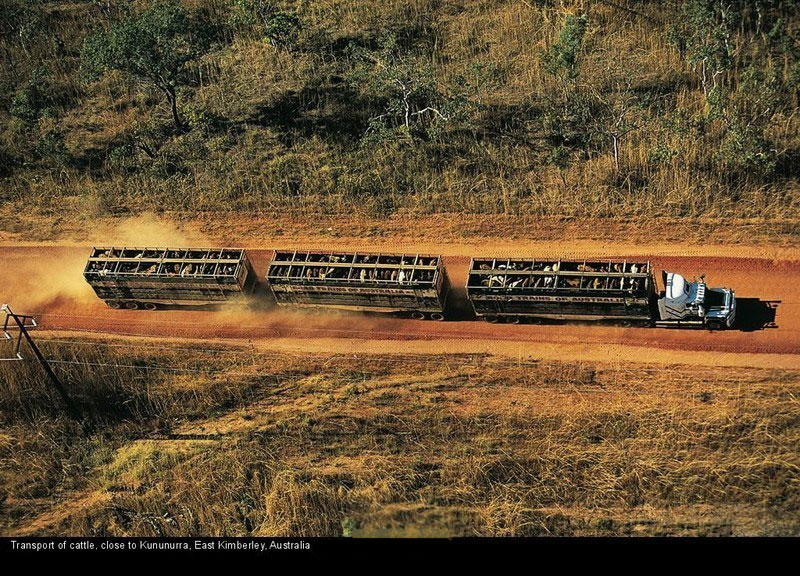
Australian Road Trains make hauling Cattle very efficient  

A road train or land train is a trucking vehicle of a type used in remote areas of Argentina, Australia, Mexico, the United States, and Canada to move freight efficiently. The term road train is most often used in Australia. In the United States, the terms triplesturnpike doubles, and Rocky Mountain doubles are commonly used for longer combination vehicles (LCVs). A road train has a relatively normal tractor unit, but instead of towing one trailer or semi-trailer, it pulls two or more of them.

Australia has the largest and heaviest road-legal vehicles in the world, with some configurations topping out at close to 200 tonnes (197 long tons; 220 short tons). The majority are between 80 and 120 t (79 and 118 long tons; 88 and 132 short tons).

Double (two-trailer) road train combinations are allowed in most areas of Australia, and within the environs (albeit limited) of Adelaide, South Australia and Perth, Western Australia. A double road train should not be confused with a B-double, which is allowed access to most of the country and in all major cities.

Here is one rolling through a flooded road

cattle1

Triple (three-trailer) road trains operate in western New South Wales, western Queensland, South Australia, Western Australia and the Northern Territory, with the last three states also allowing AB-quads (B double with two additional trailers coupled behind). Darwin is the only capital city in the world where triples and quads are allowed to within 1 km (0.62 mi) of the central business district (CBD). Tasmania and Victoria do not allow the operation of road trains on any of their roads. Victoria had previously allowed double road trains to operate around Mildura for the vintage grape harvest.

Strict regulations regarding licensing, registration, weights, and experience apply to all operators of road trains throughout Australia.

Road trains are used for transporting all manner of materials: common examples are livestock, fuel, mineral ores, and general freight. Their cost-effective transport has played a significant part in the economic development of remote areas; some communities are totally reliant on regular service.

The multiple dog-trailers are unhooked, the dollys removed and then connected individually to multiple trucks at “assembly” yards when the road train gets close to populated areas.

When the flat-top trailers of a road train need to be transported empty, it is common practice to stack them. This is commonly referred to as “doubled-up” or “doubling-up”. See illustration. Sometimes, if many trailers are required to be moved at one time, they will be triple-stacked, or “tripled-up”.

Higher Mass Limits (HML) Schemes are now piloting in all jurisdictions in Australia, allowing trucks to carry additional weight.

cattle

Road trains arrives at Helen Springs Cattle Station, north of Tennant Creek NT.

cattle2

The cattle are loaded onto the road train for their journey to Longreach QLD.

cattle3

The Road Train then leaves on its long trip.

Interesting statistics.    
*There are 17 trucks with 3 trailers and 2 decks per trailer; that’s 102 decks of cattle.

*Approximately 28 cattle per deck; A total of 2,856 head of cattle. 
*The cattle will weigh approximately 500kg each (1102.3 lbs.) 
*The sale price for cattle at Longreach is approx. 165c/kg (75c/lb.) 
*Each animal will therefore be sold at $825. 
*Total revenue from this analysis is $2.356.200 
*TYRES; Each truck has 2 front and 8 rear tyres, first trailer has 12 tyres and is dollied to the truck.

*2nd & 3rd trailers have 8 tyres at the front and 12 at the rear, that’s 20 tyres each. 
*Each truck has 62 tyres, that’s a total of 1.054 on the road. A lot of tyres!!!

cattle4
cattle5
cattle6

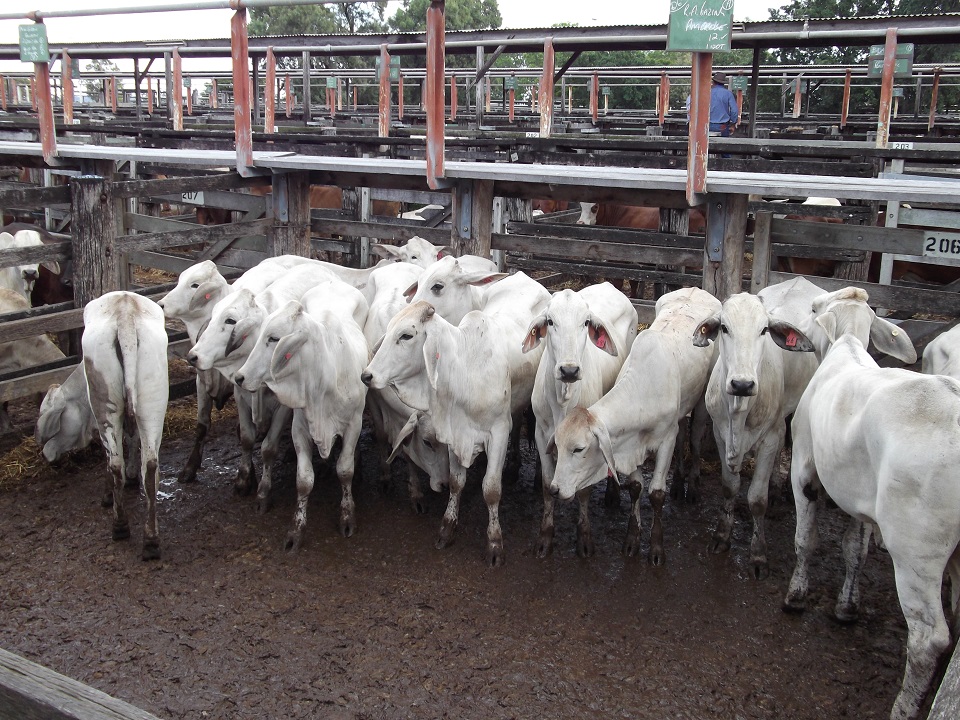
Australian cattle at stockyards in Rockhampton, Queensland.
acow1
acow2

Train Locomotives Plowing Through Snow Drifts

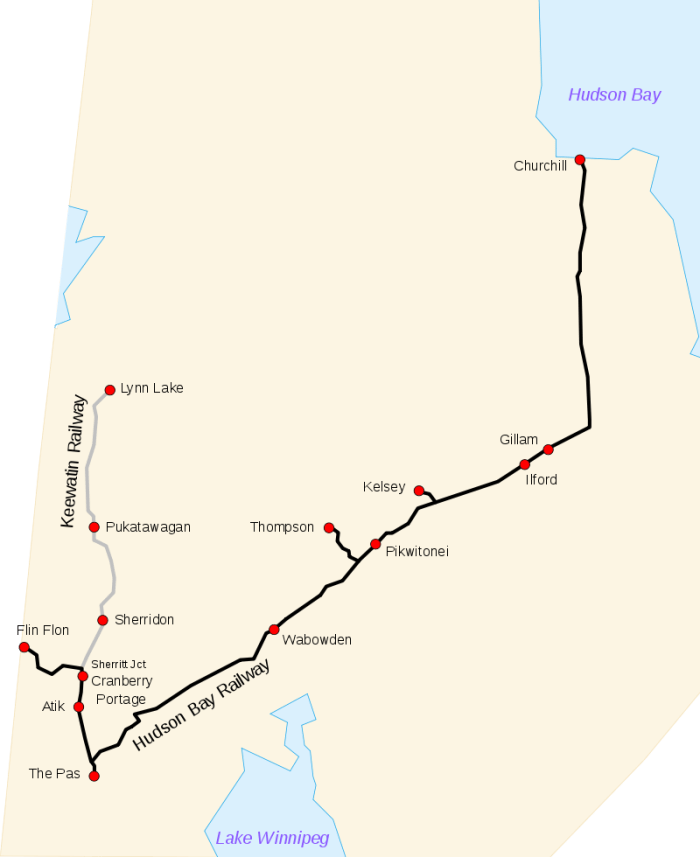
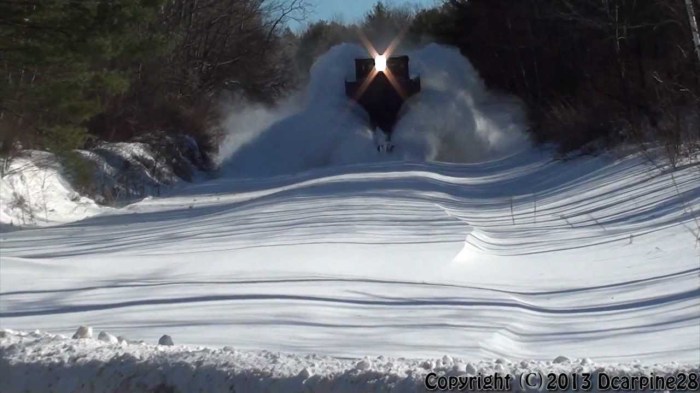
A severe winter blizzard hit northern Manitoba a couple weeks back cutting off Churchill, the “polar bear capital of the world,” for over a week. The town on the coast of Hudson Bay was buried deep. One of the worst blizzards to ever hit the place.

atrain2

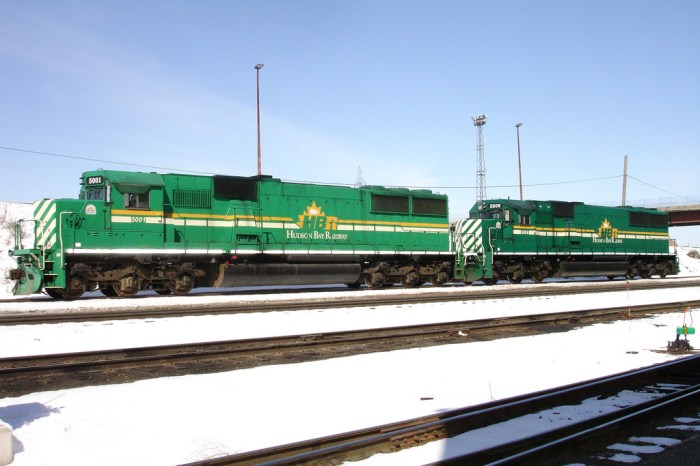
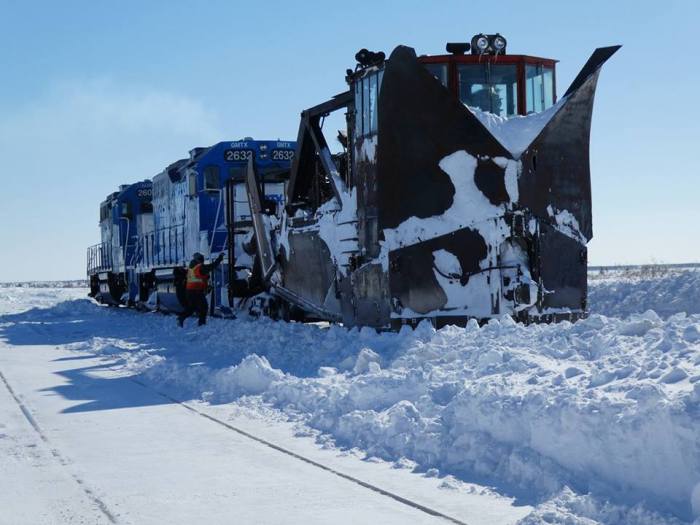
The Hudson Bay Railway, the rail company that serves Churchill, had to wait for the big snow clearing equipment to re-supply the town. The big blades on the front of the powerful locomotives.

atrain4
atrain3

The blades eventually arrived and supply trains saved the town from potential starvation. Of course I’m exaggerating, the town has back-up supplies that can last for a couple months. The airport also flies in tons of supplies.

The blades that saved Churchill

atrainRR-Train-Snowplow

These monster blades make mincemeat out of the hard packed snowdrifts.

atrain
atrain1

Robbie Knievel’s Grand Canyon Jump

Robbie Knievel is the son of the late, great American Daredevil Evel Knievel. He continued on the family tradition of jumping motorcycles over wide swaths of buses and other obstacles.

The Grand Canyon jump on May 20, 1999 was one of Knievel’s most famous jumps. The jump was partially based on Robbie’s father’s desire to perform a Grand Canyon jump, yet would end up doing the rocket-propelled Snake River Canyon jump. On May 20, 1999, Robbie jumped his motorcycle for a personal record of 228 feet. However, Knievel lost control of the bike on landing and broke his leg in the ensuing crash.

The Grand Canyon is on average five miles wide from rim to rim, so Jumping that far was pushing it beyond the limit. So they found a spur in the canyon that was very narrow.  So Robbie didn’t really jump the Grand Canyon, he jumped a small spur on the periphery of the canyon. But it was bloody good nevertheless.

robbie k1

A showman just like the Old Man.

robbie knievel
robbie k
Robbie_Knievel_Grand_Canyon-xlarge

To pay homage to his father, Knievel jumped the Caesars Palace fountains in 1989. The jump took place 22 years after Evel Knievel failed to clear the fountains in 1967. Knievel landed safely and became the first to successfully jump the fountains. Following the jump, Knievel stated, “that was for you, Dad”.

Los Angeles: the freeway capital of the universe 

los angeles7

Postcard from the 1960’s.

The Southern California freeways are a network of interconnected freeways in the megaregion of Southern California, serving a population of 22 million people. A comprehensive freeway plan was produced in 1947 and with construction beginning in the 1950s. The plan hit opposition and funding limitations in the 1970s and by 2004 some 61% of the original planned network had been completed.

los angeles8

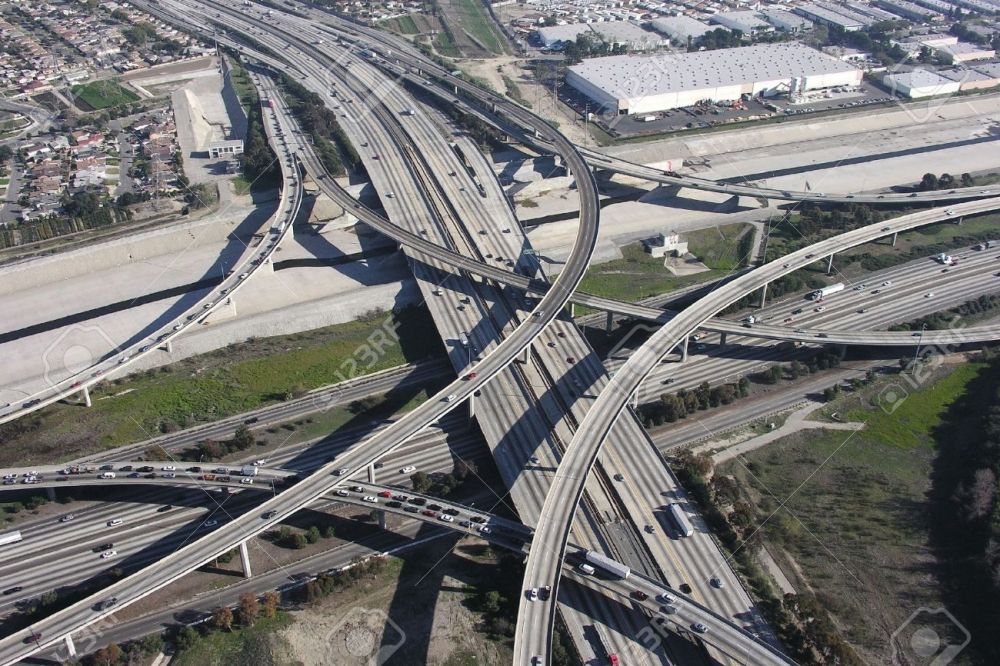
The Judge Harry Pregerson Interchange is a stack interchange near the Athens and Watts communities of Los Angeles, California.

Los_Angeles_-_Echangeur_autoroute_110_105
los angeles

los angeles9

The Inland Empire (I.E.) is a region in Southern California. The term may be used to refer to the cities of western Riverside County and southwestern San Bernardino County. A generally broader definition will include eastern Los Angeles County cities in the Pomona Valley, and/or the desert community of Palm Springs as well as its surrounding area; a much larger definition will include all of San Bernardino and Riverside counties.

The term “Inland Empire” is documented to have been used by the Riverside Enterprise newspaper (now The Press-Enterprise) as early as April 1914. Developers in the area likely introduced the term to promote the region and to highlight the area’s unique features. The “Inland” part of the name is derived from the region’s location, about 60 miles (97 km) inland from Los Angeles and the Pacific Ocean. The area has a population of approximately 4.2 million people.

los angeles1

los angeles2

los angeles3

los angeles5

los angeles4

Chinese Elevated Bus to Travel over Vehicles  

bus

Engineers in China have designed a novel new transportation method in the form of an enormous elevated bus which may make traffic jams a thing of the past.

The innovative vehicle, dubbed the ‘Transit Elevated Bus,’ would cruise along Chinese highways passing over cars and trucks that are driving below it.

Propelled via rails embedded in the road, the giant bus is designed to seat an incredible 1,200 passengers in its three massive carriages.

The engineer tasked with implementing the project contends that construction of the bus should cost a fraction of what it would take to build a new subway and accrue considerably less maintenance costs as well.

And, despite its futuristic appearance, the jaw dropping vehicle looks to be comparatively easy to construct as Chinese officials expect to begin testing the first ‘mega bus’ later this year.

Provided the trial period goes well, the Transit Elevated Bus could be in widespread use throughout Chinese cities sometime in the next year or two.

Whether the unique vehicle makes it way over to America in the future remains to be seen, but we’re hopeful that it does, because it looks like an incredibly fun way to travel and an awesome way to beat the traffic.

Subway Pushers of Japan

Encore post.

The Japanese rail network is known throughout the world for its superiority and punctuality. In the capital city Tokyo, nearly 40 million passengers ride the rail every day, heavily outweighing other modes of transport like buses and private cars. Of these, 22% or 8.7 million take the subway.

The Tokyo subway network is a transportation marvel. On most lines, trains come every 5 minutes apart, on average, and during peak times, they tend to run every 2-3 minutes. That’s about 24 trains per hour going in one direction. Despite so many trains, the subway is extremely overcrowded, especially during rush hour. This page from the Ministry of Land, Infrastructure and Transport has data (from 2007) detailing the level of congestion at different stations of Tokyo’s subway. As you can see, nearly all of them run at over capacity with a few running at 200% over rated capacity.

push

“Oshiya” or “pushers” at Tokyo’s Shinjuku station trying to pack as many passengers as possible into the carriages during rush hour in 1967. Photo credit: CNN

Just like sardines.

In order to fit twice the number of passengers into a subway carriage, the stations employ uniformed staff known as oshiya or “pusher”, whose goal is to cram as many people as possible into the subway tram. These white glove-wearing personal actually pushes people into the train, so the doors can be shut. This is so surreal, it has to be seen to be believed.

push1

When pushers were first brought in at Tokyo’s Shinjuku Station, they were called “passenger arrangement staff” and were largely made up of students working part-time. Nowadays, there are no dedicated “pushers”. The station staff and part-time workers fill these roles during rush hours.

Although a Japanese phenomenon now, subway pushers were an American invention and originated in New York City, nearly a century ago. They were not very well-liked because they were known to push and shove passengers with hostility. The vigor with which the guards often did their job earned them the reputation as “sardine packers”. Their brutality sometimes made national headlines. “The Anxious Subway Guard Who Guillotines His Passengers” —screamed a headline, and “Long Suffering New York Subway Riders Cheer Man Who Hit Guards” —reported another.

Pushers became out of fashion with the introduction of automatic door controls and automatic turnstiles. As the sadistic sardine packers began to lose their job in the 1920s, their demise were mourned briefly. Several movies about subway workers came out during this period including Subway Sadie (1926), Wolf’s Clothing (1927), The Big Noise (1928), Love Over Night (1928) and so on. Subway pushers were also depicted in a 1941 biographical movie called Pusher — the story takes place during World War 1.

More recently, in 2012, Hong Kong- based photographer Michael Wolf created a photo series named Tokyo Compression, where he captured the traumatized and pained expression of commuters as their faces were crushed against the windows. These pictures show how horrible and shameful the situation inside the subway is. Bodies are squished so tightly against one another that most people can’t physically move. Short persons suffer the risk of getting smothered against the coat of their fellow passenger. Getting off at the right station require strength and determination, and fire hazards and emergency evacuation are serious issues. The subways are also fertile grounds for pickpockets and gropers.

push2
push3
push4
push5
push6

Japanese commuters wait in line for the next train, while people pushers push passengers onto the Yamanote line subway train during the morning rush hour at Shinjuku station in Tokyo, Japan. The daily ritual is performed to maximize the number of commuters on trains.

Japanese commuters wait in line for the next train, while people pushers push passengers onto the Yamanote line subway train during the morning rush hour at Shinjuku station in Tokyo, Japan. The daily ritual is performed to maximize the number of commuters on trains.

“Be Kind; Everyone You Meet is Fighting a Hard Battle.” Plato.

The very rare 1980 4-door Chevrolet Corvette

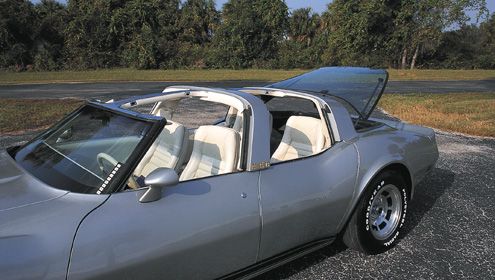
Back in 1980, California Custom Coachworks did a limited run of just five Chevrolet Corvette sedans for customers (a total of six were produced, one of them being a prototype). They took the stock body Corvettes, lengthened them by 30 inches, adding a significant 500-lb weight gain to the body. The result however was a very rare four-door Corvette that featured four seats and a very peculiar design.

corvette
corvette1

There is something just not right about this.

corvette2
corvette3